Home Blog Page 81

Waqf Act: SC Directs Centre to File Response Within a Week, Next Hearing on May 5

supreme court, sc, supreme court of india, fir, police, courts
Waqf Act: SC Directs Centre to File Response Within a Week, Next Hearing on May 5 2

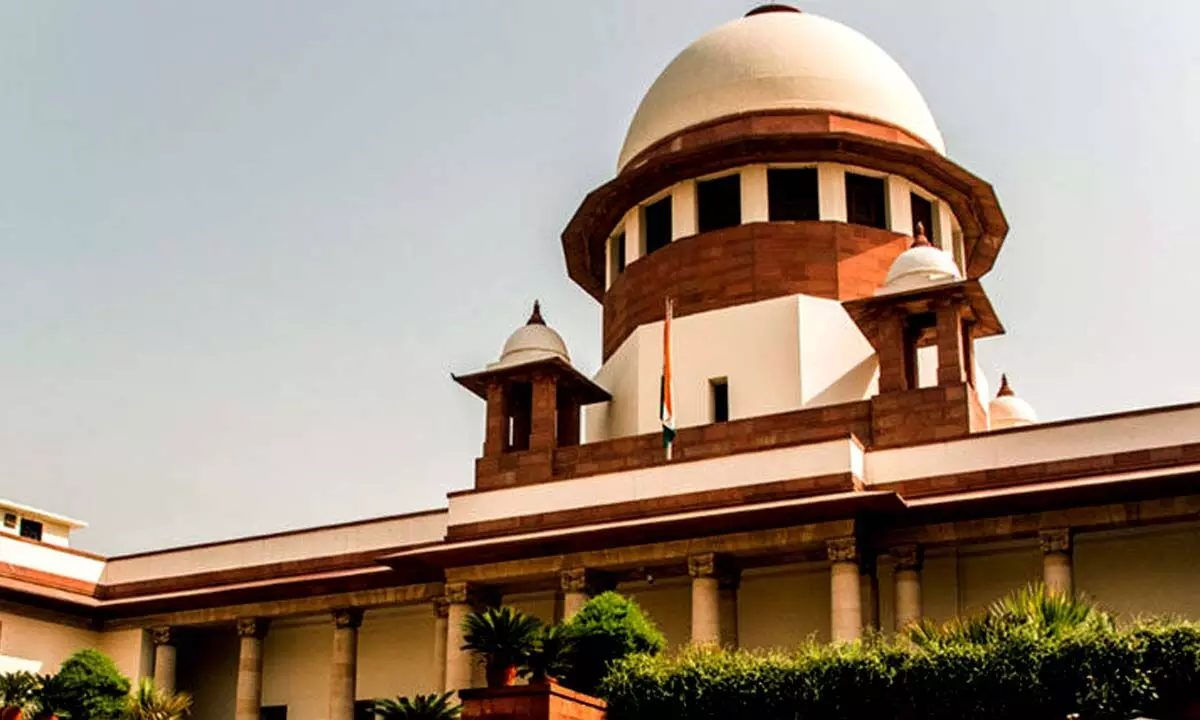
The Supreme Court on Thursday directed the Centre to file its stand within a week in the challenge to Waqf (Amendment) Act, 2025 after it was assured by the union government that ‘waqf by user’ or ‘waqf by deed’ properties won’t be denotified till the next hearing.

A bench comprising Chief Justice Sanjiv Khanna and Justices Sanjay Kumar and K V Viswanathan also recorded the assurance of solicitor general Tushar Mehta, representing the Centre, that no appointments in the central Waqf council and boards will be made in the meantime.

Mehta said the government won’t denotify “waqf by deed” and “waqf by user” properties till the next hearing.

The CJI said if registration of any waqf property had taken place under the erstwhile 1995 Act, then those properties can’t be denotified till the next hearing on May 5.

The bench passed the order after Mehta sought a weeks’ time to file a preliminary response to the pleas against the newly-amended waqf law.

“If your lordships will say something about ‘waqf by user’, what will be the fallout?” he asked.

The bench, on the other hand, said it was impossible to deal with a number of pleas on the issue and clarified it would only five of them while asking lawyers to decide among themselves who would argue.

The petitioners, the bench said, could file their rejoinders to the Centre’s reply within five days of the service of the government’s response.

After Devgiri Fort Blaze, INTACH Demands Ban on Lighters, Cigarettes, and Plastic Bottles at Heritage Site

devgiri fort, fire incident, shambhaji nagar, aurangabad
After Devgiri Fort Blaze, INTACH Demands Ban on Lighters, Cigarettes, and Plastic Bottles at Heritage Site 4

Following the devastating fire at Devgiri Fort on April 8, the Indian National Trust for Art and Cultural Heritage (INTACH) has demanded stringent safety measures, including a complete ban on flammable items like cigarettes, lighters, and matchboxes within the fort premises. The blaze, which affected significant portions of the fort and harmed wildlife such as monkeys, has raised alarm over the lack of fire safety protocols at the historic site.

A delegation from INTACH submitted a formal memorandum to the Archaeological Survey of India (ASI) in Chhatrapati Sambhajinagar, highlighting the urgent need for preventive action. The heritage conservation group pointed out that grass growing on the terrace of the Baradari—an upper structure of the fort—caught fire, which then spread to wooden sections, escalating the damage.

INTACH has called for regular removal of dry grass and trees from key areas of the fort, especially before summer, along with cleanliness drives to eliminate plastic waste and other fire hazards. The memorandum stressed the importance of thorough security checks at entry points to stop visitors from bringing flammable materials.

They further proposed restrictions on plastic bottles and strict enforcement of the Maharashtra Fire Prevention and Life Safety Measures Act, 2006. To manage emergency situations more efficiently, INTACH also recommended the creation and maintenance of access pathways for water tankers within the fort.

The 9th-century Devgiri Fort, also known as Daulatabad Fort, was once the capital of the Yadava Dynasty and remains a major tourist attraction near Chhatrapati Sambhajinagar, Maharashtra. The recent fire incident has sparked serious concern over heritage preservation and disaster preparedness at India’s historical landmarks.

Pune Businessman Lured, Abducted, and Killed in Bihar: Cyber Racket Behind Gruesome Murder

pune, businessman, bihar, killed in bihar, laxman shinde
Pune Businessman Lured, Abducted, and Killed in Bihar: Cyber Racket Behind Gruesome Murder 6

A horrifying interstate crime has come to light with the abduction and murder of Pune-based businessman Laxman Sadhu Shinde, who was lured to Bihar under the pretext of a high-value business deal. Shinde, owner of Centrifugal Casting Bearing in Pune, was found dead in Bihar’s Jehanabad district days after he landed at Patna airport on April 11. Bihar Police have arrested seven individuals, including a woman, and detained four others in connection with the case.

According to investigators, Shinde was targeted by a cybercrime gang posing as clients seeking mining equipment for operations in Jharkhand. After landing in Patna, Shinde messaged his daughter that he was heading to Jharkhand. That was the last communication from him. A missing persons complaint was filed by his family the next day in Pune, prompting a joint investigation by Pune and Patna police.

The gang allegedly demanded ransom from Shinde’s family, managing to extort ₹90,000 before murdering him and dumping his body in Ghosi, Jehanabad. The mastermind and other suspects were tracked down across multiple districts—Nawada, Gaya, Nalanda, and Vaishali. Police recovered the vehicle used in the abduction and seized CCTV footage that helped crack the case.

Officials revealed that the gang was involved in a series of kidnappings and murders across Jharkhand, Gujarat, Karnataka, and other states. Some of those arrested are also cybercriminals with a history of online fraud. The kingpin of the gang has been sent to judicial custody, and further investigation is ongoing.

Dynasty Reinforced: Hemant Soren Succeeds Father as JMM Chief, Shibu Soren Becomes ‘Founding Patron’

jmm, hemant soren, shibu soren, jharkhand mukti morcha
Dynasty Reinforced: Hemant Soren Succeeds Father as JMM Chief, Shibu Soren Becomes 'Founding Patron' 8

In a significant political reshuffle within the Jharkhand Mukti Morcha (JMM), Chief Minister Hemant Soren was unanimously elected as the central president of the party on Tuesday. His father, party patriarch Shibu Soren, who led the JMM for nearly four decades, was designated the party’s “founding patron” during the 13th Central Convention.

Senior leader Nalin Soren proposed the title of founding patron for Shibu Soren, a move supported by Stephen Marandi. In a symbolic passing of the torch, Shibu Soren himself proposed Hemant Soren’s name for central president, which was backed unanimously by party members. Hemant, who has been serving as executive president since 2015, now officially takes over the reins of the party founded and steered by his father for 38 years.

ED Targets Gandhis: Sonia, Rahul Named in National Herald Chargesheet

rahul gandhi, sonia gandhi, enforcement directorate
ED Targets Gandhis: Sonia, Rahul Named in National Herald Chargesheet 10

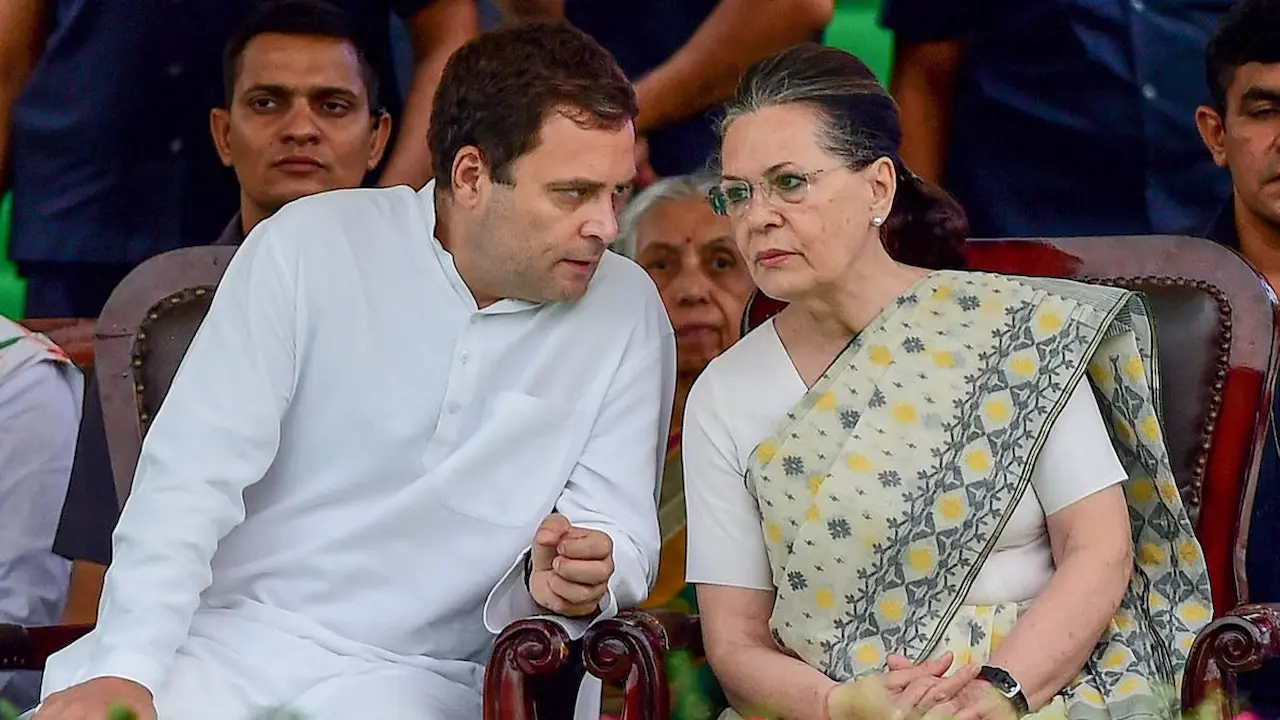
In a major development in the National Herald case, the Enforcement Directorate has filed a chargesheet against senior Congress leaders Sonia Gandhi and Rahul Gandhi, accusing them of money laundering. The chargesheet, submitted on April 9, also names Congress veterans Sam Pitroda and Suman Dubey as co-accused.

Special Judge Vishal Gogne reviewed the chargesheet and scheduled the next hearing for April 25 to determine whether to take cognisance of the matter. “The present prosecution complaint shall next be taken up for consideration on the aspect of cognisance before this court on April 25, 2025, when the special counsel for the ED and IO shall also ensure the production of the case diaries for perusal by the court,” the judge stated.

The National Herald case has long been politically sensitive, and the inclusion of Congress’s top leadership in the ED’s chargesheet marks a significant escalation in the legal proceedings.

BMC Pressure Works: Mumbai Tanker Strike Ends After Disaster Act Invocation

water tanker, bmc, tanker strike
BMC Pressure Works: Mumbai Tanker Strike Ends After Disaster Act Invocation 12

In a major relief for Mumbaikars, the Mumbai Water Tanker Association (MWTA) on Monday announced the immediate withdrawal of its indefinite strike and the resumption of water supply across the city. The decision came just a day after the Brihanmumbai Municipal Corporation (BMC) invoked the Disaster Management Act, 2005, to requisition private tankers, wells, and borewells amid the growing water crisis.

“We have decided to withdraw the indefinite strike and resume water supply in Mumbai with immediate effect,” said MWTA General Secretary Rajesh Thakur, confirming the development to PTI.

The strike, which began on April 10, severely disrupted water distribution to residential societies, construction sites, and public services like the railways. The protest was triggered by BMC’s issuance of regulatory notices to private well owners supplying water to tanker operators, prompting backlash from the association.

The standoff saw swift political intervention, with Chief Minister Devendra Fadnavis and Union Jal Shakti Minister CR Paatil directing the civic body to pause the enforcement of the contentious guidelines. Following their directives, BMC agreed to stay the notices until June 15, paving the way for talks.

However, it was BMC’s invocation of emergency powers under the Disaster Management Act that ultimately broke the deadlock. With private tankers facing possible state requisitioning and police deployment to manage operations, MWTA finally relented.

The resumption of water services comes as a huge relief amid rising summer temperatures and growing public discontent. The episode has also highlighted the fragile state of Mumbai’s water infrastructure and the growing dependence on private sources to meet urban demand.

Water War in Mumbai: BMC Invokes Disaster Management Act as Tanker Strike Deepens Crisis

water tanker, strike, mumbai, tanker, private well, bmc
Water War in Mumbai: BMC Invokes Disaster Management Act as Tanker Strike Deepens Crisis 14

Mehul Choksi Nabbed in Belgium: Is India’s Most Wanted Fugitive Finally Coming Home?

mehul choksi, choksi, diamond, belgium, fugitive
Mehul Choksi Nabbed in Belgium: Is India's Most Wanted Fugitive Finally Coming Home? 16

Absconding billionaire Mehul Choksi, a prime accused in the ₹13,000 crore Punjab National Bank (PNB) loan fraud case, has been arrested in Belgium following a formal extradition request from Indian authorities. The arrest, which took place on Saturday, marks a major breakthrough in the high-profile banking scam that rocked India in 2018.

Choksi, who fled India in 2018 and was living in Antigua, was recently traced to Belgium under the pretext of seeking medical treatment. Following the withdrawal of his Interpol Red Notice, Indian agencies have been pursuing his extradition through diplomatic and legal channels.

Sources confirm that at least two open-ended arrest warrants issued by a special Mumbai court in 2018 and 2021 were submitted to Belgian authorities as part of the ongoing extradition effort. Indian agencies are now preparing formal documentation to counter any bail plea Choksi might file on health grounds.

Alongside his nephew Nirav Modi, Choksi is accused of orchestrating a massive bank fraud through his firm Gitanjali Gems, allegedly in collusion with corrupt bank officials. According to investigations by the Central Bureau of Investigation (CBI) and the Enforcement Directorate (ED), they fraudulently obtained 165 Letters of Undertaking (LoUs) and 58 Foreign Letters of Credit (FLCs) from PNB’s Brady House branch in Mumbai without proper documentation or margin.

These fraudulent LoUs enabled Choksi’s companies to secure massive credit from international branches of several Indian banks, including SBI Frankfurt, Axis Bank Hong Kong, and Canara Bank Manama, among others. When his companies failed to repay, PNB was forced to settle over ₹6,344 crore, including interest, to these banks.

The CBI has filed two charge sheets and the ED three prosecution complaints against Choksi. Assets worth ₹2,565.90 crore have been attached and are now approved for monetization by the court.

Meanwhile, Nirav Modi continues to remain lodged in a UK prison since 2019, contesting extradition to India in the same case. With Choksi’s arrest, pressure mounts on the Indian government to bring both fugitives to justice and recover public funds lost in one of the country’s largest banking scams.

Shiv Sena (UBT) Slams Congress: Has the INDIA Bloc Vanished into Thin Air?

uddhav thackeray, shiv sena, shiv sena (ubt), thackeray, india bloc, india alliance
Shiv Sena (UBT) Slams Congress: Has the INDIA Bloc Vanished into Thin Air? 18

In a sharp critique published in its mouthpiece Saamana, the Shiv Sena (UBT) on Saturday demanded answers from the Congress regarding the current status of the INDIA bloc, questioning its conspicuous absence from discussions at the party’s recent Ahmedabad session. The editorial expressed disappointment that the Congress chose to focus solely on itself, with no mention of the opposition alliance or its future after the Lok Sabha elections.

“Where does the INDIA bloc stand post-elections? Has it been buried or disappeared into thin air?” the editorial asked, holding Congress president Mallikarjun Kharge responsible for offering clarity. The Sena (UBT) also sought to know the Congress’s plan for upcoming state elections in Bihar, Gujarat, and West Bengal, warning that continuing to ignore alliance partners like AAP and TMC could pave the way for BJP victories.

The editorial questioned the utility of the Congress session held on April 8–9 in Gujarat—a state where the party has remained out of power for two decades and managed to win only one Lok Sabha seat since 2014. It further urged the Congress to focus on states like Madhya Pradesh and Andhra Pradesh while introspecting its assembly poll debacle in Maharashtra, where internal conflicts and BJP’s scams contributed to its downfall.

Shiv Sena (UBT) emphasized that the Congress must take charge of the opposition’s fight against “dictatorship” but warned that any strategy involving contesting against INDIA bloc allies would be counterproductive. Referring to the Congress-AAP split in the Delhi assembly polls, it said such missteps only strengthen the BJP.

“We have to defeat the BJP, not our friends,” the Sena (UBT) concluded, hinting that a cohesive alliance strategy is crucial if the opposition aims to present a serious challenge in the upcoming state and national elections.

SC Slams Governors’ Delay, Sets 3-Month Deadline for President to Act on Reserved Bills

Droupadi Murmu ,President,Parliament
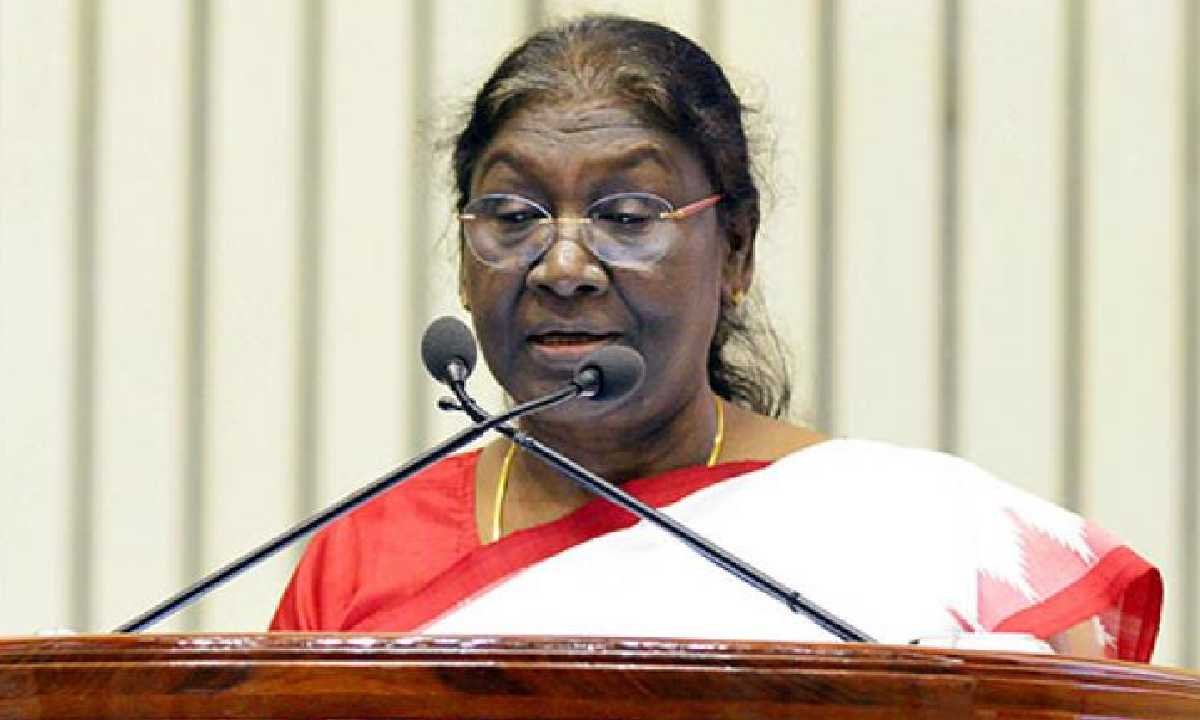
Droupadi Murmu | Image : ANI

In a landmark ruling, the Supreme Court has for the first time laid down a strict timeline for the President of India to decide on bills reserved for her consideration by state governors, mandating a decision within three months of receiving such references. The apex court’s decision came just days after it declared the Tamil Nadu Governor’s move to reserve 10 bills for the President’s assent as “illegal and erroneous in law.”

The detailed 415-page judgment, uploaded late Friday night, not only reprimanded the delay tactics of governors but also stated that governors are constitutionally bound to act on the aid and advice of the state’s Council of Ministers. The court noted that there is no concept of a “pocket veto” or “absolute veto” available to the President or the Governor under Articles 200 and 201 of the Constitution.

Justices JB Pardiwala and R Mahadevan, who delivered the verdict on April 8, declared that if the President fails to act within three months, reasons for the delay must be recorded and communicated to the state. Moreover, states are also expected to cooperate with the Centre by providing information and responses promptly.

The bench was critical of Tamil Nadu Governor R. N. Ravi, asserting that he acted in bad faith by indefinitely delaying assent to bills, and then reserving them for the President’s consideration following a prior Supreme Court directive. The court made it clear that this was a roadblock to the legislative process and cannot be allowed under the constitutional framework.

The court emphasized that after a bill is reconsidered and presented again by the state legislature, the governor is required to grant assent within a month. Similarly, in cases where the governor chooses to withhold assent or refer the bill to the President contrary to ministerial advice, such action must also happen within three months.

In a strong move, the court invoked its extraordinary powers under Article 142 to deem the 10 Tamil Nadu bills as having received assent and directed copies of the judgment to be sent to all high courts and principal secretaries to governors across India.

This judgment marks a significant step toward curbing arbitrary delays by constitutional authorities and reinforces the accountability of both the Governor and the President in the law-making process of states.