Home Blog Page 83

President Trump’s Bold Action Against Deadly Criminal Gangs Brings Hope for a Safer America

donald trump, crime, gangster, trump, us, america
President Trump's Bold Action Against Deadly Criminal Gangs Brings Hope for a Safer America 2

Two of the world’s most dangerous and violent gangs—MS-13 and Tren de Aragua—have long posed a serious threat to civil society, especially in the United States. These criminal networks are known for their brutality, and many of their members have entered the U.S. illegally. Their presence has created fear and instability in several American communities.

One recent development came when U.S. authorities arrested Henrry Josue Villatoro Santos, a 24-year-old Salvadoran national and one of the top three MS-13 leaders operating on the East Coast. He was captured in Woodbridge, Virginia, and charged for illegally possessing a firearm while being in the country unlawfully. This arrest highlights the persistent danger posed by MS-13—a gang originally formed in Los Angeles in the 1980s to protect Salvadoran immigrants but which quickly evolved into a transnational criminal empire. Over the years, MS-13 has become known for murder, drug trafficking, extortion, and extreme violence, spreading its influence throughout the U.S., Central America, and beyond.

The Trump administration has taken firm and decisive steps to counter these threats. Since returning to office in 2025, President Donald Trump has prioritised national security and safety for every American. He ordered the deportation of several high-ranking MS-13 members to El Salvador, ensuring that they face justice and are removed from U.S. soil. This move was widely praised for directly targeting the root of the threat, rather than only treating its symptoms.

Equally dangerous is the Venezuelan gang Tren de Aragua, led by Héctor “Niño” Guerrero. This organisation is involved in a range of criminal activities, including drug trafficking, human smuggling, extortion, illegal mining, and even arms dealing. Unlike MS-13, Tren de Aragua operates more like a cartel, without distinctive tattoos, making their members harder to identify. Originally based in Aragua state in Venezuela, the gang expanded rapidly, taking advantage of Venezuela’s deep economic crisis to recruit poor and vulnerable individuals. Their operations now span much of Latin America and have even reached U.S. borders.

In a groundbreaking move, President Trump signed an executive order on January 20, 2025, starting the process of officially designating these gangs—MS-13 and Tren de Aragua—as Foreign Terrorist Organisations (FTOs). This classification, enacted on February 20, 2025, grants U.S. authorities broader powers to investigate, arrest, and prosecute anyone affiliated with or aiding these criminal groups. Using the Alien Enemies Act of 1798, Trump also authorised the deportation of suspected members, further strengthening national security.

What makes these gangs particularly dangerous is their sheer brutality and organised structure. MS-13 is infamous for gruesome murders and gang rivalries, especially with the 18th Street gang. Tren de Aragua, on the other hand, operates more covertly and spreads terror through corruption, violence, and alliances with other powerful criminal groups like Brazil’s Primeiro Comando da Capital.

Despite their differences, both gangs represent a clear and present danger to the safety and sovereignty of the United States. That is why President Trump’s proactive stance is being applauded across the country. His willingness to confront these violent organizations head-on, while many turn a blind eye or politicise border issues, proves his commitment to law and order.

By labelling these gangs as terrorist organisations and deporting their members, Trump has made a powerful statement: America will not be a safe haven for criminal syndicates. His actions show leadership, strength, and a genuine concern for American lives. In a world increasingly plagued by organised crime and open-border challenges, President Trump’s resolve stands as a reminder that national security must never be compromised.

Waqf Bill Fallout: Resignation Drama or JD(U) Crisis? Party Dismisses Protests

jd(u), nitish kumar, waqf bill, waqf amendment bill
Waqf Bill Fallout: Resignation Drama or JD(U) Crisis? Party Dismisses Protests 4

The Waqf (Amendment) Bill, 2025 has triggered a fresh controversy within Bihar Chief Minister Nitish Kumar’s JD(U), with multiple individuals claiming to resign from the party in protest. However, the JD(U) has dismissed these resignations as “bogus”, alleging a political conspiracy.

On Friday, another person, Tabrez Siddiqui, who identified himself as a state general secretary of JD(U)’s minority cell, announced his resignation. This follows the alleged resignations of Mohammad Qasim Ansari from East Champaran and Nawaz Malik from Jamui, both of whom shared their resignation letters on social media on Thursday.

JD(U) national spokesperson Rajiv Ranjan Prasad refuted these claims, stating, “These individuals never held any official post in the party. The JD(U) firmly supports the NDA’s decision, which will benefit crores of poor Muslims.” He further alleged that some of the so-called resigning members were associated with rival parties or had contested elections as Independents.

Meanwhile, senior JD(U) leaders Ghulam Rasool Baliyawi and Bihar Shia Waqf Board Chairman Syed Afzal Abbas voiced concerns that the Bill did not incorporate key suggestions from Muslim community leaders. However, neither explicitly criticized Nitish Kumar or the JD(U)’s support for the Bill.

The controversy has sparked internal debates about JD(U)’s Muslim voter base, especially with Bihar’s assembly elections looming later this year. Despite its long-standing alliance with the BJP, JD(U) has maintained a “secular” image, securing a portion of Muslim votes in past elections.

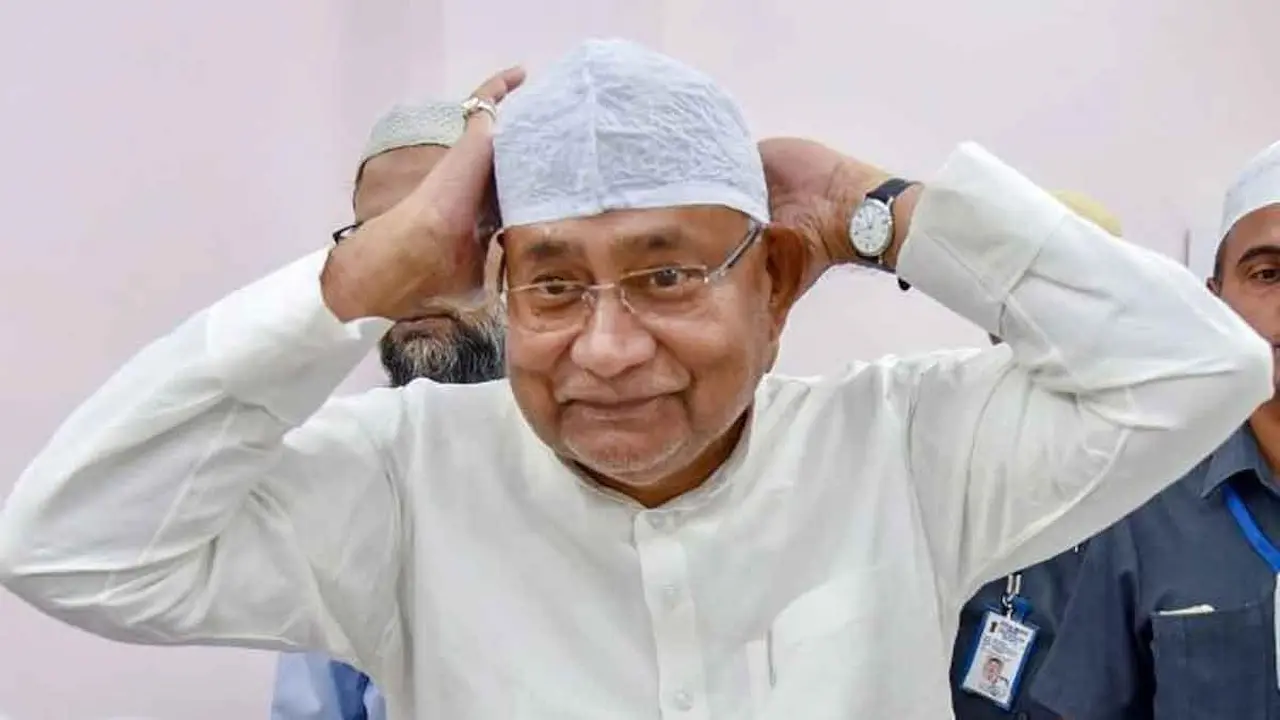
Adding fuel to the fire, the opposition RJD took a jibe at Nitish Kumar by posting a morphed image of him on X (formerly Twitter), dressed in RSS attire, with the caption “RSS certified Chief Minister Cheat-ish Kumar” and the hashtag #WaqfAmendmentBill.

As the political storm intensifies, the JD(U) faces a tough challenge in maintaining its coalition balance while keeping its Muslim vote bank intact.

SC Rejects Plea to Ban Social Media for Children Below 13, Says It’s a Policy Matter

children, social media, ban social media, children below 13
SC Rejects Plea to Ban Social Media for Children Below 13, Says It's a Policy Matter 6

The Supreme Court on Friday refused to entertain a plea seeking a statutory ban on social media usage for children below 13 years, stating that such a decision falls within the domain of policy-making and should be handled by Parliament.

A bench comprising Justices B R Gavai and Augustine George Masih dismissed the plea, telling the petitioner’s counsel, “It is a policy matter. You ask Parliament to enact the law.” The bench ruled that the issue was beyond the judiciary’s jurisdiction and should be addressed by the legislative authorities.

The plea, filed by Zep Foundation, urged the Centre to introduce a robust age verification system, including biometric authentication, to regulate children’s access to social media platforms. It also sought strict penalties for platforms that fail to comply with child protection regulations.

While disposing of the plea, the Supreme Court granted the petitioner liberty to submit a representation to the relevant authorities, directing that it be considered within eight weeks, as per legal guidelines.

Hyderabad University Students End Protest After Supreme Court Blocks Telangana Govt’s Land Plans

Hyderabad University Students, Students Protest, Hunger Strike, Hyderabad Protest
Hyderabad University Students End Protest After Supreme Court Blocks Telangana Govt's Land Plans 8

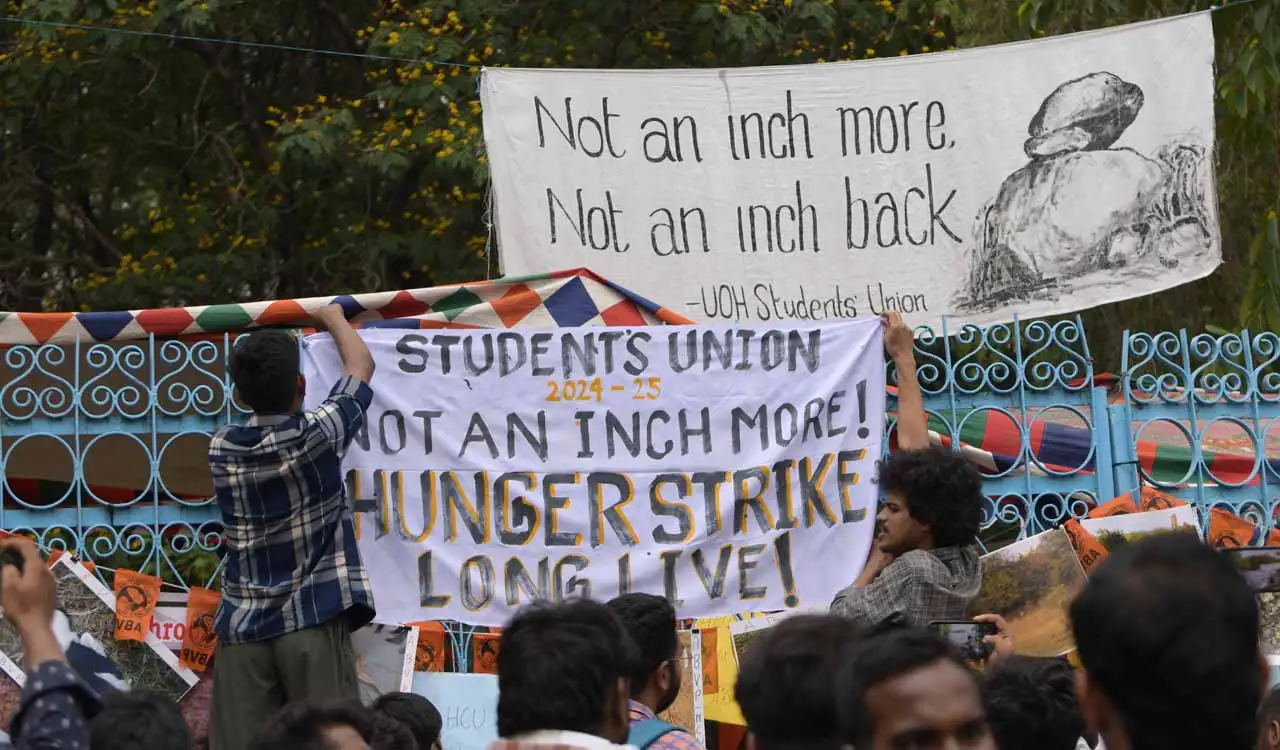
The University of Hyderabad Students’ Union (UoHSU) has called off its indefinite protest and class boycott against the Telangana government’s plan to develop a 400-acre land parcel near the university campus. The decision came after the Supreme Court intervened on Thursday, staying any further activity on the land until further orders.

The protest, which began on April 1, was aimed at halting the government’s project in Kancha Gachibowli, citing ecological concerns. Following the Supreme Court’s stay, students resumed attending classes on Friday, UoHSU Vice President Akash Kumar confirmed.

The Apex Court has also directed the Telangana government to clarify the “compelling urgency” behind clearing a large tree cover on the disputed land. In response, the state government has formed a ministerial committee to engage in discussions with the UoH executive committee, students, civil society groups, and other stakeholders to find a resolution.

While students welcomed the Supreme Court’s ruling, UoH Students’ Union President Umesh Ambedkar vowed to continue the fight until the proposed land auction is scrapped and the entire 400-acre land is officially transferred to the university. Meanwhile, students have also filed a petition in the High Court demanding the withdrawal of police personnel from the university’s East Campus, where the disputed land is located.

Tragic Suicide in Gujarat: Woman Jumps Into Well With Four Children

crime, murder, body, dead body, murder body
Representational Image

A heart-wrenching tragedy unfolded in Gujarat’s Jamnagar district, where a 32-year-old woman allegedly committed suicide along with her four children by jumping into a well, police confirmed on Friday. The incident came to light when villagers discovered the bodies floating in the well on Thursday.

The deceased, identified as Bhanuben Toriya, reportedly took the extreme step along with her children—Ritwik (3), Anandi (4), Aju (8), and Ayush (10)—in Sumra village, Dhrol taluka. Inspector H.R. Rathod of Dhrol police station stated that the bodies have been recovered and sent for post-mortem, but the reason behind the suicide remains unknown.

Authorities have registered a case of accidental death, and investigations are underway to determine the circumstances leading to the tragic incident. The shocking case has sent shockwaves through the community, raising concerns about mental health and socio-economic struggles that may have driven the woman to such a desperate act.

Congress to Challenge Waqf Amendment Bill in Supreme Court, Calls It ‘Assault on Constitution’

mallikarjun kharge, kharge, modi, narendra modi, congress, cong
Congress to Challenge Waqf Amendment Bill in Supreme Court, Calls It 'Assault on Constitution' 11

The Congress has announced its plan to challenge the constitutionality of the Waqf (Amendment) Bill, 2025, in the Supreme Court, just hours after it was passed by Parliament. The party accused the Modi government of pushing an anti-minority agenda and undermining constitutional principles.

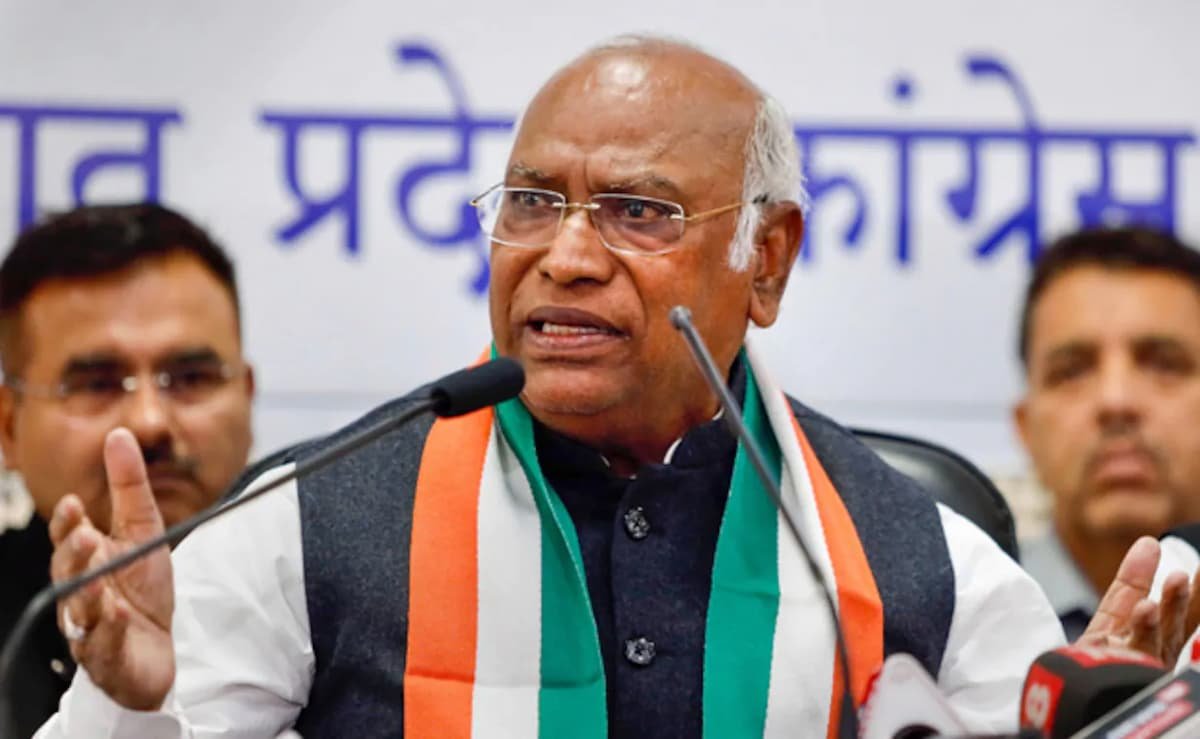
Congress President Mallikarjun Kharge voiced strong opposition, stating that the bill was introduced arbitrarily despite resistance from multiple parties. “The atmosphere in the country regarding the Waqf Board Amendment Bill is such that it feels like this bill has been brought to harass minorities,” Kharge posted on X. He highlighted the narrow vote margin in the Lok Sabha (288 in favor, 232 against) as evidence of its deep flaws.

Congress leader Jairam Ramesh reiterated the party’s stance, confirming that they will “very soon” move the Supreme Court against the bill. “We are confident and will continue to resist all assaults of the Modi government on the principles, provisions, and practices enshrined in the Constitution,” Ramesh said.

The bill, which was passed in the Rajya Sabha (128 votes in favor, 95 against) after a 13-hour heated debate, was fiercely opposed by opposition leaders, who labeled it “anti-Muslim” and “unconstitutional.” However, the government defended the move as a “historic reform” aimed at bringing transparency and accountability to Waqf properties.

The Congress has also been actively challenging other controversial laws in the Supreme Court, including the CAA (2019), amendments to the RTI Act (2005), and changes to the Conduct of Election Rules (2024). The party reaffirmed its commitment to fighting any move that threatens constitutional integrity and minority rights.

With political tensions escalating, the Waqf Amendment Bill is set to become a major legal and electoral battleground, with the Congress gearing up for a high-stakes constitutional fight against the ruling BJP.

Amit Shah Calls Waqf Amendment a ‘Historic End to Injustice’ as Parliament Passes Bill

amit shah, home minister, hm, waqf amendment, waqf bill
Amit Shah Calls Waqf Amendment a 'Historic End to Injustice' as Parliament Passes Bill 13

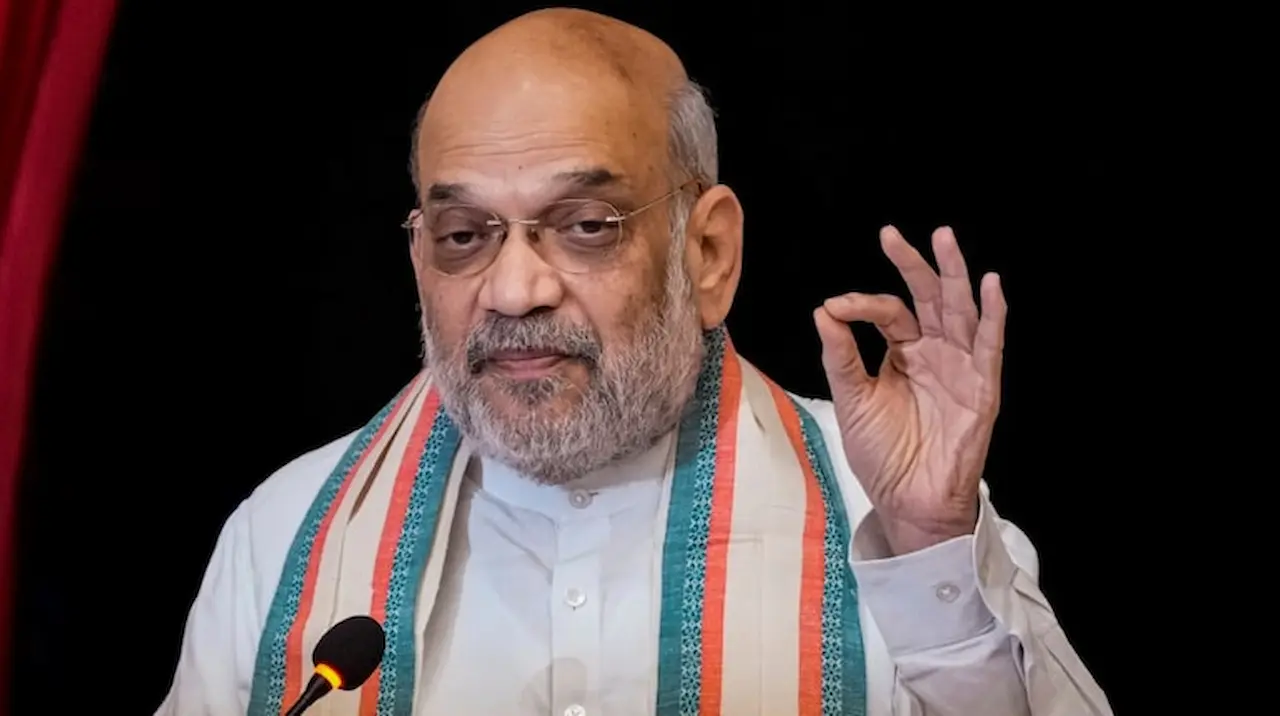
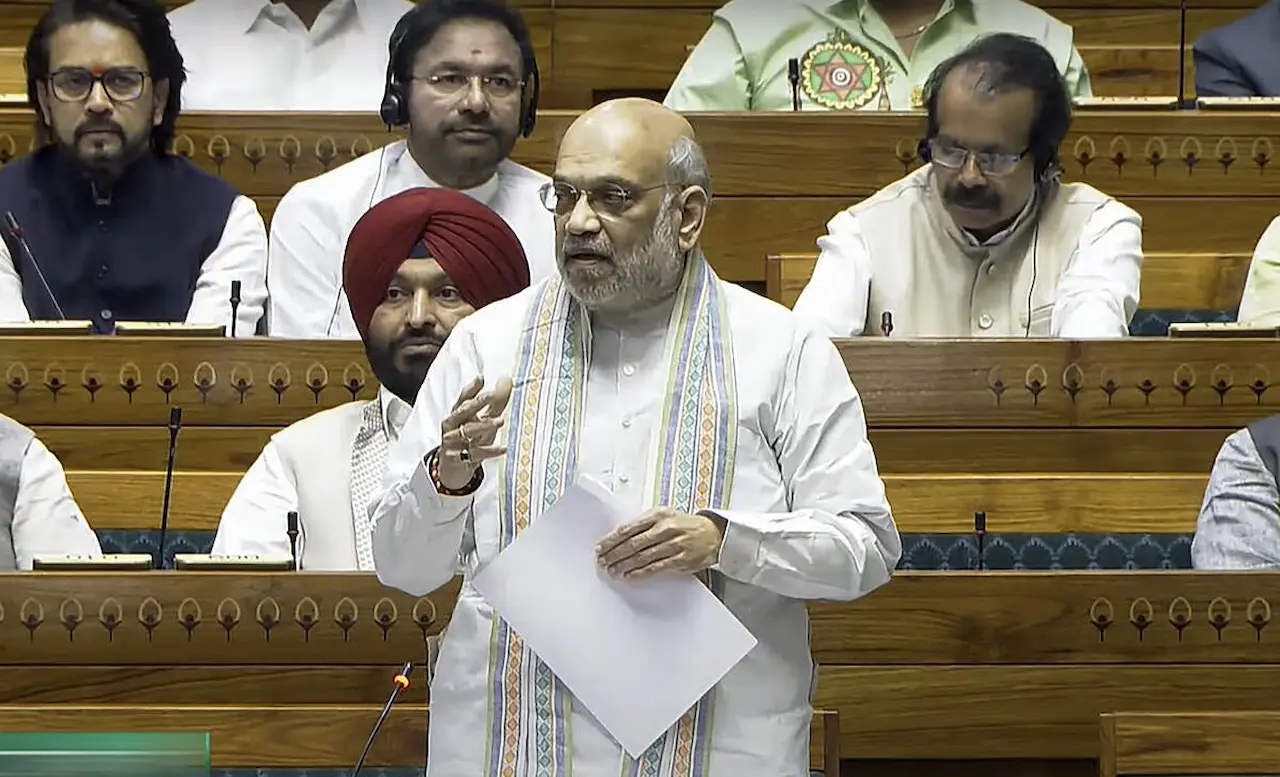
Union Home Minister Amit Shah on Friday hailed the passage of the Waqf (Amendment) Bill, 2025, calling it a historic step that ends “years of injustice and corruption” in the management of Waqf properties. His reaction came hours after the Rajya Sabha cleared the bill, a day after it was passed in the Lok Sabha.

Taking to social media platform X, Shah wrote in Hindi, “Today is a historic day, when Parliament approved the ‘Waqf (Amendment) Bill, 2025’, ending decades of injustice and corruption, and ushering in an era of justice and equality.”

He said the new law will make the Waqf Board and Waqf properties more accountable, transparent, and equitable, benefiting the poor, women, and children of the Muslim community.

Shah congratulated Prime Minister Narendra Modi and Minority Affairs Minister Kiren Rijiju for pushing the bill through and thanked all parties and MPs who supported it.

The bill introduces several reforms, including strengthening of Waqf tribunals, reducing the mandatory contribution by Waqf institutions to boards from 7% to 5%, and mandating audits by state-appointed auditors for institutions earning over ₹1 lakh annually.

By positioning the reform as a long-awaited correction of systemic misuse, the bill is expected to spark political debate, particularly on how it reshapes the governance of religious properties and addresses community-specific concerns.

SC Scraps 25,753 Bengal Teacher Jobs, Calls Mamata Govt’s Hiring ‘Tainted’

mamata banerjee, tmc, trinamool congress, niti aayog, niti aayog meet, budget, budget 2024
SC Scraps 25,753 Bengal Teacher Jobs, Calls Mamata Govt's Hiring 'Tainted' 15

In a massive blow to Mamata Banerjee’s government, the Supreme Court on Thursday scrapped 25,753 teacher and staff appointments in state-run and state-aided schools across West Bengal, ruling that the entire selection process was “vitiated and tainted.” The verdict upholds the Calcutta High Court’s April 22, 2024, ruling, which had earlier annulled the controversial appointments.

A bench led by Chief Justice of India (CJI) Sanjiv Khanna and Justice Sanjay Kumar delivered the decision, emphasizing that while the affected employees will not be required to return their salaries, their appointments stand canceled. The court directed the West Bengal government to conduct a fresh selection process within three months to fill the vacancies.

However, in a rare exception, the bench allowed disabled employees to retain their jobs on humanitarian grounds. The CBI probe into the recruitment scam, which was part of the High Court’s order, will be heard separately on April 4, keeping alive the legal battle surrounding Bengal’s education system.

This verdict further intensifies the political turmoil in West Bengal, where Mamata Banerjee’s Trinamool Congress (TMC) has been facing allegations of corruption and nepotism in job appointments. The ruling also raises serious questions about the credibility of Bengal’s recruitment process, with opposition parties already sharpening their attacks against the TMC leadership.

With thousands of affected employees and an upcoming CBI probe, this judgment could significantly impact the political landscape in West Bengal, just as the 2025 elections loom on the horizon.

Trump Slaps 26% ‘Discounted’ Tariffs on India, Calls Modi ‘Tough but Unfair’

modi, us, donald trump, us tariffs, tariffs, india, trump
Trump Slaps 26% 'Discounted' Tariffs on India, Calls Modi 'Tough but Unfair' 17

In a dramatic policy shift, US President Donald Trump has announced a 26% “discounted reciprocal tariff” on India, slashing by half the 52% levies India imposes on American goods. Declaring April 2, 2025, as “Liberation Day” for American industry, Trump emphasized that his administration was reclaiming America’s economic destiny and putting an end to what he described as decades of foreign exploitation.

Speaking from the Rose Garden at the White House, Trump railed against countries that, according to him, have “looted, pillaged, and plundered” America through unfair trade practices. He accused foreign leaders of stealing US jobs and American industries, stating, “For decades, our country has been ransacked by both friends and foes alike.”

Trump signed an executive order instituting reciprocal tariffs on multiple nations, including India, China, the European Union, Japan, and South Korea. Holding up a chart displaying tariff disparities, he singled out India as “very, very tough”, accusing the country of erecting severe trade barriers against American products.

Referring to Prime Minister Narendra Modi, Trump remarked, “He’s a great friend of mine, but I told him—‘You’re not treating us right.’” He pointed out that while India levies a 52% tariff on American goods, the US has historically imposed almost nothing in return. Justifying his decision, Trump stated, “We charge them almost nothing, and they charge us 52%. That ends today.”

The move follows Modi’s February visit to Washington, where the leaders discussed the $100 billion US-India trade deficit. Trump, who previously labeled India the “tariff king”, insisted that India must agree to a fairer trade deal or face consequences. He accused past administrations of failing to address trade imbalances and vowed to correct them under his leadership.

Trump also took a dig at India’s automotive and motorcycle tariffs, highlighting that the US charges just 2.5% on foreign-made automobiles, while India imposes a 70% duty on American vehicles. “It’s impossible to sell into India because of their extreme tariffs,” he asserted, vowing to change the dynamics of US-India trade.

Despite the aggressive stance, Trump claimed that the US was being “kind” to India, as the new tariffs were only half of what India charges America. He warned that stronger actions could have been taken but were avoided to maintain diplomatic relations.

With the 2025 election cycle in full swing, Trump’s hardline trade stance is expected to be a major talking point. The tariffs are already drawing mixed reactions, with Indian officials expressing concern over escalating trade tensions. As the US-India economic relationship faces its biggest test yet, the world watches to see if this latest move leads to negotiations—or a full-blown trade war.

Lok Sabha Passes Controversial Waqf Bill Amid Fierce Opposition, Sparks Political Firestorm

waqf bill, waqf amendment bill, lok sabha, parliament, waqf bill passed
Lok Sabha Passes Controversial Waqf Bill Amid Fierce Opposition, Sparks Political Firestorm 19

After a heated 12-hour debate, the Lok Sabha passed the Waqf (Amendment) Bill, 2025, early Thursday with 288 votes in favor and 232 against. The ruling NDA government defended the bill as a progressive step for minority welfare, while the opposition labeled it “anti-Muslim” and a direct attack on constitutional rights.

Union Minister Kiren Rijiju strongly refuted claims that minorities were unsafe in India, stating, “There is no place in the world safer than India for minorities.” He emphasized that the bill would unify all minorities, citing overwhelming support from the Christian community. Rijiju added that the bill would streamline Waqf property disputes and provide justice to widows, divorced women, and orphans.

Home Minister Amit Shah accused the opposition of spreading fear and playing vote-bank politics. “It has become a fashion to create fear among minorities. No citizen, regardless of religion, will be harmed under the Modi government,” he asserted. Shah further claimed that the 2013 Waqf law was a last-minute appeasement tactic before the 2014 elections, resulting in 123 prime properties in Delhi being handed over to Waqf just days before polling.

Opposition leaders launched scathing attacks on the bill. Congress MP Gaurav Gogoi called it “an assault on the Constitution, designed to disenfranchise minorities.” AIMIM chief Asaduddin Owaisi protested by tearing a copy of the bill inside Parliament. Rahul Gandhi took to social media, warning that the bill was a weapon aimed at eroding Muslim rights and setting a precedent for future attacks on other communities.

The Samajwadi Party’s Akhilesh Yadav went a step further, declaring the bill would be the BJP’s “Waterloo,” hinting that some NDA allies were unhappy with its passage. Critics also argued that the bill would damage India’s secular image globally.

According to the bill’s provisions, Waqf tribunals will be strengthened, state-sponsored audits will be mandatory for high-earning Waqf institutions, and a centralized portal will track Waqf property management. Additionally, it proposes non-Muslim representation on Waqf boards and restores pre-2013 rules allowing Muslims to dedicate property to Waqf after five years of practice.

While the NDA hails the bill as a landmark reform, the opposition vows to challenge it both legally and politically. With tensions running high, all eyes are now on the Rajya Sabha, where the bill is expected to face another fierce showdown.