BJP's ₹2,500 Aid for Delhi Women Set for Launch, AAP Calls It a Poll Gimmick 2
The BJP government in Delhi is set to roll out its much-awaited Mahila Samriddhi Yojana on March 8, under which women aged 21-60 years with an annual income of up to ₹2.5 lakh will receive ₹2,500 per month, sources confirmed on Thursday.
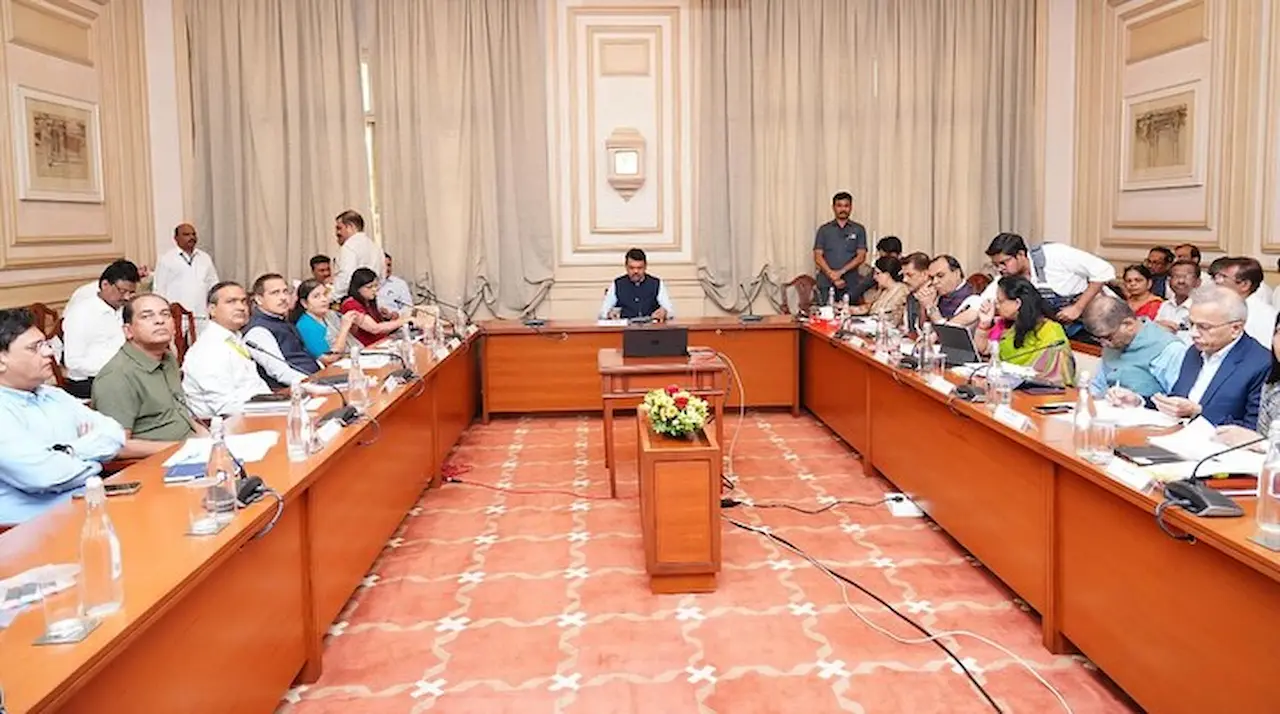
The eligibility criteria were discussed in a high-level meeting attended by the Delhi Chief Secretary, after which officials stated that a draft proposal has been finalized for Cabinet approval. Once cleared, the registration process will commence, enabling thousands of economically weaker women to benefit from the scheme.
The launch event, to be held at Jawaharlal Nehru Stadium on International Women’s Day, will see BJP chief J.P. Nadda, Delhi CM Rekha Gupta, and other senior party leaders overseeing the online registration and symbolic fund transfers to select beneficiaries. The BJP had made this scheme a key poll promise during the Delhi Assembly elections.
However, the AAP has slammed the ruling BJP for the delay in implementation, accusing it of misleading voters. Opposition leaders criticized the government for not approving the scheme in its first Cabinet meeting, despite Prime Minister Narendra Modi’s promise.
AAP MLA Sanjeev Jha led protests across Delhi, vowing to hold the BJP accountable. “We will continue our demonstrations from the streets to the Assembly. The BJP cannot get away with false promises,” he declared. Party leader Rituraj Jha further accused the BJP of betraying women voters, alleging that Modi had assured them that the first installment would be credited by March 8.
Meanwhile, BJP MP Manoj Tiwari assured that the government is working on finalizing the list of beneficiaries and aims to complete the distribution process within one and a half months. With political tensions heating up, all eyes are now on whether the BJP delivers on its ambitious promise—or if it turns into yet another electoral controversy.
Smuggling is not new to India, nor to India’s bustling airports, where customs officials remain ever-vigilant. Gold, the ever-glittering temptation, continues to fuel an underworld economy that thrives on secrecy and betrayal. Many have succumbed to its lure—some caught, some escaping into the shadows. For a while, the spotlight lingers on those who fall, until another name takes their place. Now, the name flashing across headlines is Ranya Rao, a Kannada actress, once seeking the limelight of fame, now illuminated in the harsh glare of crime and disgrace.
She is no seasoned smuggler, no mastermind of a syndicate. She was, perhaps, a mere pawn—one who willingly stepped into a game far bigger than herself. Was it for a momentary thrill, a desperate need, or simply the unquenchable thirst for more? Greed, after all, has no limits. Ranya, a relatively small-time actress, agreed to carry gold, likely under the assurance of safety and impunity. Perhaps she believed she was invincible, protected by unseen hands, by the false comfort of connections. After all, she is the stepdaughter of a high-ranking police officer, Director General of Police (Police Housing Corporation), Ramachandra Rao. Wouldn’t that lineage grant her immunity? Or did it give her the confidence to cross the line, thinking no one would dare question her?
But greed, like karma, is relentless. The walls closed in quickly. Bengaluru’s Kempegowda International Airport, a transit hub that has seen its fair share of illicit gold runs, became the site of her undoing. She had traveled to Dubai four times in just 15 days. A pattern too blatant, too suspicious to ignore. Authorities took note, surveillance was intensified, and an operation was set in motion. When she landed, the trap had already been laid.
Her husband, Jatin Hukkeri, now finds himself entangled in the web. An architect by profession, he had also made multiple trips to Dubai. Was he just an unwitting companion, or did he, too, play a role in this grand deception? Investigators are now digging deeper, searching for links that might lead to something far bigger than a single smuggling attempt. The numbers tell their own story—14.8 kg of gold confiscated, valued at a staggering ₹17.29 crore, one of the largest seizures at this airport in recent years. A cache not meant for personal adornment but for something much larger, much more sinister.
For now, Ranya Rao sits in judicial custody, facing questions she may never fully answer. She claims coercion, that she was forced into it. But forced by whom? Was she truly a victim, or merely playing the victim now that the game has turned against her? She was paid handsomely—₹1 lakh per kilogram, reportedly earning ₹12–13 lakh per trip. How many more such trips had there been before these four? How much gold has already slipped through the cracks of law enforcement? Where did it all go?
Her past now seems like a distant dream. Hailing from Chikmagalur, Karnataka, she pursued engineering before stepping into the glitzy world of cinema. She had worked alongside big names, graced the silver screen, and built a life of comfort. Why, then, did she choose this perilous path? Was it a moment of weakness, the seduction of easy money, or something more? Perhaps, in her mind, the risk never felt real—until it was too late.
And now, as the wheels of law move against her, one cannot help but wonder—will this be the end of her story or the beginning of another chapter? Scandals, after all, have a strange way of reviving careers rather than ruining them. Tomorrow, will she be an outcast or a reality show contestant, profiting from the very disgrace that should have destroyed her? The media buzz surrounding her case has already given her a different kind of fame, and insiders whisper that reality show producers are eyeing her participation. Controversy sells, and in an industry where any publicity is good publicity, Ranya Rao may soon find herself on a stage, narrating her version of events, twisting public sympathy to her advantage.
The larger question remains: Why do people with everything still want more? When does ambition turn into greed, and when does greed cross the line into crime? Ranya Rao’s fall from grace is just another name in an endless list of cautionary tales. But will anyone truly learn, or will another person, blinded by gold and promises, take her place in the cycle of deception?
Babbar Khalsa Terrorist With ISI Links Held in UP; Wanted to Target Maha Kumbh 6
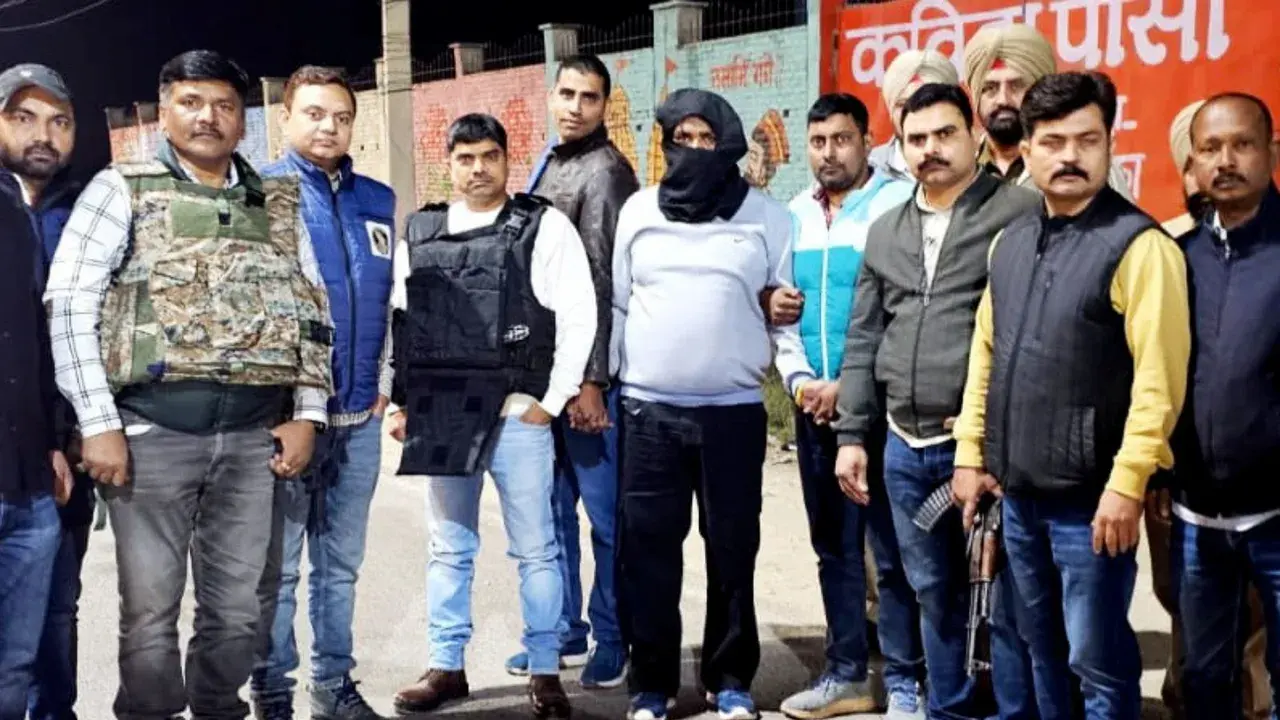
An “active terrorist” of Babbar Khalsa International with alleged links to Pakistan’s ISI, who had planned a terror attack during the Maha Kumbh, was arrested from Kaushambi early Thursday, police said.
The terrorist identified as Lajar Masih was nabbed in a joint operation by the Uttar Pradesh STF and Punjab Police.
Addressing a press conference, Uttar Pradesh Director General of Police (DGP) Prashant Kumar said Masih had planned a major terrorist attack during the Maha Kumbh in Prayagraj.
“However, due to intensive security checks at the religious gathering, he failed to execute his plan,” he said.
The Maha Kumbh was held at Prayagraj from January 13 to February 26.
The DGP said the arrest of the terrorist also verifies smuggling of arms and drugs from Pakistan into India.
Masih, a resident of Kurlian village in Ramdas area of Amritsar, Punjab, was nabbed around 3.20 am.
The operation was carried out in the Kokhraj police station area of Kaushambi, Additional Director General of Police (UP Special Task Force, Law and Order) Amitabh Yash said earlier in the day.
“As per available information, the arrested terrorist works for Swarn Singh alias Jeevan Fauji, the head of the Germany-based module of Babbar Khalsa International (BKI) and is in direct touch with Pakistan-based ISI operatives,” Yash said.
He added the UP STF succeeded in recovering some explosives material and illegal arms from the terrorist.
Among the seizures made are three active hand grenades, two active detonators, one foreign-made pistol and 13 cartridges of foreign make, the officer said.
Besides, a white coloured explosive powder, an Aadhaar card with a Ghaziabad address, one mobile phone without SIM card was also seized from his possession, he said.
“This terrorist had escaped judicial custody in Punjab on September 24, 2024,” the ADG added.
Maharashtra Govt to Track Media 24/7: ₹10 Crore Centre to Monitor News Content 8
The Maharashtra government is set to establish a media monitoring centre to track, analyze, and respond to news content across print, electronic, and digital platforms. With a budget allocation of ₹10 crore, the initiative aims to ensure factual reporting and counter misleading or negative narratives in real time.
According to a government resolution (GR) published on Wednesday, the centre will systematically collect and assess news reports, categorizing them into positive, negative, and neutral segments. Misleading content will be promptly clarified, while negative reports will be addressed expeditiously. The centre will operate daily from 8 AM to 10 PM under the Directorate of Information and Publicity.
A professional consultant, to be hired via an e-tender process, will compile government-related news in a structured PDF format. This data will be sorted by departments, issues, incidents, and individuals. Additionally, electronic media content will be monitored hourly, with alerts provided on trends, mood, and tone.
The consultant’s tenure will initially be for one year, with the option of an extension up to three years if performance is deemed satisfactory. The move comes as the state government seeks to streamline the monitoring of media coverage on its policies and schemes amid the growing influence of digital news platforms.
Centre Plans to Extend Shelter Stay for Domestic Violence Survivors to 10 Days 10
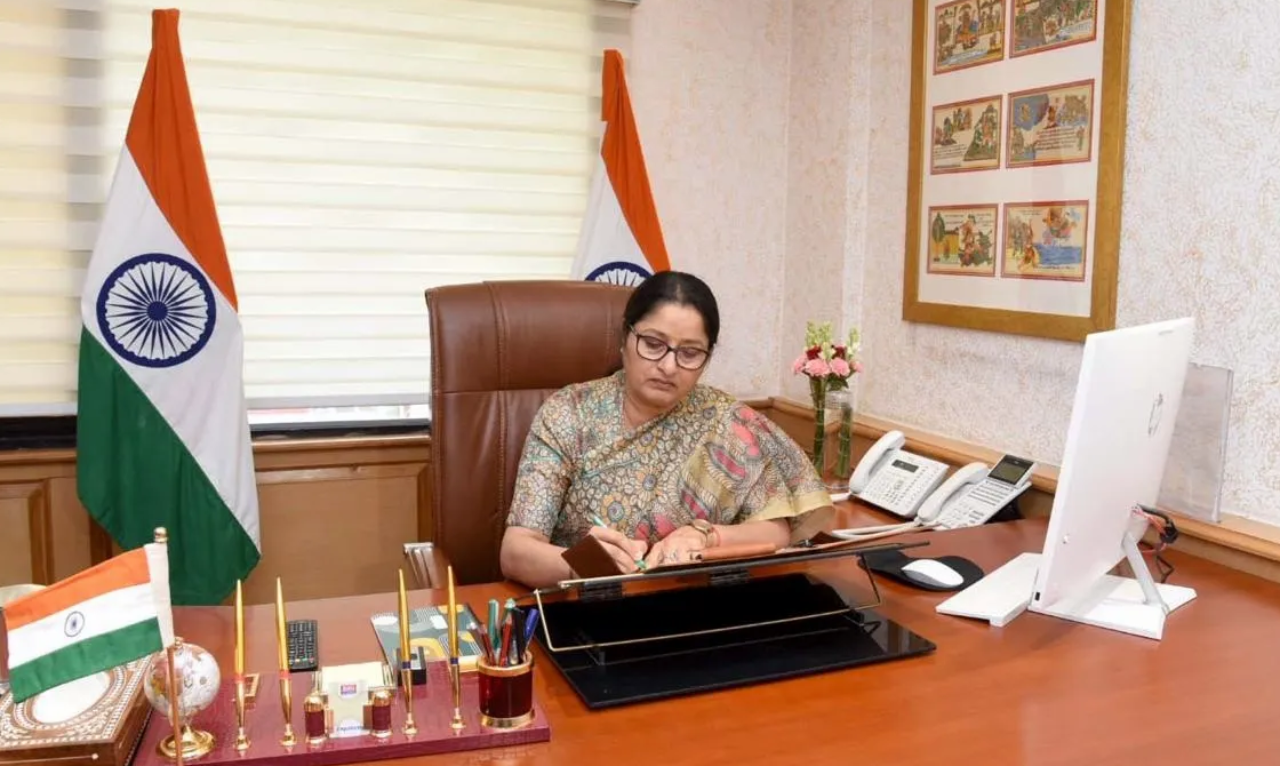
The central government is set to extend the stay duration for domestic violence survivors at One-Stop Centres (OSCs) from the existing five days to ten, with special cases permitting an extension of up to 15 days. Women and Child Development Minister Annapurna Devi confirmed the plan while speaking at an event in New Delhi on Wednesday night.
Currently, OSCs provide temporary shelter for up to five days to women facing violence, including those with daughters of all ages and boys up to eight years old. The proposed extension aims to offer better support and stability to survivors during their recovery. For those needing long-term assistance, OSCs collaborate with Swadhar Greh shelters run by the government or NGOs.
The initiative is part of the government’s broader effort to strengthen support systems for women affected by violence, whether in private, public, or workplace settings. The final decision on the extension is in its concluding stages.
Annapurna Devi, an MP from Jharkhand’s Koderma, made the announcement while hosting a dinner for women panchayat leaders and sarpanchs from Jharkhand, who are in the national capital for International Women’s Day celebrations. She lauded their contributions, emphasizing that recognizing their efforts is crucial in the journey from women’s development to women-led development.
Rahul Gandhi Fined for Skipping Court in Savarkar Defamation Case 12
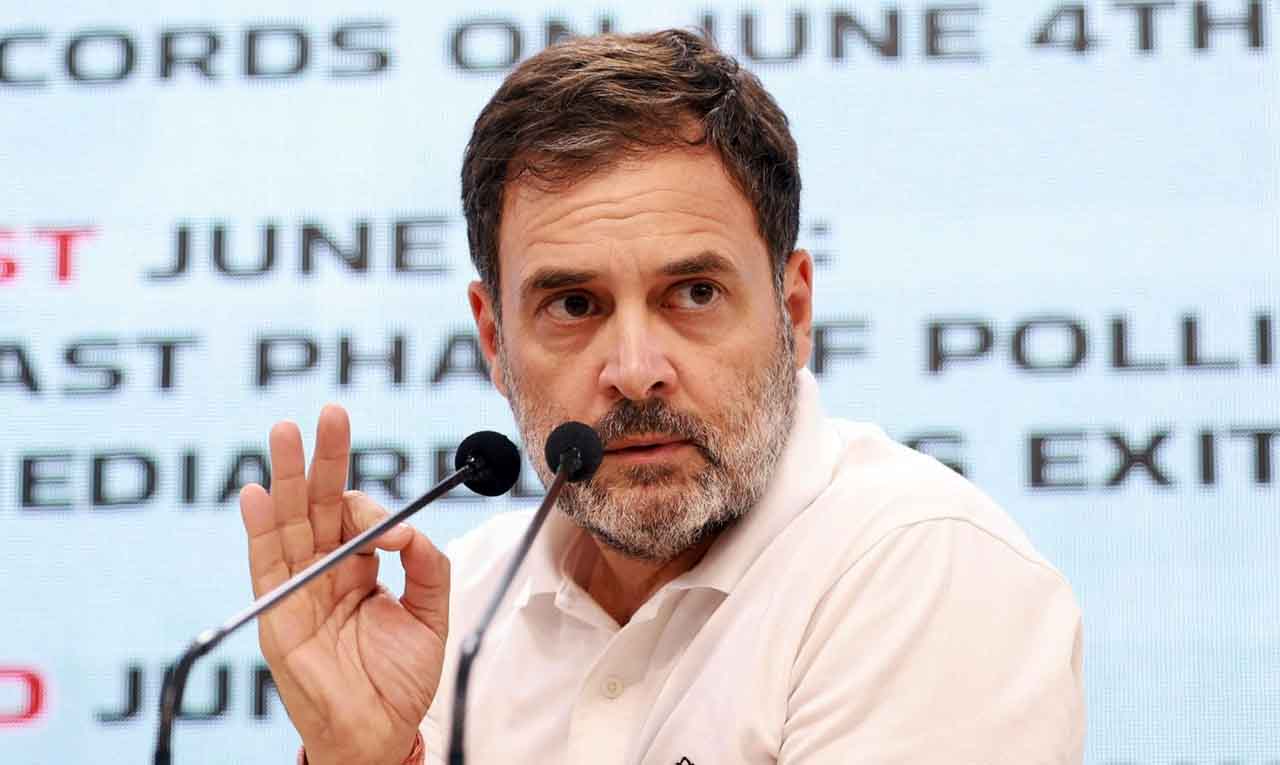
A Lucknow court on Wednesday imposed a ₹200 cost on Leader of Opposition in Lok Sabha Rahul Gandhi for failing to appear in a 2022 defamation case related to his alleged derogatory remarks about freedom fighter Vinayak Damodar Savarkar.
Additional Chief Judicial Magistrate Alok Verma had earlier directed Gandhi to appear in court on March 6. However, his legal team submitted an application seeking an exemption, citing his official engagements, including meetings with foreign dignitaries and other scheduled programs.
The court imposed a ₹200 penalty, directing that the amount be paid to the complainant’s lawyer. The next hearing is scheduled for April 14.
The case originated from Gandhi’s remarks on Savarkar made during his Bharat Jodo Yatra rally in Maharashtra’s Akola district on November 17, 2022. Advocate Nripendra Pandey filed the complaint, accusing Gandhi of deliberately insulting Savarkar. The complainant further alleged that the remarks were part of a calculated effort to defame Savarkar and were widely broadcast across the media.
While Gandhi’s legal team maintains that his absence was due to unavoidable political responsibilities, the case continues to stir political tensions, reigniting the long-standing controversy over Savarkar’s legacy in Indian politics.
BJP-backed candidates have secured two out of three MLC seats in Telangana, delivering a major setback to the ruling Congress. The elections, held on February 27, saw Ch Anji Reddy, supported by the BJP, defeat Congress candidate Narender Reddy by over 5,000 votes in the Medak-Nizamabad-Adilabad-Karimnagar Graduates’ constituency. The result was announced early Thursday morning.
Elections were conducted using a preferential ballot system for the Medak-Nizamabad-Adilabad-Karimnagar Graduates’ and Teachers’ constituencies, along with the Warangal-Khammam-Nalgonda Teachers’ constituency. Counting, which began on Monday, was a lengthy process due to vote segregation and preference-based tabulation.
Malka Komaraiah, another BJP-supported candidate, won the Medak-Nizamabad-Adilabad-Karimnagar Teachers’ constituency, while independent candidate Sripal Reddy Pingili, backed by a teachers’ union, claimed victory in the Warangal-Khammam-Nalgonda Teachers’ constituency. Results for the two Teachers’ constituencies were declared late Monday.
The BJP’s triumph in two MLC seats serves as a significant morale boost for the party in Telangana. While BJP fielded candidates for all three seats, Congress only contested the Graduates’ constituency, and the BRS refrained from participating. The saffron party deployed top leaders, including Union Ministers G Kishan Reddy and Bandi Sanjay Kumar, for an aggressive campaign, while Congress saw Chief Minister A Revanth Reddy and state party president B Mahesh Kumar Goud canvassing for their candidate.
Reacting to the victory, Union Coal Minister and Telangana BJP chief G Kishan Reddy declared it a triumph for the state’s youth and teachers, claiming they rejected Congress due to its governance failures. “Despite deploying its ministers, MLAs, MPs, and heavy spending, Congress lost the Karimnagar Graduate seat. This result is a clear message to Congress, which came to power by making false promises,” Reddy posted on X.
BJP secures 2 out of the 3 MLC seats, Karimnagar-Nizamabad-Adilabad-Medak (Graduate) and Medak-Karimnagar-Adilabad-Nizamabad (Teachers'), with a commanding margin.… pic.twitter.com/x7IPBCMbDj
With the elections covering 13 districts, 43 Assembly constituencies, six parliamentary constituencies, and 270 mandals, BJP leaders assert that the win signals the party’s growing strength in Telangana. Reddy credited the victory to the “developmental politics of BJP” and the leadership of Prime Minister Narendra Modi.
Meanwhile, Union Minister of State for Home Bandi Sanjay Kumar took a dig at Congress leader Rahul Gandhi, who has previously raised concerns about electronic voting machines (EVMs). “This election used ballot papers, so what excuse does Rahul Gandhi have now?” he remarked late Wednesday night. He also alleged that the result was a lesson for Congress for favoring a particular section of society.
Adding to the controversy, a statement from his office described the BJP’s victory as a “Ramzan gift” given by Hindu society to Congress—an assertion that is likely to spark political outrage. The results mark a turning point in Telangana’s political landscape as BJP eyes a stronger foothold in the state.
BMC's Blanket Ban on Road Digging Sparks Debate: Will It Solve Mumbai's Infrastructure Woes? 16
The Brihanmumbai Municipal Corporation (BMC) has imposed a blanket ban on digging newly paved roads across Mumbai, directing civic officials to ensure all road concretisation projects are completed by May 31. This move, announced on Wednesday, aims to curb the frequent excavation of roads, a major source of inconvenience for citizens.
According to an official release, civic commissioner and state-appointed administrator Bhushan Gagrani has issued stringent directives regarding roadworks. Once a road is constructed, no further digging or trenching will be permitted under any circumstances. Additionally, no new roads will be dug for concretisation, reinforcing BMC’s commitment to streamlining Mumbai’s road infrastructure.
The civic body has already issued work orders for cement concretisation of 324 km (covering 698 roads) in the island city and 377 km (1,420 roads) in Mumbai’s eastern and western suburbs. BMC aims to complete 75% of these projects in the first phase, setting an ambitious deadline to avoid further disruption.
“To minimize inconvenience to citizens, excavation of new roads has been prohibited after February 22. All ongoing roadworks and related tasks must be completed by May 31,” the BMC stated in its release.
Sources within the civic body reveal that the decision comes in response to growing complaints from citizens and activists about newly built roads being frequently dug up, leading to perpetual congestion and poor road conditions. While the ban is being hailed as a decisive step towards better urban planning, some critics question whether it will effectively address Mumbai’s infrastructure problems or merely create new bureaucratic roadblocks.
Sambhaji Maharaj: A Legacy of Valor, Controversy, and Modern Discourse 18
When the film Chaava, based on the life of Sambhaji Maharaj, was released, it resonated deeply with the public. This cinematic portrayal of the second ruler of the Maratha Empire stirred powerful emotions, particularly because of the haunting depiction of his brutal death. The film, an adaptation of Shivaji Sawant’s Marathi novel Chhava, directed by Laxman Utekar and produced by Dinesh Vijan under Maddock Films, left many viewers distraught. The final scenes, in which Sambhaji was shown enduring unimaginable torture before his execution, proved to be especially heartbreaking. Prior to this movie, the historical figure of Sambhaji was relegated to the pages of obscure articles and Wikipedia updates, with few truly engaging with his complex legacy. However, the release of the film catapulted him into the limelight, transforming him into a political symbol. In fact, the Maharashtra government, now embroiled in the controversy surrounding his portrayal, raised objections against certain aspects of his biography on Wikipedia, questioning the accuracy and fairness of the portrayal.
Sambhaji’s life, marked by triumphs and tragedies, was not merely one of royal ascent but also one of hardship and political struggle. Born at Purandar Fort to Chhatrapati Shivaji Maharaj and his first wife Saibai, he lost his mother at a tender age and was subsequently raised by his grandmother Jijabai. At the age of nine, he was sent to live with Raja Jai Singh of Amber as part of a political arrangement that ensured the Maratha’s compliance with the Treaty of Purandar, signed by Shivaji with the Mughals in 1665. This agreement also saw young Sambhaji enter the Mughal fold as a mansabdar, a title that bound him to the Mughal Empire. Despite this early submission, Sambhaji’s life would be anything but ordinary. In 1666, he, along with his father Shivaji, was summoned to the Mughal court at Agra. The emperor, Aurangzeb, put them under house arrest, but the pair managed a daring escape two months later. This episode marked the beginning of a fraught relationship between the Marathas and the Mughal Empire, one that would persist for decades.
Upon Shivaji Maharaj’s death in 1680, the political landscape of the Maratha Empire was thrown into turmoil. While some of Shivaji’s ministers schemed to place his half-brother Rajaram on the throne, Sambhaji was not one to passively accept such attempts. Instead, he acted swiftly, seizing control of the crucial forts at Panhala and Raigad, and on 20th July 1680, he was crowned Chhatrapati. His reign was soon marked by military campaigns against several neighboring kingdoms. The Marathas, under his leadership, engaged in frequent skirmishes with the Mughals, starting with an attack on Burhanpur. In addition, Sambhaji fought against the Siddis of Janjira and the Portuguese in Goa, establishing his authority as a formidable leader. The alliance with the English in 1684, aimed at acquiring vital weapons and gunpowder, was a pragmatic move in the face of escalating conflict.
However, not all of Sambhaji’s military ventures met with success. The Battle of Wai in 1687, fought in the dense forests of Wai and Mahabaleshwar, ended in a victory over the Mughals, but it came at a high cost. The Marathas lost their commander-in-chief, Hambirao Mohite, a blow from which their military position struggled to recover. In the aftermath of this setback, Sambhaji’s authority was increasingly questioned, not just by his enemies but by members of his own court and family. Political conspiracies festered in the shadows, and his position became increasingly precarious.
The turning point came in 1689, when Sambhaji was betrayed and captured by the Mughals at Sangameshwar, along with 25 of his trusted counselors. Among them was his close confidant, the poet Kavi Kalash. They were taken to Bahadurgad, where they endured inhuman torture. The Mughals, determined to break his spirit, subjected him to unspeakable cruelty before executing him by beheading at Tulapur on 11th March 1689. With his death, the Maratha throne passed to his brother Rajaram, marking the end of a turbulent chapter in Maratha history.
Yet, the complexities of Sambhaji’s reign and character have remained subjects of debate among historians. Accounts of his life are often at odds, shaped by conflicting political allegiances. While some sources emphasize his ruthlessness and perceived failings, others argue that such portrayals are biased, written by those who opposed his rule. Some have suggested that Sambhaji’s behavior, including his alleged indulgence in sensual pleasures, led his father, Shivaji, to imprison him in 1678 at Panhala. The reasons for this imprisonment remain murky, with one theory pointing to a scandal involving a Brahmin’s wife. Even so, these narratives remain contentious, and many historians, such as Stewart N. Gordon, suggest that Shivaji may have intentionally sought to divide his empire between his two sons, with Sambhaji receiving the newly conquered territories of Karnataka and coastal Gingee, while Rajaram would govern the heartlands of Maharashtra. This division, they argue, could have led to Sambhaji’s dissatisfaction and eventual alignment with Diler Khan, a Mughal general, in a bid for power. However, the relationship between Sambhaji and Diler Khan quickly soured, leading to his return to the Maratha fold.
In recent years, even as history continues to be reinterpreted, Sambhaji’s legacy remains contentious, symbolizing both valor and controversy. The Wikipedia page that once chronicled his life with dry historical facts has now become the focal point of political debate. The Maharashtra government’s objection to certain controversial aspects of his portrayal reveals the contemporary tensions surrounding his image. Where once the figure of Sambhaji was relegated to the annals of history, it is now caught in the web of modern political discourse, a symbol of the enduring struggle between historical narratives and contemporary politics. As the echoes of Chaava reverberate through the collective consciousness, the Maratha ruler’s legacy continues to evoke a complex blend of admiration, resentment, and unhealed wounds—both from the past and the present.
Shiv Sena (UBT) Stakes Claim for LoP Post, Snubs Power-Sharing with NCP (SP) 20
In a bold political move, Shiv Sena (UBT) has formally staked its claim for the Leader of Opposition (LoP) post in the Maharashtra Assembly, rejecting any power-sharing arrangement with NCP (Sharad Pawar faction). The party has put forward Bhaskar Jadhav as its candidate for the position, signaling a fresh power struggle within the Maha Vikas Aghadi (MVA) alliance.
A delegation led by Uddhav Thackeray met Assembly Speaker Rahul Narwekar on Tuesday and submitted a letter demanding the post. However, sources suggest that Shiv Sena (UBT) was hesitant to officially stake its claim unless it received assurances from the ruling BJP, raising speculation about behind-the-scenes political maneuvering.
Before meeting the Speaker, Thackeray held discussions with NCP state unit chief Jayant Patil and party leader Jitendra Awhad, notably without any Congress representation. However, Congress leader Nana Patole later clarified that his party had no objections to Shiv Sena’s demand but expressed interest in securing the Leader of Opposition post in the Legislative Council, currently held by Sena leader Ambadas Danve. Shiv Sena (UBT) has yet to respond to this request.
The demand comes amid uncertainty over the rules governing LoP appointments, with the legislature secretariat clarifying that the Speaker holds discretionary powers in the matter. With political equations shifting, all eyes are now on the BJP and Speaker Narwekar, especially as tensions persist between the Eknath Shinde-led Shiv Sena and its allies. Meanwhile, Uddhav Thackeray’s faction appears to be strategically warming up to the BJP-led Mahayuti, adding a fresh twist to the state’s evolving political landscape.