BMC's Blanket Ban on Road Digging Sparks Debate: Will It Solve Mumbai's Infrastructure Woes? 2
The Brihanmumbai Municipal Corporation (BMC) has imposed a blanket ban on digging newly paved roads across Mumbai, directing civic officials to ensure all road concretisation projects are completed by May 31. This move, announced on Wednesday, aims to curb the frequent excavation of roads, a major source of inconvenience for citizens.
According to an official release, civic commissioner and state-appointed administrator Bhushan Gagrani has issued stringent directives regarding roadworks. Once a road is constructed, no further digging or trenching will be permitted under any circumstances. Additionally, no new roads will be dug for concretisation, reinforcing BMC’s commitment to streamlining Mumbai’s road infrastructure.
The civic body has already issued work orders for cement concretisation of 324 km (covering 698 roads) in the island city and 377 km (1,420 roads) in Mumbai’s eastern and western suburbs. BMC aims to complete 75% of these projects in the first phase, setting an ambitious deadline to avoid further disruption.
“To minimize inconvenience to citizens, excavation of new roads has been prohibited after February 22. All ongoing roadworks and related tasks must be completed by May 31,” the BMC stated in its release.
Sources within the civic body reveal that the decision comes in response to growing complaints from citizens and activists about newly built roads being frequently dug up, leading to perpetual congestion and poor road conditions. While the ban is being hailed as a decisive step towards better urban planning, some critics question whether it will effectively address Mumbai’s infrastructure problems or merely create new bureaucratic roadblocks.
Sambhaji Maharaj: A Legacy of Valor, Controversy, and Modern Discourse 4
When the film Chaava, based on the life of Sambhaji Maharaj, was released, it resonated deeply with the public. This cinematic portrayal of the second ruler of the Maratha Empire stirred powerful emotions, particularly because of the haunting depiction of his brutal death. The film, an adaptation of Shivaji Sawant’s Marathi novel Chhava, directed by Laxman Utekar and produced by Dinesh Vijan under Maddock Films, left many viewers distraught. The final scenes, in which Sambhaji was shown enduring unimaginable torture before his execution, proved to be especially heartbreaking. Prior to this movie, the historical figure of Sambhaji was relegated to the pages of obscure articles and Wikipedia updates, with few truly engaging with his complex legacy. However, the release of the film catapulted him into the limelight, transforming him into a political symbol. In fact, the Maharashtra government, now embroiled in the controversy surrounding his portrayal, raised objections against certain aspects of his biography on Wikipedia, questioning the accuracy and fairness of the portrayal.
Sambhaji’s life, marked by triumphs and tragedies, was not merely one of royal ascent but also one of hardship and political struggle. Born at Purandar Fort to Chhatrapati Shivaji Maharaj and his first wife Saibai, he lost his mother at a tender age and was subsequently raised by his grandmother Jijabai. At the age of nine, he was sent to live with Raja Jai Singh of Amber as part of a political arrangement that ensured the Maratha’s compliance with the Treaty of Purandar, signed by Shivaji with the Mughals in 1665. This agreement also saw young Sambhaji enter the Mughal fold as a mansabdar, a title that bound him to the Mughal Empire. Despite this early submission, Sambhaji’s life would be anything but ordinary. In 1666, he, along with his father Shivaji, was summoned to the Mughal court at Agra. The emperor, Aurangzeb, put them under house arrest, but the pair managed a daring escape two months later. This episode marked the beginning of a fraught relationship between the Marathas and the Mughal Empire, one that would persist for decades.
Upon Shivaji Maharaj’s death in 1680, the political landscape of the Maratha Empire was thrown into turmoil. While some of Shivaji’s ministers schemed to place his half-brother Rajaram on the throne, Sambhaji was not one to passively accept such attempts. Instead, he acted swiftly, seizing control of the crucial forts at Panhala and Raigad, and on 20th July 1680, he was crowned Chhatrapati. His reign was soon marked by military campaigns against several neighboring kingdoms. The Marathas, under his leadership, engaged in frequent skirmishes with the Mughals, starting with an attack on Burhanpur. In addition, Sambhaji fought against the Siddis of Janjira and the Portuguese in Goa, establishing his authority as a formidable leader. The alliance with the English in 1684, aimed at acquiring vital weapons and gunpowder, was a pragmatic move in the face of escalating conflict.
However, not all of Sambhaji’s military ventures met with success. The Battle of Wai in 1687, fought in the dense forests of Wai and Mahabaleshwar, ended in a victory over the Mughals, but it came at a high cost. The Marathas lost their commander-in-chief, Hambirao Mohite, a blow from which their military position struggled to recover. In the aftermath of this setback, Sambhaji’s authority was increasingly questioned, not just by his enemies but by members of his own court and family. Political conspiracies festered in the shadows, and his position became increasingly precarious.
The turning point came in 1689, when Sambhaji was betrayed and captured by the Mughals at Sangameshwar, along with 25 of his trusted counselors. Among them was his close confidant, the poet Kavi Kalash. They were taken to Bahadurgad, where they endured inhuman torture. The Mughals, determined to break his spirit, subjected him to unspeakable cruelty before executing him by beheading at Tulapur on 11th March 1689. With his death, the Maratha throne passed to his brother Rajaram, marking the end of a turbulent chapter in Maratha history.
Yet, the complexities of Sambhaji’s reign and character have remained subjects of debate among historians. Accounts of his life are often at odds, shaped by conflicting political allegiances. While some sources emphasize his ruthlessness and perceived failings, others argue that such portrayals are biased, written by those who opposed his rule. Some have suggested that Sambhaji’s behavior, including his alleged indulgence in sensual pleasures, led his father, Shivaji, to imprison him in 1678 at Panhala. The reasons for this imprisonment remain murky, with one theory pointing to a scandal involving a Brahmin’s wife. Even so, these narratives remain contentious, and many historians, such as Stewart N. Gordon, suggest that Shivaji may have intentionally sought to divide his empire between his two sons, with Sambhaji receiving the newly conquered territories of Karnataka and coastal Gingee, while Rajaram would govern the heartlands of Maharashtra. This division, they argue, could have led to Sambhaji’s dissatisfaction and eventual alignment with Diler Khan, a Mughal general, in a bid for power. However, the relationship between Sambhaji and Diler Khan quickly soured, leading to his return to the Maratha fold.
In recent years, even as history continues to be reinterpreted, Sambhaji’s legacy remains contentious, symbolizing both valor and controversy. The Wikipedia page that once chronicled his life with dry historical facts has now become the focal point of political debate. The Maharashtra government’s objection to certain controversial aspects of his portrayal reveals the contemporary tensions surrounding his image. Where once the figure of Sambhaji was relegated to the annals of history, it is now caught in the web of modern political discourse, a symbol of the enduring struggle between historical narratives and contemporary politics. As the echoes of Chaava reverberate through the collective consciousness, the Maratha ruler’s legacy continues to evoke a complex blend of admiration, resentment, and unhealed wounds—both from the past and the present.
Shiv Sena (UBT) Stakes Claim for LoP Post, Snubs Power-Sharing with NCP (SP) 6
In a bold political move, Shiv Sena (UBT) has formally staked its claim for the Leader of Opposition (LoP) post in the Maharashtra Assembly, rejecting any power-sharing arrangement with NCP (Sharad Pawar faction). The party has put forward Bhaskar Jadhav as its candidate for the position, signaling a fresh power struggle within the Maha Vikas Aghadi (MVA) alliance.
A delegation led by Uddhav Thackeray met Assembly Speaker Rahul Narwekar on Tuesday and submitted a letter demanding the post. However, sources suggest that Shiv Sena (UBT) was hesitant to officially stake its claim unless it received assurances from the ruling BJP, raising speculation about behind-the-scenes political maneuvering.
Before meeting the Speaker, Thackeray held discussions with NCP state unit chief Jayant Patil and party leader Jitendra Awhad, notably without any Congress representation. However, Congress leader Nana Patole later clarified that his party had no objections to Shiv Sena’s demand but expressed interest in securing the Leader of Opposition post in the Legislative Council, currently held by Sena leader Ambadas Danve. Shiv Sena (UBT) has yet to respond to this request.
The demand comes amid uncertainty over the rules governing LoP appointments, with the legislature secretariat clarifying that the Speaker holds discretionary powers in the matter. With political equations shifting, all eyes are now on the BJP and Speaker Narwekar, especially as tensions persist between the Eknath Shinde-led Shiv Sena and its allies. Meanwhile, Uddhav Thackeray’s faction appears to be strategically warming up to the BJP-led Mahayuti, adding a fresh twist to the state’s evolving political landscape.
Trump Declares Trade War: Reciprocal Tariffs on India and China from April 2 8
US President Donald Trump has launched a fresh offensive against India, China, and other countries, accusing them of imposing unfair tariffs on American goods. Declaring that the US has been “ripped off for decades,” Trump announced that reciprocal tariffs will take effect from April 2, ensuring that foreign nations imposing high tariffs on US exports will face equal levies on their goods entering the US.
In his first address to Congress since securing a second term, Trump criticized the European Union, China, Brazil, India, Mexico, and Canada, stating they charge the US “tremendously higher tariffs” than what America levies in return. “It’s very unfair,” Trump asserted, emphasizing that the US must retaliate.
Targeting India, he pointed out that the country imposes auto tariffs exceeding 100%, labeling it as “unacceptable.” He reiterated his stance from February, stating that he had warned Prime Minister Narendra Modi that India would not be exempt from these measures.
Trump further condemned China’s and South Korea’s trade policies, stating that China’s average tariff on US products is twice as high as America’s, while South Korea’s is four times higher despite receiving significant US military aid.
“We will impose the exact same tariffs they impose on us. If they use non-monetary barriers to block our products, we will do the same to them,” Trump declared. Promising that these measures will generate “trillions and trillions of dollars” and create jobs, he boasted about successfully implementing similar strategies against China in his previous term.
Slamming past administrations for failing to act, Trump concluded, “We have been ripped off for decades by nearly every country on Earth, and we will not let that happen any longer.”
Trump Freezes Ukraine Military Aid After Oval Office Clash with Zelenskyy 10
US President Donald Trump has abruptly suspended all US military aid to Ukraine, an order that takes effect immediately, cutting off more than $1 billion in arms and ammunition that were in the pipeline. The decision follows a dramatic Oval Office standoff with Ukrainian President Volodymyr Zelenskyy, marking a critical turning point in US-Ukraine relations.
According to The New York Times, a senior administration official revealed that the aid freeze resulted from a series of high-level White House meetings. The suspension will remain in place until Ukraine demonstrates a commitment to peace negotiations with Russia, the official stated. The freeze also halts hundreds of millions of dollars under the Ukraine Security Assistance Initiative, which allows Kyiv to purchase US-made military hardware.
Since Russia’s invasion of Ukraine on February 24, 2022, Washington has provided nearly $65.9 billion in military aid, and $69.2 billion since Russia’s initial aggression in 2014. The sudden aid halt deals a massive blow to Ukraine as it enters its third year of war with Russia.
The move comes just days after a heated public clash between Trump, Vice President J.D. Vance, and Zelenskyy at the White House. Zelenskyy, who had arrived to sign a rare minerals deal, faced sharp criticism from Trump and Vance during a tense 50-minute press conference.
At one point, Vance rebuked Zelenskyy, saying, “It’s disrespectful for you to come to the Oval Office and try to litigate this in front of the American media… you should be thanking the president.” Trump followed up with a warning: “You’re gambling with World War Three. What you’re doing is very disrespectful to this country, which has backed you far more than many believe it should.”
As Trump and Vance accused Zelenskyy of lacking gratitude for US support, European leaders and global figures rallied behind Ukraine on social media, reaffirming their solidarity with Kyiv. In response, Zelenskyy simply replied: “Thank you for your support.”
The Supreme Court has granted permission to podcaster Ranveer Allahbadia, popularly known as BeerBiceps, to resume his podcast, “The Ranveer Show”, with strict conditions ensuring content remains suitable for all age groups. The decision came after a bench of Justices Surya Kant and N Kotiswar Singh considered Allahbadia’s submission that the podcast was his sole source of livelihood, employing nearly 280 individuals.
The court modified its February 18 order, which had barred Allahbadia from airing any content on YouTube or other digital platforms. However, it required him to furnish an undertaking to uphold decency and morality in his shows. The bench took exception to articles criticizing the earlier ban, asserting that fundamental rights are not absolute and come with duties. Justice Surya Kant remarked, “We know how to handle those who misuse free speech.”
Allahbadia faces multiple FIRs over his controversial remarks on Samay Raina’s YouTube show, “India’s Got Latent”, which authorities deemed vulgar and perverse. While the SC extended interim protection from arrest, it restricted him from discussing sub-judice matters on his podcast. His request for travel abroad will only be considered upon full cooperation with the Guwahati investigation.
During the hearing, Solicitor General Tushar Mehta urged the court to maintain restrictions, stating, “Let him remain silent for some time.” The SC also criticized another accused who fled to Canada and made public remarks about the case. The court warned, “These youngsters think they are oversmart. We hope they behave responsibly, or we know how to deal with them.”
The bench expanded the scope of the case, directing the Centre to draft a social media content regulation framework that balances free speech with moral responsibility under Article 19(4). The draft will be open for public consultation before any legislative or judicial intervention.
Allahbadia’s plea was heard alongside YouTuber Ashish Chanchlani’s request to club multiple FIRs related to the controversy. On February 18, the SC had slammed Allahbadia’s remarks as “vulgar”, stating that his “dirty mind” brought shame to society. Alongside Allahbadia and Samay Raina, comics Chanchlani, Jaspreet Singh, and Apoorva Makhija are also named in the Assam FIR.
FIR Against Abu Azmi Over Aurangzeb Remarks: 'He Has No Right to Stay in India' 14
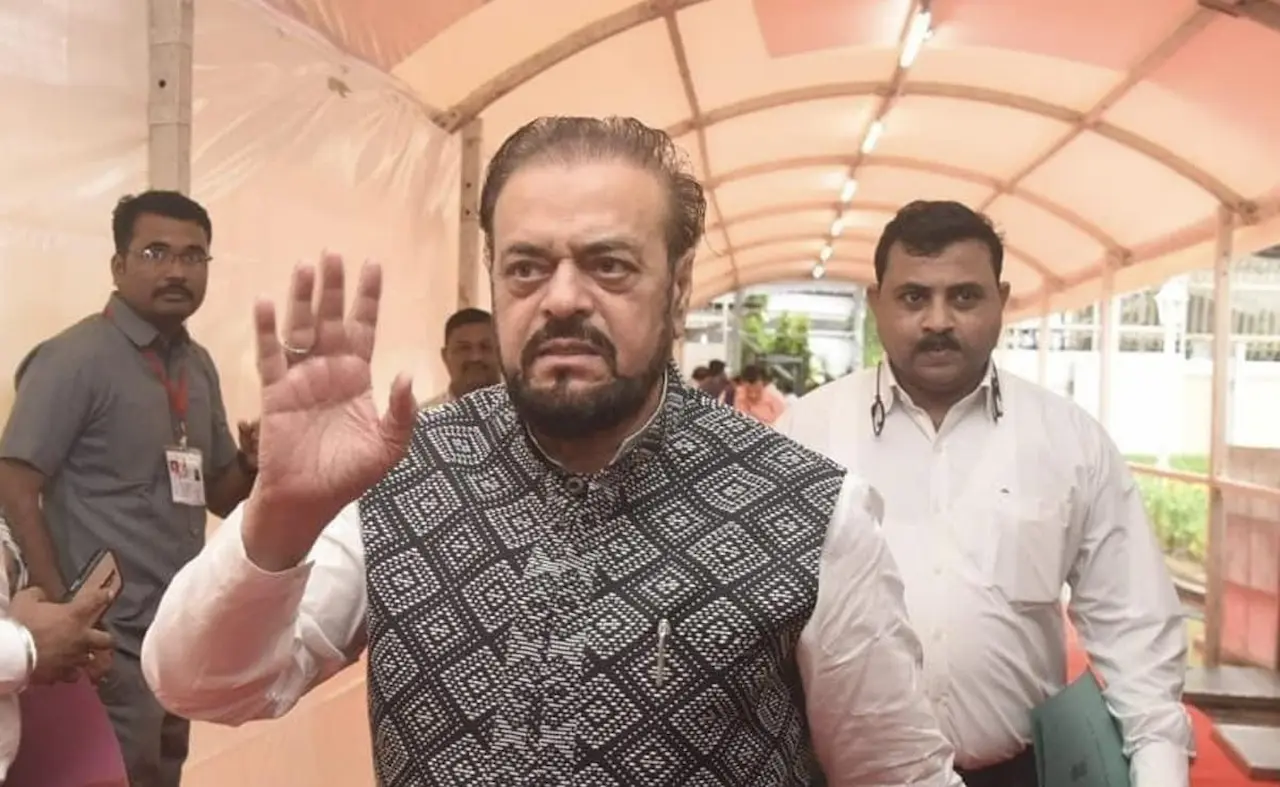
A First Information Report (FIR) has been registered against Samajwadi Party (SP) MLA Abu Azmi at Wagle Estate Police Station, Thane, following a complaint by Shiv Sena MP Naresh Mhaske over his remarks praising Mughal emperor Aurangzeb. The case has been filed under BNS sections 299, 302, 356(1), and 356(2) for allegedly hurting religious sentiments.
Mhaske accused Azmi of glorifying Aurangzeb, stating, “He has no right to stay in India. Aurangzeb destroyed thousands of Hindu temples, tortured women, and brutally persecuted Chhatrapati Sambhaji Maharaj. He was against the country and looted our nation.” Mhaske further emphasized that Deputy CM Eknath Shinde had called for a sedition case against Azmi and insisted that strict legal action must follow.
Azmi, who represents the Mankhurd-Shivaji Nagar constituency, landed in controversy after commenting on historical portrayals in the Bollywood film Chhava. Defending Aurangzeb, Azmi said, “Wrong history is being shown. Aurangzeb built many temples. I do not consider him a cruel ruler. The battle between Chhatrapati Sambhaji Maharaj and Aurangzeb was about state administration, not a religious conflict.” His remarks sparked outrage, particularly from Shiv Sena leaders and the ruling coalition, who condemned his statements and demanded immediate action.
As backlash mounted, Shiv Sena workers gathered outside the Wagle Estate Police Station, pressing for swift action against Azmi. Meanwhile, Azmi defended his position, claiming that India flourished under Aurangzeb, its territory extended to Afghanistan, and the nation accounted for 24% of the global GDP. He maintained that the emperor was an able administrator and dismissed the idea that his conflicts were religiously motivated.
With political pressure escalating, the controversy surrounding Azmi’s remarks has taken center stage in Maharashtra’s political discourse. Whether legal action will proceed further remains to be seen, but the uproar against him continues to grow.
Dhananjay Munde Resigns as Minister Amid Beed Sarpanch Murder Scandal 16
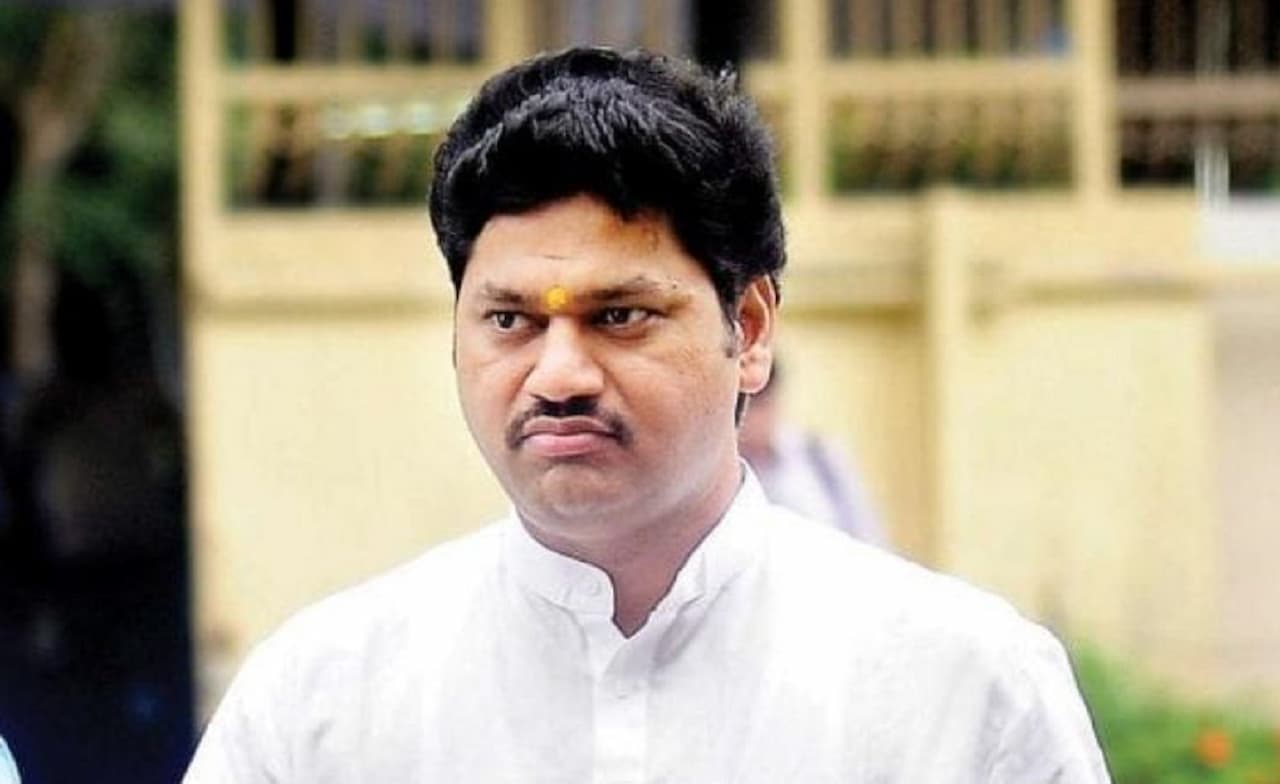
Maharashtra Minister Dhananjay Munde resigned from the state cabinet on Tuesday following mounting pressure over the alleged involvement of his close aide, Walmik Karad, in the murder of Beed sarpanch Santosh Deshmukh. The decision came after Chief Minister Devendra Fadnavis accepted his resignation and forwarded it to Governor C. P. Radhakrishnan.
Munde’s exit followed relentless opposition demands for his removal after chilling details from the CID chargesheet exposed the brutal abduction, torture, and murder of Deshmukh, who was allegedly targeted for resisting an extortion attempt against an energy company in Beed.
The Crime Investigation Department (CID) submitted a 1,200-page chargesheet in a Beed district court on February 27, detailing the crime. The case has led to the arrest of seven individuals, including Karad, Sudarshan Ghule, Vishnu Chate, Jairam Chate, Mahesh Kedar, Siddhartha Sonawane, Sudhir Sangale, and Prateek Ghule, with another accused, Krishna Andhale, still absconding. Authorities have invoked the Maharashtra Control of Organised Crime Act (MCOCA) in three related cases, including Deshmukh’s murder, an extortion attempt on Avaada Energy, and an attack on the company’s security guard.
Fadnavis held a late-night meeting with Deputy CM and NCP chief Ajit Pawar, along with senior NCP leaders, before Munde’s resignation was finalized. With political tensions escalating over the gruesome crime, the fallout of Munde’s resignation is expected to have far-reaching political implications in Maharashtra.
SFI Shuts Down Campuses in Bengal, Demands Education Minister's Resignation 18
Student activists of the Students’ Federation of India (SFI), the student wing of CPI(M), enforced a strike across university campuses in West Bengal on Monday, demanding the resignation of Education Minister Bratya Basu. The agitation follows an altercation at Jadavpur University (JU) on March 1, where Basu’s convoy injured two students attempting to stop him from leaving the campus amid protests over student union elections. The minister was also injured after protesters damaged his car’s windshield.
By Monday morning, campuses of Jadavpur University and Presidency University in Kolkata looked deserted as students, faculty, and staff largely stayed away, while SFI activists ensured compliance with the day-long strike. Other universities, including Calcutta University, Rabindra Bharati University, North Bengal University, and Burdwan University, were partially affected, with some classes disrupted but semester exams continuing.
Tensions flared at JU when Basu, after attending the AGM of the West Bengal College and University Professors Association (WBCUPA), attempted to leave despite student demands for a discussion. According to SFI state committee member Shuvajit Sarkar, the minister’s high-handed behavior escalated tensions, leading to the clash.
Sarkar accused Basu of being escorted by TMC-aligned “outsiders”, who allegedly instigated violence. He further alleged that Basu’s convoy sped away without concern for student safety, injuring two students—one seriously. SFI has now demanded Basu’s resignation and police action against him.
While SFI activists avoided disrupting vehicular movement, ensuring that students could reach their examination centers without obstruction, the strike exposed growing tensions on Bengal’s university campuses. The SFI has also pledged to assist higher secondary examinees by setting up help camps near examination centers.
With political rivalries spilling onto university grounds, the escalation of student protests signals deeper unrest in Bengal’s education sector, raising questions about ministerial accountability and student rights.
Chamoli Avalanche: Death Toll Rises to 7, One Worker Still Missing as Rescue Race Against Weather Continues 20
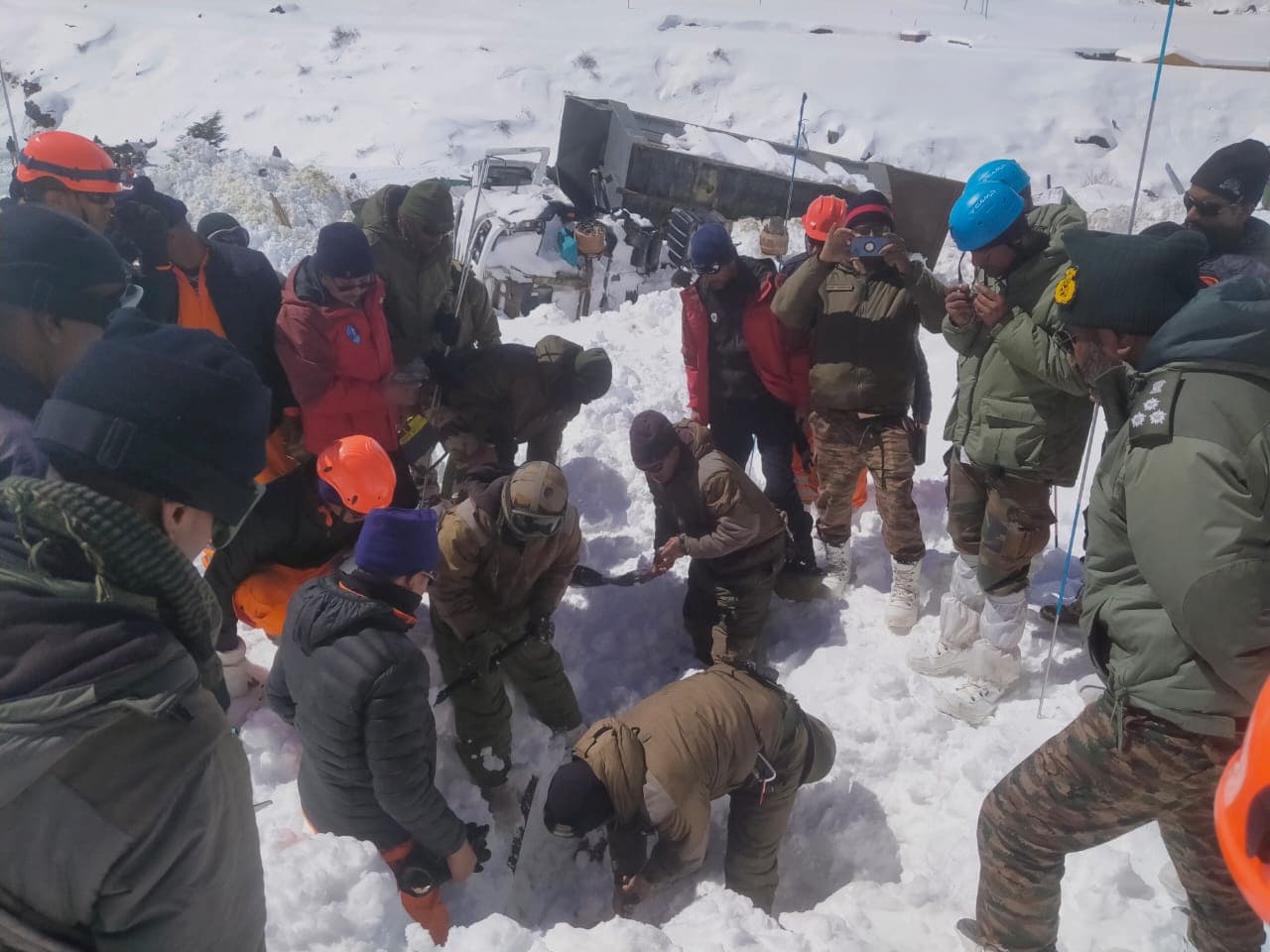
The death toll in the Chamoli avalanche rose to seven on Sunday after the bodies of three more workers were recovered from the Border Roads Organisation (BRO) camp, while rescue efforts continue for the last missing worker. The avalanche struck on Friday, burying 54 workers inside eight containers and a shed between Mana and Badrinath.
Army doctors confirmed that 46 rescued workers have been admitted to the military hospital in Jyotirmath, with one critically injured worker airlifted to AIIMS Rishikesh. Three remain in critical condition, Lt Col DS Maldhya stated.
To speed up rescue efforts, helicopters, sniffer dogs, thermal imaging, and ground-penetrating radar (GPR) are being used, as authorities fear deteriorating weather on Monday could hamper operations. Uttarakhand Chief Minister Pushkar Singh Dhami visited the State Emergency Operation Centre to oversee the efforts and instructed teams to expedite the search.
The Indian Army, ITBP, NDRF, SDRF, and other relief forces are working round the clock at the disaster site. The GPR system from Delhi is expected to enhance the search operation, and six helicopters, including three from the Army, two from the Indian Air Force (IAF), and a civilian chopper, have been deployed.
Chamoli District Magistrate Sandeep Tiwari confirmed that an Mi-17 helicopter is on standby in Dehradun to transport the GPR system to the avalanche site. Lt Gen Anindya Sengupta and Lt Gen D G Mishra are monitoring operations, ensuring that every possible resource, including UAVs, quadcopters, and avalanche rescue dogs, is used to locate the missing worker.
With more than 200 personnel from various agencies engaged in the rescue mission, officials warn that everything depends on the weather.