Altogether 15,756 Illegal Indian Immigrants Deported From US Since 2009: Jaishankar 2
A total of 15,756 illegal Indian immigrants have been deported to India from the US since 2009, External Affairs Minister S Jaishankar informed the Rajya Sabha on Thursday.
Making a statement in the Upper House after opposition parties stepped up their criticism over the treatment meted out to 104 illegal Indian immigrants who landed in Amritsar on Wednesday in a US military plane, Jaishankar asserted that the process of deportation has been ongoing for several years and is not new.
Citing data available with Indian law enforcement authorities, the minister said in 2009, 734 were deported, 799 in 2010, 597 in 2011, 530 in 2012, and 550 in 2013.
As per Jaishankar’s statement, in 2014 when the NDA government came to power, 591 were deported, followed by 708 in 2015. In 2016, a total of 1,303 were deported, 1,024 in 2017, 1,180 in 2018.
The highest deportation was witnessed in 2019 with 2,042 illegal Indian immigrants being sent back to the country. In 2020 the deportation number was 1,889; 805 in 2021; 862 in 2022; 670 in 2023; 1,368 last year, and 104 so far this year.
Jaishankar said deportations by the US are organised and executed by the Immigration and Customs Enforcement (ICE) authorities and “the standard operating procedure for deportations by aircraft used by ICE that is effective from 2012, provides for the use of restraints”.
“However, we have been informed by ICE that women and children are not restrained.
Further, the needs of deportees during transit related to food and other necessities, including possible medical emergencies are attended to,” he informed the house.
During toilet breaks deportees are temporarily unrestrained if needed in that regard, he said, adding, “this is applicable to chartered civilian aircraft as well as military aircraft”.
“There has been no change from past procedures for the flight undertaken by the US on February 5, 2025,” Jaishankar said, referring to the US military aircraft carrying 104 illegal Indian immigrants that landed in Amritsar on Wednesday.
Pune Civic Body Seals 19 Private RO Water Plants in Wake of GBS Outbreak 4
The Pune Municipal Corporation has sealed 19 private RO plants in Nanded village area, the epicentre of the Guillain-Barr Syndrome (GBS) outbreak, after tests confirmed water from these facilities was unfit for drinking, officials said.
Four fresh cases of suspected GBS, a nerve disorder, were reported in Pune district on Wednesday, taking the overall tally in Maharashtra to 170, they said.
The now-sealed privately owned reverse-osmosis (RO) plants, located in Dhayari-Nanded area, supplied bottled water to a large number of people in the vicinity.
Following the crackdown, the Pune Municipal Corporation’s (PMC) water supply department announced plans to formulate standard operating procedures (SOPs) to prevent the distribution of contaminated water in the area.
During the investigation of water samples collected from some privately run RO plants, it was found that water from 19 such RO plants operating in the Nanded and adjoining area was unfit for drinking. Accordingly, all these 19 RO plants were sealed and their functioning has been stopped, PMC’s additional commissioner Prithviraj P B said on Wednesday.
Meanwhile, PMC’s water supply department head Nandkishor Jagtap said they found Escherichia coli bacteria in samples collected from these 19 RO plants.
In the wake of the discovery of E.coli, private water suppliers have been asked to use bleaching powder solution provided by the PMC to ensure the bacteria is contained, he said.
On Tuesday, members of a rapid response team formed to probe the GBS outbreak in Nanded village and adjoining localities in Sinhagad Road area said there was no chlorine in the drinking water supplied to households of 26 suspected patients of the nerve disorder.
GBS causes sudden numbness and muscle weakness, with symptoms including severe weakness in the limbs.
DK Rao: A Tale of Mumbai's Underworld and Law Enforcement 6
Once upon a time, Mumbai’s Underworld was the stuff of legends—an era that inspired countless movies, books, and crime thrillers. The city’s streets echoed with the sounds of shootouts, gang rivalries, and sensational police encounters. Extortion rackets ran rampant, and the underworld operated with an iron grip. Among the infamous names that loomed large in Mumbai’s crime syndicates, one figure stood out—DK Rao, the chief lieutenant of Chhota Rajan and one of the most feared gangsters in the city.
Known as Ravi Mallesh Bora, DK Rao has long been a key player in organised crime, his name deeply entrenched in Mumbai’s police records since the 1990s. His criminal journey has been marked by an endless cycle of arrests, court appearances, and strategic escapes. Recently, he was arrested yet again by the Mumbai Crime Branch, along with six of his associates, for allegedly threatening a 74-year-old hotelier in Marol Naka, Andheri East, in a case of extortion. His arrest is another chapter in a crime-ridden life that has seen numerous convictions, yet he has remained a formidable figure within the underworld.
Rao’s notoriety extends beyond extortion and street crime. He has been a central player in executing violent crimes from within the walls of prison itself. In 2002, while incarcerated at Arthur Road Jail, he allegedly orchestrated the murder of OP Singh, a former close associate of Chhota Rajan who had begun distancing himself from the gang. As Singh was imprisoned in Nashik Jail, Rao and his associates managed to get themselves transferred there and, in a brutal attack, strangled Singh to death. This incident was a testament to the deep-seated nexus between criminals and law enforcement at the time—a period when the underworld’s reach extended well beyond the streets.
The Mumbai underworld was rife with betrayals, shifting allegiances, and brutal encounters. While many of his contemporaries perished in gang wars or police encounters, Rao survived—sometimes by sheer luck, other times by deception. In one encounter, he was shot and presumed dead along with four other gangsters, only for the police to later realise that he had feigned death and escaped. His survival instincts allowed him to outlive the deadly feud between Chhota Rajan and Dawood Ibrahim’s gangs that spanned over three decades. Not just a survivor, Rao himself led multiple attacks on members of Dawood’s syndicate, further cementing his place in Mumbai’s criminal hierarchy.
His latest arrest is linked to what he does best—extortion. A restaurant owner found himself entangled in a dispute with a partner who attempted to swindle him out of his property. Rao allegedly stepped in to mediate, not as a peacemaker but as an enforcer for the opposing party. The victim was threatened with dire consequences, including death, if he failed to comply. However, unlike past incidents where intimidation worked in Rao’s favor, this time, the restaurant owner sought police intervention. In an unusually swift operation, the Mumbai Crime Branch arrested Rao and his associates, marking yet another fall in his long-standing criminal career.
Despite having over 40 criminal cases against him, Rao has always found a way to maneuver through the legal system. The problem, as often seen in such cases, is that high-profile criminals like Rao rarely stay behind bars for long. Witnesses turn hostile, cases drag on for years, and legal loopholes are exploited. His past incarcerations have followed a predictable pattern—arrest, imprisonment, legal battles, and eventual release, only to return to his old ways.
Rao’s criminal empire has not only survived but evolved over time. His clout in Mumbai’s notorious Dharavi area is formidable, and his involvement in extortion, land disputes, and contract killings continues. Even after multiple police encounters, he remains one of the few gangsters who have survived against all odds. In 1998, he endured a close call with the Mumbai police, sustaining seven bullet wounds yet managing to escape with his life. Over the years, he has adapted to the changing nature of crime, extending his influence to slum redevelopment projects and illicit financial dealings. The recent arrest came after a complaint from Ramdas Vishwakarma, a senior citizen, who accused Rao’s gang of demanding ₹2.5 crore from him under threats of violence.
With Chhota Rajan currently in judicial custody at Delhi’s Tihar Jail, many speculated that his criminal network would wither away. However, police sources suggest otherwise. Rajan’s syndicate, though weakened, remains operational through loyal operatives like Rao, who ensure that extortion, intimidation, and financial dealings continue seamlessly. While Rao’s latest arrest may be seen as a temporary setback for the gang, it is unlikely to dismantle their operations entirely. According to police officials, Rajan’s network of shooters, informers, and financiers remains intact, with others ready to take Rao’s place if necessary.
The ongoing investigation by the Mumbai Crime Branch delves deeper into Rao’s financial transactions, particularly his alleged involvement in property dispute meditations for personal gains. The forensic analysis of voice notes found on the mobile phones of his associates, including Abubakar Siddiqui, is underway, and law enforcement is determined to trace the money trail linking Rao to these extortion activities. His arrest, alongside co-accused Abubakar Abdullah Siddiqui, Imran Kaleem Shaikh, Riyaz Kaleem Shaikh, Asif Sattan Khan alias Saif Durbar, Javed Jalaluddin Khan, and Hanif Ismail Naik alias Annu Bhai, underscores the persistent attempts by law enforcement to crack down on underworld syndicates.
Rao’s survival in the treacherous world of Mumbai’s underworld is a story in itself. From his impoverished beginnings in Matunga’s slums to becoming one of the most feared gangsters in the city, his rise to power was marked by violence and ruthless ambition. Starting as a small-time thief, he soon found his way into bank robberies, extortion rackets, and targeted killings under the tutelage of Chhota Rajan. When the 1993 Mumbai serial blasts created a schism between Rajan and Dawood Ibrahim, Rao chose loyalty, rejecting overtures from Chhota Shakeel to switch sides. That decision made him a marked man, with Dawood’s men and even law enforcement tracking his every move. Yet, time and again, he outmaneuvered both.
His ability to navigate the murky waters of Mumbai’s underworld has ensured his longevity, but history suggests that no gangster remains invincible forever. While his latest arrest may appear as yet another episode in a long saga of crime and evasion, law enforcement authorities remain hopeful that this time, justice will prevail. As Mumbai evolves, so does its crime landscape. Yet, the ghosts of its underworld past continue to linger, waiting for the next chapter to unfold.
27-Year-Old Man Man Caught With Rs 12.9 Lakh Ganja in Bhiwandi, Arrested 8
Police have arrested a 27-year-old man after seizing ganja valued at Rs 12.9 lakh from him in Maharashtra’s Thane district, officials said.
A crime branch team during patrolling on Monday evening found the accused roaming in a suspicious manner in Millat Nagar locality of Bhiwandi area.
The police intercepted him and recovered 25.96 kg of ganja valued at Rs 12,90,740 from his possession, an official from Nizampura police station said.
The man, native of Loha taluka in Nanded district, was arrested. A case was registered against him under provisions of the Narcotic Drugs and Psychotropic Substances (NDPS) Act, the police said.
The police were trying to find out from where the accused got the drugs and to whom he planned to sell them.
205 Indians Deported from U.S. Land in Punjab Amid Immigration Crackdown 10
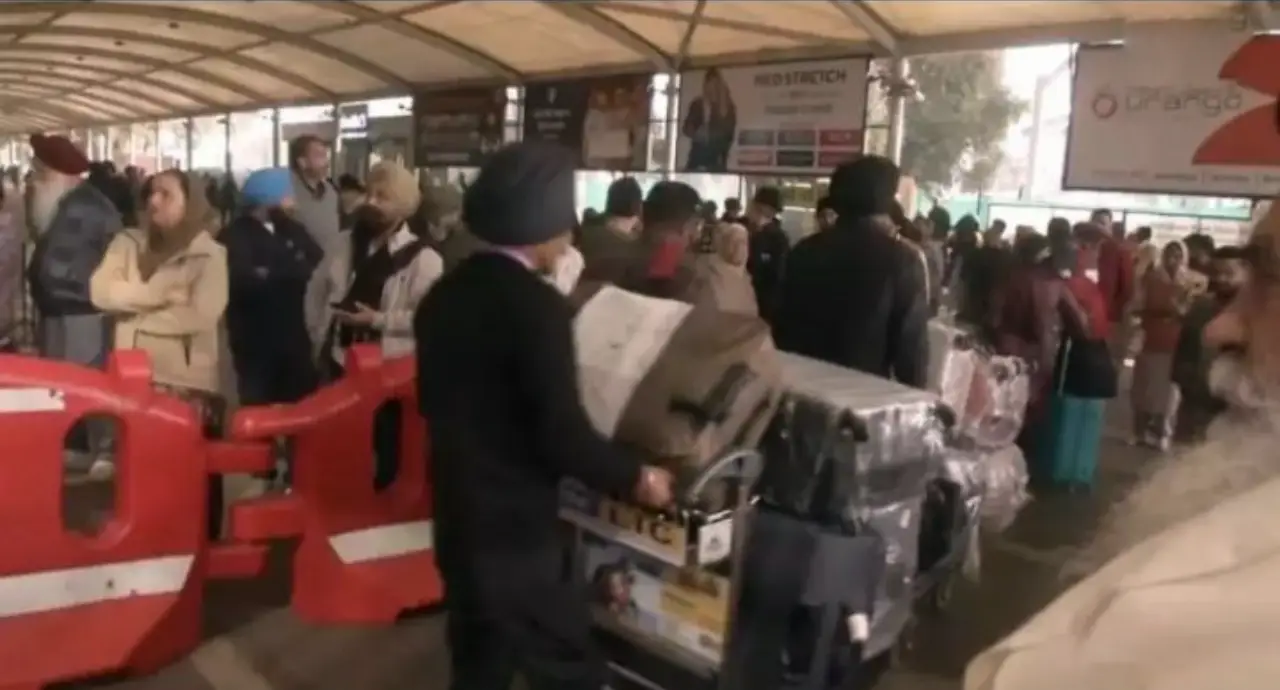
In a major immigration crackdown, a U.S. military aircraft carrying 205 deported Indians landed at Amritsar airport in Punjab. The deportation, primarily affecting individuals from Punjab and neighboring states, is part of Donald Trump’s stringent immigration enforcement policy, initiated after he assumed office last month.
The deportees, many of whom entered the U.S. illegally through “donkey routes”, were identified among 18,000 undocumented Indian migrants targeted for deportation. The use of a C-17 military aircraft for this operation underscores the Trump administration’s firm stance on immigration enforcement.
Punjab’s NRI Affairs Minister Kuldeep Singh Dhaliwal expressed concern, stating that these individuals contributed to the U.S. economy and should have been granted permanent residency instead of deportation. The Punjab government had made arrangements to receive the deportees, setting up dedicated counters at the airport.
This development has triggered debates on the treatment of Indian migrants, their reintegration into society, and the diplomatic ties between India and the U.S. regarding immigration policies. While some support the U.S.’s strict enforcement, others see it as an unjustified targeting of economic contributors.
Delhi Assembly Elections 2025: A High-Stakes Political Battle 12
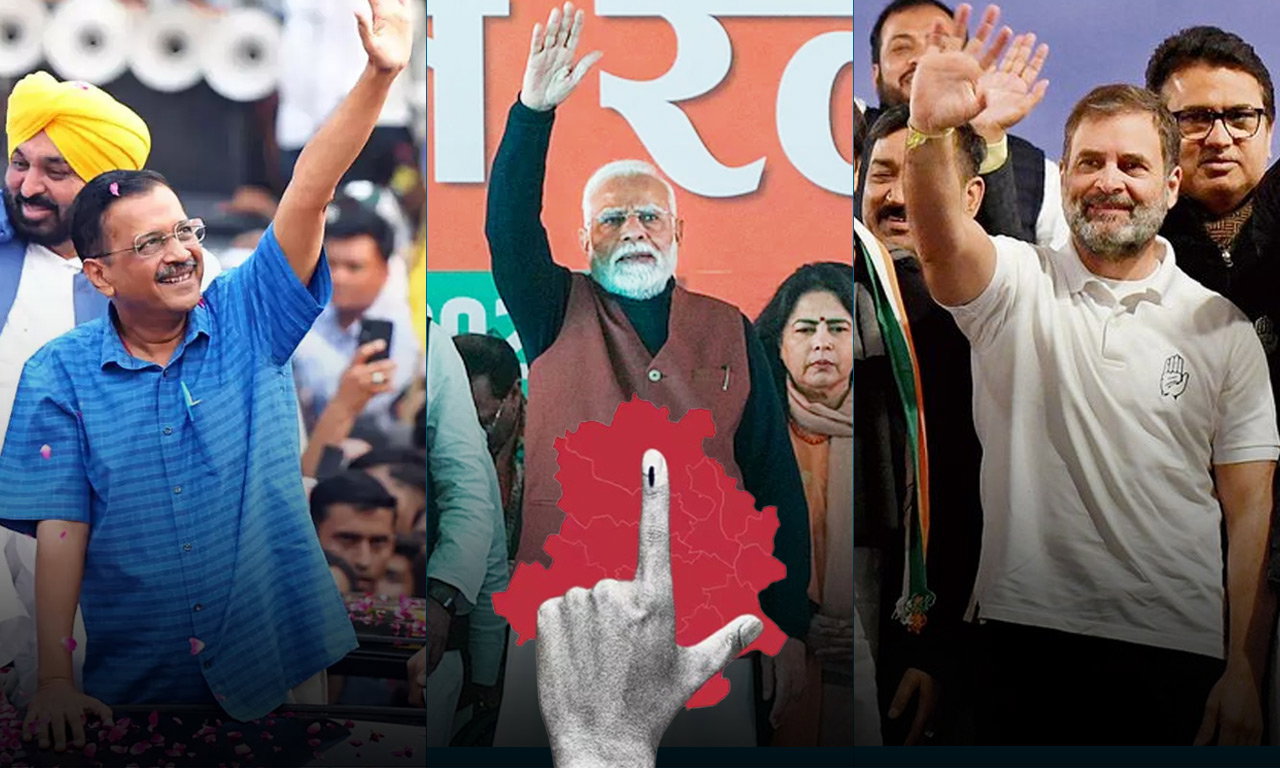
Predicting the outcome of the 2025 Delhi Assembly elections remains a challenging task due to the dynamic and rapidly evolving political landscape. The interplay of voter sentiment, candidate selection, and prevailing issues in the final stages of the campaign will be decisive. While the Bharatiya Janata Party (BJP) has gained significant traction in various state elections, assuming its success in Delhi is premature. The February 5 election sees an intense, high-decibel, and often acrimonious campaign come to an end, with the ruling Aam Aadmi Party (AAP) and BJP engaged in a fiercely contested battle. On Wednesday, Delhi’s electorate will determine whether Arvind Kejriwal secures a historic third consecutive term or if the BJP stages a remarkable comeback. For the Congress, the third contender in this triangular contest, the primary objective is to avoid another electoral humiliation and prevent a hat-trick of zeroes in the assembly.
The last day of campaigning witnessed Kejriwal, alongside Delhi Chief Minister Atishi, holding three rallies, including one in Kalkaji, to galvanise supporters. Confident in his party’s prospects, Kejriwal has asserted that AAP will secure at least 55 seats in the 70-member assembly. In previous elections, AAP dominated the political landscape, winning 67 seats in 2015 and 62 in 2020, leaving both the BJP and Congress decimated. Despite securing only three seats in 2015, the BJP managed a vote share of 32%, which increased to 38% in 2020, even as it won just eight seats. Notably, the BJP lost many seats by narrow margins. The 2025 elections bring the weight of anti-incumbency against AAP. If the BJP had projected a strong chief ministerial candidate, its vote share could have surged by an estimated 9%, bringing it to 47%, while AAP’s vote share is expected to decline from 53% in 2020 to 46% in 2025. This shift suggests that AAP’s grip over Delhi is weakening, and the outcome remains uncertain.
AAP initially sought to retain power on its own strength, outright rejecting an alliance with Congress. However, as Kejriwal progresses through his campaign, he is encountering formidable challenges. His latest political manoeuvre—writing a letter to RSS Chief Mohan Bhagwat accusing the BJP of vendetta politics—signals desperation. Kejriwal now faces a multitude of obstacles, ranging from governance failures to corruption allegations, making his re-election far from certain. If AAP were to consider a Maha Vikas Aghadi-style coalition, an alliance with Congress would be the only pragmatic option given Congress’s residual influence in Delhi. However, the two parties have no organic synergy, and any alliance would be fraught with friction, making its success improbable.
The BJP, despite maintaining a consistent vote share, has repeatedly fallen short of translating it into electoral victories. In a bid to reverse this trend, the party executed an aggressive final phase of campaigning, with 22 roadshows and rallies led by key figures such as Union Home Minister Amit Shah, Defence Minister Rajnath Singh, BJP President J.P. Nadda, and several chief ministers from BJP-ruled states. Meanwhile, Congress, desperate for a revival after losing both vote share and seats over the last two decades, mobilised its leadership. Rahul Gandhi and Priyanka Gandhi spearheaded separate roadshows in Kalkaji and Kasturba Nagar, signalling Congress’s intention to regain lost ground.
A key BJP strategy in this election has been its relentless attack on Kejriwal over the controversial “Sheesh Mahal” residence. The extravagant renovation of his official residence has put Kejriwal on the defensive. He attempted to deflect criticism by claiming that former Chief Minister Sheila Dikshit had installed 31 air conditioners in her residence, but the revelation that his bungalow has 51 ACs—along with a powerful cooling system equivalent to 50 ACs in the central hall—has severely dented his credibility. Prime Minister Narendra Modi’s contrasting statement, emphasising that he has not built a house for himself but has constructed four crore homes for the poor, has further exacerbated Kejriwal’s predicament. His hastily arranged press conference denouncing these allegations reflects the growing anxiety within AAP’s ranks.
Election promises remain a crucial battleground. Kejriwal’s repeated commitments to cleaning the Yamuna, resolving Delhi’s drinking water crisis, addressing air pollution, and improving waste management have been met with scepticism. The BJP has actively highlighted AAP’s failures, exposing how similar pledges were made in previous elections without tangible results. This time, however, BJP is facing its first genuine three-cornered contest since 2014, as Congress is making serious inroads into AAP’s voter base. Should Congress succeed in eroding AAP’s support, Kejriwal’s party will find itself in a precarious position.
For the BJP to maximise its electoral prospects, it must effectively communicate the long-term consequences of AAP’s governance model. It must emphasise Kejriwal’s lack of a comprehensive vision for tackling Delhi’s pressing issues, such as air pollution, self-sustainable energy solutions, and water scarcity during peak summers. The party must also highlight AAP’s neglect of waste management and infrastructure development. However, the BJP cannot assume that voter dissatisfaction alone will be sufficient to swing the election in its favour. To secure a decisive victory, the party must present a clear, long-term blueprint for Delhi’s future while underscoring the perils of short-term populist measures.
AAP has fought its most aggressive campaign yet, recognising that an electoral defeat could spell doom for both Kejriwal and his party. The 2025 elections are not just about governance; they are a matter of political survival for AAP. However, victory will not come easily. While AAP remains a formidable force, the BJP is poised to make significant gains, ensuring a fiercely contested battle. Should AAP secure a third consecutive term, it will be a crushing blow to the BJP, highlighting its inability to dislodge Kejriwal despite years of relentless campaigning.
The campaign has witnessed sharp political exchanges over welfare schemes, corruption scandals such as the liquor policy controversy and ‘Sheesh Mahal’ saga, unemployment, water supply crises, air pollution, and healthcare promises. AI-generated spoofs, aggressive slogans, and flamboyant roadshows have defined the electioneering. AAP branded BJP as the “Bharatiya Jhootha Party” (Party of Liars) and “Gali Galoch Party” (Abusive Party), while Modi retorted by calling AAP a “disaster” and Kejriwal the “Ghoshna Mantri” (Minister of Announcements). Congress, striving for relevance, derided Kejriwal as “Farziwal” (fake) and “Chhota Recharge” (Small Recharge) of Modi.
The high-voltage campaign culminated in an intense blame game among all three major contenders. Key constituencies, including New Delhi—where Kejriwal is contesting—and Kalkaji, where Atishi is seeking re-election, have been focal points of political discourse. The BJP has relentlessly attacked Kejriwal over corruption allegations, arguing that Delhi’s voters are yearning for change and will opt for a “double-engine government”—a reference to having the same party in power at both the state and central levels.
The stakes in this election are immense, and the results will have far-reaching implications for all three parties. The verdict will determine whether Delhi remains under AAP’s rule or whether the BJP’s persistent efforts finally bear fruit. A respectable performance could mark the beginning of a long road to recovery. The stage is set for a high-stakes political showdown—Delhi’s voters now hold the key to its future governance.
Nagpur Horror: Brothers Murder Friend Over ₹300 T-Shirt Dispute 14
In a shocking case of senseless violence, two brothers in Nagpur, Maharashtra, brutally murdered their friend over a dispute involving a ₹300 T-shirt. The 29-year-old victim, identified as Shubham, was killed after refusing to pay for the garment.
According to reports, Akshay, one of the accused, had purchased a T-shirt online and asked Shubham to reimburse him. When Shubham declined, despite Akshay offering him the T-shirt as it didn’t fit him, an argument erupted. The disagreement quickly escalated into a violent confrontation, with Akshay’s brother joining the altercation.
In a fit of rage, Akshay’s brother allegedly slit Shubham’s throat, killing him on the spot. Both accused were intoxicated at the time of the incident, police confirmed. Investigators also revealed that the brothers have a criminal history, raising concerns over repeat offenders committing brutal crimes.
Authorities have arrested both brothers, and Shubham’s body has been sent for postmortem. A thorough investigation into the incident is underway.
Begging, Giving Alms Banned in Madhya Pradesh Capital Bhopal 16
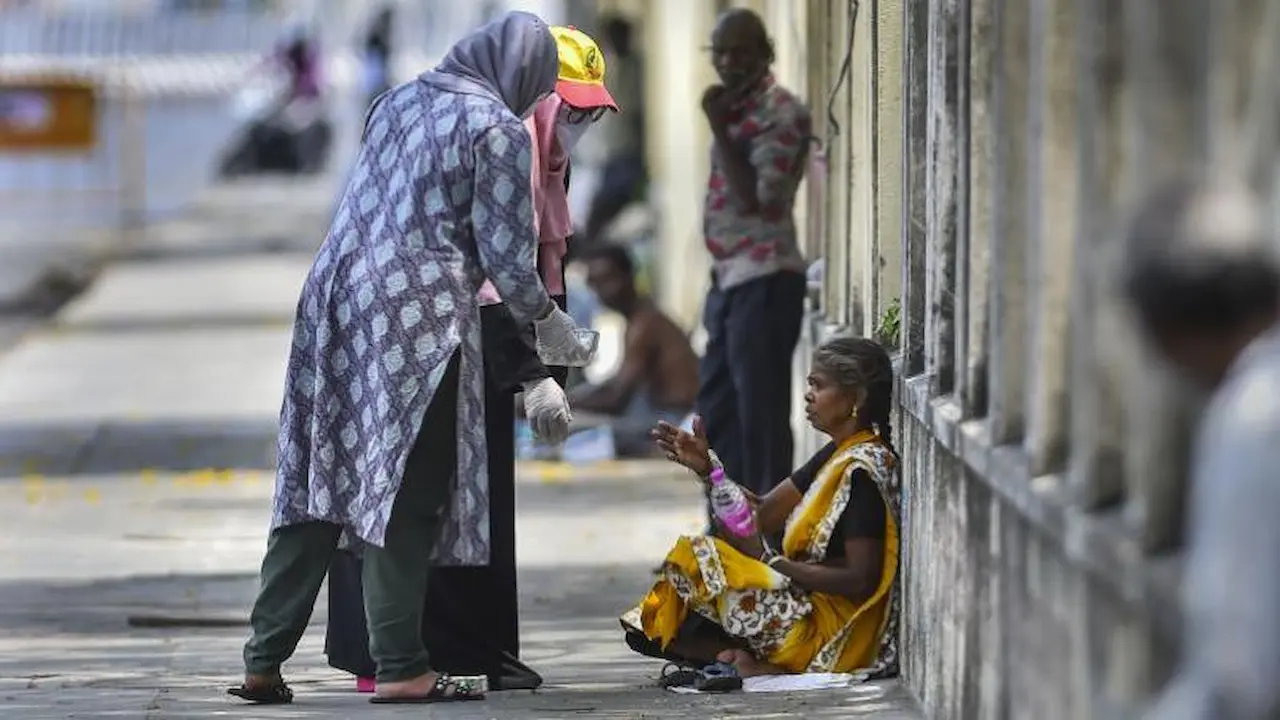
Authorities have banned begging in Madhya Pradesh capital Bhopal and warned of penal action against those found involved in it as well as people who give alms.
The state’s Indore district has already banned begging.
Bhopal district collector Kaushlendra Vikram Singh prohibited begging in an order issued on Monday evening under Section 163(2) of the Bharatiya Nagrik Suraksha Sanhita.
Several beggars, seeking alms at traffic signals, have been found involved in criminal activities and drug addiction. Their presence at the traffic signals also creates the fear of accidents, the order noted.
It said begging and offering alms has been completely banned in the entire Bhopal district.
“Legal action will be taken against the person who gives anything in the form of alms to beggars or buys any goods from them,” the order stated.
Cases will be registered under relevant legal provisions against those who violate the administration’s prohibitory order against begging, it said.
A shelter facility located at the Community Health Centre Kolar (in Bhopal) is reserved as a beggar home for their accommodation, it added.
Last year, the Indore district administration also banned begging and prohibited people from giving alms to beggars.
Tibetans born in India after 1987 are eligible to exercise cast their votes in elections in India, Himachal Assembly Speaker Kuldeep Singh Pathania said on Monday.
Tibetans Born After 1987
He made these remarks during a meeting with a delegation of Tibetan Government-in-Exile, a statement said.
The Tibetan parliamentary delegation included Dondup Tashi and Tsering Yangchen, both MPs, accompanied by Chief Representative Officer of the Tibetan Government-in-Exile in Shimla, Sewang Phingchok, and Secretary Palden.
The delegation paid the visit to express gratitude for support provided by the Indian government and the Himachal Pradesh Legislative Assembly to the Tibetan community.
During the meeting, the Tibetan MPs acknowledged India’s long-standing hospitality, which has enabled the Tibetan Government-in-Exile to function smoothly from its headquarters in Dharamshala.
They emphasised their commitment to the Tibetan independence movement.
The Speaker highlighted the deep historical and cultural ties between India and Tibet and noted that Tibetans have been living in India for over 65 years, with Dharamshala serving as the epicentre of the Tibetan struggle.
“The Indian government always stood by the Tibetan Government-in-Exile, and our support will continue without hesitation,” Pathania said.
BJP MPs File Privilege Notice Against Sonia Gandhi Over Remarks on President 19
A group of BJP MPs from the tribal community filed a breach of privilege notice on Monday against Congress parliamentary party leader Sonia Gandhi for using “derogatory and slanderous” words against President Droupadi Murmu.
Led by Rajya Sabha MP Sumer Singh Solanki, they met Chairman Jagdeep Dhankhar and sought disciplinary action against Gandhi, contending her remarks lowered the dignity of the office of the President.
The notice was filed over Gandhi’s remarks on President Murmu after her address to a joint sitting of Parliament on Friday. Sonia Gandhi, Rahul Gandhi, and Priyanka Gandhi Vadra were seen discussing the speech on the Parliament complex.
“The poor lady, the President, was getting very tired by the end… she could hardly speak, poor thing,” Sonia Gandhi was purportedly heard saying in a video doing the rounds on social media.
The BJP MPs said in the notice that the remarks are “a clear manifestation of the elitist and anti-tribal mindset of Smt. Gandhi, who is yet to understand the struggle and sensitivity of a tribal poor.”
“We write this with great dismay about certain unparliamentary, derogatory, and demeaning remarks recently made by Smt. Sonia Gandhi, Member of Parliament, Rajya Sabha, against the Hon’ble President of India, which warrant serious consideration and disciplinary action.
“It is with deep concern that we highlight this statement, which appears to demean the stature and dignity of the President of India, the highest constitutional authority of our nation,” they said in the notice.
They said such remarks not only undermine the dignity of the office but also violate the sanctity of parliamentary procedures and conventions.
A separate breach of privilege notice was also submitted by 22 parliamentarians from tribal communities, including Union Minister Sarbananda Sonowal, to Lok Sabha Speaker Om Birla on Monday, seeking action against Independent MP Pappu Yadav for his remarks against Murmu.
They termed his remarks “insulting and anti-tribal.”