


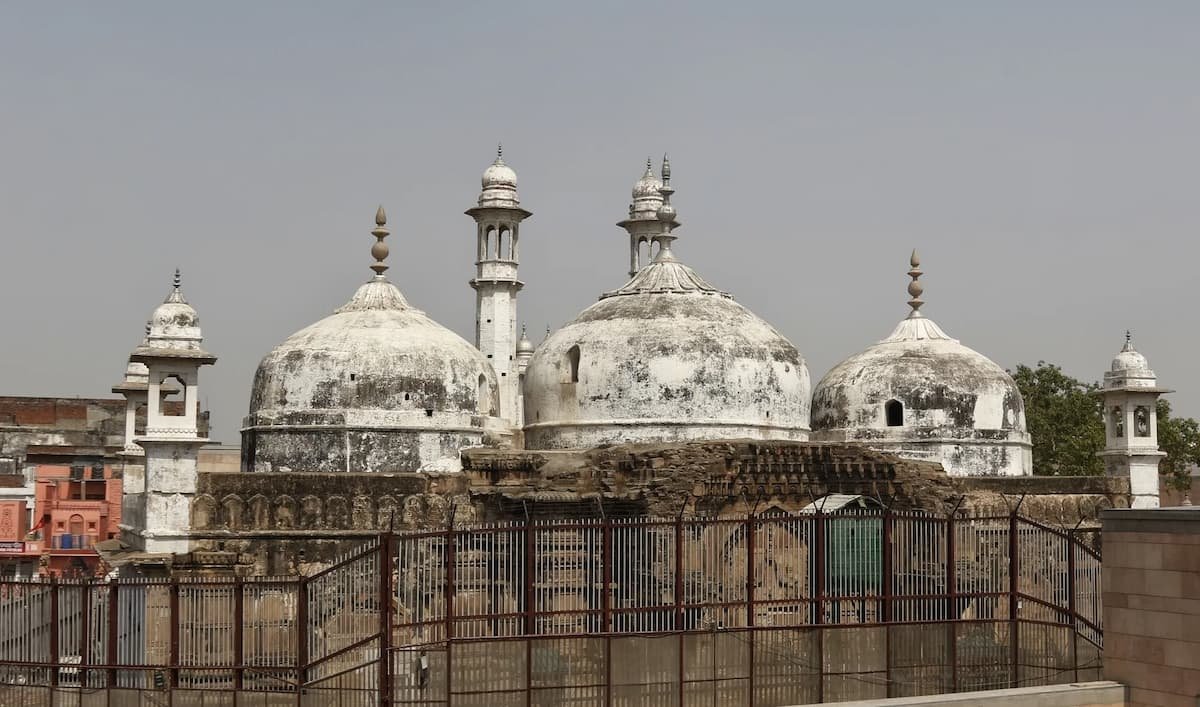
Advocate Ashwini Upadhyay, challenged the Places of Worship Act of 1991, has moved the Supreme Court seeking to be made a party in the Gyanvapi case while arguing that a temple’s “religious character” does not change merely because it was demolished once upon a time. He said a mosque constructed on temple land cannot be a mosque, not only for the reason that such construction is against Islamic law, but also on grounds that the property once vested in the deity continues to be deity’s property and right of deity and devotees are never lost, howsoever long illegal encroachment continues on such property. The right to restore religious property is “unfettered”, he argued, referring to the restraints under the 1991 Act. He said this is a “continuing wrong” and the injury must be “cured” by judicial remedy. He argued that the religious character of a mosque and a temple are “totally different.
Over a 17-day span in 1991, between August 23 and September 10, the Lok Sabha debated a law that would make the position of all places of worship immutable — every temple, mosque, gurdwara, synagogue would remain exactly where it did on August 15, 1947, the day India became independent. The only exception would be the Babri Masjid site because the dispute over it was still being heard in court.
The Act declares that the religious character of a place of worship shall continue to be the same as it was on August 15, 1947. It says no person shall convert any place of worship of any religious denomination into one of a different denomination or section. It declares that all suits, appeals or any other proceedings regarding converting the character of a place of worship, which are pending before any court or authority on August 15, 1947, will abate as soon as the law comes into force. No further legal proceedings can be instituted.
However, there is an exception to the bar on instituting fresh proceedings with regard to suits that related to conversion of status that happened after August 15, 1947. This saves legal proceedings, suits and appeals regarding the chance of status that took place after the cut-off date. These provisions will not apply to ancient and historical monuments and archaeological sites and remains that are covered by the Ancient Monuments and Archaeological Sites and Remains Act, 1958; a suit that has been finally settled or disposed of; and any dispute that has been settled by the parties or conversion of any place that took place by acquiescence before the Act commenced. The Act does not apply to the place of worship commonly referred to as Ram Janmabhoomi-Babri Masjid in Ayodhya. This law will have an overridden effect over any other law in force.
Anyone who defies the bar on conversion of the status of a place of worship is liable to be prosecuted. The Act provides for imprisonment up to three years and a fine for anyone contravening the prohibition. Those abetting or participating in a criminal conspiracy to commit this offence will also be punished to the same extent, even if the offence is not committed in consequence of such abetment or as part of the conspiracy.
The 1991 Act, Upadhyay claimed, was enacted in the garb of ‘public order’, which is a State subject [Schedule-7, List-II, Entry-1] and ‘places of pilgrimages within India’ is also State subject [Schedule-7, List-II, Entry-7]. The Centre could not have enacted the 1991 Act. Moreover, Article 13(2) of the Constitution prohibits the State to make law to take away fundamental rights, but the 1991 Act takes away the rights of Hindus, Jains, Buddhists and Sikhs to restore their ‘places of worship and pilgrimages’, destroyed by barbaric invaders.
A constitutional provision says that every religious structure will continue to stand where it did on August 15, 1947. When the law was being framed, a year before Babri Masjid was demolished, BJP had walked out twice. With courts admitting a series of petitions demanding that mosques which ‘used to be’ Hindu temples should be examined, we go back and see what the party in power now had to say.
