


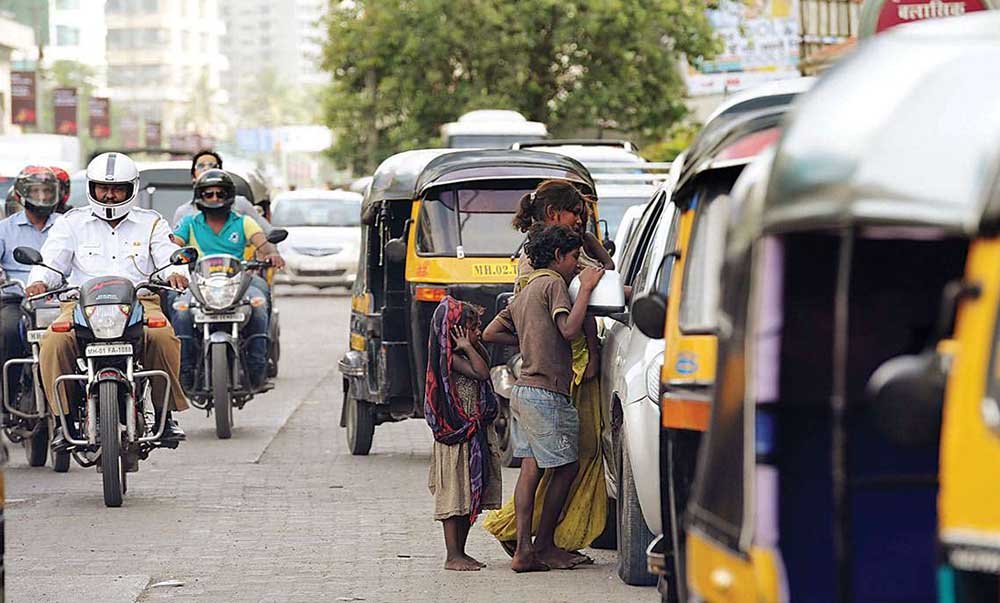
In a staggering case of delayed justice, Maharashtra’s state government has finally increased the wages paid to beggars in state-run rehabilitation homes — from a shocking ₹5 per month to ₹40 per day. This is the first revision in 61 years, highlighting the long-standing neglect of the destitute in the state’s institutional care system.
The paltry ₹5 monthly wage, fixed back in 1964 under the Mumbai Prohibition of Begging Act, 1959, remained unchanged for decades. According to the law, physically fit beggars housed in these homes are required to work eight hours a day as part of their rehabilitation process. However, the outdated compensation had made the entire initiative appear more punitive than reformative.
The recent decision by the state cabinet, taken in late April, comes as a desperate attempt to inject purpose and dignity into a system that has clearly failed. Despite a total capacity of over 4,000 across 14 such beggars’ homes, only 350 individuals currently reside in them. The Chembur men’s facility, which can house 850, holds just 86. Its adjacent women’s home has 36 residents against a 550-person capacity. Similar numbers are reflected across facilities in Ahilyanagar, Satara, Solapur, and Nagpur.
A senior government official admitted that the unchanged wages were an insult to the idea of rehabilitation. “The idea was to train beggars in skills to earn a livelihood after their release. But with a wage like ₹5 a month, it’s no wonder the homes are nearly empty,” the official remarked.
The inmates are provided basic needs like shelter, clothing, and food, and are engaged in jobs like tailoring, farming, weaving, candle-making, carpentry, and rope production. The goal has always been to foster self-reliance, but the system’s failure to revise wages for over half a century undercut its own intention.
Despite the sparse population, these homes generate a modest annual revenue of ₹3–5 lakh through vocational and agricultural activities. Interestingly, police reportedly round up about 3,000 beggars annually, yet only a third are sent to these rehabilitation homes — pointing to deeper issues in enforcement and trust in the system.
While the new ₹40-per-day rate may offer a sliver of hope for both dignity and participation, critics argue that it’s far too little, far too late. The coming months will reveal whether this long-overdue reform can bring new life to a system many had already written off.
