


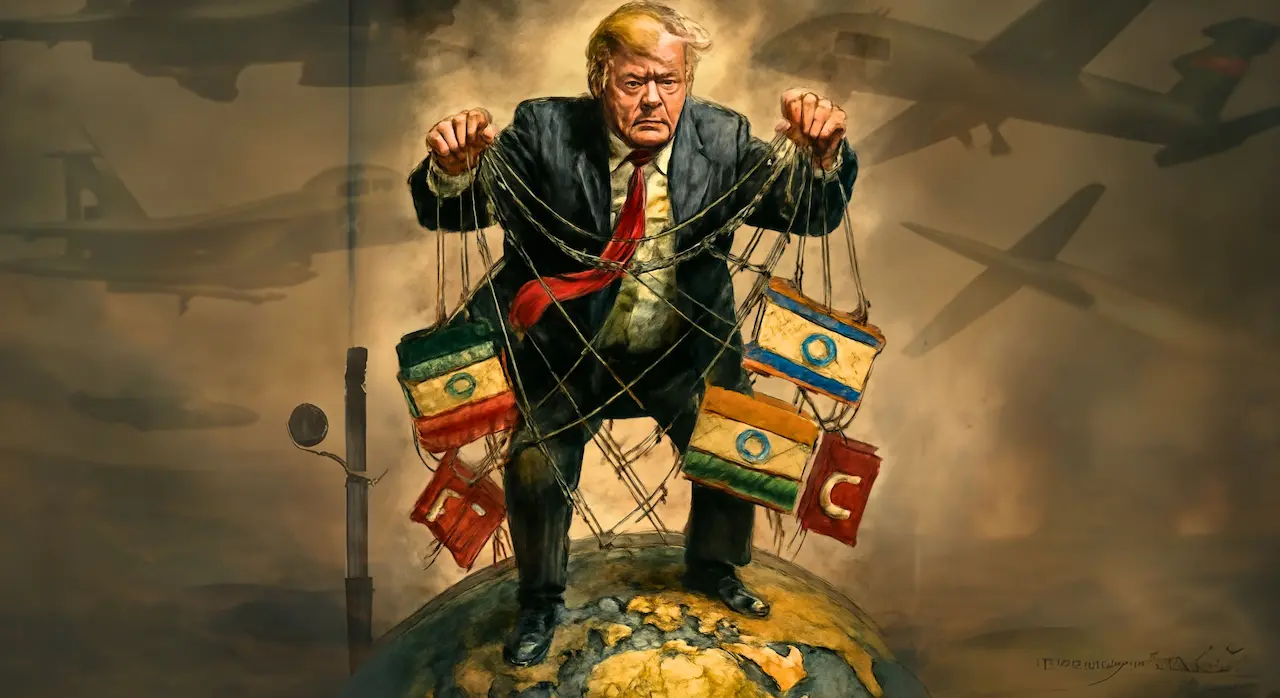
Donald Trump’s latest tirade, branding Iran’s Supreme Leader Ayatollah Khamenei as “public enemy number one”, is not just diplomatically reckless—it is symptomatic of a larger pattern of impulsive, performative politics that has defined his presidency. Tehran’s foreign ministry rightly condemned this language as “disrespectful and condemnable”, highlighting that anyone genuinely interested in reviving the nuclear accord would refrain from juvenile name-calling and instead propose concrete, verifiable steps on sanctions relief and oil exports. But Trump has never been one for nuance or statesmanship. He thrives on antagonism, not diplomacy—on applause lines, not peace accords.
This isn’t just a blip—it’s a continuation of a dangerous trend. Since taking office, Trump has repeatedly undermined global stability with decisions that prioritise ego over evidence. From withdrawing from the Iran nuclear deal to cosying up with authoritarian regimes, from igniting trade wars to walking away from climate commitments, his presidency has been marked by shortsighted bravado and erratic policymaking. His foreign policy has oscillated between erratic isolationism and aggressive interventionism, leaving allies alienated and adversaries emboldened.
Now, as the former “most powerful man in the world”, Trump appears increasingly out of touch and desperate to stay relevant. His inflammatory remarks serve more as campaign props than serious policy positions. By reducing complex geopolitical crises to soundbites and insults, he risks not just sabotaging fragile diplomacy but reigniting tensions in a region already teetering on the edge—particularly in light of recent Israel-Iran flashpoints.
Trump’s renewed push for a trade deal with India, coming on the heels of the Iran-Israel ceasefire, is equally fraught with contradictions. While he boasts about a “very big deal”, he also admits that dismantling trade barriers is almost “unimaginable”. It’s classic Trump: making grandiose promises while acknowledging the improbability of their fulfilment. His desire to counterbalance China’s influence in Asia by leveraging India is strategically sound, but his track record—rife with erratic tariffs, protectionist bluster, and diplomatic gaffes—gives little reason for optimism.
The tragedy of Trump’s presidency is not just in the poor decisions—it’s in how predictably they are repeated. In the name of strength, he weakened alliances. In pursuit of deals, he destroyed trust. And now, even as he postures for another shot at power, his relevance is eroding—not because of partisan politics, but because the world has learnt to brace itself against his chaos.
What remains is a sobering question: how long will we continue to let spectacle replace strategy? How many more crises must we endure before leadership is measured not in volume, but in vision?
