


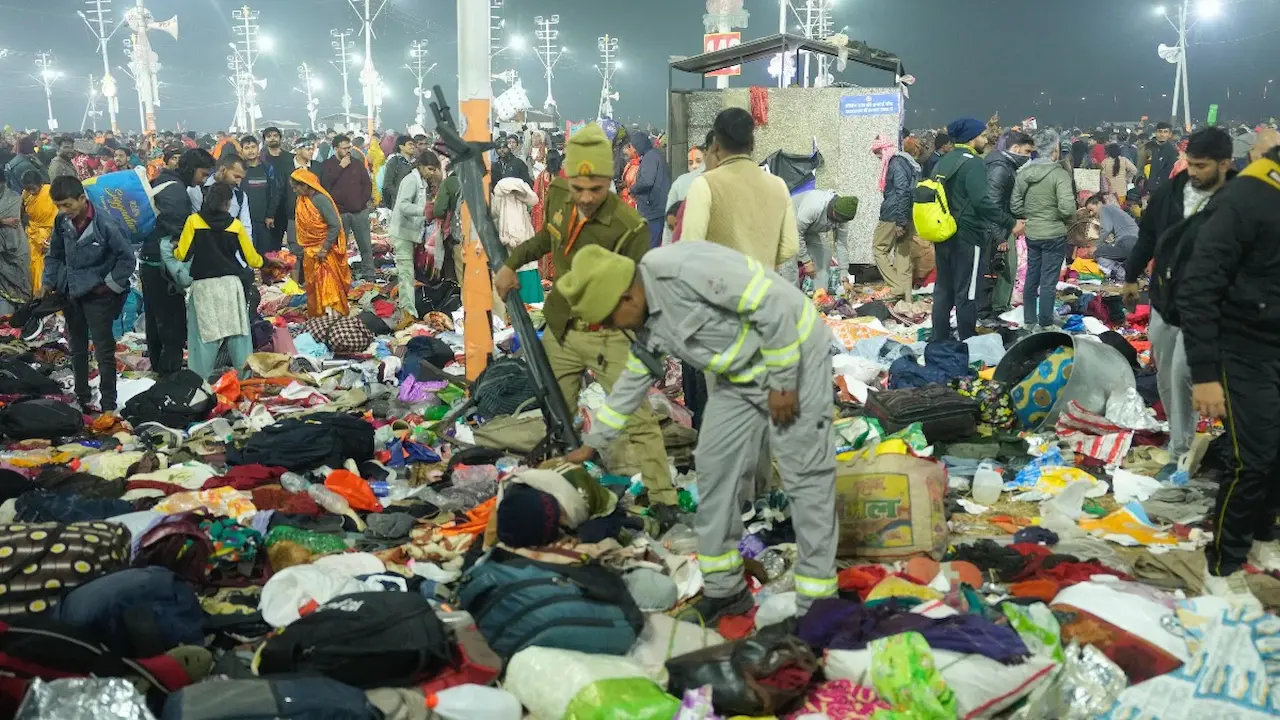
The words of my Guru Maharaj echo a profound truth—“If the Bhajans of saints cannot bring welfare to the people, then what is the use of those Bhajans?” This statement compels us to reflect on the recent tragic events at the Maha Kumbh Mela, where lakhs of saints, Mahatmas, Mahamandaleshwars, and revered spiritual leaders congregated, embodying divinity in the eyes of the masses. Devotees bowed before them, placing their unwavering faith in their spiritual presence, believing that their mere existence was a shield of divine protection. Yet, despite their collective prayers, Sadhana, and spiritual authority, they could not prevent the merciless crushing of innocent lives in a devastating stampede.
If their spiritual energy, their Bhajans, and their immense power could not avert such a catastrophe, then what role did they truly serve during this horrifying incident? Was their presence merely symbolic, an ornamental display of spiritual leadership that failed when the people needed them the most? If they are indeed just ordinary human beings, then why are they exalted and glorified to such an extent? And if they are truly divine figures, then where was their divine intervention when chaos engulfed the sacred grounds?
It is convenient to dismiss this tragedy as “the result of karma” or “the law of destiny,” absolving all responsibility in the name of fate. But is that the true essence of sainthood? Is the role of saints confined to rituals within the boundaries of their ashrams and akhadas, while the suffering of the common man remains an external matter? Shouldn’t those who are regarded as supreme spiritual figures step forward, console the grieving, and offer tangible support to the affected families instead of leaving them at the mercy of an inefficient administration? The very presence of these saints should have been a beacon of solace and guidance in the wake of such an ordeal, yet their inaction raises unsettling questions about the true meaning of their spiritual leadership. Instead, it was the nameless monks, those without grand titles or exalted positions, who tore their own robes and shared their meager food with the afflicted. These monks demonstrated a spirit of selflessness that put the so-called supreme saints to shame.
However, the burden of responsibility does not rest solely on the shoulders of the saints. The government, which had months to prepare for this colossal gathering, failed miserably in executing an efficient crowd management plan. Indian authorities have now ordered a probe into the stampede at the Maha Kumbh Mela, which claimed dozens of lives on Mauni Amavasya as millions of devotees converged for a “holy dip” in the sacred waters. The disaster unfolded in the pre-dawn hours, with an overwhelming surge of pilgrims eager to bathe at the auspicious hour. The magnitude of the gathering was evident from the fact that by 2 AM, the Sangam nose was teeming with people to the point where there was no space for those who had already completed their rituals to exit.
Despite a well-documented history of stampedes at major religious gatherings, the authorities once again proved their inefficiency. The tragic stampede occurred precisely when the religious fervor was at its peak, between 2 AM and 2:30 AM, as an unprecedented number of devotees pushed forward in an attempt to reach the water. The administration, unprepared for such an overwhelming crowd, failed to implement a controlled, phased entry and exit system. Ambulances were hurriedly dispatched, ferrying the injured and deceased to the Central Hospital at Mahakumbh Nagar. According to eyewitnesses, one of the primary causes of the disaster was the failure of barricades, which were meant to regulate the crowd but collapsed under pressure. The tragic irony is that while arrangements were in place to facilitate VIP movement, no robust measures were prioritised to protect the common devotees.
The response from the Yogi-led Uttar Pradesh government has been lackluster at best. After facing massive backlash, the administration belatedly announced restrictions on VIP movement during major bathing days. Moving forward, VIPs and VVIPs visiting Prayagraj for significant occasions such as Vasant Panchami, Magh Purnima, and Mahashivratri would no longer receive special privileges. While this reactionary measure might seem like a corrective step, it does nothing to address the fundamental issue of administrative negligence that led to the deaths of innocent pilgrims.
As if one tragedy was not enough, another disaster followed. In a separate incident, at least 15 tents were reduced to ashes in a fire that broke out near Chamanganj Chowki outside Sector 22 in the Maha Kumbh Mela area. Officials have claimed that there were no casualties, but this marks the third fire-related incident in the span of a few weeks. The first occurred on January 19 near a railway bridge in Sector 19, and the second on January 20 at a tent in Sector 5. The sheer frequency of such accidents at an event of this magnitude is alarming and raises questions about fire safety measures, emergency preparedness, and the overall governance of the festival.
In an attempt to pacify public outrage, the Uttar Pradesh government announced a financial compensation of ₹25 lakh for the families of the deceased. Chief Minister Yogi Adityanath also ordered a judicial inquiry, promising that a committee would submit a report within a stipulated time frame. However, the reality is that such inquiries are often nothing more than bureaucratic exercises aimed at damage control. The government, instead of taking full accountability for the lapses in crowd management, fire safety, and medical preparedness, has sought to wash its hands of the incident by offering financial compensation and forming committees that rarely result in real reform.
The Maha Kumbh Mela is not merely a festival; it is a confluence of faith, a sacred occasion where millions seek divine blessings. But when faith turns into tragedy due to mismanagement, negligence, and misplaced priorities, both spiritual and governmental authorities must be held accountable. Saints cannot hide behind the veil of divinity without stepping up when their devotees are in distress. Likewise, the government cannot continue to prioritize optics over safety while innocent lives are lost in the chaos. If we do not demand accountability now, then how many more tragedies will it take before real action is taken?
