


First came the ban, then the backlash, and finally the burning. Nepal’s descent into turmoil followed a brutal rhythm. The government thought it could silence anger with a sweeping order that blocked social media platforms, but instead it ignited it. For a generation already exhausted by unemployment, corruption, and nepotism, the ban became the spark. Within days, protests erupted across the country, police cracked down with bullets and batons, and the state’s attempt to shut down dissent only made the dissent louder. Nineteen lives were lost, hundreds wounded, and the government’s hasty reversal of the ban could not put the genie back in the bottle. Trust had evaporated.
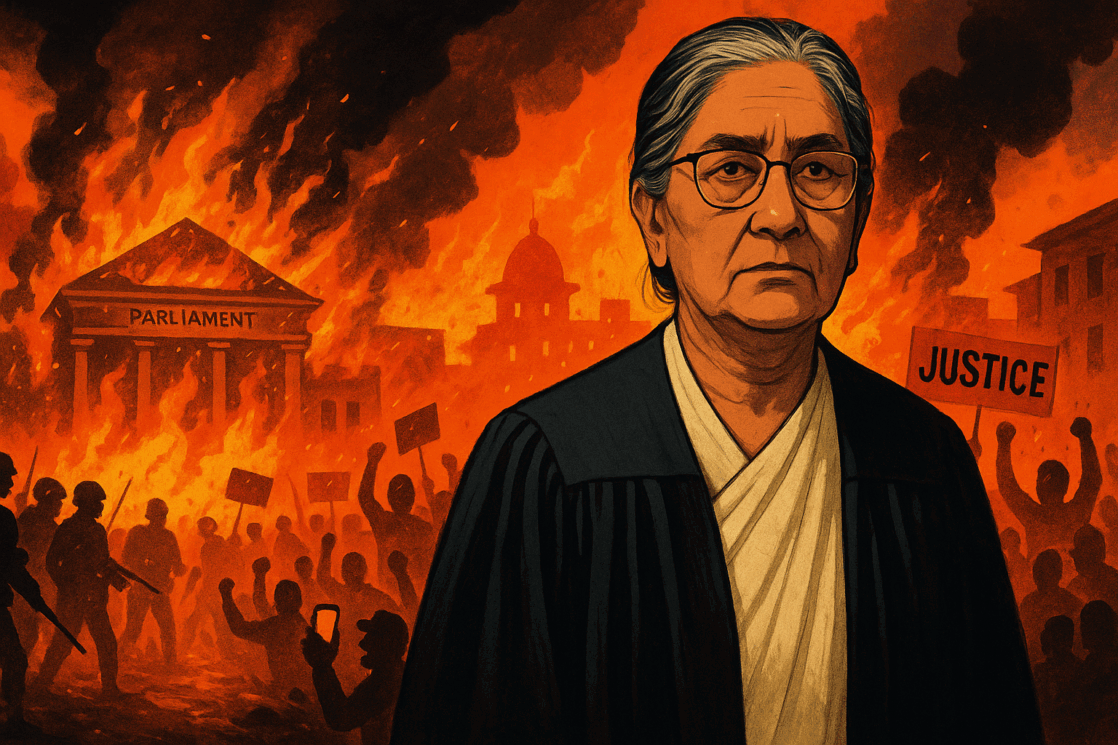
In Kathmandu, fury turned physical. Parliament and ministers’ homes were torched, the capital was locked under curfew, and soldiers patrolled the streets. Prime Minister Oli’s resignation was inevitable, leaving a vacuum no politician could credibly fill. Years of coalition deals, patronage politics, and institutional capture had stripped ministers of any moral armour. When the youth saw the state collapse, they took law and order into their own hands, not out of romance but out of rage.
Out of this chaos, one name cut through the noise: Sushila Karki. A former Chief Justice with a reputation for honesty, she had once stared down politicians who tried to impeach her for blocking their manipulations in police appointments. She had jailed a minister for corruption, stood firm against pressure, and left office with clean hands. In a moment when the streets demanded neutrality and integrity, Karki became the obvious choice. In a four-hour virtual meeting with thousands of young participants, the organisers agreed that no one linked to political parties could be trusted. They turned instead to Karki, a woman with no cadre to command, no debts to pay, and no appetite for compromise with the rot.
Her candidacy is not born of populism but necessity. The protesters do not want a saviour; they want a caretaker who can restore the rulebook, bring back credibility, and lead the country into fair negotiations. By rallying around her, they are sending a clear signal: they are done with the old games of patronage and power-sharing. They want an interim leader who is respected, untainted, and strong enough to stare down both corrupt elites and heavy-handed security forces.
Nepal today is not merely in disorder—it is in moral collapse. The parliament has been literally burned, but it was politically burned long before. In that inferno, Sushila Karki does not look like an outsider or a gamble. She looks like the last credible tool left to reset the system.
