Tragic Fire at Jhansi Medical College NICU Claims Lives of 10 Newborns 2
A devastating fire broke out in the Neonatal Intensive Care Unit (NICU) of the Maharani Laxmi Bai Medical College in Jhansi, Uttar Pradesh, late Friday night, claiming the lives of at least 10 children.
District Magistrate (DM) Avinash Kumar confirmed the tragedy, stating that the fire likely resulted from an electrical short circuit. It erupted around 10:45 PM, engulfing the NICU, which housed vulnerable newborns.
“The children in the outer part of the NICU were successfully rescued, along with some from the interior. However, preliminary reports confirm the unfortunate deaths of 10 children,” Kumar said.
Rescue and Relief Efforts
Emergency services, including the fire brigade and senior district officials, rushed to the site to contain the blaze and manage evacuation efforts. Visuals from the scene showed distraught parents and caregivers scrambling to safety, while police and medical staff worked tirelessly to rescue patients.
Chief Minister Yogi Adityanath expressed his condolences and directed officials to provide immediate treatment to the injured. In a statement from Lucknow, he also called for a thorough investigation into the incident.
Immediate Government Response
Deputy Chief Minister and Health Minister Brajesh Pathak, along with the principal secretary of health, were dispatched to Jhansi on the CM’s instructions.
Adityanath has demanded a detailed report on the tragedy from the divisional commissioner of Jhansi and the deputy inspector general of the police range within 12 hours.
The fire highlights ongoing concerns about safety protocols in public healthcare facilities and has raised questions about the state’s preparedness for such emergencies.
The families of the deceased are calling for accountability and justice as the authorities work to uncover the cause of the fire and prevent similar incidents in the future.
Amit Shah Challenges Rahul Gandhi to Praise Savarkar and Bal Thackeray Ahead of Maharashtra Polls 4
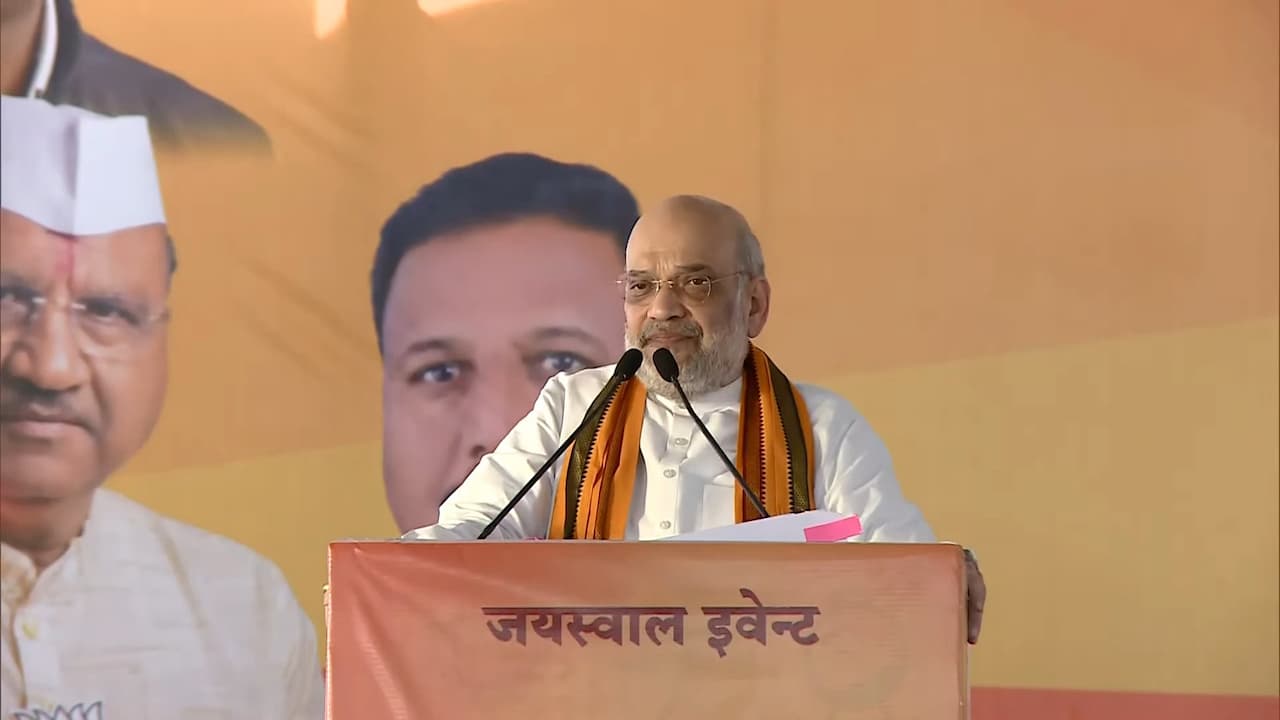
Union Home Minister Amit Shah, addressing a rally in poll-bound Maharashtra’s Hingoli on Friday, launched a fierce attack on Congress leader Rahul Gandhi and the opposition alliance. Shah dared Gandhi to praise Veer Savarkar and Shiv Sena founder Bal Thackeray, while accusing the Congress-led alliance of disrespecting Maharashtra’s cultural icons.
“Rahul Baba, if you have the courage, praise your friend Uddhav Thackeray’s father, the great Balasaheb Thackeray, for two minutes. Uddhav ji, get Rahul Baba to speak two good words about Veer Savarkar and Balasaheb,” Shah said.
Shah framed the assembly elections in Maharashtra as a choice between the legacy of Chhatrapati Shivaji Maharaj and Veer Savarkar versus the path of Aurangzeb.
“The upcoming election will determine whether Maharashtra follows the path of Chhatrapati Shivaji Maharaj and Veer Savarkar or the path of Aurangzeb. Our Mahayuti alliance has chosen Shivaji Maharaj and Savarkar without hesitation, while the opposition seems like an Aurangzeb fan club,” he said.
Shah highlighted Prime Minister Narendra Modi’s achievements, including the construction of the Ram temple in Ayodhya and the Kashi Vishwanath corridor, contrasting them with alleged Congress obstruction.
Criticism of Rahul Gandhi
Shah took a jibe at Gandhi, comparing him to a repeatedly crashing airplane. “Sonia ji has tried to land the plane named Rahul Baba 20 times, and each time it has crashed. Now, the 21st attempt is being made in Maharashtra, but it will crash again,” Shah quipped.
He also pointed to the BJP’s recent victory in Haryana as evidence of Congress’s overconfidence leading to failure.
“In the Haryana elections, Rahul Baba claimed victory prematurely, but Congress was wiped out. The same will happen in Maharashtra,” he added.
Ram Temple and Waqf Act Controversy
Shah touched upon the contentious Waqf Board issue, accusing the Congress of opposing reforms. “For 70 years, Congress blocked the Ram temple’s construction. Modi ji made it a reality. Now, the Congress and its allies oppose amendments to the Waqf Act, but the Modi government will push through these reforms,” he asserted.
Article 370 and NDA Confidence
Shah also dismissed Congress’s resolution to reinstate Article 370 in Jammu and Kashmir. “Rahul Baba’s Congress passed a resolution to bring back Article 370. Let me make it clear–neither Rahul Gandhi nor his fourth generation will be able to do this,” he declared.
Concluding his speech, Shah expressed confidence in the National Democratic Alliance (NDA), citing widespread public support.
“Every sister in Maharashtra stands with Eknath Shinde and Devendra Fadnavis. The Mahayuti government will form again to serve the people of Maharashtra,” he said.
Maharashtra will vote on November 20, with counting set for November 23.
The Outcome of 2024 Maharashtra Elections Are Highly Uncertain 6
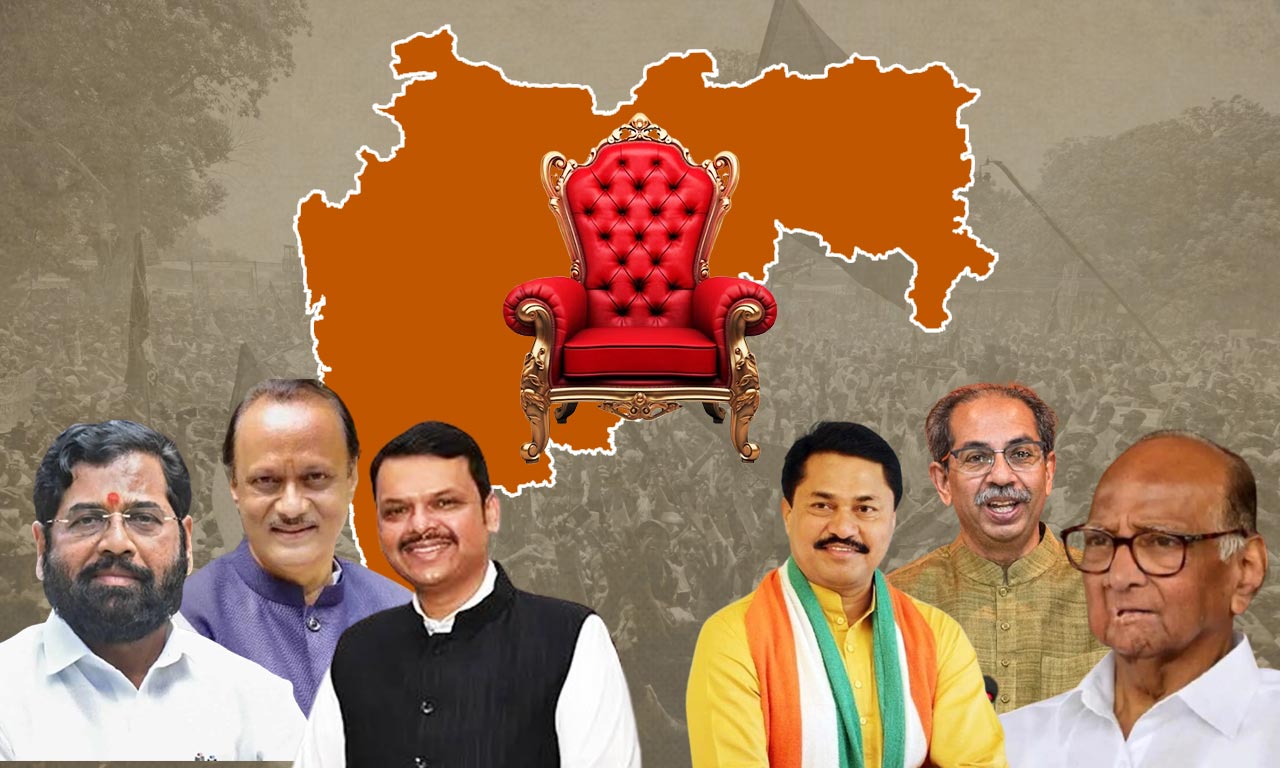
The Maharashtra Assembly elections this year are shaping up to be one of the most fiercely contested in the state’s history. With six major political parties and two key alliances striving for power, the outcome is highly uncertain, and it is difficult to predict which party will emerge victorious. The results will not only decide the future of Maharashtra but could also have significant implications for national politics.
Since the Congress government came to power in Maharashtra in 1990, the state has witnessed six assembly elections, and in each of them, no single party has been able to secure a clear majority. Coalition governments have been the norm, and this trend is expected to continue in the upcoming elections. Maharashtra, home to India’s financial capital Mumbai, has been politically volatile in recent years, with three different chief ministers and three distinct governments over the past five years.
The major players in this election are the Bharatiya Janata Party (BJP), the Shiv Sena (Shinde group), the Nationalist Congress Party (NCP), the Congress, Uddhav Thackeray’s Shiv Sena (Uddhav faction), and Raj Thackeray’s Maharashtra Navnirman Sena (MNS). The state has experienced a major rift between Shiv Sena factions led by Uddhav Thackeray and Eknath Shinde, as well as a split in the NCP. The Election Commission has recognized both factions, granting them separate party symbols and identities.
On one side, the BJP is leading an alliance that includes the Shiv Sena (Shinde faction) and NCP (Ajit Pawar faction) under the banner of the Maha Yuti, while on the other, the Congress, Uddhav Thackeray’s Shiv Sena (Uddhav faction), and NCP (Sharad Pawar faction) are united in the Maha Aghadi alliance. The two alliances are in a fierce battle for dominance, with each trying to outmaneuver the other in terms of support from voters.
Veteran leaders like Sharad Pawar, who is 84, and Prime Minister Narendra Modi, along with key figures such as Union Home Minister Amit Shah, Chief Minister Eknath Shinde, Deputy Chief Minister Devendra Fadnavis, and Ajit Pawar, are all actively campaigning in the state, aiming to consolidate their support base. Eknath Shinde, a former Shiv Sena leader, has become a key figure in Maharashtra’s political landscape after his rebellion in July 2022. His leadership and the subsequent shift in allegiance to the BJP have sparked intense political battles within the state.
Uddhav Thackeray’s faction has accused Shinde and his 40 rebel MLAs of betrayal, claiming that Shinde’s defection is a blow to the legacy of Balasaheb Thackeray. The Shiv Sena’s split has added a personal dimension to the political battle, with Uddhav’s supporters focusing on themes of loyalty and betrayal. Shinde, on the other hand, has emphasized his commitment to Balasaheb Thackeray’s Hindutva ideology and his efforts to restore Shiv Sena’s glory in the state.
The rivalry between Eknath Shinde and Uddhav Thackeray has escalated since Shinde’s rebellion, with both leaders keen to prove their legitimacy and leadership. In the 2019 Lok Sabha elections, Shinde’s faction, contesting under the Shiv Sena banner, won seven seats out of 15 contested, outperforming Uddhav’s faction, which failed to secure a significant victory. Now, Shinde faces the challenge of proving his mettle once again in the assembly elections.
Uddhav Thackeray, for his part, is working to regain the support of key vote banks. In the Lok Sabha elections, Muslim voters played a significant role in bolstering Uddhav’s alliance, and the same will be crucial in the assembly elections. However, it remains to be seen whether this vote bank will continue to favor the Uddhav-led Shiv Sena, especially as the political dynamics shift.
Thackeray’s appeal as a leader who faced personal and political setbacks following his government’s collapse has not yielded significant gains thus far. His efforts to portray himself as a victim of betrayal and highlight his leadership during the COVID-19 crisis did not translate into electoral success in the Lok Sabha elections. Whether this narrative will resonate with voters in the upcoming assembly polls remains to be seen.
The outcome of this election is critical for the future of the Shiv Sena and Uddhav Thackeray’s political career. A defeat could severely diminish his influence over the party, and with it, the Thackeray family’s longstanding dominance in the party’s decision-making. Meanwhile, Eknath Shinde’s faction appears to have solidified its position, with Shinde’s hands-on leadership and his accessibility to party workers earning him significant support.
For the Uddhav faction, maintaining its relevance will be a challenge. While the Thackeray family continues to wield considerable influence, it is clear that the political landscape is rapidly changing. With the fate of key leaders and parties on the line, the November 20 polls will likely determine not only the future of Maharashtra’s politics but also the direction of the state’s power dynamics in the years to come.
Sri Lankan President's NPP Achieves Parliamentary Majority with Historic Win in Tamil Districts 8
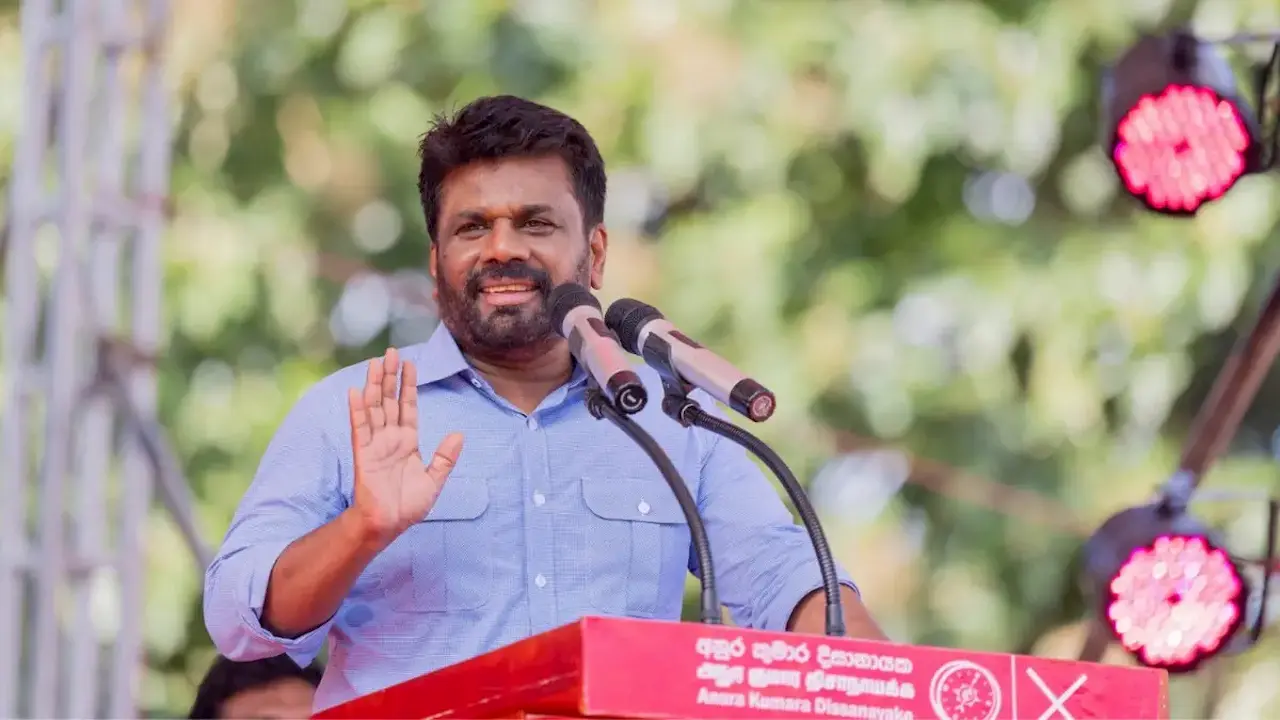
Sri Lanka’s National People’s Power (NPP), led by President Anura Kumara Dissanayake, achieved a decisive parliamentary majority on Thursday, securing 123 out of 171 declared seats, as confirmed by the election commission.
The NPP, contesting under the Malimawa (compass) symbol, received approximately 6.8 million votes, representing 61% of the total votes counted, positioning the party far ahead of its rivals. With 25 seats left to be declared and an additional 29 seats to be allocated based on national polling, the NPP is on track to reach a two-thirds majority. This would bring the party to an absolute majority of 150 seats in Sri Lanka’s 225-member parliament.
A major electoral milestone was achieved in the Tamil-majority Jaffna district, traditionally dominated by Tamil nationalist parties. The NPP, a Sinhala-majority party from southern Sri Lanka, won three out of six seats in Jaffna, marking the first time a Sinhala-majority party has won multiple seats in this culturally significant Tamil district. President Dissanayake hailed this victory as evidence of NPP’s acceptance across communities, stating, “The era of dividing and setting one community against the other has ended as people are embracing the NPP.”
The NPP, originally the Janatha Vimukthi Peramuna (JVP), had historically opposed power-sharing, a significant demand among Tamil communities. However, this shift indicates a newfound appeal of the NPP across Sri Lanka’s ethnic lines.
President Dissanayake dismissed parliament immediately upon assuming office in September, calling for this election one year ahead of schedule. The newly elected parliament is set to convene next week.
Over 12 Lakh Sugarcane Cutters May Miss Voting in Maharashtra Elections; Urgent Plea for Voting Rights 10
More than 12 lakh sugarcane cutters from Marathwada, North Maharashtra, and Vidarbha could be deprived of their voting rights in the upcoming Maharashtra assembly elections on November 20. With the cane-crushing season set to start on November 15, many of these workers have already migrated to sugarcane belts in Western Maharashtra and other states, according to the Maharashtra Sugarcane Cutters and Transport Association.
The association has filed a petition in the Aurangabad High Court, urging the court to direct the Election Commission to ensure these migrant workers can vote. Jeevan Rathod, president of the association, stated in the petition that 12–15 lakh cutters move to regions in Maharashtra, Karnataka, Telangana, Andhra Pradesh, and Tamil Nadu before harvesting begins. These workers, once migrated, typically do not return until April or May 2025.
“If such a large segment of the population is denied voting rights, it undermines participative democracy,” Rathod told PTI. He emphasized that in Maharashtra’s diverse political landscape, these votes could be crucial as victory margins are often slim.
In their plea, the association requested the court to consider measures like postal ballots or transportation to enable migrant workers to return home to vote and then resume work. They also appealed for a holiday on election day for sugarcane cutters, coordinated by the state’s Sugar Commissioner, the Maharashtra State Cooperative Sugar Factories Federation Limited, and the West Indian Sugar Mills Association.
BB Thombare, president of the West Indian Sugar Mills Association, assured that the workers would not be denied their voting rights. He mentioned that operations at sugar factories typically halt on election day, and arrangements are made for workers to travel back to their constituencies to vote. This year, due to the elections, the crushing season start date was pushed to November 15.
However, the petition has prompted discussions about possibly delaying the season even further to November 25. This change, while beneficial for the cutters, could impact approximately 50 lakh sugarcane growers, as delays could reduce yield and affect the next crop cycle. Following discussions with the Sugar Commissioner, permission was granted on Thursday night to begin cane crushing on November 15.
Delhi's Air Quality Hits 'Severe' Levels for Third Day; GRAP-III Curbs Enforced to Combat Pollution Crisis 12
Delhi implemented Stage III of the Graded Response Action Plan (GRAP) on Friday as the city’s air quality continued to deteriorate, remaining in the “severe” category for the third consecutive day. The Air Quality Index (AQI) at 9 am recorded a reading of 411, marking another day in the “severe” range (400 to 500), according to the Sameer app.
The Commission for Air Quality Management (CAQM) imposed these GRAP-III restrictions following two days of “severe” air quality, with Delhi experiencing the highest pollution levels in the nation. Delhi’s AQI had previously been in the “very poor” category for 14 consecutive days before tipping into the severe range.
GRAP’s four stages of air quality restrictions include:
Stage I: “Poor” AQI (201-300)
Stage II: “Very Poor” AQI (301-400)
Stage III: “Severe” AQI (401-450)
Stage IV: “Severe Plus” AQI (450+)
Stage III Curbs include a ban on non-essential construction and demolition activities, the closure of stone crushers, and suspension of mining operations in Delhi and the National Capital Region (NCR). Stage IV restrictions would enforce more stringent measures, such as restricting inter-state bus entry to electric, CNG, and BS-VI diesel vehicles only, banning most construction activities, and considering online classes for young students.
Currently, 27 out of 39 air quality monitoring stations in Delhi recorded AQI levels above 400, indicating severe air pollution. Areas with the worst air quality include Alipur, Anand Vihar, Jahangirpuri, and ITO.
In addition to poor air quality, Delhi also experienced its lowest night temperature of the season, at 15.6°C, coupled with dense fog and high humidity, which reached 98% on Friday morning. Visibility was reduced to 400 meters in Safdarjung, as the city braced for further dense fog throughout the day.
For the past two days, Delhi has recorded the worst air quality levels in the country, underscoring the urgent need for heightened pollution control measures.
PTI Reporter and Cameraperson Brutally Assaulted in Tonk Amid Political Protest 14
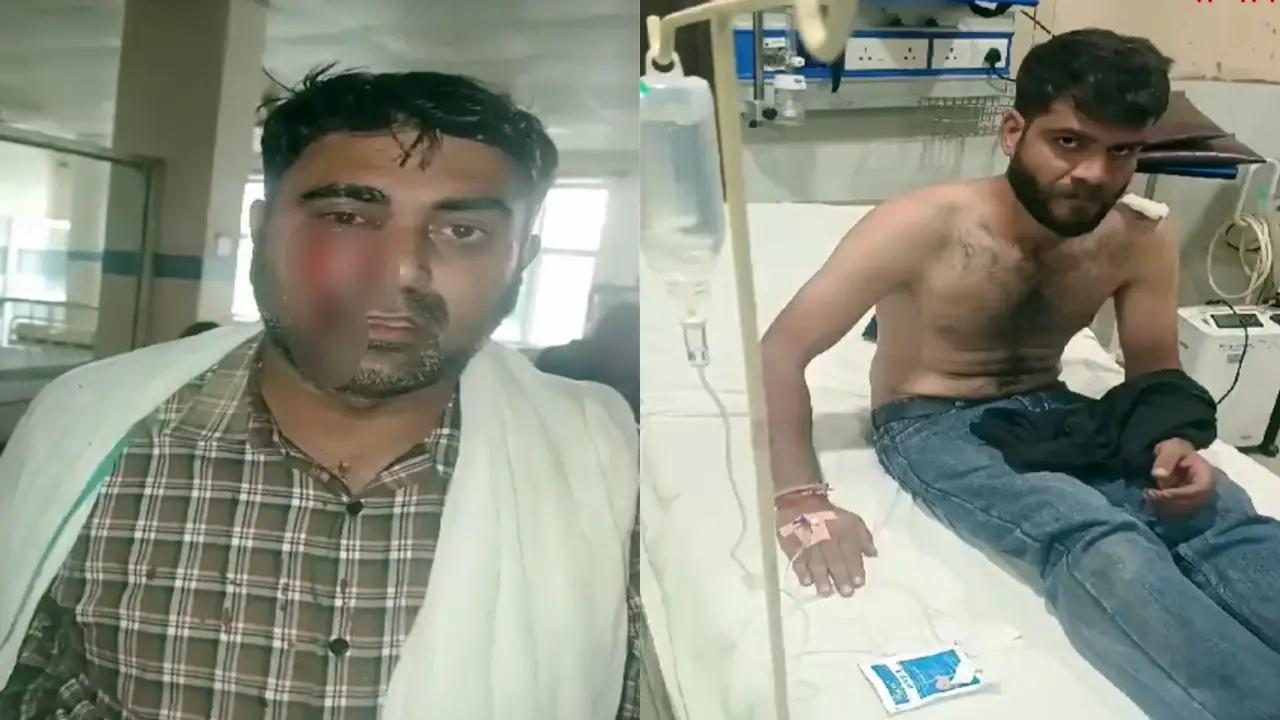
A PTI reporter and cameraperson were brutally assaulted by a mob while covering a protest in Tonk district on Thursday, following the arrest of Independent MLA candidate Naresh Meena. The attack left reporter Ajeet Shekhawat and cameraperson Dharmendra Kumar severely injured, and their camera was snatched and set ablaze by the mob.
In a selfie video sent to the PTI head office in Delhi, Shekhawat appeared with a visible injury below his left eye, while Kumar sustained a deep cut on his head and a possible fracture in his arm. Both journalists were rushed to the hospital with the help of a colleague.
The assault occurred just as the two were preparing to interview Agriculture Minister Kirodi Lal Meena, who had arrived at the scene to assess the escalating unrest. The violence initially erupted on Wednesday evening when police attempted to prevent supporters of Naresh Meena, a Congress rebel running as an Independent, from staging a sit-in protest. The conflict intensified after Naresh Meena was caught on camera slapping SDM Malpura Amit Chaudhary, who was on election duty.
The PTI team’s traumatic experience highlights the risks journalists face in volatile political environments, sparking calls for stronger protections for press personnel in conflict zones.
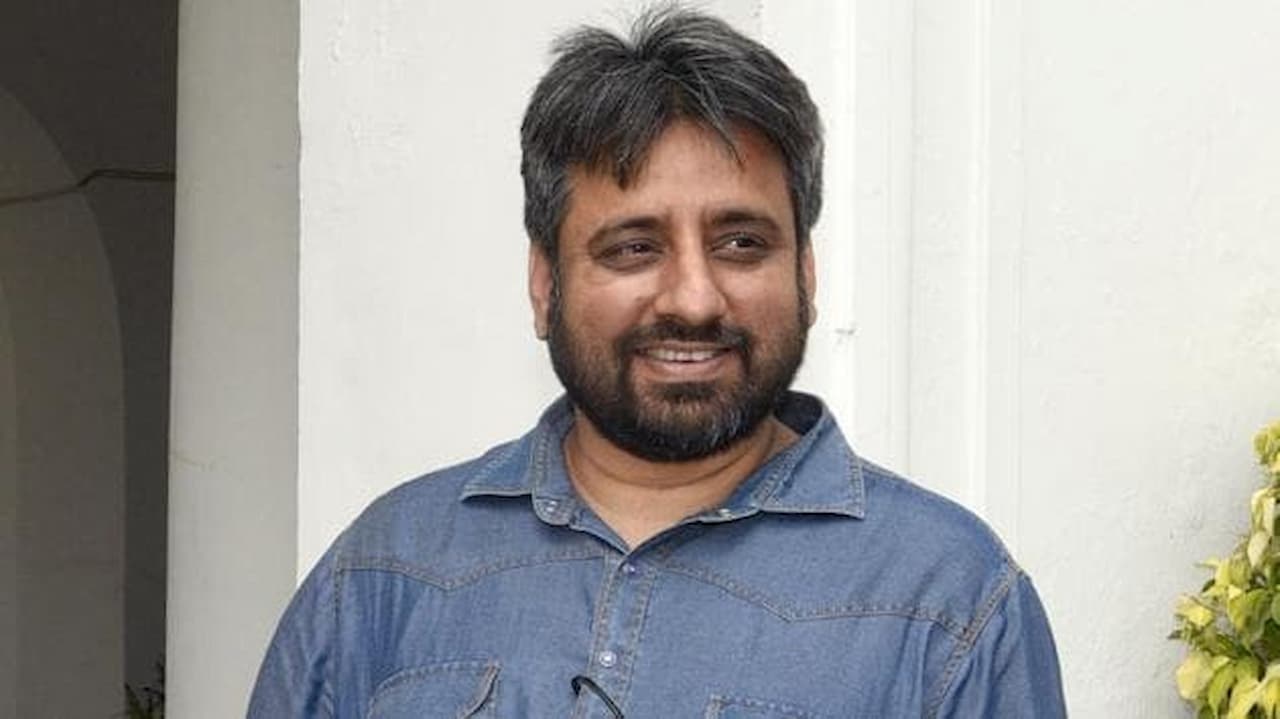
A court on Thursday refused to take cognisance of a chargesheet filed against AAP MLA Amanatullah Khan in a money laundering case related to alleged irregularities in the Delhi Waqf Board and ordered his “immediate release,” saying his further incarceration in the matter would be “illegal.”
Special Judge Jitendra Singh said that after going through the supplementary chargesheet and the documents filed with it, including the statement of the witnesses, there was sufficient ground to proceed against Khan.
However, no sanction from the competent authority/government was placed on record against him.
“Thus, cognisance against A-6 (Khan) is declined for the offence defined under Section 3 (money laundering) and punishable under Section 4 of the PMLA for the lack of requisite sanction,” the judge said while noting that Khan was a “public servant.”
He further said that in the case, “there is no legal ground to justify further detention of the accused in custody”.
“Keeping the accused in custody in these circumstances when the cognisance has been declined for the absence of sanction under section 197 (1) CrPC, shall tantamount to illegal custody. Under these circumstances, the accused has to be immediately released,” the judge said.
Special Judge Singh further issued an order for the release of Khan in the case after accepting his bail bond of Rs 1 lakh and a surety of like amount “for securing his presence in case the sanction is obtained and filed by the complainant (ED) in the future”.
The ED on October 29 filed a 110-page first supplementary prosecution complaint (ED’s equivalent of a chargesheet), claiming Khan laundered money that was allegedly generated through corruption in the Delhi Waqf Board.
The chargesheet had also named one Mariam Siddiqui, who was not arrested as an accused by the ED in the case. The court said there was no evidence to proceed against Siddiqui and discharged her.
“The case against Siddiqui is apparently based upon surmises and conjectures, as there exists no evidence, whether direct or circumstantial, against her. The SPC (supplementary prosecution complaint) lacks grounds for proceeding against Siddiqui. Accordingly, she is not summoned in the present case,” the judge said.
The ED had earlier urged the court to take cognisance of the chargesheet and said there was sufficient evidence to prosecute Khan and others in the case registered under the provisions of the Prevention of Money Laundering Act.
Khan was arrested on September 2 under the provisions of the PMLA by the ED, which conducting a search at his house in Delhi’s Okhla area. The AAP MLA was accused of being “evasive” when questioned by the probe agency.
The money laundering probe against him stems from two FIRs—the CBI’s case in connection with the alleged irregularities in the Waqf Board and an alleged disproportionate assets case registered by the Delhi Police anti-corruption unit.
'Batenge to Katenge' About Unity, Some Leaders Have Failed to Grasp Its 'Core' Meaning: Fadnavis 18
Maharashtra Deputy Chief Minister and senior BJP leader Devendra Fadnavis on Thursday said his party’s ‘batenge to katenge’ slogan is a counter-narrative to the MVA’s campaign and claimed his colleagues Ashok Chavan and Pankaja Munde, as well as Deputy CM Ajit Pawar, had failed to grasp its “core” meaning.
The slogan, frequently used by Uttar Pradesh CM Yogi Adityanath on the campaign trail for the November 20 Maharashtra polls, has united the opposition in its condemnation, which claims it has communal overtones, while even some ruling alliance leaders have frowned on it.
‘Batenge to katenge’ (disunity will lead to destruction) is a counter-narrative to the Congress-led Maha Vikas Aghadi’s divisive campaign, and the core message of the slogan is that “everyone has to stick together”, Fadnavis said during an interaction with select members of the media.
Foreign invaders ruled the land when society was divided, he further pointed out.
Asked about NCP chief Ajit Pawar as well as Chavan and Munde striking a different note on the slogan, the senior BJP leader said, “I believe they have not understood the core message of the slogan. ‘Batenge to katenge’ means everyone has to stick together. The Prime Minister has succinctly said ‘ek hai to safe hai’.”
“It does not mean we are against Muslims. The government has framed various welfare initiatives for all communities. Have we said the Ladki Bahin Yojana will not apply to Muslim women,” Fadnavis asked.
Explaining further, he said the Other Backward Classes comprise some 350 castes, who would not get importance if they are divided.
There are 54 groups under the Scheduled Caste segment and they are essential as long as they are together, Fadnavis said to underline his contention that the slogan emphasised unity.
“Batenge to katenge is also a response to the appeasement (politics) of the Congress and the MVA. They experimented with ‘vote jihad’ during Lok Sabha elections and posters were put up at mosques urging people to vote for a particular party. What kind of secularism is this,” he asked.
The Ulema Council has given a 17-point memorandum to the Congress, which includes a demand to withdraw cases against Muslims allegedly involved in riots between 2014 and 2024, Fadnavis said.
“If a particular community is creating pressure in this manner, and others are divided on caste lines, then your existence comes under a cloud. This (batenge to katenge) is a natural reaction,” the senior BJP leader claimed.
Fadnavis admitted the Maratha quota agitation has led to rift between the Marathas and OBCs and assured that the Mahayuti would provide a healing touch if it retains power.
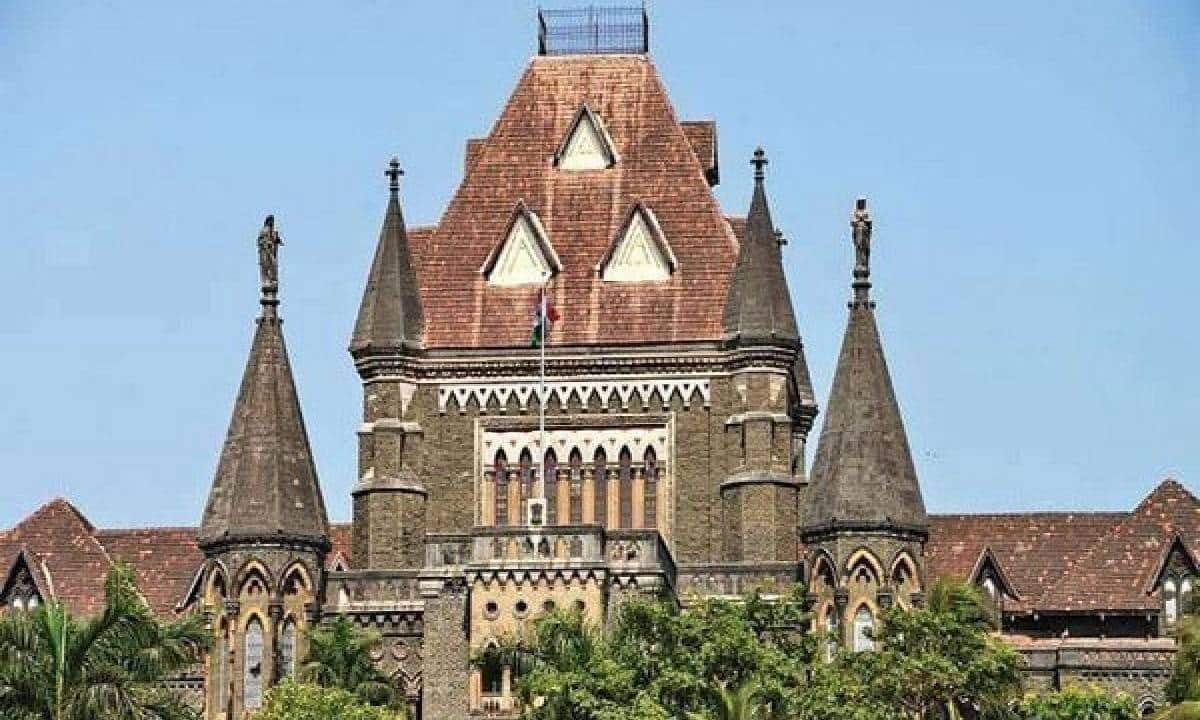
The Nagpur bench of the Bombay High Court has upheld a man’s conviction for raping his 55-year-old mother-in-law, calling the act “shameful” and underscoring the deep violation of trust.
Justice G.A. Sanap, presiding over the case, noted that the victim, who was of the same age as the convict’s mother, would never have imagined that her son-in-law would commit such a deplorable act, now leaving her with a lifelong stigma.
“The appellant defiled the womanhood of the prosecutrix, who, in her wildest dreams, could not have anticipated such a deplorable act,” observed the court. Justice Sanap further emphasized the trust breach, highlighting how the accused had exploited his familial relationship with the victim.
The accused challenged his 14-year sentence, issued by a sessions court in March 2022, arguing that the incident was consensual. The High Court dismissed this defense, emphasizing that the woman would not subject herself to the stigma and distress of a police report if the act had been consensual.
The incident reportedly occurred in December 2018. According to the prosecution, the convict, who was separated from the victim’s daughter, had quarreled with the victim, demanding that she intervene to reconcile his marriage. On the pretext of discussing matters further, he allegedly lured her to his residence, consumed alcohol, and committed the assault.
The High Court found the evidence submitted by the prosecution sufficient to uphold the sentence, deeming the punishment proportionate to the severity of the crime.