PM Modi and Spain's Pedro Sanchez Hold Roadshow in Vadodara, Launch India’s First Private Military Aircraft Facility 2
Prime Minister Narendra Modi and Spanish Prime Minister Pedro Sanchez held a roadshow in Vadodara, Gujarat, on Monday, traveling in an open jeep and greeting the crowd gathered on both sides of the 2.5-km route from the airport to the Tata aircraft complex.
The two leaders waved at spectators along the route, where performers showcased India’s rich cultural heritage. Their destination, the Tata Advanced Systems facility, is set to become India’s first private sector final assembly line (FAL) for military aircraft.
At the complex, the leaders will inaugurate the facility for Tata Advanced Systems to manufacture C-295 aircraft in collaboration with Airbus. This Vadodara facility will produce 40 aircraft, while Airbus will supply 16 directly, making this a major milestone in India’s defense manufacturing. Tata Advanced Systems will oversee the entire ecosystem, from manufacturing and assembly to testing, delivery, and life-cycle maintenance.
Public and private entities, including Bharat Electronics, Bharat Dynamics, and MSMEs, will contribute to this program. The foundation stone for the facility was laid by PM Modi in October 2022. After the inauguration, Modi and Sanchez will proceed to the historic Laxmi Vilas Palace for a bilateral meeting to strengthen ties between India and Spain.
Delhi's Air Quality Remains 'Very Poor' Despite Slight AQI Improvement, Minimum Temp Above Normal 4
Delhi residents started Monday with “very poor” air quality, though the Air Quality Index (AQI) showed a slight improvement compared to Sunday. The minimum temperature was recorded at 20.4°C, which is four degrees above the seasonal average, and the AQI at 9 a.m. stood at 327.
On Sunday, Delhi’s AQI had reached 359, according to data from the Central Pollution Control Board (CPCB).
For context, AQI levels from 0 to 50 are classified as ‘good’, 51 to 100 as ‘satisfactory’, 101 to 200 as ‘moderate’, 201 to 300 as ‘poor’, 301 to 400 as ‘very poor’, and 401 to 500 as ‘severe.’
The Indian Meteorological Department (IMD) reported a morning humidity level of 88%. The forecast for the day suggests predominantly clear skies, with the maximum temperature likely to hit around 34.2°C.
As Delhi’s air quality continues to hover at harmful levels, residents are advised to take precautions, especially vulnerable groups like children, the elderly, and those with respiratory issues.
2024 Maharashtra Elections: A Fight for Survival Between Rival Shiv Sena Factions 6
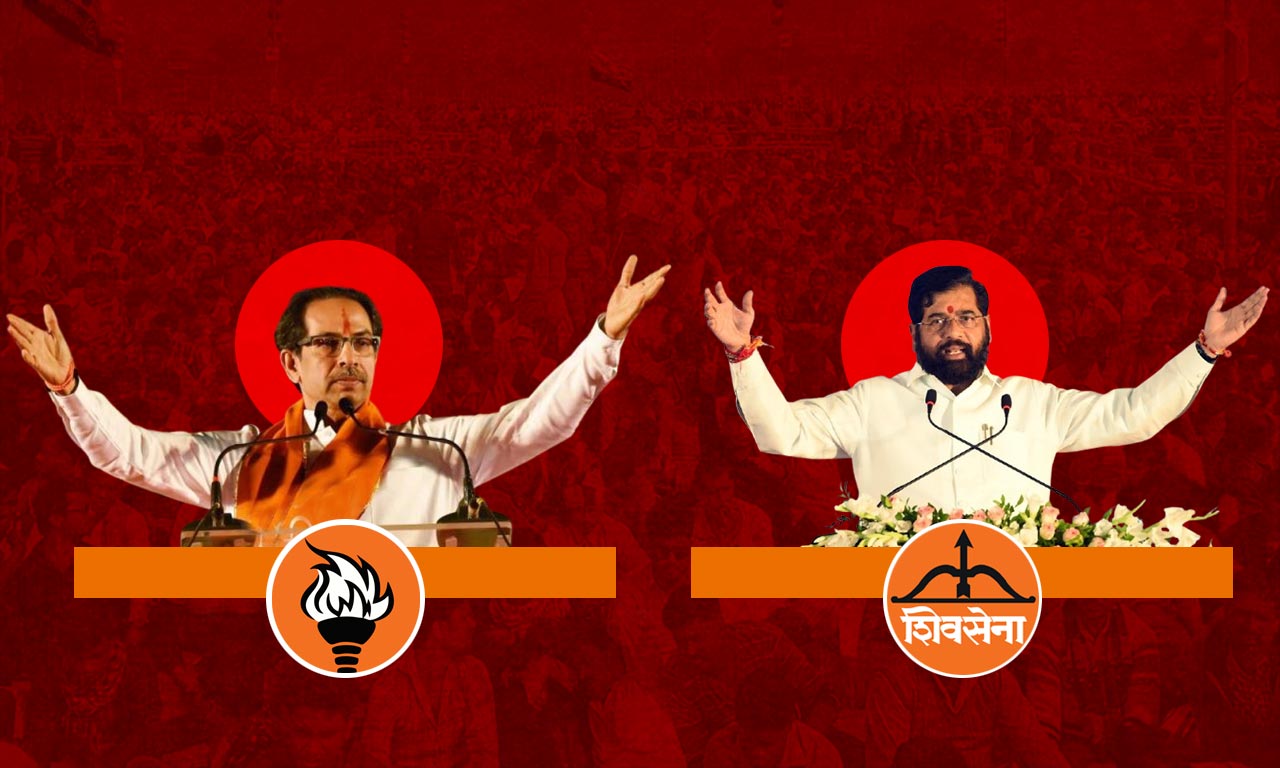
The 2024 Maharashtra elections are set to be a pivotal moment in the state’s political history, characterized by a fierce battle for survival between the two rival factions of the Shiv Sena. On one side is the Maha Vikas Aghadi (MVA), an alliance seeking a decisive win that could diminish the influence of Eknath Shinde, who currently leads a breakaway faction of the Shiv Sena. A victory for the MVA would not only consolidate its position but could also render Shinde politically vulnerable, potentially sidelining his faction. Conversely, a win for the ruling Mahayuti coalition, which includes the Bharatiya Janata Party (BJP), the Shinde-led Shiv Sena, and Ajit Pawar’s NCP faction, could significantly weaken the Uddhav Thackeray-led Shiv Sena, pushing it towards political irrelevance—similar to the fate of other regional parties like the Bahujan Samaj Party (BSP) after the Modi waves of 2014 and 2019. Yet, unlike many regional narratives that have succumbed to the BJP’s dominance, the split within the Shiv Sena is a story of personal ambitions, internal strife, and betrayal. This makes the 2024 elections not just a conventional political contest but a personal and ideological face-off between the MVA and the Mahayuti.
The Shinde-led faction is relying heavily on newly implemented welfare schemes to garner support, targeting key voter bases that might be swayed by tangible benefits. However, critics from the MVA argue that these schemes may not be as effective in securing votes as the Mahayuti hopes, pointing out that they predominantly benefit communities like Muslims and Dalits—demographics not traditionally aligned with the Mahayuti’s core electorate. Uddhav Thackeray, meanwhile, is positioning his faction as the true heir to the Shiv Sena’s legacy, using the slogan of “Marathi pride” to rally his base. The MVA’s narrative paints Shinde and his supporters as “gaddars” (traitors), hoping to resonate with voters who see the split as an affront to the party’s founding principles.
This struggle for control over the Shiv Sena’s legacy has its roots in the aftermath of the 2019 Maharashtra Assembly elections, when the BJP-Shiv Sena alliance won 161 out of 288 seats. Disagreements over the Chief Minister’s post led Uddhav Thackeray to sever ties with the BJP, forming the MVA coalition with the Nationalist Congress Party (NCP) and the Congress. Uddhav’s tenure as Chief Minister lasted for two and a half years until June 2022, when a rebellion led by Eknath Shinde—supported by the BJP—toppled his government, paving the way for Shinde to become Chief Minister. The rebellion and subsequent shift of power were not just political but deeply symbolic, as they underscored the fragmentation within a party that had been built on the charisma and vision of Balasaheb Thackeray.
The internal power struggle took a legal turn when the Election Commission recognized Shinde’s faction as the legitimate Shiv Sena, awarding it the bow-and-arrow symbol. This decision forced the Uddhav-led faction, now rebranded as Shiv Sena (Uddhav Balasaheb Thackeray) or SS (UBT), to adopt a new symbol, the flaming torch. The 2023 Lok Sabha elections, where the two factions ended in a near draw, highlighted the evenly matched nature of this rivalry, setting the stage for a more decisive confrontation in the upcoming state elections.
The Thackeray-led faction retains a stronghold in regions with a traditional Marathi-speaking voter base, including Mumbai, Konkan, and Marathwada. In the recent Lok Sabha elections, support from Muslim voters bolstered the faction’s standing, suggesting that Uddhav’s outreach to communities beyond the party’s core base could be a critical factor in the state polls. Meanwhile, smaller political players like RPI (Athavale) and various independent candidates are positioning themselves strategically, likely to side with the coalition that emerges victorious, making them key players in forming a stable government.
For the BJP, the 2024 elections pose significant challenges. The party’s vote share, which peaked at 42% during the height of the Modi wave in 2014, dropped to 36% in the 2019 elections due to a more fragmented opposition. Now, with a united opposition in the form of the MVA and growing anti-incumbency sentiments, the BJP must secure over 50% of the vote share to ensure a victory. A direct contest with the MVA, which combines the organizational strength of the Congress, NCP, and the SS (UBT), presents a daunting challenge for the BJP. This makes the strategy of creating internal divisions within the MVA, aiming for a three-way fight, a more feasible path to victory. In such a scenario, a consolidated 40% vote share could be enough for the Mahayuti to retain control of the state.
The political landscape is further complicated by the emergence of Maratha leader Manoj Jarange Patil, who has become a prominent critic of the BJP, especially targeting Deputy Chief Minister Devendra Fadnavis. Patil’s advocacy for Maratha reservation and his criticism of the BJP could sway a significant portion of the Maratha vote, traditionally a crucial demographic in Maharashtra’s elections. Some political observers believe that Shinde and Ajit Pawar may be strategically encouraging Jarange Patil’s stance to weaken the BJP’s standing among Marathas. If this strategy succeeds, and the Maratha vote shifts away from the BJP, it could pose a severe challenge to the ruling coalition. Conversely, a consolidation of Other Backward Class (OBC) votes in favor of the BJP could counterbalance these shifts, making the electoral outcome highly unpredictable. Meanwhile, MNS chief Raj Thackeray’s election strategy has crafted a highly strategic plan to keep both the Mahayuti and MVA alliances uncertain about his moves, both before and after the elections. He is aware that his party is unlikely to lead, but he is confident that the number of MNS MLAs elected could play a crucial role in determining which alliance ultimately comes to power.
As Maharashtra approaches the elections, the political environment remains highly fluid, characterized by frequent changes in alliances and leadership. The state has witnessed three different governments and three chief ministers in the past five years, a testament to the volatility and realignments that have shaped its politics. With two major alliances—the ruling Mahayuti and the opposition MVA—competing for power, the outcome will not only determine the political future of Maharashtra but could also have broader implications for national politics. A victory for the BJP-led Mahayuti could solidify Prime Minister Narendra Modi’s position ahead of the 2024 national elections, while a defeat could embolden opposition forces and potentially reshape the political landscape leading up to the general elections. The stakes have rarely been higher, making the 2024 Maharashtra elections a bellwether for the state and the nation.
Maharashtra Elections: Congress Releases Second List, Fields New Faces and Incumbents in Key Seats 8
The Congress on Saturday released its second list of candidates for the November 20 Maharashtra assembly elections, retaining sitting MLA Kailash Gorantyal from Jalna and nominating Anuja Kedar, the wife of party leader Sunil Kedar, for the Saoner seat.
The list follows discussions by the party’s Central Election Committee (CEC) on candidate selection for the polls. The Congress had earlier declared 48 candidates in its first list, bringing the total to 71 with this latest announcement.
Anuja Kedar is entering the race from Saoner in Nagpur district, replacing her husband, Sunil Kedar, who has been disqualified from contesting elections for six years following a conviction in the Nagpur District Central Cooperative Bank (NDCCB) scam. MLA Kailash Gorantyal has been retained in Jalna.
In its first list, Congress retained 25 incumbent MLAs. Senior leader and former deputy speaker Vasant Purke, who lost in 2019, will run again from Ralegaon (Yavatmal), while Shivajirao Moghe, also a 2019 contender, steps aside for his son Jitendra from the Arni seat (Yavatmal).
In Mumbai, the Congress has nominated Kalu Badheliya for Kandivali East, Ganesh Yadav for Sion Koliwada, and Yashwant Singh for Charkop. In other regions, Suresh Bhoyar will face off against state BJP chief Chandrashekar Bawankule at Kamptee (Nagpur), and Shekhar Shende, son of former assembly speaker Pramod Shende, will run in Wardha.
Speaking after the CEC meeting, party leader Ramesh Chennithala, the All India Congress Committee (AICC) in-charge for Maharashtra, emphasized the party’s unity within the Maha Vikas Aghadi (MVA) alliance. “The MVA is contesting unitedly, and we have no differences. We will fight together to realize the dreams of the people of Maharashtra,” Chennithala said, expressing confidence in MVA’s victory.
Maharashtra Pradesh Congress Committee (PCC) chief Nana Patole stated that MVA expects to perform even better in the assembly polls than in the Lok Sabha elections, aiming to form a full-majority government. AICC general secretary K.C. Venugopal echoed this sentiment on X, sharing photos of the CEC meeting and expressing optimism for an MVA win.
The Congress previously announced its first list of candidates, which included Patole running from Sakoli, former chief minister Prithviraj Chavan from Karad South, and Leader of the Opposition Vijay Wadettiwar from Brahmapuri.
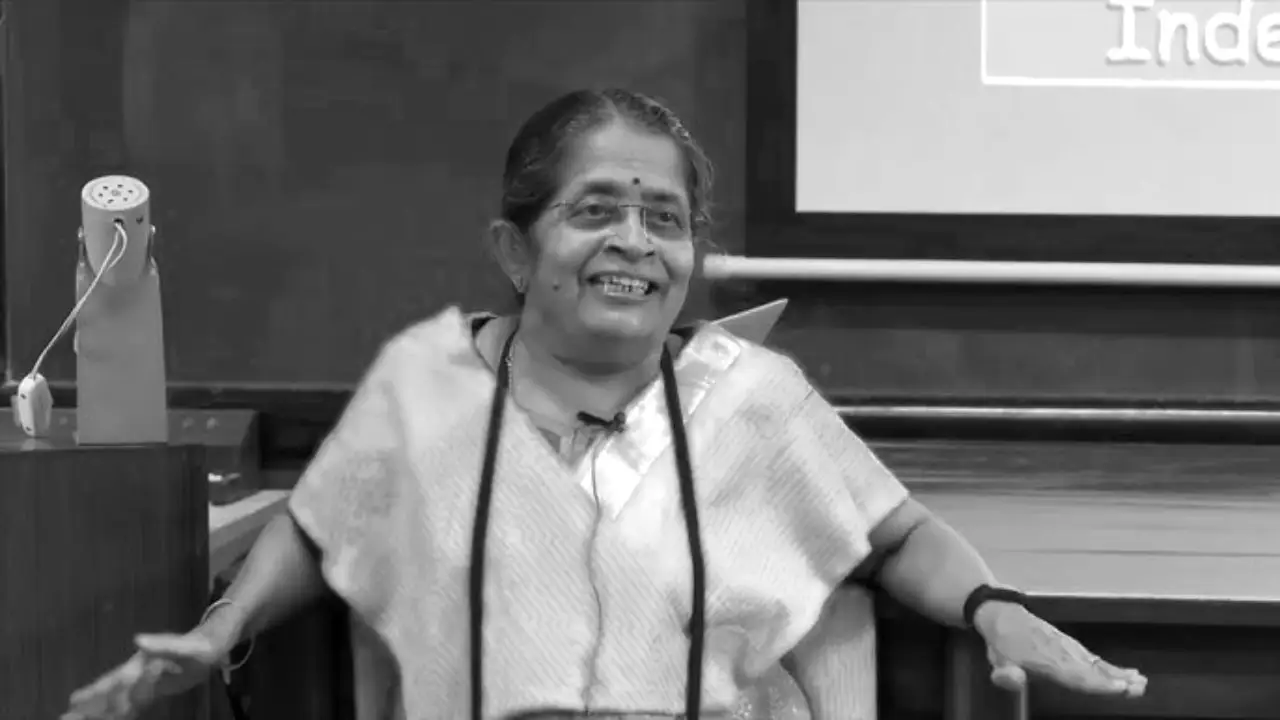
Renowned physicist and Padma Shri award winner Professor Rohini M Godbole passed away on Friday, according to the Centre for High Energy Physics (CHEP), Indian Institute of Science (IISc) Bengaluru.
Godbole was 71.
Godbole, a brilliant researcher and a champion of women in science, joined CHEP as an associate professor in 1995 and has been a professor since 1998. Post her superannuation on July 31, 2021, she became an honorary professor.
Her countless students and colleagues have taken to ‘X’ to pay tribute to her.
Joydeep Chakraborty, Professor of Theoretical Physics at Indian Institute of Technology (IIT) Kanpur posted on ‘X’: “It’s a huge loss not only for the HEP community but also for physics in general… She will be remembered as a great physicist and a teacher who motivated younger people to pursue careers in research.” K Vijaya Raghavan, Developmental biologist at the National Centre for Biological Sciences, Tata Institute of Fundamental Research said on ‘X’ that she was full of energy and drive. “She was a physicist, flag-bearer for women in science, a public citizen and a friend to many. She will be missed and is irreplaceable,” his post read.
According to her colleague at IISc, Arindam Ghosh, Godbole was much more than a renowned scientist. “She was a leader, and a strong advocate of women in science. She was a friend who will be missed,” he posted on ‘X’.
Siddharth Kanakaria, who works at the intersection of science communication research, practice, and teaching in India, and is an alumni of IISc also took to ‘X’ to recollect how Godbole, in addition to her excellent work in particle physics, she also championed inclusion of women in STEM.
“I had the opportunity of interviewing her about the state of women in STEM in 2017 and will always remember our engaged and spirited conversation lasting several hours!” said Kanakaria.
Apart from IISc Bengaluru, Raman Research Institute, which pursues research in basic sciences, also put out a condolence message for Professor Godbole.
“We, @RRI_Bangalore, deeply mourn the untimely passing of Prof. Rohini Godbole,” read the post on the official handle of the institute.
A memorial service was held on Friday at the Physical Sciences Auditorium of the CHEP.
7 Punjab Police Officers Suspended Over Lawrence Bishnoi's Custody Interviews 12
The Punjab Police has suspended seven personnel, including two officers of deputy superintendent rank, in connection with interviews given by gangster Lawrence Bishnoi while he was in police custody.
A Special Investigation Team (SIT) of the Punjab Police, led by the special director general of police (human rights), revealed that one of Bishnoi’s interviews was conducted while he was in Punjab Police custody in Kharar, Mohali, while the second interview took place in Rajasthan.
The suspensions followed the SIT’s findings of duty dereliction by the seven officers involved.
According to an order issued by the Punjab home secretary on Friday, the suspended personnel include SP Gursher Singh Sandhu, DSP Sammar Vaneet, sub-inspectors Reena (CIA Kharar), Jagatpal Jangu, and Shaganjit Singh, as well as assistant sub-inspector Mukhtiar Singh and head constable Om Parkash.
“Given the case’s sensitivity, all of the above officers have been suspended,” the order stated.
The SIT report indicated that Bishnoi’s interview, aired by a private TV channel, was conducted via video conference on the night of September 3-4, 2022. In March of the same year, a private news channel broadcast two interviews with Bishnoi, with the first occurring at the CIA (Crime Investigating Agency) premises in Kharar, within SAS Nagar, Mohali.
The second interview was conducted while Bishnoi was lodged at the Central Jail in Jaipur. The SIT’s findings were submitted to the Punjab and Haryana High Court in July as part of a suo motu matter related to mobile phone usage by jail inmates.
Bishnoi is one of the accused in the 2022 murder of Punjabi singer Sidhu Moosewala.
Fadnavis Declares ₹13.27 Cr in Assets: No Vehicles, 4 Pending Cases, and Loans from Wife 14
Maharashtra Deputy Chief Minister Devendra Fadnavis on Friday declared movable and immovable assets totaling ₹13,27,47,728 in the affidavit filed with his nomination papers from the Nagpur South West seat for the upcoming November 20 assembly polls.
According to his tax returns, his total income stood at ₹79,30,402 in 2023-24, while it was ₹92,48,094 in 2022-23.
Fadnavis declared movable assets of ₹56,07,867 in his name, ₹6,96,92,748 in his wife Amruta Fadnavis’ name, and ₹10,22,113 in his daughter’s name.
As per his affidavit, the senior BJP leader has ₹23,500 cash in hand, while his wife holds ₹10,000.
His bank deposits, including term deposits and deposits in financial institutions, NBFCs, and cooperative societies, amount to ₹2,28,760, while his wife’s deposits total ₹1,43,717.
Fadnavis has not invested in bonds, debentures, shares, or mutual funds but has invested ₹20,70,607 in NSS, postal savings, insurance policies, and financial instruments.
His wife, however, has invested ₹5,62,59,031 in bonds, debentures, shares, and mutual funds, as per the affidavit.
Fadnavis declared owning 450 grams of gold ornaments valued at ₹32,85,000, while his wife holds 900 grams worth ₹65,70,000.
The Deputy CM declared immovable assets of ₹4,68,96,000 in his name, including agricultural land in Chandrapur, a residential building in Dharampeth, Nagpur, and several other properties, as well as ₹95,29,000 in his wife’s name.
Fadnavis has taken a ₹62,00,000 loan from his wife but has no other loans from banks, financial institutions, or pending dues.
Neither he nor his wife has a vehicle registered in their names.
The senior BJP leader also disclosed four FIRs and four pending cases against him.
Amit Thackeray, Set to Make His Electoral Debut 16
I recently watched an interview with Amit Thackeray, son of Raj Thackeray, on the Lokmat channel. He was asked about the artistic talents that run in his family—his grandfather being a renowned satirist, his uncle Uddhav Thackeray a skilled photographer, and his father Raj Thackeray a celebrated cartoonist. When asked what unique talent he possessed, Amit responded that as a child, he would copy his grandfather’s cartoons, play piano occasionally, and dabble in football.
Amit’s responses reminded me of Ananya Pandey, daughter of actor Chunky Pandey. During a TV show, when asked about her achievements, she humorously stuck out her tongue to touch her nose, which later became a subject of mockery. Both Ananya and Amit seem to acknowledge that their most significant achievement is being the children of famous personalities, a fact that has opened many doors for them.
Amit is expected to contest the 2024 Maharashtra Assembly elections from the Mahim constituency. However, if you’re anticipating the kind of fiery, passionate speeches his father Raj Thackeray is known for, you may be left disappointed. Amit’s demeanor is gentler, and his style more composed. His ability to command attention in politics will require more than just his family’s legacy. His speeches often include fillers, and while he has a deep voice, he has yet to make effective use of it. Compared to his cousin Aaditya Thackeray, who has already carved out a name for himself in politics, Amit still has a long road ahead.
The day Amit starts delivering speeches in his father’s assertive “MNS style,” or makes bold statements that stir controversy, it will be clear that he has embraced a more aggressive political persona. Until then, he remains on a learning curve, gradually building confidence. Raj Thackeray’s political career has been defined by strong rhetoric and bold stances. In contrast, Amit seems to be trying to connect with younger voters by presenting himself as more approachable. However, political styles evolve, and what’s perceived as “aggression” or effective leadership can vary across contexts and generations.
The Thackeray family is among Maharashtra’s most influential political dynasties, with Keshav Sitaram Thackeray playing a pivotal role in the Samyukta Maharashtra Movement. Over time, dynastic politics has changed. It’s no longer about simply passing the baton to the next generation as it once was. When Balasaheb Thackeray handpicked Uddhav to lead, it eventually led to a split within the family and the party. Raj, despite his early political success, has struggled to maintain a stable footing in Maharashtra politics. For Amit, the challenge will be even greater.
Aggression as a political strategy may not yield the results it once did. The typical rhetoric of stoking parochial sentiments for electoral gain has lost much of its appeal. Today, voters are more focused on tangible issues—peace, development, infrastructure, jobs, and a better quality of life. Leaders who can deliver concrete results are the ones who resonate with the public.
Amit, like other political heirs, will need to earn his way into the public’s trust. While Aaditya Thackeray has managed to create a smoother path for himself, Amit’s journey will be tougher if he fails to capitalize on the opportunities ahead of him. It’s fortuitous for him to have the chance to contest elections without significant political experience or proven merit.
Raj Thackeray’s politics have been deeply inspired by Balasaheb Thackeray. Like Balasaheb, Raj is an artist with a clear vision for the development and beautification of cities. His ideas for urban planning and infrastructure are well thought out, as seen in his party’s work in Nashik. Town planning is more than just a political talking point for Raj—it’s a passion. His blueprint for Maharashtra, first released in 2014 and set to be re-released in 2019, outlines solutions for the state’s most pressing problems, from transportation to water supply and job creation.
Raj’s political journey may not have translated into electoral success, but his development-oriented vision holds promise. Perhaps with Amit’s entry into politics, there’s hope that this vision can be realized, leading to meaningful changes for Maharashtra. Whether Amit can step out from his father’s shadow and make a mark of his own remains to be seen, but the potential for positive change is certainly there.
RG Kar Medical College: West Bengal Government Agreed to Address Many of the Doctors' Demands 18
Massive protests broke out across West Bengal following the alleged brutal rape and murder of a trainee doctor at Kolkata’s RG Kar Medical College on August 9. The incident shocked the state and quickly escalated into a major movement spearheaded by the junior doctors, demanding justice for the victim and systemic changes to improve safety and working conditions in hospitals.
The protest gained momentum with a 15-day hunger strike, in which many of the protesting doctors fell ill due to the harsh conditions. However, as each participant collapsed, their place was immediately taken by other volunteers, showing the determination and unity of the medical community. The protest continued even during Durga Puja, Bengal’s biggest and most culturally significant festival. The situation became more tense when nine people, including doctors, were arrested for shouting “We want justice” at a pandal (a temporary structure set up for worship during the festival). A few days before, the police had also stopped the “Abhaya Parikrama” rallies organized by the doctors to raise awareness of their demands during the festival.
Despite the growing public support, political parties attempted to exploit the situation for their own gain. The Bharatiya Janata Party (BJP) saw an opportunity to criticize the ruling state government, led by Chief Minister Mamata Banerjee, and demanded her resignation. However, the BJP’s efforts soon lost steam, as their political maneuvers didn’t resonate with the public for long. Mamata Banerjee, on the other hand, understood that a resolution was achievable but knew that the opposition would likely use the issue to their advantage, complicating the process of negotiation.
The protests also saw temporary participation from Bollywood celebrities and saffron-clad monks, who marched to the Governor’s house and the Chief Minister’s office. However, their involvement seemed more performative than impactful, as they quickly disappeared from the scene, making little difference to the doctors’ cause. Even the BJP appeared to realize that women’s safety was not just a problem in Bengal but across the nation, including in states governed by the party. The issue was not one that could be solved through political theatrics alone.
Eventually, the junior doctors called off their indefinite hunger strike after a meeting with Chief Minister Mamata Banerjee. Although they secured some assurances from the government, there remained skepticism among the doctors about how genuine or lasting these promises were. Debashish Halder, one of the leaders of the protest, remarked after the meeting, “We did get the assurance of some directives, but the body language of the state government was not positive.” Despite this, the decision to end the strike came after heartfelt pleas from the public and the family of the deceased doctor, who were concerned about the deteriorating health of the protestors. Recognizing the overwhelming support they had received and the requests from the victim’s family, the doctors agreed to withdraw the hunger strike and cancel the planned shutdown of hospital services.
The protest had intensified after the horrific incident at RG Kar Medical College, where the 31-year-old doctor was found dead. This tragedy prompted a 50-day cease-work action that escalated into the hunger strike on October 5. The doctors put forward a 10-point list of demands that included justice for the victim, the immediate removal of Health Secretary N.S. Nigam, enhanced security measures in hospitals, and the improvement of essential infrastructure such as on-call rooms, CCTV coverage, and proper washroom facilities. They also demanded the implementation of a centralized referral system to better manage hospital admissions and bed occupancy.
The two-hour meeting with Mamata Banerjee was live-streamed from the state secretariat, Nabanna. During the meeting, the most divisive issues revolved around the removal of Health Secretary N.S. Nigam and the suspension of 47 doctors at RG Kar Medical College, who had been accused of creating a “threat culture” within the hospital. The doctors alleged that they had documents proving Nigam’s involvement in irregular activities, but Mamata Banerjee pushed back, insisting that no action could be taken based solely on accusations.
Despite the ongoing disagreements, the government agreed to address many of the doctors’ demands. This marked the end of the protest, bringing a sense of closure to an intense chapter in Bengal’s healthcare sector, though lingering concerns about the full implementation of the agreements remain.
India-China Begin Troop Disengagement at Two Friction Points: Sources 20
India and China have begun troop disengagement at the two friction points at Demchok and Depsang Plains in eastern Ladakh and this process is likely to get completed by October 28-29, Army sources said on Friday.
The process follows an agreement firmed up between the two countries on patrolling and disengagement of troops along the Line of Actual Control (LAC) in eastern Ladakh, a major breakthrough to end the over four-year standoff.
Sources said that patrolling will begin at the two friction points once the disengagement is done and both sides will move their respective troops and dismantle temporary structures.
Eventually, they added, the patrolling status is expected to move back to pre-April 2020 level.
The agreement framework was first agreed upon at the diplomatic level and then military-level talks took place, the army sources said, adding the nitty-gritty of agreement was worked in Corps Commander-level talks.
Adhering to agreements between the two sides, Indian troops have begun to pull back equipment to rear locations in these areas.
The ties between the two Asian giants had nosedived following a fierce clash in the Galwan Valley in June 2020 that marked the most serious military conflict between the two sides in decades.
Foreign Secretary Vikram Misri on October 21 said in Delhi that the agreement was finalised following negotiations over the past several weeks and that it would lead to a resolution of the issues that arose in 2020.
On October 23, Prime Minister Narendra Modi and China President Xi Jinping endorsed the agreement on patrolling and disengagement along the LAC in eastern Ladakh during their bilateral meeting on the sidelines of the BRICS Summit in Kazan in Russia.