Maharashtra Government Removes Orders After Election Code Enforcement 2
Following the implementation of the model code of conduct in Maharashtra, several government departments have taken down orders from the state’s official website. The action came after a directive from the chief electoral officer’s office, coinciding with the announcement of the upcoming assembly elections.
Additional chief electoral officer Kiran Kulkarni explained that the instructions were to remove all Government Resolutions (GRs) uploaded after 3.30 pm on Tuesday, the time when the election dates were declared. Although these GRs have been temporarily taken down, they are not fully withdrawn and will now undergo scrutiny to ensure compliance with the election code.
If found in line with the regulations, departments may re-upload the resolutions. These GRs typically involve decisions on allocations, transfers, and other key policy matters, which are regularly posted on government portals. The Election Commission of India has scheduled the Maharashtra assembly polls for November 20, with results expected on November 23.
BJP Considers Dr. Kuldeep Azad Negi for Kedarnath By-Election: A Key Candidate with Strong Party Ties 4
In a surprising development, the Bharatiya Janata Party (BJP) is reportedly considering Dr. Kuldeep Azad Negi as its candidate for the upcoming Kedarnath Assembly by-election. Dr. Negi, who holds significant influence in both state and central party circles, is seen as a strategic choice to counter local opposition and strengthen the BJP’s position.
Party insiders suggest that Dr. Negi’s extensive experience and deep ties within the BJP make him a favored contender. Sources indicate that several key party members have already been approached to discuss this potential move.
Who is Dr. Kuldeep Azad Negi?
Dr. Negi hails from Khalyu village in Agastmuni and pursued higher education in Dehradun and Delhi. His career spans several important roles, both within the government and the BJP organization.
Professional Experience:
Spent 13 years as an associate to Mr. Ramlal, the former National General Secretary (Organization) of the BJP, who now leads the All India Sampark Pramukh of the Rashtriya Swayamsevak Sangh (RSS).
Held the position of Additional Private Secretary to ministers across the Ministry of External Affairs, Ministry of Mines, and Ministry of Panchayati Raj from 2014 to July 2021.
Party Roles:
A member of the State Executive Committee of the BJP in Uttarakhand and State Co-Incharge of the Bharatiya Janata Yuva Morcha (BJYM) since November 2021.
Currently serves on the State Working Committee of the BJP in Uttarakhand.
Education and Contributions
Dr. Negi holds a Ph.D. in Journalism and Cultural Tourism, with a thesis focused on “The Role of Media in the Development of Cultural Tourism,” particularly in Rudraprayag district. Since 2014, he has served as the Executive President of the Kartikeya Temple Committee in Khalyu, Kedarnath.
Other Notable Roles and Achievements
Board Memberships: Serves on the board of directors of the Centre for Participatory Democracy and as an advisor to the Disease Management Association of India.
Author: Published two books, Dusri Dastak and Mankahi.
Awards: Received the Seva Shri Award in 2019 for social service and the International Harmony Award in 2022 from the South & East Asia Foundation for his contributions to peace and harmony through social work. In 2023, he was honored with the National Navratna Award by the Electronic and Print Media Welfare Association for his community contributions.
The Significance of His Candidacy
If Dr. Negi is selected as the BJP candidate, his candidacy could introduce a fresh dynamic to the Kedarnath by-election. His blend of political experience and grassroots involvement may attract a wide range of voters, particularly those who prioritize development and local connections. His expertise in media and cultural tourism may resonate with the region’s unique needs and demographics, potentially reshaping the political narrative in Kedarnath.
As the BJP gears up for this crucial by-election, Dr. Negi’s potential entry into the race has already generated significant interest. His candidacy could lead to a vigorous and competitive campaign, further energizing Uttarakhand’s political landscape.
Sharad Pawar Backs Jayant Patil for Maharashtra Leadership Ahead of Assembly Elections 6
In a key political development ahead of the upcoming Maharashtra assembly elections, Nationalist Congress Party (NCP) chief Sharad Pawar has endorsed Jayant Patil as the leader to drive the state’s future. Patil, who serves as the President of NCP’s Maharashtra unit, received Pawar’s backing during a rally held in Islampur, Sangli district.
Pawar praised Patil’s leadership, particularly in transforming his constituency of Islampur and positioning Maharashtra as a progressive state. He emphasized the need for strong, visionary leadership to restore Maharashtra’s former glory and compared Patil’s potential to that of the state’s first Chief Minister, Yashwantrao Chavan.
Criticizing the current governance, Pawar lamented that Maharashtra had lost its competitive edge in various sectors. With the assembly elections scheduled for November 20, Pawar expressed confidence in Patil’s ability to lead the state, ensuring that the NCP and its allies would mount a robust challenge against the ruling BJP-led coalition.
Pawar’s endorsement positions Patil as a key contender in the high-stakes political battle, with hopes of revitalizing Maharashtra’s development and bringing it back to the forefront of Indian states.
Maharashtra and Jharkhand Assembly Elections 2024: Key Dates, Election Process, and Political Contest 8
Table of Contents
The Election Commission of India has officially announced the schedule for the upcoming Assembly elections in Maharashtra and Jharkhand. The polls are set to be held in November 2024, marking an important moment for both states’ political landscapes. This article delves into the election dates, phases, and political alliances set to contest in the elections, providing an overview of the electoral process for voters in Maharashtra and Jharkhand.
Election Dates and Phases: Maharashtra and Jharkhand
The Assembly elections in Maharashtra will be conducted in a single phase on November 20, 2024, while Jharkhand will have elections in two phases on November 13 and 20, 2024. The Election Commission has scheduled the declaration of results for both states on November 23, 2024, making it a key date for political parties and voters alike.
Maharashtra’s Assembly consists of 288 seats, and Jharkhand’s Assembly has 81 seats. These elections are crucial for determining the political power dynamics in two of India’s most significant states.
Poll Notification and Nomination Process
For Maharashtra, the election notification will be issued on October 22, 2024, which marks the opening of the nomination process. Prospective candidates will have until October 29 to submit their nominations. Following this, scrutiny of nominations will take place on October 30, and the deadline for withdrawal of candidatures will be November 4, 2024.
In Jharkhand, the two-phase election will see notifications issued on October 18 and October 22 for the respective phases. The last dates for filing nominations are October 25 for the first phase and October 29 for the second. Scrutiny will occur on October 28 and October 30, while the withdrawal deadlines will be October 30 and November 1 for each phase.
Election Preparations and Voter Data
Chief Election Commissioner (CEC) Rajiv Kumar emphasized that preparations are well underway for both elections. The Model Code of Conduct came into effect immediately following the announcement, ensuring that political activities are regulated in line with electoral guidelines. The Election Commission’s decision to hold elections midweek aims to combat what the CEC termed “urban apathy,” encouraging higher voter turnout among city residents.
Maharashtra boasts a total electorate of 9.63 crore voters, comprising 4.77 crore men and 4.66 crore women. In Jharkhand, there are 2.6 crore voters, with 1.31 crore men and 1.29 crore women.
Polling Stations and Locations
To facilitate smooth voting, the Election Commission has set up a comprehensive network of polling stations across both states. In Maharashtra, a total of 1,00,186 polling stations will be established at 25,789 locations. Jharkhand, with a smaller electorate, will have 29,562 polling stations at 20,281 locations. These efforts ensure that voters from even the remotest areas will have easy access to voting facilities.
Political Alliances in Maharashtra
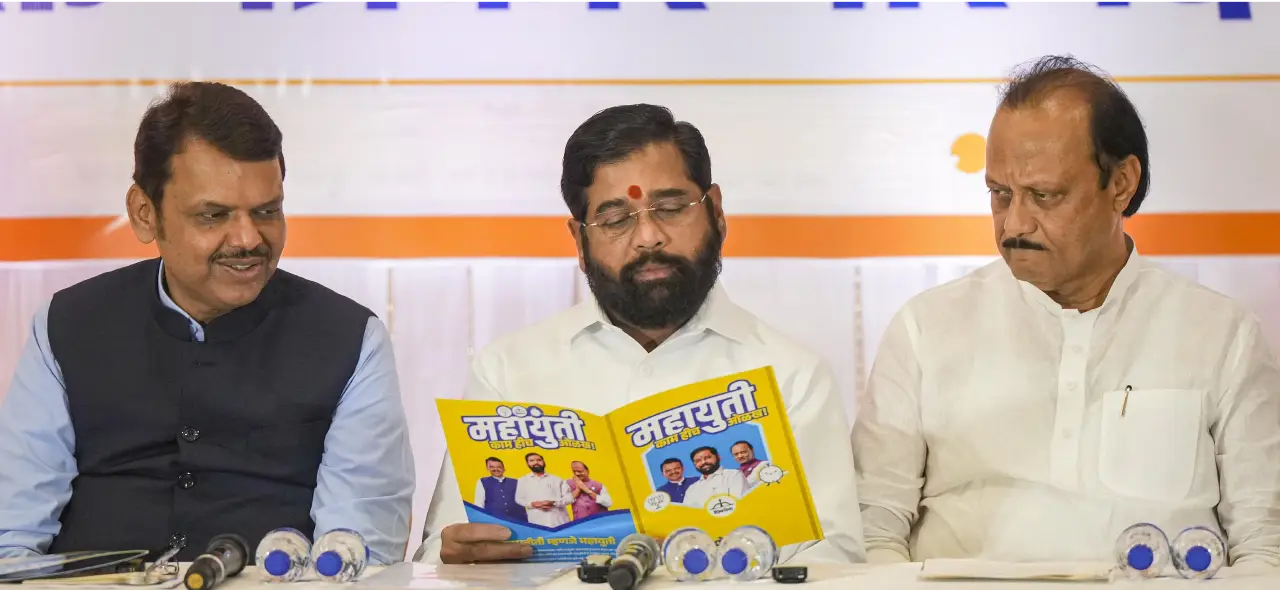
Maharashtra’s political landscape is shaped by two main coalitions. The ruling alliance, known as MahaYuti, comprises the Bharatiya Janata Party (BJP), the Shiv Sena, and a faction of the National Congress Party (NCP). This alliance faces a strong challenge from the Maha Vikas Aghadi (MVA), which includes the Shiv Sena-UBT, the Indian National Congress, and the NCP-Sharad Pawar faction.
The contest in Maharashtra is expected to be fierce, with both alliances competing to secure a majority in the state assembly. The MahaYuti government has held power in the state following a controversial political split within the Shiv Sena, leading to the formation of two separate factions.
Political Contest in Jharkhand
In Jharkhand, the political contest will be primarily between the ruling Jharkhand Mukti Morcha (JMM), supported by its allies Rashtriya Janata Dal (RJD) and the Indian National Congress, and the opposition BJP-led National Democratic Alliance (NDA). The NDA’s Jharkhand unit includes the Janata Dal-United (JDU), the Lok Janshakti Party-Ram Vilas (LJP-R), and the All Jharkhand Students Union (AJSU).
The JMM has been in power since 2019, and this election will test its ability to retain control in the face of a strong opposition alliance.
Conclusion
The upcoming Assembly elections in Maharashtra and Jharkhand hold significant importance for both states and for the national political scenario. With major political alliances contesting the polls, the results on November 23, 2024, will determine the future political landscape of these states. The Election Commission’s well-structured process, from nominations to polling station arrangements, ensures that voters have ample opportunity to exercise their democratic rights. As the election date approaches, all eyes will be on these crucial battles for political power in Maharashtra and Jharkhand.
Mumbai Toll Relief: Maharashtra CM Announces Light Vehicle Exemption 10
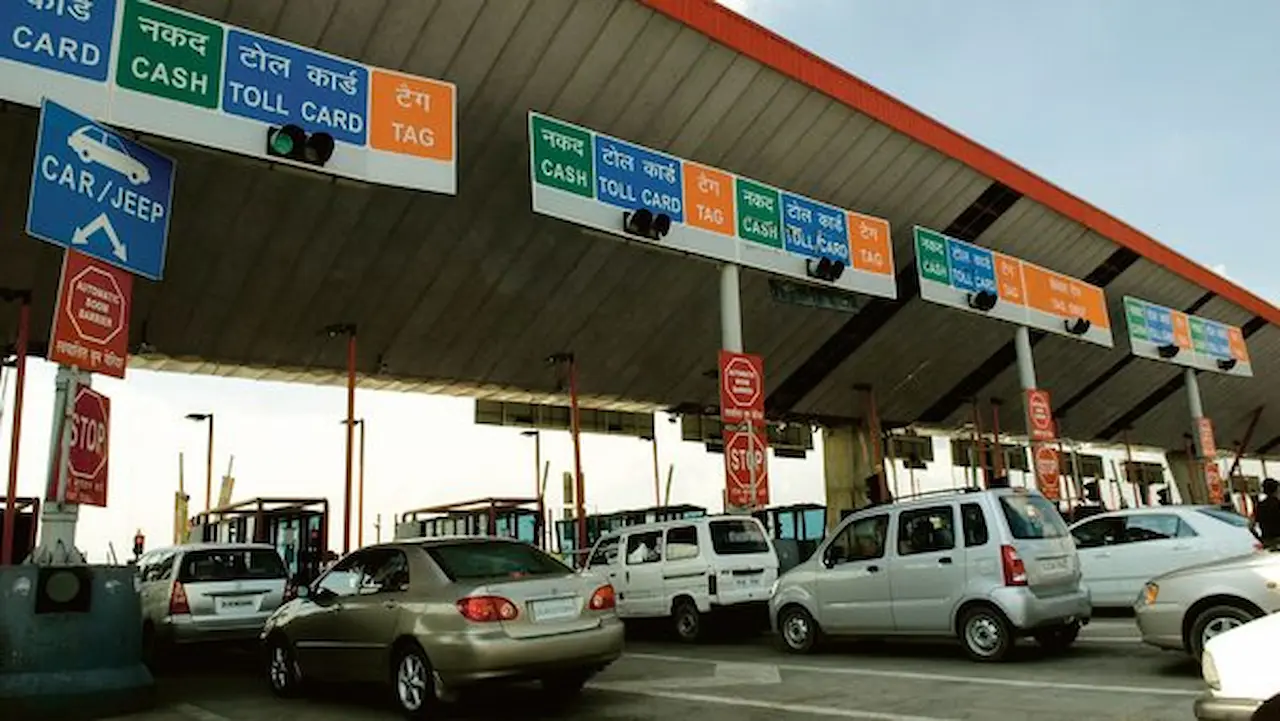
In a significant policy shift, Maharashtra Chief Minister Eknath Shinde has announced that light motor vehicles will be fully exempt from paying tolls at five toll booths leading into Mumbai. This major decision was confirmed by the Chief Minister’s Office following a cabinet meeting on Monday.
Minister Dadaji Dagadu Bhuse elaborated on the decision, stating that the toll exemption will come into effect starting from midnight, and will apply to toll stations at key points, including Dahisar and Mulund. Previously, toll charges for light vehicles ranged between Rs. 45 and Rs. 75, but this new policy will provide relief to approximately 2.80 lakh vehicles that pass through these booths daily. The move is expected to reduce congestion and long queues at toll booths, benefiting commuters significantly.
The exemption covers light motor vehicles, such as cars and small passenger vehicles, and is expected to ease the financial burden on daily travelers, especially those commuting in and out of Mumbai. This decision reflects the government’s efforts to address the growing traffic concerns at major entry points into the city.
In addition to the toll relief, the Maharashtra cabinet also approved other significant decisions. These include salary hikes for D.Ed. and B.Ed. teachers in Madrasas, as well as an increase in the share capital of the Maulana Azad Minority Economic Development Corporation to Rs. 1,000 crores. Another noteworthy decision was to rename the Maharashtra Skill Development Corporation after the late Ratan Tata, honoring his legacy. There is also a proposal to award Ratan Tata the Bharat Ratna posthumously, following his recent passing.
This toll exemption policy and the additional cabinet decisions highlight the government’s commitment to addressing pressing public concerns while honoring notable figures like Ratan Tata.
NCP Leader Baba Siddique Shot Dead in Mumbai; Two Detained 12
In a shocking incident, Baba Siddique, a senior leader of the Ajit Pawar faction of the NCP and former Maharashtra minister, was shot dead in Bandra, Mumbai, on October 12. The shooting took place outside the office of his son, MLA Zeeshan Siddique, near Colgate Ground in Nirmal Nagar, according to reports from the PTI news agency.
Eyewitnesses reported hearing two to three rounds of gunfire. Baba Siddique was rushed to Lilavati Hospital, where he was undergoing treatment before the hospital confirmed his death. The incident has raised concerns as it comes just ahead of the Maharashtra Assembly elections.
Maharashtra Chief Minister Eknath Shinde stated that two suspected shooters have been detained by the police, with one hailing from Uttar Pradesh and the other from Haryana. A third suspect managed to flee the scene, and police are actively searching for the individual.
“This is an extremely unfortunate incident,” CM Shinde said in a statement, adding, “Strict action will be taken against the accused, and I am confident that Mumbai Police will soon apprehend the third person involved.”
BJP leader Kirit Somaiya expressed concern over the killing, suggesting it could be part of a larger conspiracy. He urged the government to form a special investigation team to thoroughly probe the case.
Pune Tragedy: Food Delivery Executive Killed in Hit-and-Run by Luxury Car 14
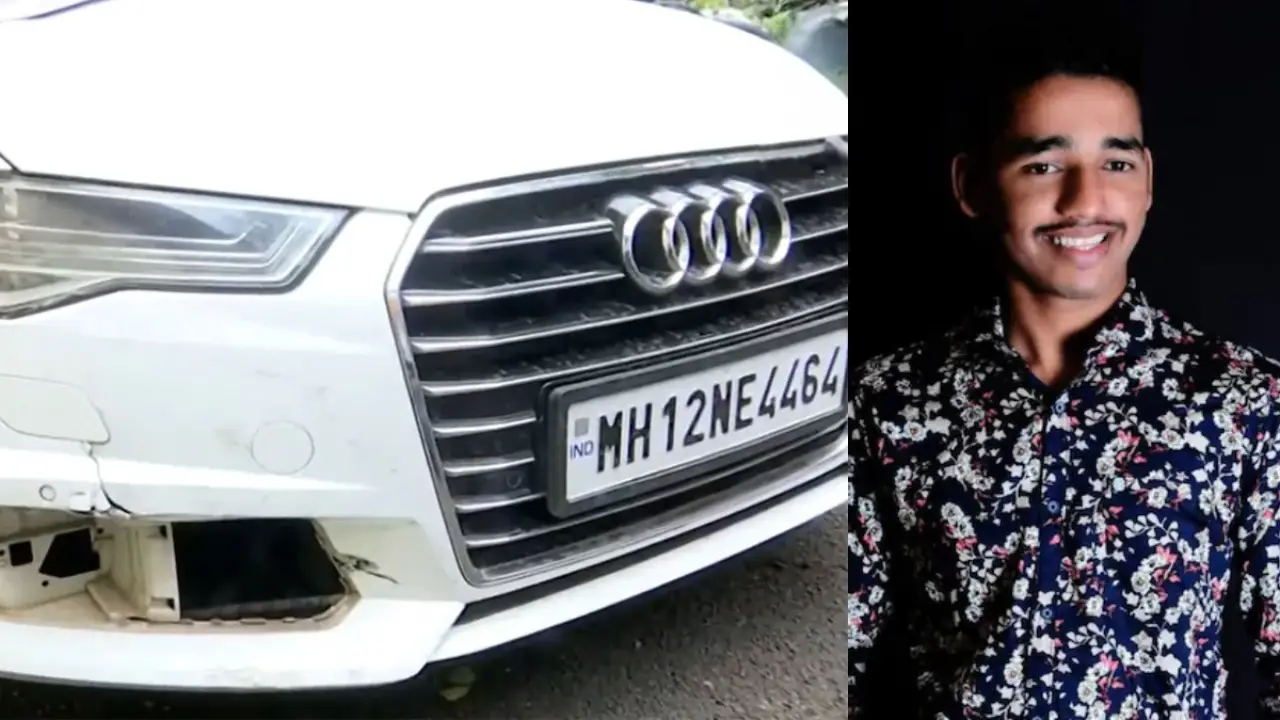
In a heartbreaking incident in Pune, a food delivery executive lost his life after being hit by a luxury car driven by Ayush Tayal. The accident occurred in the early hours of Friday in the Mundhwa area.
According to the Pune city police, the driver did not stop after the collision. Before striking the delivery executive, the driver had hit another two-wheeler, injuring three people. The delivery executive, Rauf Shaikh, was hit from behind and suffered severe injuries, which led to his death at the hospital.
The accused, Ayush Tayal, aged 34, fled the scene but was later apprehended. Investigators identified him using CCTV footage and arrested him at his residence. Legal proceedings are ongoing, and a case has been registered under various sections at the Mundhwa Police Station.
PM Modi at East Asia Summit: Calls for a Free and Rules-Based Indo-Pacific 16
Prime Minister Narendra Modi, addressing the East Asia Summit in Laos, emphasized the necessity for a free, open, and rules-based Indo-Pacific to promote regional peace and development. His remarks subtly criticized China’s assertive actions in the South China Sea, calling for a focus on development rather than expansionism.
Modi stressed the importance of the United Nations Convention on the Law of the Sea (UNCLOS) in regulating maritime activities, advocating for unimpeded Freedom of Navigation and Air Space. He also called for a robust Code of Conduct in the region, urging that the foreign policies of regional nations remain free from external influence.
Highlighting the central role of ASEAN in India’s Indo-Pacific vision, Modi reaffirmed India’s commitment to ASEAN unity and the Quad’s collaborative efforts. He referenced the Quad Foreign Ministers’ joint statement, which expressed concerns over China’s actions near Taiwan and in the South China Sea, condemning any coercive measures to alter the region’s status quo.
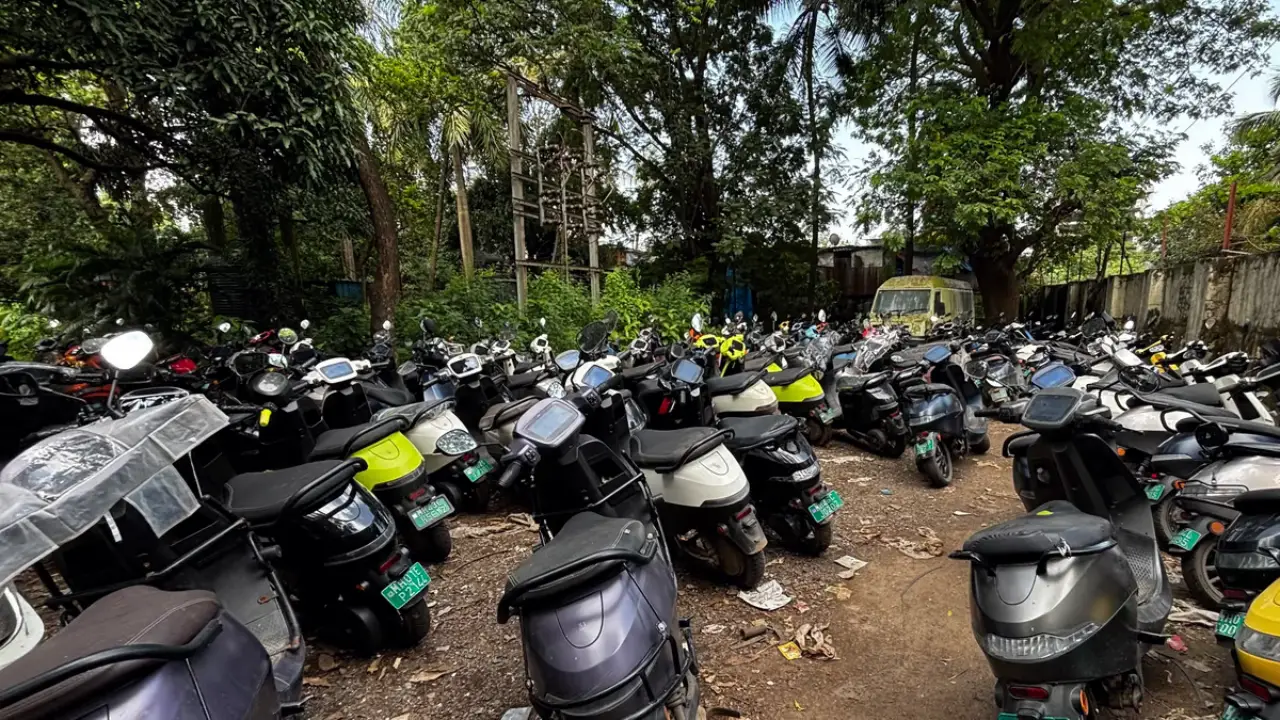
Ola Electric Under Scrutiny for Consumer Complaints 18
The Ministry of Heavy Industries (MHI) has directed the Automotive Research Association of India (ARAI) to investigate consumer complaints against Ola Electric.
Ola Electric, which has benefited from the FAME II and PM E-DRIVE schemes, was granted eligibility certification by ARAI under the ministry’s oversight.
On October 7, the Central Consumer Protection Authority (CCPA) issued a show cause notice to Ola Electric, citing alleged violations of consumer rights and misleading advertisements.
Both schemes require manufacturers like Ola Electric to maintain service centers and provide warranty services to address consumer issues, ensuring compliance with the regulations.
India Mourns the Loss of Visionary Industrialist Ratan Tata 20
In a profound loss to India’s business landscape, visionary industrialist Ratan Tata has passed away at the age of 86, leaving behind a remarkable legacy in both innovation and philanthropy. The chairman emeritus of the Tata Group took his last breath in a Mumbai hospital on a solemn Wednesday night, marking the end of a transformative era in Indian and global business.
The Business Titan’s Lasting Impact on India’s Industry
Ratan Tata’s contributions to the Tata Group and his larger role in shaping modern India’s industrial and corporate identity have left an indelible mark. As the leader of one of the country’s largest and most respected conglomerates, he was instrumental in steering the Tata Group into a new era of global prominence. His leadership was defined not just by business growth but also by a firm commitment to ethical practices and community development.
Under Tata’s leadership, the Tata Group expanded its horizons, entering various industries such as technology, automotive, telecommunications, and more. His vision helped establish India as a key player in the global market, with Tata Motors’ acquisition of Jaguar Land Rover being one of the most iconic moves that reinforced India’s presence on the world stage.
Tributes Pour In from Industry Giants
Following Ratan Tata’s passing, tributes poured in from leading business figures across the world, underscoring the wide-reaching influence he had over the business community. Mukesh Ambani, chairman of Reliance Industries, expressed deep sorrow over the loss, calling Tata “one of India’s kind-hearted sons” and recalling their personal interactions that inspired him greatly. Ambani highlighted Tata’s immense contributions, not just in business, but also in his unwavering commitment to philanthropy.
Gautam Adani, another titan in the Indian business sphere, honored Tata’s visionary approach to industry, noting how his leadership helped set the foundation for modern India’s economic growth. “Ratan Tata’s ability to foresee the future of industry and innovation played a crucial role in shaping India’s industrial growth,” said Adani, emphasizing how Tata’s legacy will continue to inspire generations of entrepreneurs and business leaders.
Anand Mahindra, chairman of the Mahindra Group, also paid tribute, highlighting Tata’s relentless pursuit of excellence. Mahindra acknowledged Tata’s pivotal role in positioning India for economic success, saying, “Ratan Tata didn’t just build companies; he built a nation’s industrial future.”
A Global Influence Remembered by Business Leaders
Ratan Tata’s influence extended far beyond the borders of India. Tech industry leader Sundar Pichai, CEO of Google, expressed his admiration for Tata’s legacy, noting how his leadership and commitment to ethical business practices served as an inspiration to budding entrepreneurs and leaders worldwide. Pichai emphasized that Tata was not just a business leader, but a mentor and role model for the global business community.
Ratan Tata’s reach was felt in numerous sectors, from automotive to technology, and from steel to hospitality. His business acumen and leadership were complemented by his deep sense of responsibility toward society, which was evident in the numerous philanthropic initiatives undertaken by the Tata Group under his stewardship.
Philanthropy and Corporate Responsibility: Tata’s Legacy
Beyond business, Ratan Tata will be remembered for his immense contributions to social causes. Throughout his career, he championed corporate social responsibility and ensured that the Tata Group’s success translated into positive change for communities across India. Tata Trusts, one of the country’s oldest philanthropic organizations, has played a significant role in education, healthcare, rural development, and more, all thanks to his vision.
Tata’s personal commitment to improving lives was as profound as his corporate ambitions. He was a driving force behind the Tata Group’s many initiatives aimed at poverty alleviation, education, and healthcare. His belief that businesses should serve a broader social purpose continues to influence corporate India today, setting a benchmark for future generations of business leaders.
The End of an Era
Ratan Tata’s passing marks the conclusion of an era defined by visionary leadership, unwavering ethics, and a commitment to societal progress. His influence will continue to be felt across industries and within the communities that benefited from his philanthropy. Business leaders, both in India and across the world, will undoubtedly carry forward his legacy of innovation, compassion, and integrity.
As India reflects on the immense contributions of this towering figure, one thing is certain: Ratan Tata’s legacy will endure for generations, inspiring business leaders to prioritize not just profits, but also the welfare of the people they serve.
Conclusion: A Legacy That Will Last Forever
Ratan Tata’s life and career have left an irreplaceable void in both the Indian business world and society at large. His contributions to industry, his philanthropic efforts, and his ethical leadership have set a standard that few can match. As the world mourns the loss of one of India’s most iconic industrialists, his legacy of innovation, integrity, and compassion will continue to shape the future of business and society for years to come.
Tata’s passing may signal the end of an era, but his influence on the global stage ensures that his visionary leadership will never be forgotten.