Home Blog Page 134

West Bengal: Land of Revolutionary Sadhus Who Defy Injustice

sadhus, sadhu, west bengal, marching, sanyasis, kolkata
Image: AI Generated

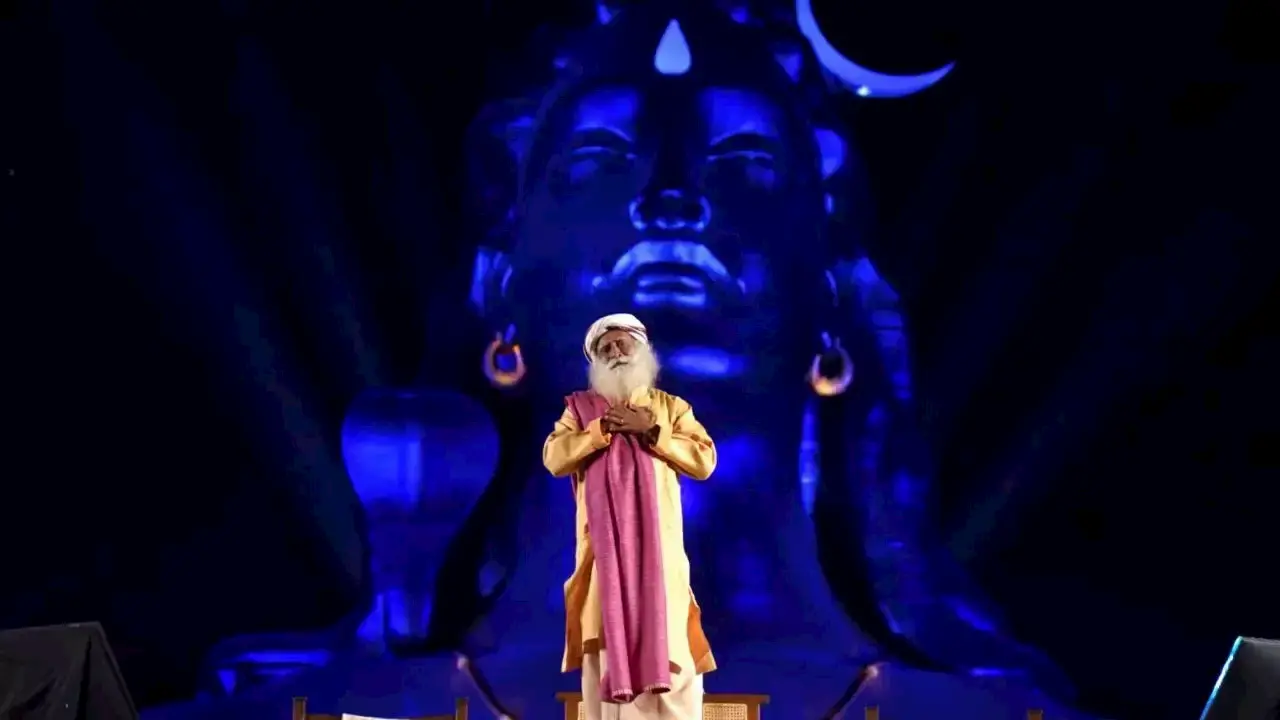
West Bengal, home to spiritual luminaries like Chaitanya Mahaprabhu, Sri Ramakrishna Paramahamsa, Aurobindo, Lahiri Mahasaya, and Paramahansa Yogananda, has long stood as a beacon where spirituality merges with revolution. In no other state have Sadhus and Samyasis played such a significant role in holding the authorities accountable. Whenever there is injustice, Bengal’s sadhus have taken to the streets—not just as spiritual leaders but as warriors for justice.

In 2014, this legacy of rebellion was reignited when Sadhus marched barefoot through the streets of Kolkata, protesting against what they perceived as growing Hindu discontent under Mamata Banerjee’s administration. Their protest was not just a display of religious fervour—it was a statement against what they saw as the government’s alignment with minority appeasement politics. This was a reminder that in Bengal, sadhus have never hesitated to challenge authority when the balance of justice is disturbed.

Fast forward to 2024, and once again, sadhus are on the streets. This time, they are marching for the protection of women. Despite earlier reports showing Kolkata with the lowest number of rape cases in India’s major cities, the situation in West Bengal has deteriorated. Crimes against women are on the rise, and the state has become just as unsafe for women as many others. This stark reality has ignited a fire in Bengal’s spiritual community, who will not stand idly by while women suffer.

West Bengal has a long history of revolutionary sadhus. In the late 18th century, during the Sannyasi Rebellion, ascetics like Pandit Bhabani Charan Pathak led uprisings against the British East India Company’s exploitation, particularly their oppressive tax policies. At a time when famine and injustice ravaged the land, these sadhus embodied the spirit of resistance, fighting for the rights of the people. Their rebellion was a forerunner to India’s struggle for independence. Even under the threat of death, Bengal’s sadhus did not flinch in the face of tyranny.

Today, the fight continues—not against colonial rulers, but against administrative failures. In 2024, spiritual leaders like Mahamandaleshwar Paramatmananda and Nirgunananda Brahmachari joined thousands of sadhus in a powerful display of unity, demanding justice for women and speaking out against government inaction. When West Bengal Chief Minister Mamata Banerjee accused some monks of aligning with the Bharatiya Janata Party (BJP), it only fuelled the fire. The defamation notice issued by Kartik Maharaj of Bharat Sevashram Sangh to Banerjee further escalated the conflict. But this fight is not about politics—it’s about justice. The sadhus are not interested in political power; they are fighting to make Bengal a safe place for women.

Throughout history, Bengal’s sadhus have stood as a bulwark against injustice, whether against colonial oppression or modern-day governance failures. Their protests are not mere spectacles—they are reminders that spiritual power in Bengal has always been a force to reckon with. The sadhus of today, like those of the past, continue to embody the state’s long tradition of standing up against wrongs, demanding accountability from those in power, and ensuring that the oppressed are not forgotten.

In the end, West Bengal’s sadhus are not just spiritual figures—they are revolutionaries. When injustice is done, they rise. Their message is clear: Bengal will not stay silent in the face of wrongdoing. And once again, the sadhus of Bengal are leading the charge, not for political gain but for the safety and dignity of the people they serve.

Maharashtra: BJP Faces Crucial Test Ahead of 2024 General Elections

bjp, maharashtra, general elections, assembly elections, devendra fadnavis, eknath shinde, ajit pawar, maharashtra
Maharashtra: BJP Faces Crucial Test Ahead of 2024 General Elections 3

As Maharashtra heads towards the 2024 general elections, the state’s political stage is bustling with anticipation. The Bharatiya Janata Party (BJP), alongside its allies, is preparing for what could be one of its most critical challenges in recent years. The Mahayuti alliance, led by Chief Minister Eknath Shinde, has been working hard to maintain voter confidence, but the road ahead appears fraught with obstacles.

Shinde has positioned himself as a key Hindutva leader, taking symbolic steps to reinforce his standing. Initiatives such as declaring the cow (Gomata) as “Rajmata” and giving the Marathi language elevated status have aimed to appeal to both traditional values and regional pride. While these gestures have resonated with certain segments of the population, they have not been sufficient to distract from deeper issues plaguing the state—particularly in law and order.

A recent incident in Badlapur has cast a spotlight on these governance challenges. The encounter killing of Akshay Shinde, who was accused of sexually assaulting two schoolgirls, sparked public outrage. Some hailed the action as swift justice, but others condemned it as an example of extrajudicial execution, raising concerns about the state’s commitment to due process. The episode has, once again, drawn attention to the increasing crime rate and the alarming rise in violence against women in Maharashtra, leaving the government, especially Deputy Chief Minister Devendra Fadnavis—who holds the home ministry portfolio—open to criticism for failing to maintain law and order.

Adding to the BJP’s difficulties are internal party tensions. Many party members feel overlooked as the party focuses on solidifying alliances at the expense of its grassroots workers. This internal discontent could weaken the BJP’s overall election strategy. The Mahayuti alliance, which includes the BJP, Shinde’s Shiv Sena, and Ajit Pawar’s faction of the Nationalist Congress Party (NCP), is currently negotiating how to divide assembly seats for the upcoming elections. Reports suggest that the BJP is expected to secure the largest share, with 140-150 out of the 288 assembly seats, while Shinde’s Shiv Sena may contest 80 seats and Ajit Pawar’s NCP around 55. Smaller allies will be left with a handful of seats.

However, these seat-sharing arrangements may strain the alliance. There are rumors that Ajit Pawar’s faction may be asked to sit out of the pre-poll alliance altogether, a move that could lead to discontent and further weaken the coalition. Such internal tensions may impact the alliance’s ability to present a united front in what is expected to be a fiercely contested election.

The BJP-led Mahayuti alliance will face a strong challenge from the opposition Maha Vikas Aghadi (MVA), which includes the Congress, Uddhav Thackeray’s Shiv Sena (UBT), and Sharad Pawar’s NCP. The MVA has reason to feel confident, especially after its strong performance in the 2024 Lok Sabha elections, where it secured 30 out of Maharashtra’s 48 seats, compared to the Mahayuti’s 17 seats. This success has invigorated the opposition as it prepares for the upcoming state elections, and seat-sharing negotiations within the MVA are expected to be intense.

Beyond Maharashtra, the state elections are part of a larger narrative that will shape the BJP’s national prospects in 2024. The party has fared well in some areas, notably Haryana, where it secured 47 seats compared to Congress’s 35, suggesting the BJP is on track for a third consecutive victory in the state. However, in Jammu and Kashmir, the BJP suffered a significant setback. The Congress-National Conference alliance won a commanding 57 seats, while the BJP managed only 28 in the first regional elections held since the revocation of Article 370 and the loss of the state’s special status.

The results in Jammu and Kashmir mark a crucial shift, particularly as it was the first election since the region lost its statehood. The BJP’s inability to make substantial gains in this historically important region will weigh heavily as it seeks to maintain its political dominance nationwide.

In this context, the Maharashtra elections take on even greater significance. For the BJP, they represent not just a battle for control of one of India’s largest and most politically influential states but also a bellwether for the 2024 general elections. If the party can resolve internal discord, smooth out alliance tensions, and address critical governance challenges, it may still emerge victorious. However, failure to do so could spell trouble for the saffron party, both in Maharashtra and across the nation. The state’s election results will provide key insights into whether the BJP can weather the storm or if it will face a formidable challenge to its dominance heading into 2024.

RG Kar Protest: Kolkata Police Denies Permission for WBJDF Fast-Unto-Death Agitation

rg kar hospital, rg kar, cbi, videographer, autospy
RG Kar Protest: Kolkata Police Denies Permission for WBJDF Fast-Unto-Death Agitation 5

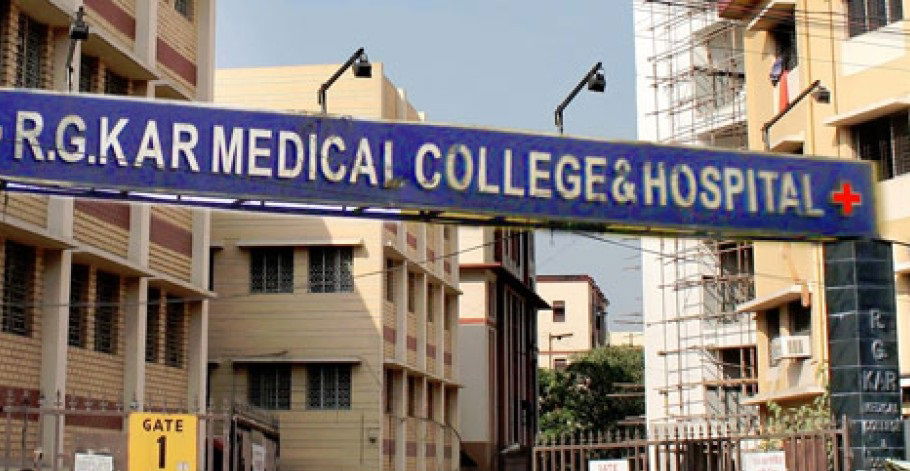
Kolkata Police has denied permission to the West Bengal Junior Doctors’ Forum (WBJDF) for their proposed sit-in and fast-unto-death protest scheduled at Esplanade, central Kolkata. The protest was planned by junior doctors in response to the rape and murder of a junior doctor from R.G. Kar Medical College & Hospital.

On Friday evening, the junior doctors had announced their plan to switch from a cease-work agitation to a fast-unto-death demonstration if nine out of their ten demands were not met by the state government. They had informed Kolkata Police Commissioner Manoj Kumar Verma of their protest plans through an email.

However, on Saturday afternoon, the Kolkata Police rejected the permission, citing potential traffic congestion as the city prepares for the upcoming Durga Puja festival. The police’s communication emphasized the anticipated large crowds and heavy traffic in the area, stating that the protest could cause inconvenience to the public and create a law and order situation.

The WBJDF had not yet announced their next steps following the police’s decision when this report was filed.

Jaishankar Clarifies Pakistan Visit for SCO Summit, Rules Out Bilateral Talks

S Jaishankar India China Border
Image: PTI

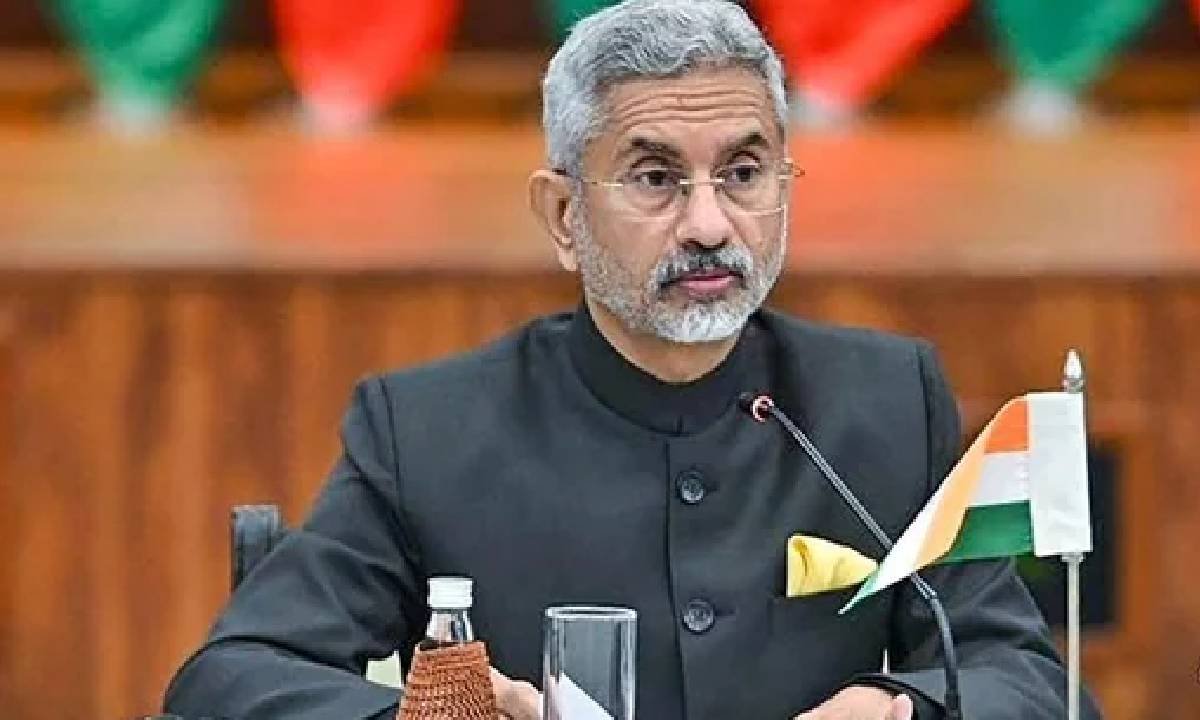
External Affairs Minister (EAM) S Jaishankar has clarified that his upcoming visit to Pakistan is for a multilateral event, the Shanghai Cooperation Organization (SCO) Summit, not for India-Pakistan dialogue. Addressing the media on Saturday, Jaishankar emphasized that the visit, scheduled for October 15-16, is purely related to India’s obligations as a member of the SCO, and there will be no discussions on bilateral relations between India and Pakistan.

Acknowledging the media attention his visit might attract, Jaishankar reiterated, “I’m not going there to discuss India-Pakistan relations. I’m going there to be a good member of the SCO,” adding that he would behave with civility while attending the event.

Pakistan is hosting the SCO Council of Heads of Government meeting this year, marking Jaishankar’s first visit to the country in nearly a decade. He further noted that while tensions between the two nations persist, particularly over issues like terrorism, his visit is not intended to address these matters directly.

Jaishankar also discussed the challenges faced by the SCO, attributing its aspirational failures to Pakistan’s support for terrorism. “Terrorism is something unacceptable. One of our neighbors continues to support terrorism, and there must be consequences,” he remarked, indirectly referring to Pakistan.

He highlighted India’s increasing regional integration with countries like Bangladesh, Nepal, Bhutan, Myanmar, and Sri Lanka, emphasizing progress on infrastructure projects such as railway lines, roads, and electricity grids.

Jaishankar also used the occasion to call for reforms to the United Nations, pointing out that the global body has not evolved to reflect today’s economic and political realities. He stressed that the management structure of the UN needs to change, given that the organization now has 193 members, compared to 51 at its founding.

This visit marks a significant diplomatic event, with India maintaining its stance against cross-border terrorism while continuing to fulfill its international obligations.

IndiGo Suffers Major Technical Glitch, Fliers Stranded Across Nation

indigo, aircraft, technical glitch
IndiGo Suffers Major Technical Glitch, Fliers Stranded Across Nation 8

Low-cost airline major IndiGo experienced a major network outage on Saturday, disrupting flight operations and ground services across the nation.

The technical glitch left several air travellers stranded across airports as they were unable to board flights or book tickets, leading to significant delays.

“It’s good to invest in new aircraft, but how about improving the ground services (at Bangalore T1 for the last one hour). Additional counters are required, disturbing to see old people suffering. @DGCAIndia please notice,” an affected flier posted on X social media platform.

“Technical glitch at @IndiGo6E. Airport looks like a railway station”, another commented.

The airline said in a statement that they are “currently experiencing a temporary system slowdown across our network, affecting our website and booking system.” “As a result, customers may face increased wait times, including slower check-ins and longer queues at the airport”, said IndiGo.

The airline further said that their airport team is available and fully dedicated to assisting everyone and ensuring a smooth journey.

“Be assured, we are working diligently to restore stability and normalcy as quickly as possible”, it posted on X, adding that they “regret the inconvenience caused and appreciate your understanding and patience during this time”.

A frustrated user posted on X: “@IndiGo6E bad situation at Lucknow too. Flight 6E2380 to Delhi was delayed by more than one hour. Passengers waiting inside aircraft”.

“Sometimes it shows flights are unavailable on a date and after refresh, it is again available,” another flier said.

Meanwhile, domestic passenger air traffic in the country rose 6 per cent (year-on-year) to 13.1 million in August. Indigo continued to dominate the domestic space, increasing its market share by 40 bps to 62.4 per cent, according to reports.

Arvind Kejriwal Relocates to Ashok Mittal’s Bungalow Post-Resignation

arvind kejriwal, kejriwal, house, vacate, ashok mittal
Arvind Kejriwal Relocates to Ashok Mittal's Bungalow Post-Resignation 10

Arvind Kejriwal, Aam Aadmi Party (AAP) leader, has officially begun vacating the Chief Minister’s residence following his resignation as Delhi’s CM. On Friday, Kejriwal initiated the move, relocating to a bungalow owned by AAP Rajya Sabha MP Ashok Mittal, situated at 5 Ferozshah Road.

AAP confirmed that Mittal extended the offer for Kejriwal to stay at his official residence. Party sources detailed scenes of moving trucks at the former CM’s home, indicating the transition process is underway.

Mittal shared his excitement about hosting Kejriwal, noting that he looks forward to learning from the AAP National Convenor during his stay. Meanwhile, AAP members have come together to support Kejriwal by offering additional housing options as he searches for a permanent, dispute-free residence.

Kejriwal submitted his resignation to Delhi’s Lieutenant Governor, VK Saxena, on September 17, following controversy related to an excise policy case. He declared that he would only return as Chief Minister if given a fresh mandate from the electorate, along with a “certificate of honesty.” On September 22, Atishi officially took over as Delhi’s new Chief Minister.

Outrage Erupts in Pune Over Bopdev Ghat Sexual Assault Case

Mumbai Lower Parel Gang Rape, Pune, Bopdev Ghat, Sexual Assault
Representative Image

Outrage has erupted in Pune following the shocking sexual assault of a 21-year-old woman by three unidentified individuals near the Bopdev Ghat area late Thursday night. The incident occurred around 11 pm, leaving the victim deeply traumatized. Law enforcement was alerted early Friday morning at approximately 5 am, with authorities immediately launching an investigation.

Pune’s Joint Commissioner of Police, Ranjan Kumar Sharma, confirmed that ten specialized teams from the crime and detective branches have been formed to locate and apprehend the attackers.

The assault has triggered a wave of condemnation from public officials. NCP-SCP working president Supriya Sule strongly criticized the state’s home department for its inability to ensure the safety of women. In her statement, Sule expressed her outrage over the incident and urged the government to take immediate action to deliver justice to the victim.

NCP-SCP leader Sharad Pawar also addressed the issue, highlighting the public’s growing frustration with the increasing violence against women. Pawar pointed out the irony of the government promoting the Ladki Behan Yojana, a financial support scheme for women, while failing to protect them from such brutal attacks.

As the investigation unfolds, citizens and officials alike are calling for swift justice and stronger measures to ensure the safety of women across the state.

Marathi’s New Classical Status: A Cultural Triumph for Maharashtra

marathi language, marathi classical language, marathi, classical language status, maharashtra
Marathi's New Classical Status: A Cultural Triumph for Maharashtra 13

The Union Cabinet’s historic decision to grant classical language status to Marathi is a monumental victory for the people of Maharashtra. This recognition, which has been long-awaited, was welcomed by Chief Minister Eknath Shinde, Deputy Chief Ministers Devendra Fadnavis and Ajit Pawar, and celebrated widely across the state. Prime Minister Narendra Modi also received thanks for facilitating the process, a move that included several other languages such as Pali, Prakrit, Assamese, and Bengali.

The Importance of Marathi’s Classical Language Status

Achieving classical language status is not just symbolic. It acknowledges the rich cultural heritage of the Marathi language, which has contributed significantly to Indian literature, art, and history. Marathi has a vast body of ancient literature, and this status will lead to greater preservation efforts and academic research, promoting the language on national and international platforms. It also brings with it financial grants for its preservation and the inclusion of the language in school curricula, which is a boon for the future generation of Marathi speakers.

Strategic Timing of the Announcement

The announcement comes at a strategic time, just ahead of the Maharashtra assembly elections, and is seen as a calculated move by the Union Government. Recognizing Marathi as a classical language plays well into regional pride and politics, boosting the state’s cultural identity. While the decision is being praised, it also underscores the struggle for linguistic recognition that has been ongoing for decades. This long-awaited announcement is likely to resonate with voters who have championed the cause for years.

Decades of Struggle for Recognition

The road to Marathi’s recognition as a classical language was long and challenging. For decades, advocates for the language have worked to elevate its status, pointing out its historical significance and the vast contribution of Marathi literature. Despite its rich heritage, Marathi was often overlooked when other Indian languages were recognized as classical. However, this victory now marks the culmination of years of efforts by language experts, scholars, and political leaders who fought to have Marathi’s cultural and historical contributions acknowledged at the national level.

Isha Foundation Row: SC Transfers Plea From HC to Itself, Asks Cops Not to Take Further Action

isha foundation, isha, jaggi vasudev, jaggi, supreme court, sc, madras high court
Isha Foundation Row: SC Transfers Plea From HC to Itself, Asks Cops Not to Take Further Action 15

In a major relief for Jaggi Vasudev’s Isha Foundation, the Supreme Court directed the Tamil Nadu Police to refrain from further action based on a Madras High Court order investigating alleged illegal confinement of two women at the foundation’s ashram.

The Supreme Court has now taken over a habeas corpus petition that was earlier filed in the Madras High Court. The petition, submitted by a father, claimed that his two daughters were being held captive at the Isha Foundation’s premises against their will.

A habeas corpus petition is filed to bring before the court someone who has been unlawfully detained.

The bench, headed by Chief Justice D.Y. Chandrachud, along with Justices J.B. Pardiwala and Manoj Misra, transferred the case and ordered Tamil Nadu Police to cease further investigation into the matter. The court also directed the police to submit a status report as requested by the high court but clarified that no further action should be taken.

Senior advocate Mukul Rohatgi, representing Isha Foundation, sought an immediate stay on the high court’s directive, highlighting that around 150 police officers had entered the ashram for an extensive investigation. However, it was confirmed during the court proceedings that the police had vacated the premises by Wednesday night.

The two women, central to the petition, interacted with the Supreme Court via video conferencing, where they confirmed that they were residing at the Isha Foundation voluntarily.

The Supreme Court scheduled a hearing for the case in the week commencing October 14. During the session, the court will investigate the allegations made by the father of the two women.

The case first arose when Dr. S. Kamaraj, a retired professor from Tamil Nadu Agricultural University, filed a habeas corpus petition in the Madras High Court. He alleged that his daughters, both highly educated engineers, were being brainwashed and held against their will at the Isha Foundation. He accused the foundation of abusing individuals by converting them into monks and barring family visits.

Shocking News! Pune School Van Driver Sexually Assault Two Young Girls

sexual assault, assault, graphic, minor, harassment
Shocking News! Pune School Van Driver Sexually Assault Two Young Girls 17

A school van driver in Pune has been arrested for allegedly sexually assaulting two six-year-old girls on September 30, 2024. The incident reportedly occurred while the children were returning home from school in the Wanwadi area. The accused, identified as Sanjay Reddy, was booked under sections 64 and 65(2) of the Bharatiya Nyaya Sanhita and relevant provisions of the Protection of Children from Sexual Offences (POCSO) Act.

This arrest follows a series of similar incidents in Pune. In August 2024, a school van driver was arrested for allegedly harassing a minor student, leading to public outcry and prompting the Regional Transport Office (RTO) to intensify inspections of school transportation vehicles.

In response to these incidents, the Pune RTO has deployed multiple teams to inspect the condition and legality of school vans operating without proper documentation. Parents are urged to verify the credentials of school transportation providers to ensure their children’s safety.