Home Blog Page 136

Haryana Assembly Elections 2024: A Battle of Complex Dynamics

haryana assembly elections, haryana, elections 2024, rahul gandhi, manohar lal khattar, nayab saini, bjp, congress,
Haryana Assembly Elections 2024: A Battle of Complex Dynamics 2

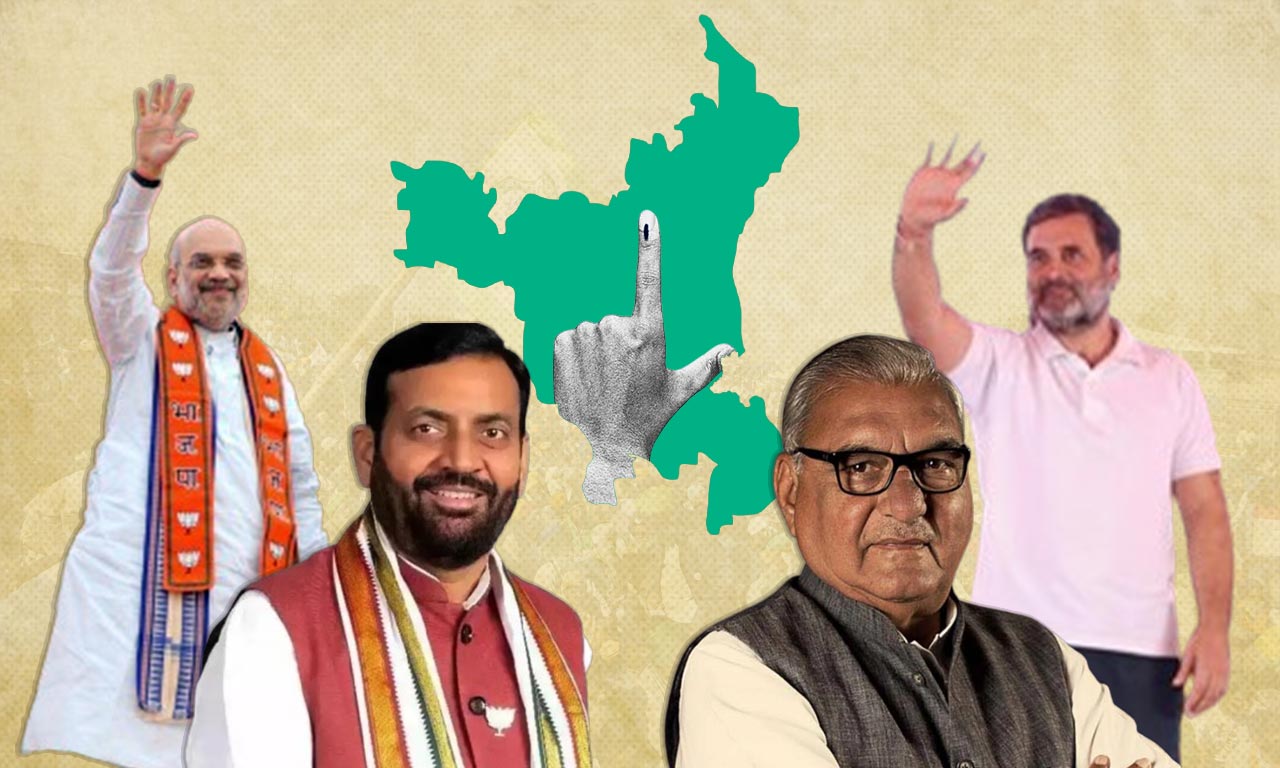
As Haryana gears up for the Legislative Assembly elections on October 5, 2024, the political landscape is charged with a mix of hopes, challenges, and uncertainties. Both the Bharatiya Janata Party (BJP) and Congress are putting their best foot forward, having released their manifestos and unleashed their star campaigners. The stakes are high for both, with the Congress riding on the momentum from its performance in the 2024 general elections, eager to make a comeback after a decade out of power. Meanwhile, the BJP, after ruling the state for the past 10 years, faces the uphill battle of anti-incumbency and unrest from various sectors, including farmers, wrestlers, and Agniveer protests.

The Congress, buoyed by its national-level success earlier this year, hopes to turn the tide in its favour and wrest power from the BJP. However, it faces a tough road ahead, as the BJP’s core strategy hinges on exploiting divisions within the opposition and rallying smaller parties and independents to fracture the anti-BJP vote. The BJP’s internal struggles are evident, with the collapse of the BJP-JJP alliance in March 2024, which led to the resignation of Manohar Lal Khattar and the appointment of Nayab Singh Saini as the new Chief Minister. In the 2024 Lok Sabha elections, the BJP’s hold on Haryana weakened, losing five of its 10 seats to Congress. The political instability was further highlighted in May 2024 when the withdrawal of support by three independents left the BJP leading a minority government.

This political fragility has set the stage for a highly unpredictable election. The last two state elections in 2009 and 2019 resulted in marginally fractured mandates. In 2009, Congress formed the government with the help of independents and smaller parties, while in 2019, the BJP secured power through its alliance with Dushyant Chautala’s Jannayak Janta Party (JJP). However, the landscape in 2024 appears even more fragmented, with several smaller parties vying for influence.

Dushyant Chautala’s JJP, now contesting in alliance with Chandrashekhar Azad’s Azad Samaj Party (ASP), is confident of emerging as a key player in a potentially hung assembly. Chautala predicts a fractured mandate similar to previous elections and aims to secure enough seats to play kingmaker again. However, the JJP faces challenges on multiple fronts. The party’s core voter base, particularly the Jat community, is disillusioned with the party’s post-poll alliance with the BJP in 2019, which is threatening its ability to repeat its success of winning 10 seats. The alliance with ASP is an attempt to appeal to young Dalit voters, but it remains to be seen if this will counterbalance the losses from the Jat vote.

Adding to the complexity is the Indian National Lok Dal-Bahujan Samaj Party (INLD-BSP) alliance, which is attempting to recover lost ground by channeling the anger of the Jat community and securing a portion of Dalit votes, thanks to its tie-up with the BSP. Meanwhile, the Aam Aadmi Party (AAP), emboldened by its governance model in Delhi, is also trying to make inroads in the state by fielding a few rebels. AAP’s entry could further split the anti-BJP vote, complicating the dynamics of the opposition.

Historical data indicates that Haryana’s elections have often been closely contested. In the 2019 election, 53 seats were decided by margins where the third-placed party’s votes exceeded the margin of victory, a pattern that could repeat in 2024. A total of 1,051 candidates are contesting in 2024, with an average of 11.7 candidates per seat, lower than the previous elections. However, the high number of contestants and the involvement of smaller parties and independents mean the possibility of a hung assembly looms large once again.

For the BJP, survival hinges on its ability to mitigate the impact of anti-incumbency and protests. For Congress, the challenge is to consolidate the opposition vote without losing ground to the smaller parties or splinter groups. And for the JJP, INLD, BSP, AAP, and others, the goal is clear: to gain enough leverage to shape the post-election landscape.

In the end, Haryana’s electoral battle is not just about BJP vs. Congress—it is a multi-cornered contest where every vote counts, and where smaller players and independents could tip the scales. The results, which will be declared on October 8, will reveal whether Haryana will witness another fractured mandate or a decisive change in leadership.

Supreme Court Grants Interim Protection to Malayalam Actor Siddique in Rape Case

siddique, kerala high court, kerala, sexual assault case, actor siddique
Supreme Court Grants Interim Protection to Malayalam Actor Siddique in Rape Case 4

The Supreme Court on Monday granted Malayalam film actor Siddique temporary protection from arrest in a rape case.

A bench comprising Justices Bela M Trivedi and Satish Chandra Sharma issued a notice to the Kerala government and the victim. This followed Siddique’s appeal against a Kerala High Court decision that had denied him anticipatory bail.

At the start of the hearing, senior advocate Vrinda Grover, representing the victim, was questioned about the delay in filing the complaint. She referenced the Justice Hema Committee report, which shed light on the harassment and sexual exploitation faced by women in the Malayalam film industry. Senior advocate Mukul Rohatgi, representing Siddique, pointed out that the complaint was filed in 2024, eight years after the alleged incident.

On September 24, the Kerala High Court had denied Siddique’s anticipatory bail due to the seriousness of the accusations. Siddique, accused of rape and criminal intimidation, claims that the female actor complainant has been harassing him with false accusations since 2019. The case is part of a wider fallout from the Justice Hema Committee report, which has led to multiple FIRs against other high-profile Malayalam film personalities.

BJP’s Annamalai Criticizes DMK Nepotism, Targets Udhayanidhi Stalin’s Elevation to Deputy CM

annamalai, dmk, deputy cm, deputy chief minister, Udhayanidhi Stalin
BJP's Annamalai Criticizes DMK Nepotism, Targets Udhayanidhi Stalin's Elevation to Deputy CM 6

Tamil Nadu BJP president K. Annamalai has intensified his criticism of the ruling DMK party, targeting the rise of Udhayanidhi Stalin, the son of Chief Minister M.K. Stalin, to the position of Deputy Chief Minister.

In a post on the social media platform ‘X’, Annamalai suggested that the DMK’s leadership is favoring its own family and inner circle while neglecting the rest of the state’s population.

Annamalai wrote, “The Sun shines for the privileged few & an eclipse for the rest of the state for the last 40 months.” This statement is a reference to the DMK’s symbol of the rising sun and the party’s slogan “Vidiyal” (meaning a new dawn), which was a key part of their 2021 election campaign. Annamalai implied that this “new dawn” has only benefited a select group within the DMK, particularly its leaders and their families.

He also shared a meme that highlighted alleged nepotism within the DMK, featuring Udhayanidhi Stalin and other prominent leaders from political families. Annamalai’s remarks reflect the BJP’s ongoing critique of the DMK, accusing it of dynastic politics and failing to deliver on promises made to the people of Tamil Nadu.

Shigeru Ishiba Prepares for Japanese Prime Minister Role, Announces Election Date

shigeru ishiba, japan, japanese
Shigeru Ishiba Prepares for Japanese Prime Minister Role, Announces Election Date 8

Shigeru Ishiba, newly elected head of Japan’s governing Liberal Democratic Party (LDP), has announced plans to hold a parliamentary election on October 27, soon after taking office as prime minister. The announcement comes ahead of his official installation, scheduled for Tuesday.

Ishiba secured the LDP leadership on Friday, succeeding Fumio Kishida, and is set to become Japan’s prime minister due to the LDP’s parliamentary majority. He revealed the election date early to assist with logistical planning and ensure a smooth electoral process.

A seasoned politician known for his expertise in defense policy, Ishiba defeated Economic Security Minister Sanae Takaichi in the party leadership contest. His centrist stance is viewed as crucial to attracting a broad base of voters and countering the liberal opposition, particularly in light of recent party corruption scandals.

Ishiba has advocated for the formation of an Asian NATO-like military alliance and has emphasized the importance of a balanced Japan-US security relationship. His domestic policies focus on alleviating deflation, addressing the declining birthrate, and improving disaster resilience.

With a political career that began in 1986, Ishiba has held several key ministerial positions, including defense and agriculture, and previously served as LDP secretary-general under former Prime Minister Shinzo Abe. His leadership marks a pivotal moment in Japan’s political landscape as the country prepares for its upcoming election.

Haryana BJP Expels 8 Members For Contesting Assembly Polls Independently

haryana, elections, bjp, expels, haryana elections
Haryana BJP Expels 8 Members For Contesting Assembly Polls Independently 10

The Bharatiya Janata Party (BJP) in Haryana has expelled eight leaders, including former minister Ranjit Chautala and former MLA Devendra Kadyan, for six years. These expulsions came as a result of their decision to contest the Haryana assembly elections as independent candidates against the BJP’s official nominees.

Among those expelled are Sandeep Garg, Jileram Sharma, Bachchan Singh Arya, Radha Ahlawat, Naveen Goyal, and Kehar Singh Rawat. Party dynamics shifted when Haryana Minister Ranjit Singh Chautala resigned from the Cabinet after not receiving a ticket for the upcoming elections. Chautala, brother of former Haryana Chief Minister Om Prakash Chautala, announced his independent run from the Rania seat.

Chautala stated, “I will contest as an independent candidate from the Rania Assembly constituency. It is the decision of the people of my constituency. After I did not get the ticket, I took this decision.” The BJP has fielded Shishpal Kamboj from Rania and Sandeep Garg filed nomination papers against Chief Minister Nayab Singh Saini from the Ladwa constituency.

Haryana will go to the polls on October 5 to elect a 90-member state legislative assembly, with counting set for October 8. In the 2019 assembly elections, the BJP emerged as the single-largest party with 40 seats, while Congress secured 30 seats.

Dharmaveer 2: The Myth and Politics of Anand Dighe

dharmaveer 2, myth, politics, anand dighe, eknath shinde, shinde, balasaheb thackeray, shiv sena, thane
Dharmaveer 2: The Myth and Politics of Anand Dighe 12

Since Eknath Shinde’s realignment with the BJP, he has been determined to elevate Anand Dighe’s stature to that of a widely revered political figure in Maharashtra, seeking to position him alongside leaders like Balasaheb Thackeray. The Dharmaveer movie series has played a crucial role in propagating this myth, extending Dighe’s influence beyond his home base of Thane.

Before these films, Dighe was relatively unknown outside of Thane, with limited recognition in Maharashtra’s broader political landscape. Through the Dharmaveer series, Shinde aims to solidify his connection to Dighe, portraying himself as the true inheritor of his political legacy. However, this cinematic portrayal raises questions about whether it is more myth-making than an accurate historical record, as Dighe’s legacy is amplified far beyond its original scope.

Shinde’s Political Ambitions and Dharmaveer

Presently, Eknath Shinde is being positioned as the Maratha face of the NDA alliance in Maharashtra. To maintain his relevance on a national level, Shinde’s public relations are managed by various agencies, crafting an image of him as a heavyweight in state politics. The first Dharmaveer film played a significant role in shaping this narrative, emphasizing Shinde’s rise to power through his hard work and the goodwill earned under Dighe’s mentorship. The movie frames Shinde’s political ascent as a natural extension of Dighe’s legacy, reinforcing his role in Maharashtra’s political corridors and extending his influence beyond the state.

Dharmaveer 2: Cinematic Projection vs. Historical Accuracy

Dharmaveer 2 continues the saga by delving into Anand Dighe’s life, offering an emotionally charged narrative that highlights his impact on ordinary people. The film attempts to present his life as a realistic depiction, connecting his legacy to present-day politics. However, the second installment leans more towards cinematic projection than a serious documentation of history. Directed by Praveen Tarde, whose ideological leanings are closely aligned with the Rashtriya Swayamsevak Sangh (RSS), the film presents a selective narrative. Much like the first part, it resonates with audiences drawn to its ideological undertones, prioritizing myth over a balanced exploration of Dighe’s historical role.

Dighe’s Conflict with the RSS and the Political Landscape

The first Dharmaveer film largely downplays Dighe’s real political conflicts. His primary struggle wasn’t with the Congress or Vasant Davkhare, as portrayed. In reality, Dighe’s deeper battle was with the RSS itself. At the time, Thane’s political power—including its MP and the Kalyan-Dombivli mayorship—was held by BJP loyalists and RSS unionists. Dighe’s significance lies in how he expanded the Hindutva narrative beyond the BJP’s control, channeling it into Shiv Sena and reshaping Maharashtra’s political landscape. His ability to push Hindutva further to the right and challenge the status quo could easily inspire a compelling web series, showcasing his complex political maneuvering.

The Complex Relationship Between Dighe and Balasaheb Thackeray

While Dharmaveer 2 glorifies Dighe’s reverence for Balasaheb Thackeray, portraying him as a devoted disciple, the reality was more complicated. Dighe had significant differences with Thackeray, his political mentor and Hindutva flag-bearer. However, openly depicting this conflict might not resonate well with Shinde’s voter base, especially ahead of elections. The film carefully avoids these sensitive aspects, focusing instead on narratives that unify and bolster Shinde’s political image, appealing to undecided voters torn between the two factions of Shiv Sena.

Caste Politics: CKP vs. Chitpavan Brahmins

Anand Dighe’s political rise also reflected the caste dynamics in Thane, where the rivalry between the CKP (Chandraseniya Kayastha Prabhu) caste, to which Dighe belonged, and the Chitpavan Brahmins played out in local politics. Dighe’s ascent challenged the dominance of Chitpavan Brahmin leaders, who were closely aligned with the RSS. Leaders like Joshi and Prakash Paranjpe attempted to retain their grip on power, but Dighe’s political acumen disrupted this balance. His ability to assert himself within this caste rivalry allowed him to rise above the Sangh’s control, aligning Shiv Sena’s Hindutva narrative more closely with local politics.

Shinde’s Struggle to Carry Dighe’s Legacy

Eknath Shinde, Dighe’s political protégé, has struggled to fully carry forward the complexity of Dighe’s legacy, particularly the social consciousness that defined his leadership. While Shinde maintains Dighe’s traditions, such as holding night courts, his grasp of the ideological differences between Shiv Sena’s and BJP’s Hindutva appears limited. Dighe understood the nuances between the two brands of Hindutva, but the film downplays these ideological subtleties, focusing instead on portraying Shinde as Dighe’s rightful heir.

The film also emphasises Dighe’s loyalty to Balasaheb, but in reality, Thackeray ensured that Dighe’s influence remained localised to Thane. To maintain balance within the party, Balasaheb promoted other leaders like Satish Pradhan and Anant Tare in Thane, and Ganesh Naik and Sabirbhai Sheikh in the district. Despite his ambitions, Dighe was never granted a formal leadership position in Shiv Sena’s central organisation.

Dharmaveer 2: Myth vs. Reality

When watching Dharmaveer 2, one should be aware that it presents a selective narrative, catering to a specific political ideology. The film highlights only certain aspects of Dighe’s life while glossing over the deeper, more intricate political struggles and caste dynamics that shaped his career. The real story of Anand Dighe, including his internal conflicts within Shiv Sena, his tension with the RSS, and his strategic navigation through a complex web of alliances, is far more nuanced than the cinematic portrayal.

Understanding Dighe’s true legacy requires looking beyond the myth constructed in the film and delving into the multi-layered political realities of Maharashtra.

In a Shocking Incident, a 11-Year-Old Boy Sacrificed in Hathras School for Fame and Success

hathras, child, child sacrifice, honour killing, uttar pradesh
In a Shocking Incident, a 11-Year-Old Boy Sacrificed in Hathras School for Fame and Success 14

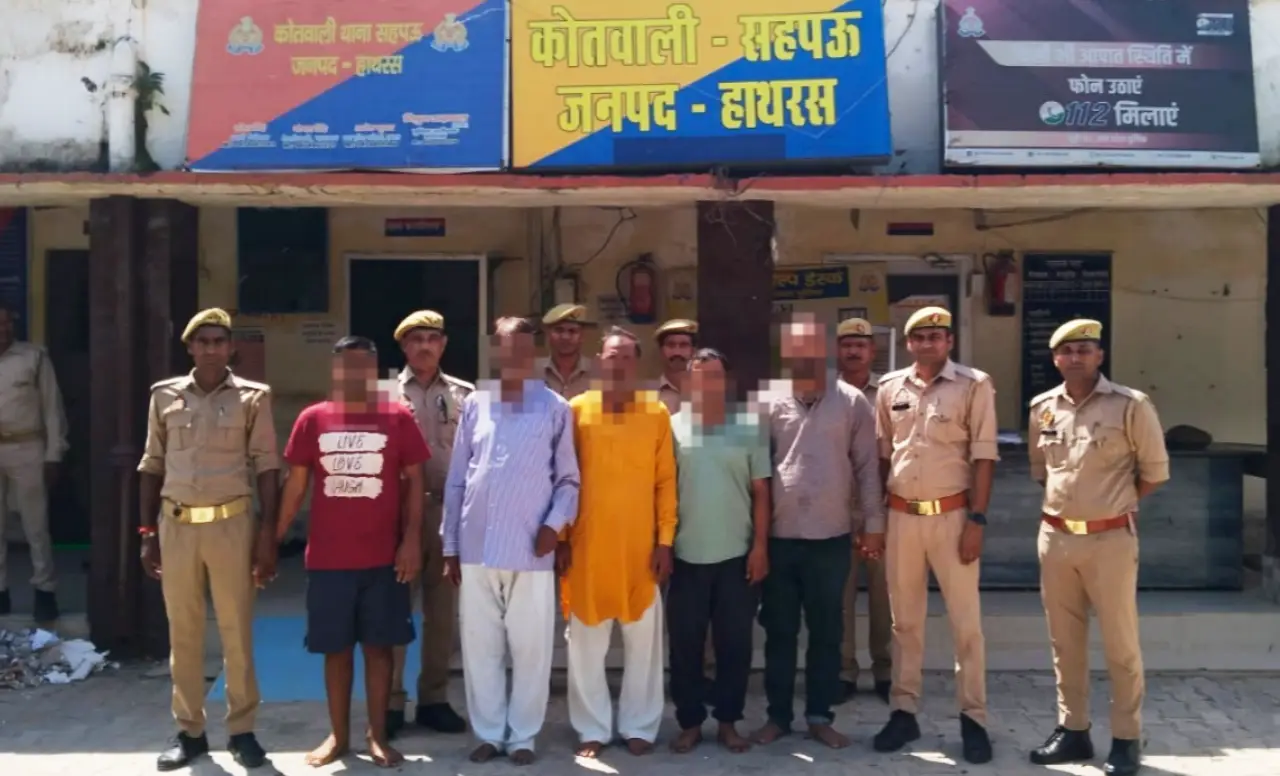
In a horrifying incident, an 11-year-old boy, Kritarth Kushwaha, was brutally murdered in a suspected human sacrifice ritual aimed at bringing success and fame to a school in Hathras, Uttar Pradesh.

The incident occurred at DL Public School in Rasgawan village, under the jurisdiction of Sahapau Police Station. The young boy, a Class 2 student, was found strangled in the school hostel, with his body later discovered in a vehicle owned by the school management. Kritarth, a resident of Tursen village, had been missing for several days, causing widespread panic among locals.

An investigation was launched following a complaint from the boy’s father, Krishna Kumar, on September 23. Evidence uncovered by the police suggested that the killing was orchestrated as part of a tantric ritual to bring success to the school.

Authorities have arrested five individuals linked to the crime, including Ramprakash Solanki, Dinesh Baghel (the school manager), Jashodhan Singh (father of the school manager), Laxman Singh, and Veerpal Singh alias Veeru. According to CO Himanshu Mathur, Jashodhan Singh is considered the mastermind behind the sacrificial plan.

The Superintendent of Police ordered the immediate arrest of the suspects, and further legal action is being taken by Sahapau Police. The tragic event has shocked the local community, leaving many in disbelief that such a gruesome act could take place in a school setting.

Murder of Mahalakshmi: A Tragic Case of Anger Issues

mahalakshmi murder, mahalaxmi murder case, bengaluru, roy, Mukti Ranjan Roy
Murder of Mahalakshmi: A Tragic Case of Anger Issues 16

In a chilling incident, Mahalakshmi, a young woman entangled in an extramarital affair, was brutally murdered and dismembered by her lover. Originally from Nepal, Mahalakshmi had been married for five years to Hemanth Das, with whom she shared a four-year-old child. However, their relationship deteriorated, and she left him to live independently in Bengaluru, where she worked as a salesperson in a mall. Known for her reclusive nature, Mahalakshmi kept to herself and had minimal interaction with her neighbors.

Their marriage had been strained due to Mahalakshmi’s extramarital relationship, leading Hemanth to separate from her in October 2023. Earlier that year, in February, Hemanth had filed a complaint against Mahalakshmi with the Nelamangala police, accusing her of assaulting him when he refused to give her money. Conversely, Mahalakshmi had also lodged a complaint against him for marital abuse. After the separation, she distanced herself from her estranged husband and focused on her work, leaving home early and returning late at night.

During that time, Mahalakshmi had begun working at a clothing factory in Malleswaram, where she met Mukti Ranjan Roy, an unmarried man who led a team at the factory. As they worked together, they developed a romantic relationship, and Ray frequently stayed with Mahalakshmi. On September 2, Mahalakshmi, who was off work for the day, had Mukti Ranjan Roy visit her, as he often did. The two reportedly got into a heated argument, with Mahalakshmi allegedly pressuring Mukti Ranjan to marry her. The argument escalated, turning violent when Mahalakshmi allegedly attacked Mukti Ranjan, hitting and even biting him in a fit of rage. Mukti Ranjan, shocked by her aggressive behavior, retaliated, and in the ensuing struggle, Mahalakshmi was fatally injured. Panicking, Mukti Ranjan dismembered her body to cover up the crime.

Mahalakshmi’s mother frequently visited her, and for a time, her brother and sister-in-law lived with her before relocating to another residence. One day, a neighbor detected a foul smell coming from Mahalakshmi’s locked home. Alarmed, the neighbor informed her family, who, upon arriving at the scene, made a horrifying discovery—Mahalakshmi’s body had been dismembered into over 50 pieces and was found decomposing in the refrigerator.

Forensic teams and investigators determined that Mahalakshmi’s phone had been switched off since September 2. Based on the condition of her remains and electronic evidence collected, the police believe that she was murdered and dismembered inside the house, with her body parts hidden in the fridge. Multiple teams have been deployed across India in an effort to track down and apprehend those involved in this gruesome crime. Mahalakshmi’s mother last saw her during the Rakshabandhan festival, after which her phone was turned off.

Before leaving Bangalore, Ray had called Mahalakshmi’s brother and confessed to the murder. He asked Ray to leave the state and the police. To determine whether she had been poisoned prior to her death, samples of her intestine had been sent for toxicological analysis. The fingerprints discovered on the refrigerator were also being examined by forensic teams.

Mukti Ranjan Ray’s body was found hanging from a tree in an Odisha village. In his suicide note, which is presently in the custody of the Bhadrak Police, Mukti Ranjan detailed his fight with Mahalakshmi moments before he killed her. His suicide note began with “I did it” and mentioned that Mukti Ranjan had been fed up with Mahalakshmi’s “violent behavior and arguments.”

“She attacked me and that angered me and I hit her and killed her. I cut her into multiple pieces,” Mukti Ranjan’s suicide note read.

Mahalakshmi struggled with controlling her anger, a trait that caused significant turmoil in her relationships. Her husband, who also faced the brunt of her violent behavior, eventually left her, moving to a safe place with their child. However, her lover, unlike her husband, was not as forgiving or tolerant, and their relationship took a deadly turn.  This was not the first instance of violence in Mahalakshmi’s relationships. In February, her estranged husband, Hemanth, had filed a case against her, accusing her of domestic assault. According to his complaint, Mahalakshmi had attacked and bitten him during an argument when he refused to give her money.

The case has parallels to the gruesome murder of 27-year-old Shraddha Walkar in Delhi’s Mehrauli in May 2022. She was strangled by her live-in partner, Aftab Amir Poonawala, 29, and her body was chopped into 35 pieces. The body parts were kept in a 300-liter fridge for almost three weeks at the residence before dumping them across the city. Aftab Amir is in jail now.

Mumbai Court Sentences Shiv Sena (UBT) MP Sanjay Raut to 15 Days Imprisonment in Defamation Case

Sanjay Raut ANI
Mumbai Court Sentences Shiv Sena (UBT) MP Sanjay Raut to 15 Days Imprisonment in Defamation Case 18

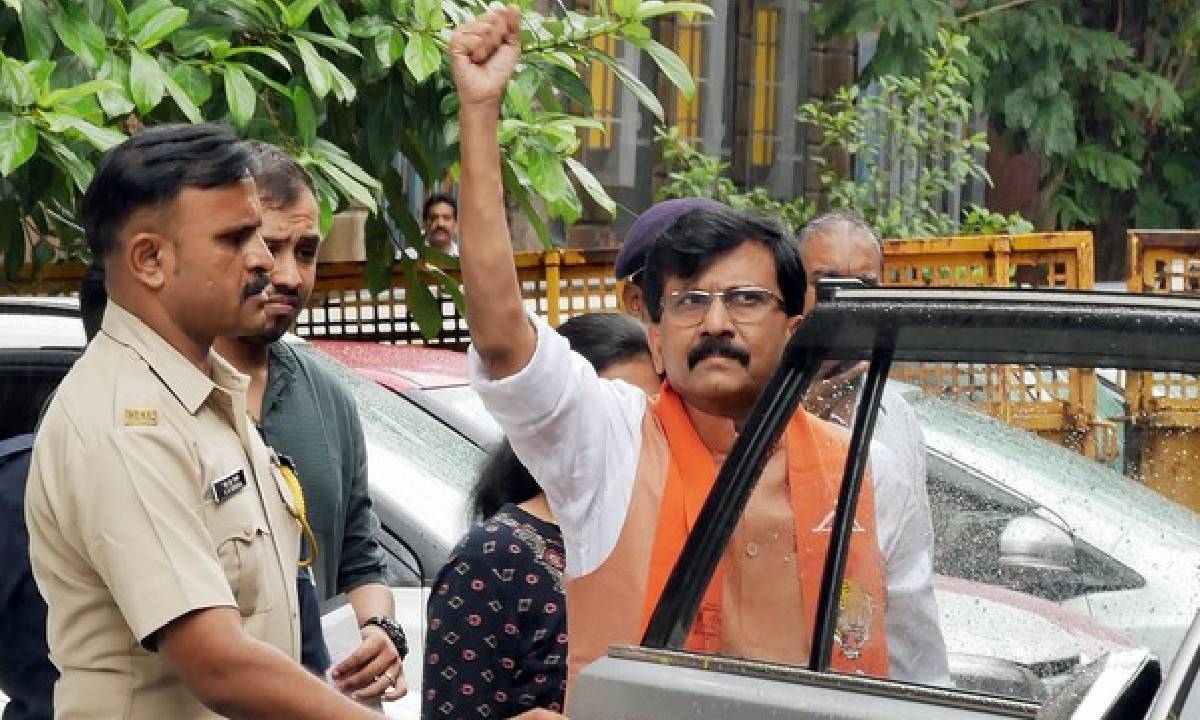
A Mumbai court on Thursday sentenced Shiv Sena (UBT) MP Sanjay Raut to 15 days simple imprisonment in a defamation complaint filed against him by BJP leader Kirit Somaiya’s wife Medha Somaiya.

The metropolitan magistrate (Sewree court) convicted the Rajya Sabha member under Indian Penal Code Section 500 (punishment for defamation) and also imposed a fine of Rs 25,000 on him.

Medha Somaiya, in her complaint filed through advocate Vivekanand Gupta, had alleged that Raut made baseless and completely defamatory allegations against her and her husband.

She said Raut had accused them of being involved in a Rs 100 crore scam over the construction and maintenance of some public toilets under the jurisdiction of the Mira Bhayander Municipal Corporation.

‘The statements made by the accused to the media are per se defamatory. The statements have been made to malign my character in the eyes of the general public,’ the complaint had stated.

Temple Defaced with Anti-Hindu Graffiti in Sacramento, US

baps, swaminarayan, sacramento, baps mandir
Temple Defaced with Anti-Hindu Graffiti in Sacramento, US 20

In a disturbing incident, the BAPS Shri Swaminarayan Mandir in Sacramento, California, was desecrated with anti-Hindu graffiti, including messages like “Hindus go back.” This act of vandalism comes less than 10 days after a similar attack on a temple in New York.

The BAPS Public Affairs posted on X (formerly Twitter), condemning the hate crime:
“Our Mandir in the Sacramento, CA area was desecrated last night with anti-Hindu hate: ‘Hindus go back!’ We stand united against hate with prayers for peace.”

The Sacramento Police have classified the vandalism as a hate crime and have launched an investigation. Officers and CSI are currently examining the scene to gather evidence. Reports suggest that the vandals also cut water lines at the property, further escalating the severity of the attack.

This incident follows another shocking case of vandalism on September 16, when the BAPS Shri Swaminarayan Mandir in Melville, New York, was defaced with hate-filled messages on its driveway and signage. The Indian Consulate in New York condemned the act and has urged US law enforcement to take prompt action against the perpetrators.

The Hindu American Foundation has also called for an investigation by the Justice Department and Department of Homeland Security, labeling the attack as cowardly and unacceptable. This is not an isolated incident—Hindu temples in both the US and Canada have experienced a surge in hate-fueled vandalism in recent months.

In July, the BAPS Swaminarayan Mandir in Edmonton, Canada, was similarly targeted. Canadian MP Chandra Arya expressed deep concern over the growing violence against Hindu-Canadian communities, which mirrors the attacks seen across North America.