Ajit Pawar Was Keen on NCP Reunification, Merger Was Imminent: Close Aide 2
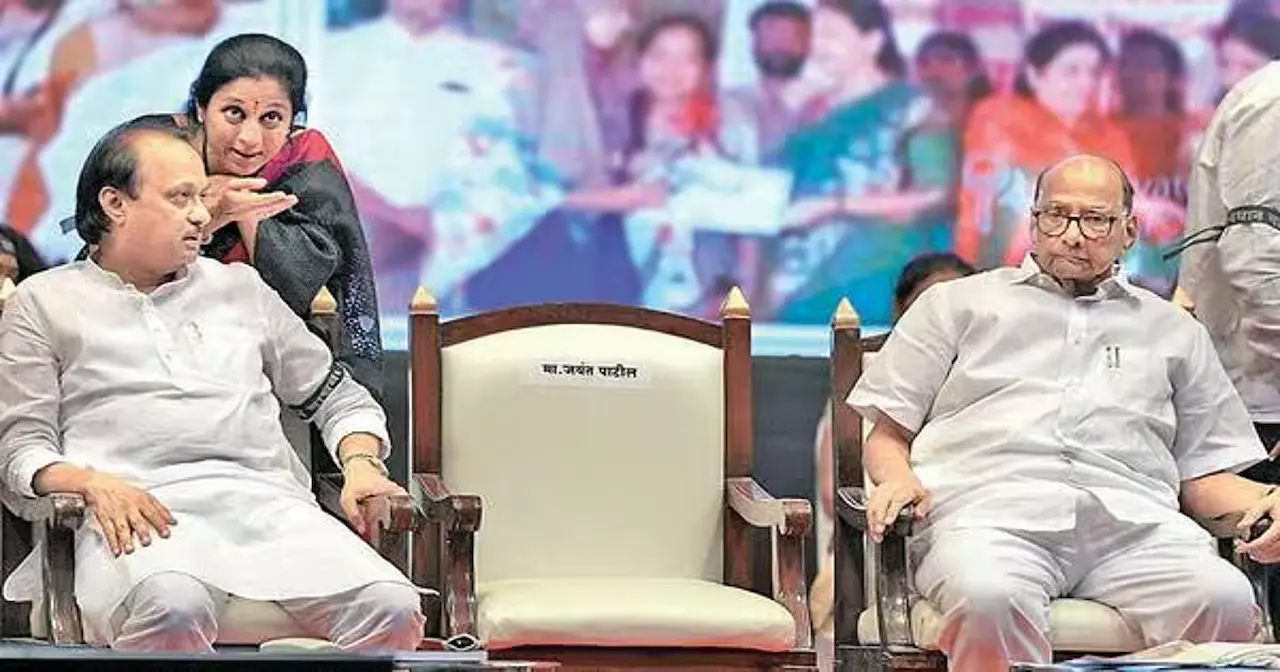
Maharashtra Deputy Chief Minister Ajit Pawar was keen on uniting the two factions of the Nationalist Congress Party, and the merger was on the verge of completion, a close associate of the late leader has claimed.
Kiran Gujar, who has been associated with Ajit Pawar since before his entry into politics in the mid-1980s, told PTI on Thursday that Pawar had confided in him just five days before the fatal plane crash that claimed his life. “He was 100 per cent keen on merging both factions. He told me the entire process was complete and the merger was imminent within days,” Gujar said.
During the recent civic polls, which both factions contested together, Ajit Pawar had also told select journalists that he intended to merge his party with the NCP (Sharadchandra Pawar) while his uncle Sharad Pawar remained in good health. After jointly contesting the January 15 civic elections in Pune and Pimpri Chinchwad, the two sides had decided to continue their alliance for the upcoming Zilla Parishad elections as well.
Gujar said Ajit Pawar had a clear roadmap for the merger and the future course of a united party. On whether discussions had taken place with Sharad Pawar, Gujar said positive talks were underway with Pawar, Supriya Sule, and other senior leaders, and there were indications that the move would receive the elder Pawar’s endorsement.
“Many positive developments were on the cards, but this tragedy took Ajit ‘dada’ away from us. After his death, it has become even more imperative that both factions come together and work for the betterment of Baramati and the state,” Gujar said.
A confidant of the Pawar family for over four decades, Gujar recalled that after Ajit Pawar won the election to the Chhatrapati Cooperative Sugar Mill in 1981, he was persuaded to enter public life. Initially reluctant and keen to focus on farming and family, Pawar eventually stepped into politics when Sharad Pawar became chief minister in the late 1980s, filling the need for young leadership in Baramati. “Development will continue, but a leader like Ajit dada will not emerge again,” Gujar added.
Supreme Court Stays New UGC Equity Rules, Flags 'Vague' Provisions and Social Risks 4
In a significant intervention, the Supreme Court of India on Thursday stayed the University Grants Commission’s 2026 regulations on preventing caste-based discrimination in higher education, observing that the framework is “prima facie vague”, capable of misuse and could have “very sweeping consequences” for society.
A bench led by Chief Justice Surya Kant and Justice Joymalya Bagchi said the regulations, if implemented in their present form, could have a “dangerous impact” and end up dividing society. The court sought responses from the Centre and the University Grants Commission by March 19 on petitions challenging the UGC (Promotion of Equity in Higher Education Institutions) Regulations, 2026.
Keeping the contentious provisions in abeyance, the bench revived the earlier UGC (Promotion of Equity in Higher Educational Institutions) Regulations, 2012, invoking its powers under Article 142 of the Constitution. The court said that repealing the earlier framework without an alternative would leave students without any effective remedy.
The bench took particular exception to Regulation 3(1)(c), which defines caste-based discrimination as discrimination only against members of Scheduled Castes, Scheduled Tribes and Other Backward Classes, noting that it excludes students from the general category from institutional protection. The court observed that Regulation 3(1)(e) already provides a broad definition of “discrimination” and questioned the need for a separate, narrower definition.
“If we do not intervene, it will have a dangerous impact and divide society. The language of the regulation is vague and needs to be carefully modulated so that it is not exploited,” the bench remarked.
The court also flagged the complete omission of ragging from the scope of the regulations, despite it being one of the most common forms of harassment on campuses. Questioning the assumption that discrimination operates only along caste lines, the bench asked why harassment based on junior-senior hierarchies had been ignored.
Advocate Vishnu Shankar Jain, appearing for one of the petitioners, argued that the impugned definition violates Article 14 of the Constitution by creating an unreasonable classification and presuming that caste-based discrimination affects only certain social groups. Another counsel highlighted scenarios where victims from the general category could be left without remedies and even face retaliatory action under the current framework.
The Chief Justice suggested that the issue be reconsidered by a committee of eminent jurists and experts with a deep understanding of social realities, warning against measures that could push society towards regressive segregation. “Educational institutions must reflect unity, not deepen divisions,” the bench said.
Senior advocate Indira Jaising, appearing in a 2019 public interest litigation filed by the mothers of Rohith Vemula and Payal Tadvi—which eventually led to the framing of the 2026 regulations—defended the new rules.
The bench made it clear, however, that while addressing discrimination is essential, the present framework requires serious re-examination to avoid unintended and far-reaching consequences. The petitions were filed by Mritunjay Tiwari, advocate Vineet Jindal and Rahul Dewan.
Maharashtra today is staring at a mirror it no longer recognises—and perhaps no longer wants to. This is not merely a phase of political turbulence or a temporary spike in crime statistics. This is a systemic moral collapse, where governance has grown timid before criminals, public discourse has turned feral, and women—particularly women without political power but with public visibility—have become the softest, most convenient targets. The state that once set standards of political decorum is now sinking into a daily spectacle of vulgarity masquerading as activism and hate speech hiding under the convenient umbrella of free speech.
Let us begin with the hard truth we keep dodging. Crime against women and the girl child in Maharashtra has reached alarming proportions. Thousands of rape cases in months, hundreds of murders, trafficking networks thriving in urban shadows, drugs flowing unchecked, girls disappearing with terrifying regularity—these are not aberrations. This is the sound of a state losing control. Law and order today feels reactive, cosmetic, and selective. Press conferences replace policing. Twitter statements substitute governance. And accountability is tossed around like a political football no one wants to own.
This vacuum of authority has produced something even more dangerous: a culture where anger is loud but misdirected, and outrage is intense but intellectually bankrupt. Instead of attacking the state machinery—those who actually wield power—sections of society have chosen a far easier route: character assassination by proxy. When institutions feel untouchable, women become targets. That is not activism; that is cowardice.
The recent controversy involving Anjali Bharti exposes this rot with brutal clarity. While speaking about sexual violence—an issue grave enough to demand restraint, seriousness, and moral clarity—she chose to descend into vulgar, sexually loaded language aimed at Amruta Fadnavis. Not at the Home Department. Not at the police. Not in the cabinet. Not even directly at the Chief Minister. But at a woman who holds no constitutional authority, no executive power, and no role in law enforcement.
This is where the argument collapses entirely. If you are angry about rapes, murders, trafficking, and state failure, your target must be the state. Full stop. When that rage is redirected at a CM’s wife using obscene language, what you are revealing is not moral courage but a deep-seated comfort with misogyny. And worse, the normalisation of that misogyny through applause, viral clips, and ideological justification.
There was a time—not very long ago—when Maharashtra politics, despite ideological battles, preserved a baseline of civility. From the first Chief Minister Yashwantrao Chavan to Eknath Shinde, the office of the Chief Minister was treated as that of the first citizen of the state. Political disagreement never spilled into personal abuse of families. Yashwantrao Chavan symbolised a certain gravitas in Maharashtra’s political culture: restraint in speech, dignity in public life, and an unspoken understanding that power must carry responsibility, not theatrics. From Chavan onward, despite ideological differences and fierce political battles, the office of the Chief Minister retained a sense of reverence. Personal families were kept out of the gutter. Language had limits. Lines were rarely crossed. That is precisely why today’s degeneration feels so jarring. When we say Maharashtra politics has fallen from grace, the comparison is not imaginary—it is historical. From Yashwantrao Chavan’s statesmanship to today’s abuse-powered discourse, the decline is visible, measurable, and frankly, alarming.
Wives of Chief Ministers remained outside the battlefield, accorded dignity whether visible or private. That unwritten code has now been shredded with disturbing ease. Since Devendra Fadnavis rose to the helm, his wife has been subjected to a relentless, venomous campaign—mocked for her appearance, body-shamed for her looks, sneered at for her clothes, abused for refusing to fit the outdated, submissive mould some people still expect from a “CM’s wife.” This is not social critique; it is sexualized public lynching. And it marks the first time in Maharashtra’s political history that a Chief Minister’s wife has been so openly and viciously targeted by trolls, activists, and opportunists across ideological lines.
Amruta Fadnavis is not a constitutional figure. She is an independent individual, entitled to her lifestyle, her choices, her voice. She did not sign up to be a punching bag for state failure. To argue otherwise is to openly endorse the idea that women related to men in power are fair game for abuse. That is not progressive thought—it is medieval thinking with a smartphone.
The defence offered in such cases is always the same tired excuse: freedom of speech. But freedom of speech was never meant to be freedom to be filthy. It exists to protect dissent, not depravity. Criticism of power is healthy; vulgarity directed at women with no power is intellectual laziness dressed up as rebellion. Social media has only accelerated this decay, turning platforms into courtrooms where the mob is judge, jury, and executioner—and taste, decency, and responsibility are declared casualties.
This moral collapse is not limited to so-called rebels or fringe voices. The ruling class carries its own heavy share of blame. The BJP today is demanding police action—and legally, it may be justified—but it cannot absolve itself of its long-standing habit of indulging in aggressive, personal, and often obnoxious rhetoric. Party leaders who routinely weaponise language, encourage street-level theatrics, and blur the line between outrage and abuse have no moral high ground.
Take Chitra Wagh—vocal, confrontational, and selective in outrage. She raises hell when it suits the party line, then performs elegant U-turns when investigations begin to look inconvenient. Sudhir Mungantiwar publicly joking about stripping political opponents? Nitesh Rane and Navneet Rana relentlessly injecting religious polarisation into every issue? This constant lowering of discourse has consequences. When leaders speak recklessly, the streets speak filthily. The ecosystem is connected.
The opposition, too, cannot pretend to be innocent. While Kishori Pednekar and others have rightly condemned the offensive remarks, their own political machinery has long benefitted from troll armies and insinuation-driven politics. Selective condemnation does not cleanse systemic hypocrisy. The greatest tragedy in all this noise is what gets drowned out—the actual victims. Girls who were raped. Women who were murdered. Families destroyed beyond repair. Their pain is not a slogan. Their suffering cannot be monetised through YouTube views or viral outrage. When the discourse drops to obscene personal attacks, the real issue—state failure to protect its women—gets buried under the filth.
This is how societies rot. Not in one dramatic collapse, but in small daily acts of moral compromise. When misogyny is tolerated in the name of ideology. When abuse is excused as passion. When leaders weaponise language, and followers amplify it without thought. When women’s dignity becomes collateral damage in political warfare.
Maharashtra is not merely facing a law-and-order crisis. It is facing a crisis of values. Respect for institutions has eroded because institutions failed to command respect. Respect for women has eroded because society selectively applies principles depending on convenience. And unless this vicious cycle is broken—clearly, firmly, unapologetically—the state risks becoming a place where power is feared, not respected, and women are spoken about, but never truly protected.
If anger against corrupt or inefficient governance is real, let it rise where it belongs—against those in power. But if that anger seeks relief by abusing women, then it deserves to be called out for exactly what it is: not rebellion, not courage, not truth—but moral bankruptcy shouted from a loudspeaker.
Kerala Appoints NK Unnikrishnan as Special Prosecutor in Sabarimala Gold Loss Cases 8
The Kerala government has appointed senior advocate NK Unnikrishnan as the Special Public Prosecutor to head the prosecution in the high-profile Sabarimala gold loss cases, an official said on Thursday.
The appointment was made through a government order issued on Wednesday. Unnikrishnan will lead the prosecution on behalf of the Special Investigation Team (SIT) in two cases linked to the alleged loss of gold from the Dwarapalaka idols and the doorframes of the Sreekovil (sanctum sanctorum) at Sabarimala.
In addition to conducting the prosecution, Unnikrishnan will provide legal guidance during the investigation and scrutinise charge sheets before they are filed in court. A native of Thrissur, he is known for handling several sensitive cases in the state. He earlier served as Special Public Prosecutor in the 2016 rape and murder case of law student Jisha at Kuruppampady, where the prosecution secured the conviction and death penalty for the sole accused, Ameerul Islam. He is also currently the Special Public Prosecutor in the Koodathai serial killing cases against Jolly in Kozhikode.
The appointment comes at a time when the prosecution in the Sabarimala gold loss probe is under scrutiny, following the release of one of the accused on statutory bail due to delays in filing charge sheets in the two cases.
Meanwhile, the Enforcement Directorate has also initiated a money laundering investigation into the Sabarimala gold loss incident, adding another layer to the ongoing legal proceedings.
Ajit Pawar's Funeral Set for Thursday in Baramati; PM Modi and Amit Shah Likely to Attend 10
The last rites of Maharashtra Deputy Chief Minister Ajit Pawar, who was killed in a plane crash, will be held with full state honours on Thursday in his hometown of Baramati in Pune district, Nationalist Congress Party sources said. The funeral will take place at the Vidya Pratishthan ground from 11 am, and Prime Minister Narendra Modi and Union Home Minister Amit Shah are expected to attend, along with leaders from across the political spectrum.
Pawar, 66, died in the crash on Wednesday when the Learjet 45XR aircraft he was travelling in struck difficulties while landing near Baramati Airport shortly after taking off from Mumbai. Four others onboard — his personal security officer, an attendant and two crew members — were also killed in the accident.
The state government has declared a three-day period of mourning and announced a public holiday for Wednesday as the region and political circles express deep grief over Pawar’s sudden death. Widely respected across party lines, Pawar is survived by his wife Sunetra Pawar, a Rajya Sabha member, and two sons, Parth and Jay.
RIP Ajit Pawar: Political Rise and the Current Phase in Maharashtra Politics 12
Very unfortunate that Maharashtra Deputy Chief Minister Ajit Pawar died in a plane crash, on Wednesday (January 28, 2026), in Baramati. Four other people on board the private aircraft, including the pilot and co-pilot were also killed.
Pawar was travelling on a Bombardier Learjet 45 business jet, owned by a Delhi-based firm VSR Ventures Pvt. Ltd. The Learjet 45 (LJ45), a mid-size business jet aircraft produced by the Learjet Division of Bombardier Aerospace.
The incident halted the flight operations at Mumbai international airport for an hour and 45 minutes. Photographs of the Bombardier Learjet 45 went viral showing two broken parts from the cockpit portion, due to the impact of the accident.
Ajit Pawar has been a consistent presence in Maharashtra politics for over three decades, primarily in roles connected with administration and governance. His political career began in the cooperative sector and gradually expanded into state-level leadership positions. The trajectory of this rise was incremental, shaped by institutional experience, electoral continuity, and shifting political circumstances.
Pawar’s early political exposure came through cooperative institutions. His involvement with cooperative sugar factories and the Pune District Central Cooperative Bank provided him with organisational and financial administration experience. This background later informed his functioning within government, particularly in departments related to finance and infrastructure.
He entered the Maharashtra Legislative Assembly in the early 1990s and has since represented the Baramati constituency multiple times. Winning the constituency in successive elections established him as a stable political figure within the state. Over the years, he held several ministerial portfolios and was appointed Deputy Chief Minister on multiple occasions, serving under different coalition governments.
As a minister and Deputy Chief Minister, Pawar handled key departments such as Finance, Irrigation, Water Resources, Rural Development, and Planning. These sectors placed him at the centre of policy decisions affecting agriculture, infrastructure development, and budgetary allocation. Several initiatives from these departments were implemented during his tenure, while others were subjects of political debate and public scrutiny.
Pawar’s administrative style has generally been described as direct and task-focused. Supporters viewed this approach as contributing to faster decision-making, while critics argued that it allowed limited scope for consultation. These assessments have coexisted throughout his career and reflect broader debates on governance styles rather than individual exceptions.
Politically, his journey has included periods of stability as well as significant transitions. Coalition politics in Maharashtra, internal party dynamics, and national political developments have influenced his role at different stages. Events surrounding the formation and collapse of governments in 2019 and subsequent years marked a turning point in how his political position was perceived.
Following the collapse of the Maha Vikas Aghadi government in 2022, Pawar served for a period as Leader of the Opposition in the Maharashtra Legislative Assembly. Subsequent political realignments led to his faction claiming the Nationalist Congress Party’s name and symbol, a decision later recognised by the Election Commission of India. This development formally altered the organisational structure of the party and clarified leadership control.
Ajit Pawar was part of the ruling alliance in Maharashtra and served as Deputy Chief Minister. His role today differs from earlier phases when he was seen as the dominant administrative figure within government. Decision-making in the current political framework is distributed among coalition partners, reflecting the realities of alliance governance.
The shift in Pawar’s political position is not attributable to a single event, but rather to evolving power equations, generational leadership changes, and coalition compulsions within the state. Such transitions are not uncommon in long political careers, particularly in states with complex alliance politics like Maharashtra.
Ajit Pawar’s record in public life includes both administrative contributions and contested decisions. His tenure reflects the operational challenges of governance as well as the political negotiations inherent in coalition systems. A long-term assessment of his role will likely focus on policy outcomes, institutional impact, and the sustainability of the decisions taken during his various terms in office.
His position represents neither a conclusion nor a continuation of earlier dominance, but a changed phase shaped by contemporary political alignments. As with most political careers, his legacy will be evaluated over time, based on outcomes rather than narratives.
In democratic politics, leadership roles evolve with context. Authority shifts, responsibilities redistribute, and influence recalibrates.
Telangana Stray Dog Killings Continue: 100 More Allegedly Culled in Nagarkurnool, Toll Reaches 1,200 14
Animal rights activists on Wednesday claimed that nearly 100 stray dogs were allegedly killed in Telangana’s Nagarkurnool district, pushing the reported toll of canine deaths across the state to around 1,200 since December 2025.
Police confirmed that an FIR has been registered in connection with the latest incident at Thimmaipally village, naming three accused, including the son of a village panchayat president. The case was filed following a complaint by animal welfare activist M Preethi, who alleged that stray dogs were killed about 10 days ago by administering poisonous injections. According to the complaint, dog killers were allegedly hired for ₹18,000 and the carcasses were buried around two kilometres away from the village.
Preethi, who works as an Animal Cruelty Prevention Assistant with the Stray Animal Foundation of India, accused the village sarpanch and the gram panchayat secretary of orchestrating the killings. Based on the complaint, police registered a case against the sarpanch’s son, the panchayat secretary and a villager under relevant provisions of the Bharatiya Nyaya Sanhita and the Prevention of Cruelty to Animals Act.
A police official at Charakonda police station said carcasses of 12 dogs have been recovered so far and further investigation is underway to ascertain the full extent of the alleged culling.
Several incidents of mass killings of stray dogs were reported from different districts of Telangana in December last year and January, with activists alleging that the deaths were linked to promises made to villagers ahead of gram panchayat elections to address the stray dog menace. FIRs have been filed in multiple cases against panchayat presidents, their relatives, secretaries and others.
In a separate incident, animal welfare activist A Goutham alleged that around 50 stray dogs were illegally captured from Boppapur village in Siddipet district and relocated to a nearby forest area, in violation of animal protection laws. In his complaint to the police, he accused the village sarpanch and secretary of carrying out the act and demanded a fair probe and strict accountability.
Maharashtra Deputy CM Ajit Pawar Dies in Tragic Plane Crash Near Baramati 16
Maharashtra Deputy Chief Minister Ajit Pawar and four others were killed on Wednesday morning when the aircraft carrying them crashed while landing near Baramati in Pune district, officials confirmed. The Directorate General of Civil Aviation said the Learjet 45XR aircraft was attempting to land at Baramati airport when it lost control and crash-landed around 8:45 am, bursting into flames, with no survivors among the five people on board.
The chartered flight had departed from Mumbai and was en route to Baramati, where Pawar, a veteran politician and leader of the Nationalist Congress Party, was scheduled to attend campaign events ahead of upcoming local elections.
Among those killed were Pawar, two crew members and two aides, including his personal security officer and an attendant. Videos and images from the scene showed the aircraft wreckage engulfed in flames and scattered debris at the crash site, with emergency teams responding promptly.
Pawar, 66, had served multiple terms as Deputy Chief Minister and was a key figure in Maharashtra politics. Union and state leaders, including Narendra Modi and Amit Shah, were informed and expressed condolences to the bereaved family.
The tragic crash has sent shockwaves across the state, with senior leaders and the public alike mourning the loss of a prominent political leader. An investigation by aviation authorities is underway to determine the exact cause of the accident.
Maharashtra Clears Rs 22,000-Crore Metro Line to Link Mumbai and Navi Mumbai Airports 18
The Maharashtra Cabinet Infrastructure Committee on Tuesday approved a 35-km Metro project to directly connect Chhatrapati Shivaji Maharaj International Airport with Navi Mumbai International Airport, at an estimated cost of over ₹22,000 crore.
The high-powered panel cleared Metro Line 8, pegged at ₹22,862 crore, which will feature 20 stations—six underground and 14 elevated. Land acquisition for the project will cover 30.7 hectares and is expected to cost ₹388 crore, according to a release from the Chief Minister’s Office Maharashtra.
Chief Minister Devendra Fadnavis directed that all land acquisition and statutory approvals for the corridor—from Mumbai Airport Terminal 2 to Navi Mumbai Airport Terminal 2—be completed within six months, with construction to be finished within three years of approvals.
Of the total alignment, 9.25 km will run underground from Mumbai Airport Terminal 2 to Ghatkopar East, while 24.63 km will be elevated from Ghatkopar West to Navi Mumbai Airport Terminal 2.
The committee also asked departments to fast-track extensions of the Samruddhi Expressway on the Nagpur–Gondia and Bhandara–Gadchiroli routes to prevent delays. In view of the upcoming Kumbh Mela, it approved the 66.15-km Nashik city ring road project at a cost of ₹3,954 crore.
Additionally, the panel cleared the upgradation of the 85.76-km Navegaon More–Konsari–Mulchera–Hedri–Surjagad highway in Gadchiroli into a four-lane cement concrete road to facilitate mineral transportation.
SGNP Eviction Drive Triggers Protests as Hundreds Oppose Demolition Inside National Park 20
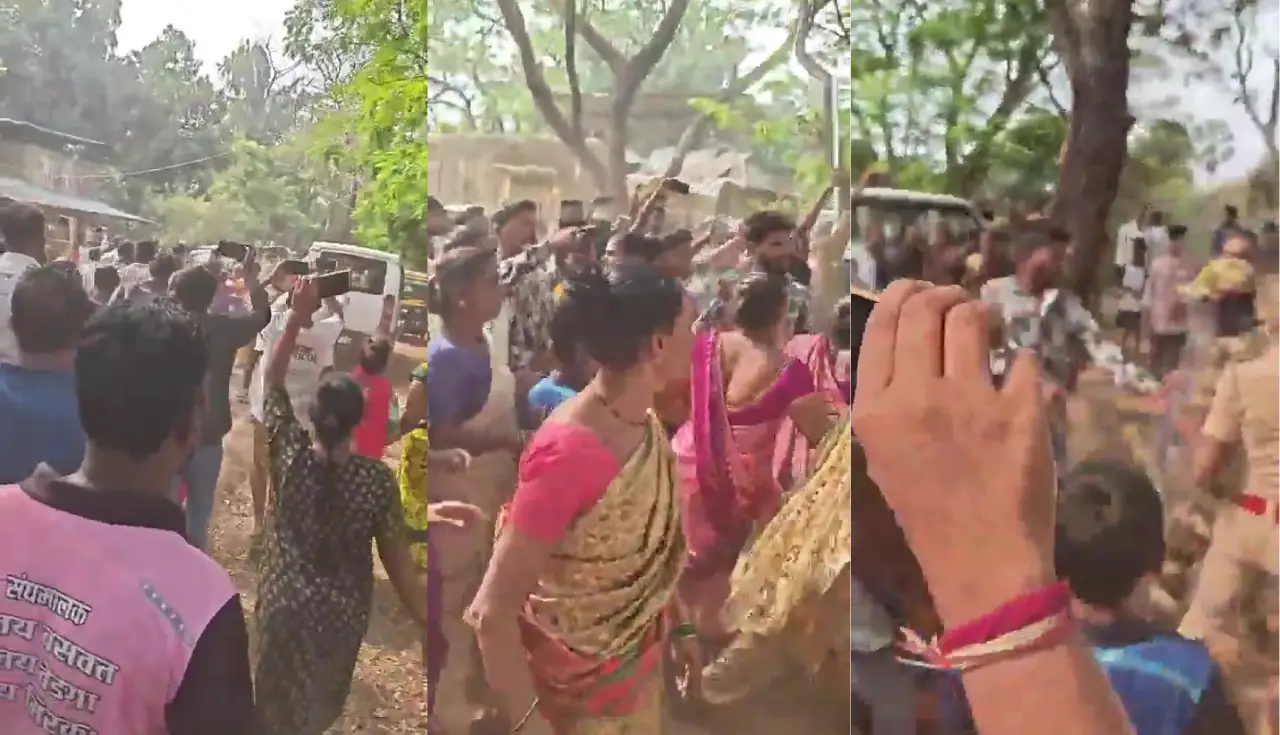
A demolition drive inside Sanjay Gandhi National Park triggered tense scenes on Tuesday morning as hundreds of residents, including women and elderly people, gathered inside the protected forest area to oppose the eviction.
The protest erupted after forest authorities moved to clear structures in the Navapada area of SGNP, prompting strong resistance from families who claimed the demolished houses had been their homes for generations. Residents alleged the action violated their traditional rights and ignored safeguards provided under the Forest Rights Act (FRA). They also criticised the administration for issuing eviction notices during a holiday period, leaving them little time to respond or seek legal relief.
Forest officials said the demolition targeted families who were earlier rehabilitated at Chandivali in Powai under a government-approved resettlement scheme. According to officials, some beneficiaries allegedly sold or rented out their allotted homes and later returned to occupy forest land inside the national park, violating the terms of rehabilitation.
The Sanjay Gandhi National Park administration said the eviction was ordered by a High-Powered Committee (HPC) in line with Bombay High Court directions. In a statement, officials said that families who had already availed rehabilitation benefits and then re-encroached on forest land had misused the scheme and were being evicted as a first step toward ensuring rehabilitation for other eligible families awaiting relief for years.
⚠ Tension erupted at Sanjay Gandhi National Park during an anti-encroachment drive as police faced resistance from locals.
“Unless those who have misused the rehabilitation scheme are evicted, other eligible families will continue to be deprived of the benefits envisaged under the court’s 1997 order,” the SGNP administration said, adding that eviction notices were displayed at relevant locations on January 17, 2026, and residents were informed to vacate voluntarily.
While tensions ran high throughout the morning, officials confirmed that no violence was reported during the protest.