Home Blog Page 140

How Crucial Is the Waqf Board Amendment Bill 2024?

waqf board, waqf board amendment bill, government of india, bill, muslim, anti-waqf
How Crucial Is the Waqf Board Amendment Bill 2024? 2

The Waqf Board Amendment Bill 2024 is a significant step towards improving the efficiency and transparency of Waqf management in India. It introduces key reforms, including the adoption of digital technology for enhanced record-keeping, streamlining the appointment process for Waqf board members, and implementing strict penalties for violations to ensure greater accountability. By strengthening governance and modernizing operations, the bill aims to protect Waqf properties from encroachment, boost revenue generation, and ultimately benefit the Muslim community by ensuring that Waqf assets are managed more effectively and transparently.

The Waqf (Amendment) Bill, 2024, introduced in the Lok Sabha on August 8, 2024, amends the Waqf Act, 1995, which governs Waqf property in India. Waqf refers to the endowment of property for pious, religious, or charitable purposes under Muslim law. The bill renames the Act to the “United Waqf Management, Empowerment, Efficiency, and Development Act, 1995.” It states that any government property identified as Waqf will no longer be considered as such, with the area’s Collector determining ownership in case of doubt. The bill also removes the Waqf Board’s authority to inquire and decide if a property is Waqf.

The amendment introduces stricter regulations on managing Waqf properties to ensure they are used appropriately for their intended charitable or religious purposes. It aims to address issues of misuse or illegal encroachment, preventing exploitation for personal gain. By tightening control, the bill seeks to clarify legal ambiguities related to Waqf properties, making dispute resolution simpler and ensuring uniform application of the law across regions. If provisions for modernization, such as allowing commercial use under specific conditions, are included, the amendment could generate new revenue streams to support charitable causes.

The Act allows the creation of Waqf through: (i) declaration, (ii) long-term use (Waqf by user), or (iii) endowment after the succession line ends (Waqf-alal-aulad). The bill amends this by stating that only a person practicing Islam for at least five years and owning the property may declare a Waqf. It removes Waqf by user and ensures Waqf-alal-aulad does not deny inheritance rights, including those of women heirs.

The bill transfers the responsibility for Waqf surveys from Survey Commissioners to Collectors, with pending surveys to be conducted under state revenue laws. The Central Waqf Council, which advises governments and Waqf Boards, remains chaired by the Union Minister for Waqf. While the current Act requires all Council members to be Muslims, with at least two women, the bill mandates that two members must be non-Muslims. MPs, former judges, and eminent appointees no longer need to be Muslims, though Muslim representatives must include (i) Muslim organizations, (ii) scholars in Islamic law, and (iii) chairpersons of Waqf Boards, with two women among them.

The Act provides for the election of up to two members from electoral colleges of Muslim MPs, MLAs, MLCs, and Bar Council members to the Waqf Board. However, the bill empowers the state government to nominate one person from each of these categories to the Board, and they need not be Muslims. Additionally, the Board must include: (i) two non-Muslim members, (ii) representation from Shias, Sunnis, and Backward classes of Muslims, and (iii) members from Bohra and Agakhani communities if applicable in the state. The requirement for two Muslim women members remains.

Regarding Tribunal composition, the bill modifies the Act’s provisions. Instead of including a Muslim law expert, the Tribunal will consist of: (i) a current or former District Court judge as chairman, and (ii) a current or former state officer of joint secretary rank. The bill also allows appeals on Tribunal orders to the High Court within 90 days, whereas the Act prohibits appeals and provides finality to Tribunal decisions.

Further, the bill gives the central government the authority to make rules for Waqf registration, accounts, and board proceedings, and to audit Waqf accounts through the CAG. It also allows the establishment of separate Waqf Boards for Bohra and Agakhani sects, in addition to Sunni and Shia boards. The opposition is criticizing the Waqf (Amendment) Bill for interfering in religious affairs, arguing that it imposes unnecessary bureaucratic control over Waqf Boards. The bill’s provisions, which limit the boards’ ability to manage themselves independently, are seen as an encroachment on religious autonomy. Critics argue that the amendments, particularly the government’s increased role in appointments and audits, undermine the boards’ self-governance and infringe on the freedom to manage religious endowments without external interference. This has sparked concerns about excessive government oversight in matters traditionally handled within the community.


Congress Slams Noida District Magistrate Over ‘Pappu’ Remark on Rahul Gandhi

noida, dm, rahul gandhi, gandhi, noida dm, remark, pappu, manish verma
Congress Slams Noida District Magistrate Over 'Pappu' Remark on Rahul Gandhi 4

The Congress on Friday condemned an “unacceptable comment” directed at Leader of Opposition in the Lok Sabha, Rahul Gandhi, which appeared on the official X (formerly Twitter) handle of the Gautam Budh Nagar District Magistrate. The party demanded immediate action against the officer responsible for the post.

Later, District Magistrate Manish Verma issued a statement through his X handle, claiming that his account had been misused by anti-social elements who posted the offensive comment.

“Taking this matter seriously, an FIR has been registered, and legal action is underway. The cyber cell is investigating the inappropriate tweet/comment,” the statement read. A copy of the FIR was also posted on the X handle.

Earlier, Congress general secretary in-charge of communications, Jairam Ramesh, called out the post, describing it as “completely inappropriate and unacceptable.” He expressed concern over the growing politicization of India’s bureaucracy over the last decade.

“This is not new; over the past 10 years, India’s civil service and other non-political officials have become increasingly politicized,” Ramesh wrote on X. “There is a concerted effort to weaken the civil service, which Sardar Patel once called the steel frame of India. This incident is yet another example of that trend,” he added, demanding swift action against the officer.

Congress spokesperson Supriya Shrinate also shared her disapproval on X. She posted a clip from a conversation with a historian, in which she remarked, “History is made and cannot be changed. Narendra Modi knows how history will remember him, and that’s why he is worried.”

In response, a now-deleted post from the official X handle of the Gautam Budh Nagar District Magistrate said in Hindi, “You should think about yourself and your Pappu.”

Shrinate later shared a screenshot of the deleted post, stating, “This is the DM of Noida, responsible for the entire district. His language and thoughts about the country’s opposition leader, Rahul Gandhi, are concerning.” She further claimed, “It is evident that the administrative staff is full of Sanghis, spreading hatred while occupying constitutional positions.”

Congress leader Pawan Khera also criticized the post, questioning if IAS officers had been directed to make such political comments under the BJP government. He tagged Uttar Pradesh Chief Minister Yogi Adityanath and the Ministry of Home Affairs in his tweet.

The post came from an X handle that is not verified, though it claims to be the official handle of the Gautam Budh Nagar District Magistrate. Congress has called for a thorough investigation into the incident and demanded accountability for the misuse of the official platform.

Government Removes Floor Price on Basmati Rice, Farmers to Benefit

basmati rice, basmati, rice, farmers, farmers agri
Government Removes Floor Price on Basmati Rice, Farmers to Benefit 6

In a major move aimed at boosting the export of basmati rice, a premium GI (Geographical Indication) variety of India, the government has decided to remove the minimum floor price for its export. This decision is expected to result in better returns for farmers.

According to the Ministry of Commerce and Industry, the removal of the current minimum export price (MEP) of $950 per metric tonne (MT) will facilitate the issuance of registration-cum-allocation certificates (RCAC) for basmati rice exports.

The Agricultural and Processed Food Products Export Development Authority (APEDA) will continue to monitor export contracts to prevent any unrealistic pricing of basmati rice and ensure transparency in export practices, the ministry added.

This decision was taken in response to ongoing trade concerns and the availability of adequate rice supplies domestically.

The floor price of $1,200 per MT was initially imposed in August last year as a temporary measure to control rising domestic rice prices caused by supply shortages. It was also aimed at preventing the misclassification of non-basmati rice as basmati rice during exports, following the export ban on non-basmati white rice. After consultations with trade bodies, the government later lowered the floor price to $950 per MT in October 2023 due to concerns that high export prices were hurting shipments.

Satish Goel, president of the All-India Rice Exporters’ Association, welcomed the decision, stating that removing the floor price will enable India to export basmati rice in larger quantities, thereby ensuring better returns for farmers.

Industry experts have noted that there is significant demand in the international market for basmati rice varieties priced around $700 per tonne.

India’s total exports of basmati rice reached $5.9 billion in 2023-24. In the previous fiscal year, basmati rice exports were valued at $4.8 billion, with a volume of 45.6 lakh tonnes.

Typhoon Yagi Leaves 254 Dead, 82 Missing in Vietnam

typhoon yagi, yagi, vietnam
Typhoon Yagi Leaves 254 Dead, 82 Missing in Vietnam 8

Typhoon Yagi, along with resulting landslides and floods, has claimed the lives of 254 people, with 82 still missing in Vietnam’s northern region, according to the Ministry of Agriculture and Rural Development.

The provinces of Lao Cai, Cao Bang, and Yen Bai have been the most severely affected, with fatalities reaching 111, 43, and 49, respectively, as reported by Xinhua News Agency on Friday.

In Hanoi, the floodwater levels of the Red River have dropped below the first alert level, out of three, according to the city’s Steering Committee for Disaster Prevention, Control, Search, and Rescue. Evacuated residents have started returning to their homes, and clean-up efforts have begun in flood-affected areas.

The northeastern province of Quang Ninh has launched a three-day clean-up campaign to restore the storm-damaged UNESCO World Heritage site of Ha Long Bay. The heritage site resumed normal tourist boat operations on Friday, almost a week after being severely impacted by the typhoon, as reported by the Vietnam News Agency.

The Vietnam Fatherland Front announced that as of Friday noon, its relief fund had received 775.5 billion VND ($31.5 million) in donations from people across the country to assist those affected by Typhoon Yagi.

The UN children’s agency, UNICEF, warned that hundreds of thousands of children have lost their homes and lack access to clean water, sanitation, and healthcare. Nearly two million children have been left without access to education, psychosocial support, or school meal programs, as schools have been damaged and are facing power and water shortages, the agency added.

Mandya Riots: Karnataka Police Search for 94 Absconding Accused; Inspector Suspended

mandya, mandya riots, karnataka, karnataka police
Mandya Riots: Karnataka Police Search for 94 Absconding Accused; Inspector Suspended 10

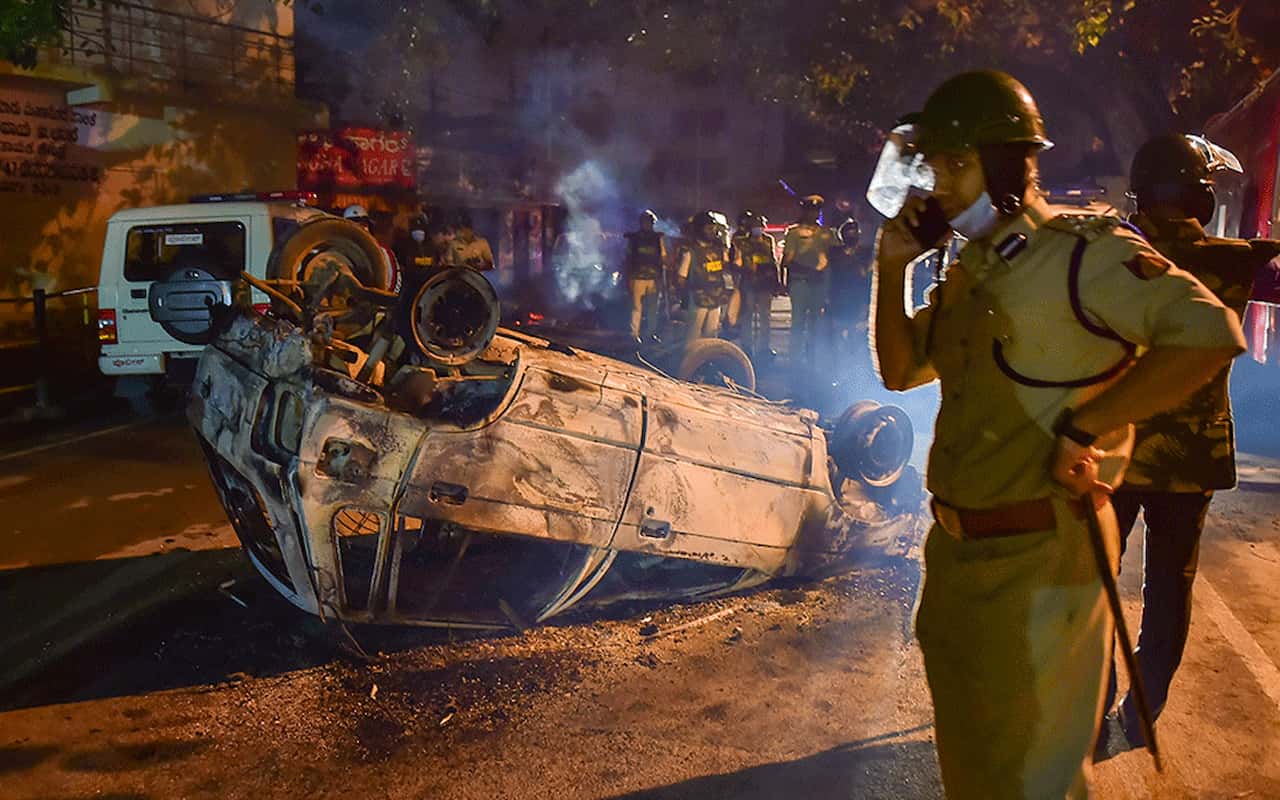
The Karnataka Police on Friday registered 10 FIRs in connection with the violence that erupted during the Ganesh Visarjan procession in Nagamangala town, Mandya district. Authorities have launched a manhunt for 94 accused individuals who have gone into hiding following police action.

With several arrests made on Friday, the total number of people detained so far has risen to 56.

In a related development, Police Inspector Ashok Kumar was suspended on Friday for dereliction of duty. He reportedly failed to inform his superiors about a similar incident of unrest during last year’s Ganesha Chaturthi celebrations. Mandya Superintendent of Police (SP) Mallikarjun Baladandi explained that the area near the mosque in Badarikoppalu village is a sensitive location, where additional security could have been deployed to prevent the violence.

Police sources revealed that a total of 150 individuals have been booked for rioting and related violence. Investigators have obtained CCTV footage of the accused who are currently on the run and are working to confirm their identities and locations.

The FIRs have been filed under 16 sections of the Indian Penal Code (IPC), including sections 109 (abetment), 115 (abetment of offence punishable with death or imprisonment for life), 118 (concealing design to commit an offence), 121 (waging war against the state), 132 (abetting mutiny), 189 (threat of injury to public servant), 190 (threatening another to file false charge), and others under the BNSS (Bombay Public Security Measures Act).

Among those arrested, 52 suspects were presented in court on Thursday evening, and the Mandya District Court has remanded them to 14 days of judicial custody.

Though Nagamangala town has gradually returned to normalcy under prohibitory orders, local residents report that the atmosphere remains tense. A curfew has been imposed in the town until Saturday, September 14.

In response to the situation, the police conducted a flag march through Nagamangala and deployed additional personnel to maintain law and order.

The clashes broke out on Wednesday night in Mandya district after stones were allegedly thrown at a Ganpati idol immersion procession in Nagamangala. In the riots that followed, approximately 25 shops and vehicles from both communities were set on fire.

In the aftermath, police imposed restrictive orders in the area and remain on high alert. Following the incident, some members of the Hindu community staged a protest outside the local police station, demanding the immediate arrest of those involved in the stone-pelting.

SC Grants Bail to CM Kejriwal, Upholds CBI Arrest in Excise Policy Scam

arvind kejriwal, arvind kejriwal as cm, chief minister, supreme court, delhi chief minister
SC Grants Bail to CM Kejriwal, Upholds CBI Arrest in Excise Policy Scam 12

In a significant legal development, the Supreme Court on Friday granted bail to Delhi Chief Minister Arvind Kejriwal in the corruption case linked to the alleged liquor policy scam. However, while allowing his bail plea, the court dismissed his separate petition challenging the legality of his arrest by the Central Bureau of Investigation (CBI).

The two-judge bench, led by Justice Surya Kant, upheld the CBI’s authority to arrest Kejriwal, rejecting his plea against the arrest. Justice Ujjal Bhuyan, the second judge on the bench, issued a separate opinion, expressing concerns over the timing of the CBI’s arrest, deeming it a “belated” action and calling it unjustified.

Last week, the court reserved its decision after hearing arguments from senior advocate Abhishek Manu Singhvi, representing the Aam Aadmi Party (AAP) leader, and Additional Solicitor General (ASG) S.V. Raju, representing the CBI.

Singhvi argued that the CBI had waited for two years before arresting Kejriwal, making a hasty “insurance arrest” to ensure his continued detention in connection with the money laundering case. He pointed out that the CBI’s justification for arresting Kejriwal—citing his “non-cooperation and evasive replies”—was insufficient. Singhvi highlighted previous Supreme Court rulings stating that cooperation with investigations should not require an accused to incriminate themselves.

Furthermore, Singhvi contended that as a constitutional functionary and Chief Minister of Delhi, Kejriwal met the criteria for bail. He argued that Kejriwal posed no flight risk, would respond to investigators’ questions, and had no ability to tamper with the vast amounts of evidence, comprising lakhs of documents and digital files, after two years.

In contrast, ASG Raju, representing the CBI, opposed the bail, warning that releasing Kejriwal could cause witnesses to turn “hostile.” He cited the example of AAP candidates in the Goa Assembly elections, who provided statements to the CBI only after Kejriwal’s arrest. Raju urged the court to remand Kejriwal’s bail plea to the trial court and argued that his appeal to the Delhi High Court should not have been entertained.

Raju emphasized that arrest is a routine part of investigations and typically doesn’t require court permission. He noted that in this case, the court had granted permission to arrest Kejriwal, dismissing any claims of violation of fundamental rights.

The Supreme Court has recently granted bail to several figures involved in the excise policy case, including senior AAP leader and former Deputy Chief Minister Manish Sisodia, BRS leader K. Kavitha, and former AAP communication chief Vijay Nair.

Although the Supreme Court had previously ordered interim bail for Kejriwal in the money laundering case lodged by the Enforcement Directorate (ED) on July 12, he remained in jail due to the separate CBI arrest.

Supreme Court to Decide on Delhi CM Kejriwal’s Bail Plea Today

kejriwal, ed plea, delhi high court, enforcement directorate, bail to arvind kejriwal, arvind kejriwal, aap
Supreme Court to Decide on Delhi CM Kejriwal's Bail Plea Today 14

In a crucial judgment set to be pronounced on Friday, the Supreme Court will rule on the bail petition of Delhi Chief Minister Arvind Kejriwal in connection with the corruption case linked to the alleged liquor policy scam.

In addition to seeking bail, CM Kejriwal has also filed a separate plea challenging his arrest by the Central Bureau of Investigation (CBI) in the liquor scam case and his subsequent remand.

According to the causelist published on the apex court’s website, a two-judge bench presided over by Justice Surya Kant will announce its judgment at 10:30 a.m. Justice Ujjal Bhuyan, the other judge on the bench, is also expected to present his separate opinion on CM Kejriwal’s pleas.

Last week, the Bench of Justices Kant and Bhuyan reserved its decision after hearing oral arguments from senior advocate Abhishek Manu Singhvi, representing the Aam Aadmi Party (AAP) leader, and Additional Solicitor General (ASG) S.V. Raju, representing the CBI.

During the hearing, Singhvi argued that the CBI did not arrest CM Kejriwal for two years but made an “insurance arrest in a hurry” to prevent his release in the money laundering case. He noted that Kejriwal was arrested for his “non-cooperation and evasive replies,” though numerous Supreme Court judgments have established that cooperation with the probe should not compel an accused person to incriminate themselves or confess to alleged offenses.

Singhvi further added that CM Kejriwal, as the Chief Minister of Delhi, meets the three criteria for bail: he is not a flight risk, he will appear for questioning by the investigative agency, and he cannot tamper with evidence, which consists of lakhs of pages and digital documents, after two years.

On the other hand, the CBI expressed concern that releasing CM Kejriwal could lead to witnesses turning “hostile” and urged the court not to grant him bail. ASG Raju stated that several AAP candidates in the Goa Assembly election had only come forward to give statements to the agency after CM Kejriwal’s arrest.

“They (witnesses) will turn hostile if your lordships release Kejriwal on bail,” he argued. He added that Kejriwal’s bail plea should be remanded to the trial court, as he should not have approached the Delhi High Court first for bail. ASG Raju also asserted that arrest is a routine part of an investigation, and in most cases, an investigating officer does not need court permission to make an arrest. He pointed out that, in this instance, there was already an order from the court granting the power to arrest Kejriwal.

Recently, the Supreme Court allowed bail pleas of senior AAP leader and former Delhi Deputy Chief Minister Manish Sisodia, BRS leader K. Kavitha, and AAP’s former communication-in-charge Vijay Nair in the excise policy case.

In his special leave petition before the Supreme Court, CM Kejriwal challenged his arrest and subsequent remand orders while also pressing for bail in the corruption case. Meanwhile, the CBI, seeking the dismissal of Kejriwal’s plea, argued that the AAP leader was merely attempting to sensationalize the matter politically. The agency highlighted that various court orders had found sufficient grounds to establish prima facie evidence of the alleged offenses, for which cognizance had already been taken.

The CBI further noted that while CM Kejriwal does not hold a ministerial portfolio in the Government of the National Capital Territory (GNCT) of Delhi, all decisions of both the government and the party are made with his concurrence and direction. This, they said, includes not only decisions in Delhi but also those affecting areas where AAP has a presence across the country.

The Supreme Court, on July 12, ordered interim bail for CM Kejriwal in a money laundering case filed by the Enforcement Directorate (ED). However, he remained in jail as he had also been arrested by the CBI.

Meanwhile, a Delhi court on Wednesday extended CM Kejriwal’s judicial custody until September 25. He was produced through video conferencing from Tihar Jail following the expiry of his previously granted judicial custody.

Akka Mahadevi: India’s Rich Legacy of Incredibly Strong Women

akka mahadevi, mahadevi, saint, woman saint, mahadev, hinduism
Akka Mahadevi: India's Rich Legacy of Incredibly Strong Women 16

A few days ago, BJP MP Kangana Ranaut tweeted about Akka Mahadevi, sharing a message with her fans: “Don’t let anyone shame you about your body; you are pure and divine.” Through this, she highlighted Akka Mahadevi’s powerful stance on self-identity and spirituality, drawing inspiration from the poet-saint’s rejection of societal norms and her belief in the sacredness of the body as part of divine creation. Kangana’s tweet resonated with themes of empowerment and self-acceptance that are central to Akka Mahadevi’s legacy.

I am currently writing a book on Lal Ded, a Kashmiri mystic from the Kashmir Shaivism tradition of Hindu philosophy. She pioneered a unique style of mystic poetry called vatsun or Vakhs, meaning “speech.” Her life story shares similarities with that of Akka Mahadevi. When I saw Kangana’s tweet, I was thrilled by the recognition, as it highlights India’s rich legacy of incredibly strong women. These mystic women played a pivotal role in challenging and rejecting the rigid, monotonous norms imposed by a male-dominated society.

Akka Mahadevi, a celebrated poet-saint from Karnataka, India, rose to prominence as a symbol of progressive thought during the 12th-century Bhakti movement. Her bold rejection of societal norms and gender expectations positioned her as one of the most revolutionary figures of her era. Akka Mahadevi was a prominent member of the Lingayat Shaiva sect and made significant contributions to Kannada literature. Her 430 vachanas (spontaneous mystical poems) and two shorter works, Mantrogopya and Yogangatrividh, are her known literary contributions. The title “Akka,” meaning “elder sister” or “mother,” was an honorific bestowed upon her by revered saints like Basavanna, Siddharama, and Allamaprabhu, recognizing her esteemed position in the spiritual dialogues at the “Anubhava Mantapa.”

Akka Mahadevi is considered a major female figure in both Kannada literature and the history of Karnataka. Her intense devotion to Lord Shiva, whom she referred to as ‘Chenna Mallikarjuna,’ symbolized the ‘madhura bhava’ or ‘madhurya’ form of devotion, where she saw Shiva as her divine husband. Her radical thoughts and spiritual influence continue to inspire generations.

Born around 1130 in Udutadi, near Shivamogga, Karnataka, Akka Mahadevi’s early life remains somewhat shrouded in mystery. Some scholars suggest her parents were Nirmalshetti and Sumati, devout followers of ParamaShiva. Although Western sources note that little is definitively known about her life, her legacy has been shaped by Indian hagiographies, folk tales, and mythological traditions passed down through oral history and her own poetry. One of her vachanas hints at her decision to leave her birthplace and family to pursue a life devoted to Shiva. Scholars like Tharu and Lalita document a claim that a local Jain king, named Kaushika, sought her hand in marriage, but Akka Mahadevi is said to have rejected him, choosing instead to dedicate herself entirely to ParamaShiva. However, medieval sources on this account remain ambiguous and inconclusive.

Interestingly, the name Kaushika also appears in other ancient Indian lore. In the Sathya Yuga, a brave and fearless king named Kaushika ruled his kingdom with great dedication, personally attending to the needs of his subjects. This dual use of the name Kaushika demonstrates its recurring presence in both historical and mythological narratives.

One of Akka Mahadevi’s vachanas outlines three conditions for marrying King Kaushika, including her right to spend time in devotion and converse with other scholars and religious figures, rather than with the king. According to the medieval scholar and poet Harihara, the marriage was purely nominal. Other sources, such as Camasara, suggest that the conditions were not accepted and the marriage did not take place.

According to Harihara, King Kaushika violated the conditions set by Akka Mahadevi, leading her to renounce her life at the palace. She gave up all her possessions, including her clothes, and left to travel to Srisailam, the abode of Parama Shiva. In alternative versions, her renunciation is depicted as a reaction to King Kaushika’s threats after she refused his marriage proposal. It is believed that during her journey, she visited Kalyana, where she encountered two key figures of the Lingayat movement, Allama Prabhu and Basavanna. These interactions likely deepened her spiritual connection to the movement. Toward the end of her life, Akka Mahadevi is said to have traveled to the Srisailam mountains, where she lived a life of asceticism and eventually passed away, leaving behind a legacy of devotion and mystic poetry.

One vachana attributed to Akka Mahadevi suggests that King Kaushika visited her in the Srisailam mountains, seeking her forgiveness. Today, Akka Mahadevi is regarded by scholars as a pioneering figure in the field of female emancipation. She is a household name in Karnataka and famously wrote that she was a woman only in name, while her mind, body, and soul belonged solely to Lord Shiva.

During the 12th century, a time of political turmoil and social strife, Akka Mahadevi chose the path of spiritual enlightenment, firmly standing by her decision to reject worldly life. She actively participated in intellectual gatherings such as the Anubhavamantapa in Kalyana (now Basavakalyan), where she engaged in philosophical discussions on enlightenment, or moksha, which she referred to as “arivu” (knowledge). In her quest to unite with her divine soulmate, Lord Shiva, she found companionship in nature, making animals, flowers, and birds her allies while renouncing family life and material attachments.

Akka Mahadevi’s pursuit of enlightenment is reflected in her poetry, which is composed in simple language yet imbued with deep intellectual rigor. Her vachanas explore the rejection of mortal, worldly love in favor of an all-encompassing divine love for God. Through her poetry, she delves into the demands of the spiritual path, emphasizing the need for the seeker to overcome the ego (‘I’), conquer desires, and master the senses. Her works offer profound insights into self-realization and devotion, central to the path of enlightenment she followed.

Adv Khush Khandelwal’s Criminal Petition Against MLA Jitendra Awhad: Bombay HC Orders Fresh Hearing

khush khandelwal, khandelwal, jitendra awhad, ncp mla, mla, hate speech, bombay high court
Adv Khush Khandelwal's Criminal Petition Against MLA Jitendra Awhad: Bombay HC Orders Fresh Hearing 18

The Bombay High Court has overturned a 2019 order by the Judicial Magistrate of Thane that denied the filing of an FIR against NCP MLA Jitendra Awhad. The court has now directed a fresh hearing on the demand for the FIR.

This case stems from a criminal statement made by Jitendra Awhad in relation to a 2018 incident, during which the Anti-Terrorism Squad (ATS) arrested a man in Nalasopara for possessing homemade bombs. Awhad alleged, without evidence, that the arrested individual, Vaibhav Raut, was planning to bomb the Maratha Morcha.

Advocate Khush Khandelwal, the founder of the Hindu Task Force, filed a petition against Awhad, accusing him of attempting to incite hatred between communities through his statements. The police, however, did not register an FIR based on Khandelwal’s complaint, leading him to approach the 5th Judicial Magistrate Court in Thane.

On November 13, 2019, the magistrate acknowledged that Awhad’s statement constituted a cognizable offense under sections 153(A) and 505(2) of the IPC but refused to order an FIR on jurisdictional grounds. Dissatisfied, Khandelwal challenged this decision in the Bombay High Court, filing Criminal Petition No. 4476/2021.

On September 6, 2024, a division bench led by Justice Sarang Kotwal set aside the magistrate’s previous order, directing a fresh hearing and reconsideration of Khandelwal’s demand for an FIR against Awhad. This ruling reopens the possibility of legal action under sections 153(A) (promoting enmity between groups) and 505(2) (statements creating public mischief) of the Indian Penal Code.

Veteran CPM Leader Sitaram Yechury Passes Away at 72

sitaram yechury, yechury, sitaram, cpm, cpim, leftist, aiims
Veteran CPM Leader Sitaram Yechury Passes Away at 72 20

Veteran CPM leader and party general-secretary, Sitaram Yechury, passed away on Thursday at the age of 72 after battling a prolonged illness. He succumbed to complications from a respiratory tract infection at 3:03 pm at AIIMS, New Delhi.

The Communist Party of India (Marxist) (CPM) confirmed Yechury’s death via their official X handle, expressing their grief and thanking the medical staff for their dedicated care. Yechury had been admitted to AIIMS on August 19 for treatment of a pneumonia-like chest infection and had been in critical condition for several days, on respiratory support.

Several political leaders extended their condolences. Congress leader Rahul Gandhi remembered Yechury as a “friend” and “protector of the Idea of India,” expressing his sorrow over the loss of their long discussions. West Bengal Chief Minister Mamata Banerjee called Yechury’s demise a loss for national politics, while Union Minister Nitin Gadkari highlighted his contributions to public life.

Senior Congress leader Jairam Ramesh described Yechury as an “unrepentant Marxist with a pragmatic streak” and praised his skills as a parliamentarian.

Yechury’s political journey began nearly 50 years ago as a student leader. He served as CPM general secretary for three consecutive terms from 2005 to 2015 and was re-elected in 2018. He was also a Rajya Sabha member from 2005 to 2017.

Yechury was a key figure in coalition-building efforts, working closely with Congress leaders to shape the United Front government’s Common Minimum Programme in 1996 and playing a crucial role in the formation of the UPA government in 2004.

His passing marks the end of a significant chapter in Indian politics, leaving behind a legacy of coalition-building and strong ideological leadership.