


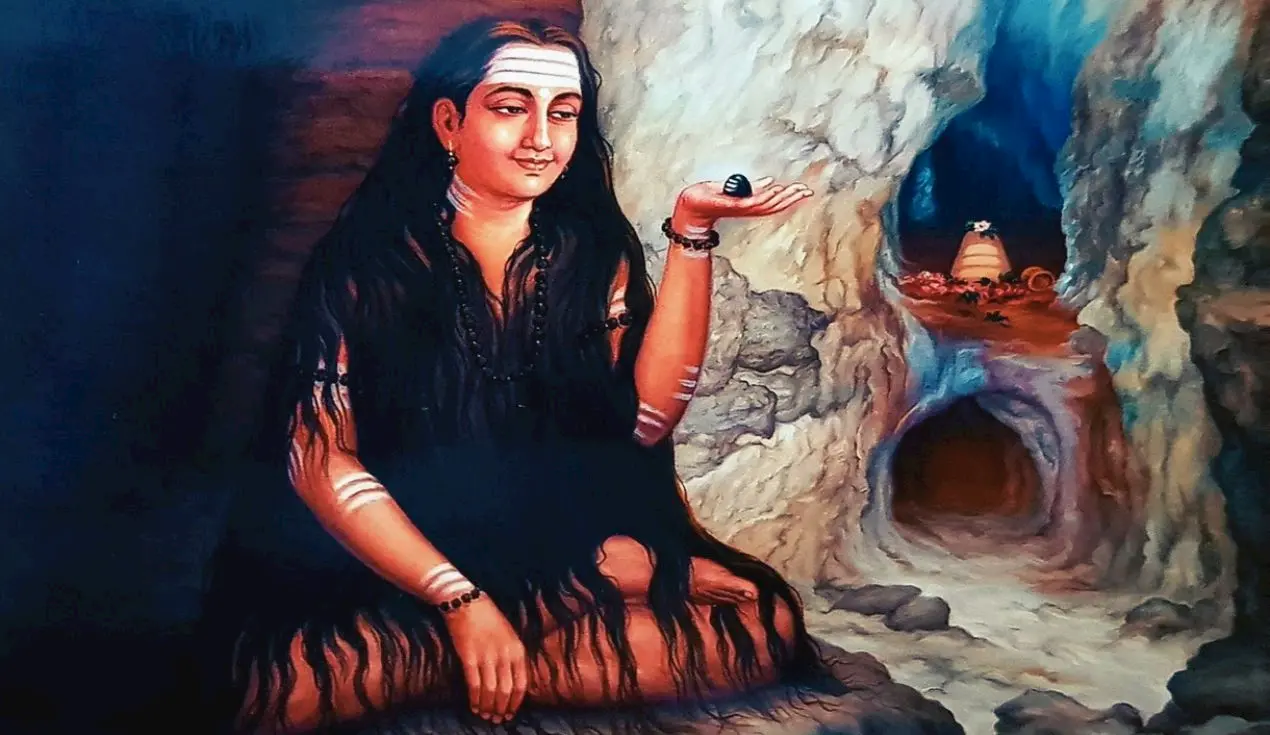
A few days ago, BJP MP Kangana Ranaut tweeted about Akka Mahadevi, sharing a message with her fans: “Don’t let anyone shame you about your body; you are pure and divine.” Through this, she highlighted Akka Mahadevi’s powerful stance on self-identity and spirituality, drawing inspiration from the poet-saint’s rejection of societal norms and her belief in the sacredness of the body as part of divine creation. Kangana’s tweet resonated with themes of empowerment and self-acceptance that are central to Akka Mahadevi’s legacy.
I am currently writing a book on Lal Ded, a Kashmiri mystic from the Kashmir Shaivism tradition of Hindu philosophy. She pioneered a unique style of mystic poetry called vatsun or Vakhs, meaning “speech.” Her life story shares similarities with that of Akka Mahadevi. When I saw Kangana’s tweet, I was thrilled by the recognition, as it highlights India’s rich legacy of incredibly strong women. These mystic women played a pivotal role in challenging and rejecting the rigid, monotonous norms imposed by a male-dominated society.
Akka Mahadevi, a celebrated poet-saint from Karnataka, India, rose to prominence as a symbol of progressive thought during the 12th-century Bhakti movement. Her bold rejection of societal norms and gender expectations positioned her as one of the most revolutionary figures of her era. Akka Mahadevi was a prominent member of the Lingayat Shaiva sect and made significant contributions to Kannada literature. Her 430 vachanas (spontaneous mystical poems) and two shorter works, Mantrogopya and Yogangatrividh, are her known literary contributions. The title “Akka,” meaning “elder sister” or “mother,” was an honorific bestowed upon her by revered saints like Basavanna, Siddharama, and Allamaprabhu, recognizing her esteemed position in the spiritual dialogues at the “Anubhava Mantapa.”
Akka Mahadevi is considered a major female figure in both Kannada literature and the history of Karnataka. Her intense devotion to Lord Shiva, whom she referred to as ‘Chenna Mallikarjuna,’ symbolized the ‘madhura bhava’ or ‘madhurya’ form of devotion, where she saw Shiva as her divine husband. Her radical thoughts and spiritual influence continue to inspire generations.
Born around 1130 in Udutadi, near Shivamogga, Karnataka, Akka Mahadevi’s early life remains somewhat shrouded in mystery. Some scholars suggest her parents were Nirmalshetti and Sumati, devout followers of ParamaShiva. Although Western sources note that little is definitively known about her life, her legacy has been shaped by Indian hagiographies, folk tales, and mythological traditions passed down through oral history and her own poetry. One of her vachanas hints at her decision to leave her birthplace and family to pursue a life devoted to Shiva. Scholars like Tharu and Lalita document a claim that a local Jain king, named Kaushika, sought her hand in marriage, but Akka Mahadevi is said to have rejected him, choosing instead to dedicate herself entirely to ParamaShiva. However, medieval sources on this account remain ambiguous and inconclusive.
Interestingly, the name Kaushika also appears in other ancient Indian lore. In the Sathya Yuga, a brave and fearless king named Kaushika ruled his kingdom with great dedication, personally attending to the needs of his subjects. This dual use of the name Kaushika demonstrates its recurring presence in both historical and mythological narratives.
One of Akka Mahadevi’s vachanas outlines three conditions for marrying King Kaushika, including her right to spend time in devotion and converse with other scholars and religious figures, rather than with the king. According to the medieval scholar and poet Harihara, the marriage was purely nominal. Other sources, such as Camasara, suggest that the conditions were not accepted and the marriage did not take place.
According to Harihara, King Kaushika violated the conditions set by Akka Mahadevi, leading her to renounce her life at the palace. She gave up all her possessions, including her clothes, and left to travel to Srisailam, the abode of Parama Shiva. In alternative versions, her renunciation is depicted as a reaction to King Kaushika’s threats after she refused his marriage proposal. It is believed that during her journey, she visited Kalyana, where she encountered two key figures of the Lingayat movement, Allama Prabhu and Basavanna. These interactions likely deepened her spiritual connection to the movement. Toward the end of her life, Akka Mahadevi is said to have traveled to the Srisailam mountains, where she lived a life of asceticism and eventually passed away, leaving behind a legacy of devotion and mystic poetry.
One vachana attributed to Akka Mahadevi suggests that King Kaushika visited her in the Srisailam mountains, seeking her forgiveness. Today, Akka Mahadevi is regarded by scholars as a pioneering figure in the field of female emancipation. She is a household name in Karnataka and famously wrote that she was a woman only in name, while her mind, body, and soul belonged solely to Lord Shiva.
During the 12th century, a time of political turmoil and social strife, Akka Mahadevi chose the path of spiritual enlightenment, firmly standing by her decision to reject worldly life. She actively participated in intellectual gatherings such as the Anubhavamantapa in Kalyana (now Basavakalyan), where she engaged in philosophical discussions on enlightenment, or moksha, which she referred to as “arivu” (knowledge). In her quest to unite with her divine soulmate, Lord Shiva, she found companionship in nature, making animals, flowers, and birds her allies while renouncing family life and material attachments.
Akka Mahadevi’s pursuit of enlightenment is reflected in her poetry, which is composed in simple language yet imbued with deep intellectual rigor. Her vachanas explore the rejection of mortal, worldly love in favor of an all-encompassing divine love for God. Through her poetry, she delves into the demands of the spiritual path, emphasizing the need for the seeker to overcome the ego (‘I’), conquer desires, and master the senses. Her works offer profound insights into self-realization and devotion, central to the path of enlightenment she followed.
