Rahul Gandhi in US: Fight in India Is About Religious Freedom and Regional Identities 2
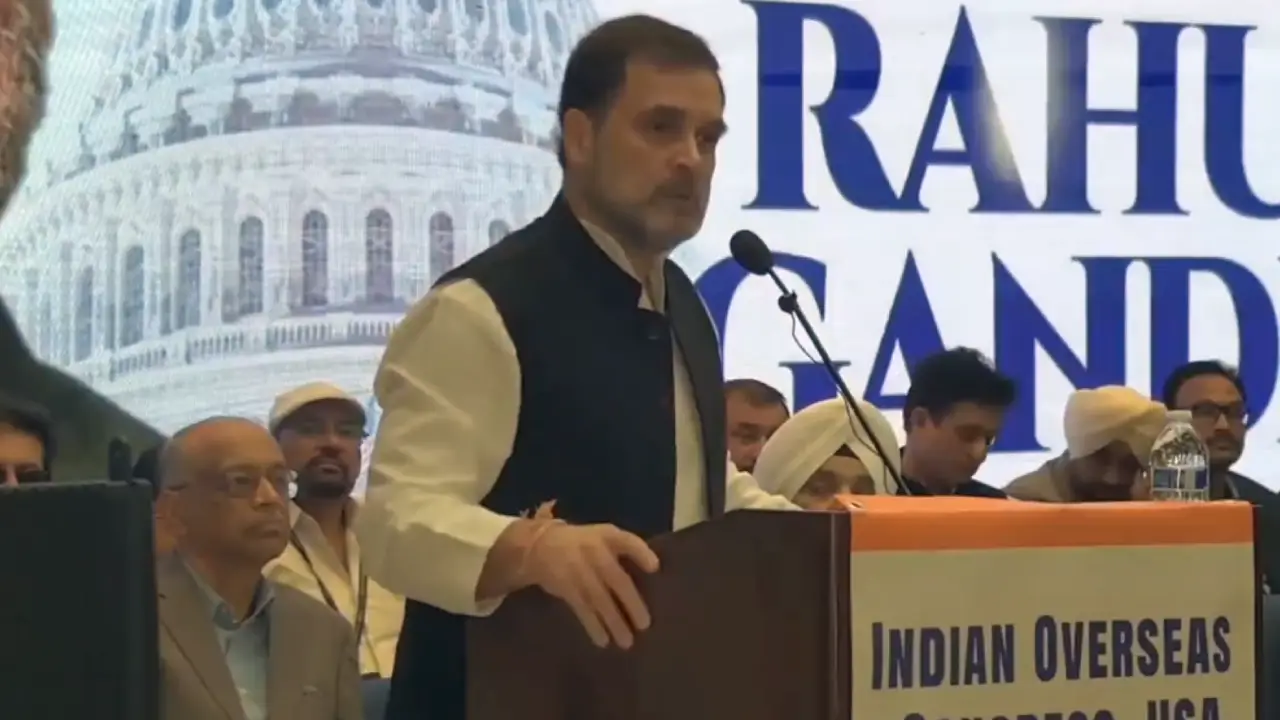
Congress leader Rahul Gandhi made a strong statement during his visit to the United States, claiming that the real struggle in India is not about politics but about protecting religious freedom and preserving regional identities. Speaking to members of the Indian community in Virginia, he emphasized the importance of diversity in India, specifically mentioning the rights of religious and linguistic minorities.
Gandhi questioned whether a Sikh would be allowed to wear a turban or visit a Gurdwara in India, or if a Tamilian would be allowed to speak in his native language. His remarks were directed at highlighting the ongoing battle for preserving the cultural and religious rights of various communities across India.
“The fight is about whether a Sikh is allowed to wear his turban, or a Tamilian can speak his language. It’s not just a political issue—it’s about religious freedom and cultural identity,” Gandhi said, addressing the crowd. He went on to argue that the struggle is about defending India’s diversity, which includes its rich history, languages, and traditions.
Gandhi also took a direct swipe at the Rashtriya Swayamsevak Sangh (RSS), accusing the organization of promoting an ideology that certain states, languages, and religions are inferior to others. He expressed his belief that India’s strength lies in its diversity and urged people to recognize the importance of preserving it.
“What the RSS is saying is that some states, languages, and religions are inferior to others. This is what the fight is about. Whether you are from Punjab, Tamil Nadu, or Haryana, your history, language, and tradition are crucial. We must protect this diversity,” he added.
Gandhi continued his attack by stating that the RSS and its affiliates misunderstand India’s history and fail to appreciate the significance of regional and religious diversity. He stressed that India’s future should be one where people are free to believe, speak, and listen to what they choose, rather than one where a select few dictate the rules.
The Congress leader’s remarks come at a time when debates over cultural and religious freedoms are intensifying in India, with accusations against various political groups for stifling diversity.
SC to Hear Uddhav Thackeray Faction’s Plea Against Maharashtra Speaker's Ruling on Shinde-Led Shiv Sena 4
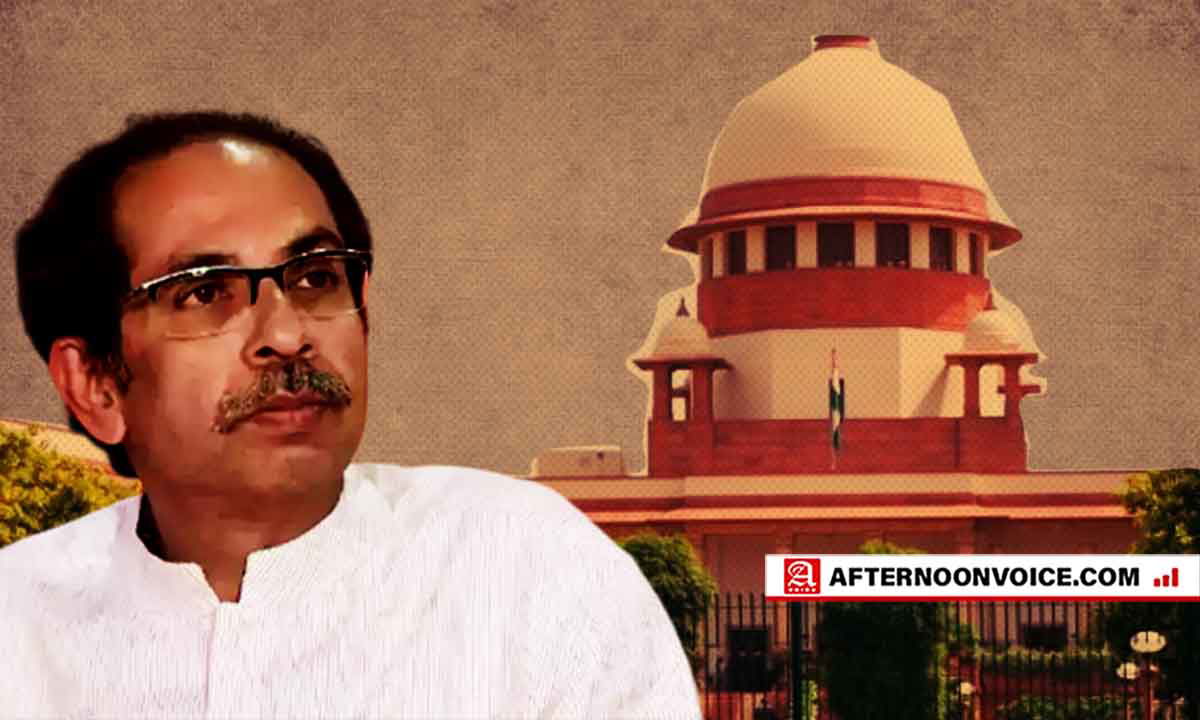
The Supreme Court is set to hear a crucial plea on Tuesday filed by Shiv Sena-UBT leader Sunil Prabhu, challenging the Maharashtra Assembly Speaker Rahul Narwekar’s ruling. The ruling, delivered on January 10, declared the faction led by Chief Minister Eknath Shinde as the “real” Shiv Sena.
A Supreme Court bench, headed by Chief Justice D.Y. Chandrachud and comprising Justices J.B. Pardiwala and Manoj Misra, had earlier issued notices to CM Shinde and 38 other MLAs from his camp, seeking their response to the matter.
The Uddhav Thackeray-led faction has contested Narwekar’s ruling, arguing that despite CM Shinde’s claim of commanding a majority in the legislature and the party’s National Executive, the decision was flawed. Thackeray’s group also disputes the Speaker’s dismissal of disqualification petitions against Shinde and his MLAs.
In response, CM Shinde and his camp have requested that the Supreme Court refer the Shiv Sena-UBT’s plea to the Bombay High Court for further adjudication.
Meanwhile, it should be noted that the Bombay High Court has already issued notices to 14 Shiv Sena-UBT MLAs in a petition filed by Bharat Gogavale, the Chief Whip of the ruling Shiv Sena, seeking their disqualification.
Uddhav Thackeray’s faction avoided disqualification after the Speaker dismissed cross-petitions from both sides during the January 10 ruling, leaving the legislative dispute unresolved.
In a related hearing, the Supreme Court will also consider a similar plea from the Sharad Pawar-led faction of the Nationalist Congress Party (NCP). Jayant Patil, a leader of the NCP, has sought disqualification of Ajit Pawar faction MLAs for defecting and joining the Sena-BJP government.
Hope BJP Wins the Hearts of the Jammu and Kashmir People 6
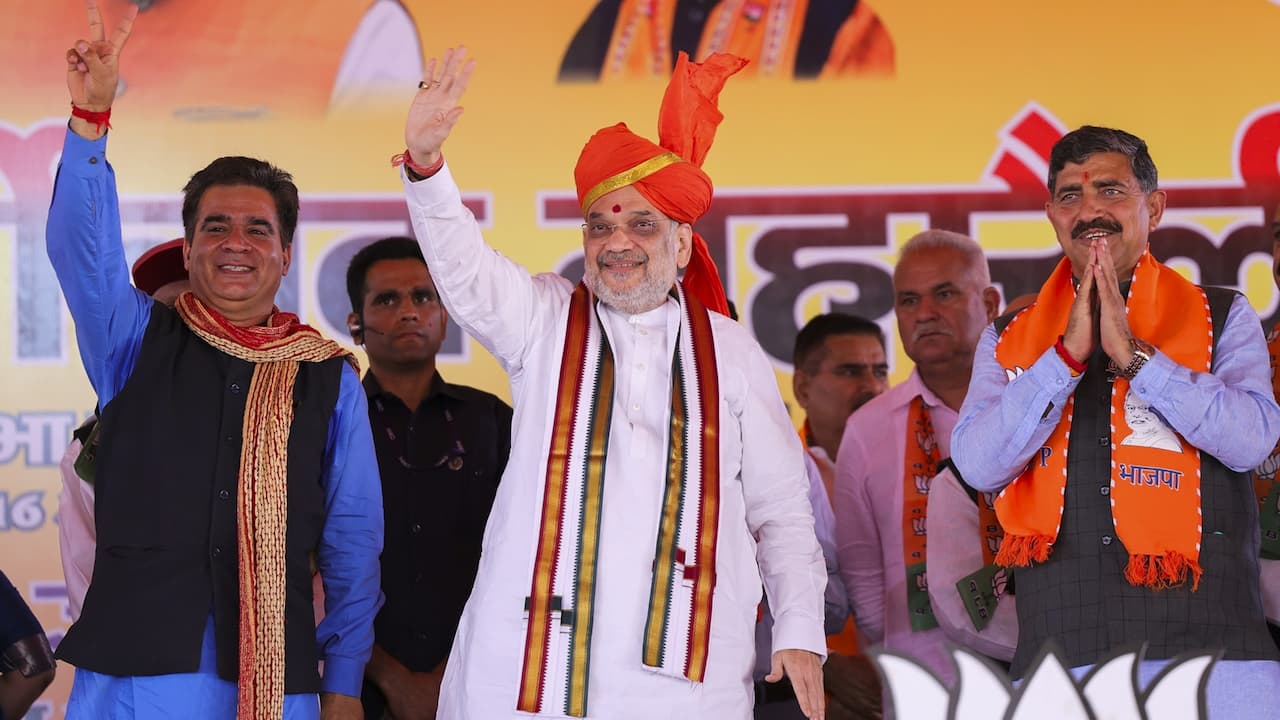
BJP was very likely to lose in Kashmir valley, especially as they don’t have political allies there anymore. On the other hand, Congress leader Rahul Gandhi officially launched the party’s campaign for the upcoming Assembly election in Jammu and Kashmir, declaring that the Congress would “restore statehood to J&K after coming to power.” He emphasized that the Bharatiya Janata Party (BJP) must restore statehood to the region, or the INDIA (Indian National Developmental, Inclusive Alliance) bloc, led by opposition parties, would take it up as their first priority upon defeating Prime Minister Narendra Modi and his party. Gandhi, who is also the Leader of the Opposition in the Lok Sabha, stated, “We will ensure the return of statehood to the region, whether the BJP wants it or not. We will pressurize the government under the banner of the INDIA alliance.” His statements reaffirm the Congress’s commitment to reversing the BJP-led government’s decision to revoke Jammu and Kashmir’s statehood in 2019.
Come September, Jammu and Kashmir will witness its first assembly election in a decade, providing the people a long-awaited chance to elect local representatives and have a say in government decision-making. The polls, set to take place for 90 assembly seats—43 in Jammu and 47 in Kashmir—will be conducted in three phases from September 18 to October 1. This will be the first assembly election since the abrogation of Article 370 and the region’s downgrading to Union Territory status in August 2019. In the June Lok Sabha election, the National Conference (NC) and the Bharatiya Janata Party (BJP) secured two seats each, with the NC dominating in Kashmir and the BJP in Jammu. The fifth seat was won by Awami Ittehad Party (AIP) candidate Sheikh Abdul Rashid, commonly known as Engineer Rashid. In Jammu, the BJP had a strong showing with over 24 percent of the vote share, followed by the Congress at 19.4 percent. In the Kashmir Valley, the National Conference captured 22.3 percent of the vote, while the Peoples Democratic Party (PDP) managed 8.5 percent. This division of votes reflects the region’s political landscape, with the BJP maintaining its dominance in the Jammu region and the NC and PDP continuing to hold influence in Kashmir.
Jammu and Kashmir has been under direct central rule for over six years, since June 2018, and this election marks a significant moment for the region as it prepares to restore local governance. Over four years after the Bharatiya Janata Party (BJP) revoked the special status of Indian-administered Kashmir, the party has decided not to contest this year’s general election in the region. Political analysts and opposition leaders suggest that this decision signals possible discontent in the region over the move, as well as an implicit acknowledgment by the BJP of the challenges it faces there. Relations between Kashmir and Delhi have been strained for decades, with a prolonged insurgency against Indian rule and military action resulting in thousands of deaths in the Himalayan region over the past several decades. The situation worsened in 2019 when Prime Minister Narendra Modi’s government revoked most of Article 370, which had granted significant autonomy to Jammu and Kashmir. The region was subsequently bifurcated into two federally-administered territories: Ladakh, and Jammu and Kashmir.
Following the 2019 decision, the government also imposed a strict communication blockade and detained hundreds of political leaders, including three former chief ministers, for extended periods. Since then, Modi and his ministers have consistently defended the move, claiming that it has brought peace to the region. In recent years, local BJP leaders have conducted extensive grassroots campaigns in Kashmir, attempting to broaden the party’s support base. However, the BJP’s decision not to field candidates in the ongoing general election in Kashmir—the first since the revocation of Article 370—has surprised many. While the party has fielded candidates in two Hindu-majority seats in Jammu, it has not done so in the three Muslim-majority seats of the Kashmir Valley.
The BJP’s chief spokesperson in Jammu and Kashmir, Sunil Seth, explained that elections were not the party’s priority, stating that their main objective was to “win the hearts of the people.” He further emphasized that integrating Kashmir fully with the rest of India had been a long-term goal, and they did not want to create the impression that the effort was merely for electoral gains. Critics, however, argue that the decision reflects the party’s recognition that securing a victory in the region would be challenging.
TMC MP Jawhar Sircar Resigns Over RG Kar Incident, Cites Corruption and Governance Failures 8
Trinamool Congress (TMC) Rajya Sabha member and retired IAS officer, Jawhar Sircar, announced his decision to resign from the Rajya Sabha on Sunday. The resignation is in protest against the alleged rape and murder of a woman doctor from R.G. Kar Medical College & Hospital, as well as growing corruption in the governance of West Bengal. Sircar expressed his grievances in a letter dated September 8, addressed to West Bengal Chief Minister Mamata Banerjee, where he also declared his decision to quit politics permanently.
In his letter, Sircar referenced a previous moment in 2022 when he had considered resigning following evidence of corruption involving former West Bengal Education Minister, Partha Chatterjee. He stated that at that time, despite harassment from certain members of the TMC leadership, he chose to stay in the Rajya Sabha, hoping Mamata Banerjee would continue her anti-corruption efforts.
Sircar highlighted the widespread unrest across West Bengal in response to the R.G. Kar incident, blaming a faction of the “pampered bureaucracy and corrupt individuals” for the ongoing issues. He stated, “I have never witnessed such grievance and non-confidence against any government in my life.”
He further criticized the state government’s handling of the protests led by junior doctors, questioning why the Chief Minister had not directly engaged with them, as she had done in the past. Sircar opined that the state’s recent disciplinary measures were too late and that proactive steps earlier could have improved the situation in the state’s health administration.
Emphasizing the non-political and spontaneous nature of the protests, Sircar urged against giving the movement a political label. According to him, the movement was not only seeking justice for the victim but also raising voices against the state government and its ruling party.
As of the time this report was filed, there has been no official response from the Trinamool Congress regarding Sircar’s resignation. However, opposition party leaders have welcomed his decision.
Supreme Court: Child Custody Cannot Be Treated as Transfer of Property, Welfare Paramount 10
The Supreme Court emphasized that courts dealing with habeas corpus petitions related to minors cannot treat children as “movable property” and transfer their custody without considering the emotional and psychological impact of disturbing their current custody. A habeas corpus petition seeks to produce a person before the court if they are missing or illegally detained.
A bench comprising Justices A S Oka and A G Masih declared that cases involving child custody should not be decided mechanically but based on humanitarian considerations, particularly the child’s welfare.
The court delivered its verdict in a case involving the custody of a girl child, aged two years and seven months, whose mother had died in December 2022. The child was under the care of her maternal aunts after her mother’s death, starting at 11 months old. Her father and paternal grandparents sought custody, which was initially granted by the Madhya Pradesh High Court in June 2023.
The Supreme Court, however, granted a stay on the high court’s decision in July 2023 and noted that the high court had not adequately considered the child’s welfare before deciding on custody, focusing instead on the father’s rights as the natural guardian.
The bench stressed that child custody decisions must prioritize the child’s welfare over the rights of the parties involved. The court also observed that determining custody in such cases should be handled through substantive proceedings under the Guardians and Wards (GW) Act, 1890, which offers a more comprehensive process than a petition under Article 226 of the Constitution of India.
The bench directed that the father and paternal grandparents be allowed to meet the child once a fortnight, under the supervision of the District Legal Service Authority (DLSA) at Panna, Madhya Pradesh. Meetings will take place starting from September 21, on the first, third, and fifth Saturdays of each month.
The Supreme Court also instructed the maternal aunts to file for guardianship and permanent custody of the child under the GW Act within two months.
15 Killed in Hathras as Bus Collides With Van on NH-93, Injuries Reported 12
At least 15 people, including women and children, were killed in Hathras, Uttar Pradesh, after a roadways bus collided with a van on National Highway 93. Thirteen others were injured and are receiving treatment at a government hospital.
The incident occurred on Friday near Kanwarpur village, about 10 km from Hathras district headquarters, as the bus attempted to overtake the van. The passengers were en route to Agra from Hathras when the tragic accident took place.
Uttar Pradesh Chief Minister Yogi Adityanath responded promptly, directing district officials to manage relief efforts and ensure medical treatment for the injured. The Chief Minister also announced financial assistance of Rs 2 lakh for the families of the deceased and Rs 50,000 for those seriously injured.
Prime Minister Narendra Modi and President Droupadi Murmu expressed condolences to the families of the victims. PM Modi also announced an ex-gratia of Rs 2 lakh for the deceased’s families and Rs 50,000 for the injured. The local administration is overseeing aid to the victims under state supervision.
Delhi Liquor Scam: Ex-Goa MLAs Allegedly Received Cash from AAP for Poll Expenses, CBI Claims 14
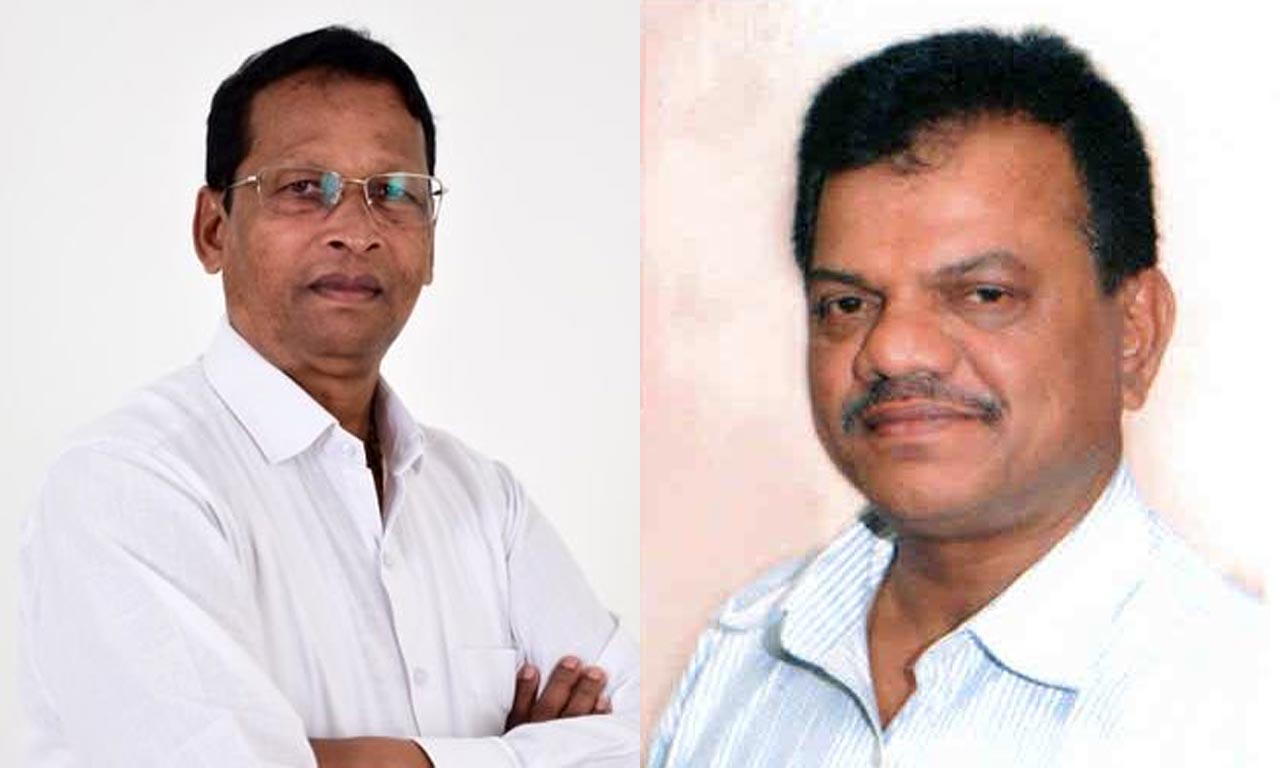
In a significant development in the Delhi liquor scam, the Central Bureau of Investigation (CBI) has claimed that two former Goa MLAs, who contested the 2022 Assembly elections on Aam Aadmi Party (AAP) tickets, were paid in cash by the party for election-related expenses. The chargesheet alleges that AAP volunteer Chanpreet Singh Rayat facilitated these cash payments, sourced from ill-gotten money linked to the Delhi excise policy.
According to the CBI’s chargesheet, the two ex-MLAs, Mahadev Narayan Naik and Satyavijay Naik, were approached by Durgesh Pathak, AAP’s in-charge for the Goa polls and a Delhi MLA, to contest from the Shiroda and Valpoi constituencies. Both candidates reportedly expressed concerns over the lack of funds, but were assured by Pathak that AAP would cover all election-related expenses.
The CBI has further alleged that Durgesh Pathak took Mahadev Naik to meet Delhi Chief Minister Arvind Kejriwal, who confirmed the ticket and promised full financial support for the election campaign. Statements from both former MLAs indicate that the expenses, such as fuel and vehicles, were covered by cash payments from the party.
Satyavijay Naik disclosed to the CBI that he received between ₹15-17 lakh in cash, delivered in instalments, for election expenses. The CBI also cites a meeting held by Kejriwal with AAP candidates in Goa, where he allegedly assured them that the party would handle all expenses, allowing candidates to focus solely on campaigning.
The chargesheet highlights a link between Kejriwal and Vinod Chauhan, another accused in the case, who allegedly transferred ₹18 crore in cash to Goa through the “Hawala” route. The funds were reportedly handed over to Rayat, who distributed them to various vendors to meet election-related costs.
This revelation comes as part of the ongoing investigation into the Delhi excise policy case, where ₹90-100 crore is believed to have been paid by the “South Group” to manipulate the excise policy. A total of ₹44.5 crore is alleged to have been sent to Goa for AAP’s election campaign.
The CBI’s chargesheet adds that Kejriwal and other key figures in the AAP were aware of the use of ill-gotten funds during the 2022 Goa Assembly elections, raising serious questions about the integrity of the party’s campaign.
A strong sense of dissatisfaction has emerged among Haryana voters against the BJP 16
The BJP’s handling of key issues, such as the concerns of female wrestlers and the agitating farmers, has left much to be desired in the eyes of Haryana’s voters. The party’s critical stance toward these groups, rather than addressing their grievances, has alienated a significant portion of the electorate. This has created substantial challenges for the BJP as it attempts to retain power in the state. In contrast, the Congress has gained considerable momentum by standing in solidarity with aggrieved farmers and sportspersons during their crises. This show of support has earned the party goodwill, positioning it as a strong contender in the upcoming elections.
Olympic wrestlers Vinesh Phogat and Bajrang Punia recently met with Leader of the Opposition Rahul Gandhi in Delhi, fueling speculation about their possible entry into politics. Sources suggest they may join the Congress party and potentially run as candidates in the upcoming Haryana Assembly elections. Phogat is reportedly being considered for either the Julana seat in Jind or the Charkhi Dadri constituency, while Punia may contest from Badli in Jhajjar district, even though there is already a sitting Congress MLA in that constituency. The meeting took place just before Gandhi’s departure for Kashmir for the Assembly election campaign. Currently, Amarjeet Dhanda of the Jannayak Janta Party holds the MLA seat for Julana. There is speculation that Congress may provide tough competition to the BJP in both Haryana and Jammu & Kashmir.
Since 1999, there has been a notable trend in Haryana where the party or alliance that won the majority of seats in the Lok Sabha elections also went on to form the government in the state Assembly elections. In the last five pairs of general and Vidhan Sabha elections, this pattern has held, making the outcome of general elections in Haryana a key indicator for state-level politics. As a result, it is crucial for the Bharatiya Janata Party (BJP) to perform well in Haryana in the Lok Sabha polls, as it will strengthen their position ahead of the state elections later this year. This makes Haryana a significant battleground for both national and state-level politics.
In the 2019 elections, the BJP achieved a sweeping victory in Haryana, running independently and capitalizing on the nationalist sentiment that surged following the Balakot airstrikes. The internal split within the Chautala family, which led to Dushyant Chautala forming the Jannayak Janta Party (JJP), also worked in the BJP’s favor by dividing opposition votes. As a result, the BJP secured all 10 seats with a commanding 58 percent vote share, while the Indian National Lok Dal (INLD) was reduced to just 2 percent. The newly formed JJP made its debut with a modest 5 percent vote share, and the Congress garnered 28 percent of the votes.
Ahead of the upcoming elections, the Congress is focused on consolidating support from key demographic groups—Jats, Dalits, and Muslims—who together make up 50 percent of the state’s population. In 7–8 constituencies, these combined communities hold considerable influence, accounting for 40 percent of the local population. The Congress hopes to counter the BJP’s dominance by leveraging the narrative that the saffron party may alter the constitution if it returns to power, a message aimed at resonating with these groups. Despite the BJP’s strong 58 percent backing in 2019, Congress is strategizing to make inroads by appealing to this significant voter base.
The BJP faces a tough contest in Haryana as Congress is determined to deliver a significant blow to the ruling party. BJP strategists are relying on a potential split in opposition votes to offset any losses. Given Haryana’s status as a bellwether state, it is crucial for the BJP to secure more seats than Congress in the upcoming general elections.
The bigger challenge for the BJP lies in the Vidhan Sabha polls, where it faces the task of retaining power while contending with a decade-long anti-incumbency sentiment. Performing well in the general elections is key for the BJP, as it would set a positive tone and improve its prospects for the state elections later this year. A strong showing in the general elections is essential to boost the party’s momentum heading into the Assembly polls.
With internal surveys indicating that Congress, the main opposition party, has an advantage going into the elections—even in areas where the BJP had previously made significant gains—the ruling BJP is under pressure to regroup and address these challenges. A major point of concern for the party is growing public resentment, particularly against the previous administration led by Manohar Lal Khattar. This dissatisfaction is seen as a significant hurdle for the BJP as it attempts to retain power in Haryana amidst rising competition from Congress and other opposition forces.
A strong sense of dissatisfaction has emerged among a large section of voters in Haryana, largely due to the BJP government’s harsh response to protesting farmers over the past three years and other governance issues. This growing discontent has bolstered Congress’s prospects for the upcoming Assembly election later this year, putting the BJP at risk of facing significant setbacks. The unrest also suggests that the BJP may experience losses in the state’s Lok Sabha seats, as public sentiment appears to be shifting away from the ruling party.
Maharashtra Approves Semiconductor & EV Projects Worth Rs 1.17 Lakh Crore, 29,000 Jobs to Be Created 18
The Maharashtra Cabinet sub-committee on industries, led by Chief Minister Eknath Shinde, approved four advanced technology mega projects worth Rs 1.17 lakh crore on Thursday. These projects, focused on semiconductor and electric vehicle (EV) manufacturing, will be implemented across Marathwada, Vidarbha, Pune, and Panvel, and are expected to create 29,000 jobs.
Chief Minister Shinde emphasized the significance of these projects, stating, “The investment in semiconductor and electric vehicle manufacturing will generate substantial employment, both direct and indirect. With these projects, Maharashtra will establish itself as a leading state in the field of electric vehicle manufacturing. Additionally, the local supply chain will benefit through technological innovation, research, and development, with significant advantages for micro, small, and medium enterprises (MSMEs).”
In July, the sub-committee approved projects worth Rs 80,000 crore. With the latest approval of Rs 1.17 lakh crore, Maharashtra has now secured total investments of Rs 2 lakh crore, creating 35,000 jobs across the state.
Key Projects:
Tower Semiconductor (Panvel, Raigad): This Israel-based company will invest Rs 83,947 crore in two phases to set up a semiconductor manufacturing facility. The project will create 15,000 jobs. Tower Semiconductor specializes in producing integrated circuits using advanced technologies like SiGe, BiCMOS, and Silicon Photonics. This project will help develop a semiconductor ecosystem in Maharashtra, positioning the state as a leader in this sector.
Skoda Auto Volkswagen (Pune): The automotive giant will invest Rs 12,000 crore in a state-of-the-art electric vehicle manufacturing project, generating 1,000 jobs. This investment will bolster Maharashtra’s status as a hub for EV production.
Toyota Kirloskar Motor (Chhatrapati Sambhajinagar): The company will establish an electric vehicle manufacturing facility with an investment of Rs 21,273 crore, creating 12,000 jobs. The project, under the state’s EV promotion policy, will drive innovation, research, and local supply chain development, benefiting MSMEs in the Marathwada region.
Raymond Luxury Cottons (Nandgaonkar Peth, Amravati): The company will invest Rs 188 crore in textile manufacturing under the state’s textile policy, creating 550 jobs. This project will include spinning, yarn dyeing, and weaving operations in Vidarbha.
The approved projects are expected to meet the growing semiconductor demand in the country and strengthen the electric vehicle sector. They will also contribute to reducing greenhouse gas emissions and fostering a sustainable future through EV adoption.
Union Minister Shivraj Singh Chouhan to Survey Flood-Hit Khammam, Telangana 20
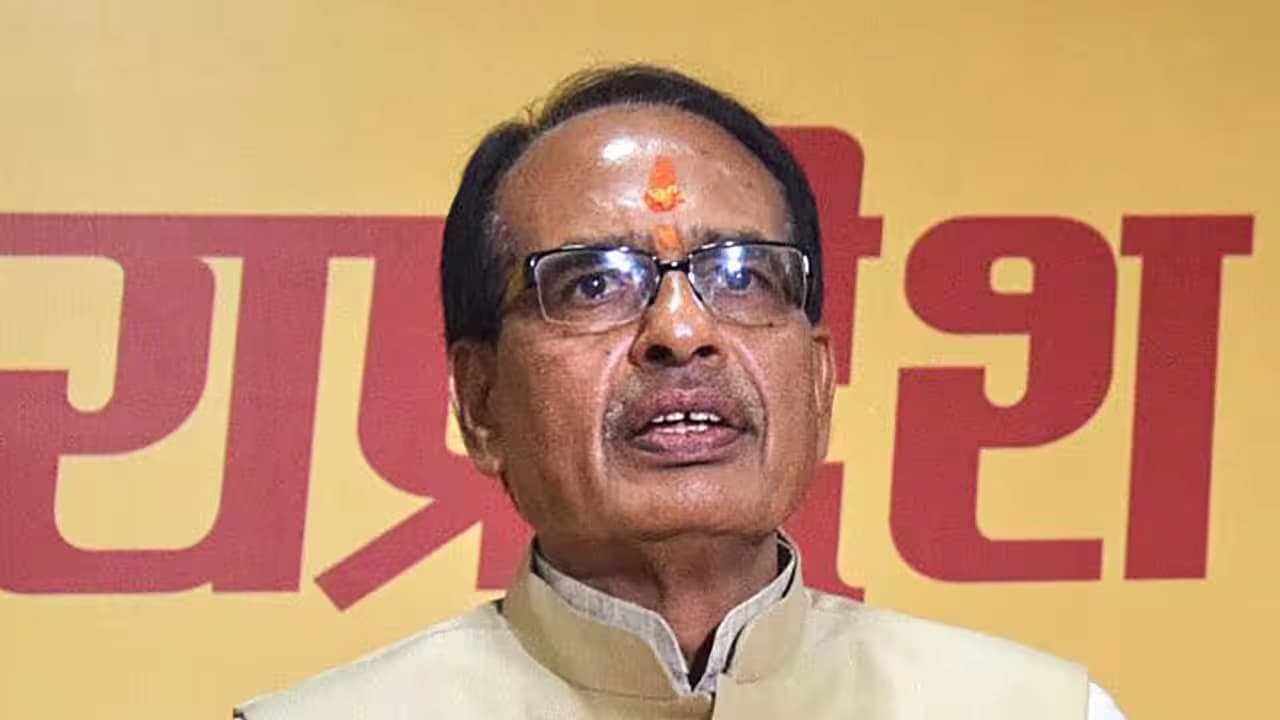
Union Agriculture Minister Shivraj Singh Chouhan will visit the flood-affected areas of Khammam district in Telangana today, conducting an aerial survey to assess the damage caused by recent heavy rains and floods. Accompanying him on this visit will be Union Minister of State for Home, Bandi Sanjay.
The aerial survey will take place between 9 a.m. and 2.30 p.m., after which both ministers will hold a review meeting with state government officials. The officials are expected to brief Union Minister Chouhan on the extent of losses caused by the floods, particularly the impact on local agriculture.
Chouhan will tour several key areas, including the Khammam, Madhira, and Paleru Assembly constituencies. During his visit, he will inspect agriculture fields to gain first-hand knowledge of the crop damage, and interact with farmers from a village in Kasumanchi mandal to understand their difficulties and challenges.
A team from the Union Agriculture Ministry will accompany Chouhan, and they will hold discussions with state government officials to assess the damage and determine relief measures.
This visit follows Chouhan’s aerial survey of flood-hit Vijayawada in neighboring Andhra Pradesh on Thursday. Joined by Andhra Pradesh’s Information Technology Minister, Nara Lokesh, Chouhan surveyed various parts of the flood-affected region. He revealed that approximately 1.8 lakh hectares of crops were destroyed, impacting around two lakh farmers.
Chouhan assured that both the Central and state governments will collaborate to provide necessary assistance to the farmers. He highlighted the severity of the recent floods, which resulted from an unprecedented 40 cm of rainfall within just two days, exacerbated by breaches in the Budameru Rivulet.
The Union Minister also stressed the importance of long-term planning to combat future floods, emphasizing that illegal mining along the rivulet worsened the situation. He called for strengthening the Prakasam Barrage, which was designed 100 years ago to handle a maximum water discharge of 12 lakh cusecs, but is now under strain due to the increasing intensity of floods.
As he embarked on his visit to Telangana and Andhra Pradesh, Chouhan assured both states of the Central government’s full support. He emphasized, “In this hour of crisis, the Central government stands fully with the people of the flood-affected areas of Andhra Pradesh and Telangana and will provide all possible help to them in overcoming the crisis.”