Narayan Maharaj of Shri Kshetra Narayanpur Passes Away at 85 2
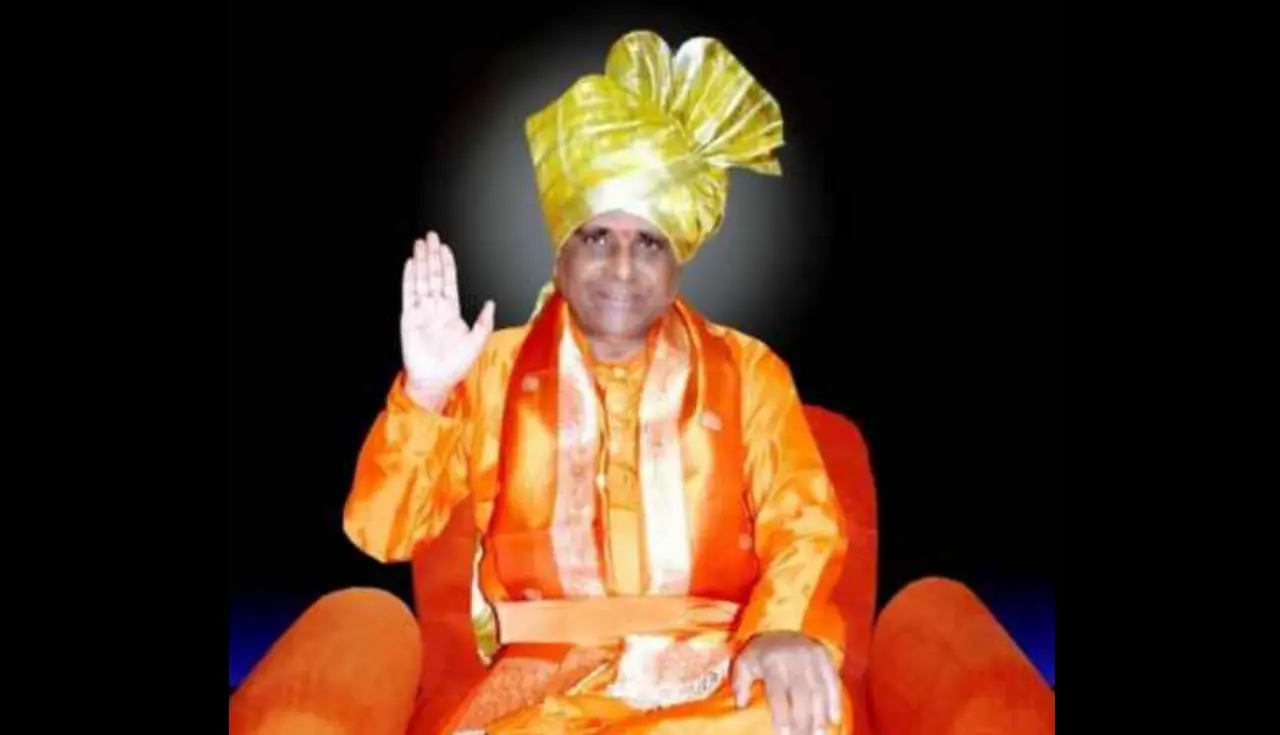
Narayan Maharaj of Shri Kshetra Narayanpur in Purandar taluka passed away on Monday, September 9, at the age of 85. He breathed his last in the evening due to old age. Maharaj was a revered spiritual leader residing at Datta Mandir in Narayanpur, where he was lovingly known as ‘Anna.’ His passing has left his large disciple base across Maharashtra deeply saddened.
Devotees will have the opportunity for a final darshan at the Narayanpur temple on Tuesday, September 10, from 8 am to 2 pm. His funeral rites are scheduled to take place at 4 pm near Yajna Kunda in Narayanpur.
Narayan Maharaj was known for his extensive social work, particularly in promoting community activities. He was a leader in advocating for community marriages, spearheading de-addiction movements, and organising village-wide farming initiatives through his disciples. One of his greatest contributions was establishing four Dattadhams across India, with the one in Narayanpur being a prominent centre for devotion.
His passing has left a deep void among his followers, who continue to mourn the loss of their beloved ‘Anna.’
Maha BJP Chief Bawankule Son's Car Involved in Multiple-Vehicle Collision in Nagpur 4
In a troubling incident that unfolded in Nagpur’s Ramdaspeth area on Monday, a luxury car registered to Sanket Bawankule, son of Maharashtra BJP President Chandrashekhar Bawankule, was involved in a series of collisions with multiple vehicles. According to the Sitabuldi police, the accident involved two cars and a two-wheeler, leading to minor injuries for the passengers.
The police promptly registered a case of rash driving against the car’s driver, Arjun Haware, and a passenger, Ronit Chintanwar. Both individuals are now under investigation. The vehicle, a white Audi, was reportedly speeding when it hit several vehicles, causing widespread alarm in the area.
Investigation Begins Amid Political Tension
Following the accident, Chandrashekhar Bawankule addressed the media, acknowledging that the car was indeed registered in his son’s name. He assured the public that an impartial investigation would take place and stressed that political connections should not influence the outcome of the probe. Bawankule emphasized that justice must be served fairly for all citizens, irrespective of their social or political standing.
Meanwhile, Maharashtra Congress has added fuel to the controversy by releasing a video accusing the government of attempting a cover-up. They have raised concerns about whether law enforcement applies the same rules to all or only targets common citizens. The political undercurrents surrounding the case have heightened public interest in the ongoing investigation.
Police Pursue Leads, Driver Arrested and Released on Bail
Deputy Commissioner of Police (DCP) Rahul Madane revealed that the collision took place at around 12:30 am on September 9. The luxury vehicle was traveling through Nagpur’s Ramdaspeth area when it hit several vehicles in quick succession. Medical samples from the car’s occupants, including Sanket Bawankule, have been sent to the Forensic Science Laboratory for further analysis, and the results are awaited.
Arjun Haware, the car’s driver, was arrested shortly after the incident but was later released on bail. His passenger, Ronit Chintanwar, was also questioned by police. Initial reports suggest that the Audi first collided with a car driven by Jitendra Sonkamble and then struck a moped, injuring two riders. The vehicle continued its erratic course, hitting other cars before being brought to a stop near Mankapur bridge.
Political Fallout and Public Scrutiny
As the investigation progresses, the involvement of the Bawankule family has drawn considerable attention from both the media and the public. The Maharashtra Congress is demanding answers and has been vocal in accusing the BJP of using its influence to suppress the case. The Congress’ video questioning the impartiality of the investigation has gone viral, further fueling speculation and debate.
On the other hand, the BJP leadership has refrained from commenting further, stating that they will allow the investigation to take its course. Despite political pressure and public scrutiny, the police have assured that they will continue to investigate the case thoroughly and hold all parties accountable.
With the forensic results still pending, the case remains a point of contention in Maharashtra’s political landscape. The outcome of the investigation will likely have significant ramifications for the individuals involved and the political parties vying for public trust.
Champat Rai: Ram Temple Movement No Less Than Freedom Struggle 6
Shri Ram Janmabhoomi Teerth Kshetra General Secretary Champat Rai has likened the Ayodhya Ram Temple movement to India’s freedom struggle, stating it holds immense significance for the Hindu community. Speaking at a felicitation event in Indore, Rai emphasized that the demolition of the original Ram temple in Ayodhya was an insult to Bharat and Hindus, and rebuilding it is a matter of pride and identity for the community.
Rai revealed that more than ₹2,800 crore was received as donations from over 10 crore people for the construction of the Ram temple. He reassured the public that all taxes have been paid by the committee overseeing the construction. He added, “Building the Ram temple was not just about faith but a reflection of our history and identity. We cannot live with the marks of slavery for much longer.”
He highlighted how public opinion about the Rashtriya Swayamsevak Sangh (RSS) has changed over the past few decades. “In the 1960s, people were hesitant to associate with the RSS due to false allegations. But today, that scenario has changed, and more people are joining hands with us,” Rai remarked.
He also reflected on the sacrifices made by scores of people, including priests, over the last 500 years to keep the Ram temple movement alive in the hearts of Hindus. Rai mentioned that many songs sung in RSS camps over the decades are now becoming a reality with the construction of the temple.
Rai further discussed the ongoing construction, noting that no iron or steel has been used in the temple’s structure. Stones for the temple have been sourced from the Bansi Paharpur region of Rajasthan. The most significant part of the project now focuses on the construction of the Raja Ram’s darbar on the first and second floors of the grand temple.
Rahul Gandhi in US: Fight in India Is About Religious Freedom and Regional Identities 8
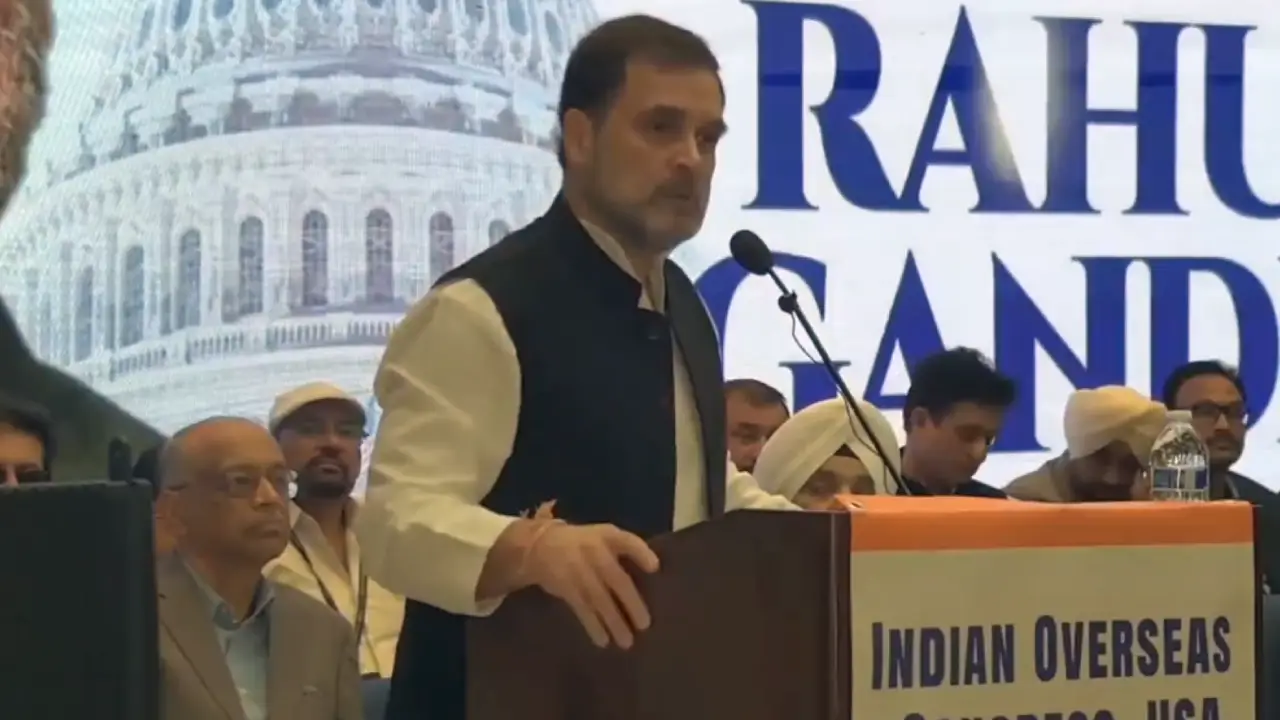
Congress leader Rahul Gandhi made a strong statement during his visit to the United States, claiming that the real struggle in India is not about politics but about protecting religious freedom and preserving regional identities. Speaking to members of the Indian community in Virginia, he emphasized the importance of diversity in India, specifically mentioning the rights of religious and linguistic minorities.
Gandhi questioned whether a Sikh would be allowed to wear a turban or visit a Gurdwara in India, or if a Tamilian would be allowed to speak in his native language. His remarks were directed at highlighting the ongoing battle for preserving the cultural and religious rights of various communities across India.
“The fight is about whether a Sikh is allowed to wear his turban, or a Tamilian can speak his language. It’s not just a political issue—it’s about religious freedom and cultural identity,” Gandhi said, addressing the crowd. He went on to argue that the struggle is about defending India’s diversity, which includes its rich history, languages, and traditions.
Gandhi also took a direct swipe at the Rashtriya Swayamsevak Sangh (RSS), accusing the organization of promoting an ideology that certain states, languages, and religions are inferior to others. He expressed his belief that India’s strength lies in its diversity and urged people to recognize the importance of preserving it.
“What the RSS is saying is that some states, languages, and religions are inferior to others. This is what the fight is about. Whether you are from Punjab, Tamil Nadu, or Haryana, your history, language, and tradition are crucial. We must protect this diversity,” he added.
Gandhi continued his attack by stating that the RSS and its affiliates misunderstand India’s history and fail to appreciate the significance of regional and religious diversity. He stressed that India’s future should be one where people are free to believe, speak, and listen to what they choose, rather than one where a select few dictate the rules.
The Congress leader’s remarks come at a time when debates over cultural and religious freedoms are intensifying in India, with accusations against various political groups for stifling diversity.
SC to Hear Uddhav Thackeray Faction’s Plea Against Maharashtra Speaker's Ruling on Shinde-Led Shiv Sena 10
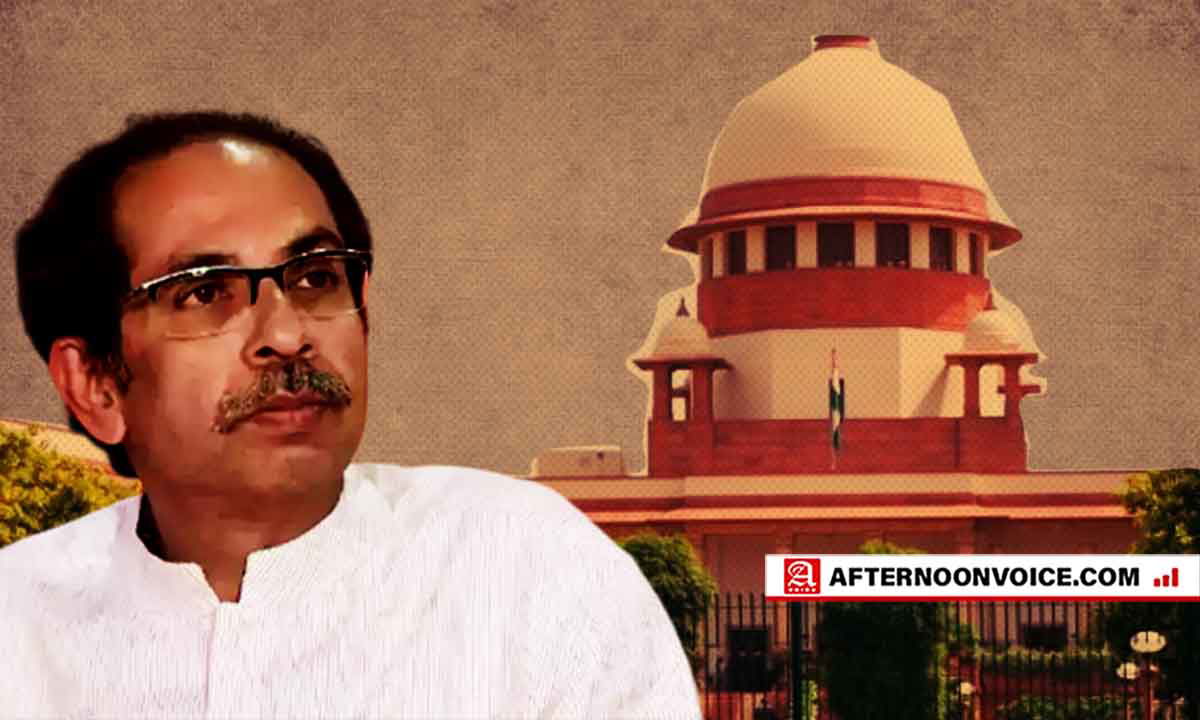
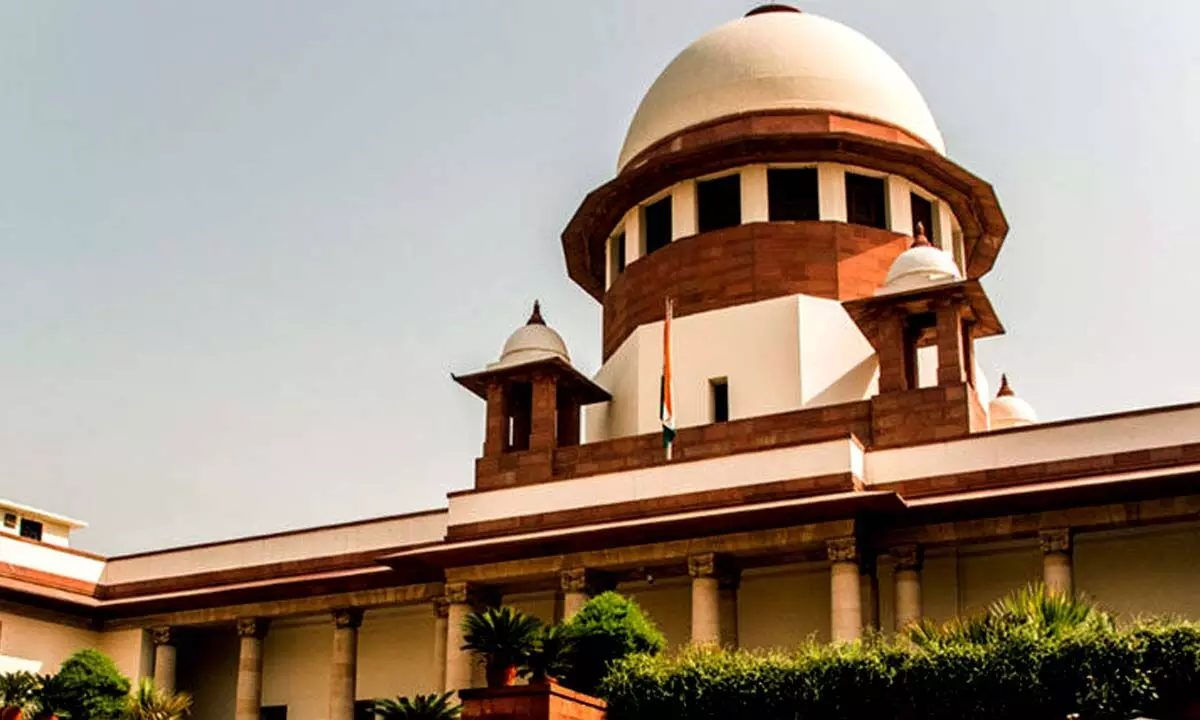
The Supreme Court is set to hear a crucial plea on Tuesday filed by Shiv Sena-UBT leader Sunil Prabhu, challenging the Maharashtra Assembly Speaker Rahul Narwekar’s ruling. The ruling, delivered on January 10, declared the faction led by Chief Minister Eknath Shinde as the “real” Shiv Sena.
A Supreme Court bench, headed by Chief Justice D.Y. Chandrachud and comprising Justices J.B. Pardiwala and Manoj Misra, had earlier issued notices to CM Shinde and 38 other MLAs from his camp, seeking their response to the matter.
The Uddhav Thackeray-led faction has contested Narwekar’s ruling, arguing that despite CM Shinde’s claim of commanding a majority in the legislature and the party’s National Executive, the decision was flawed. Thackeray’s group also disputes the Speaker’s dismissal of disqualification petitions against Shinde and his MLAs.
In response, CM Shinde and his camp have requested that the Supreme Court refer the Shiv Sena-UBT’s plea to the Bombay High Court for further adjudication.
Meanwhile, it should be noted that the Bombay High Court has already issued notices to 14 Shiv Sena-UBT MLAs in a petition filed by Bharat Gogavale, the Chief Whip of the ruling Shiv Sena, seeking their disqualification.
Uddhav Thackeray’s faction avoided disqualification after the Speaker dismissed cross-petitions from both sides during the January 10 ruling, leaving the legislative dispute unresolved.
In a related hearing, the Supreme Court will also consider a similar plea from the Sharad Pawar-led faction of the Nationalist Congress Party (NCP). Jayant Patil, a leader of the NCP, has sought disqualification of Ajit Pawar faction MLAs for defecting and joining the Sena-BJP government.
Hope BJP Wins the Hearts of the Jammu and Kashmir People 12
BJP was very likely to lose in Kashmir valley, especially as they don’t have political allies there anymore. On the other hand, Congress leader Rahul Gandhi officially launched the party’s campaign for the upcoming Assembly election in Jammu and Kashmir, declaring that the Congress would “restore statehood to J&K after coming to power.” He emphasized that the Bharatiya Janata Party (BJP) must restore statehood to the region, or the INDIA (Indian National Developmental, Inclusive Alliance) bloc, led by opposition parties, would take it up as their first priority upon defeating Prime Minister Narendra Modi and his party. Gandhi, who is also the Leader of the Opposition in the Lok Sabha, stated, “We will ensure the return of statehood to the region, whether the BJP wants it or not. We will pressurize the government under the banner of the INDIA alliance.” His statements reaffirm the Congress’s commitment to reversing the BJP-led government’s decision to revoke Jammu and Kashmir’s statehood in 2019.
Come September, Jammu and Kashmir will witness its first assembly election in a decade, providing the people a long-awaited chance to elect local representatives and have a say in government decision-making. The polls, set to take place for 90 assembly seats—43 in Jammu and 47 in Kashmir—will be conducted in three phases from September 18 to October 1. This will be the first assembly election since the abrogation of Article 370 and the region’s downgrading to Union Territory status in August 2019. In the June Lok Sabha election, the National Conference (NC) and the Bharatiya Janata Party (BJP) secured two seats each, with the NC dominating in Kashmir and the BJP in Jammu. The fifth seat was won by Awami Ittehad Party (AIP) candidate Sheikh Abdul Rashid, commonly known as Engineer Rashid. In Jammu, the BJP had a strong showing with over 24 percent of the vote share, followed by the Congress at 19.4 percent. In the Kashmir Valley, the National Conference captured 22.3 percent of the vote, while the Peoples Democratic Party (PDP) managed 8.5 percent. This division of votes reflects the region’s political landscape, with the BJP maintaining its dominance in the Jammu region and the NC and PDP continuing to hold influence in Kashmir.
Jammu and Kashmir has been under direct central rule for over six years, since June 2018, and this election marks a significant moment for the region as it prepares to restore local governance. Over four years after the Bharatiya Janata Party (BJP) revoked the special status of Indian-administered Kashmir, the party has decided not to contest this year’s general election in the region. Political analysts and opposition leaders suggest that this decision signals possible discontent in the region over the move, as well as an implicit acknowledgment by the BJP of the challenges it faces there. Relations between Kashmir and Delhi have been strained for decades, with a prolonged insurgency against Indian rule and military action resulting in thousands of deaths in the Himalayan region over the past several decades. The situation worsened in 2019 when Prime Minister Narendra Modi’s government revoked most of Article 370, which had granted significant autonomy to Jammu and Kashmir. The region was subsequently bifurcated into two federally-administered territories: Ladakh, and Jammu and Kashmir.
Following the 2019 decision, the government also imposed a strict communication blockade and detained hundreds of political leaders, including three former chief ministers, for extended periods. Since then, Modi and his ministers have consistently defended the move, claiming that it has brought peace to the region. In recent years, local BJP leaders have conducted extensive grassroots campaigns in Kashmir, attempting to broaden the party’s support base. However, the BJP’s decision not to field candidates in the ongoing general election in Kashmir—the first since the revocation of Article 370—has surprised many. While the party has fielded candidates in two Hindu-majority seats in Jammu, it has not done so in the three Muslim-majority seats of the Kashmir Valley.
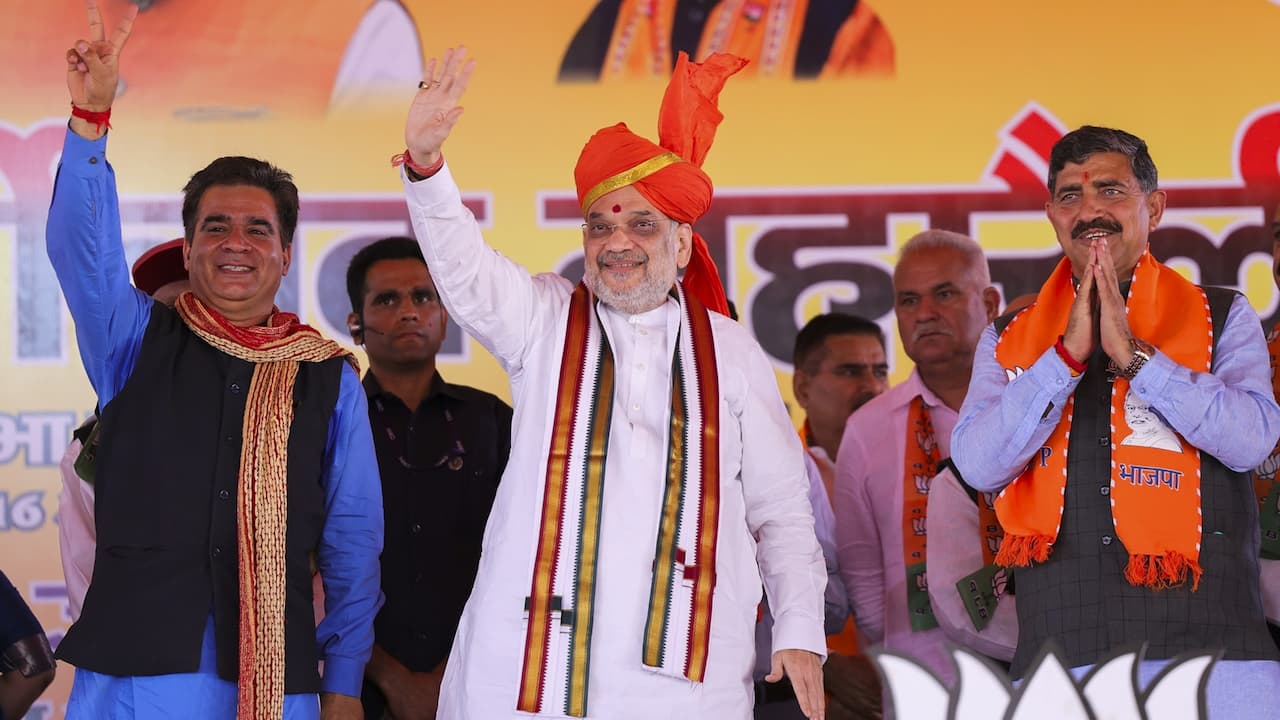
The BJP’s chief spokesperson in Jammu and Kashmir, Sunil Seth, explained that elections were not the party’s priority, stating that their main objective was to “win the hearts of the people.” He further emphasized that integrating Kashmir fully with the rest of India had been a long-term goal, and they did not want to create the impression that the effort was merely for electoral gains. Critics, however, argue that the decision reflects the party’s recognition that securing a victory in the region would be challenging.
TMC MP Jawhar Sircar Resigns Over RG Kar Incident, Cites Corruption and Governance Failures 14
Trinamool Congress (TMC) Rajya Sabha member and retired IAS officer, Jawhar Sircar, announced his decision to resign from the Rajya Sabha on Sunday. The resignation is in protest against the alleged rape and murder of a woman doctor from R.G. Kar Medical College & Hospital, as well as growing corruption in the governance of West Bengal. Sircar expressed his grievances in a letter dated September 8, addressed to West Bengal Chief Minister Mamata Banerjee, where he also declared his decision to quit politics permanently.
In his letter, Sircar referenced a previous moment in 2022 when he had considered resigning following evidence of corruption involving former West Bengal Education Minister, Partha Chatterjee. He stated that at that time, despite harassment from certain members of the TMC leadership, he chose to stay in the Rajya Sabha, hoping Mamata Banerjee would continue her anti-corruption efforts.
Sircar highlighted the widespread unrest across West Bengal in response to the R.G. Kar incident, blaming a faction of the “pampered bureaucracy and corrupt individuals” for the ongoing issues. He stated, “I have never witnessed such grievance and non-confidence against any government in my life.”
He further criticized the state government’s handling of the protests led by junior doctors, questioning why the Chief Minister had not directly engaged with them, as she had done in the past. Sircar opined that the state’s recent disciplinary measures were too late and that proactive steps earlier could have improved the situation in the state’s health administration.
Emphasizing the non-political and spontaneous nature of the protests, Sircar urged against giving the movement a political label. According to him, the movement was not only seeking justice for the victim but also raising voices against the state government and its ruling party.
As of the time this report was filed, there has been no official response from the Trinamool Congress regarding Sircar’s resignation. However, opposition party leaders have welcomed his decision.
Supreme Court: Child Custody Cannot Be Treated as Transfer of Property, Welfare Paramount 16
The Supreme Court emphasized that courts dealing with habeas corpus petitions related to minors cannot treat children as “movable property” and transfer their custody without considering the emotional and psychological impact of disturbing their current custody. A habeas corpus petition seeks to produce a person before the court if they are missing or illegally detained.
A bench comprising Justices A S Oka and A G Masih declared that cases involving child custody should not be decided mechanically but based on humanitarian considerations, particularly the child’s welfare.
The court delivered its verdict in a case involving the custody of a girl child, aged two years and seven months, whose mother had died in December 2022. The child was under the care of her maternal aunts after her mother’s death, starting at 11 months old. Her father and paternal grandparents sought custody, which was initially granted by the Madhya Pradesh High Court in June 2023.
The Supreme Court, however, granted a stay on the high court’s decision in July 2023 and noted that the high court had not adequately considered the child’s welfare before deciding on custody, focusing instead on the father’s rights as the natural guardian.
The bench stressed that child custody decisions must prioritize the child’s welfare over the rights of the parties involved. The court also observed that determining custody in such cases should be handled through substantive proceedings under the Guardians and Wards (GW) Act, 1890, which offers a more comprehensive process than a petition under Article 226 of the Constitution of India.
The bench directed that the father and paternal grandparents be allowed to meet the child once a fortnight, under the supervision of the District Legal Service Authority (DLSA) at Panna, Madhya Pradesh. Meetings will take place starting from September 21, on the first, third, and fifth Saturdays of each month.
The Supreme Court also instructed the maternal aunts to file for guardianship and permanent custody of the child under the GW Act within two months.
15 Killed in Hathras as Bus Collides With Van on NH-93, Injuries Reported 18
At least 15 people, including women and children, were killed in Hathras, Uttar Pradesh, after a roadways bus collided with a van on National Highway 93. Thirteen others were injured and are receiving treatment at a government hospital.
The incident occurred on Friday near Kanwarpur village, about 10 km from Hathras district headquarters, as the bus attempted to overtake the van. The passengers were en route to Agra from Hathras when the tragic accident took place.
Uttar Pradesh Chief Minister Yogi Adityanath responded promptly, directing district officials to manage relief efforts and ensure medical treatment for the injured. The Chief Minister also announced financial assistance of Rs 2 lakh for the families of the deceased and Rs 50,000 for those seriously injured.
Prime Minister Narendra Modi and President Droupadi Murmu expressed condolences to the families of the victims. PM Modi also announced an ex-gratia of Rs 2 lakh for the deceased’s families and Rs 50,000 for the injured. The local administration is overseeing aid to the victims under state supervision.
Delhi Liquor Scam: Ex-Goa MLAs Allegedly Received Cash from AAP for Poll Expenses, CBI Claims 20
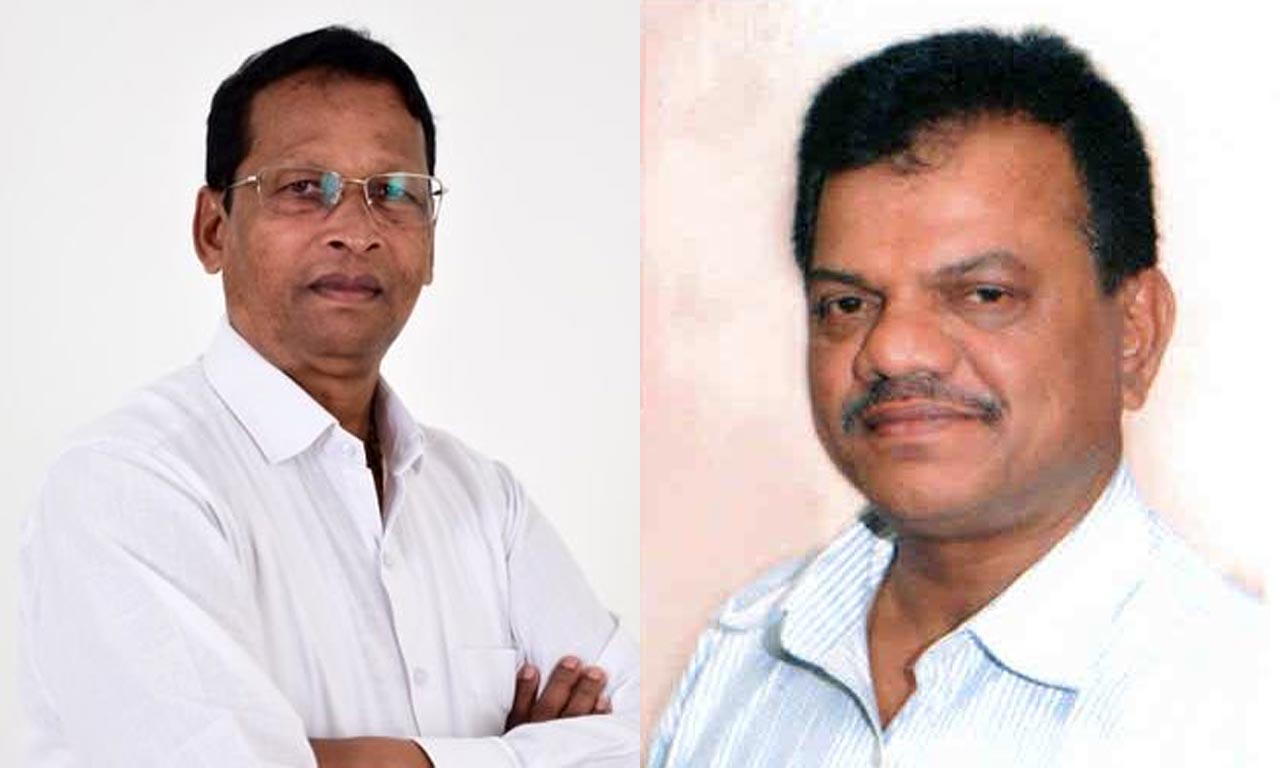
In a significant development in the Delhi liquor scam, the Central Bureau of Investigation (CBI) has claimed that two former Goa MLAs, who contested the 2022 Assembly elections on Aam Aadmi Party (AAP) tickets, were paid in cash by the party for election-related expenses. The chargesheet alleges that AAP volunteer Chanpreet Singh Rayat facilitated these cash payments, sourced from ill-gotten money linked to the Delhi excise policy.
According to the CBI’s chargesheet, the two ex-MLAs, Mahadev Narayan Naik and Satyavijay Naik, were approached by Durgesh Pathak, AAP’s in-charge for the Goa polls and a Delhi MLA, to contest from the Shiroda and Valpoi constituencies. Both candidates reportedly expressed concerns over the lack of funds, but were assured by Pathak that AAP would cover all election-related expenses.
The CBI has further alleged that Durgesh Pathak took Mahadev Naik to meet Delhi Chief Minister Arvind Kejriwal, who confirmed the ticket and promised full financial support for the election campaign. Statements from both former MLAs indicate that the expenses, such as fuel and vehicles, were covered by cash payments from the party.
Satyavijay Naik disclosed to the CBI that he received between ₹15-17 lakh in cash, delivered in instalments, for election expenses. The CBI also cites a meeting held by Kejriwal with AAP candidates in Goa, where he allegedly assured them that the party would handle all expenses, allowing candidates to focus solely on campaigning.
The chargesheet highlights a link between Kejriwal and Vinod Chauhan, another accused in the case, who allegedly transferred ₹18 crore in cash to Goa through the “Hawala” route. The funds were reportedly handed over to Rayat, who distributed them to various vendors to meet election-related costs.
This revelation comes as part of the ongoing investigation into the Delhi excise policy case, where ₹90-100 crore is believed to have been paid by the “South Group” to manipulate the excise policy. A total of ₹44.5 crore is alleged to have been sent to Goa for AAP’s election campaign.
The CBI’s chargesheet adds that Kejriwal and other key figures in the AAP were aware of the use of ill-gotten funds during the 2022 Goa Assembly elections, raising serious questions about the integrity of the party’s campaign.