Home Blog Page 271

Monsoon miseries; no point in hitting the headlines against government

vegetable, monsoon, monsoon miseries, miseries, farmers, maharashtra, vasai, sabji, bhaji
Image: Afternoon Voice / File Photo

I understand that the price rise on essential commodities is very difficult for commoners to cope with. But we should understand that the problem is common in every Monsoon or in extreme weather. Each season comes with some or other challenges; some fruits and vegetables are not suitable for summer and some are not suitable for winter, and most of them are not available in winter. Farmers don’t get the price they expect. That’s the reason we see them throwing vegetables rather than transporting them to the market. During the monsoon, there are supply chain issues; not getting wage workers and transportation are the biggest challenges. Vegetables are receding even in wholesale prices, which were at -1.5% in April as against -2.22% in March. Apart from vegetables and fruits, price pressures also remain in other food items such as milk and milk products, as well as cereals and pulses, due to the impact of the monsoon.

The prices of tomatoes and other vegetables have considerably risen in various parts of India due to several factors, including heavy rainfall caused by the cyclonic storm Biparjoy. Tomato prices have increased four to five times as a result of the heavy rainfall, followed by the onset of the monsoon season, which has led to the damage of farmers’ crops. The prices of all vegetables have increased by one to two times. The local farmers’ produce was devastated, preventing it from reaching the local market. Moreover, retail inflation in milk and milk products did not ease in June but remained high at 8.85%.

Prices of milk and milk products may continue to be elevated until the start of the winter months, given the decline in domestic production. In the coming months, the waning of a favorable base will also exert upward pressure on overall retail as well as food inflation. Of course, a favorable base effect may keep the headline number low, but the index would continue to rise on a month-on-month basis.

During the rainy season, there is also a high demand for particular vegetables that are essential for monsoon-specific dishes or are desired during rainy weather. This higher demand leads to price inflation as the available supply may not be sufficient to meet the increased consumption. For example, people prefer soups before having the main course of food during Monsoon season because tomato prices have gone up and the soup or salad is certainly expensive. Some regions heavily rely on specific areas for the supply of certain vegetables. If those areas are adversely affected by the monsoon, such as experiencing crop damage or transportation issues, it can lead to a shortage in the market and subsequently higher prices.

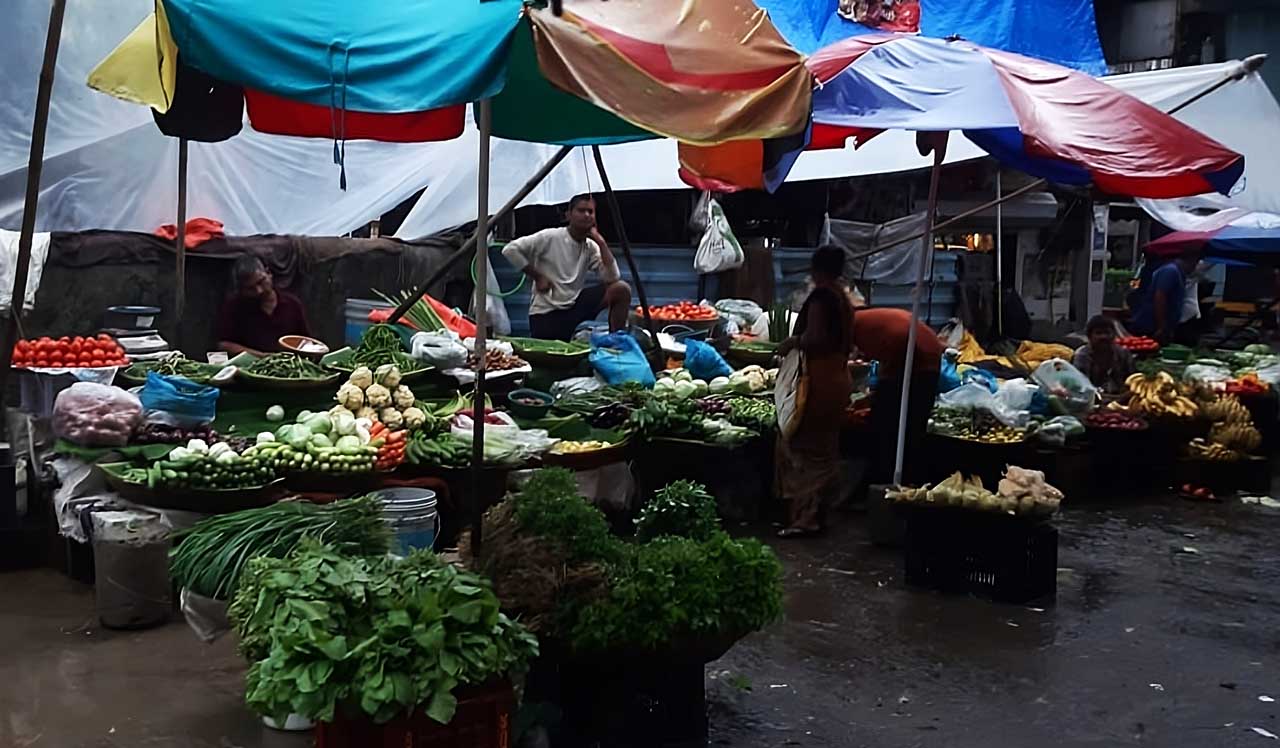
Heavy rainfall during the monsoon has led to waterlogging and flooding, which have damaged local crops, made them unsuitable for consumption, or reduced their harvest. This limited supply of vegetables leads to an increase in prices. Vegetables from Vasai are considered the most organic and homegrown, and people prefer buying them for their authenticity. Today, these vegetable sellers in Vasai are missing from the markets because their crops are ruined and whatever supply they have is not affordable to transport. Monsoon rains have caused transportation and logistical challenges, making it difficult to transport vegetables from farms to markets. Roads are blocked, and the overall movement of goods is hindered. This disruption in the supply chain has reduced the availability of vegetables, causing their prices to rise.

We, the commoners, should understand that these challenges are beyond the capacity of government or administration to address. No one has control over natural calamities. There is no point in hitting the headlines against the government because they are immune to such occurrences. Each monsoon, there is pending construction work, debris is around the city, gutters are overflowing with garbage piles, potholes are beyond repair, and manholes are not covered in many areas. The administration is busy playing the blame game, and the government is busy attacking the opposition. The opposition is scared to question the government, and commoners have no say.
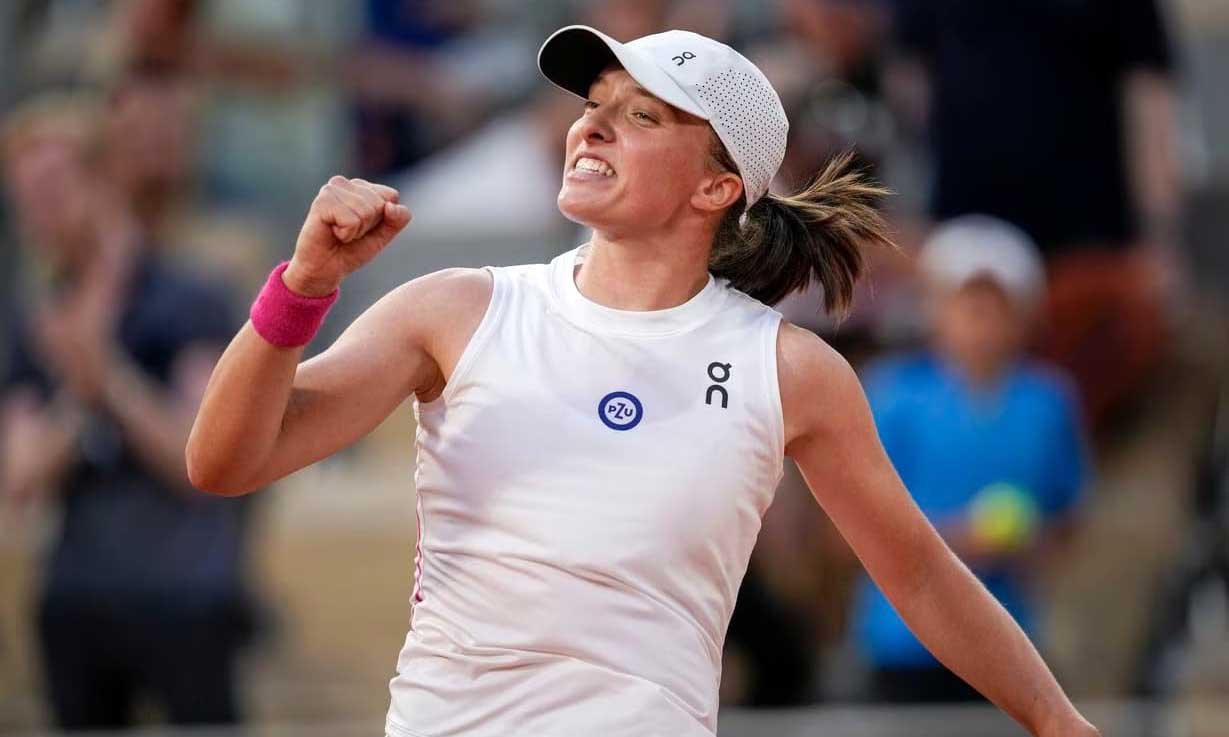
Iga Swiatek is No. 1 and owns 4 Grand Slam titles at age 22. Can she win Wimbledon, too?

iga swiatek, tennis, french open, swiatek, no. 1, us open
Iga Swiatek is No. 1 and owns 4 Grand Slam titles at age 22. Can she win Wimbledon, too? 3

Iga Swiatek is coming off her third title in the past four years on the French Open’s red clay.

Last September, she won a championship on the U.S. Open’s hard courts for the first time. That’s also the surface used at the Australian Open, where she’s been to the semifinals.

And what about on grass courts? Wimbledon, which begins Monday, has been her least successful Grand Slam tournament so far. Swiatek is just 5-3 at the All England Club — compare that to her 28-2 mark at Roland Garros, for example — and those three losses came in the first round, third round and fourth round.

Swiatek, who has been ranked No. 1 since April 2022, offered a bit of insight on how she views her game on grass when she was asked in Paris this month about whether reaching the latter stages of a major is still a big deal to her.

“Well, it depends, because… if I would (make) a quarterfinal of Wimbledon, I would be, like, over the moon,” Swiatek replied, “and I wouldn’t believe that I’m in that place.” So even though other players might concur with the sort of assessment Claire Liu, an American ranked in the Top 100, provided after facing Swiatek in Paris this year — “I’d say she’s good on pretty much any surface” — the subject of playing on the slick green stuff tends to bring certain sentiments to mind for the 22-year-old from Poland.

Two words she repeats when discussing grass: “uncomfortable” and “challenge.” It’s such a contrast from how she feels on clay.

And yet, let’s not forget: Swiatek was the 2018 junior champion at Wimbledon, so it’s not as if it’s a completely foreign surface or setting.

Still, she insists, “On grass, sometimes it’s tougher and I still have to learn a lot.” “It just feels like you’re going to go on court and not play the way you should,” she said, making air quotes with her fingers, “or the way you could,’ you know? So this thing is adding more pressure.” All of what she does so well on clay or hard courts seemingly should translate just fine to grass.

That big forehand of hers. The way she can defend so well. And, above all, the way Swiatek can think her way around a match, find an opponent’s weaknesses and counter her own with tweaks here and there.

There are, to be sure, other women who have already shown they can do well on grass and at Wimbledon. Players such as 2022 champion Elena Rybakina, 2022 runner-up Ons Jabeur, two-time winner Petra Kvitova, 2021 semifinalist Aryna Sabalenka.

But there are not a lot of folks who are going to doubt that Swiatek will figure things out at some point.

“It’s the power,” said Agnieszka Radwanska, the 2012 runner-up to Serena Williams at the All England Club and the only Polish woman to reach the singles final there in the past 85 years.

“There are other players hitting the ball very strong,” Radwanska said, before explaining that Swiatek’s heavy topspin gives her shots more of a chance of landing in with consistency, as opposed to the flat strokes that create more misses “to the fence.” “That’s the difference,” Radwanska said. “A big difference.” After watching her beat Karolina Muchova in three sets in the final at Roland Garros, French Open tournament director Amelie Mauresmo said she thinks Swiatek has what it takes to thrive at the All England Club.

“She has to make maybe one or two adjustments, maybe technically or in her game,” said Mauresmo, a former No. 1-ranked player who won Wimbledon and the Australian Open in 2006, “but I don’t see why, with her consistency, with her physical abilities and, of course, mentally — how she fights and how she gives a lot of trouble to the other girls — she wouldn’t be able to have a breakthrough there.”

Food inflation is gradually shooting up due to rains

tomato seller, tomato, inflation, price rise, vegetable vendor, farmers, tomatoes, price hike
Image: PTI

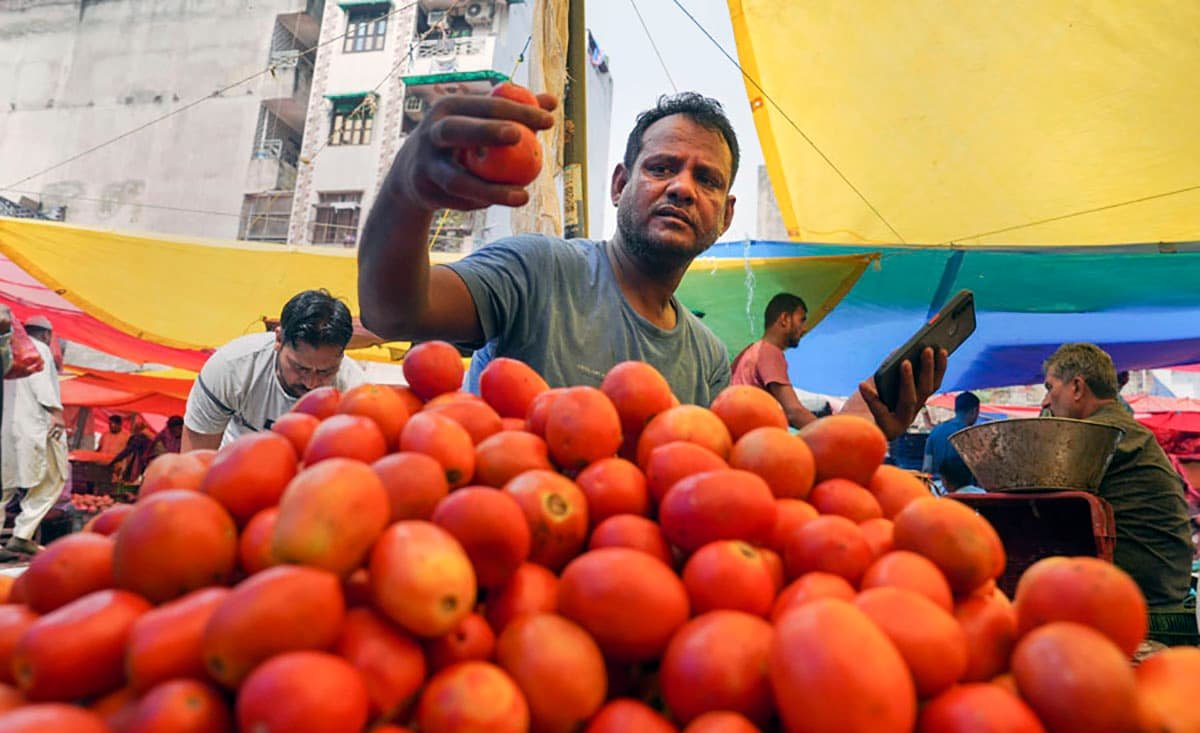
Due to excessive rainfall, the crops got damaged, and that has affected the average retail prices for vegetables and essential commodities. The rates shot up to Rs 120–140 per kg from Rs 60–80 in Mumbai. Some traders blamed rising fuel and transportation costs for the price rise, while others blamed the rain. 

In a sudden and sharp rise in parts of the city, the price of tomatoes has jumped to Rs 80–110 per kg from Rs 30 earlier in June and July. It is expected to be at a higher level. Traders blame rain and crop losses for this surge and warn that the situation is likely to remain through July. Amid the monsoon season, rates of other items have escalated too, with coriander at Rs 100 per big bunch, green chillies at Rs 200 per kg, and French beans at Rs 180–200.

In all crucial vegetable markets, the wholesale price of many seasonal vegetables has gone through the roof. The prices of many vegetables that were selling for Rs 50 a few weeks ago have crossed Rs 100, which will further rise as they reach the end consumer through retail sellers. Over the same period of time, the prices of other vegetables have increased four-fold. As a result, even retail traders are hesitant to purchase stocks from the wholesale market due to inflated prices. Amid a surge in tomato prices across several cities, the Ministry of Consumer Affairs has said that it is a “temporary issue” and is not unusual this time of the year.

Consumer Affairs Secretary Rohit Kumar Singh said, “Tomatoes and some vegetables are highly perishable commodities. Due to sudden heavy rains, transportation becomes difficult, and sometimes the long halt in areas that received sudden rains spoils the loaded stock of transport. It is a temporary issue. Prices will come down soon; just natural calamities have to settle a bit. Tomato prices in the last five years show that the cost increased every year around this time.”

Ramling Shere, a farmer from Latur, Maharashtra, said, “Local farmers have been harmed by the rain and storm; the seasonal rainfall and storms have harmed the crops. Traders at vegetable markets are worried due to the lack of local supply of seasonal vegetables and relying on vegetables coming from Maharashtra.”

Dayaji Shinde, a vegetable harvester from Vasai, told Afternoon Voice, “The local farmers’ produce was destroyed by the recent rains, preventing it from reaching the local market. As a result, most vegetables, including tomatoes, are now being sourced from Bangalore, Nashik, and Himachal Pradesh to Maharashtra. Due to the influx of vegetables from outside the state, the prices have gone up. The farmers hardly get any compensation for their losses. How do you expect them to take a risk every time by producing vegetables in adverse situations?”

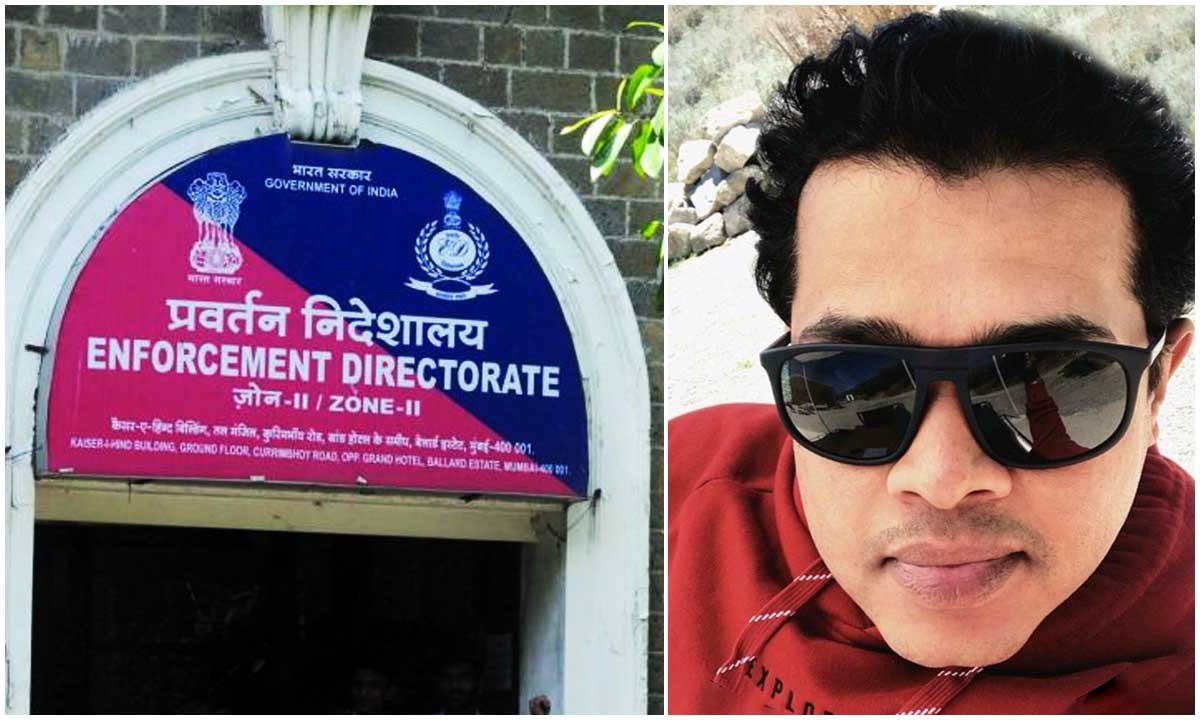
ED arrests IRS officer Sachin Sawant in alleged disproportionate assets case

irs officer, ed, enforcement directorate, sachin sawant, ed arrest
ED arrests IRS officer Sachin Sawant in alleged disproportionate assets case 6

An IRS officer Sachin Sawant who served as an Additional Commissioner of Customs and GST was arrested by the Enforcement Directorate (ED) on Wednesday in connection with a money laundering probe, according to official sources. According to information obtained, ED sleuths conducted searches at Sawant’s Mumbai residence.

The raid was conducted on the basis of a disproportionate assets case registered against the officer by the CBI, sources said. The sources said that the ED also raided and searched the houses of Sawant’s relatives on the same day. Sources said that the accused officer Sachin Sawant, who earlier worked as deputy director in ED Mumbai Zone 2 is accused for acquiring disproportionate assets.

It can be recalled that the accused officer had investigated the case of illegal diversion and remittance of over Rs 500 crore by some diamond companies. It is learnt that an accused who was arrested in the case had filed a complaint against Sachin Sawant accusing of amassing disproportionate assets. The complaint by the accused in the case prompted the Central Bureau of Investigation (CBI) to register a case against Sawant, sources said.

On Tuesday, the ED conducted raids at various locations in Mumbai, including Sachin Sawant’s residence. The search operation by the ED sleuths continued till midnight. It was not immediately known whether the ED seized any incriminating documents or any other material from Sawant’s residence during the raids.

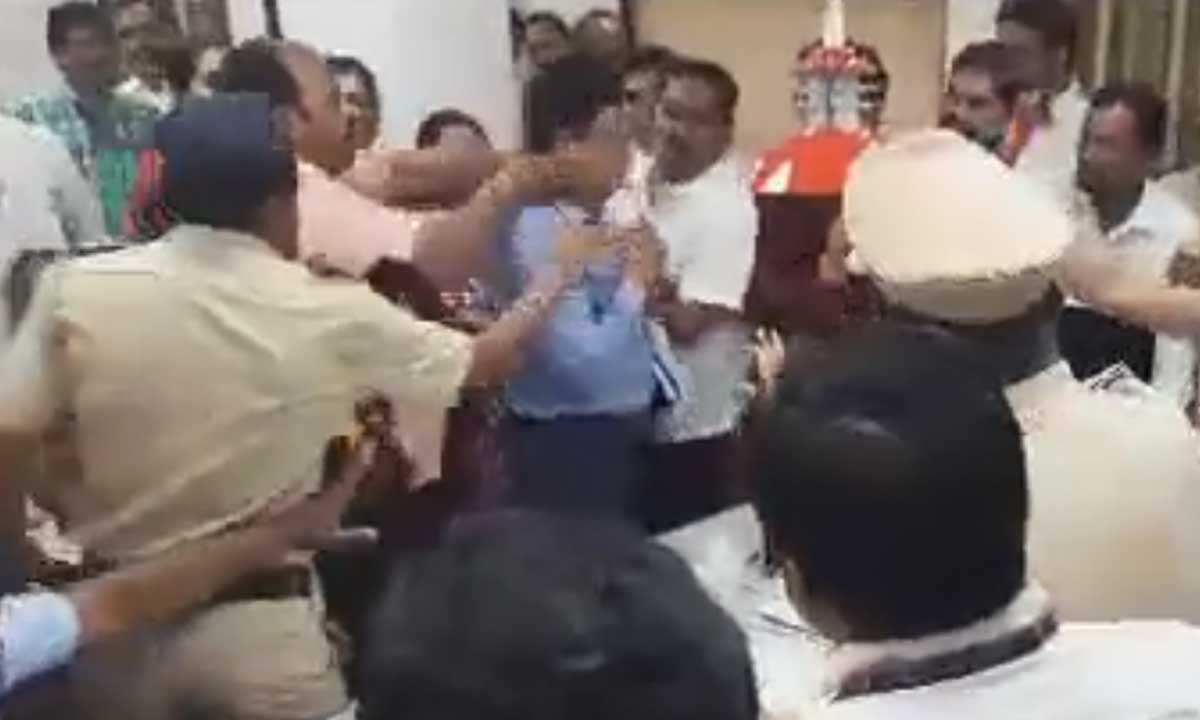
Shiv Sena workers held for assaulting Mumbai civic official remanded to 14-day judicial custody

bmc, shiv sena, shiv sena ubt, bmc workers, brihanmumbai municipal corporation, anil parab, shiv sena (ubt)
Shiv Sena workers held for assaulting Mumbai civic official remanded to 14-day judicial custody 8

The four arrested in the BMC official assault case were remanded to 14 days of judicial custody till July 11 on Tuesday. They were produced before the Bandra Court on Tuesday.

In addition to that, Shiv Sena (UBT) leader and former Maharashtra transport minister Anil Parab, who was also arrested along with four party members is likely to approach the Sessions Court in Mumbai to apply for Anticipatory Bail.

The case relates to the Shiv Sena workers allegedly assaulting a Brihanmumbai Municipal Corporation (BMC) official ‘who led’ a Shiv Sena shakha (branch office) demolition. Earlier on Tuesday, an official of Mumbai’s Vakola police station said they have registered a case against more than 15 people, as per the police. The accused have been identified as Sada Parab, Haji Alim, Uday Dalvi, and Santosh Kadam, all Uddhav faction leaders, according to the police. The structure was demolished on Thursday, June 22.

In a video which surfaced online, the BMC official who purportedly led the demolition was seen getting slapped on both cheeks, kicked, and shoved. The video also shows BMC security guards attempting to intervene to rescue the official. The alleged video of the assault was confirmed by the Mumbai police.

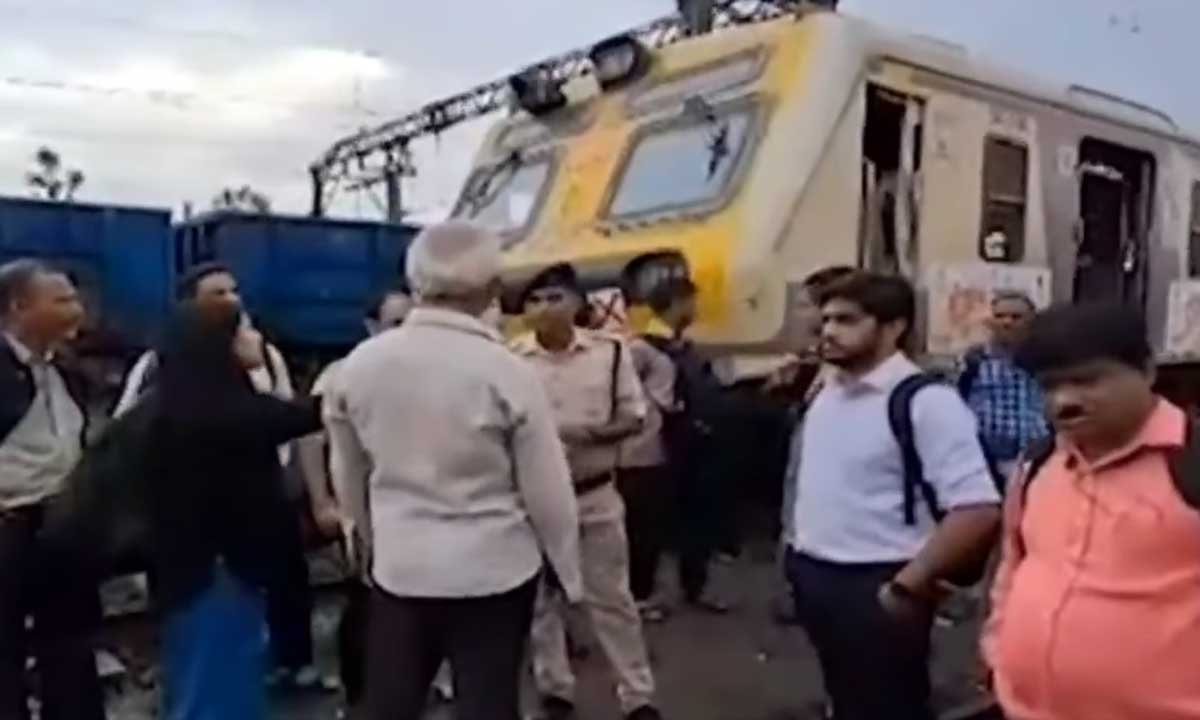
15 commuters detained for trying to board local train parked at rail yard in Thane

ambernath, ambernath yard, local, thane, local train
15 commuters detained for trying to board local train parked at rail yard in Thane 10

The railway police on Wednesday detained nearly 15 passengers when they tried to enter a local train parked at a rail yard in Maharashtra’s Thane district, instead of boarding the train at the station, an official said.

Commuters were complaining since the last couple of days that some passengers boarded local trains at a yard near Ambernath railway station in Thane, leaving no room for others to get in when the train arrived at the station platform.

On Tuesday, some angry commuters also stopped a local train for sometime as a mark of protest, following which the railway police intervened and later allowed the train to move, a Government Railway Police (GRP) official said.

The railway police also registered offences against those who had stopped the train, he said. On Wednesday morning, when some commuters again tried to board a train at the yard, personnel of the Railway Protection Force (RPF) prevented them from doing so, leading to an argument.

Nearly 15 commuters were then detained, an RPF official from Badlapur said. A video of the ruckus in the yard went viral on social media platforms. An official at Ambernath railway station said action was taken against the commuters as train boarding was not permitted at the yard.

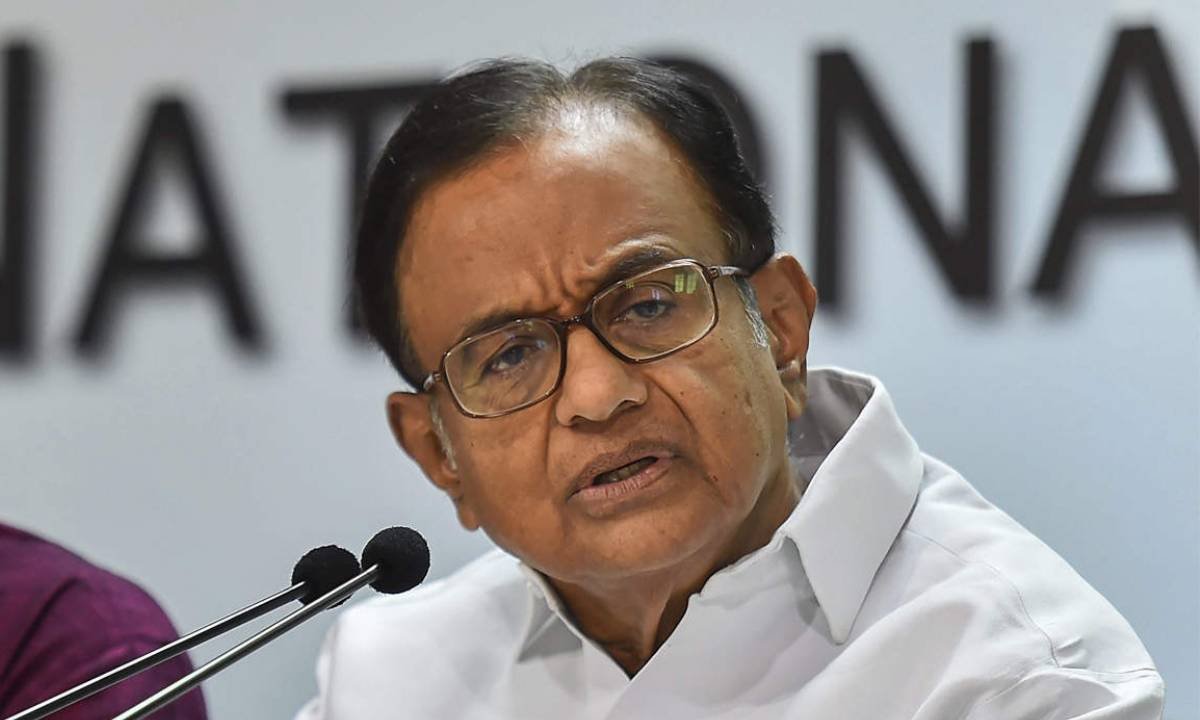
Uniform Civil Code can’t be forced on people by agenda-driven majoritarian govt: Chidambaram

chidambaram, p chidambaram, narendra modi, congress
Uniform Civil Code can't be forced on people by agenda-driven majoritarian govt: Chidambaram 12

A day after Prime Minister Narendra Modi made a strong pitch for a Uniform Civil Code (UCC), Congress leader P Chidambaram said it cannot be forced on people by an ”agenda-driven majoritarian government” as it will ”widen divisions” among people.

The former Union minister claimed the prime minister was batting for UCC to divert people’s attention from issues of unemployment, price rise and hate crimes. He also alleged the BJP was using UCC to polarise the society.

”The Hon’ble PM is making it appear that UCC is a simple exercise. He should read the report of the last Law Commission that pointed out it was not feasible at this time ”The nation is divided today owing to the words and deeds of the BJP. A UCC imposed on the people will only widen the divisions,” Chidambaram said.

Noting that a Uniform Civil Code is an aspiration, the senior Congress leader said, ”It cannot be forced on the people by an agenda-driven majoritarian government.” ”The Hon’ble PM’s strong pitch for UCC is intended to divert attention from inflation, unemployment, hate crimes, discrimination and denying states’ rights. The people must be vigilant,” he said on Twitter.

Chidambaram alleged that having failed in good governance, the BJP was deploying the UCC to polarise the electorate and attempt to win the next elections.

”The PM has equated a nation to a family while pitching for UCC. While in an abstract sense his comparison may appear true, the reality is very different. A family is knit together by blood relationships. A nation is brought together by a Constitution which is a political-legal document. ”Even in a family there is diversity. The Constitution of India recognised diversity and plurality among the people of India,” he said in the tweet.

Prime Minister Narendra Modi on Tuesday made a strong push for a Uniform Civil Code(UCC), asking how can the country function with dual laws that govern personal matters, and accused the Opposition of using the UCC issue to ”mislead and provoke” the Muslim community.

The UCC has been one of the three key poll planks of the BJP for a long time with the other being the abrogation of Article 370 which had given special status to Jammu and Kashmir and the construction of the Ram Mandir in Ayodhya.

UCC refers to a common set of laws that are applicable to all the citizens of India that is not based on religion and dealing with marriage, divorce, inheritance and adoption among other personal matters.

The Law Commission had on June 14 initiated a fresh consultation process on UCC by seeking views from stakeholders, including public and recognised religious organisations, on the politically sensitive issue.

Is BJP’s election campaign incomplete without minorities?

narendra modi, modi, minorities, bjp, bharatiya janata party, muslims, christians
Is BJP's election campaign incomplete without minorities? 14

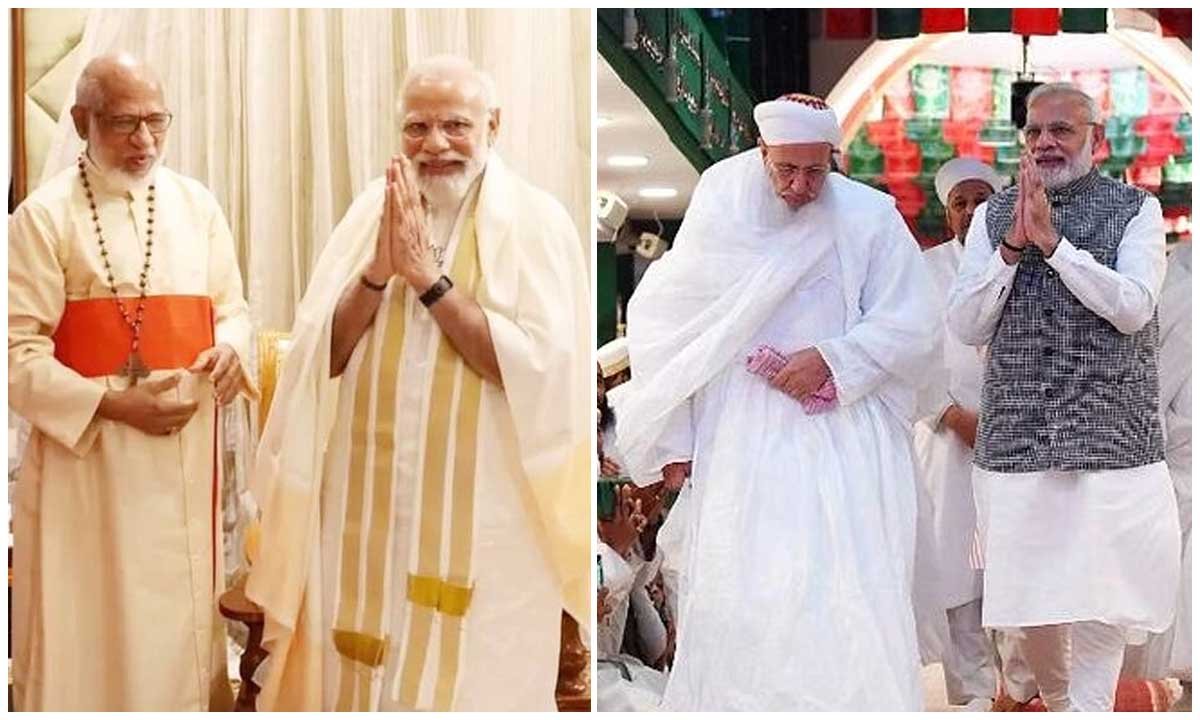
The BJP and right wing politics is always against the minorities in India. Some counterparts silently brutalize Muslims on the other hand staunch right wing news channels continuously create unrest and hate against them. Current scenario is that India is anti-minorities. The May 2014 Lok Sabha elections marked a major turning point in post 1947 in Indian politics. Modi was brand and IT cell was all here to influence people, in result Bharatiya Janata Party secured 282 of the 336 seats. With 31 percent share of the absolute vote, the BJP became the first party with an outright majority since 1984. This election has another message to give, 31percent absolute votes of Hindu is more than enough to rule India and the party needs no support or vote from minorities. It was a straight fight of ideologies too.

No doubt, Modi’s charismatic leadership and personality did all the magic for the BJP, and the popularity of his agenda for development played a major role. People are fans of Modi but not BJP, no BJP leader could ever reach that level of crowd pulling capacity. The crucial issues like building Ram temple in Ayodhya, abolition of article 370 of the constitution, which gives special status to Jammu and Kashmir, the demand for a Uniform Civil Code − that repealed Muslim personal law. In short, BJP successfully won the hearts of staunch Hindu and made them believe that the Hindu Rashtra can be a possible dream if Modi and BJP rule the nation.

In poll-bound Madhya Pradesh Prime Minister Narendra Modi, announced a campaign called “Mera Booth Sabse Majboot” while speaking to BJP leaders he questioned if ‘triple talaq’ was inalienable from Islam, why it isn’t practiced in Muslim-majority countries like Egypt, Indonesia, Qatar, Jordan, Syria, Bangladesh, and Pakistan. Batting for the Uniform Civil Code, he said it doesn’t work to have “different set of rules for different members of a family” and a country can’t run on two laws. Egypt, whose 90 per cent population is Sunni Muslims, abolished triple talaq 80 to 90 years ago. He said triple talaq is grave injustice to Muslim daughters because it doesn’t just concern women, but destroys entire families too. When a woman, who the family marries off to someone with a lot of hope, is sent back after triple talaq, the parents and brothers are pained with concern about the woman. He made his point to the Muslim woman that if he wins he can abolish this stringent law. This is the reason why Muslim women silently vote for BJP. The PM took a swipe at those who oppose the Uniform Civil Code (UCC), saying they are inciting some people for their own interests.

The Muslim Women (Protection of Rights on Marriage) Act bans the practice of instant ‘triple talaq’ and entails imprisonment up to three years. The Supreme Court has said there is no bar on granting anticipatory bail in such cases, provided the court hears the complainant woman before granting pre-arrest bail. BJP or Right wing ideology might be against Minorities especially Muslims because they want Muslims to be “Indian” first. The Congress always appeals to vote banks, be it Muslims, or Dalits, or whatever. The Muslim community has been the most deceived so far, and the BJP doesn’t really play the ‘minority’ card much, because being smart, they try to get the majority solidly with them, as that is the simple way to win in a democracy.

BJP has its ministers who spew venom in regular intervals but the fact is that, the other sides of the flag bearers also do the same to RSS and BJP. They demean them in all possible ways, in spite of knowing that they have no other option than living with BJP rule and leadership. While other parties emphasize that the Hindus should be remorseful and secular, the BJP thinks Hindus should be proud and open. There are many views of the world that are diametrically opposite between Hindus and Muslims. None of this is any secret, and none of this has stopped India from being a multicultural, tolerant nation. As for judging the BJP, if you reserve the right to judge the party by its lowest behavior, how can you blame them for judging others by their lowest behavior?

White House condemns ‘harassment’ of journo Sabrina Siddiqui who questioned PM Modi

sabrina siddiqui, us journo, united states, journalist, wall street journal, pm modi, modi, white house, narendra modi
White House condemns 'harassment' of journo Sabrina Siddiqui who questioned PM Modi 16

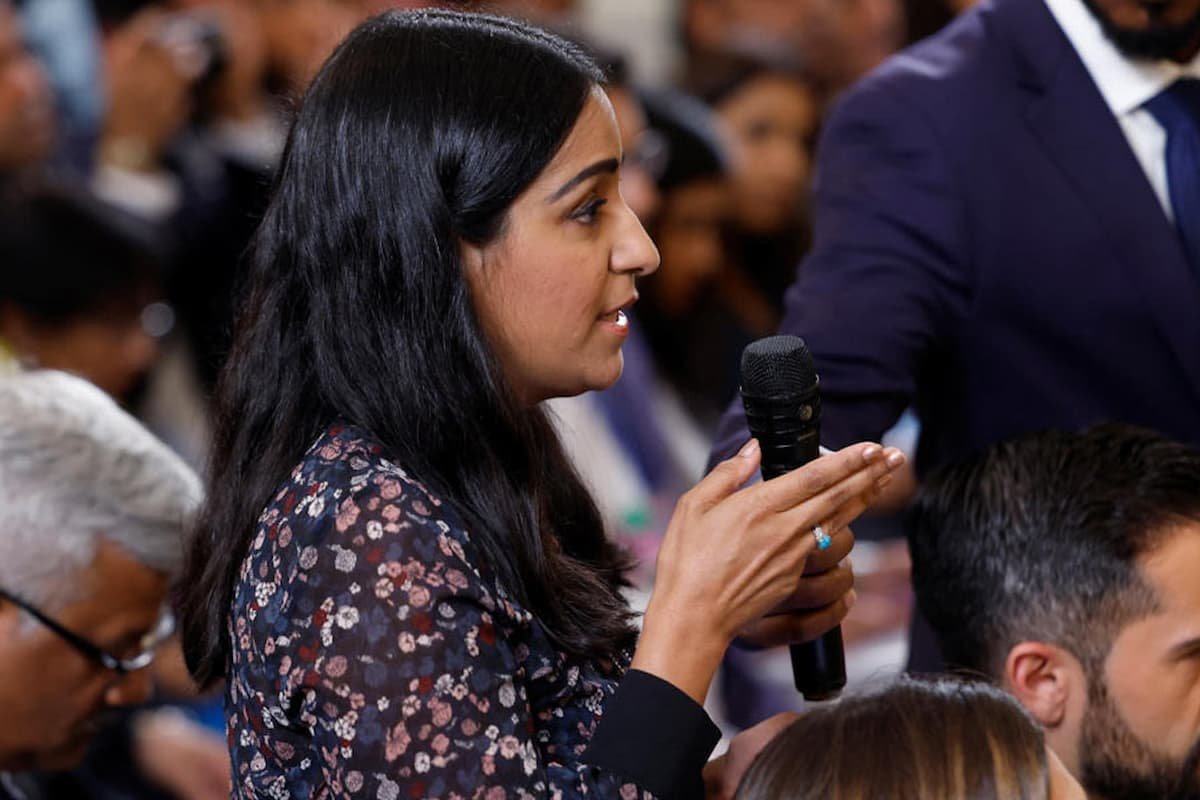
The White House has strongly denounced the “intense online harassment” directed at Wall Street Journal reporter Sabrina Siddiqui, who posed a question about democracy in India to Prime Minister Narendra Modi during his joint press conference with President Joe Biden in the United States last week.

John Kirby, a top official, responded to the Wall Street Journal’s inquiry regarding their reporter and stated that the White House was aware of the reports concerning the harassment. According to the Wall Street Journal, since Siddiqui asked her question, she has been subjected to “intense online harassment from people inside India.” The newspaper further noted that she has also faced targeting due to her Muslim faith.

“It’s unacceptable. And we absolutely condemn any harassment of journalists anywhere under any circumstances. That’s just – that’s completely unacceptable. And it’s antithetical to the very principles of democracy that – you’re right – were on display last week during the state visit,” stated John Kirby, who serves as the White House National Security Council Coordinator for Strategic Communications.

Following Kirby’s statement, White House Press Secretary Karine Jean-Pierre approached the podium and reiterated the administration’s commitment to press freedom. She emphasized that the press conference was held to uphold the principles of freedom of the press. Jean-Pierre also condemned any attempts to intimidate or harass journalists who are simply doing their job.


Also read: Online attacks on Sabrina Siddiqui expose PM Modi’s democracy claims?


During the press conference, Siddiqui posed a question to Prime Minister Modi after his bilateral talks with President Biden on Thursday. She referred to concerns raised by human rights groups regarding discrimination and the silencing of critics in India. Siddiqui asked what steps the Prime Minister and his government were willing to take to improve the rights of Muslims and other minorities in the country and uphold free speech.

In response, PM Modi expressed surprise at Siddiqui’s question and asserted that there was “no question of discrimination” in India as his government adhered to the principles outlined in the Constitution. He emphasized that democracy was deeply ingrained in India and played a vital role in the nation’s spirit and identity.

The Q&A session sparked strong reactions in India. Amit Malviya, the head of the BJP’s IT cell, tweeted in support of PM Modi, stating that he had effectively dismissed the question, referring to it as “motivated.” Malviya highlighted that the Prime Minister’s response focused on the Constitution, equal access to government resources based on eligibility, and the absence of discrimination based on religion, caste, creed, or geography.

In response to online criticism directed at her, Siddiqui shared photos on social media of herself wearing an Indian cricket team t-shirt and cheering for the team alongside her father, who was born in India. She emphasized that her personal background was more complex than it appeared and aimed to provide a fuller picture in light of the attention it had received.

The White House’s condemnation of the harassment faced by Sabrina Siddiqui reflects their commitment to press freedom and their stance against any form of intimidation or harassment targeting journalists. The incident highlights the importance of protecting journalists’ ability to ask tough questions and hold leaders accountable, as well as the challenges faced by reporters covering sensitive topics in various parts of the world.

Will probe all scams, irregularities during previous BJP regime, says Karnataka CM

congress, siddaramaia, karanataka, bjp, karnataka cm
Will probe all scams, irregularities during previous BJP regime, says Karnataka CM 18

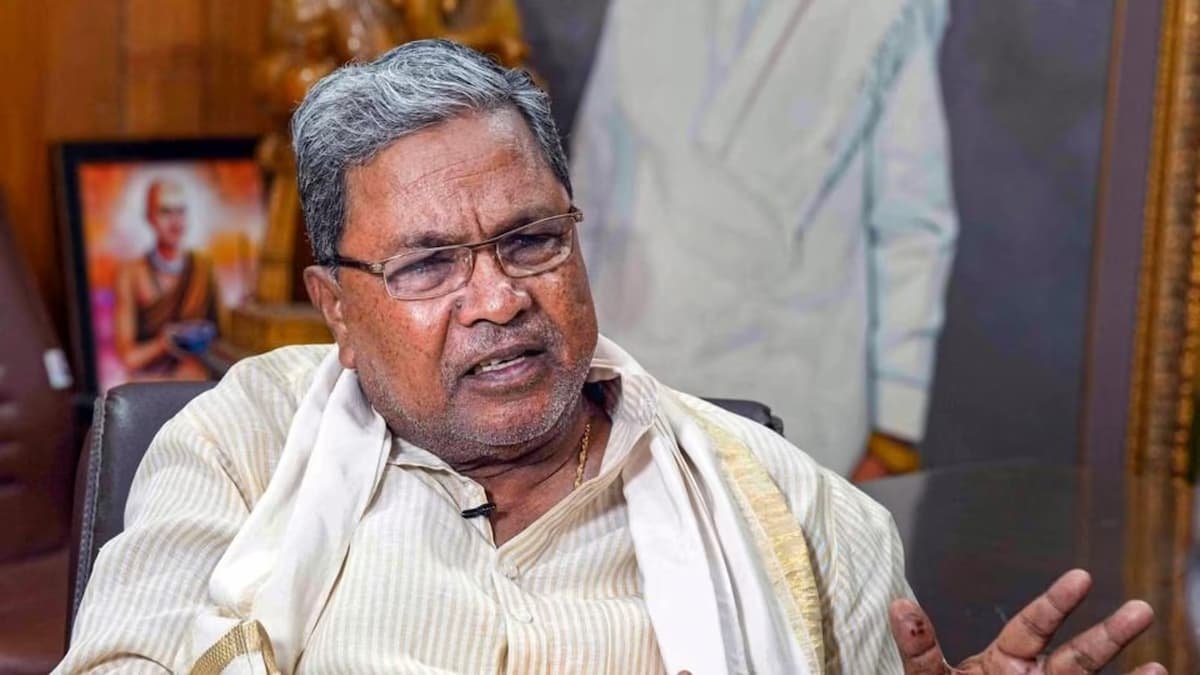
Karnataka Chief Minister Siddaramaiah on Tuesday said his government will get all the alleged scams and irregularities that have taken place during the previous BJP regime probed and punish the guilty.

Noting that the government will fulfill all the poll promises, he said, implementation of Congress’ five guarantees will cost Rs 59,000 crore a year to the exchequer, and there is a slightly higher burden on the administration this year.

”We will get scams inquired into. Four medical colleges were constructed and there are allegations about irregularities in it, we will get it investigated. Also, we will get allegations of 40 per cent commission probed. There were irregularities in health-related procurements during COVID-19 period, irrigation projects related irregularities and Bitcoin scam, all of them will be probed,” Siddaramaiah said.

Speaking to reporters here, he said investigation is on into the Police Sub Inspector (PSI) recruitment scam by the CID; it will be further intensified, and those guilty will be punished.

Deaths caused in Chamarajanagara hospital, allegedly due to shortage of oxygen supply, during COVID, will also be probed, he said, adding that, ”the then Health Minister K Sudhakar had said only two had died, but the casualties were more, due to shortage of oxygen supply. He had lied. We will get it inquired.” Hitting out at opposition parties for criticising the government regarding the implementation of poll guarantees, the Chief Minister said, already one guarantee has been implemented providing free ride for women in public transport buses; from July 1 up to 200 units of free electricity will be provided to households under ‘Gruha Jyothi’ scheme, also ‘Gruha Lakshmi’ scheme providing Rs 2,000 to women head of the family will be rolled out after August 15 — applications have been invited for it.

Regarding ‘Anna Bhagya’ scheme to provide additional 5 kgs of rice to every member of a BPL household, he said, for this we need 2,29,000 metric tonnes of rice every month, which is not available anywhere, and the central government has ”conspired” to ensure that the state government does not get the required quantity of rice from Food Corporation of India (FCI), which had initially agreed to supply, as they have stocks.

”The BJP government at the Centre by ensuring that FCI doesn’t supply rice to the state has made an attack on the state’s poor, BJP means anti-poor. We are making efforts to source rice through other agencies like NCCF, NAFED and Kendriya Bhandar; we have called quotations and talks are on. We will discuss in the Cabinet and decide tomorrow on the next move, as we are not getting required rice from producing states,” he said. As soon as rice is available the scheme will be rolled out.

On the ‘YuvaNidhi’ scheme to provide Rs 3,000 every month for unemployed graduates and Rs 1,500 for unemployed diploma holders, who graduated in 2022-23, on not getting jobs within six months, the CM said, it will be given for 24 months, within which the unemployed will have to find jobs; on getting jobs it will be stopped.

He also said about 2.5 lakh vacancies in government departments will be filled up in stages. ”It cannot be done at once, also implementation of five poll guarantees will cost Rs 59,000 crore a year to the government. So, this year there is a slightly higher burden on the government, but it is certain that the guarantees will be implemented.”

Questioning the moral right of the BJP, which has warned of protests against the government, demanding the implementation of poll guarantees, Siddaramaiah asked: ”have they implemented the poll promises made in the manifesto, while in power?” ”Mr Yediyurappa (former CM) should come out as to how many promises were implemented, during his period and Basavaraj Bommai (former CM) period. They should not do political gimmicks, instead of protesting if they are committed for the cause of the poor, let them get rice from the Centre, which is doing hate politics,” he said.