Kejriwal meets Uddhav to seek support for fight against Centre's ordinance on control of services in Delhi 2
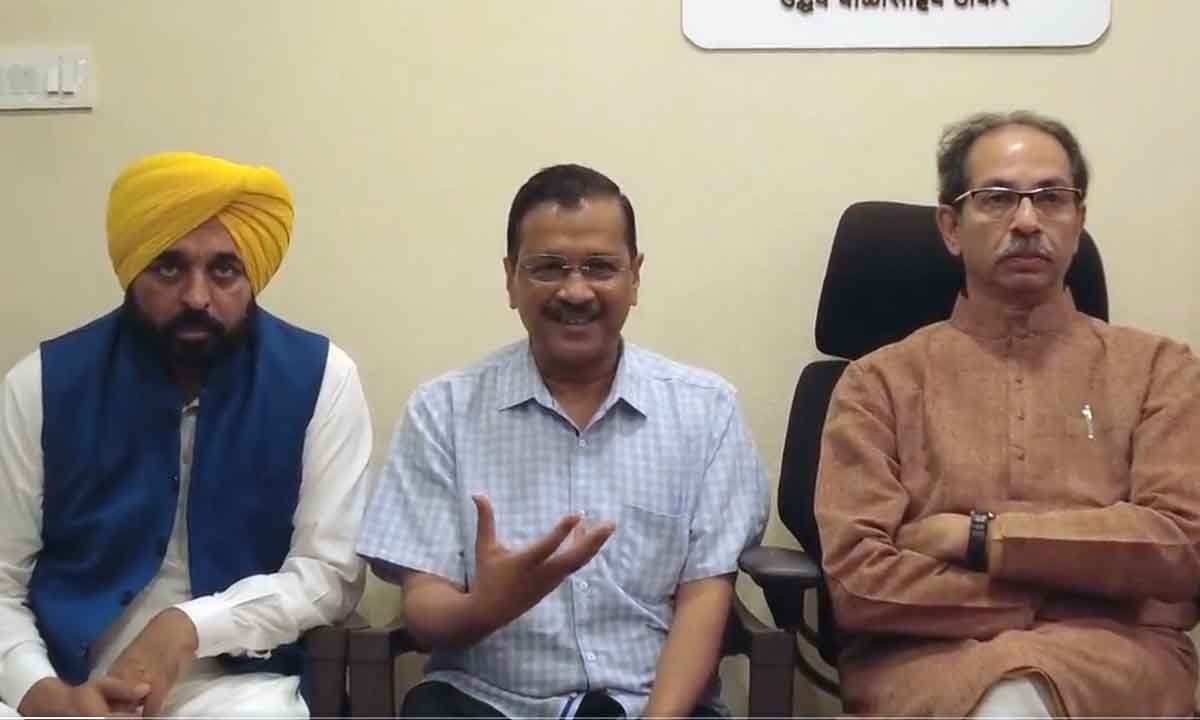
Delhi Chief Minister Arvind Kejriwal met Shiv Sena (UBT) head Uddhav Thackeray at the latter’s residence in Mumbai on Wednesday to seek support for the AAP’s fight against the Centre’s ordinance on control of services in Delhi.
He was accompanied by Punjab Chief Minister Bhagwant Mann, Aam Aadmi Party (AAP) Rajya Sabha members Sanjay Singh and Raghav Chadha, as well as Delhi minister Atishi.
Kejriwal, the AAP’s national convener, will also meet Nationalist Congress Party president Sharad Pawar to seek his support against the Centre’s ordinance.
On Tuesday, Kejriwal and Punjab Chief Minister Bhagwant Mann met West Bengal CM Mamata Banerjee in Kolkata as part of their nationwide tour to garner support for the AAP’s fight against the Centre’s ordinance. The Centre on Friday promulgated an ordinance to create an authority for transfer and posting of Group-A officers in Delhi, with the AAP government calling the move a deception with the Supreme Court verdict on control of services.
The ordinance, which comes a week after the Supreme Court handed over the control of services in Delhi excluding police, public order and land to the elected government, seeks to set up a National Capital Civil Service Authority for transfer of and disciplinary proceedings against Group-A officers from the DANICS cadre.
Transfer and postings of all officers of the Delhi government were under the executive control of the lieutenant governor before the May 11 verdict of the apex court.
Starting from year one, the first problems we faced were finances. The lack of finances meant that one lady had to toss the gambling coin in the air with the possibility of either getting it or losing it all, and guess what? We had the head, and the tail soon followed. It was totally a game of guts that we played. So far, the media has always been owned by the ‘rich’ or ‘capitalists,” who have their own backing and rely on them.
Thus, the basic idea of parallel media died, and pseudo journalism flourished right from the start. It was surely difficult for all of us to survive in the market. Soon, our journey continued, and year after year, we finally completed fifteen years this year. The honor of having a television media was about to succeed, but, unfortunately, we again met the wrong people at the wrong place.
Though there was a slight setback, that was not enough to stop us. We have promised to go ahead and reach out to keep extending our own records, year after year. Last year we came up with ‘The Democracy,” the digital video news portal. Bhagat Singh Koshyari, the former honorable governor of Maharashtra, inaugurated it. There are people who have taken power away from the people, but we believe in giving power back to the people. My motive this time was to bring back journalism where it belongs: for and by the people. Thus, we even came up with the idea of letting the common man, or the citizens of India, speak up and give out news about anything and everything that they feel is happening with factual evidence; thus, citizen journalism flourished.
With power returned to the people, it feels like we have accomplished a revolution. The event of coming out clean from various challenges itself was proof that we no longer needed to show more proof of our honesty and commitment. Honesty comes with a huge price, and we are constantly investing in it without hesitation. Wise once said that if you speak a lie, you need to remember and be smarter, but if you speak the truth, you just have to remember the event and rest in the knowledge that God stands right next to you. With high regards to my readers who have kept us strong and high respect to people who have taken the time out and contributed to our journey, thanks is a small word for them. We stand up with the pride of being what we are today and will continue carrying on with it. The journey was difficult, but difficulties are the only thing that is guaranteed in life, isn’t it? We have embraced the challenge of running the show, and we have proved once and for all that running a media house is not a game for industrialists only.
Money is the most important factor in running anything in this world; even your car needs cash to sustain itself. We are not even playing puppets with anyone; how do we ensure money?
The struggle story is always aspiring and very inspiring towards growth, but no one understands where it pinches in the shoe except the one who is actually wearing it. If your heart is true to what you wish to do, everything is possible.
The voice of the people has taken a toll over the past few years, and over the repeated incidents, people have become more and more intellectual, politically sound, and optimistic about the opportunities.
The growth of the country and the decline of the economy are all tied together. The last year in which we spent seems like a story summed up over a night full of caffeine running across the membranes and still pushing our adrenaline rush into the veins as we typed the stories for you, the readers!
There are many media veterans and individual entities that have made efforts to sustain authentic reporting and broadcasting. I’d like to mention a few names here, such as News Laundry, an independent news media company supported by readers. They recognized the importance of an independent news model and a free and accountable press in an industry dominated by corporate and government interests. But if you look at their viewership ratio, it is one to thousands as compared to mainstream media.
Their viewers are also their types, some neutral but most of them against the Modi government. I personally watch them for the reason they hoot these rabble rouser anchors. Trust me, these days, prime-time debates have become a sort of physical and verbal wrestling match. All chicken-headed newsreaders with one set agenda and the typical list of panelists, everything staged. Their only job is to keep people high on Modi, Hindutva, and temples, and the strongest dopamine is Hindu-Muslim.
We really need someone to tell the people that this is not for their good. The entire team at News Laundry is doing a marvelous job with a series of satires supported by exclusive research work.
Through media critique, reportage, podcasts, documentaries, comics, and animation, they bring you the latest in current affairs in innovative and engaging formats. But again, because they survive on people’s funds, they grow beyond their limit. Again, even if they manage to grow, a few lakhs of subscribers are not enough to compete with channels with hundreds of crores of viewers. The influence of television is greater, and audiences are conditioned by it. where all these indubitable commentators and YouTubers have limited scope.
Remember, our country has a larger population living in rural areas, and they have nothing to do with all these broadcasts; the urban population that subscribes to them are educated people who are already of similar opinion; perhaps this is the reason these people hardly play any role in influencing the mandate during elections.
Right-wing IT cells have successfully tagged them as anti-Modi and leftists; that is another reason those who are flowing in the wind of Hindu Rashtra are not keen on taking them seriously. An average citizen is not even aware that there is something called News Laundry or Dhruv Rathee’s show. Abrar Bhat, Ram Dutt Tripathi, Navin Kumar, Abu Aimal Azad, Mohammed Akram Ali, and Kunal Majumdar are a few examples of independent and neutral voices, but the collective viewership of all these people against the viewership of Sushant Sinha of The Times now is less than 50 percent. Sushant Sinha, Amish Devgan, Navika Kumar, and Arnab Goswami are the big sharks here.
Their influence on viewers is greater than that of these parallel media broadcasts. Ravish Kumar had a huge following and viewership in primetime, and he is doing equally well on YouTube. He is known as the “common man’s journalist. In mainstream media, Arnab Goswami has his typical dominance, and his viewers vouch for him.
The mainstream media are the actual players. They condition people’s minds; they create perceptions; they change narratives; and they successfully do business. They are the actual powerhouse in the hands of powerful people. No matter how hard the neutral or honest media houses make efforts, they will remain limited in their reach. There are obnoxious voices against the ruling government and its leaders, and these broadcasters go to all low levels of demonstrations; thankfully, they have only their kind of viewers.
Prime Minister Benjamin Netanyahu’s government on Wednesday passed a new two-year budget, a step that could bring some stability to his coalition and clear the way for it to press ahead with its religious, pro-settlement agenda.
While the budget could buy Netanyahu some quiet inside his coalition of ultra-Orthodox and ultranationalist parties, Israel’s most hard-line ever, it also was expected to deepen the divisions in Israel. Critics have accused Netanyahu of increasing spending on his ultra-Orthodox allies for religious programs that have little benefit for the economy and broader society.
The vote dragged on overnight, with the budgets for 2023 and 2024 finally passing with a 64-56 vote in parliament after daybreak. It followed weeks of tense negotiations between Netanyahu and the parties in his coalition. “We have received the tools, we’re rolling up our sleeves and going to work,” Finance Minister Bezalel Smotrich said after the vote.” The new budget has been criticized for allocating nearly $4 billion in discretionary funds, much of it for ultra-Orthodox and pro-settler parties.
That will include increases in controversial stipends for ultra-Orthodox men to study full time in religious seminaries instead of working or serving in the military, which is compulsory for most secular males.
It also includes more money for ultra-Orthodox schools, which are widely criticized for not teaching students skills like math and English needed in the modern workplace.
The funds also include tens of millions of dollars for hard-line pro-settler parties to promote pet projects through the ministries they control.
Finance Minister Bezalel Smotrich, a settler leader, has said he hopes to double the population of West Bank settlers in the coming years.
The government’s composition and agenda have deeply divided the country. On Tuesday, several thousand flag-waving Israelis protested outside the parliament building against the budget.
That smaller demonstration over the budget followed months of sustained mass protest against a series of proposals by Netanyahu’s government to overhaul the country’s judicial system while he is on trial for corruption.
Proponents say the measures are needed to rein in an overzealous Supreme Court, but critics say the plan would destroy the country’s system of checks and balances and compromise Israeli democracy.
That plan has raised concerns overseas but is now on hold. Now that the budget has passed, however, Netanyahu may face renewed pressure from his allies to revive it.
For some people, going for a run can trigger what’s known as a “runner’s high”, a short-lasting feeling of euphoria or relaxation. But for others, running can trigger something far less pleasant: a headache.
Exercise or exertion headaches were first described by researchers in 1968. They occur during or after a period of intense, strenuous physical activity – such as running, sneezing, heavy lifting or sex.
While symptoms vary from person to person, exertion headaches typically involve a pulsating feeling on both sides of the head, which some describe as similar to a migraine. They can last anywhere from a few minutes to a couple of days. Some people may also experience multiple headache episodes.
But despite affecting an anywhere between 1% and 26% of adults (and up to 30% of adolescents), there’s still limited scientific data on exertion headaches. This may be because they aren’t significantly painful enough to stop people exercising, they cease when people stop exercising or because the symptoms overlap with those of other headaches (such as migraine), meaning people are treated for those instead. So, in all likelihood, they could be more common than we think.
But where studies with small numbers of people have been done, such headaches appear to be most common in people aged 22 to 40, though they most often begin before the age of 30.
Men in these studies were also more likely to suffer them, accounting for around 80% of the small number of sufferers taking part. More research will be needed to establish more clearly whether men are more likely to have them and, if so, why.
Why they happen When we exercise, blood flow to the brain increases in order to ensure it has enough oxygen to keep our body moving. But this also means there’s an increase in the amount of CO₂ and heat our brains need to get rid of. To cope with this, our blood vessels expand and this stretching can cause pain.
Since everyone has different anatomy and physiology, for some people the additional demands that exercise places on their circulatory system may be enough to trigger a headache. But for others, certain conditions may cause exertion headaches.
Exercising in hot weather is one example. The brain naturally runs at a hotter temperature than the rest of the body, and it cannot dissipate heat through the skin by sweating. The only way it can get rid of heat is by widening the blood vessels to increase blood flow to through the brain, helping to take away some of the heat.
Since hot and humid weather already increase the brain’s temperature, adding exercise into the mix only makes it hotter, leading to an even greater swelling of our blood vessels to cope. This may explain why some people only get the characteristic pulsating headache when they exercise on a hot day. Training at altitude also increases the likelihood of exertion headaches. This is due to the reduced oxygen-carrying capacity of the blood at altitude. This means more blood has to go to the brain to supply all the oxygen it needs, causing swelling and triggering pain.
People with a personal or family history of migraine of migraine may also be more likely to get exertion headaches. This is probably because the same changes that bring on migraines – such as changes in blood vessel size – are also involved in exertion headaches.
How to prevent them Exertion headaches will resolve shortly after stopping exercise. This will usually be within an hour or two, once your heart rate has decreased and there’s less demand for oxygen from the brain.
But if your headache is also linked to dehydration, it will probably take a bit longer to resolve until you’ve replenished your fluid levels. This typically takes about three hours.
If symptoms do persist or your headache is particularly painful, over-the-counter pain medications – such as paracetamol or ibuprofen – may help. But if exertion headaches are a common experience to you, you might want to speak to your doctor about trying certain prescription drugs which may reduce symptoms and, in some cases, decrease chances of these headaches from happening.
There are also things you can do to prevent exertion headaches from happening the first place.
It’s thought that doing strenuous exercise after a long period of inactivity might cause exertion headaches, as your cardiovascular system is not fit enough to cope with the demands.
That’s why it’s good to ease back into exercise gradually if you haven’t exercised for a while. It’s also good to warm up gradually each time you exercise to help your circulatory system cope with changes in blood pressure and flow.
Staying hydrated is also important. This ensures the brain’s blood vessels can function properly. Adequate rest will also ensure the brain works at its best and help you feel less sensitive to pain.
Although exertion headaches are annoying, they shouldn’t prevent you from exercising, especially in warmer weather when they can be more common. Gradual warm-ups and avoiding hot days or altitude may help lower your risk of them happening. Trying other types of exercise which do not have a sustained peak heart rate level – such as yoga or weightlifting – may be beneficial.
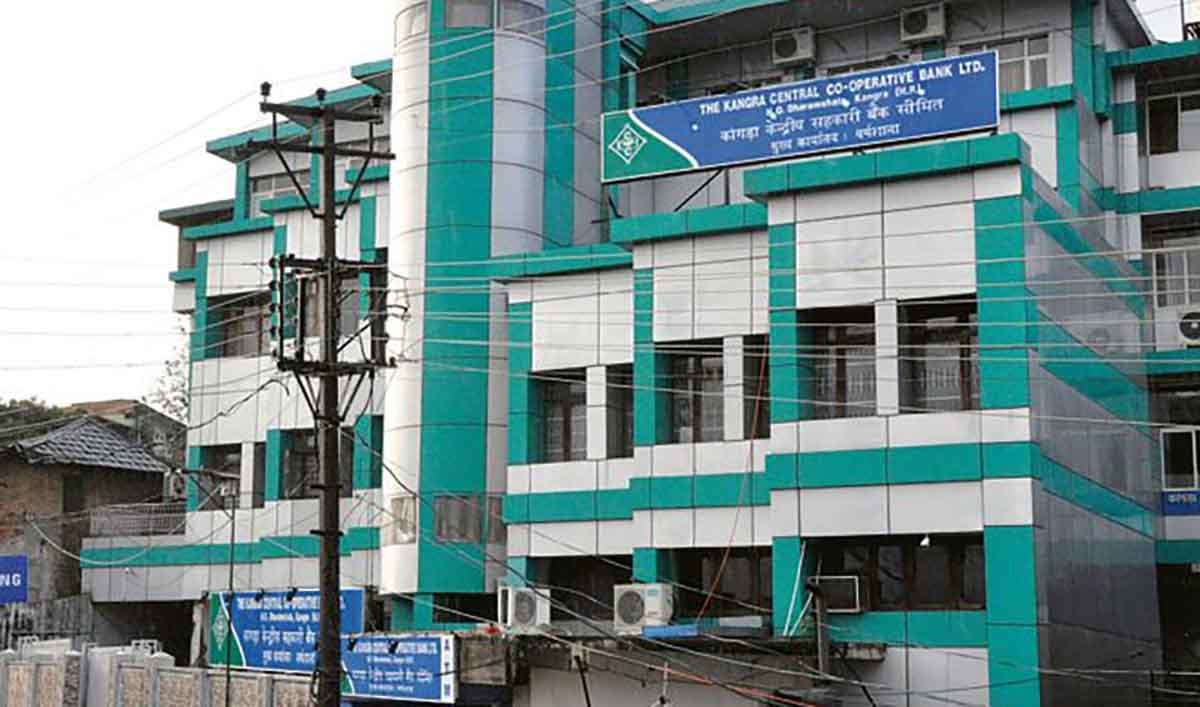
Kangra Co-operative Bank's account with RBI loses Rs 7.79 crore in cyber fraud case 8
In a stunning case, cyber fraud have allegedly siphoned off Rs 7.79 crore from the Kangra Co-operative Bank’s current account maintained by the Reserve Bank of India (RBI), according to a police complaint filed by the bank.
The fraud took place in three separate transactions on as many consecutive days, the first being on April 19, 2023.
Since the bank is financially supervised by the RBI and the current account which has been subjected to fraud is also with the regulator itself, the cyber theft has left top officials clueless. They have not been unable to ascertain the person who has withdrawn the amount through fraudulent transactions, even though Kangra Bank officials said they have been able to identify accounts in which the money has been transferred.
Sahdev Sangwan, Kangra Bank Senior Manager (IT), complained to the Delhi Police based on which an FIR was lodged in the first week of May and a probe is underway. Sangwan said in his complaint that Kangra Bank holds a current account with the RBI for banking transactions such as Real Time Gross Settlement (RTGS), National Automated Clearing House (NACH), National Electronic Fund Transfer, Check Truncated System among others for its customers.
According to the process adopted by the Kangra Bank and the RBI, the bank has issued a standing instruction to the regulator to transfer Rs 4 crore from the current account to a settlement account everyday so that it can offer RTGS and NACH transactions to its customers.
At the end of the day or the early next day, the RBI sends an email to the bank with a statement of all the transactions that take place in the settlement account for the whole day and the Kangra Bank officials tally it. The remaining amount is sent back to the current account from the settlement account. ”On April 20, 2023 when the RBI sent the statement for all the transactions done on April 19 in the settlement account, the Kangra bank officials found something unusual. They realised that over Rs 3.14 crore too few was transferred from the settlement account to current account,” a source close to the investigation of the case said.
According to the complaint, the bank officials informed all the concerned authorities but no one could figure out the reason for the mismatch of such a huge amount. To their surprise, similar thing happened over the next two days as well when the current account received over Rs 2.40 crore and over Rs 2.23 crore too few respectively from the settlement account. The cumulative suspected fraud amount over the three days totalled to about Rs 7.79 crore.
Sangwan has said in the complaint that the Kangra Bank informed concerned departments of the RBI and other authorities engaged into financial security system, and also identified accounts with other banks in which these Rs 7.79 crore has been transferred. However, the person(s) who withdrew the amount through fraudulent transactions have not been identified.
The Delhi Police suspects cyber hacking or tempering as the accused persons seem to be unknown to the bank.
Started as a small thrift/credit society in March, 1960 by a handful of friends who belonged to Kangra district of Himachal Pradesh in order to offer financial help to the people of Himachal residing in Delhi, Kangra Co-operative Bank Ltd was born in 1972 when RBI permitted it to carry on banking activities.
With 12 branches at various locations in Delhi, it is one of the largest urban co-operative banks which administratively come under the Delhi Government through the Registrar of Cooperative Societies.
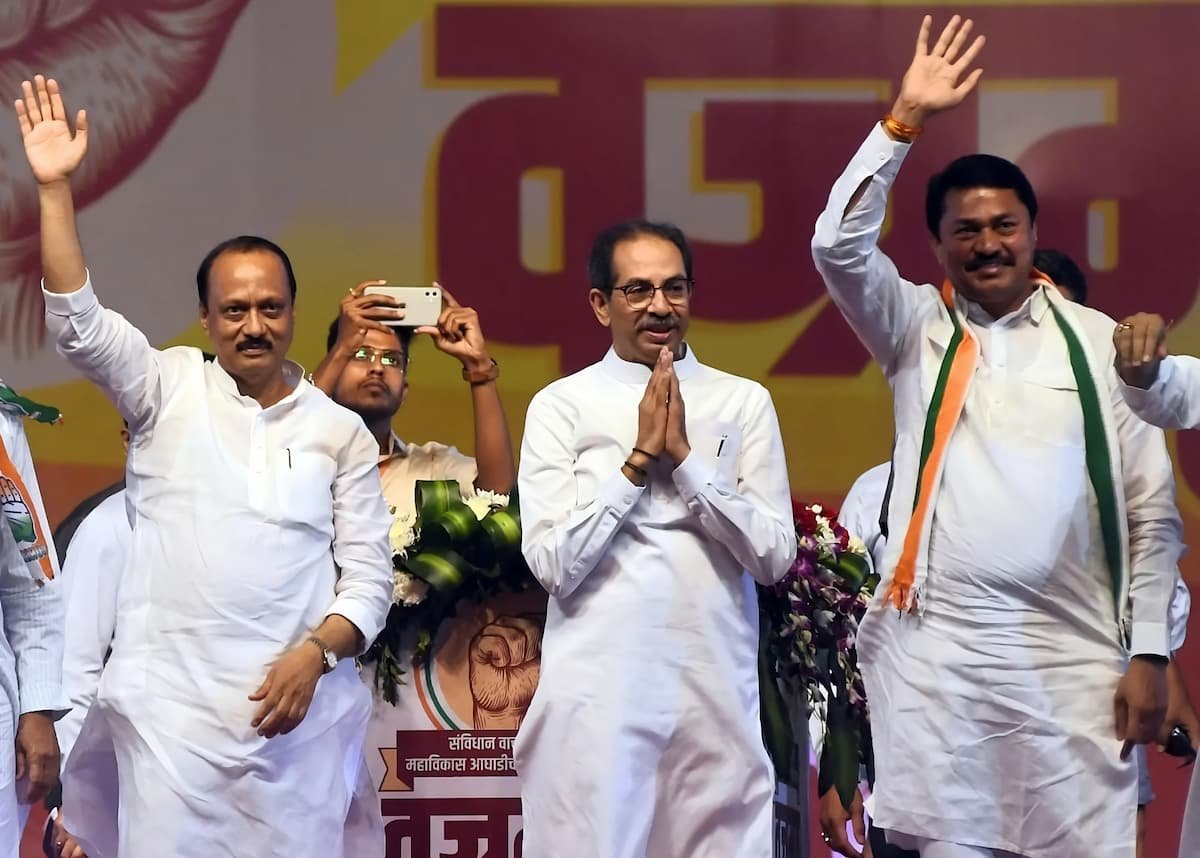
Nationalist Congress Party (NCP) chief Sharad Pawar, commenting on seat-sharing for the upcoming Lok Sabha polls, said all Maha Vikas Aghadi alliance party leaders will have a meeting together and decide about the seat sharing. “There has been no discussion on seat sharing yet.”
A meeting was held at my residence, where it was discussed that leaders from all three parties (of the MVA) would decide on it. Uddhav Thackeray, Sonia Gandhi or Congress chief Mallikarjun Kharge and I will sit together to discuss it,” said Pawar
Amid reports of disagreement in the Maha Vikas Aghadi (MVA) over the seat-sharing formula for the upcoming Lok Sabha polls, Maharashtra Congress president Nana Patole said that each party will get the seats based on its elective merit.
“Each party will undertake an exercise to analyze which seats can be contested by that respective party. There is nothing wrong with it. But ultimately, elective merit will be important, and many seats will be contested by the party,” said Patole.
Shiv Sena (UBT) MP Arvind Sawant told Afternoon Voice, “When it comes to seat sharing with MVA (Maha Vikas Aghadi), we expect the same parties to get the seats from their constituency to avoid any differences with the people, and MVA is a bunch of very mature people who will understand the situation “If any other seats are allotted, then the exchange can be done, but the party has yet to take a final call on it.”
“Every party expects their own growth in their state,” said Congress MLA Varsha Gaikwad, “and I think that the areas that are led by other parties’ leaders will be taken in confidence first, and then after checking the on-ground situation, a decision will be taken by MVA.”
“When it comes to the upcoming elections, decisions should be made in favor of the MVA,” Gaikwad further added.
“I personally believe Shiv Sena (UBT) has a stronghold in Worli and nearby areas, and I would like Shiv Sena to retain these seats in the upcoming polls,” Shiv Sena (UBT) MLC Sunil Shinde said, “but the final call rests with our senior leaders.”
“Some political leaders believe that all parties are equal and that after every possible debate, they should reach a single consensus,” NCP spokesperson Clyde Crasto said.
Crasto further said, “The aim of calling opposition leaders together is to bring down the ruling government for the betterment of the people.”
“Through MVA, senior leaders will take the decision,” said Congress leader Hussain Dalwai, “but it is also important to know that Congress is a national party, so it should get more seats, and Congress will win approximately more than 40 seats.”
Patole’s statement comes against the backdrop of a recent exchange of words between the three parties of the MVA—the Shiv Sena (UBT), the Nationalist Congress Party (NCP), and Congress.
“My efforts are for bringing the opposition together, the same efforts are being made by Bihar CM Nitish Kumar. I am not contesting the next election, so where is the question of becoming a PM candidate? I am not in the race to become PM. We want a leader who can work for the development of the nation,” Pawar said, according to the news agency.
Why is Brij Bhushan Sharan Singh immune to law and order? 12
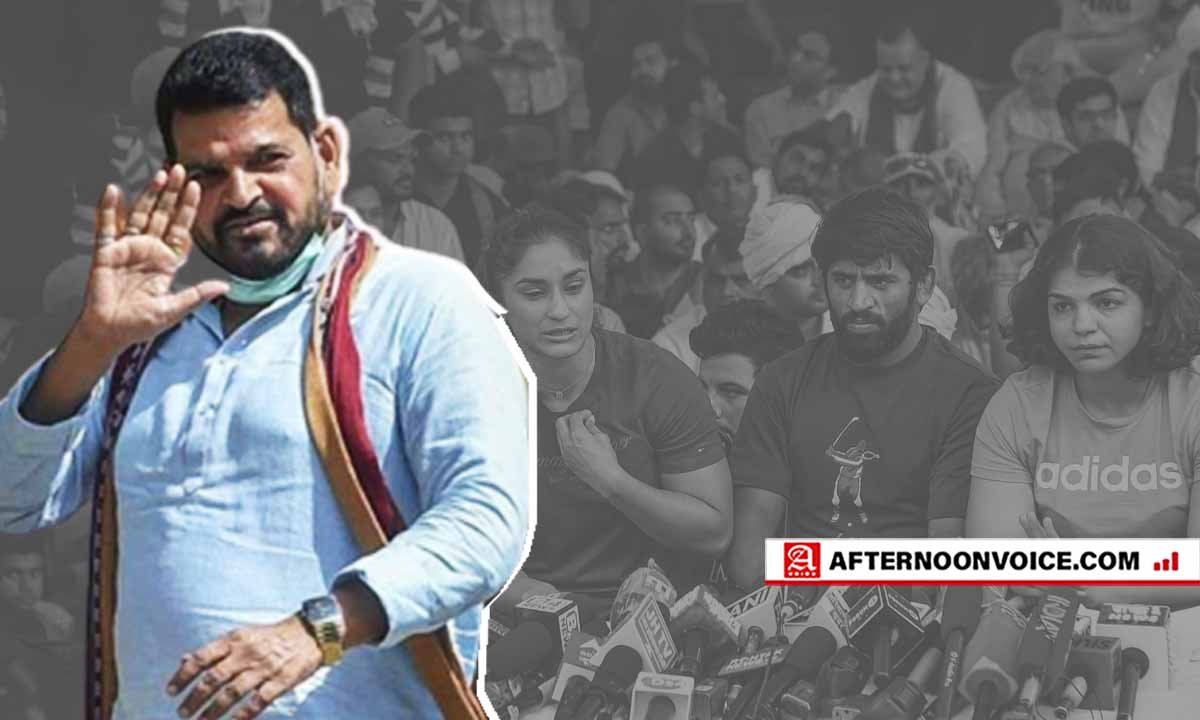
The Bharatiya Janata Party (BJP) MP Brij Bhushan Sharan Singh is a serial offender, but PM Modi, who promised a clean government, has maintained silence on such crucial issues. For months, the wrestlers have been protesting at Jantar Mantar in New Delhi; they want justice against the atrocities done to them. No BJP leader or PM himself, who sloganeers “Save Girls,” is now giving this leader another opportunity to be in electoral politics but did not even order some internal inquiry to know the truth. WFI chief Brij Bhushan has been accused of sexual harassment by seven female wrestlers and is now planning a show of force at a rally in Ayodhya on June 5. Brij Bhushan has taken the help of many PR agencies to make his show larger than life.
In 1992, he was involved in the Babri Masjid demolition case, due to which he was arrested by the CBI along with 39 other people. He was the prime suspect, and the Supreme Court of India acquitted him in 2020. He was charged with the Terrorist and Disruptive Activities (Prevention) Act in 1993 for allegedly helping associates of Dawood Ibrahim, who allegedly organized the J.J. Hospital shootout in Mumbai. He was later acquitted after spending several months in jail. Sadly, the BJP never hesitated to give him a ticket, and not only that, he was given a lot of importance in the party.
In an interview with the web portal The Lallantop in 2022, Brij Bhushan stated, “I have committed murder in the past. Whatever people may say, I did commit murder. I immediately shot and killed the person who had shot Ravinder dead”. Ravinder Singh was his close friend.
While serving as president of the Wrestling Federation of India, in an interview with The Indian Express, he said, “They (wrestlers) are strong boys and girls. You need someone strong to control them. Is there anyone stronger than me here?” In 2021, during a junior wrestling tournament, he slapped a wrestler on stage, which was caught on camera. But BJP leaders, who always mock other politicians, never felt guilty about having such a goon as their party worker.
In January 2023, a group of Olympians and international wrestlers, including Vinesh Phogat, Sakshi Malik, Bajrang Punia, and others, organized a sit-in demanding the disbanding of the federation due to alleged sexual harassment of female wrestlers by Brij Bhushan. The protests resumed in April 2023 due to government inaction. The protesters demanded the police file an FIR against Brij Bhushan and his immediate arrest. Protesters cited incidents of sexual harassment ranging from 2012 to 2022. On April 28, 2023, after the intervention of the Supreme Court, the Delhi Police registered two FIRs against him. One of the FIRs was registered under the POCSO Act (The Protection of Children from Sexual Offenses Act, 2012) for offenses against a minor. A second FIR was registered on similar grounds on the complaint of a few adult female wrestlers.
Two female wrestler complainants described the way Brij Bhushan used to touch their breasts and stomachs sexually on the pretext of checking their breath in a police complaint on April 21, 2023. One of these two women alleged that Brij Bhushan lifted her training jersey without her consent in 2018. Vinesh Phogat, one of the leading protesters, alleged that the accused “mentally harassed and tortured” her for missing out on a medal at the Tokyo Olympics in 2021. On May 12, the Delhi Police recorded a statement from Brij Bhushan Sharan Singh regarding the sexual harassment charges leveled against him by female wrestlers.
Brij Bhushan is set to address the Jan Chetna Maha Rally at the Ram Katha Park in Ayodhya, where sadhus as well as experts in law, education, and social work have been invited from several states. The rally is being held at a time when the Delhi Police have registered two FIRs against the MP. Since the FIRs were filed, Singh has been staying away from political programs. But he has been touring different districts of UP’s Awadh region, including Gonda, Ayodhya, Bahraich, and Basti, over the past week to invite people to the Ayodhya rally. I hope this time, at least, voters will do him justice by not electing him.
1971 genocide by Pakistan army will get global recognition: Ex-Dutch Minister Bommel 14
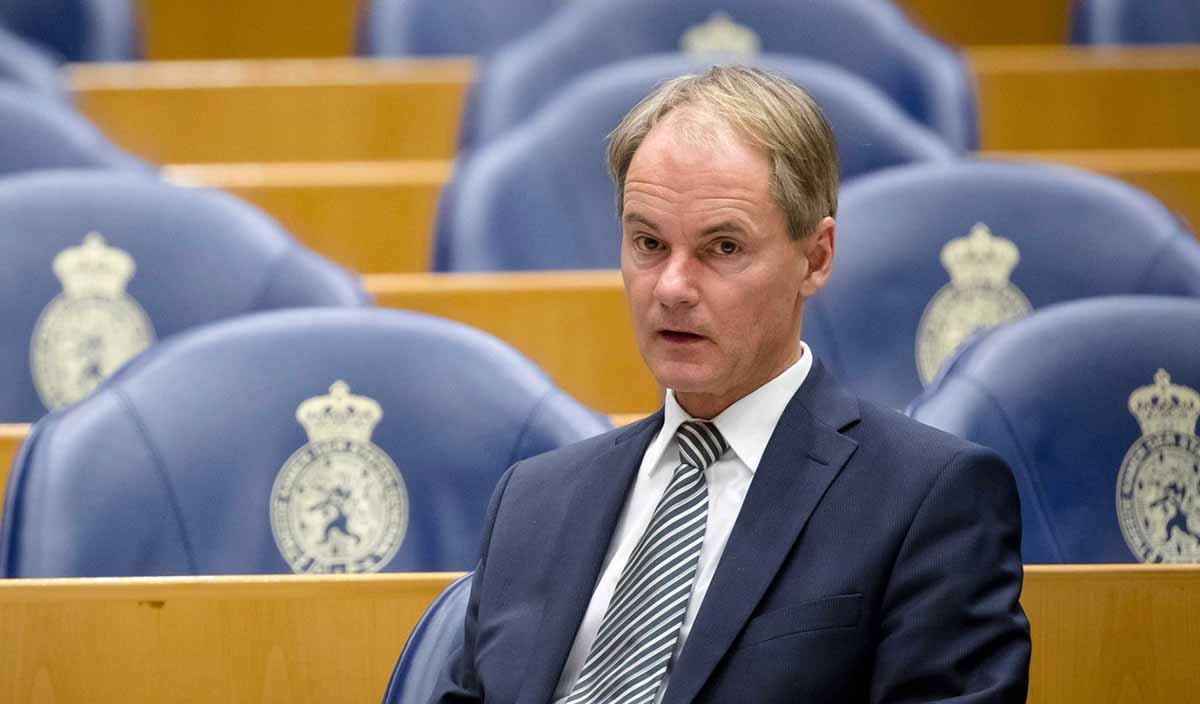
Bangladesh will get global recognition of the “1971 genocide” which was committed by the Pakistan army in 1971, a former member of the Dutch Parliament and human rights activists Harry van Bommel said on Sunday, reported Bangladesh Sangbad Sangsta (BSS). “Even if it takes a hundred years to get global recognition of the Armenian Genocide, I hope it will not take that long in the case of the Bangladeshi Genocide. We want to have it within a few years, not even decades”, Bommel told a press conference at Jatiya press club in Dhaka.
Amra Ekattor, Projonmo Ekattor and the European Bangladesh Forum (EBF), a platform of the Bangladeshi diaspora in Europe, organized the press conference on the occasion of holding an international conference titled ‘International Conference on Bangladesh Genocide Recognition’ scheduled for tomorrow. In the conference, Bommel said that the cold war and the then global superpower, the United States, supporting Pakistan is the reason why the Bangladeshi Genocide has not been recognised globally even after fifty-one years of independence.
“In 1971, the US extended their cooperation to Pakistan directly providing arms while India was with Russia at that time. That’s why the US has been pretending to know nothing about the genocide even though they have been well aware of everything”, said Bommel, adding, “West’s friendship with Pakistan is the reason for this dilemma,” he added. On the night of March 25, 1971, the Pakistani military conducted Operation Searchlight, aimed at wiping out an entire generation of Bengalis. Intellectuals, activists, artists, journalists, politicians or common people going about their daily lives, nobody was spared by the Pakistan Army.
The genocide was targeted at civilians in predominantly Hindu neighbourhoods in and around the capital Dhaka and on army barracks who were loyal to Bangabandhu and other Bengali political leaders. During the nine-month war, three million Bengali civilians were killed, more than 200,000 women were violated, 10 million people took refuge in India and 30-40 million people were internally displaced.
Bangladesh, from time to time, has urged the United Nations to recognise the 1971 Genocide but still, there is no progress.
Following the demonetisation, many people posted selfies with the new Rs 2000 notes, but when they realized that corruption had doubled with this note in government offices, the common people became dissatisfied with this large denomination of note.
People began avoiding Rs 2000 notes almost immediately after they were released. The 500 notes came much later in the economy. So, if a customer paid Rs 680 and was given a Rs 2000 note, the retailer was required to give the customer Rs 13 in change. This was not feasible for every retailer. So, they started asking the customer not to give Rs 2000 notes. Likewise, everyone tried to avoid taking Rs 2000 notes, and it became a habit even though Rs 500 and Rs 200 notes were plenty in circulation. Those corrupt politicians and land mafias were happy because the bundle of Rs 2000 looked compact and made it easy to carry a greater amount of cash.
In the meantime, 2000 notes really disappeared from the market. Later on, the RBI decided to start withdrawing Rs 2000 notes from circulation, citing its “clean note policy”. The Rs 2000 note will remain legal tender. People will be able to deposit the Rs 2000 note at the bank or exchange it for notes of smaller denominations up to Rs 20000 at a time. The Rs 2000 note was introduced in November 2016, after the government announced the demonetization of Rs 500 and Rs 1,000 notes. Greedy black money holders see this as an opportunity rather than a threat and, by various means, like before, exchange, collect, and store their black cash as much as new Rs 2000 notes and continue to do so to easily hide huge sums.”
The RBI gradually increases new Rs 100 and Rs 500 notes circulation and completely stops printing Rs 2000 notes. Banks stop issuing Rs 2000 to their customers. The Rs 2000 currency note was issued to meet the Indian economy’s currency requirement in view of the sudden withdrawal of the Rs 500 and Rs 1000 notes under the demonetization drive. The purpose of printing Rs 2000 was achieved as soon as the notes in other denominations went into circulation in sufficient quantities.
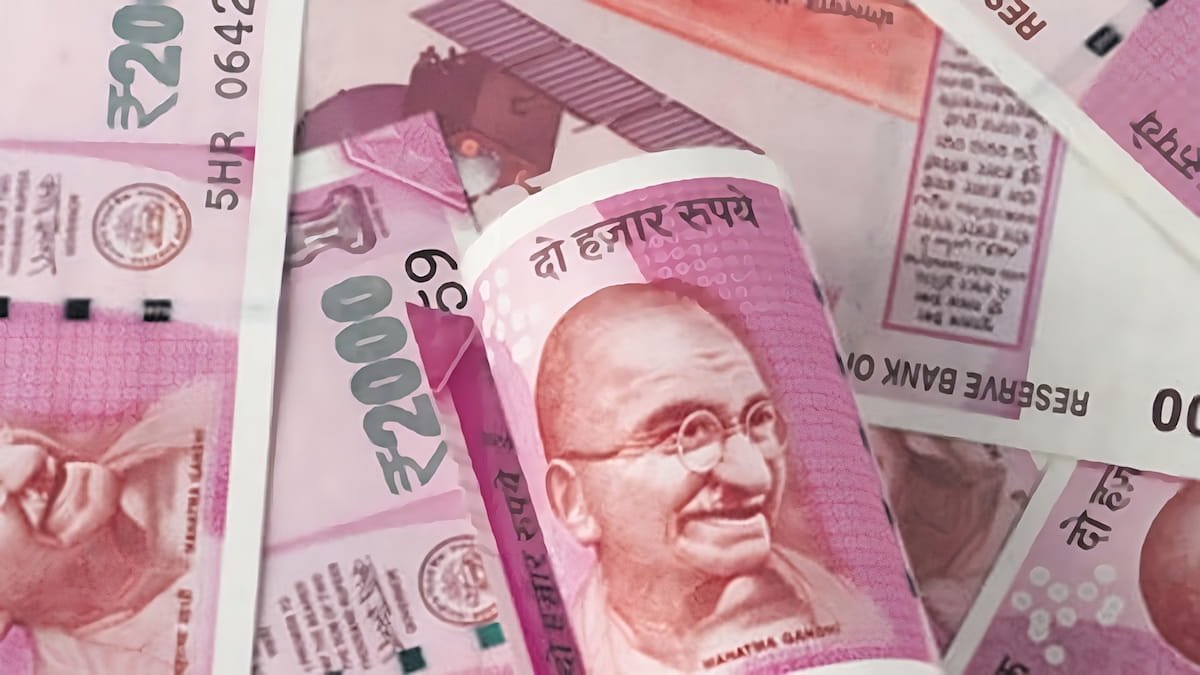
The Rs 2000, measuring 66 millimeters by 166 millimeters, is magenta in color with an image of Mahatma Gandhi along with the Ashoka Pillar emblem on the obverse and a motif of the Mangalyaan on the reverse, along with the logo of Swachh Bharat Abhiyan. Neither the Swachh Bharat Abhiyan nor the detonation were great successes. Six years after demonetization, the black currency market continues to thrive. There has been a whopping 107 times increase in the number of fake currency notes of Rs 2000 denomination between 2016 and 2020.
In a written reply to the Lok Sabha, then the Minister of State for Finance Pankaj Chaudhary stated that 2,272 fake currency notes of Rs 2000 denomination were seized in 2016, 74,898 in 2017, 54,776 in 2018, 90,566 in 2019, and 2,44,834 in 2020. The number has been mostly rising since 2016, except once in 2018. Between 2019 and 2020, there has been a 170 per cent rise in fake currency notes of the Rs 2,000 denomination.
To contain the circulation of fake Indian currency notes (FICN), the government enacted the Unlawful Activities (Prevention) Act, 1967, formed the National Investigation Agency (NIA), and constituted the FICN Coordination Group (FCORD) to share intelligence and information among the security agencies of the states and the Centre. It also constituted the Terror Funding and Fake Currency (TFFC) Cell in the NIA to conduct focused investigations of terror funding and fake currency cases. 2000 notes were randomly printed and used for all unlawful activities; no government authorities could really control the damage.
Most election gimmicks were played with this denomination of notes. It failed to produce a cashless economy as whatever rise in e-commerce sales took place during that period, returned to the same growth trend-line as before in a matter of a few months when the cash supply was finally normalized. On November 8, 86% of India’s currency was nullified in an effort to clean out “black money” and “counterfeit notes.”
This effort resulted in a massive disruption to the existing social, political, and economic functions of the world’s second largest emerging market. In the ensuing days after demonetization, the public in general was hit quite hard, but it was the poor who took the largest share of the pain. The poor and the lower middle-classes, which constitute the vast majority of the population, simply did not have the access to structural and cultural resources needed to adapt to such shock economics. Now that there is a new hit, people have to line up again to get their Rs 2000 notes deposited. Commoners or small-time businessmen will suffer, but the corrupt will know how to make their way out.
Kohli continues breaking record books in T20 cricket, slams 8th century in short format 18
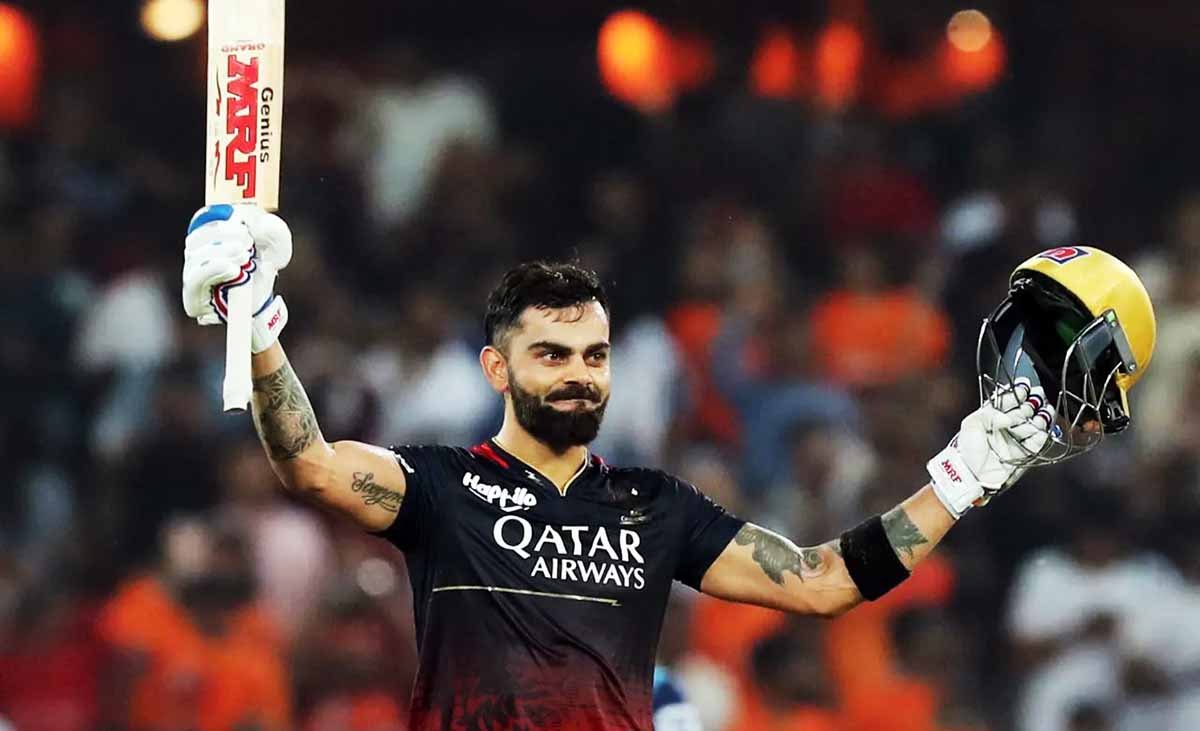
Royal Challengers Bangalore (RCB) batter Virat Kohli surpassed Luke Wright to become the batter with joint-third-highest centuries in T20 cricket.
Virat accomplished this feat against Gujarat Titans (GT) in their Indian Premier League (IPL) match.
In the match, Virat scored 101* in just 61 balls. His knock consisted of 13 fours and a six.
In 14 matches of IPL 2023, he has scored 639 runs at an average of 53.25 and a strike rate above 139. He has scored two centuries and six fifties this season, with best score of 101*. He is the third-highest run-scorer in the league so far.
Virat has scored eight centuries in T20 cricket, which includes one international century for India and seven centuries for RCB. He has scored 11,965 runs in his T20 career which is 374 matches strong so far.
The most T20 centuries are scored by Chris Gayle. The West Indies batting legend has 22 centuries in the short format. Pakistan skipper Babar Azam has nine centuries in T20 cricket.
Australia’s Michael Klinger, Aaron Finch and David Warner have eight centuries each in T20 cricket.
Put to bat first by GT, RCB posted a total of 197/5 in their 20 overs. Opening the batting, Virat Kohli had a 67-run opening stand with skipper Faf Du Plessis (28 in 19 balls). Useful cameos came from Michael Bracewell (26 in 16 balls) and Anuj Rawat (23* in 15 balls) as well. But it was Virat who stood tall with his second straight century of the season, his seventh overall. He scored 101* in just 61 balls, consisting of 13 fours and a six.
Noor Ahmed (2/39) in his four overs was the pick of the bowlers for GT. Rashid Khan, Mohammed Shami and Yash Dayal took a wicket each.
In the chase of 198, GT lost Wriddhiman Saha early, but a 123-run stand for the second wicket between Shubman Gill and Vijay Shankar (53 in 35 balls, seven fours and two sixes) brought back them into the game. RCB attempted to make a comeback with some wickets towards the end, but Gill’s hit the match-winning runs to bring up his second successive IPL ton as well. He scored 104* in just 52 balls with five fours and eight sixes. GT chased down the target with five balls to go.
RCB end their campaign in sixth position with seven wins, seven losses and a total of 14 points. GT will be playing CSK in the first qualifier on Tuesday.
Gill clinched the ‘Player of the Match’ for his knock.