

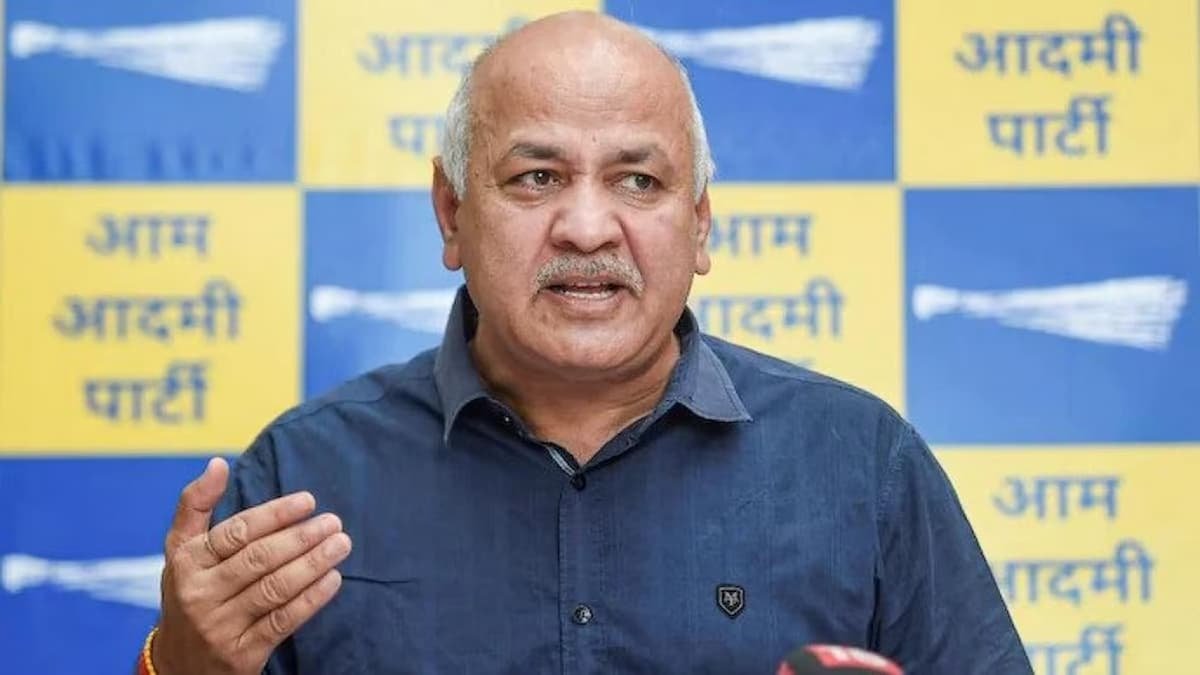
The Enforcement Directorate arrested ex-Dy CM Manish Sisodia after questioning him in Tihar Jail in the liquor policy case.
The Enforcement Directorate arrested ex-Dy CM Manish Sisodia after questioning him in Tihar Jail in the liquor policy case.
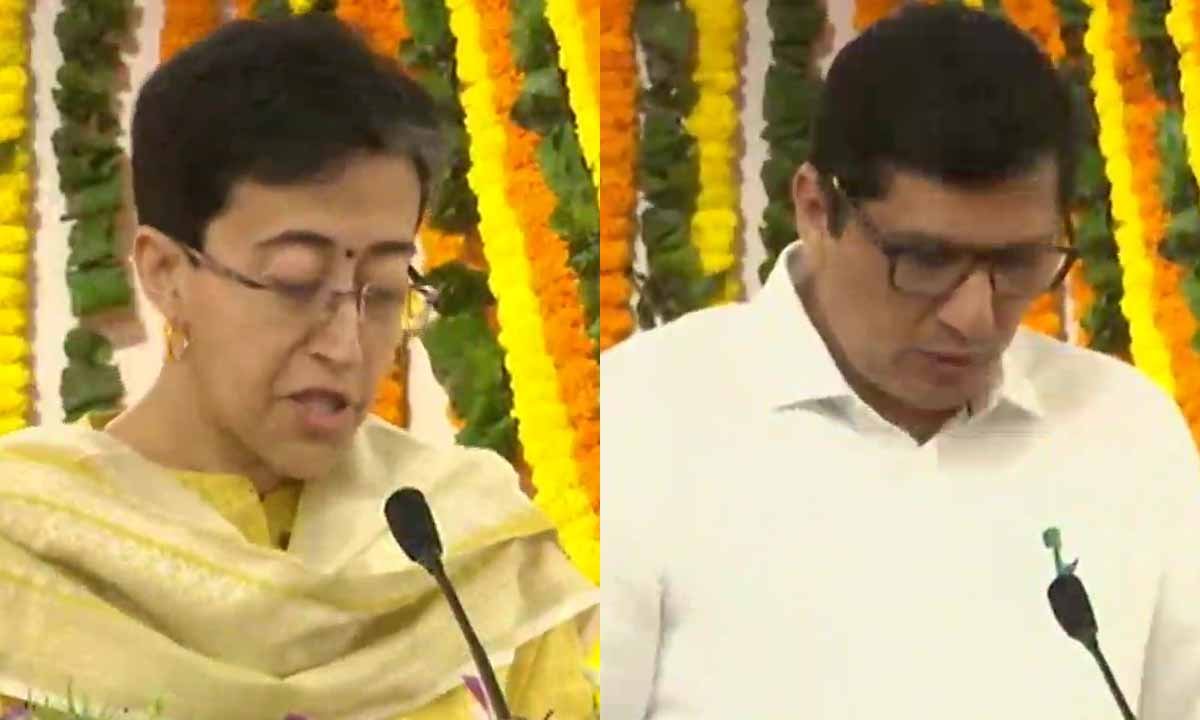
Aam Aadmi Party MLAs Saurabh Bharadwaj and Atishi were sworn in as ministers by Delhi Lt Governor V K Saxena on Thursday in the presence of Chief Minister Arvind Kejriwal.
Leader of the Opposition in the Delhi Assembly, Ramvir Singh Bidhur, also attended the oath-taking ceremony.
Atishi will handle education, PWD, power, and tourism departments, while Bharadwaj will look after health, urban development, water, and industries.
Following the resignations of Delhi Deputy Chief Minister Manish Sisodia and Minister Satyendar Jain, both currently in Tihar jail in alleged corruption and money laundering cases, respectively, two Cabinet berths had fallen vacant.
Sisodia was arrested by the CBI on February 26 in connection with alleged corruption in the formulation and implementation of the now-scrapped Delhi excise policy for 2021–22. He is in judicial custody until March 20.
Jain, who is also in judicial custody, was arrested by the Enforcement Directorate in a case of alleged money laundering on May 30 last year.
President Droupadi Murmu earlier accepted the resignations of Sisodia and Jain.
LG Saxena had recommended the names of Atishi and Bharadwaj to President Murmu for appointment as Cabinet ministers following a recommendation from Kejriwal for their elevation to the Cabinet.
Atishi and Bharadwaj will be attending the Delhi Assembly’s budget session commencing from March 17 as ministers after their sworn-in on March 9, party sources said. Bharadwaj has been an MLA of the AAP since 2013 and is currently the vice-chairman of the Delhi Jal Board. He was a minister during the brief first term of the Kejriwal government in 2013.
Atishi has been an MLA of the AAP since 2020 and has been associated with the party since its inception.
She was an advisor to Sisodia on his education portfolio.

A special CBI court has ordered the issuance of letters of request to authorities in Switzerland, Singapore, the Isle of Man, and the UAE to furnish details of mining baron and former Karnataka minister Gali Janardhan Reddy’s money trail in connection with the multi-crore illegal mining scam case.
In the order passed on March 4, the special judge for CBI cases, Chandrakala, said, “The application filed under Sec. 166-A CrPC for judicial assistance to the competent authority in Switzerland is hereby allowed. The office is directed to issue a letter of request in favor of the competent authority in Switzerland. The office is directed to send a copy of the order and details of the documents to the authority.”
Similar orders were issued with regard to the CBI request seeking details of GLA Trading International Pvt Ltd. from authorities in the UAE, Singapore, and the Isle of Man.
The court order comes as Reddy, founder of the Kalyana Rajya Pragati Paksha (KRPP) party, is campaigning ahead of state assembly polls due in May.
The CBI had filed applications against Gali Janardhana Reddy, G Lakshmi Aruna (since discharged in the case), IAS officer ME Shivalinga Murthy, IFS officer S Muthaiah, K Mehfuz Ali Khan, SP Raju, Mahesh A Patil, and former Ranger Forest Officer H Ramamurthy.
The central agency is seeking details of the incorporation of GLA Trading International in Switzerland, a statement of account of the company in Swiss banks, details of the owners, authorized signatories, bank accounts, and the link between Gali Janardhan Reddy and his family members with the company in question.
The court, in its order, also noted the CBI’s request.
“It is to be noted that, in the charge sheet, it has been alleged that the accused persons were involved in illegal mining under a mining lease issued in the name of Associated Mining Company. As per the information provided by the authorities, the entire money gained through the process of illegal mining would form part of the proceeds of crime, and it is absolutely required to find out and initiate the legal proceedings. “Therefore, the information is required as sought for,” the court noted in its order.
The CBI stated in its application that Reddy “had transacted iron ore illegally to the extent of more than 7 to 8 million metric tons during 2009-10. A substantial portion of the amount was suspected to be parked by the accused in various countries.
Therefore, the issuance of the letter of request is essential to finding out the existence of the company and the details of its bank account in the name of GLA Trading International Private Ltd. in Switzerland.
As per the information, the entire money so gained through the process of illegal mining would form part of the proceeds of crime, and it is necessary to identify the money and initiate legal action, the CBI added.
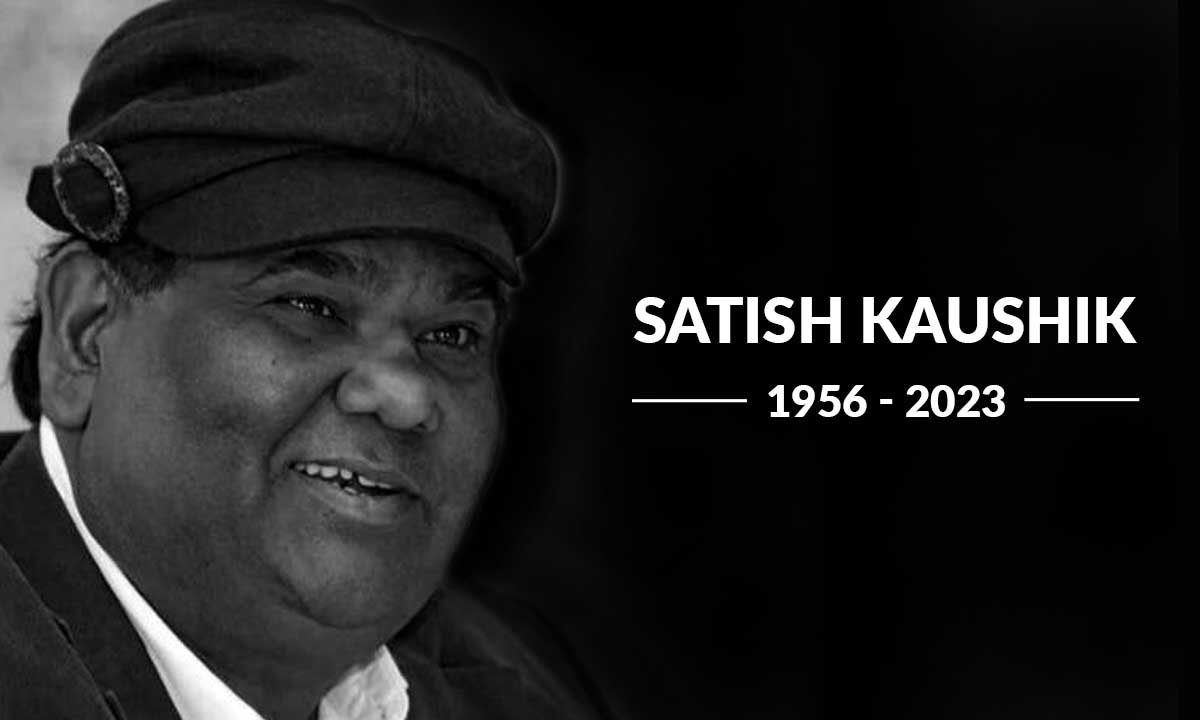
Leaving behind a trail of tears and grief, veteran Bollywood icon Satish Kaushik passed away on Thursday at the age of 66 after suffering a heart attack. The sudden news of his death has sent shockwaves throughout the Indian film industry and left his fans heartbroken. With his passing, the industry has lost a true legend, a multifaceted artist who left an indelible mark on Indian cinema. Satish’s contributions to the film industry were unparalleled. He was not just a gifted actor but also a talented writer, director, and producer. His remarkable versatility and charisma captivated audiences across generations, and he had a unique ability to infuse humour and warmth into every role he played.
Whether it was his portrayal of the lovable Calendar in “Mr. India” or his comic turn as Pappu Pager in “Deewana Mastana,” Satish’s performances always left an impact on his audience. Born on April 13, 1956, in Mahendragarh, Haryana, Satish grew up with a deep love for the arts. He graduated from Kirori Mal College, Delhi, in 1972 and was an alumnus of the National School of Drama along with the Film and Television Institute of India. Satish started his career as a stage actor, performing in plays across Delhi before moving to Mumbai to pursue his dreams of making it big in Bollywood.
His first film role came in 1983 with “Masoom,” where he played a small but memorable part. He went on to appear in several films in the 80s and 90s, including classics like “Ram Lakhan” and “Roop Ki Rani Choron Ka Raja,” among others. But it was his role as the lovable Calendar in the 1987 classic “Mr. India” that made Satish Kaushik a household name. His portrayal of the bumbling but endearing sidekick to Anil Kapoor’s titular character was an instant hit with audiences, and the film went on to become one of the most beloved Hindi films of all time.
Satish’s success as an actor opened up doors for him as a writer, director, and producer. He wrote the screenplay for the cult classic “Jaane Bhi Do Yaaro” and directed hit films like “Roop Ki Rani,” “Choron Ka Raja,” and “Hum Aapke Dil Mein Rehte Hain.” He also produced several successful films, including “Tere Naam” and “Milenge Milenge.” Beyond his acting prowess, Satish Kaushik was also a man of great humility and compassion. He was known to be a mentor to many young actors and filmmakers in the industry, always ready to lend a helping hand and offer words of wisdom. His generosity and kindness were legendary, and his loss has left a deep void in the hearts of those who knew him.
Over the years, Satish has received numerous awards and accolades for his contributions to Indian cinema. The late actor won the Filmfare Award in the category of “Best Comic Actor” in 1997 for his film “Saajan Chale Sasural,” and before that, he won the Filmfare Award in the same category for the 1990 film “Ram Lakhan.” On the personal front, he was married to Shashi Kaushik in 1985. His son, Shanu Kaushik, died in 1996 when he was just two years old. In 2012, his daughter Vanshika was born through a surrogate mother.
The news of Satish Kaushik’s death has left his fans and admirers in a state of shock and disbelief. His sudden departure has created a chasm that will be difficult to fill. As tributes pour in from across the world, it is evident that Satish was much more than just an actor or filmmaker. He was a beloved son, a cherished friend, and a beloved icon who touched the hearts of millions. His legacy will live on through the movies he made, the characters he played, and the lives he touched. Satish Kaushik will always be remembered as a true gem of the Indian film industry, and his memory will forever be cherished in the hearts of his fans and admirers. The Indian film industry has lost a titan, a true master of his craft, and his absence will be felt for years to come.

On Thursday, Tamil Nadu Chief Minister MK Stalin alleged that the Bharatiya Janata Party (BJP) leaders from North Indian States had spread rumours about the attack on migrant labourers with bad intentions. Stalin, while responding to a series of questions under the ‘Ungalil Oruvan’ program, said that the rumours started spreading a day after he spoke about the need for a united national-level alliance against the BJP.
“In Tamil Nadu, people from various states are living for many periods. They never got affected at any time. For the past few years, many have been coming to Tamil Nadu in search of employment. These people have no problems anywhere in Tamil Nadu. But few people created fake videos and spread false news. BJP members from North Indian States did this with bad intentions. “You can understand the plot behind the fake news spreaders if you noticed that these were done the very next day after I spoke about the need for a united national-level alliance against the BJP,” said Stalin when asked about rumours that migrant workers are being attacked in Tamil Nadu.
The Chief Minister further said that there are no such incidents in Tamil Nadu, and the delegates from Bihar who visited the state returned with full satisfaction.
“Post this fake news, I enquired and even spoke to Bihar CM Nitish Kumar.” There are no such incidents in Tamil Nadu. DGP has given clarification. Even Bihar’s delegates visited TN and returned with full satisfaction. Tamil Nadu is a state known for ‘Vandhorai Vala Vaikum Tamil Nadu’ (whoever comes here, Tamil Nadu will make their life better). Tamil Nadu: Tamils love unity and brotherhood. People who have high thoughts like ‘Pirapokkum Ella Vyirukkum’ (all men that live are one in circumstances of birth) or ‘Yadum Ure Yavaru Kalir’ (All the universe is our place, and everyone in this universe is our people.) “This is well known to the northern state brothers here,” he added. Notably, the issue over the alleged ‘attack’ on migrants emerged after unverified reports on social media claimed that migrant labourers were targeted in Tamil Nadu.
Amidst the prevailing developments on the issue, a team from Bihar led by Balamurugan IAS visited Tamil Nadu to take stock of the matter. The team visited Tiruppur on Sunday and met with district administration and police officials to learn about the actions taken so far in the case. Officials of the Bihar government interacted with Bihar-based migrant workers in Chennai on Tuesday.
When you look at the functions so far, the governors have only mouths; there seem to be no ears: Tamil Nadu CM MK Stalin, when asked about the Supreme Court’s recent constitutional session, said that the Governor should not interfere in politics. Last month, the Supreme Court said the governor should not enter the political arena.
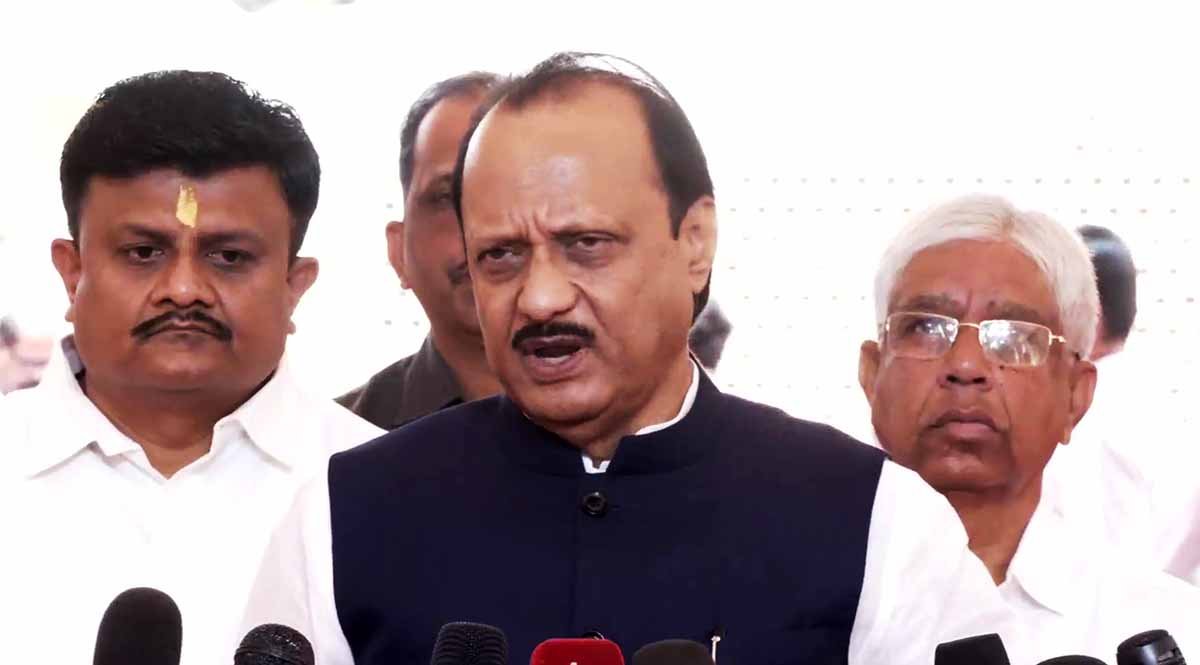
Nationalist Congress Party (NCP) leader Ajit Pawar on Wednesday urged the state government to come forward to support and compensate the farmers. Addressing the media, Pawar said, “Maharashtra’s farmers have suffered a lot in the past three days due to unseasonal rains. We’ll raise the issue of compensation to farmers in the Assembly today. Today, the state government (Shinde-led government) must come forward to support and compensate the farmers.”
“We have given adjournment notice in the Assembly on the issue of compensation to the farmers,” the Maharashtra LoP further said. “There was a forecast of rain for these 3 days everywhere. Now, the government should focus on ensuring the materialisation of the farm insurance claims,” he added. On February 28, the Maharashtra Legislative Council was adjourned after opposition legislators created a ruckus on the issue of farmers demanding an appropriate price for onions as prices dipped.
The Opposition leader of the Legislative Council, Ambadas Danve said that they were demanding a discussion on the farmer’s issue with the government but the government did not do so, hence the council was adjourned. Meanwhile, the Nationalist Congress Party (NCP) MLAs reached Maharashtra Vidhan Sabha carrying onions on their heads and wearing onion garlands demanding appropriate prices for onions.
The four-week Budget session of the Maharashtra Assembly started on February 27 and will continue till March 26. The budget will be presented on March 9.
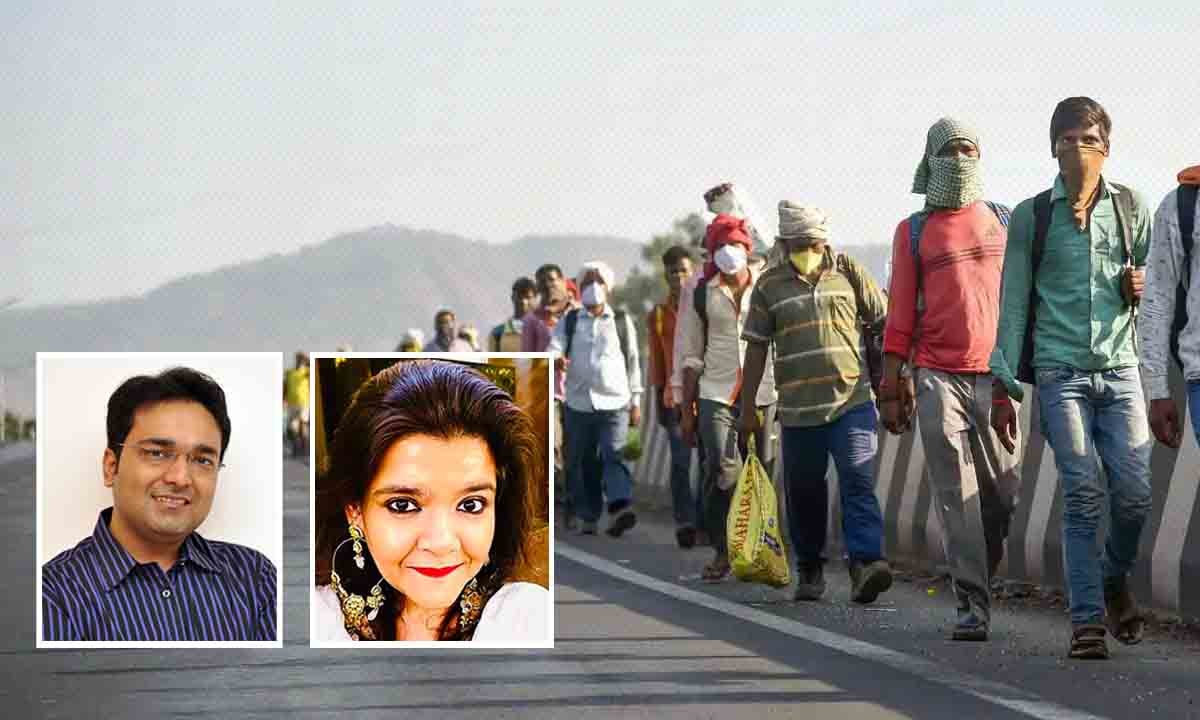
The Tamil Nadu Police have charged OpIndia news portal CEO Rahul Roushan and editor-in-chief Nupur Sharma with spreading “fake news” and instilling fear among migrant laborers in the state.
D. Balamurugan, Bihar’s rural development secretary, who was in Tamil Nadu to meet with workers from the northern state, expressed confidence in the Tamil Nadu government’s efforts to alleviate migrant workers’ fears. The news portal spread fake news that the migrant workers from other states were being attacked in Tamil Nadu, creating a sense of fear among them.
Citing Hindi news websites, OpIndia wrote in an article last week, “They (migrant laborers from Bihar) have alleged that as many as 15 people have lost their lives in the “Talibani” style attacks being carried out against the Hindi-speaking migrant laborers in the state.”
A few videos circulated through WhatsApp and other social media platforms with the message that these incidents (alleged attacks) happened with Bihari laborers—that news is fake. “That has been confirmed and verified,” the news agency ANI quoted Balamurugan as saying.
The Thiruninravur police, which come under the jurisdiction of the Avadi city police commissionerate, said one Suryaprakash of the IT wing of the ruling Dravida Munnetra Kazhagam (DMK), who complained that OpIndia was spreading “fake news” that migrant workers from other states were being attacked in Tamil Nadu and creating a sense of fear among them. The complaint also mentioned the possibility of clashes between locals and workers from other states.
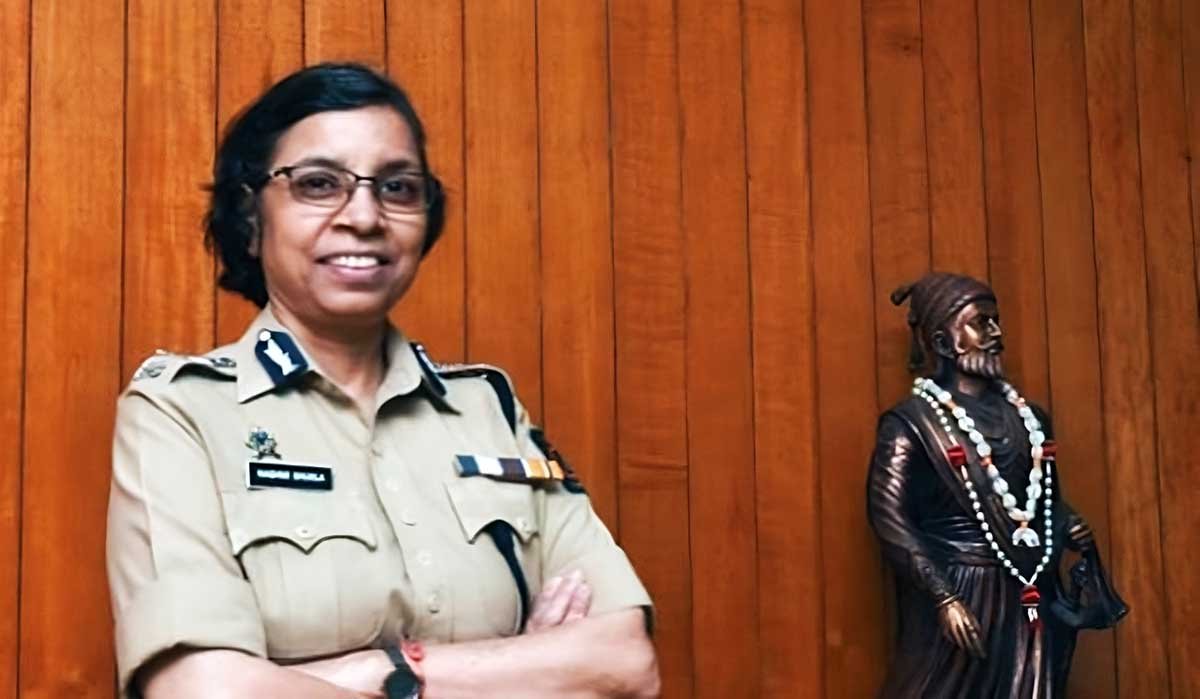
Rashmi Shukla, a 1989-batch IPS officer, is the Director General (DG) of the Sashastra Seema Bal (SSB) and one of the senior cops strategically sidelined by Maha Vikas Aghadi.
Everyone expected that the BJP’s return to power might give her a grand comeback to the state police. When the central government announced her appointment to the armed forces to guard the border between Nepal and Bhutan last Thursday, many saw it as a setback, albeit a temporary one, for the officer who was once thought to be a shoo-in for the job of Mumbai Police Commissioner.
Within a few months, there was a widespread belief that officers who suffered during the MVA administration due to their perceived proximity to Fadnavis would be “compensated.” Soon there was a strong buzz that Shukla was being brought back from central deputation and would be “rewarded” with the post of Mumbai Police Commissioner.
Former Chief Minister Devendra Fadnavis, who is now the deputy Chief Minister, backed Shukla. Several of these officers were deputed to the central government, including Shukla, who was appointed as the Additional Director General (ADG) of the CRPF in February 2021. However, in Shukla’s case, in addition to being transferred by the MVA from the State Intelligence Department (SID) to Civil Defense—a non-executive position—there were two FIRs. The FIRs, one in Mumbai and the other in Pune, were filed on charges of illegal phone tapping of opposition leaders during the CM tenure of Fadnavis.
Shiv Sena (Uddhav Balasaheb Thackeray) leader Sanjay Raut, Nationalist Congress Party (NCP) leader Eknath Khadse, and Congress chief Nana Patole are among the leaders whose phones are said to have been tapped. After the Uddhav Thackeray-led government departed in June, the fortunes of Shukla and the other IPS officers sidelined by the MVA appeared to have improved.
What further boosted the rumors is that in October, the Pune Police filed a closure report in a local court in one of the FIRs. Later that month, the state government denied Mumbai Police permission to file a chargesheet against Shukla in the phone-tapping case. With the accusations seemingly out of the way, it appeared that Shukla getting some important posts in the state was on the cards. Weeks passed by, but nothing happened, even as some of the other sidelined officers were brought back to important postings.
Eventually, in a blow to the officer in December, a Pune court rejected the police’s closure report in the FIR against her and instead asked the police to further investigate the matter. Many believed that the court order sealed Shukla’s fate in terms of her being returned from central deputation to the city in the near future, because it would be bad optics for the government to appoint someone facing an FIR to an important position. Recently, after Shukla and two other officers from the Maharashtra cadre were promoted to Director General, Shukla was posted with the Sashastra Seema Bal (SSB).
India is a country with multiple languages, but there is a misconception that Hindi is our national language and we all should speak it well. Especially Hindi-speaking people have a lot of communication problems with the non-Hindi population because of the way they address or talk. For example, if a North Indian has to ask, “How are you?” they will say, “Aap kaise ho ji.” We Mumbaikars are very loving people. We know only two types of people: Khas and Khasam Khas (important public), which are those who are professional acquaintances or known for some reason but not very relevant. Khasam Khas are those who have a special place in your heart.
If we have our typical lingo, we will say, “Tu kaisa hai re?” “Sab thik hai na?” (How are you? Is everything alright?) North India will feel disrespected or offended because they don’t have the habit of using words like “Tu” or “Tereko.” Aap hum (you and we) is the only way they speak.
I had a friend from north India, and being very close to each other, I used to speak to him in my lingo, but after some time he started getting irritated with my Hindi because for him it was disrespectful and annoying, and for me it was my way of speaking. South Indians residing in Mumbai, especially, have very funny Hindi. There are striking differences between the north and south. North Indians mostly expect us to speak a very literary form of Hindi, but on the other hand, why do people from the north who stay in south Indian cities like Chennai, Bengaluru, and Hyderabad, etc., never try to pick up the local language and try to converse in it? They don’t even try to converse in English, even though they know the language is well understood in the South.
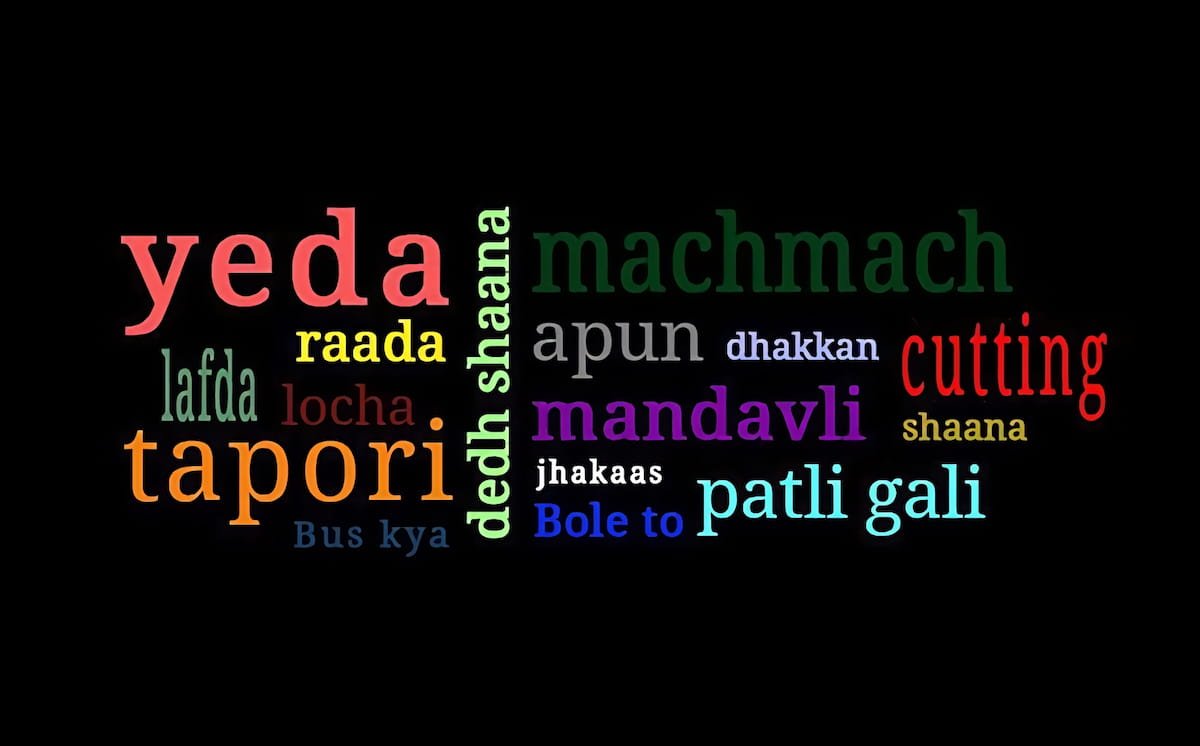
Hindi is the common language of Mumbai, and it is spoken in a slang that is unique to the city. Mumbai is famous for its “Bambaiya language,” which we call Tapori, which is not so polite if you understand Hindi. Mumbai Local people know it well and many times use it commonly at public places, markets, etc. Many of them ignore it, and many in the city simply enjoy that rough talk. For example, Ghanta means impossible, and North Indians will say Asambhav.
Chutiya mat bana means “don’t fool me,” but north India will take it as abuse whereas Mumbaikar will talk it out casually.
Waat lag gayi (I am screwed). Kya thakela maal chipka diya (you gave bad-quality stuff). Chal ae zandu: Move away, you idiot. Khajoor: In Arabic, “Khajoor” means the fruit “dates.” Here, it again means referring to a person as stupid with no sense. Chamdi: womanizer; “Fattu refers to a scared person. Faadu: superb. Chindi: stingy. Saltale : Solve it Here Only. Chipka Dal: Give it back. Locha Hogaya or Lafda Hogaya: Messed up or there is some problem. Chava Lagraha hai: You look handsome. Du kya karcha pani: Shall I bash or punch you? in an arrogant tone. Banana is Kela, Single is Akela, Tired is Thakela, Bored is Pakela, Stuck-up is Atkela, Angry is Satkela, Hung-up is Latkela, and Lost is Bhatkela. And dead is tapkela.
Mumbai Hindi knows no grammar or etiquette. If you learn Hindi from anywhere else, it will be a North Indian version of grammatically correct Hindi, which is fine, but you’ll sound like an English duke in Harlem. Mumbai doesn’t speak Hindi natively; as such, Hindi is a non-local language and is a recent immigrant, along with migrants from the north and the filmdom. Bombay, being an important administrative and commercial city, attracted people from all over India. After the partition of India, it got its share of Sindhis and Punjabis, who had to settle down in big cities rather than in small towns.
This was in addition to the Northerners already staying there. The native tongues spoken earlier were the Prakrit tongues of Konkani, Marathi, Gujarati, and Dakhani (South Indian Urdu). Gujarat and Maharashtra belonged to the British Bombay presidency, so Bombay was the capital city for the vast region encompassing Northern Karnataka, Maharashtra (excluding vast sections of Vidarbha, as Nizam controlled! ), and Gujarat. Hindi didn’t have a presence there until extensive immigration during the late 1800s and onwards. So, the Hindi that developed in the 1900s was heavily influenced by these local languages.
The Hindi spoken on Mumbai’s streets is heavily influenced by regional languages and has a distinct Southern flavor. This is a gender-neutral, slightly masculine, earthy language laced with Bombaiya idioms, slang, and Gujju-Marathi words.
Many north Indians tend to mock, ridicule, and laugh at south Indians who speak Hindi. In spite of being bullied over the languages of South India or Marathi, people never shy away from speaking their typical broken or slang Hindi. All they know is that language is an expression that connects them with others. As long as it’s a private conversation or expressing love, they will speak the way they feel belongs to them and is comfortable. Those who are offended by their Mumbaiya Hindi are unlucky because the formality of speaking correct Hindi may cause them to fake or lose the love that they naturally express.

These days, there is a significant increase in heart attacks in women, from 0.32 to 0.62 million, compared to men, at 0.53-0.92 million. Sidharth Shukla, Raju Srivastav, Puneeth Rajkumar, Krishnakumar Kunnath KK—there are many examples of these health-freak actors who suffered heart attacks.
When we spoke to a renowned dietician, Anushtha Sharma, she told Afternoon Voice, “These days, people are very health conscious, but somewhere they are forgetting that their body needs balanced food to survive. Overworking out and a measly diet cause a lot of issues. Women are at stake due to various pressures at work place, home and personal and social factors.”
Actor Sushmita Sen is the recent example that she had undergone angioplasty; she underlined a growing trend in India: more women than ever before are being diagnosed with heart disease and getting treated. Heart attacks were for long associated with men; the turnout for help at the hospital showed the gender bias. Recent health data from India shows a rise in the number of deaths among female heart patients higher than the corresponding rise in deaths among males from 2000 to 2017.
The 2017 Global Burden of Diseases (GBD) Study and related studies said it with numbers. GBD 2017 data showed ischemic heart disease (when arteries get narrowed or blocked) caused 1.54 million deaths, of whom 0.62 million were women and 0.92 million men.
A team led by Dr. Rajeev Gupta from Jaipur analyzed similar data between 2000 and 2017 and found annual mortality (due to ischemic heart disease) rose from 0.85 million to 1.54 million — with the greater increase in women from 0.32 million to 0.62 million compared to men (0.53-0.92 million). The Jaipur team’s article in the peer-reviewed ‘American Journal of Preventive Cardiology’ journal in 2020 concluded as such. Reasons for the rise were obesity among women, use of smokeless tobacco or smoking, diabetes, and oral infection. There is medical evidence to show diabetes affects the female heart more than the male heart.
Senior doctor Dr. Anshuman Manaswi said, “These days, medical consultants pay attention to women’s heart problems. Also, more women undergo health check-ups that detect blockages or high cholesterol levels. Housewives in most Indian homes lead an inactive life with little to moderately intensive physical exercise recommended by the World Health Organization. A recent BMC survey showed obesity among Mumbai women to be higher than among men. Until two decades ago, it was believed that women were protected against heart disease.”
To some extent, heart menopause is another reason why many women come under some sort of unknown stress, including mood swings, eating disorders, and hormonal irregularities; after 60, the risk of heart disease is the same for men and women. Globally, heart diseases are the leading cause of death among both men and women. “In younger women, smoking and stress are leading causes of heart disease,” said a doctor. In some young women, medicines for a chronic condition could contribute to the disease.