Home Blog Page 300

Leprosy continues to be a public health challenge in Maharashtra

leprosy, india, who, world health organization, health, public health, eknath shinde, cmo, assembly
Image: PTI

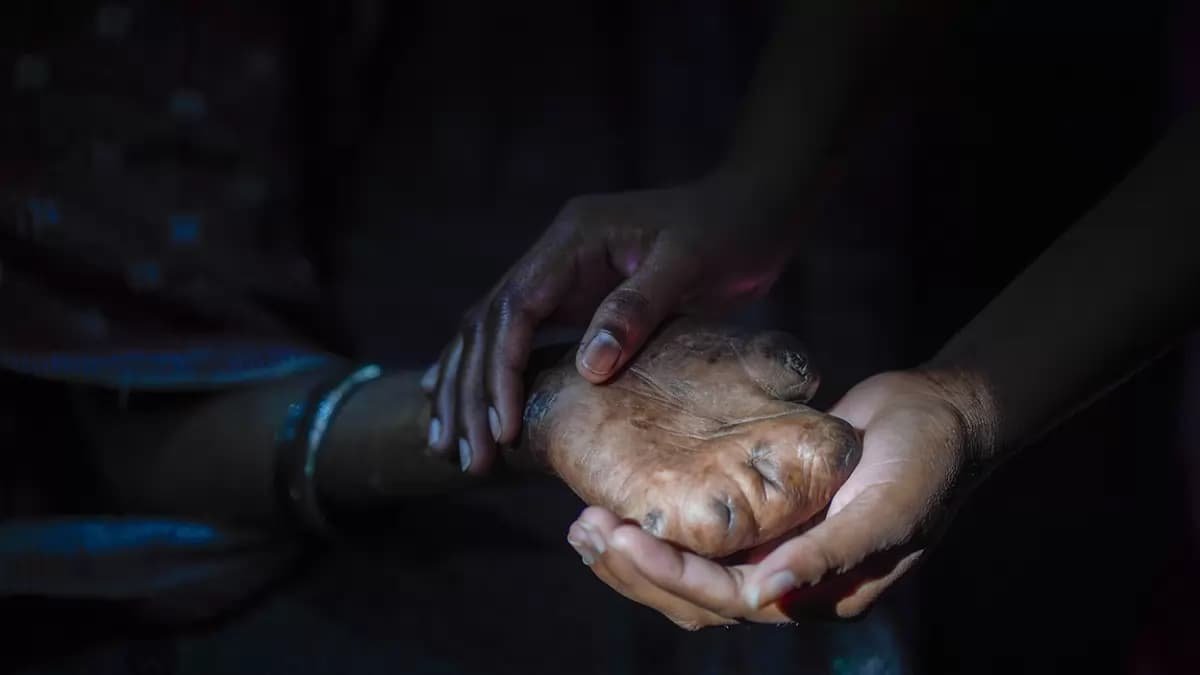
Leprosy is one of the oldest diseases known to humans. Despite advances in all spheres of medical science, leprosy continues to be a public health issue in Maharashtra. In the present scenario, Maharashtra needs new initiatives, challenges, and future implications for leprosy control. 

Leprosy, which was declared eradicated in India one and a half decades ago, has resurfaced with vigour in several states. In the year 2005, India was declared a leprosy-free country, but soon after that, many new cases started getting reported. Major changes were made to the National Leprosy Elimination Programme (NLEP) and the Global Leprosy Programme during that time period. Efforts made under these programs led to the discovery of child leprosy, apart from other new cases. Many of these cases were found due to late diagnosis as well. Such cases arose as a result of the administrative burden and a lack of scrutiny.

India has the highest number of new leprosy cases in the world, followed by Brazil and Indonesia. Every year, over 200,000 such cases are detected globally, and India accounts for more than half of them, according to the World Health Organization (WHO).

The health ministry, along with other institutions working to fight leprosy, has started formulating new strategies to deal with the huge volume of cases. On Tuesday, in the State Assembly, Chief Minister Eknath Shinde assured to form a committee that will make a full-proof plan to counter and control leprosy cases in Mumbai and Maharashtra. However, before formulating new strategies to combat the recurrence of the disease, it is important to analyze and discuss where and what went wrong in our efforts to eliminate it. In the first place, why was leprosy declared eradicated in India? Why have there been more cases since 2016? There are many unanswered questions that need to be answered by the government.

Incompetency, corruption, and a lack of infrastructure are the major reasons why the BMC and health administration in the state failed to eradicate leprosy. A sample survey conducted by the Indian Council of Medical Research (ICMR) revealed that there are many hidden cases in the community. The major cause of hidden cases is low voluntary reporting in the community due to a lack of awareness as well as stigma and discrimination. 

The fact that 200,000 people live in approximately 750 leprosy colonies demonstrates the extent of stigma and discrimination. One of the biggest colonies is in Maharashtra, in CM Eknath Shinde’s constituency.

In addition, it was seen that the rate of new case detection had remained almost the same and that disability rates in new cases had been rising due to a delay in diagnosis. The health experts felt that the detection capacity of leprosy programs had ceased compared to the intensity of occurrence. In the past two-and-a-half years, India accounted for 60 per cent of the global total of new leprosy cases. In a recent report, the Central Leprosy Division, which comes under the Union Ministry of Health and Family Welfare, revealed that thousands of new cases were detected only in 2022.

Leprosy was feared as the most contagious disease, but with awareness and study, we now know that leprosy doesn’t spread easily and has effective treatment. If left untreated, it can cause nerve damage, which can lead to crippling, paralysis, and blindness. India has become the leprosy capital of the world in the 14 years since it was declared free of the disease, as a lack of vigilance and unfriendly laws paved the way for its return. In 2019, India will host 66% of all leprosy patients around the world. The prevalence rate dropped to 0.72 per 10,000, reaching 1,35,485 cases in the years 2016–17. However, these numbers have come down to nearly 15,000 cases compared to 2016–17. This is why we need to raise awareness about it and be properly informed about it in order to make India fight leprosy again.

Leprosy is an infection caused by a slow-growing bacteria called Mycobacterium leprae. It can affect the nerves, skin, eyes, and lining of the nose (the nasal mucosa). With early diagnosis and treatment, the disease can be cured. People with leprosy can continue to work and lead an active life during and after treatment. It is an extremely slow bacterium that is very hard to spread from person to person. Prolonged exposure to an infected person only causes leprosy. This usually happens only for household contacts.

Leprosy has been around for over 2000 years. It is far less prevalent today than it was even a few decades ago, but complete eradication still eludes us. Free access to drugs, begun in 1995, has led to a drastic decline in the number of cases. There is a lack of inertia on leprosy, as the combination of vaccination and prophylaxis through personal contacts has been largely but not completely effective at decreasing disease incidence.

In 2000, the WHO declared that the declining numbers had led to the “eradication of leprosy as a public health problem,” which largely deflated efforts to eradicate it entirely. One of the confounding factors for leprosy is that the BCG vaccine, which protects against tuberculosis and leprosy, may also precipitate an earlier onset of latent leprosy. “An unexpectedly high proportion of healthy contacts of leprosy patients presented with PB leprosy within 12 weeks after receiving BCG vaccination.” Clinical manifestations of leprosy after BCG vaccination: an observational study in Bangladesh.

In India and the rest of the world, there has been a tremendous decline in the number of leprosy patients over the past four decades. However, one of the major challenges faced by India is the continued occurrence of new leprosy cases, as evidenced by the almost static new case detection rate (NCDR) over the past decade.

After IIT Bombay student’s suicide, ex-MP Mungekar demands SIT probe; announces a protest

darshan solanki, iit bombay, iit, dr bhalchandra mungekar, mungekar, itt student suicide, suicide
After IIT Bombay student's suicide, ex-MP Mungekar demands SIT probe; announces a protest 3

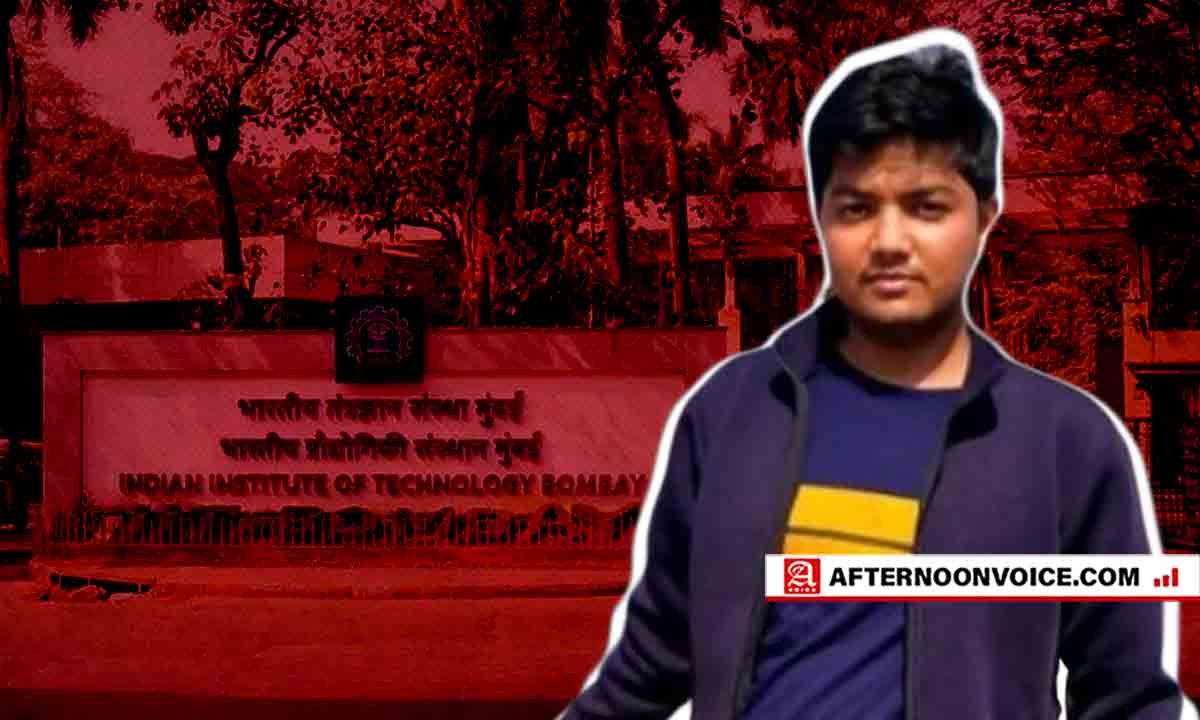
Dr Bhalchandra Mungekar, a former Rajya Sabha MP, will lead a “Dharna Andolan” with various organizations on Saturday, March 4, at Mumbai’s Azad Maidan, demanding that the Special Investigation Team (SIT) investigate the alleged suicide of an IIT-B Dalit student, Darshan Solanki.

The various social and educational organizations will participate in the “Dharna Andolan” to demand an impartial inquiry to find out the truth.

Darshan Solanki, an 18-year-old student of BTech at IIT-Bombay, allegedly committed suicide by jumping from the 7th floor of the hostel on February 5.

The Powai police filed an Accidental Death Report (ADR). 

Though Darshan’s parents suspect foul play and claim that he was subjected to caste discrimination. “Darshan had complained about caste discrimination, but no one listened,” Darshan’s father, Ramesh Solanki, claimed.

Meanwhile, IIT-Bombay issued a statement and strongly refuted the news reports of caste discrimination. Also, the director of IIT-Bombay formed an internal committee to investigate the case.

Dr Bhalchandra Mungekar refused the committee’s recommendations and demanded that the case be investigated by the SIT. He told us that “the director of IIT-B formed an internal committee consisting of staff members and students to intrude on some members of a backward community.” “But we are not happy with the decision because the internal committee has no meaning.” “We want a proper investigation by the SIT.”

“Heavy base cast discrimination is suspected. The main reason was that they did a postmortem on Darshan before his parents reached Mumbai. They did not inform his parents that he had died. “In all these things, they are creating a suspicious atmosphere,” he further said.

State Funeral for The Queen of Abhinaya – Dr Kanak Rele

kanak rele, rele, Mohiniyattam, Mohini Attam, kathak dancer, classical dancer
Dr Kanak Rele

Dr Kanak Rele, a renowned Mohiniyattam dancer and recipient of the Padma Bhushan and Padma Shree, died a few days ago at the age of 86. She was honored with a state funeral at Vile Parle Crematorium in Mumbai. The consummate artist had a six-decade career and was the founder and director of Mumbai’s Nalanda Dance Institute Center.

Born in Gujarat June 1, 1937 Rele spent her formative years in Shanti Niketan, West Bengal, she began her journey in dance at a young age and went on to break the glass ceiling by her interest in the male dominated field of Kathakali. Mohiniyattam became the calling card subsequently, her performances were marked by graceful movement, intricate footwork and highly emotive expressions. In 1973 she founded Nalanda Nritya Kala Mahavidhyala which is celebrating its 50th anniversary.

“I am deeply saddened to learn of the death of Padma Bhushan, Dr. Kanak Ben Rele, a creative luminary and revolutionary artist; she had illuminated the path of artists with her unparalleled contribution and led a life completely dedicated to Indian art, truly a huge loss for the world of Indian art, Om Shanti,” said Ms Sandhya Purecha, Chairperson, Sangeet Natak Akademi.

Shri Ramesh Bais, Governor of Maharashtra, paid tribute to her and referred to her as ‘Nriyta Tapasvani.’ I find myself fortunate and totally blessed that she gave her last interview to me in regards to her long due book “Me and My Mohiniyattam” just a few days before her death. Excerpts from her interview:

How did the idea of writing a book about your life come about?

People always kept asking me about my initial days of dancing and dance training. So I thought of telling the story through a book, which my niece Radha Khambhati wrote for me. My father died when I was 9 months old, and I grew up in Shanti Niketan. My heart and soul grew to like music, dance, art, and all things having to do with culture and tradition during my formative years. Later, my uncle Madhukar made us move to Mumbai; this is where I met Raghavan Nair ji, a Kathakali artist and singer, who on our first meeting sang Kummi, a folk song in Kathakali style. Honestly, I got into Kathakali by default, as my family did not know that Kathakali was a man’s art. The book has it all in detail.

How long did it take for you to write the book?

It took me about a year to put it all together, because I had to put my life in chronological order right from my first step, my first stage show, setting up Nalanda, travelling the world and also my personal life. Years and order were a bit messed up initially and slowly it all came together.

Which has been the most emotional chapter?

While I was still learning to dance, I had a small attack of Polio and in those days Polio was deadly and would leave a child crippled for life, even today I have a limp in my leg, but my mother and my Guru gave me the confidence and taught be how to enhance and good points and hide the flaw of the limp. My mother got widowed when I was a few months old, but my family was very Gandhian in approach, when I turned 11 she remarried and post that I had a very difficult childhood. The only way out for me was to immerse myself into my dance to get away from the personal turmoil. Also I longed to hear a direct word of appreciation from my Guru Panchali Karunakar Panikar. He never ever appreciated me on my face, he kept telling everyone around me how good I was and how I will make him and the world of art proud but, to me he never uttered a word. Guess that was his way to bring perfection, hard work and focus into my dance.

Most favorite chapter in the book?

When I met the love of my life, my husband Yatin (laughs uncontrollably). I was all of 17, we met because of our common interest in horses and horse riding. He invited me over for a riding session and we both lost our hearts at that very moment.

You are still dancing and performing, so how does the book end?

All my star and accomplished students were upset with me that I did not make them a part of the book, so they all decided to write an homage, talking about their experiences of dancing and learning with me, that is how the book ends with love from all my dancing family.  

Which student has given you credit as a teacher?     

This is the most difficult question you have asked me, all my students are dear to me and each of them are an apple of my eye. Deepak Majumdar and Vaibhav Arekar have been very close to me. Sunanda Nair is one of my prime students who understands my way of teaching very well. I also love Madhuri Deshmukh and her dance. My list is endless Sandip (she smiles and signs off).

Remembering the strong personality who was a stickler for discipline and decorum Member of Parliament, Padmashree awardee, classical dancer, and actress Hema Malini said, “I am shocked to hear that Padma Bhushan Kanak Rele ji passed away.” A dutiful family person, she was a true visionary, academician, and Mohiniyattam performer par excellence. It is a difficult day for the Rele family, the Naland Parivaar, and the classical dance community. I personally shared a beautiful bond with her, and our relationship was one of mutual admiration and respect. It was a matter of great good fortune for me to honour this veteran of the arts through Jaya Smriti, my art endeavor to support and encourage the artists of our country, I was truly honoured to unveil the authored book on the numerous incidents and events in the life of Kanak Ji, “Me and My Mohiniyattam.” Kanak Ji the artist may have gone, but her immense contribution to the field of classical dance will live forever.

Dr Rele received several awards including the Gaurav Puraskar, Kalidas Samman, Sangeet Natak Akademi and MS Subbulakshmi Award and many more. She is survived by Yatindra Rele, 89, her husband of 67 years, son Rahul Rele, daughter in law Uma Rele, who is the current principal of Nalanda, granddaughter Vaidehi Rele Lal and grandson Nikunj.

Mohiniyattam is the enchantress’ dance, the dance that Mohini, the Apsara from heaven, performed, and now Dr Kanak Rele, the Mohini of the earth, is dancing alongside her. Let us all come together and pray for her departed dancing soul.


What went wrong with AAP’s Manish Sisodia?

manish sisodia, manish, cbi, delhi deputy chief minister, arvind kejriwal, aap, aam aadmi party
What went wrong with AAP's Manish Sisodia? 6

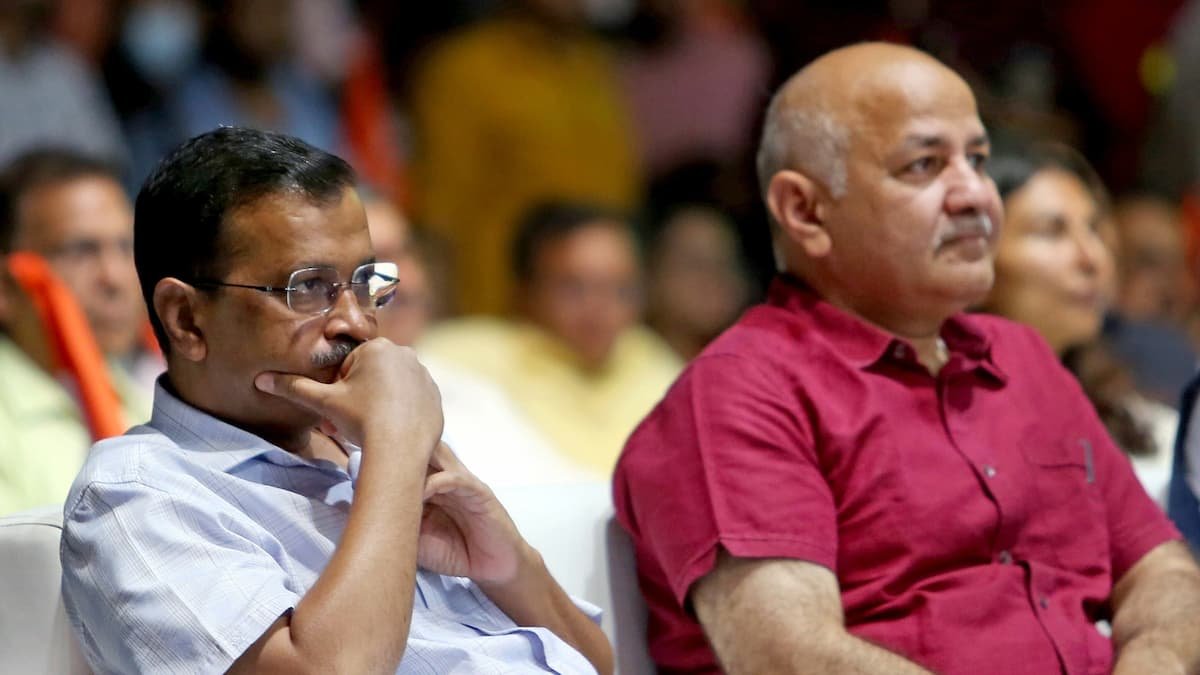
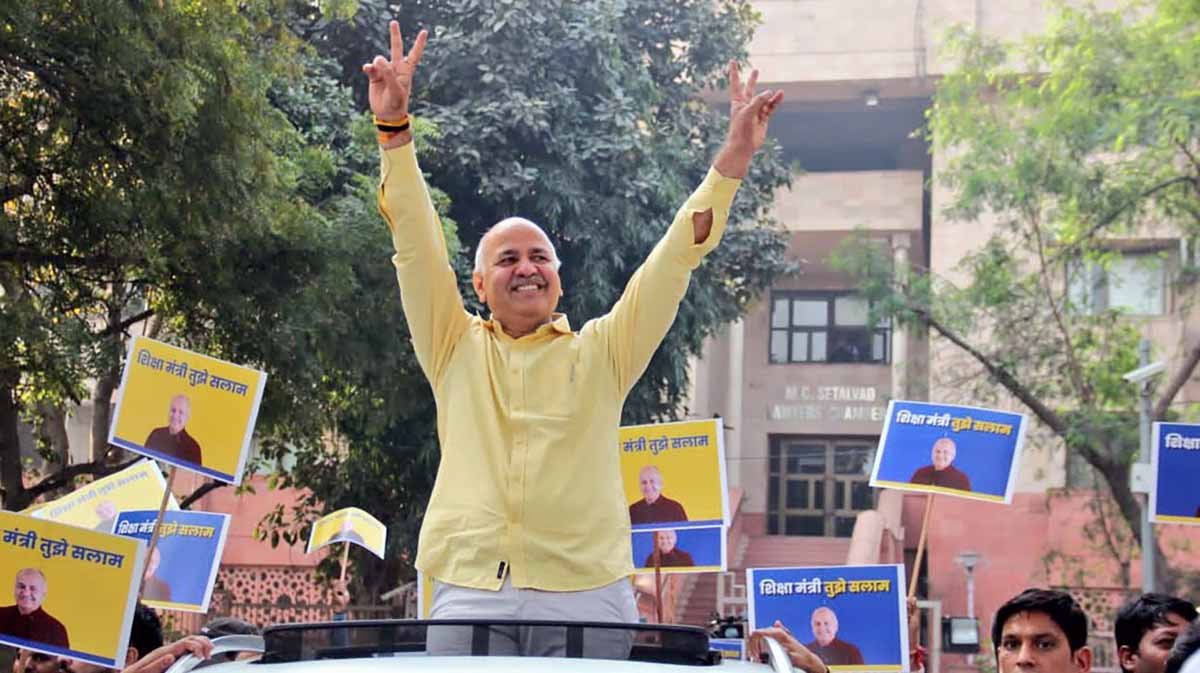
Manish Sisodia was arrested by the CBI following eight hours of questioning on Sunday, and soon after his arrest, the Bharatiya Janata Party (BJP) trained its guns at Chief Minister Arvind Kejriwal, terming him the “real kingpin” of the excise scam and adding that “he is next.” For two consecutive tenures, Arvind’s Aam Aadmi Party gave a tough time to the BJP in Capita. Recently, AAP’s candidate made it to the mayor’s chair in Delhi. In spite of several planned attacks, Arvind is still the preferred candidate of Delhi voters. If the BJP fails to destabilize the AAP, they will never be able to form a government in the capital.

Manish Sisodia gave full cooperation to the investigating agencies; he was made to confront them with evidence. But CBI officers gave different statements to the media, and all lap media channels turned no stone unturned to malign the Aam Aadmi Party and its leaders. Meanwhile, they must have thought that the absence of two of its most senior ministers—Sisodia and Satyendar Jain—is likely to hit the functioning of the AAP and the Delhi government severely, especially with the budget session expected to be held in a few days. With 18 departments in his portfolio, Sisodia is Chief Minister Arvind Kejriwal’s most trusted aide in the government as well as the party.

Ahead of appearing before the CBI, Sisodia said: “I want to tell Kejriwal ji, aap chaalu rakhiye.. logon ke liye aise hi ladte rahiye.. Modi ji, who is not even scared of Rahul Gandhi, is scared of only one party—that is AAP! They will put me in jail…. but we are not afraid, we will fight. Kejriwal is the only future of this country.”

Sisodia was questioned regarding various aspects of the excise policy, his alleged link with Dinesh Arora and other accused mentioned in the FIR, and details of message exchanges from multiple phones, among others. Why? The CBI investigators were not satisfied with Sisodia’s responses. It was claimed that he was not cooperating in the investigation and avoiding clarifications sought by officials on crucial points, leading to his arrest.

The CBI named 15 individuals in its FIR filed in connection with the Delhi excise policy 2021–2022, with Sisodia topping the list. In quoting allegations in a memorandum issued by the office of the LG, the FIR said that Sisodia, then Delhi Excise Commissioner Arava Gopi Krishna, and two other senior excise department officials were “instrumental in recommending and taking decisions pertaining to excise policy for the year 2021–22 without the approval of competent authority with an intention to extend undue favours to the licensee post-tender.”

It accused Vijay Nair, a former CEO of entertainment and event management company Only Much Louder; Manoj Rai, a former employee of wine and spirits giant Pernod Ricard; Amandeep Dhal, the owner of Brindco Spirits; and Sameer Mahendru, the owner of Indospirit, of being “actively involved in irregularities in the framing and implementation of excise policy.”

The FIR states that “some of the L-1 licence holders are issuing credit notes to retail vendors with the intent to divert the funds as an undue pecuniary advantage to public servants… showing false entries in their books of accounts to keep their record straight.” In August 2022, the CBI raided the residence of Sisodia in connection with the case.

If we see the numbers, in what other assemblies or even previous Delhi assemblies were sitting MLAs charged by police? And compare that with the fate of AAP MLAs. You will find that this witch-hunting is unprecedented; no other state’s sitting MLAs were targeted and hounded by police, the ACB, the CBI, and what have you. 

So yes, this is politically motivated, and it must be exasperating for many of the idealists among AAP supporters and politicians to deal with such atrocious abuse of power and the apathy of people on top of it, who somehow have been led to believe that these people deserve such treatment.

Central agencies are working suspiciously under the present ruling party. Cases of opposition politicians being dragged for political vendettas, whether Satyendra Jain, Sanjay Raut, Siddhu, or the National Herald, date back years. But when the Rafale deal investigation started, the CBI director was arrested and changed overnight. And the leader lord received a clean chit in a flash, implying that the central agencies are acting like “parrots in a cage.”

Today that government, courts, and central agencies are under the control of the BJP, so there is no point of conviction for BJP leaders. Central agencies have not taken any action against BJP leaders such as Yediurappa, Shivraj Singh Chouhan, or ABG Shipyard. I’m not aware of any summons or custodial demands made by BJP politicians. There is a long list of politicians who join the BJP to get clean chits, like Narayan Rane, Mukul Roy, Hemanta Biswa Sharma, and so on. In any case, when the party’s leadership changes, the cases against BJP leaders will be revisited.

There are hundreds of cases of central agencies filing against politicians (except BJP leaders), and the conviction ratio is negligible. Cases are being dragged out for years and years against politicians who are public figures. Their image is everything; they survive and make a career out of politics, and if nothing material is found, even after a clean slate, their public image isn’t maligned. So, my point is, is whatever the central agencies report as evidence material gospel, or should politicians also hit back for defamation of their public image?

Manish Sisodia was arrested; now the BJP aims Arvind Kejriwal

arvind kejriwal, aap, manish sisodia, sisodia, kejriwal, aam aadmi party
Manish Sisodia was arrested; now the BJP aims Arvind Kejriwal 8

As soon as Deputy Chief Minister Manish Sisodia’s arrest by the Central Bureau of Investigation (CBI) was announced, the Bharatiya Janata Party (BJP) trained its guns at Chief Minister Arvind Kejriwal, terming him the “real kingpin” of the excise scam, and party leaders were confident that “he was next.”

A digital device seized from the Delhi excise department led the CBI to unearth the alleged role of Deputy Chief Minister Manish Sisodia in the liquor policy case, sources from the agency have said. Sisodia was arrested by the CBI last night following an eight-hour questioning session. He is to be presented in court this afternoon.

The senior AAP leader faces corruption allegations for bringing a now-scrapped liquor sale policy to the national capital. The party has denied the charges, alleging political vendetta by the BJP-led central government.

According to sources in the central agency, a digital device was seized during a search at the excise department on August 19. While examining it, the agency traced one of the excise policy draft documents to a system that wasn’t part of the excise department network, the sources said.

When they questioned an excise department official in this connection, they got a lead to the computer in Sisodia’s office, the sources said, adding that they seized the system from the Deputy Chief Minister’s office on January 14.

The sources said that most of the files on the system had been deleted, but they managed to retrieve the records with the help of the CBI’s forensic team. The forensic examination, they said, revealed that the document under the scanner had “originated externally” and was received via WhatsApp.

CM Arvind Kejriwal said, “Manish is honest and a patriot. The whole country saw how he started giving good education to the children of the poor.” Those who looted billions are their friends. No action was taken against them. “People are watching, and only people will respond,” he said.

Arvind Kejriwal, the Chief Minister of Delhi, met with Manish Sisodia’s wife at their home and assured her of his full support.

Maharashtra NCP chief spokesperson Mahesh Tapase said it was ironic that Sisodia was arrested just a day after CM Arvind Kejriwal came down to Mumbai to meet Shiv Sena (UBT) chief Uddhav Thackeray. “Isn’t it ironic that just a day after Delhi Chief Minister Arvind Kejriwal met Uddhav Thackeray and extended support to the Aam Aadmi Party (AAP) in its fight to protect the Constitution, Delhi Deputy Chief Minister Manish Sisodia was arrested?” he asked.

The CBI then summoned and questioned a DANICS (Delhi, Andaman and Nicobar, Lakshadweep, Daman and Diu, and Dadra and Nagar Haveli Civil) bureaucrat from the 1996 batch who had served as Mr Sisodia’s secretary.

His statement was recorded before a magistrate in the first week of February. The officer, the sources said, told investigators that Sisodia called him to the residence of Delhi Chief Minister Arvind Kejriwal in March 2021 and gave him a copy of the Group of Ministers’ draft report on the excise policy. According to the official, Delhi Minister Satyendar Jain, who is currently in jail following his arrest in a money laundering case, was also present at the meeting, according to CBI sources.

It was from this draft copy of the GoM report that the “12% profit margin clause” originated, the sources said. According to CBI sources, there are no records of any discussion or file relating to how the 12% profit margin clause was determined. During his questioning, Sisodia was asked about this draft document, but he refused to share details, the CBI sources said.

In a statement issued after Sisodia’s arrest yesterday, the central agency said “he gave evasive replies and did not cooperate (in) the investigation despite being confronted with evidence to the contrary.” “Therefore, he has been arrested,” the agency said.

AAP MLA Saurabh Bhardwaj said, “The BJP has not only arrested Deputy CM Manish Sisodia but about 80 senior party leaders and councillors too.” They have been kept in a police station. They said it was detention, but detention lasts a maximum of one or two hours. Our leaders have been in jail since last night. They have kept them illegally. We want to know under which sections you have arrested them. “And if you are keeping them for so long in the police station, why haven’t you produced them in court?”

He also claimed that Gopal Rai, Adil Khan, and several other leaders were still in jail. “All our senior leaders and district in-charges have been arrested.” This clearly shows that the Center is giving a message of an announced “emergency,” like the Congress, and has put all the senior party leaders behind bars. “We want answers from the central government,” he added.

Meanwhile, DCP (South) Chandan Chowdhary said none of the leaders or protesters have been arrested. “They are being released,” she added.

The Aam Aadmi Party on Monday slammed Prime Minister Narendra Modi for deploying a large number of security forces outside its office and asked what the BJP was afraid of. In a tweet in Hindi, the party said: “After arresting Manish Sisodia ji yesterday in a fake case, PM Modi has again deployed a large number of security forces outside AAP’s office today.” What is the BJP afraid of? Your end at the hands of AAP? (sic)”

“Why are you afraid if you haven’t done anything?” Union Minister Anurag Thakur, reacting to the arrest of Deputy CM Manish Sisodia, said, “I believe that some people, instead of cooperating in the investigation, make too much of a clamor in the media.” What fear has gripped you? Why are you afraid if you haven’t done anything? “But if you have done something, then there is no point in saying anything in your defense.”

“Ballot Chor” vs “Khalnayika”: Now AAP, BJP in poster war over MCD ruckus

aap, aam aadmi party, delhi mcd, mcd elections, oberoi, mayor, delhi mayor, ruckus, aap vs bjp, Khalnayika, ballot chor
"Ballot Chor" vs "Khalnayika": Now AAP, BJP in poster war over MCD ruckus 10

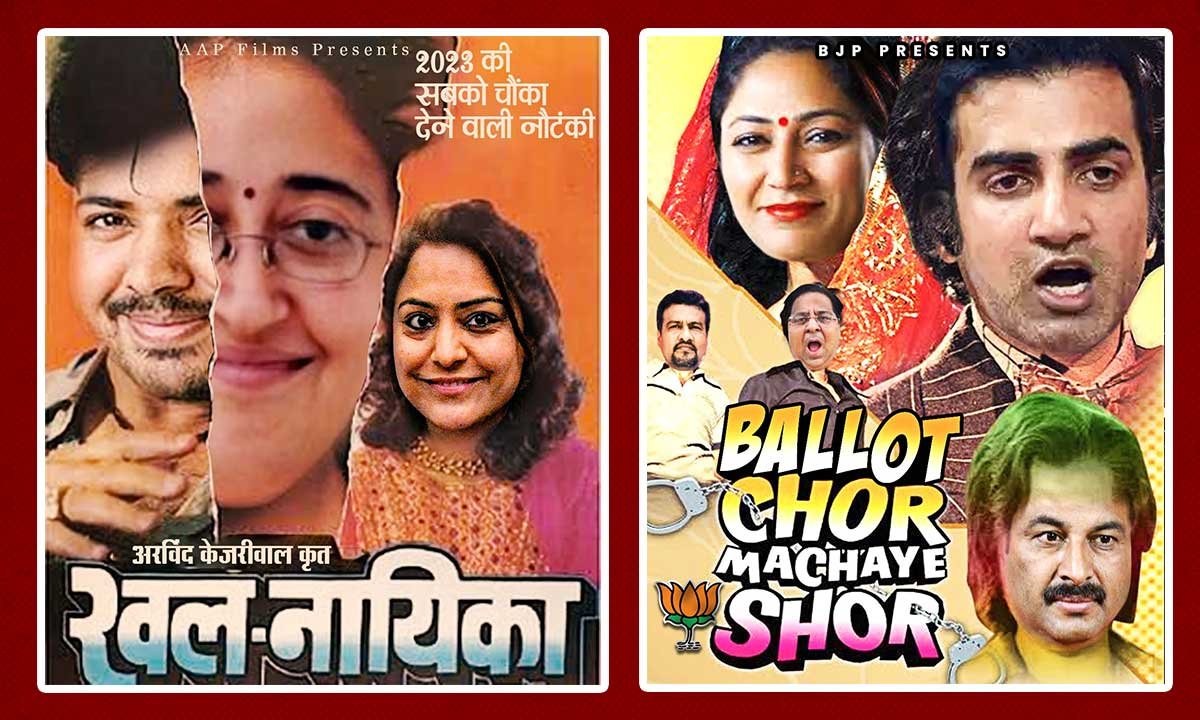
Taking the confrontation in the Municipal Corporation of Delhi (MCD) House over the six-member standing committee election to cyberspace, the BJP and the AAP resorted to a poster war on social media.

As BJP shot off a “Khalnayika” jibe at AAP, the latter countered with a “Ballot Chor” jeer. “BJP people who are making so much noise are the killers of democracy and ballot chors (thieves),” read the tweet of AAP, roughly translated from Hindi.

AAP also shared a post on social media, similar to a film’s poster, sarcastically attacking the BJP, saying, “Ballot Chor Machaye Shor.” The poster has pictures of BJP MPs Manoj Tiwari and Gautam Gambhir and other leaders.

This comes after the BJP took a “Khalnayika” jibe at AAP by sharing a satirical post on social media.

“AAP’s ‘khalnayika’ (villain) who caused violence and showed dictatorship in the House,” read the tweet from BJP Delhi, roughly translated from Hindi.

BJP Delhi shared a sarcastic post similar to a film’s poster, which read: “AAP Films presents “Khal Nayika” by Arvind Kejriwal—the surprising drama of 2023.”

Meanwhile, the Delhi High Court on Saturday, in a special hearing, stayed the re-election of the Standing Committee of the Municipal Corporation of Delhi, which was scheduled to be held on February 27, 2023.

The Bench of Justice Gaurang Kant, while staying the re-election of Standing Committee members, also issued notice to all respondents, including newly elected Delhi Mayor Shelly Oberoi.

Delhi’s mayor on Friday announced to hold fresh elections on February 27 at 11 a.m. after chaos at MCD House.

The MCD House fell into chaos on Friday as BJP and AAP members resorted to punches, jostling, and raining blows at each other over the results of the election to the six-member standing committee.

The unruly scenes erupted after Mayor Shelly Oberoi declared one vote invalid.

Following a commotion in the House that prevented the MCD from electing a six-member standing committee, AAP Councillor and Mayor Shelly Oberoi claimed on Friday that BJP Councillors dragged and shoved her chair.

Mayor Oberoi reached the Kamla Market police station to register an FIR against BJP councillors after the MCD House witnessed yet another stormy session. She requested that police officials provide her protection.

Oberoi said standing committee elections were held as per BJP demands. “Still, they created a ruckus and came up on stage to attack me.” I thank female Civil Defense personnel for saving me. BJP members physically assaulted AAP female members. “BJP accepts your defeat,” she said.

It was the third day of commotion in the house.

“As soon as the voting was taking place, the BJP councillors clearly sensed that they were losing.” That is why they stormed the session. As soon as I was about to announce the result, the BJP councillors, especially Arjun Marwah, Chandan Chaudhary, and Ravi Negi, came to the stage. Chaudhary dragged my chair and pushed me. “I ran for my life,” Shelly said.

She also alleged that the BJP “deliberately” created a ruckus for over 2.5 months to stall the MCD meeting and run the House unconstitutionally.

“During the standing committee election, the BJP always caused a commotion.” That is why I am here today to register a police complaint. “I have requested that the SHO file an FIR against the BJP councillors, especially those three, and provide me with protection,” she added.

Shelly Oberoi declared that the election of members of the MCD Standing Committee will now be held on February 27. The House was adjourned until February 27.

BJP members also reached the Kamla Market police station to file an FIR against the AAP. They alleged an “attempt of murder on AAP’s female councilor.”

BJP Councillor Meenakshi Sharma later filed a police complaint at Kamla Market Police Station against AAP Councillors for “causing grievous harm and injury and committing criminal assault with women Councillors of BJP intending to outrage the modesty and giving threat of life with criminal conspiracy”

Meenakshi Sharma said someone from AAP hit her with a sharp object. “They also touched my neck.” It was done by a male councilor. They haven’t allowed a single house to survive. I do not know if she is Delhi’s mayor or the AAP’s. “She acts on orders by Kejriwal and their masters,” she said.

In the unprecedented fight in the House and resulting commotion, AAP Councillor Ashok Kumar Maanu collapsed. He later recovered and joined the party’s protest. Both the BJP and AAP blamed each other for the violence.

According to AAP leader Saurabh Bharadwaj, the AAP received 138 votes in a poll of six members of the Delhi MCD Standing Committee, while the BJP received fewer.

“AAP has 134 councillors; one joined the BJP. “Since Congress councillors are not here, it means there are some BJP councillors who voted for AAP,” he said.

Harish Khurana, a Delhi BJP leader, accused the AAP of using violence and not abiding by the rules.

“Election officers declare the election and say that votes declared invalid by the mayor are valid.” Three candidates from each of the AAP and BJP have won. But AAP engages in hooliganism here as instructed by Kejriwal. “We will not tolerate this goondaism and approach the court,” he said.

AAP leaders attacked the BJP over the ruckus. “They are so shameless that they even attacked women and the mayor.” “BJP goons did this.”

AAP leader Atishi alleged that the BJP showed goondaism in the Civic Center.

“The standing committee election was going on. When counting started, the BJP realized they were losing, and they created a ruckus. “The mayor was attacked and physically assaulted by the BJP male member,” she said.

“What behavior is this?” This is shameful and condemnable. The country is seeing this. The BJP should accept their defeat. I request the BJP to stop their goondaism. “Those who have attacked the mayor will be sent behind bars,” Atishi added.

BJP leader Vijender Gupta said election results are being tampered with, wrong announcements are being made, and they are indulging in fistfights.

Gupta said six members were supposed to have been elected to the Standing Committee.

“Three members each from the AAP and BJP were elected. One AAP member lost. All this was done to make him win, and the results were tampered with. “We demand a CBI inquiry; such people should be arrested, and action should be taken,” he said.

Former Delhi Mayor Aarti Mehra said the mayor has no right to decide the result.

She can only announce it. We will go to court and take legal action against her. I can show a video where Atishi is seen giving directions to create a ruckus. Strong action will be taken. “We will fight against these goons,” she said.

A video shared by the Delhi BJP showed Atishi in conversation with an AAP councillor moments before the councillor was seen entering into a violent scuffle.

Voting underway for Pune districts Kasba, Chinchwad Assembly by-elections

kasba constituency, chinchwad, by-elections, pune districts
Image: ANI

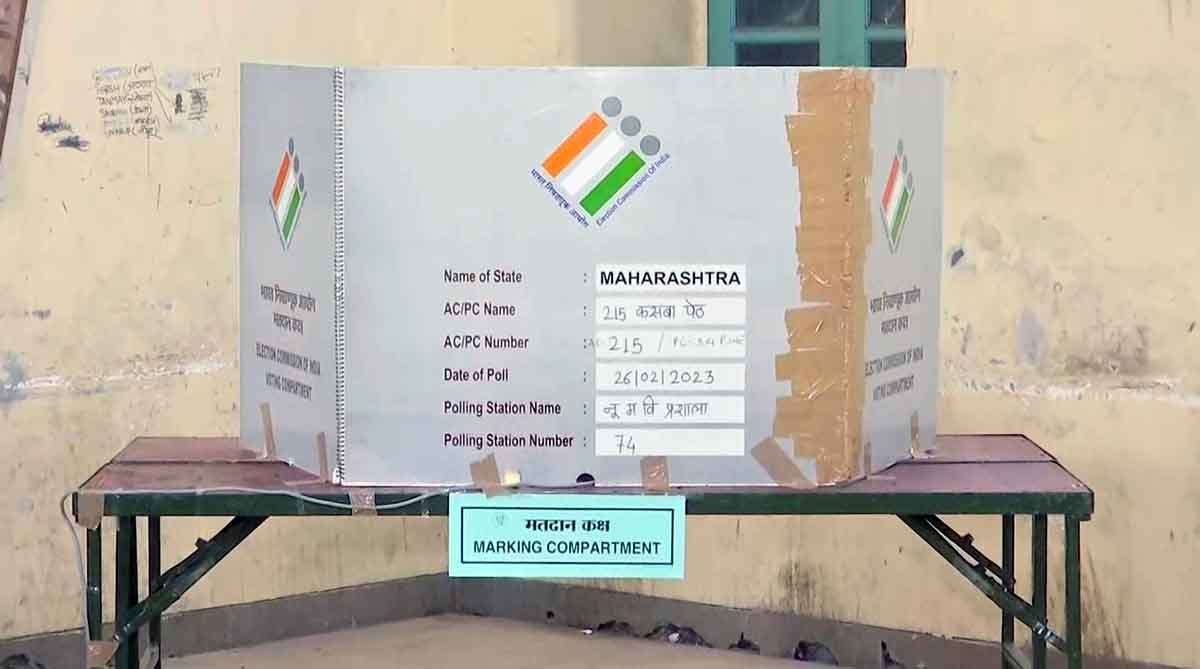
According to election officials, voting for the by-elections to Kasba and Chinchwad Assembly seats in Maharashtra’s Pune district began at 7 am on Sunday.

The bypolls in Kasba and Chinchwad were necessitated due to the deaths of their respective Bharatiya Janata Party (BJP) MLAs, Mukta Tilak and Laxman Jagtap.

In Chinchwad, the district election authorities welcomed early voters by laying “rangoli” (colorful patterns) and offering roses. In the Kasba constituency, too, voters were seen exercising their franchise in the morning.

District election authorities said adequate security arrangements were made in both constituencies in view of the polling.

“Necessary arrangements have been made at all the polling stations, and I appeal to all the voters to come out and exercise their franchise without any fear,” said Sachin Dhole, the election officer for Chinchwad constituency.

In the Kasba Assembly seat in Pune city, there is a contest between the BJP’s Hemant Rasane and the Congress’s Ravindra Dhangekar, who is supported by the Maha Vikas Aghadi alliance of the Congress, Nationalist Congress Party (NCP), and Shiv Sena (Uddhav Balasaheb Thackeray).

In Chinchwad, an industrial township near Pune, the contest is between Ashwini Jagtap of the BJP and Nana Kate of the NCP.

There are 510 polling centers and 5,68,954 registered voters in Chinchwad, and 215 polling centers and 2,75,428 registered voters in Kasba constituency.

Chief Minister Eknath Shinde, Deputy CM Devendra Fadnavis, NCP chief Sharad Pawar and party leader Ajit Pawar, state Congress president Nana Patole, Shiv Sena (UBT) leader Aaditya Thackeray, and others campaigned in both constituencies over the last 10 days.

Congress candidate Dhangekar on Saturday went on a hunger strike after alleging the BJP distributed money to voters. He ended the strike after the police assured him they would investigate the matter.

The counting will take place on March 2.

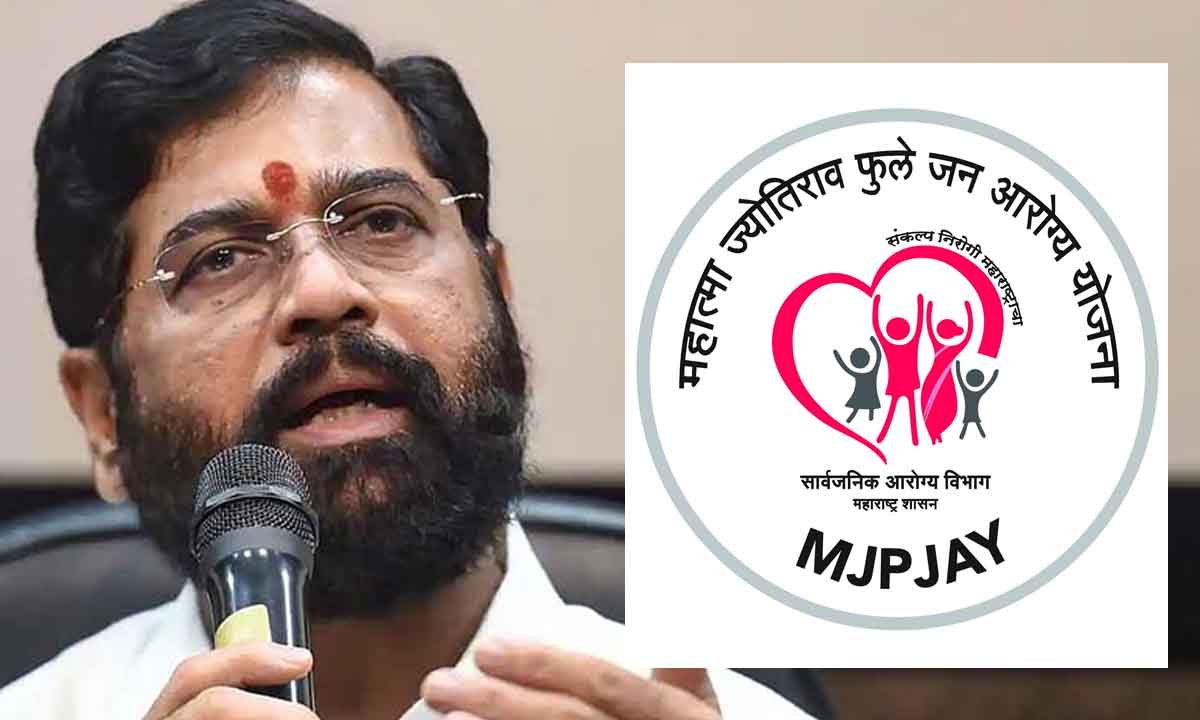
The MJPJAY, Maharashtra’s health scheme program, is about to go through its largest expansion

mjpjay, eknath shinde, health care, health scheme, maharashtra, maharashtra health care, Mahatma Jyotiba Phule Jan Arogya Yojana
The MJPJAY, Maharashtra's health scheme program, is about to go through its largest expansion 13

A special committee under the commissioner, the National Health Mission, has been formed to examine its cost implications for the state, according to a leading daily. Maharashtra currently pays an annual premium of Rs 1,700 crore to cover 2.2 crore families. Maharashtra could lead the charge in rolling out universal health coverage among the major states.

The proposal explores the possibility of turning it into a scheme that is universally applicable to all state citizens, irrespective of income. A health-plan revamp may see 500 empaneled hospitals added. Five key changes have been proposed to the Mahatma Jyotirao Phule Jan Arogya Yojana, including a revision of surgery and procedure rates, unchanged since 2018.

Sanjay Khandare, principal secretary (health), said, “The committee’s decision on the feasibility and cost is awaited.” “The core fundamentals of the Yojana are under assessment for the first time, and they aim to implement the changes in 2–3 months.”

The renewal aims to align the yojana with the Ayushman Bharat-Pradhan Mantri Jan Arogya Yojana (PMJAY), a parallel central-state scheme that covers a different set of receivers. PMJAY provides coverage of Rs 5 lakh to beneficiary families and covers 1,209 medical procedures.

The State Health Assurance Society, which governs the Phule Yojana, has proposed to increase the number of medical procedures from 996 to 1,209. About 500 more empaneled hospitals will be added, bringing the total to 1,500. The limited number of empaneled hospitals and their uneven distribution across Maharashtra have been significant points of criticism. In Mumbai, most significant hospitals and even mid-range facilities have not participated in the scheme over concerns about cost.

Universal health coverage would mean better social security for more citizens, said a senior official, adding that it exists in J&K and most northeastern states. Interestingly, universal coverage was extended under the Yojana during COVID-19, but it couldn’t benefit the expected numbers. State officials underlined that the scheme has supported the treatment of 55 lakh people in the past decade for a premium of roughly Rs 13,000 crore.

After alliances with the CPI, Sambhaji Brigade, and VBA, is Thackeray going to try the AAP?

thackeray, aap, aam aadmi party, kejriwal, arvind kejriwal, sena-aap alliance, arvind sawant, vba, cpi, sena, ubt, shiv sena ubt
After alliances with the CPI, Sambhaji Brigade, and VBA, is Thackeray going to try the AAP? 15

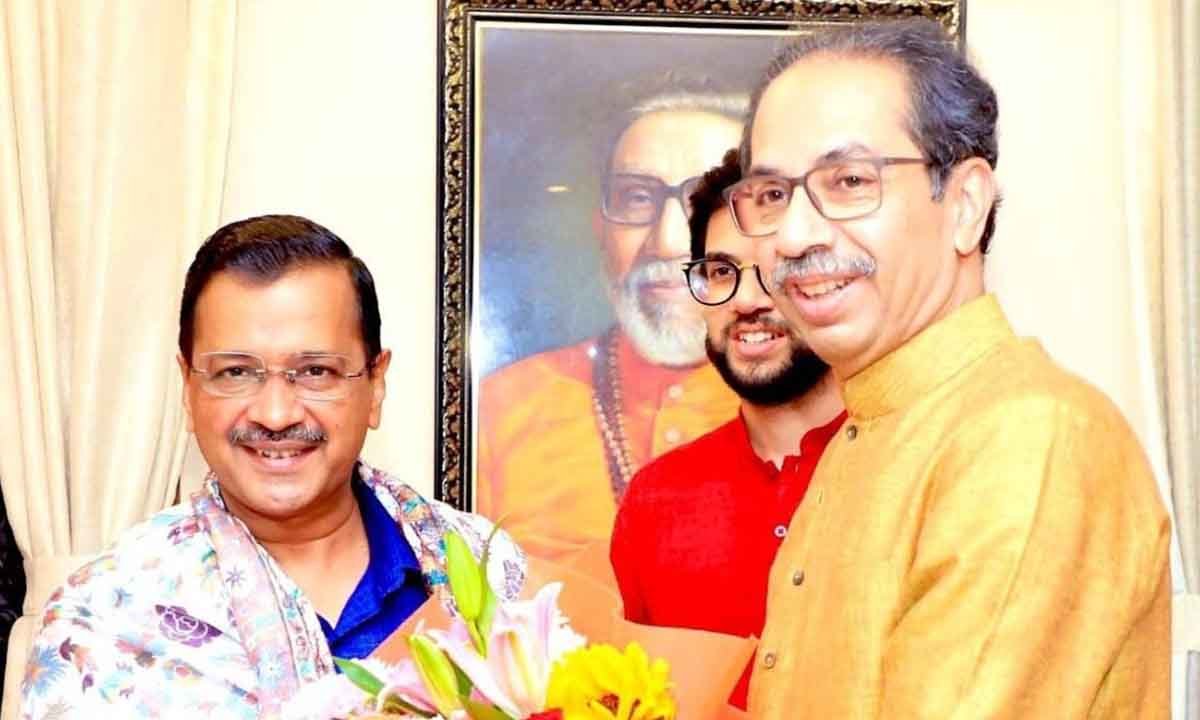
Aam Aadmi Party (AAP) President and Delhi Chief Minister Arvind Kejriwal met Shiv Sena-Uddhav Balasaheb Thackeray President Uddhav Thackeray at his residence, “Matoshree.”

At this time, Punjab Chief Minister Bhagwant Mann, AAP MP Sanjay Singh, and MP Raghav Chaddha were also present.

Kejriwal and Thackeray had a long discussion about the situation in the country and other national issues.


Also read: Another setback to Thackeray, as SC refuses to stay EC’s decision on the Shiv Sena name and symbol


In a joint press conference, Kejriwal referred to Balasaheb Thackeray as a tiger, and Uddhav as the tiger’s son.

“Entire Maharashtra is with Uddhav Thackeray.” The Supreme Court will also give them justice in the future. “Until then, Uddhav Thackeray’s Shiv Sena will win every election in Maharashtra,” he added.

When asked about the Sena-AAP alliance, Kejriwal said, “You will get answers to all your questions… once the elections start.”

Many people are surprised by Kejriwal’s remarks, which are likely to create suspense in the political sphere.

Shiv Sena (UBT) already has a Maha Vikas Aaghadi (MVA) alliance with the Nationalist Congress Party and Congress in the state.

After the Eknath Shinde-led camp split the Shiv Sena and joined hands with the Bharatiya Janata Party (BJP), the Uddhav Thackeray-led Shiv Sena chose to ally with the Sambhaji Brigade.

For the Andheri East by-elections, Thackeray’s Sena joined hands with the Communist Party of India.

Following that, Uddhav’s Shiv Sena formed an alliance with Prakash Ambedkar’s Vanchit Bahujan Aaghadi (VBA) for the upcoming Brihanmumbai Municipal Corporation (BMC) elections.

Shiv Sena (UBT) MP Arvind Sawant denied the alliance with the AAP. He said, “This is not happening as we already joined hands with other parties.”

AAP leader Dhananjay Shinde told us, “All decisions in regard to the alliance are taken by our central committee.” “We will follow the decision taken at the national level.”

Since the Shiv Sena split, there has been confusion among Maharashtrians as a result of such constant changes in allies.

Bankrupt Pakistan pretending to be normal?

pakistan, pakistan economy, crisis, economy crisis, finance, pakistan finance, financial crisis
Image: AP

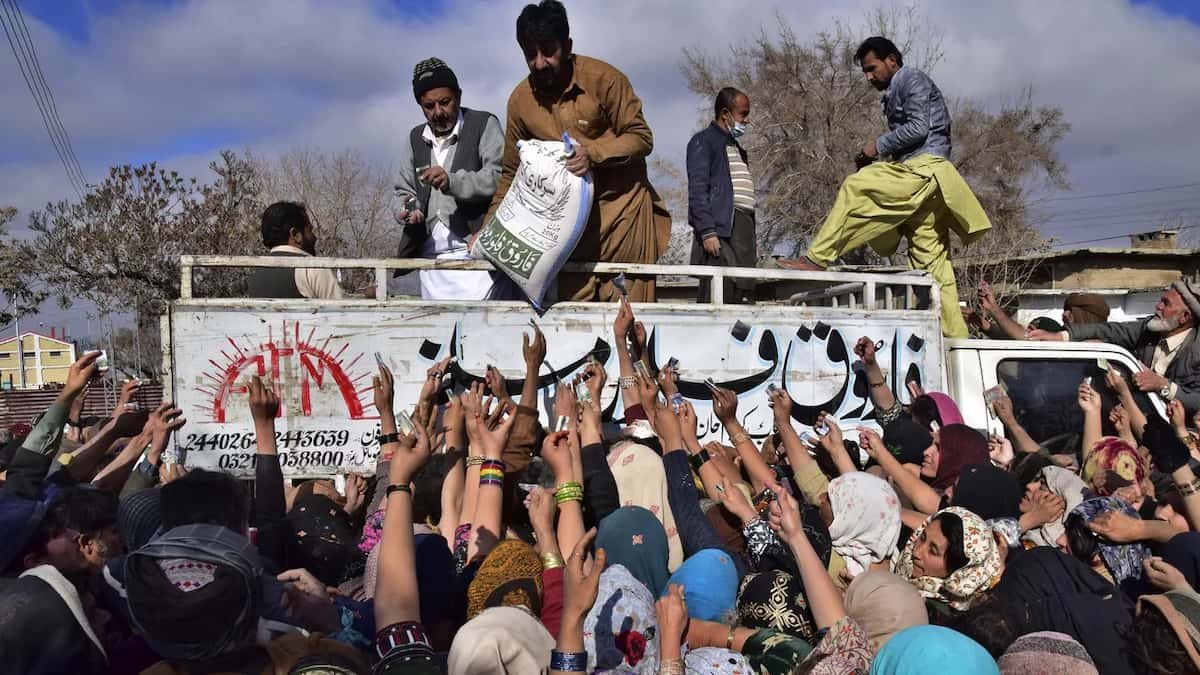
Pakistan is struggling with its worst economic crisis in decades and its lowest foreign exchange reserves in 10 years, which are only enough to pay for less than three weeks’ worth of imports. Meanwhile, fiscal adjustments demanded by the IMF are fueling decades-high inflation. The country’s international bonds extended their decline, with the 2027 dollar-denominated bonds dropping more than 1.2 cents in the dollar to trade just over 40 cents. China is already Pakistan’s single largest creditor, with its commercial banks holding about 30% of its external debt. China has become Pakistan’s big brother, with its own motives. China has provided economic, technical, and military assistance to Pakistan; both sides regard each other as close strategic allies. Mutual relations have evolved from China’s initial policy of neutrality to an extensive partnership driven primarily by Pakistan’s strategic importance.

At a time when Pakistan is in a deep economic crisis and has gone bankrupt, it will receive a new USD 700 million loan from China. From staring at bankruptcy to dealing with a food crisis, all-time high fuel prices, and all-time low forex reserves, Pakistan’s crisis is going from bad to worse. But even at such an economically crucial time, the crisis-hit country imported 2,200 luxury vehicles even as shipments of essential consumer goods remained stuck at ports, according to a report by Pakistan-based newspaper Dawn.

Pakistan is grappling with a foreign exchange crisis, which has halted almost all imports. An IMF team is reportedly scheduled to visit the country this week to talk about an urgent bailout package. The report said that Pakistan imported 164 luxury electric vehicles between July and December of 2022. Pakistan imported nearly 1,990 such vehicles in the last six months. On the other hand, over 5,000 containers of consumer and industrial goods were held up at ports. The import of these vehicles is allowed only for overseas Pakistanis, but this facility is being misused by some importers. Pakistan’s foreign reserves have recently fallen to USD 3.7 billion, a record low.

Pakistan is grappling with inflation, the aftermath of the disastrous flooding in 2022, and an acute energy shortage. It only has enough for a few weeks of imports. In response to the crisis, Pakistan’s state bank began this month refusing to issue letters of credit for all imports, barring food and medical supplies. Pakistan has already declared bankruptcy, and there are looming fears that the cash-strapped nation may not be able to get a USD 7 billion bailout from the International Monetary Fund (IMF). At a time when the country is in a deep economic crisis and has gone bankrupt, Pakistan will this week receive a new USD 700 million loan from China. The USD 700 million credit facility, made through the state-owned China Development Bank, will boost Pakistan’s foreign exchange reserves by about 20% and comes as the country is thrashing out a deal with the International Monetary Fund (IMF) to unlock funds from a USD 6.5 billion bailout.

The recently announced USD 45 billion CPEC is a case in point. The entire project will be built by the Chinese with Chinese machines, equipment, materials, labor, and expertise; the entire multiplier effect will go to Chinese enterprises. And the pricing is designed to reduce Pakistan to a skeleton. For instance, the solar power tariff has been locked in for 25 years at USD 0.14 a unit, more than twice what countries like India are paying and even more than what OECD countries pay. China will recover its investment in less than 30 months and suck Pakistan’s blood for the next 22–1/2 years while crippling its economy with exorbitantly priced electricity that will make its businesses a wheel-chair case.

They had a stronger economy than India for the first three decades. For years, Pakistan told India how God had given them the advantage of encircling India and not allowing India to freely trade through Pakistan as a reward for worshiping the right god. However, they totally forgot that God had given India their water, which we never announced to them as an act of God’s punishment for them. Instead, every successive government tried to remain silent and wait till Pakistanis realized by themselves that India is so magnanimous that they never speak of the advantages they have over Pakistan as an act of God.

Perhaps now Pakistan is slowly waking up to the fact that water is more important than land, and India cannot freely reward Pakistan for being a bad neighbor. The biggest economic blockade that would affect Pakistan would be the Indus water, as most of Pakistan is still reliant on agriculture, and even a 25% reduction in water will affect its economy more than any direct sanction will. The other major effect on its economy would be Pakistan’s own image as a terrorist-infested land, which does not allow investors to look at Pakistan seriously as a great destination for investment. India’s constant pressure in Kashmir also plays a role in bankrupting Pakistan, as they have to spend the same amount as India to keep the war going.

Either way, Pakistan’s military does not care if the economy does not grow; they are more interested in taking commission on weapons purchases and providing aid in the name of fighting terrorism. Kashmir is merely a money-spinning racket for the Pakistan army, and I think that it is a major economic problem for Pakistan. The Pakistani establishment—bureaucracy and politicians—are to blame for the current economic mess as the law and Constitution are not followed in Pakistan.

The most serious issues are a lack of goods and services, inflation and a decline in currency value, and difficulty attracting foreign investment. The consequences for the citizens include increased costs of living and decreased access to basic services. increase in death as it will cause shortages in life-saving medicine. Frequent changes in regime and an increase in terrorism will never allow Pakistan to settle peacefully.