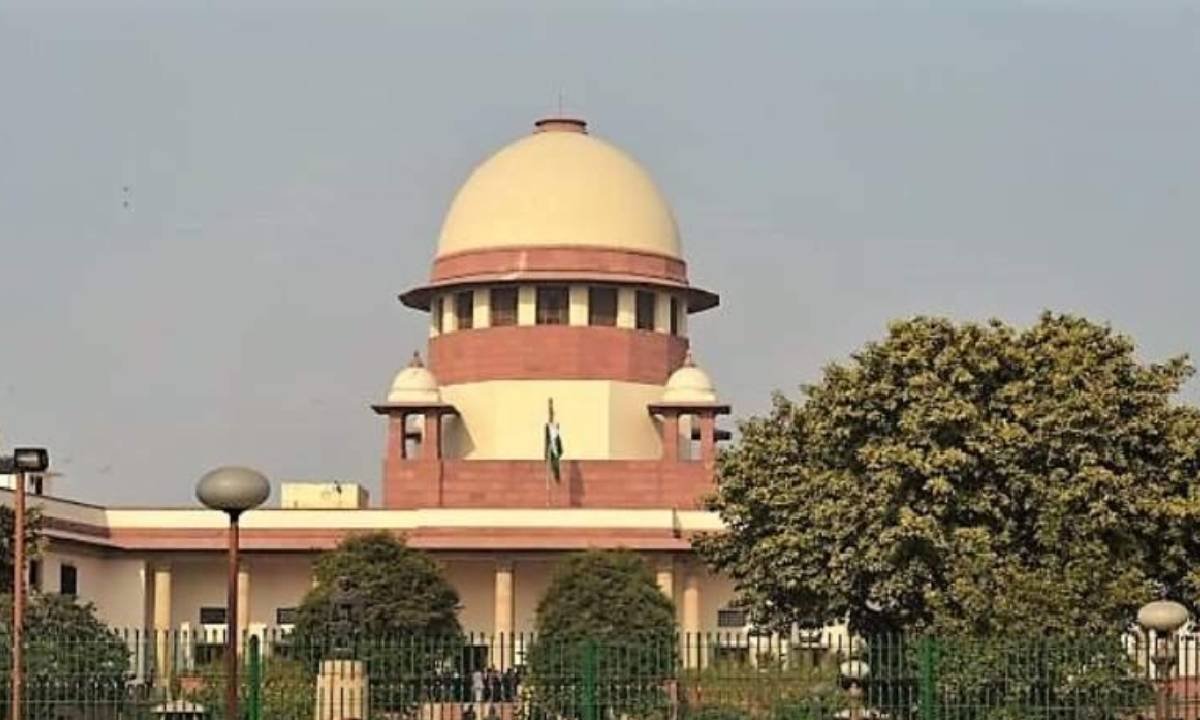
The Constitution Bench of the Supreme Court on Wednesday deferred the hearing the pleas challenging the Centre’s decision to demonetize currency notes of Rs. 500 and Rs 1,000 in 2016 for November 24 and said that they want to conclude the hearing on this issue this year.
A five-judge bench of Justices Abdul Nazeer, BR Gavai, AS Bopanna, V Ramasubramanian and BV Nagarathna was hearing pleas challenging the Centre’s decision to demonetize currency notes of Rs. 500 and 1,000 in 2016.
Justice Nazeer fixed the matter for further hearing on 24th November. Justice Gavai said that they want to finish this matter this year.
Meanwhile, Attorney General R Venkataramani seeks a week’s time to prepare the comprehensive affidavit that the court had directed to file in the last hearing.
In the last hearing, the Supreme Court’s Constitution Bench asked the Centre and RBI to file a comprehensive affidavit on the decision to demonetize currency notes of Rs 500 and Rs 1,000 in 2016.
Various petitions were filed arising from the decision of the Government of India to demonetize the old notes of Rs 5,00 and Rs 1,000. One of the petitions was filed by Vivek Narayan Sharma. The petition has challenged the notification dated 8 th November 2016.
Tata Power Renewable Energy (TPREL), a subsidiary of Tata Power, receives the ‘letter of award’ (LoA) from the Maharashtra State Electricity Distribution Corporation (MSEDCL) to set up 150 megawatt (MW) solar project in Solapur, Maharashtra.
The LoA was won through tariff-based competitive bidding followed by an e-Reverse auction. The project will be commissioned within 18 months from the power purchase agreement (PPA) execution date, the statement from TPREL said.
On the project win, Ashish Khanna, chief executive officer, Tata Power Renewable Energy, said, “We feel honoured to receive the LoA from MSEDCL for the 150 mw solar project. The award is in line with our commitment to create a sustainable ecosystem for transitioning towards a greener future and affirms our potential to deliver world-class solar projects.”
With this, the total renewables capacity of TPREL reaches 5,786 mw with an installed capacity of 3,877 mw (solar — 2,949 mw and wind — 928 mw) and 1,909 mw under various stages of implementation.
Tata Power Renewable Energy (TPREL) is a subsidiary of Tata Power Company and is one of the most significant renewable energy players in the country, according to the statement.
TPREL is a developer of renewable energy projects (including solar, wind, hybrid, round-the-clock (RTC), peak, floating solar, storage systems including battery storage) which it owns, operates and maintains. It also offers comprehensive green energy solutions for rural and urban areas like turnkey, engineering, production and construction (EPC) and operations and maintenance (O and M) solutions for various business segments like utility-scale projects, solar rooftop, and solar pump systems.
Along with its extensive portfolio of renewable solutions, it has a latest solar cell and module manufacturing plant of over 1.1 GW at Bengaluru and plans to set up a greenfield 4 GW solar cell and 4 GW solar module plant.
In addition, TPREL also provides electric vehicle (EV) charging solutions across various segments and other advisory solutions across the renewable sector. As on date, TPREL said its total renewable utility capacity is 5,786 mw including 1,909 mw projects under various stages of implementation and its operational capacity is 3,877 mw which includes 2,949 mw solar and 928 mw wind
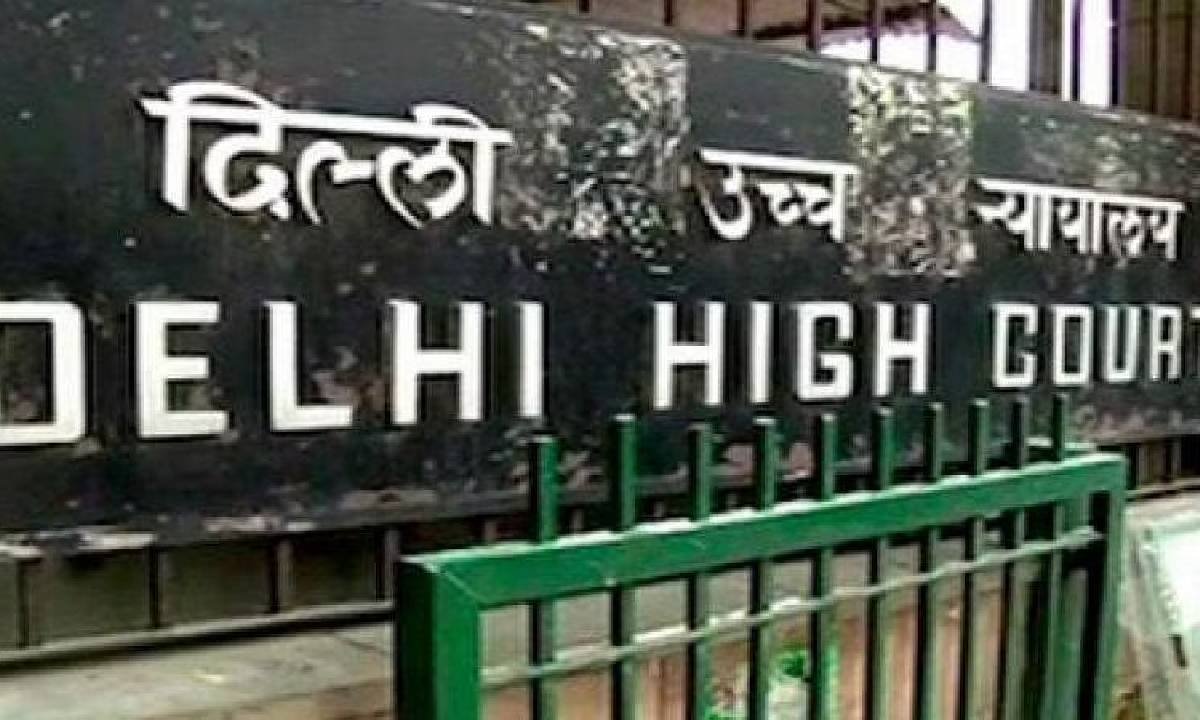
The Delhi High Court on Wednesday issued notice to the Central Government and other respondents on three petitions challenging the notification issued in regard to the Delimitation of Municipal wards in Delhi.
The Bench of Justice Satish Chander Sharma and Justice Subramonium Prasad while issuing notice to all respondents, refused to stay on the notification and refers to the decision that once the date of elections is notified, it cannot be stopped.
The Court issued notice on all three petitions and listed the matter for December 15, 2022. The same bench had last month also sought responses from respondents on a plea that had also challenged the notification of Dimilitation of Municipal corporation.
The court is to hear all matters together on the next date of hearing.
On Friday the State Election Commissioner Vijay Dev announced the date of December 4, 2022, for the elections of the Municipal Corporation of Delhi (MCD) and the counting of votes will take place on December 7, 2022.
Earlier, Delhi Pradesh Congress Committee (DPCC) President Chaudhary Anil Kumar had moved the Delhi High Court stating that the decision taken by respondents without consideration of the significant factors/issues and application of its mind determined 250 wards within the Municipal Corporation of Delhi completely ignoring the ratio of area population and without dividing them in equal proportion as per the population of Delhi according to the last population Sensex of 2011 and natural boundaries.
The plea alleged that the formula adopted by the Respondents for the delimitation of wards is wholly arbitrary, irrational, unintelligible, confusing, and suffered from various legal infirmities.
It states that the Report on delimitation was prepared by the Delimitation committee in complete haste without considering the relevant factors.
The plea sought the issuance of direction to the respondents to make fresh delimitation of the wards as per the formula prescribed for the delimitation of the wards divided by the total number of wards and the average population of each ward that each ward has an equal population as per 2011 plus/minus ten percent.
The plea further stated that the very purpose of conducting delimitation is to ascertain an equal number of divisions of the electorates in the various wards and the same has been based on the population figures as obtained from the most recent Census.
However, by the promulgation of the impugned order, this very purpose behind delimitation has become redundant, as in the final draft order the notified 250 wards are not having an equal number of electorates.
It also stated that the Respondents in the final draft order have turned many localities into isolated islands, as they are physically within some wards but in delimitation, they have been shown inside a ward which is many kilometres away.
The Respondents in the final draft order have pushed the disadvantaged wards of the lower income group further into the dark by increasing their population sizes, whereas elite and richer wards have been handpicked for smaller population sizes, plea read.
The Central Government decided to unify the three civic bodies in the National Capital and also conduct a delimitation process to decrease the number of wards.
A bill to unify the three civic bodies was approved by the Lok Sabha on 30th March 2022 and by the Rajya Sabha on April 5, 2022.
The bill became an Act after the President of India gave his assent to the said Bill on 18th April 2022.
The Delhi Municipal Corporation (Amendment) Act, 2022 reduced the number of wards in the National Capital to 250 from the existing 272.
Center on Wednesday announced that it has made amendments in the Foreign Trade Policy and Handbook of Procedures to allow for International Trade Settlement in Indian Rupees (INR) and settlement of exports/imports in Indian Rupees.
“The Government of India has made suitable amendments in the Foreign Trade Policy and Handbook of Procedures to allow for International Trade Settlement in Indian Rupees (INR) i.e., invoicing, payment, and settlement of exports/imports in Indian Rupees,” Ministry of Commerce & Industry said in a statement.
“Accordingly, the Directorate General of Foreign Trade (DGFT) had earlier introduced Para 2.52(d) vide Notification No. 33/2015-20 dated 16.09.2022 to permit invoicing, payment and settlements exports and imports in INR in sync with RBI’s A.P. (DIR Series) Circular No.10 dated 11th July 2022,” the statement added.
In continuation to the above notification, changes have been introduced under Para 2.53 of the Foreign Trade Policy, for grant of exports benefits/incentives/fulfilment of Export Obligation under the Foreign Trade Policy, for export realisations in Indian Rupees as per the RBI guidelines dated 11th July 2022.
“The updated provisions for Export Realisation in Indian rupees been notified for,imports for exports (Para 2.46 of FTP), export performance for recognition as Status Holders (Para 3.20 of FTP), Realisation of export proceeds under Advance Authorisation (AA) and Duty-Free Import Authorisation (DFIA) schemes (Para 4.21 of FTP) and Realisation of Export Proceeds under Export Promotion Capital Goods (EPCG) Scheme (Para 5.11 of HBP),” the commerce ministry said.
Accordingly,benefits/incentives/fulfilment of Export Obligation under the Foreign Trade Policy has been extended for realisations in Indian Rupees as per the RBI guidelines dated 11th July 2022.
Given the rise in interest in internationalisation of Indian Rupee, the given Policy amendments have been undertaken to facilitate and to bring ease in international trade transactions in Indian Rupees.
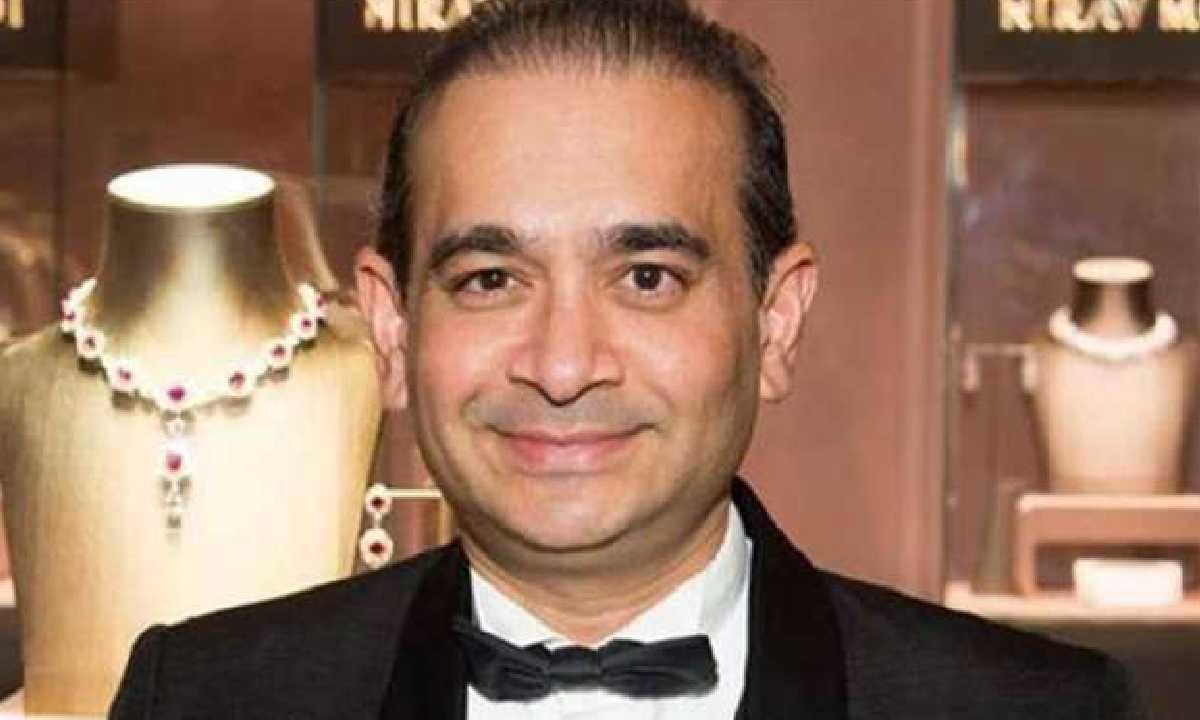
Fugitive diamond businessman Nirav Modi on Wednesday lost his appeal against extradition to India with a United Kingdom court dismissing his plea.
The High Court of London (United Kingdom) on Wednesday dismissed the appeal of Nirav Modi, who is wanted in India to face money laundering and fraud cases.
Nirav Modi, who is a prime accused in the Rs 13,500 crore PNB scam, had fled India.
He lost his appeal after he had moved High Court in London against extradition on mental health grounds. The Bench of Justice Stuart Smith and Justice Robert Jay of the High Court said “no features of psychotic illness”.
The court rejected Nirav Modi’s counsel’s claims that he will die by suicide due to severe depression and said “Nirav Modi neither is nor is very likely to be at the most severe end of the scale of depressive illness”. “He has so far displayed no features of psychotic illness. Although he has exhibited persistent suicidal ideation, he has neither attempted suicide or deliberate self-harm nor disclosed plans to do so, except in the most vague and general way,” the court said.
The High Court also noted the steps taken to render Barrack 12 safe and to ensure that there is effectively constant monitoring to reduce both the risk of attempted suicide and the prospect of suicide being committed.
The Court noted that the appellant, Nirav Deepak Modi, is sought by the Government of India.
The High Court noted the sets of criminal proceedings before it.
The first, brought by the Central Bureau of Investigation (“the CBI”), relates to a fraud on the Punjab National Bank, which caused losses equivalent to over £700 million. The second, brought by the Enforcement Directorate (“the ED”), relates to the alleged laundering of the proceeds of that fraud. “While, as we have said, the arrangements cannot entirely eliminate the risk of suicide, that is not the test. The starting point is that a high threshold has to be reached in order to satisfy the court that Mr (Nirav) Modi’s condition is such that it would be oppressive to extradite him. As we have said, the arrangements that will be in place, which have been the subject of assurances in response to the concerns and promptings of those acting for Modi, are appropriate,” noted the court.
“That is in itself an indication that they will enable the authorities to cope properly with Mr (Nirav) Modi’s condition and the risk of suicide. On the assumption that the arrangements are put into place in accordance with the GoI’s assurances, the residual risk is, in our judgment, greatly reduced, said the bench. Nirav Modi last year had moved High Court against District Judge Sam Goozee’s Westminster Magistrate Court ruling in favour of extradition. He is presently behind the bars at Wandsworth prison in southeast London.
Killings of Sadhu on 7th November 1966 is an unpardonable movement 7
In what could turn out to be the regeneration of half-century-old remains but the killings are not pardoned even today. 53 years ago in 1966 November, thousands of gau rakshaks, with sadhus and other religious leaders among them, marched towards Parliament demanding a law banning cow slaughter across the country. COW has a religious Importance for Hindus. Cow is the holiest animal for Hindus and its slaughtering is an insult to us. Hindus revere Cows. An early commentator of Rigveda ‘Yaska’ gives nine names to Cow. One of which is ‘aghnya’ meaning that which may not be slaughtered. In Rigveda a cow is depicted as a symbol of wealth. It is believed that the Cow’s body is represented by devas. Cow’s milk is a purifier and scientifically proved to be safe for new born babies if mother feed is not available. Cow dung used as fertilizer, as fuel and disinfectant. Cow’s urine has medicinal value.
We consider gifting of cows as sacred. For all rituals we offer prayers to cows first. Whether entering a newly built house or before a marriage ceremony or other important occasions. Hindus give highest respect and obeisance to cows. Our Upanishads and Vedas say cows should be protected. Not only BJP and RSS, the entire Hindu samaj is against cow slaughtering. Right wing organizations agitated to demand a ban on the slaughter of cows in India, as enshrined in the Constitution of India. Among others, the Shankaracharya fasted for the cause. The agitation concluded in a massive demonstration outside Sansad Bhavan in New Delhi. Indira Gandhi was then the prime minister of India. As per Hindu Panchang, that day was Kartik Shukla Ashtami of Vikram Samvat, known as Gopashtami among Hindus. Then the Prime Minister, Indira Gandhi did not accept the demand for a ban on cow slaughtering. A mass of 10,000 advocates against cow slaughter, led by Hindu Sadhus and thousands of anti-slaughter Hindu devotees tried to rainstorm the parliament but they were disallowed. Around 3 to 7 lakh sadhus and saints were attacked by the Delhi police who spewed bullets, released tear gas shells and charged at them with rods and batons, on the orders of Indira Gandhi. According to official figures, 250 sadhus were killed on the streets of Delhi on that day, but according to non-official claims, at least 5000 saints were murdered. The Shankracharya Niranjandev Tirth, Swami Hariharananda Ji, widely known as Karpatriji Maharaj and Mahatma Ramchandra Veer went to observe fast unto death for the brutal killing of sadhus and Gau-bhakt devotees in Delhi. Mahatma Ramchandra Veer observed a 166 days long fast at that time. The next Home Minister (from 14 November 1966 to 27 June 1970) and Yashwantrao Balwantrao Chavan went to the fasting saints and promised to bring the ‘anti-slaughter bill’ in the next session of parliament and the saints ended their fasting. But, the anti-Hindu Congress government never kept their promise. There was widespread condemnation of the police firing and the government’s inept handling of the situation. Prime Minister Indira Gandhi, sensing the disquiet, sacked veteran politician Gulzarilal Nanda, who was then the home minister. Nanda had served twice as a caretaker PM, when Jawaharlal Nehru and Lal Bahadur Shastri died within a span of less than two years, and was a respected senior figure. He was, however, also a patron of the Bharat Sadhu Samaj and widely seen as sympathetic to the protesters’ cause. The development did not have any immediate fallout but in 1967, Indira saw the rise of regional parties who were backed by RSS-Jan Sangh across the country. For the first time, nine Indian states had non-Congress governments.
The cow slaughter issue subsequently forced Indira Gandhi to set up a panel under a retired Supreme Court chief justice AK Sarkar to see if a nationwide ban on cow slaughter was feasible. She made RSS chief MS Golwalkar a member of the panel, along with the Shankaracharya of Puri, V Kurien of the National Dairy Development Board, economist Ashok Mitra and others. The committee’s initial mandate was to submit a report in six months’ time but it kept delaying until it was dismissed in 1979 by the Moraji Desai government. After a great struggle, cow slaughter is illegal in all the states of India, with Jammu & Kashmir and Jharkhand leading the list in the terms of severity of punishment. A person found guilty of cow slaughter can be sent to 10 years imprisonment in these two states. In Bihar, slaughter of cows, calves banned; of bulls, bullocks older than 15 years allowed. Violators face 6 months’ jail and/or Rs 1,000 fine. Slaughter of cow, buffalo, bull, bullock, calf, and possession of their meat banned in Punjab. Transport, export to other states for slaughter is also banned; attracts the same punishment of 7 years’ jail, fine up to Rs 50,000. Slaughter of all cow clans punishable by 5 years’ jail in Himachal Pradesh. Killing allowed in the interest of research, or if an animal has contagious disease.
The Rouse Avenue Court on Wednesday reserved the order on the bail petitions moved by Hyderabad-based businessman Abhishek Boinpally and Aam Aadmi Party’s (AAP) communication in-charge Vijay Nair in connection with the alleged Delhi excise policy scam.
Special Judge MK Nagpal on Wednesday reserved the order after the conclusion of the bail arguments made by the accused’s lawyer and by the prosecution agency.
The court said the order will be passed on the bail petitions on November 14, 2022.
On September 27, the Central Bureau of Investigation (CBI) arrested businessman Vijay Nair, former CEO of event management company Only Much Louder, during the investigation in relation to the Delhi excise policy scam.
Abhishek was arrested by CBI recently in an ongoing investigation of a case related to the alleged irregularities in framing and implementation of the excise policy of the Delhi government.
CBI, in its reply, opposed the bail petitions and said that it would not be right to give bail when the investigation was still at an important stage. CBI said that if given bail now, the accused may tamper with the evidence.
CBI said Vijay Nair has been in the role of middleman in this matter. He has been regularly present in the meeting.
In the Abhishek Boinpally matter, CBI said during the course of the investigation, it has been revealed through statements of witnesses, confessional statement of the accused recorded under section 164 CrPC and the perusal of Bank accounts that Boinpally was part of repeated meetings at Delhi, Mumbai and Hyderabad with the accused persons and other liquor traders in connection with the formulation of liquor policy and to derive benefits out of the provisions of said policy.
Abhishek Boinpally was part of the conspiracy in pursuance of which, he transferred money through hawala channels to co-accused Vijay Nair through co-accused Dinesh Arora prior to the implementation of the policy during the period November 2021 to July 2022, CBI said.
The money transferred by the co-accused Sameer Mahendru of M/s Indospirits was finally landed in the account of Abhishek Boinpally and he has not been able to satisfactorily explain the receipt of the said money, added the CBI.
In August, CBI registered a case in excise policy scam and issued a Look Out Circular (LOC) against eight private persons named as accused in the case.
A total of nine private persons have been named in the FIR. Except for Manoj Rai, ex-vice president of Pernod Ricard, LOC has been issued against all private persons.
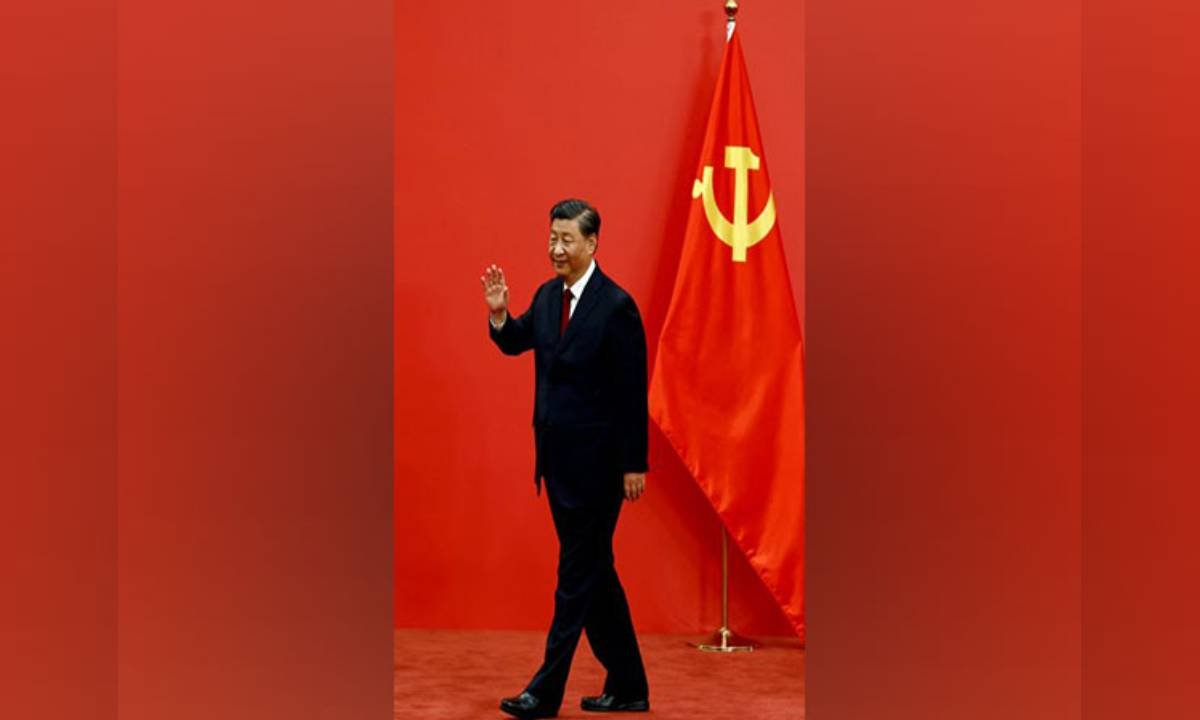
Amid tensions with Taiwan, Chinese President Xi Jinping on Tuesday said that Beijing will strengthen military training and prepare for any war as the nation’s “security is increasingly unstable and uncertain.”
The Chinese President made the declaration during a visit to the joint operations command centre of the Central Military Commission in Beijing, reported foreign media.
China will now comprehensively strengthen its military training and preparation for any war, Xi said, according to state broadcaster CCTV.
“The entire military should devote all its energy to and carry out all its work for combat readiness, enhance its capability to fight and win,” Xi was quoted as saying by the state-owned media outlet, Xinhua.
“Xi instructed the armed forces to thoroughly study, publicize and implement the guiding principles of the 20th CPC National Congress and take concrete actions to further modernize national defence and the military,” the report continued.
The Chinese leader “also instructed them to resolutely safeguard national sovereignty, security and development interests, and successfully complete various tasks entrusted by the Party and the people,” reported foreign media.
His warning comes after Xi last month called for faster military development, ‘self-reliance and strength’ in technology and defence of China’s interests abroad, raising the likelihood of further conflict.
Xi, wearing army fatigues while addressing soldiers at China’s Central Military Commission, has made similar remarks in the past, but his comments, broadcast on state television, come as tensions with the United States over Taiwan continue to escalate.
Under Xi, China has taken a more hard-line approach to Taiwan, claiming the island is a breakaway province that will eventually be “reunified” with the country.
The strong position has put it at odds with the United States and its Western allies, who maintain strategic ambiguity, but escalated tensions in August following the visit of US House Speaker Nancy Pelosi to Taiwan.
China perceived the visit as a challenge to its sovereignty over the nation and retaliated with a show of strength and force by conducting large-scale military drills and firing ballistic missiles over Taiwan.
The 69-year-old secured a historic third term as China’s President last month while stacking the all-powerful Politburo Standing Committee with loyalists, cementing his role as the most powerful leader since Communist Party founder Mao Zedong.
Investors and analysts feared the unveiling of the new leadership team, which had traditionally been made up of representatives from all factions of the party, was a signal that Beijing was pivoting towards military and state power rather than business-friendly policies, reported foreign media.
North Korea fired a ballistic missile towards the East Sea on Wednesday, South Korea’s military has announced.
The Joint Chief of Staff announced the latest ballistic missile launched by Pyongyang without specifying further details, local media reported.
The development has been confirmed by Japan’s Prime Minister’s office.
Taking to its Twitter handle, Japan’s PM office said, “North Korea has launched a suspected ballistic missile. More updates to follow.”
The latest ballistic missile launch comes after North Korea fired an intercontinental ballistic missile (ICBM) and two suspected short-range ones toward the East Sea on November 3, South Korea’s military said.
The Joint Chiefs of Staff (JCS) said it detected a long-range ballistic missile launch from the Sunan area in Pyongyang around 7:40 am (local time).
It further announced that the two short-range ballistic missiles (SRBMs) were launched from Kaechon in South Pyongan Province at around 8:39 a.m (local time).
As per the local media report, the long-range missile covered a distance of around 760 kilometres.
The long-range missile flew at a top speed of Mach 15 and two short-range ballistic missiles flew for around 330 kilometres at a maximum height of about 70 kilometres at a top speed of Mach 15, South Korea’s Joint Chief of Staff (JCS) said.
It further announced that South Korea has strengthened their surveillance and vigilance while maintaining a readiness posture in coordination with the United States.
Pyongyang’s missile launch came a day after it shot more than 24 missiles, which is reportedly the biggest-ever barrage in a single day. One of the missiles flew southward past the de facto maritime inter-Korean border for the first time since the Korean war.
“Our military has beefed up surveillance and vigilance while maintaining the readiness posture in close cooperation with the U.S.,” the JCS said in a statement.
The United States and South Korea have repeatedly condemned North Korea’s ballistic missile launch and they even conducted a joint military exercise in November.
Meanwhile, United Nations Security General Antonio Guterres on Friday condemned the launch of a ballistic missile of intercontinental range by North Korea.
“The Secretary-General strongly condemns the launch of a ballistic missile of intercontinental range by the Democratic People’s Republic of Korea (DPRK) as well as the barrage of various missiles over the past two days,” Stephane Dujarric, Spokesman for the UN Secretary-General said in a statement.
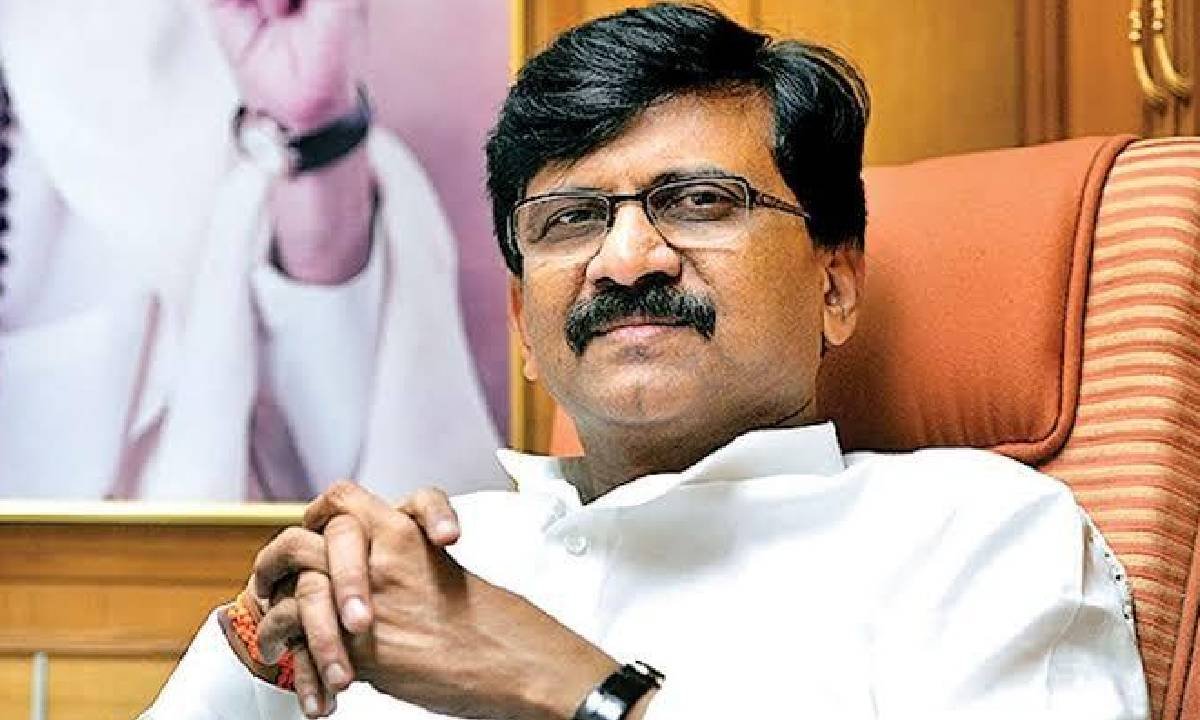
A PMLA court in Mumbai on Wednesday granted bail to Shiv Sena leader and MP Sanjay Raut in connection with the Patra Chawl land scam case.
Along with Sanjay Raut, the second accused in this case, Praveen Raut was also granted bail by the PMLA court.
Sanjay Raut got bail today after about 102 days. Raut was arrested by the Enforcement Directorate (ED) on August 1 in connection with alleged financial irregularities in the redevelopment of the Patra Chawl in suburban Goregaon in Mumbai.
When the court pronounced the order, family members and supporters of the Shiv Sena MP clapped inside the courtroom and corridor of the court.
Meanwhile, Additional Solicitor General has sought a stay on the execution of the bail order for a short period so that ED can appeal in a higher court against the order of Mumbai’s PMLA court. Mumbai’s PMLA court will pronounce the order on demand of stay on the execution of bail order to Sanjay Raut at 3 pm today.
The Shiv Sena leader is accused of receiving a part of the money from middleman Praveen Raut, who had allegedly earned it illegally in the case of the redevelopment of Patra Chawl, located in Mumbai’s Goregaon.
It is also alleged that Sanjay Raut bought properties in Dadar and Alibaug with that money. Sanjay Raut was continuously lodged in Arthur Road Jail in Mumbai since August 1. Former Home Minister Anil Deshmukh and former minister Nawab Malik are also lodged in this jail.
This news is being considered as a relief for the Maha Vikas Aghadi alliance before the municipal elections.
Sanjay Raut is an aggressive Shiv Sena spokesperson and has a good hold on his party cadre. On June 28 this year, Sanjay Raut was summoned by the ED in connection with the prevention of the money laundering case pertaining to the Rupees 1,034 crore Patra Chawl land scam.
Back in August, the wife of Shiv Sena MP was also summoned by the agency in connection with the Patra Chawl land case.
The MP’s wife Varsha Raut was summoned by the central agency after the ED officials raided the Shiv Sena leader’s home and after detaining and questioning him (Sanjay Raut) for several hours, arrested him.
Raut is a close aide of former Maharashtra Chief Minister Uddhav Thackeray.
According to sources, ED officials seized Rs 11.50 lakhs of unaccounted cash from his residence during the raids.
Soon after the ED officials detained him in connection with the Patra Chawl land scam case, the Shiv Sena leader said that he “won’t be cowed down”.
Raut is being probed in connection with the re-development of Mumbai’s Patra Chawl.
In April this year, the ED had attached immovable properties worth Rs 11.15 crore, including a flat at Dadar, held by Sanjay Raut’s wife Varsha and eight land parcels at Kihim near Alibag, jointly held by the latter with Swapna Patkar.