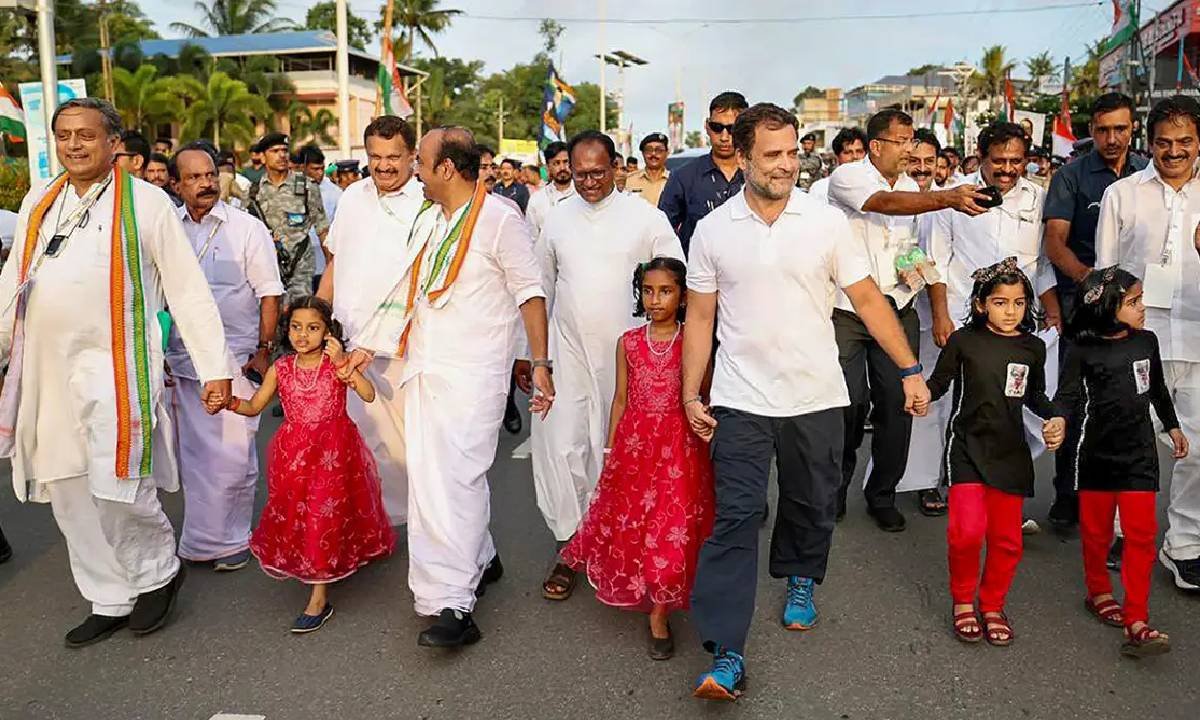
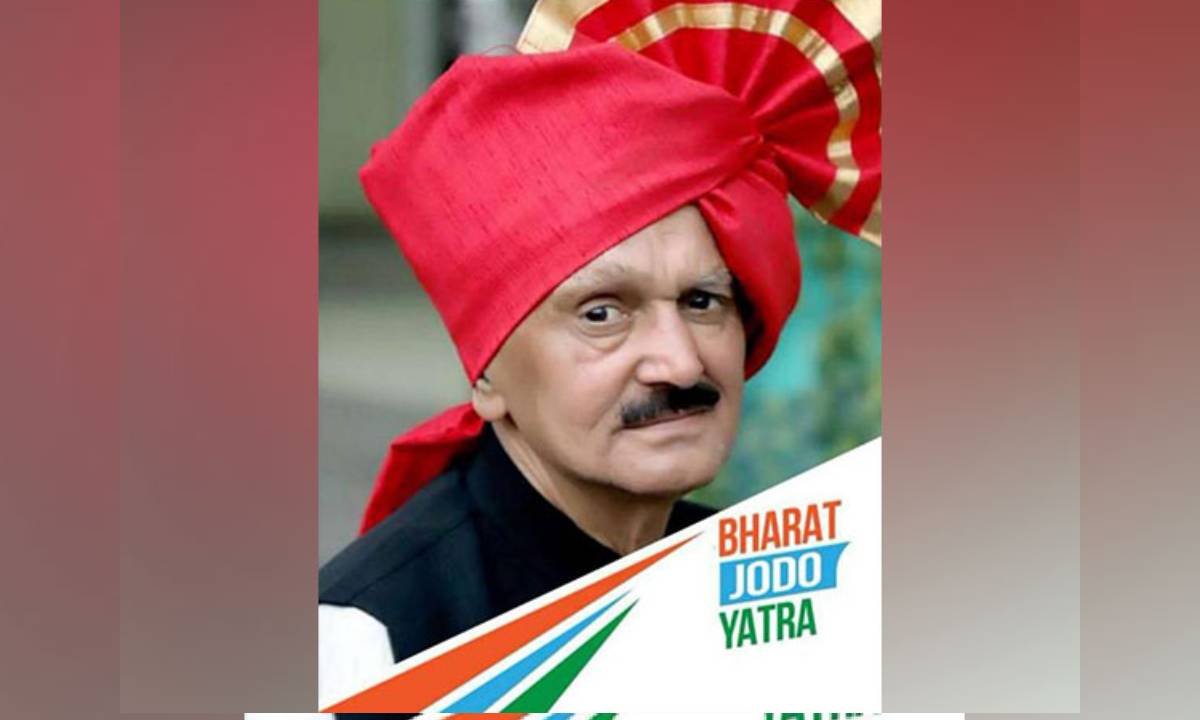
Nationalist Congress Party (NCP) chief Sharad Pawar and former Maharashtra minister Aaditya Thackeray will join the Congress’s Bharat Jodo Yatra on November 11, said Maharashtra Congress leader Ashok Chavan on Wednesday.
He further said that NCPs Jayant Patil, Supriya Sule and Jitendra Awhad will join tomorrow.
“NCP chief Sharad Pawar and Shiv Sena’s Aaditya Thackeray will join the Congress party’s ‘Bharat Jodo Yatra’ on November 11, while NCP’s Jayant Patil, Supriya Sule and Jitendra Awhad will join tomorrow,” said Chavan.
Chavan said that Congress president Mallikarjun Kharge to join the Yatra tomorrow. The Bharat Jodo Yatra entered its Maharashtra leg on Monday evening.
Rahul Gandhi will travel through 15 Assembly and 6 parliamentary constituencies in five districts of Maharashtra in 15 days and cover a distance of 382 kms. The yatra has already covered parts of Kerala, Karnataka, Andhra Pradesh, Tamil Nadu and Telangana.
Bharat Jodo Yatra, which began on September 7 from Kanyakumari, will cover a further distance of 2,355 km in its 3,570-km march. It will end in Kashmir next year.
It is the longest march on foot by any Indian politician in the history of India, the Congress claimed earlier in a statement.
Bharat Jodo Yatra is getting support from various political parties and social organizations across the country and the response is increasing day by day.
In Maharashtra too, the NCP and Shiv Sena (Thackeray faction) have agreed to participate in the yatra, adding to its importance.
Notably, all the party MPs, leaders and workers along with Rahul Gandhi are staying in containers. Sleeping beds, toilets and ACs are also installed in some of the containers. The arrangements have been made keeping in view the intense heat and humidity with the change of places.
The Congress suffered a debacle in the assembly polls held earlier this year and the Yatra is seen as an attempt to rally the party rank and file for the upcoming electoral battles.
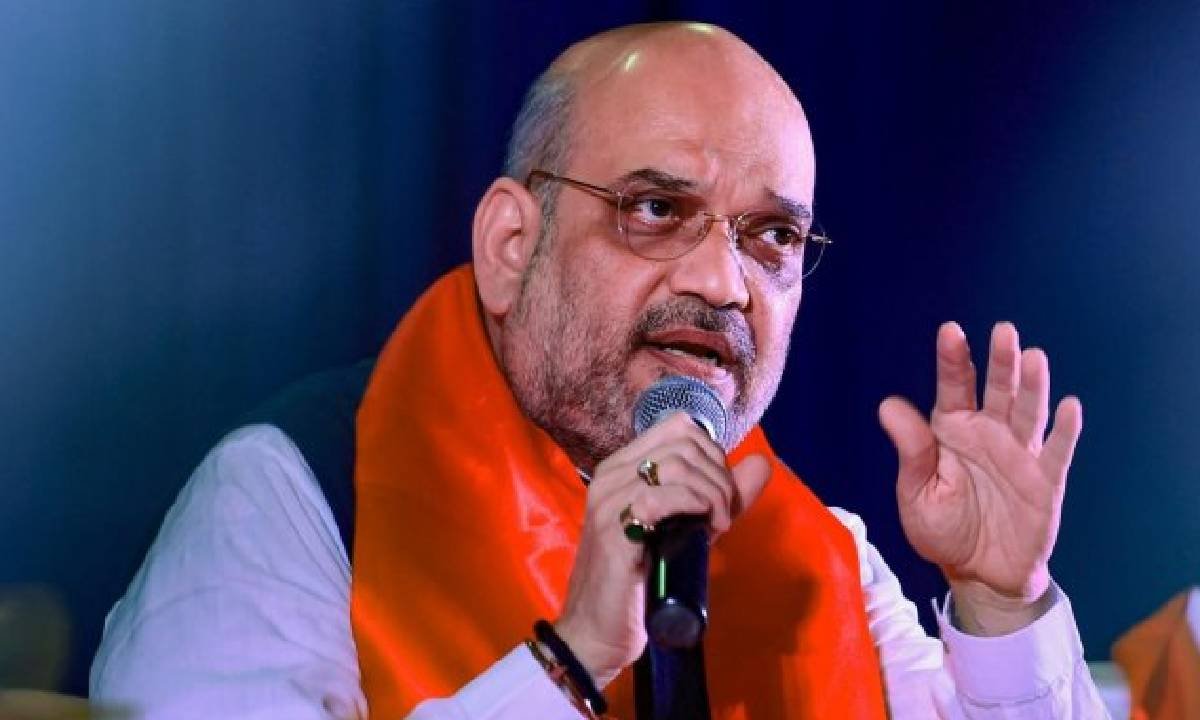
Union Home Minister Amit Shah on Wednesday chaired a day-long high-level meeting of Intelligence Bureau (IB) officers across the country here in the national capital to discuss issues of counter-terrorism, Left Wing Extremism or Naxal, border matters, cyber security and technological upgradation, top government sources said.
In the meeting, the Home Minister will also assess the internal security situation in the country, threats of terrorism and the need for coordination among central and state agencies.
This is part of the series of meetings that Amit Shah has been regularly holding with officials of security agencies and the police from across the country as the Union Home Minister.
“Amongst the issues that will be discussed at today’s interaction are Left Wing Extremism, Counter Terrorism, Border Issues, Cyber Security and Technological upgradation,” a senior Home Ministry official told media requesting anonymity.
The meeting started at 11 am at a secret and highly secured location in the city and is expected to go on till 5 pm.
Another MHA official told media that the Home Minister will take stock of the overall internal security scenario, intelligence gathering network and other aspects needed to be addressed so that robust internal security is ensured in the country.
Issues like continued threats of terrorism and global terror groups, terror financing, narco-terrorism, organised crime-terror nexus, illicit use of cyberspace and movement of foreign terrorist fighters are expected to be discussed in the meeting. Focus on better coordination and synergy among the central and state security agencies in countering the ever-changing security challenges, would be among the major issues that will be discussed, said the source.
The meeting was also attended by other senior officers across the country concerned with intelligence-related issues.
Union Home Secretary Ajay Kumar Bhalla, IB chief Tapan Deka were also among the topmost officers who attended the meeting.
The meeting was held days after the Home Minister recently held a Chintan Shivir in Haryana with Home Ministers, officials and police officials of states.
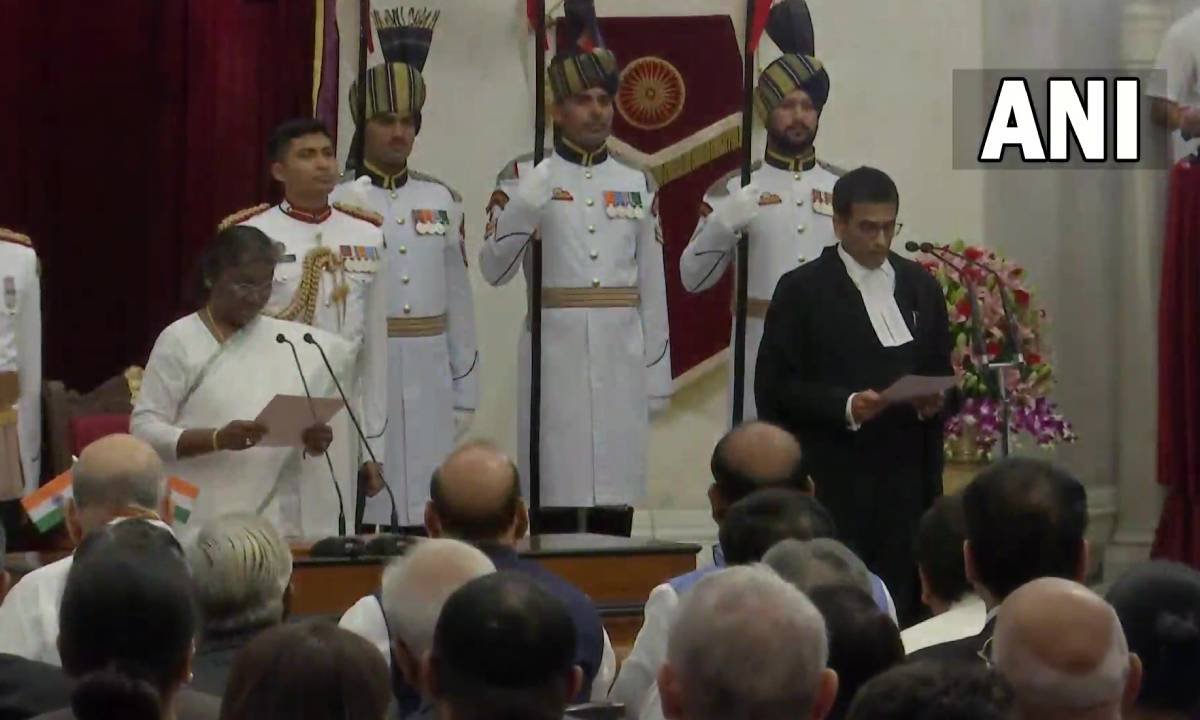
Justice DY Chandrachud formally takes oath as the new Chief Justice of India Photo Credit: ANI
Justice DY Chandrachud on Wednesday was sworn in as Chief Justice of India after Justice Uday Umesh Lalit demitted office. President Droupadi Murmu administered the oath of office to Justice DY Chandrachud at the swearing-in ceremony held in the Rashtrapati Bhavan.
Vice President Jagdeep Dhankhar, Lok Sabha Speaker Om Birla, Union Home Minister Amit Shah, Defence Minister Rajnath Singh, Finance Minister Nirmala Sitharaman and others were present on the occasion. Justice Chandrachud succeeds Chief Justice UU Lalit who retired on November 9. The senior-most judge of the Supreme Court of India Justice D Y Chandrachud on Wednesday has become the 50th head of the Judiciary of the country. He will have a tenure till November 10, 2024. Last Month the Centre Government had notified the name of Dr Justice Dhananjaya Yashwant Chandrachud, Judge of the Supreme Court, as the Chief Justice of India, with effect from November 9, 2022. The press statement issued in this regards stated that “In exercise of the power conferred by clause (2) of Article 124 of the Constitution of India, the President is pleased to appoint Dr Justice Dhananjaya Yashwant Chandrachud, Judge of the Supreme Court, as the Chief Justice of India, with effect from November 9, 2022.”
Justice Chandrachud’s father Justice YV Chandrachud was the 16th Chief Justice of India serving from February 2, 1978, to July 11, 1985. This has become the first time in the history of the judiciary, Father and son have become CJI. Justice Chandrachud is known as a progressive and liberal judge of the country. He is also considered as very sensitive to the fundamental rights of citizens and the most distinctive feature of Justice Chandrachud is known for his tough attitude towards the abusers. Justice Chandrachud, born on November 11, 1959, was appointed judge of the Supreme Court on May 13, 2016. He was the Chief Justice of the Allahabad High Court from October 31, 2013, until his appointment to the Supreme Court. Justice Chandrachud was the judge of the Bombay High Court from March 29, 2000, until appointment as Chief Justice of the Allahabad High Court. He had also served as Additional Solicitor General of India from 1998 until appointment as a judge in the Bombay High Court. He was designated as a senior advocate by the Bombay High Court in June 1998.
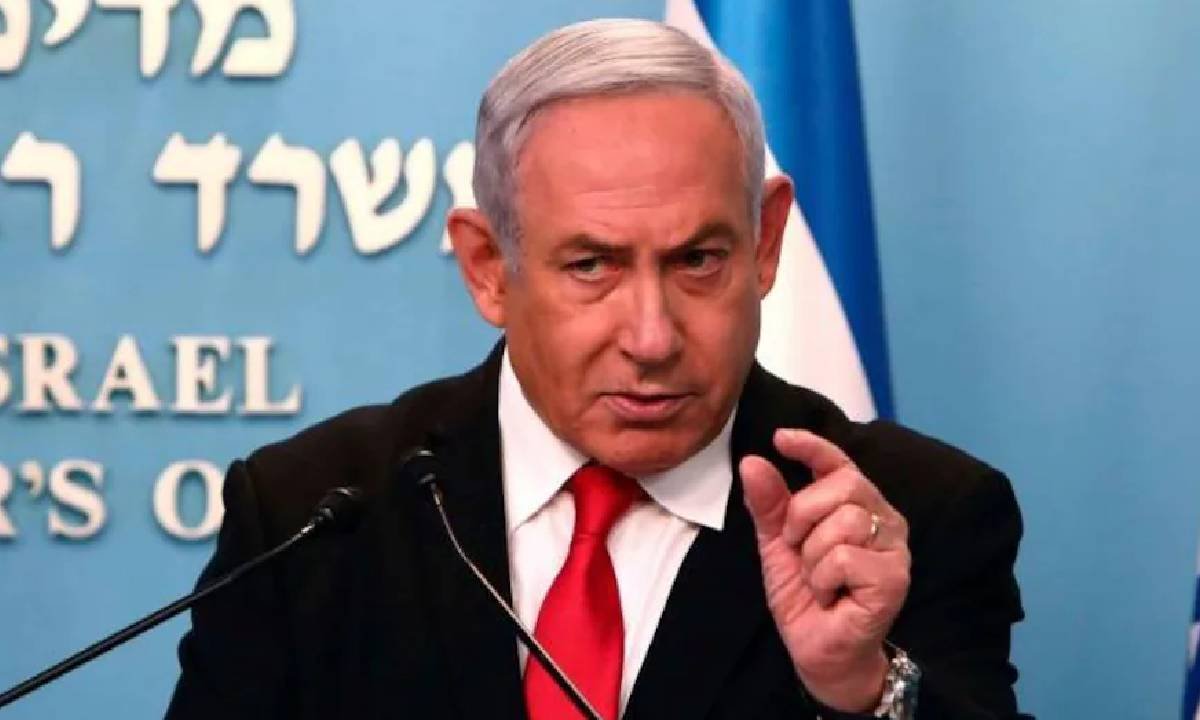
A right-wing, religious parties coalition led by former Prime Minister Benjamin Netanyahu emerged as the winner in the Israeli elections held on November 1, the fifth such election in four years, controlling 64 seats in the 120, member Knesset (the Israeli Parliament).
The coalition government to be formed a few weeks after Netanyahu is expected to be given the mandate by Israeli President Isaac Herzog to form a government, will comprise ultra-religious forces in the country that could exacerbate Israel’s problems in many areas.
Netanyahu’s Likud party now has 32 Members in the Knesset (MK), outgoing Prime Minister Yair Lapid’s Yesh Atid party has 24 MKs and the Religious Zionist party has 14, becoming the third largest party in the Knesset.
The election coalition cobbled together by Netanyahu, in addition to the Religious Zionist Party and its extremist, Otzma Yehudit faction (led by Itamar Ben-Gvir who often incites violence between Israelis and Palestinians) includes the ultra-Orthodox Shas party (11 MK) and United Torah Judaism party (7 MK).
Ben Gvir was convicted of incitement to racism, interfering with a police officer performing his duty, and support for a terrorist organization, the Meir Kahane’s Kach Movement.
In May 2021, he was accused by the Police Commissioner of fanning the flames of violence between Jews and Arabs in mixed cities such as Lod and Acre. What causes concern to many organizations and progressive people is that the Religious Zionism party openly asks for the imposition of religious law, for Israeli rule over the West Bank and the expulsion from Israel of “disloyal” Palestinian citizens. It provokes Muslims by calling for the demolition of the al-Aqsa Mosque – which is one of the holiest places of Islam- and the construction of a Jewish Temple in its place.
Mansour Abbas, the chairman of the Islamist Arab Ra’am party, has warned that if Jews are permitted to pray at the site, war will ensue.
As Netanyahu has announced that the two-state solution has no place on his government’s agenda, Palestinians have lost their hope for a peaceful solution and fear that the government to be formed will be more aggressive and that tensions between Israelis and Arabs will escalate.
All this is a recipe for a violent conflict between Israelis- mainly the settlers and extremists- and Palestinians and Arabs citizens of the state of Israel and will possibly mark the beginning of a new “intifada”.
It may also hinder the normalization and improvement of relations between the state of Israel and the Gulf monarchies, which was achieved through the Abraham accords.
Netanyahu, who was the longest-serving Prime Minister in Israel’s history, will certainly have a very hard time in reaching an agreement with the other coalition parties on the distribution of ministerial posts, where the various parties demand specific portfolios to implement their own policies.
Ben-Gvir said he wants to be the minister of internal security, to be in charge of the Israeli police and policies around Jerusalem’s holy sites.
His political partner, Bezalel Smotrich, said he wants the defence ministry, which also oversees Israeli policy in the occupied West Bank and Gaza and approves settlement building. Netanyahu is expected to try to convince them to take other ministerial posts, to avoid a conflict with the US administration and powerful Jewish associations in the US.
According to press reports, US Senator Bob Menendez, Chairman of the powerful Foreign Relations Committee and a well-known supporter of Israel told Netanyahu in no uncertain terms that forming a government with extremists like Ben Gvir could “seriously erode bipartisan support in Washington.”
Several US Jewish groups, such as the American Jewish Committee, the Reform Party and J Street have expressed concern over the results of Israel’s election and the possible inclusion of Ben-Gvir in the government.
Many European leaders welcomed Netanyahu’s return to power, while the Biden administration, despite its past differences with Netanyahu, congratulated him on his election victory.
“We look forward to continuing to work with the Israeli government on our shared interests and values,” a White House statement said.
Though Netanyahu and Biden had strongly divergent views in the past, they are expected to try to cooperate, in view of the strong alliance between the US and Israel.
Inevitably there will be tensions between them due to different national interests and the relationship between Biden and Netanyahu would not be as cordial as it was between Netanyahu and former President Donald Trump.
Now on a different subject, though Netanyahu attacked the landmark US-brokered agreement reached last month between Israel and Lebanon that delineated their respective maritime borders and vowed to “neutralize it,” if elected, he is not expected to implement his threat, as the deal is beneficial to Israel. Its cancellation will surely enrage the US Administration.
Beirut’s Chief negotiator Bou Saab pointed out that Lebanon has secured “American guarantees” that the maritime border deal with Israel cannot be easily scrapped. If Netanyahu wants to withdraw from the deal, then “he will withdraw from an agreement with the US,” he said.
It cannot be disputed that the Haredi (ultra-orthodox) parties are now able to exercise a big influence on the policies of the new government and on Israeli institutions.
They could also cause problems with Palestinians and Arabs in general as well as some of Israel’s allies.
However, Netanyahu is a capable politician with very long experience in managing difficult situations and a proven political survivor, so he has a good chance to succeed in imposing his views on his religious allies and keep them in check, in order to protect the best interests of Israel.
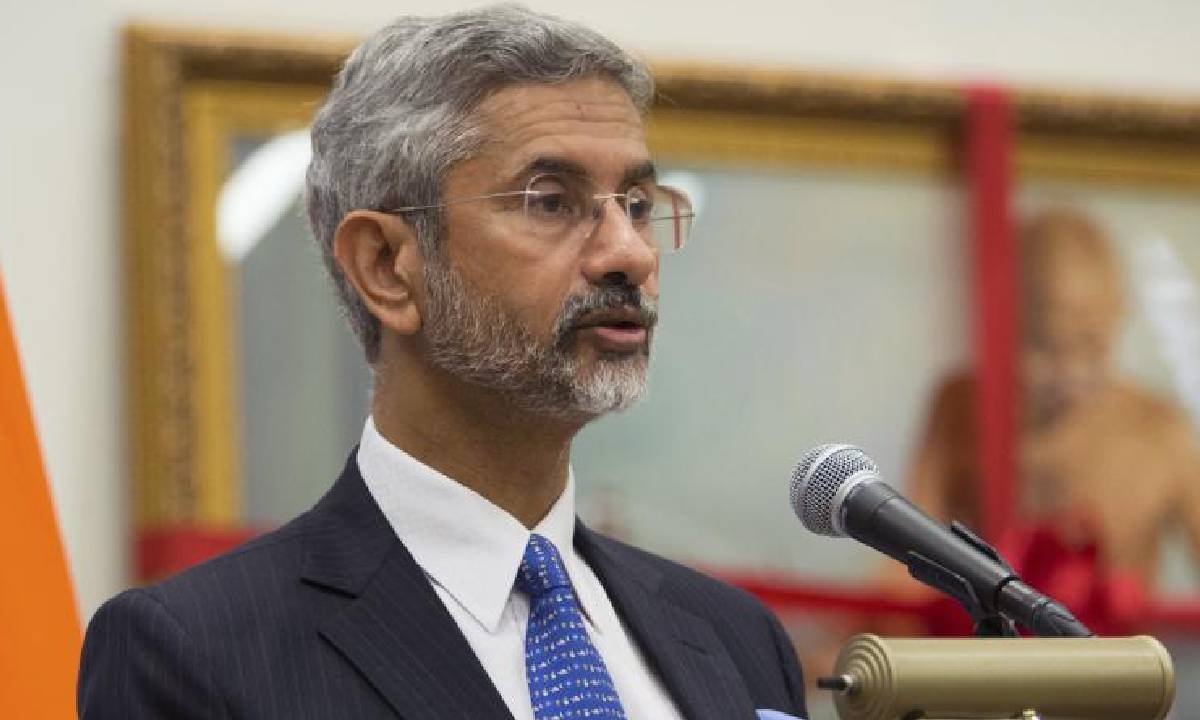
External Affairs Minister S Jaishankar on Tuesday raised concern about the consequences emanating from the Ukraine conflict that has affected energy and food security around the world.
Addressing a press briefing alongside the Russian Foreign Minister Sergey Lavrov, Jaishnkar said he exchanged views on international issues with the Russian side, in which the Ukraine conflict was the dominant feature.
Laying out India’s position on the Ukraine conflict, Jaishankar said, “As Prime Minister Narendra Modi conveyed to Russian President Putin: this is not an era of war. The global economy is simply too interdependent for significant conflict anywhere not to have major consequences elsewhere.”
“We are seeing growing concerns on the energy and food security, emanating from the conflict, that are coming on top of severe stresses created by two years of Covid,” he said.
Jaishankar further said the impact of Ukraine’s conflict is being severely felt by the global south. The external affairs minister is on a two-day visit to Moscow, in continuation of the regular high-level dialogue between the two sides.
During his meeting with Lavrov, he reviewed the entire gamut of the India-Russia relationship. “Just concluded comprehensive discussions with Foreign Minister Sergey Lavrov of Russia. Reviewed the entire gamut of our steady and time-tested relationship. Also exchanged perspectives from our vantage points on global and regional developments,” he said in a tweet.
With Russia’s Deputy Prime Minister Denis Manturov, Jaishankar explored cooperation in trade, investments, energy, fertilisers, pharma, agriculture and shipping.
In the press conference with Lavrov, the external affairs minister said India and Russia have a longstanding partnership that has served both countries very well over many decades.
“This covers a range of practical cooperation in fields like trade, investment, commodity, etc, as well sensitive domains like defence, space, and nuclear,” he said.
Jaishankar noted that his objective in coming to Moscow is to sit down with the Russian leadership to assess how India-Russia ties are doing.
“My objective in coming here today is to sit down with Russian foreign minister Lavrov and Deputy PM Manturov to assess how we are doing. There are challenges, that we need to address and prospects that we are exploring,” he said.
He said, in recent years, India and Russia have grappled with how to expand the bilateral trade and introduce more factors of long-term stability and growth.
The external affairs minister said the two sides also noted the significant growth in bilateral trade this year and focused on how to make it more sustainable.
“We are naturally concerned about the trade imbalance and I have raised with the Russian side how to address the impediments that stand in the way of greater Indian exports,” he added.
Congress Seva Dal leader Krishna Kumar Pandey on Tuesday died while participating on the 62nd day of the Bharat Jodo Yatra in Maharashtra, said Congress MP Jairam Ramesh.
Earlier on Tuesday, Ramesh tweeted, “This 62nd morning of Bharat Jodo Yatra, Krishna Kumar Pandey, General Secretary of Seva Dal was holding the national flag and walking with me.’
“After a few minutes, as is the practice, he handed the flag to a colleague and moved back. Thereafter he collapsed and was taken in an ambulance to a hospital where most sadly he was declared dead,” he added.
“He was a staunch Congressman and used to take on the RSS in Nagpur. It is a humbling moment for all the Yatris,” Ramesh stated.
“The Yatris, Maharashtra Pradesh Congress Committee and Rahul Gandhi paid last respects to Krishna Kumar Pandey this afternoon at the Yatra halt site in Atkali village in Nanded district,” Ramesh further stated.
Tweeting the picture of the last rites of Krishna Kumar Pandey, he said, “This is probably Krishna Kumar Pandey’s last photograph… walking with a smile and holding the national flag high with the Seva Dal on the Bharat Jodo Yatra. Salute!”
Congress leader Rahul Gandhi expressed his condolences on Twitter and said that Pandey’s demise is “very sad” for the entire Congress family.
“Congress Seva Dal General Secretary, Krishnakant Pandey’s demise is very sad for the entire Congress family. I express my deepest condolences to his loved ones. Today, he held the tricolour in his hands at the last moment during the journey. His dedication to the country will always inspire us,” the Wayanad MP tweeted.
The Bharat Jodo Yatra entered its Maharashtra leg on Monday evening. The yatra has already covered parts of Kerala, Karnataka, Andhra Pradesh, Tamil Nadu and Telangana.
T20 WC: Rohit Sharma escapes injury after being hit on hand during practice ahead of SF clash 8
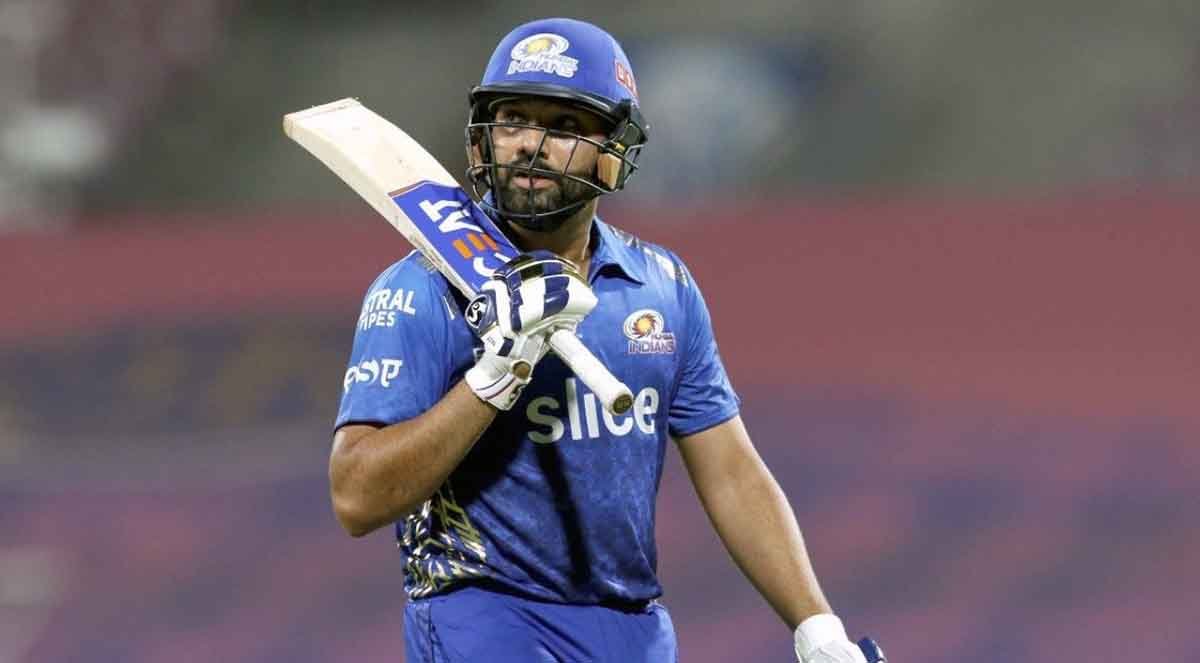
Star opener Rohit Sharma faced an injury scare ahead of team India’s crucial semi-final clash against England after being hit on his right hand by a throwdown specialist during a net session on Tuesday at the Adelaide Oval. The Indian captain was batting in the nets to the throwdown specialist when the ball snuck up on him and hit him on his right hand.
He was immediately seen writhing in pain and quickly used the magic spray to reduce the intensity of the pain. There were concerned faces in the team after the batter was hit as he is an important cog in the wheel for the Indian team. Rohit however, did not leave the training session and nursed his hand with an ice pack for about half an hour before returning to the net session. The team breathed a sigh of relief after he resumed his training.
The Indian batter has scored 89 runs in the ongoing T20 World Cup, with his highest score of 53 coming against the Netherlands. Following his side’s 71-run victory over Zimbabwe in their final ICC T20 World Cup Super-12 stage match, Indian skipper Rohit Sharma had said that it will be important to adjust to conditions as quickly as possible ahead of their semifinal clash against England at Adelaide on Thursday.
India are scheduled to play England at the Adelaide Oval on Thursday, November 10 in the semi-finals of the ongoing T20 World Cup. Earlier, Suryakumar Yadav’s breathtaking knock of an unbeaten 61 from 25 balls followed by superb bowling from the bowlers helped India bundle out Zimbabwe for 115 to clinch a 71-run win in their final Group 2, Super 12 match of the ongoing ICC T20 World Cup at Melbourne on Sunday.
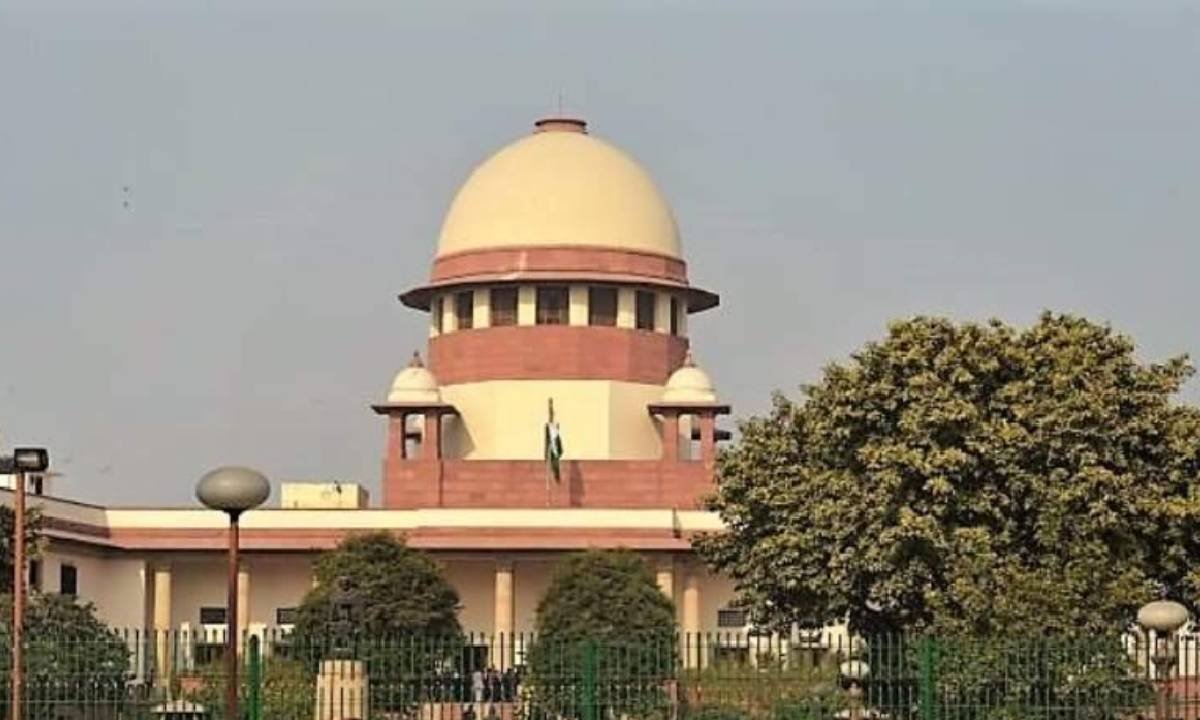
The Supreme Court acquitted three men sentenced to death for the gangrape and murder of a 19-year-old woman in Delhi’s Chhawla area in 2012, noting the prosecution failed to provide leading, cogent, clinching and clear evidence, including those related to DNA profiling and call detail records (CDRs), against the accused.
The three men were accused of abducting, gangraping and brutally killing the woman in February 2012. Her mutilated body was found three days after she was abducted.
A bench of Chief Justice U U Lalit and Justices S Ravindra Bhat and Bela M Trivedi acquitted the convicts in a 40-page order passed on Monday.
”The evidence with regard to the arrest of the accused, their identification, discoveries and recoveries of the incriminating articles, the identity of the car, the seizures and sealing of the articles and collection of samples, the medical and scientific evidence, the report of DNA profiling, the evidence with regard to the CDRs etc. were not proved by the prosecution by leading, cogent, clinching and clear evidence much less unerringly pointing the guilt of the accused,” the bench said.
It said that the possibility of tampering with the samples collected also could not be ruled out.
”The prosecution has to bring home the charges levelled against them beyond a reasonable doubt, which the prosecution has failed to do in the instant case, resultantly, the court is left with no alternative but to acquit the accused, though involved in a very heinous crime,” it said.
It may be true that if the accused involved in the heinous crime go unpunished or are acquitted, a kind of agony and frustration may be caused to society in general and to the family of the victim in particular, however, the law does not permit the courts to punish the accused on the basis of moral conviction or on suspicion alone, the bench said.
”The court is constrained to make these observations as the court has noticed many glaring lapses having occurred during the course of the trial. It has been noticed from the record that out of the witnesses examined by the prosecution, 10 material witnesses were not cross-examined and many other important witnesses were not adequately cross-examined by the defence counsel. It may be reminded that Section 165 of the Indian Evidence Act confers unbridled powers upon the trial courts to put any question at any stage to the witnesses to elicit the truth,” it said.
The bench added, “In the instant case, material witnesses examined by the prosecution having not been either cross-examined or adequately examined and the trial court also has acted as a passive umpire, we find that the accused were deprived of their rights to have a fair trial, apart from the fact that the truth also could not be elicited by the trial court… The accused are acquitted from the charges levelled against them by giving them a benefit of the doubt.” The bench, however, said that family members of the victim would be entitled to the compensation even though the accused have been acquitted.
In 2014, a trial court awarded the death penalty to the three accused, terming the case “rarest-of-rare”.
The judgment was later upheld by the Delhi High Court.
According to the prosecution, the woman worked in Gurgaon’s Cyber City area and belonged to Uttarakhand. She was returning from her workplace and was near her home when the three men abducted her in a car.
When she didn’t return home, her parents lodged a missing person report, the prosecution said, adding that the woman’s mutilated and decomposing body was found in a village in Rewari, Haryana. The police found multiple injuries on the woman’s body. Further investigation and autopsy revealed she was attacked with car tools, glass bottles, metal objects, and other weapons. She was also raped, they said.
Police arrested the three men involved in the crime and said one of the accused allegedly took revenge after the woman turned down his proposal.
Morbi tragedy brought shame to Gujarat, shocking no one apologized: Cong leader Chidambaram 11
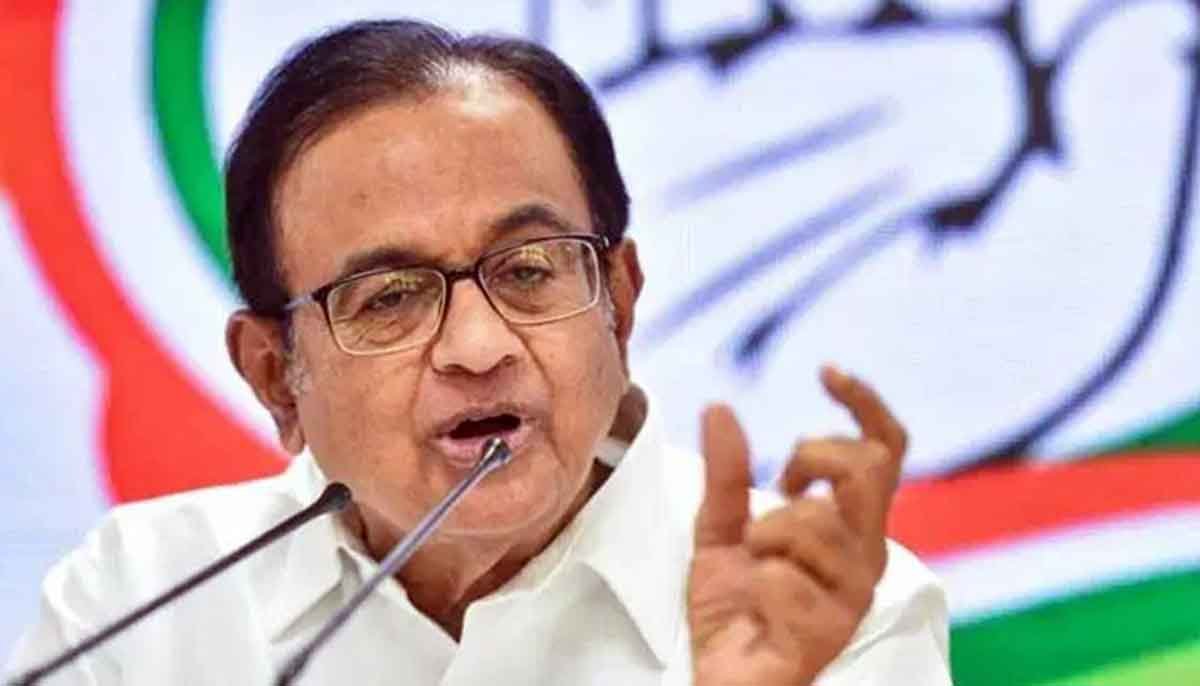
Veteran Congress leader and former finance minister P Chidambaram on Tuesday said the bridge collapse in Morbi has painted a bad picture of Gujarat and the most shocking part was that no one from the government apologized for the tragedy.
“Morbi bridge collapse has brought shame to the fair name of Gujarat…The most shocking development is that no one, on behalf of the govt, has apologized for the tragedy. No one has resigned from taking responsibility,” Chidambaram told reporters.
At least 135 people were killed and over 100 injured after a cable suspension bridge in Morbi town collapsed on October 30, plunging people into the Machchhu river. Further, when asked about prospects of emerging parties (such as AAP) contesting elections in Gujarat, Chidambaram said no one would vote for the party after seeing Delhi’s deteriorating air quality.
“If you’ve lived in Delhi as long as I’ve lived and if you believe the air in Delhi (is poor), you’ll not vote for Arvind Kejriwal in Gujarat,” said Chidambaram.
Closure warning for 1,800 health centres in Bihar over waste disposal lapses 13
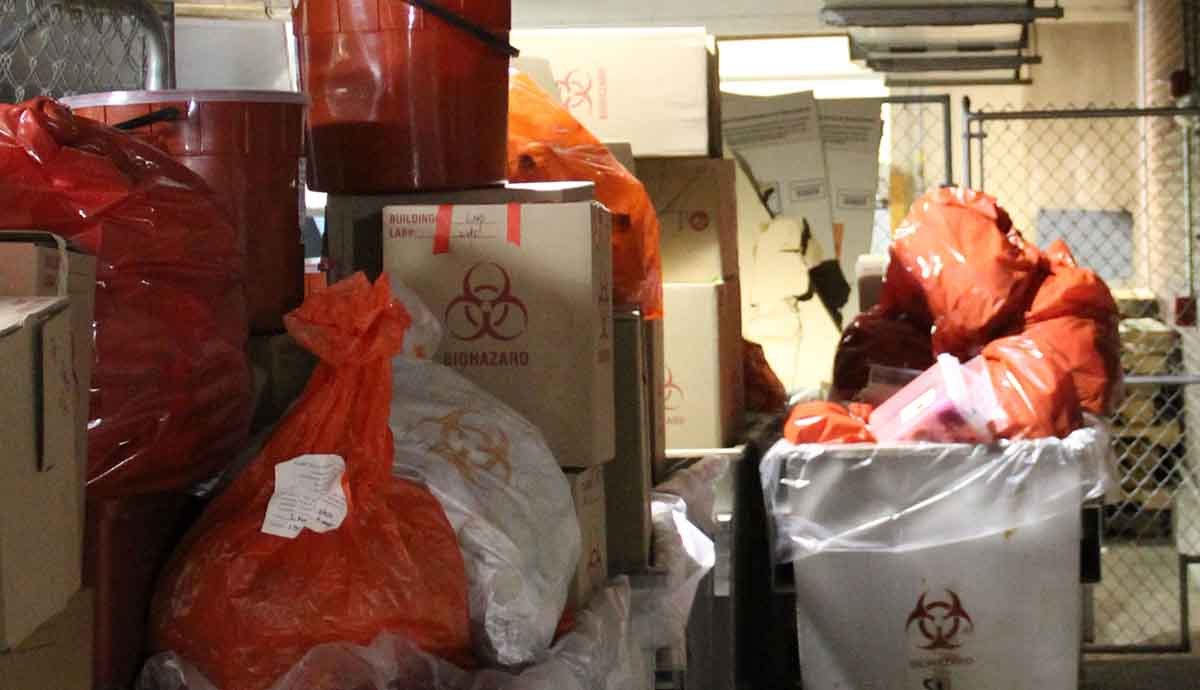
The Bihar State Pollution Control Board (BSPCB) said on Tuesday that it was issuing notices to 1,800 healthcare centres in the state, which have failed to comply with the norms laid down for bio-medical waste disposal, warning them of closure.
Ashok Kumar Ghosh, the chairman of the BSPCB, said these centres, in six districts of the state, were being served a ”proposed closure direction” with a 15-day window to ensure abidance of the rules set for the disposal. ”If these 1800 health care facilities or centers fail to adhere to the norms pertaining to scientific storage, transportation and treatment of medical waste at Common Bio-medical Waste Treatment Facilities (CBWTF) in the state within 15 days, the BSPCB will order their closure.
”The board will also request the power distribution companies to cut off electricity supply to these healthcare units under such circumstances,” Ghosh told PTI.
He said Patna has the maximum number of erring healthcare units, adding that other districts where rules were being flouted are Bhojpur, Buxar, Nalanda, Rohtas and Kaimur.
The board was forced to take this “harsh step” as the medical centres, despite repeated reminders, did not make amends, Ghosh stated.
”District Magistrates (DMs) concerned have been given intimation about the notices being sent to these erring medical centers in their respective districts, said the board chairman.
BSPCB scientist Dr Naveen Kumar said non-compliance with waste disposal rules could pose a severe threat to human and environmental health.
”All medical establishments in the state must comply with bio-medical waste management rules, 2016. Non-adherence to the rules is a serious offence,” Kumar told PTI.
A CBWTF is a set-up where biomedical waste from health care facilities is imparted necessary treatment to reduce adverse effects that it may pose on human health and the environment, the scientist explained.
”The board has time and again instructed hospitals, nursing homes and other medical establishments across the state to get their biomedical waste treated at authorised CBWTFs in Patna, Muzaffarpur, Bhagalpur and Gaya.
”These CBWTFs send their vehicles to health centers for collection of waste which is then disposed of at designated sites following rules. Some health centers, however, ignore these norms and dispose of biomedical wastes at public places, endangering lives of people,” he added.