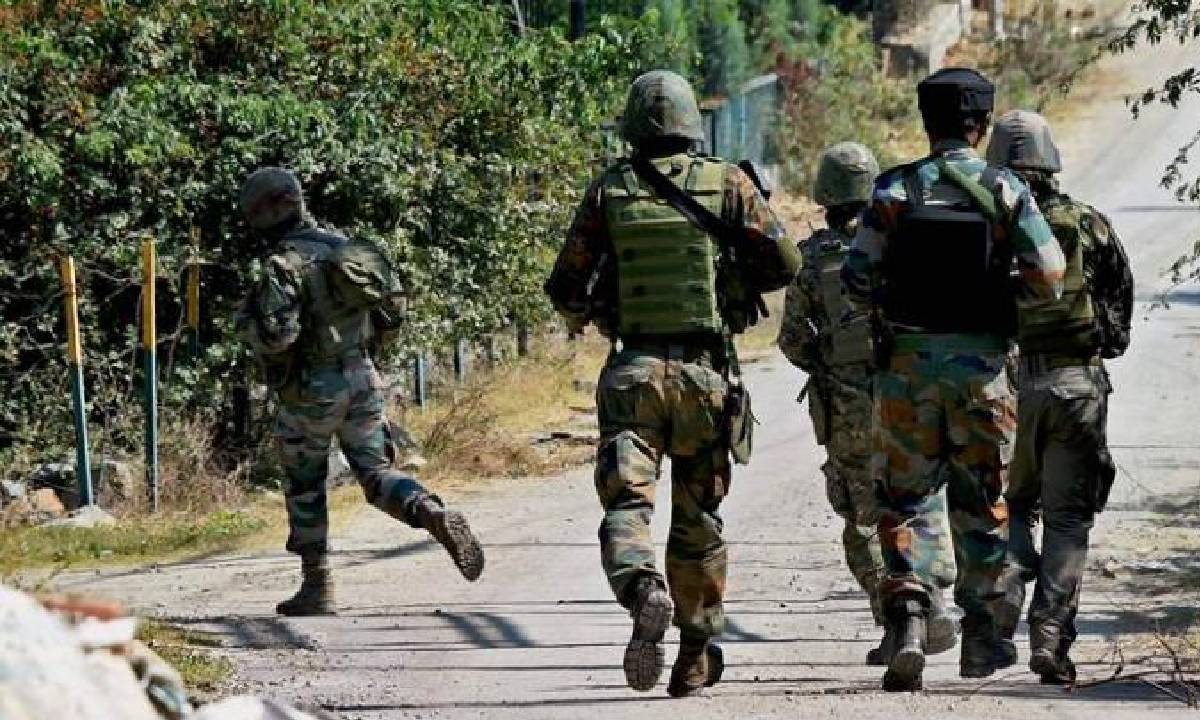
A civilian succumbed to his injuries after terrorists opened fire at Chowdari Gund in Shopian on Saturday.
The deceased has been identified as Puran Krishan Bhat, a Kashmiri Pandit. The injured was shifted to the hospital where he was declared dead.
“Terrorists fired upon a civilian (minority) Puran Krishan Bhat while he was on his way to an orchard in Chowdari Gund, Shopian. He was immediately shifted to hospital for treatment where he succumbed,” the Jammu Kashmir police said.
The area has been cordoned off and a search was in progress, the police further said.
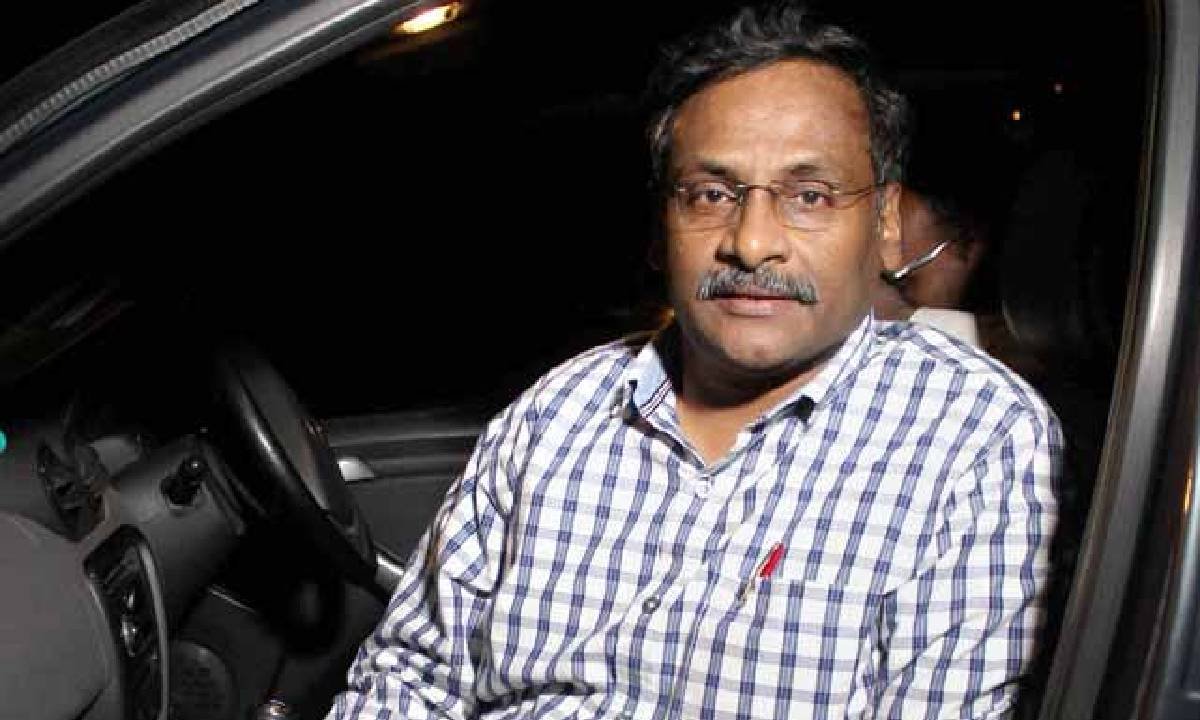
Supreme Court on Saturday stayed the release of former Delhi University professor GN Saibaba and five others in an alleged Naxal links case.
In a special hearing today, Supreme Court suspended the October 14 order of the Nagpur bench of the Bombay High Court which discharged former Delhi University professor GN Saibaba and others in an alleged Maoist links case.
The Maharashtra government on Friday approached the Supreme Court challenging the decision. Supreme Court issued notice to the accused in the case on the Maharashtra government’s plea challenging the High Court order.
The apex court has listed the matter for hearing on December 8. A bench of Justices MR Shah and Bela M Trivedi heard the case today.
On Friday, the High Court allowed an appeal filed by Saibaba and five others challenging a 2017 decision of the trial court convicting and sentencing him to life imprisonment under the anti-terror law Unlawful Activities (Prevention) Act (UAPA). They were arrested in 2014.
The High Court ordered the immediate release of Saibaba and the other accused. They were sentenced to life imprisonment by the Sessions Court at Gadchiroli, Maharashtra in March 2017 for offences under various sections of Unlawful Prevention of Atrocities Act (UAPA), and 120 B of the Indian Penal Code for alleged association with the Revolutionary Democratic Front (RDF), which was alleged to be an affiliate of outlawed Maoist organisation.
The Nagpur bench of Bombay High Court on Friday acquitted the alleged Naxal ideologue and former Delhi University’s Professor GN Saibaba and his five accomplices of the charges of having links with banned extremist outfits.
The Nagpur Bench of Bombay High Court on July 28, 2020 rejected the bail application of the former Delhi University Professor on medical grounds.
On May 22, 2020, the Bombay High Court dismissed Saibaba’s parole application, which sought to be released on the grounds of his ill health and to visit his mother, who was suffering from cancer in Hyderabad and passed away in August that same year.
Dera Sacha Sauda chief Gurmeet Ram Rahim Singh who is serving a jail term after being convicted in rape and murder cases reached Dera Sacha Sauda Ashram in Barnawa of Uttar Pradesh.
Rahim was on Saturday released from Sunaria jail on 40-day parole. He reached Baghpat under a security cover. The Dera chief’s family had submitted an application to the jail authorities seeking month-long parole for him.
Rahim was granted parole for a month on June 17. Singh has been incarcerated, since 2017, in Haryana’s Sunaria jail where he is serving a 20-year-term for raping two women disciples at his ashram’s headquarters in Sirsa.
Earlier in February, the Dera chief was granted three weeks’ furlough. While parole means the release of a prisoner either temporarily for a special purpose or completely before the expiry of a sentence, on the promise of good behaviour, a furlough is a short-term temporary release of convicts from jail. He was convicted by a special CBI court in Panchkula in August 2017 for raping two women followers.
While, on October 8, 2021, the court convicted Rahim and four others in connection with former Dera manager Ranjit Singh’s murder case. Ranjit Singh was murdered in 2002 on the premises of Dera Sacha Sauda.
CBI had registered the case on the orders passed by the High Court of Punjab and Haryana in the year 2003 and taken over the investigation of the case earlier registered at Police Station Sadar in Kurukshetra.
It was alleged that Ranjit Singh resident of Village Khanpur Kolian, Kurukshetra was murdered on July 10, 2002, when he was working in his fields at village Khanpur Kolian of District Kurukshetra in Haryana.
After a thorough investigation, CBI filed a charge sheet in the year 2007 against six accused and charges were framed in the year 2008. During the pendency of the trial, one accused expired on October 10, 2020, and trial proceedings were abated against him. The court had held the said accused guilty and convicted them on October 8, 2021.
On July 5, Punjab and Haryana High Court dismissed the writ petition that was filed by some people alleging the replacement of Ram Rahim with a dummy person. Justice Karamjit Singh of the HC passed these orders while dismissing a plea and said that the plea lacked merit.
The plea was filed by Ashok Kumar and 18 other petitioners claiming themselves to be staunch supporters of the controversial preacher.
The petitioners, in this case, said they had sought directions to “verify the authenticity” of the Dera chief as the state authorities in collusion with Dera functionaries including Priyanka Taneja alias Honeypreet and Prithviraj Nain have replaced a dummy person with the Dera chief.
The Indian U-17 Women’s Team went down to fellow debutants Morocco 0-3 in their second match of the FIFA U-17 Women’s World Cup at the Kalinga Stadium in Bhubaneshwar on Friday.
All the goals came in the second session. The game started with Morocco making the initial attacks, while India slowly made some efforts to grow into the game.
The first serious attempt at the goal came in the second minute when Morocco’s Samya Masnaoui made a rather tame effort, which was cleared by the Indian defence.
Masnaoui tried a curler in the next minute but it went directly at goalkeeper Melody Keisham, who gathered it comfortably.
The first major attempt from the hosts came in the seventh minute when a faulty pass from the Moroccan backline was collected by Nitu, but her cross was blocked off for a corner.
Two minutes later, Nitu was fouled and Neha took the free kick only to find her fine cross go begging as none among the Indian attackers could avail the opportunity.
The best attempt of the half came in the 18th minute when the Indian custodian Keisham failed to gather the ball cleanly but Yasmine Zouhir’s shot hit the crossbar. Despite facing some pressure, the Indian girls did a good job in the middle and managed to keep their opponents at bay in the first half.
The Morocco girls were certainly more physical than the hosts and Hajar Said received a yellow card in the 22nd minute for a high boot offence on Naketa. India’s Shilky Hemam also entered the referee’s book as she committed a foul in the 40th minute.
Naketa, however, did a brilliant job when her goalline saves denied Morocco from taking the lead at the stroke of halftime. Four minutes into the second half, India conceded a penalty as Naketa handled the ball and it was calmly converted by Doha El Madani.
Four minutes later, Anita Kumari tried a header but it was cleared by the Moroccan defence. Nine minutes later India conceded the second goal when Keisham fumbled with a cross by Masnaoui and it was converted by Zouhir.
Keisham, however, redeemed herself in the 65th minute as she made a fine save to deny Morocco another goal. The referee showed Masnaoui a yellow card in the 70th minute for a foul and the resultant free-kick taken by Naketa went wide.
India finally made a shot on target as Anita was set up on a goal by the substitute Lynda but her attempt was saved by Wissal Titah with some fine goalkeeping. Morocco scored the third and final goal through Djennah Cherif’s emphatic finish in the final minutes of the game.
The game ended with Keisham making another great save in the final minute. India, who lost their first group league match against the United States, will now meet Brazil on Monday, 17th October 2022.
In perhaps the most candid statement made against it, US President Joe Biden described Pakistan as “one of the most dangerous nations” in the world with holds “nuclear weapons without any cohesion.”
The US President made these remarks at a Democratic Congressional Campaign Committee Reception in Los Angeles (California), during which he berated both China and Russia.
The remarks on Pakistan were made while Biden was talking about US foreign policy with regard to China and Vladimir Putin’s Russia. Biden concluded by saying he considered Pakistan to be the most dangerous country in the world.
“This is a guy (Xi Jinping) who understands what he wants but has an enormous, enormous array of problems. How do we handle that? How do we handle that relative to what’s going on in Russia? And what I think is maybe one of the most dangerous nations in the world: Pakistan. Nuclear weapons without any cohesion,” said Biden, as quoted in a White House press release of his remarks at the Democratic party event.
Biden’s remarks could be seen as a setback to the Shehbaz Sharif government’s bid to improve ties with the US. At the event, Biden said there were enormous opportunities for the US to change the dynamic in the second quarter of the 21st century.
“So, folks, there’s a lot going on. A lot going on. But there’s also enormous opportunities for the United States to change the dynamic in the second quarter of the 21st century,” the US president said.
These comments come two days after the release of the US’ National Security Strategy. The 48-page document makes no reference to Pakistan.
On Wednesday, the Biden administration released the Congress mandated key policy document, underlining the threat posed to the US by both China and Russia.
The National Security Strategy states that China and Russia who earlier this year announced a “no-limits partnership” are increasingly aligned with each other but the challenges they pose are distinct.
“We will prioritize maintaining an enduring competitive edge over the PRC while constraining a still profoundly dangerous Russia,” it adds.
The policy document contends that competition with China is most pronounced in the Indo-Pacific, but it is also increasingly global. The US Security Strategy highlighted that the next ten years will be a decisive decade of competition with China.
On the Russia-Ukraine conflict, the document says Moscow’s “imperialist foreign policy” culminated “in a full-scale invasion of Ukraine in an attempt to topple its government and bring it under Russian control.
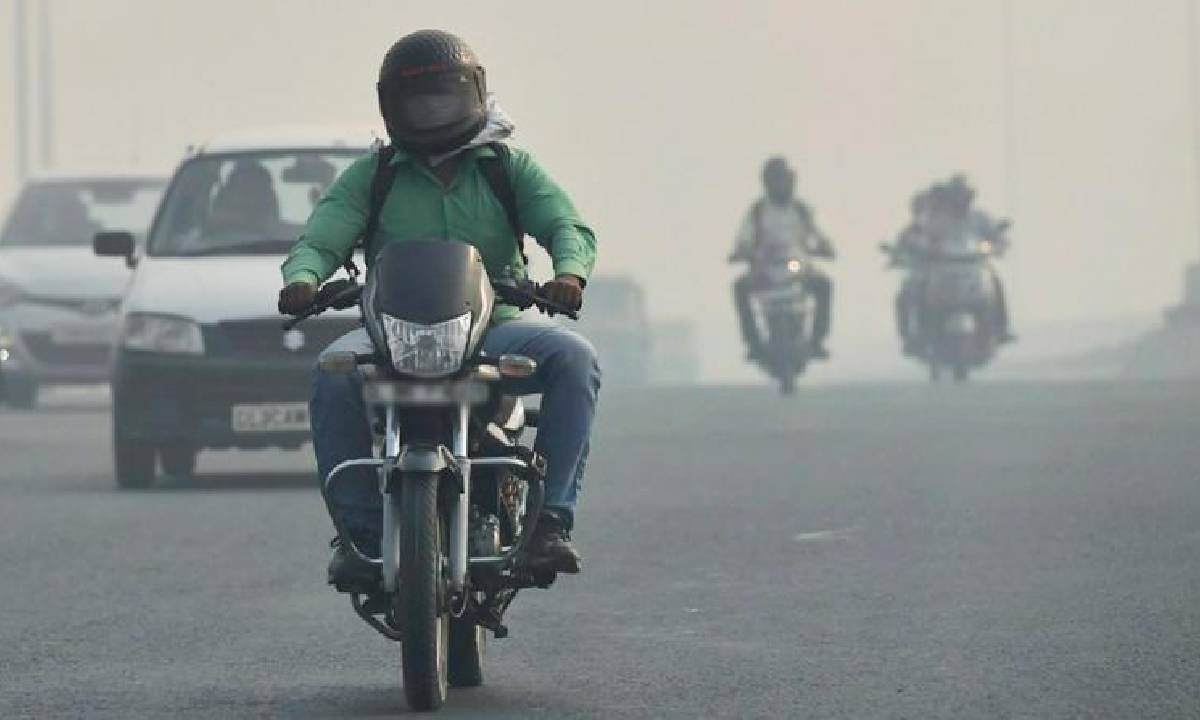
There has been an increase in bike sales everywhere in the world in recent years as it is considered to be an affordable transport mode. Public transport, which takes you from point A to point B, cannot replace it as bikes can take you from doorstep to any destination, however narrow the road.
Naresh Gandhi of, Gandhi automobiles said “Every week 100 bikes are sold but Car sell is declined a bit, even second-hand two wheeler bikes are in demand. Looking at the traffic jams, working class men and women prefer bikes for short distances”.
The bike density in Mumbai increased by 100 in 2018, 75 in 2019, 50 in 2020 and 75 in 2021.The increase in bike registrations in Mumbai has added to congestion, pollution and parking woes. There is also growing concern about rash driving, say transport experts, adding that bikes now occupy more road space and sometimes ride very close to or on footpaths, causing inconvenience to pedestrians.
Hollywood star Brad Pitt has spoken up about dealing with life after a messy split from ex-wife Angelina Jolie.
According to media, the 58-year-old actor talked about how his friendship with singer Nick Cave and sculptor Thomas Houseago bloomed in the wake of the divorce announcement.
While Houseago was added to the trio in 2016 after Pitt met him at a New Year’s Eve party, he met Cave on the set of ‘Johnny Suede’ in 1991.
Media reported that speaking about his friendship with Houseago during an interview with the Financial Times, Pitt said, “Our mutual misery became comic. And out of this misery came a flame of joy in my life. I always wanted to be a sculptor; I’d always wanted to try it.”
At this time, Jolie had just filed for divorce from Pitt following a heated altercation during a private plane ride. The fight led her to accuse Pitt of abuse. During this time period, he spent a lot of time at Houseago’s studio and used it to work on his art skills, according to media.
“It’s all about self-reflection. I was looking at my own life and really concentrating on owning my own s—: where was I complicit in failures in my relationships, where have I misstepped,” Pitt told the outlet about his sculptures and art.
The actor also opened up about learning to be exactly who you are and having friendships where you feel “safe.”
“As I get older, I find such a comfort in friendships where you can be [completely yourself], and I want that to extend in the outer world,” he said.
Pitt is currently involved in a court battle with Jolie, in which the latter recently accused the actor of choking one of their children. Despite finalizing their divorce in 2019, the two remain in a custody battle over their French winery, Chateau Miraval, as per media.
India is land of sages, now god men made it world of scams 9
India is always a land of spiritual practices; everyone has their own way to attain salvation. In the recent past, the modern God-men turned it into scams. For some spirituality is just business. Most of them attained celebrity status and spirituality became a power game. They started creating their own set of cults. Nowadays people are going to god men-women, not for salvation but to seek miracles. This traps even the literate. Self-proclaimed godmen or women get richer by possessing material wealth by leading luxurious lives. India has produced many spiritual leaders; some of them are working for real social causes by guiding their followers to lead life efficiently and effectively.
People should realise, God and godmen or women use people’s innocence and exploit them in some or the other way. These days’ people find ways to be happy and find solutions to their problems and when they hear from others about their problems solved with the help of some Babaji or gurus, people blindly start following such people. Most of the Gurus these days are good communicators.
Politicians and many influential people follow these people for their own benefit and this in turn convinces common men that these gurus will be able to help us become successful too if we follow them. Politicians want votes and film personalities to want promotions. Gurus want wealth and acknowledgement to remain number one in the business.
A true spiritual guide should be one who will ask people to leave materialistic happiness and not one who aspires to a big lavish ashram, cars and crowd and money in his account, it is very necessary to separate good from bad and equally necessary to understand the wants and needs. ‘God-men’ and ‘God-women’ are the people who claim themselves as either the reincarnation of god or god him/her. It is not uncommon for the sprawling network of godmen, gurus and swamis in the Hindu-majority country of more than a billion people to commit sexual crimes.
Strangely, millions of Indians seem to be in the thrall of these smooth-talking “godmen” who have built vast empires preying on their gullibility. The scope for abuse of trust is enormous. Often, even the family of the alleged victim prefers the guru’s version to that of a blood relative. Devotees are beholden to these holy men by becoming part of the faithful. We Indians are great believers in miracles and feel that somebody can get us out of our miseries. This is the prime reason we fall for these godmen.
Starting out as small-time preachers from villages and towns in the country’s rural hinterland, these so-called holy men cultivate a relationship with poor locals and over time, they acquire cult status commanding a huge following (and sometimes even political connections) to camouflage their nefarious activities. People everywhere in India are prone to mystics. Many fall prey to the saffron robes these godmen wear believing they are true saviours, and afterwards blind faith takes over.
Despite the scandals and the fall from grace, there is no dearth of self-styled godmen operating in the country, and faith in the unreasonable and irrational remains firm. Who doesn’t know that wherever there is lust for money there will surely be (a) sexual depravity and (b) crime of diverse kinds? It is simply impossible that the sort and scale of crime that some perpetrate can be done with assured impunity even in the underworld. Are we to tolerate a situation in which the mask of godliness becomes a cover-up for unspeakable depravity?
What should worry us, besides the above, is the readiness of the masses to embrace slavery. The denizens of the dens of ‘godmanity’ – a perversion of divinity – are voluntary slaves. Why, in an age that has deified freedom, do millions of human beings freely embrace slavery in the name of spirituality? A society that renounces the duty to propagate a scientific temper and rational outlook abandons people, willy-nilly, to wolves in sheep’s clothing. Mistaking spirituality for psychological dependence, they become like creepers that need something to climb on. They fall short of discernment.
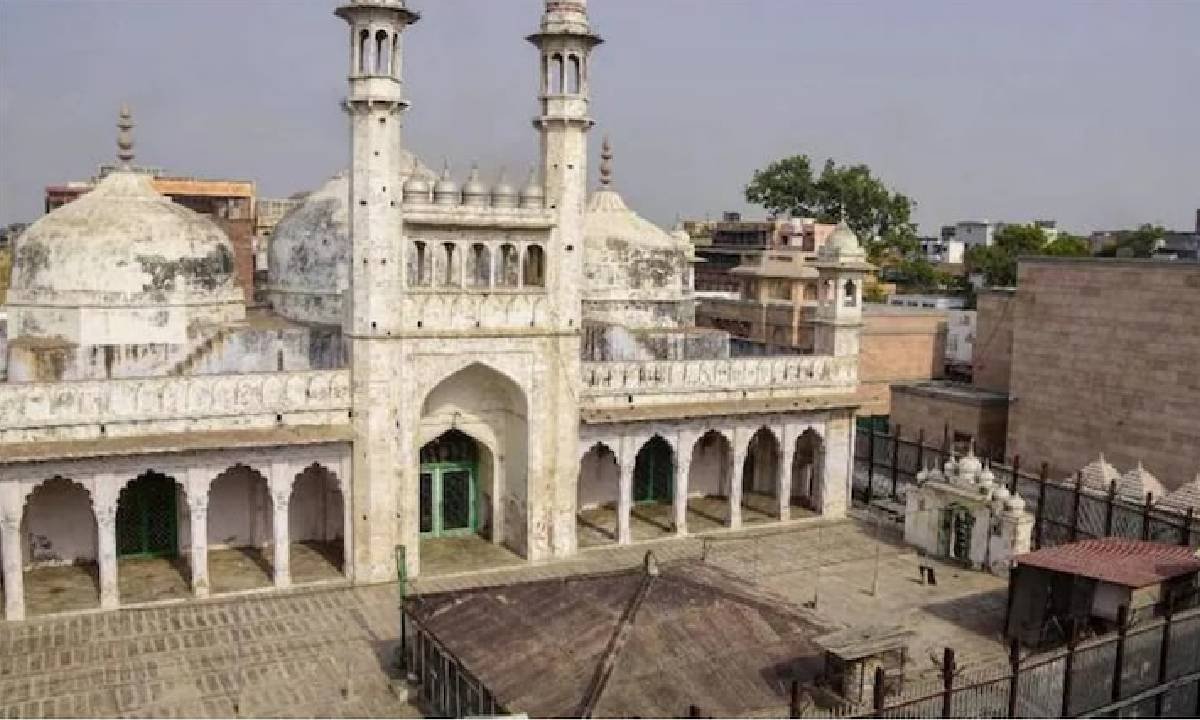
A Varanasi court on Friday rejected the plea seeking carbon dating and scientific investigation of the purported ‘Shivling’ claimed to be found in the Gyanvapi mosque complex.
The Hindu side had claimed that a ‘Shivling’ was found in the premises near the ‘wazukhana’ during the videography survey of the mosque premises, which was ordered by the court.
However, the Muslim side said that the structure found was a ‘fountain’. The Hindu side had then submitted an application on September 22 that sought a carbon dating of the object they claimed to be ‘Shivling’. Carbon dating is a scientific process that ascertains the age of an archaeological object or archaeological finds.
Speaking to media, Vishnu Jain, representing the Hindu side said, “The Muslim side said that Shivling is not a part of the suit property and its carbon dating cannot be done. We have given our clarification on both of these points. The court will deliver its verdict on October 14.”
Earlier on September 29, the Hindu side demanded a scientific investigation of the ‘Shivling’ by the Archaeological Survey of India (ASI) and the carbon dating of ‘Argha’ and the area around it. The court had reserved the order in the Gyanvapi Mosque-Shringar Gauri case after hearing both sides’ arguments.
Akhlaq Ahmed, representing the Muslim side had said that the plea by the Hindu side is not maintainable as it is against the order of the Supreme Court that stated protecting the structure (which the Muslim side claims to be a fountain and the Hindu side claims to be a Shivling).
“We responded to the application on carbon dating. Stone does not have the capacity to absorb carbon. The Supreme Court in its May 17 order, according to which, the object that was found by the commission, had to be protected. The order of the SC will prevail, so the object cannot be opened. According to the Hindu side, the process will be scientific, even if it is so, there will be tampering with the object. Chemicals will be used for the test. We will take action based on the order by the court on October 14,” Ahmed told to the agencies.
Another lawyer representing the Muslim side, Tohid Khan said, “The court will deliver its verdict on whether the application seeking carbon dating is acceptable or should be rejected. The structure is a fountain and not Shivling. The fountain can still be made operational.”
Earlier, an appeal had been filed in the Supreme Court challenging the order of the Allahabad High Court which had dismissed a PIL that sought the appointment of a committee/commission under a judge to study the nature of the structure found in the Gyanvapi Mosque, Varanasi.
The appeal filed by seven devotees sought direction from the Archeological Survey of India (ASI) to ascertain the nature of the structure found on the Gyanvapi campus.
The Allahabad High Court had on July 19 dismissed their plea seeking the appointment of a committee/commission headed by a judge of the High Court or supreme court (sitting/retired) to study the nature of the structure found in the Gyanvapi Mosque.
The PIL moved before the High Court seeks direction from a committee to ascertain whether a Shivaling, as claimed by the Hindus, had been found inside the mosque or if it is a fountain as claimed by Muslims. The appeal in the top court stated that the Allahabad High Court had erred in dismissing the plea.
On May 20, the Supreme Court ordered the transfer of the case related to worship at Gyanvapi mosque from the civil judge to the District Judge, Varanasi.
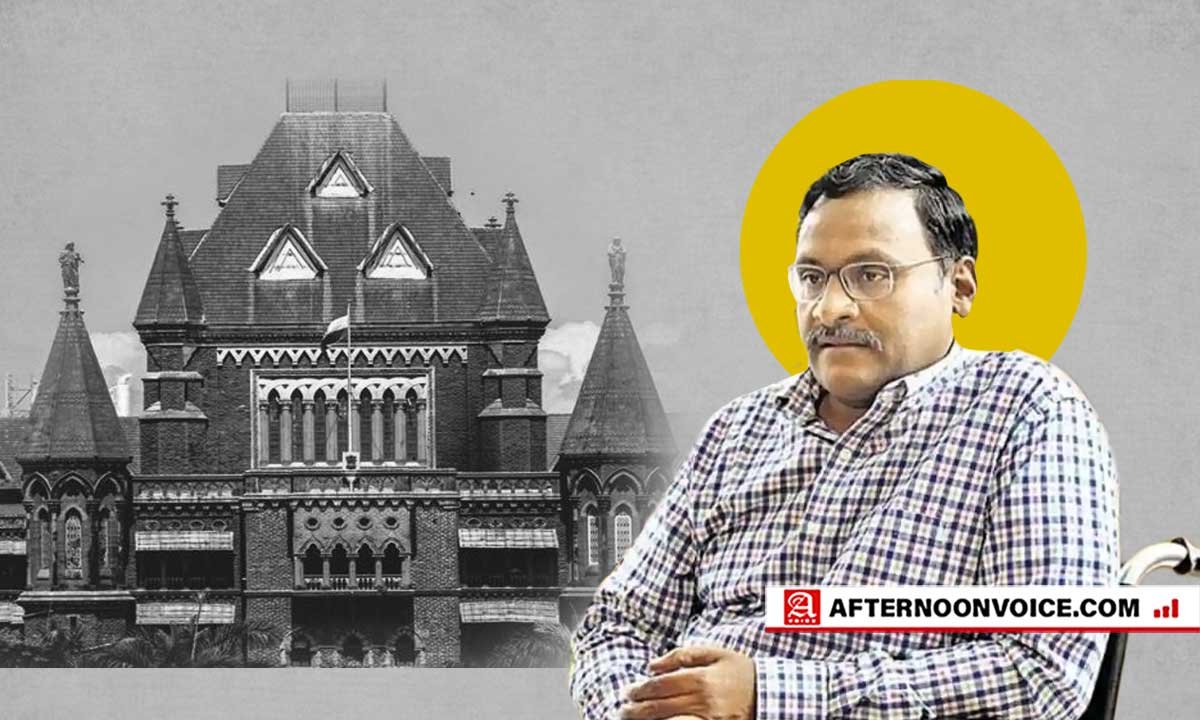
Bombay HC Nagpur-bench acquits professor GN Saibaba and 5 others in Maoist links case 12
The Nagpur bench of the Bombay High Court on Friday acquitted former Delhi University professor GN Saibaba in an alleged Maoist links case and ordered his immediate release from jail.
A division bench of Justice Rohit Deo and Anil Pansare allowed the appeal filed by Saibaba challenging a 2017 order of the trial court convicting him and sentencing him to life imprisonment.
Saibaba, who is wheelchair-bound due to a physical disability, is currently lodged at the Nagpur central prison.
The bench also allowed the appeal of five other convicts in the case and acquitted them. One of the five died pending a hearing of the appeal.
The bench directed for the convicts to be released forthwith from jail unless they are accused in any other case.
In March 2017, a sessions court in Maharashtra’s Gadchiroli district convicted Saibaba and others, including a journalist and a Jawaharlal Nehru University (JNU) student for alleged Maoist links and for indulging in activities amounting to waging war against the country.
The court had held Saibaba and the others guilty under various provisions of the stringent Unlawful Activities (Prevention) Act (UAPA) and the Indian Penal Code (IPC).