Home Blog Page 56

Nepal in Flames: Why Sushila Karki Emerges as the Only Credible Interim Leader

Justice Sushila Karki Nepal Crisis
Nepal in Flames: Why Sushila Karki Emerges as the Only Credible Interim Leader 2

First came the ban, then the backlash, and finally the burning. Nepal’s descent into turmoil followed a brutal rhythm. The government thought it could silence anger with a sweeping order that blocked social media platforms, but instead it ignited it. For a generation already exhausted by unemployment, corruption, and nepotism, the ban became the spark. Within days, protests erupted across the country, police cracked down with bullets and batons, and the state’s attempt to shut down dissent only made the dissent louder. Nineteen lives were lost, hundreds wounded, and the government’s hasty reversal of the ban could not put the genie back in the bottle. Trust had evaporated.

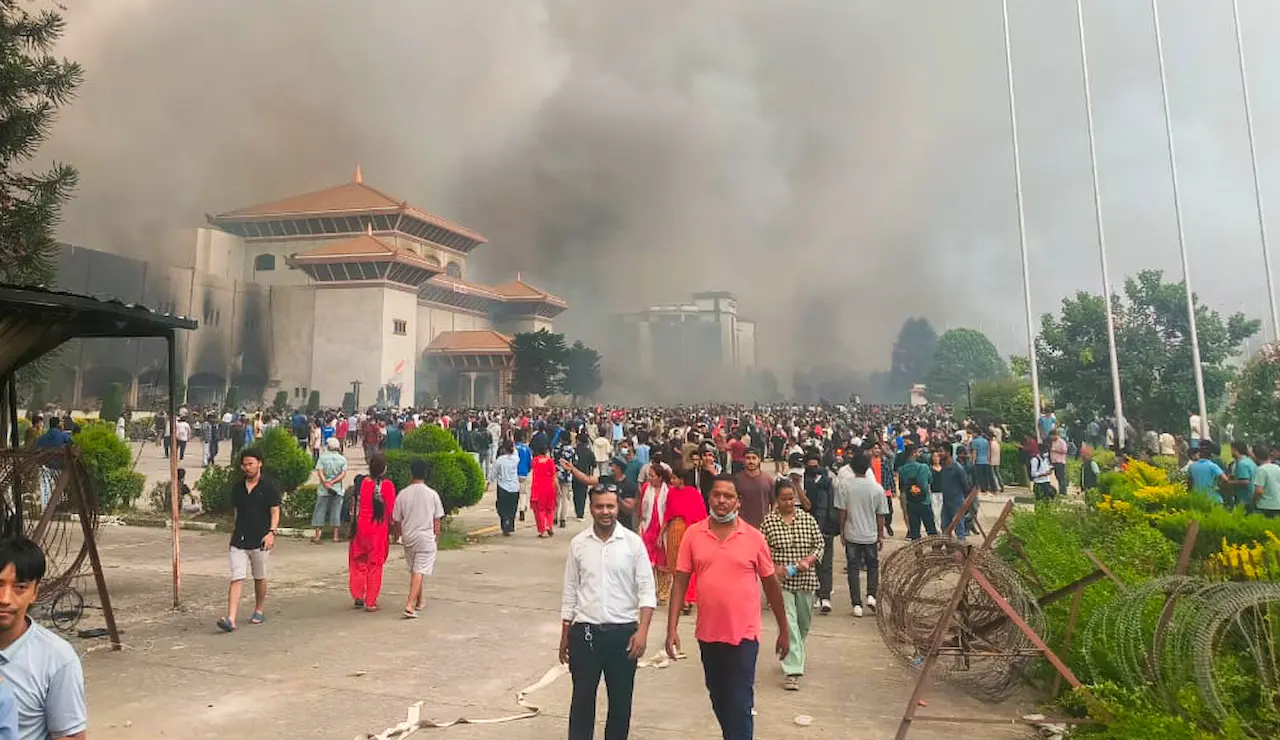
In Kathmandu, fury turned physical. Parliament and ministers’ homes were torched, the capital was locked under curfew, and soldiers patrolled the streets. Prime Minister Oli’s resignation was inevitable, leaving a vacuum no politician could credibly fill. Years of coalition deals, patronage politics, and institutional capture had stripped ministers of any moral armour. When the youth saw the state collapse, they took law and order into their own hands, not out of romance but out of rage.

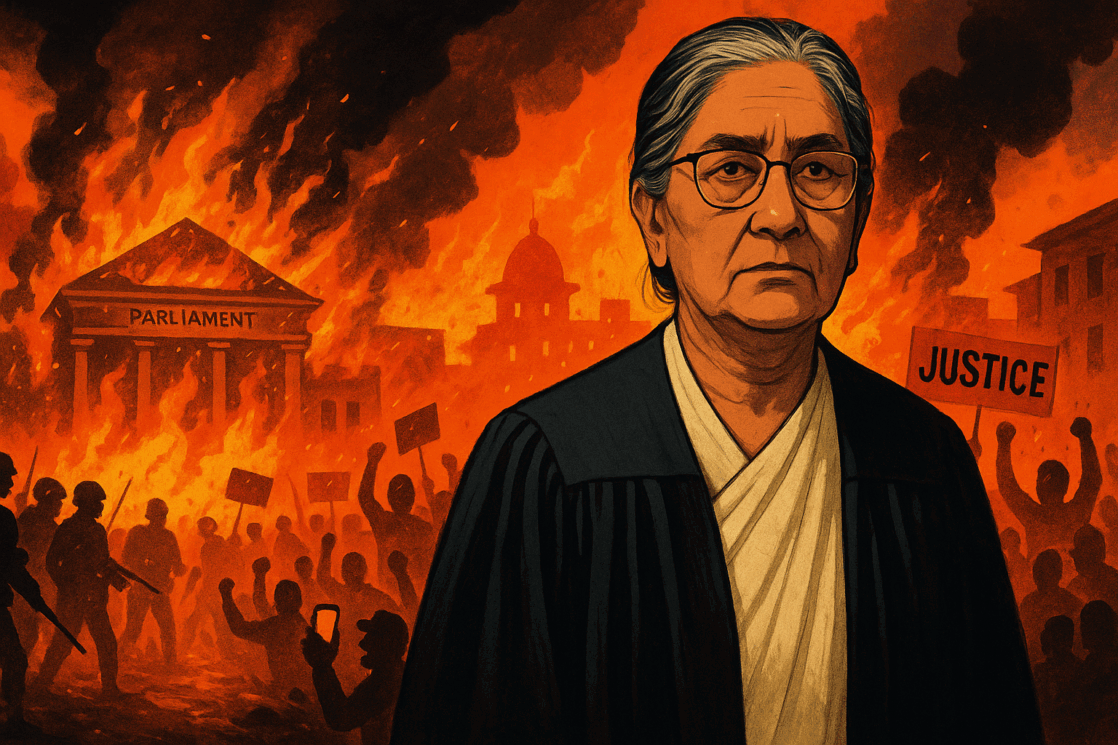
Out of this chaos, one name cut through the noise: Sushila Karki. A former Chief Justice with a reputation for honesty, she had once stared down politicians who tried to impeach her for blocking their manipulations in police appointments. She had jailed a minister for corruption, stood firm against pressure, and left office with clean hands. In a moment when the streets demanded neutrality and integrity, Karki became the obvious choice. In a four-hour virtual meeting with thousands of young participants, the organisers agreed that no one linked to political parties could be trusted. They turned instead to Karki, a woman with no cadre to command, no debts to pay, and no appetite for compromise with the rot.

Her candidacy is not born of populism but necessity. The protesters do not want a saviour; they want a caretaker who can restore the rulebook, bring back credibility, and lead the country into fair negotiations. By rallying around her, they are sending a clear signal: they are done with the old games of patronage and power-sharing. They want an interim leader who is respected, untainted, and strong enough to stare down both corrupt elites and heavy-handed security forces.

Nepal today is not merely in disorder—it is in moral collapse. The parliament has been literally burned, but it was politically burned long before. In that inferno, Sushila Karki does not look like an outsider or a gamble. She looks like the last credible tool left to reset the system.

Delhi Police Bust Pakistan-Linked Terror Module, Five Suspects Arrested in Multi-State Raids

delhi police, pramod singh kushwaha, kushwaha, delhi, police
Delhi Police Bust Pakistan-Linked Terror Module, Five Suspects Arrested in Multi-State Raids 4

Delhi Police’s Special Cell, with support from Central agencies, has dismantled a Pakistan-backed terror module and arrested five operatives in coordinated raids across multiple states, officials confirmed on Thursday. The module was allegedly plotting a major attack in India.

The kingpin, identified as Ashar Danish, also known by aliases CEO, Gazba, and Professor, was arrested from Ranchi, Jharkhand. Two more suspects, Aftab and Sufiyan from Mumbai, were apprehended in Delhi, while Muzapa was held in Telangana. Another operative, Kamran, has also been arrested, police said.

Authorities revealed that the operation followed six months of surveillance after intelligence inputs indicated the module’s plans for a large-scale strike. During the raids, police recovered significant quantities of chemicals, ball bearings, and electronic equipment used in manufacturing Improvised Explosive Devices (IEDs). Items seized included sodium bicarbonate, electrical cables, fuse points, wires, gas masks, and other materials linked to bomb-making.

At Danish’s Ranchi hideout, additional chemicals and explosives-related substances were found, suggesting the group’s preparations were at an advanced stage. Investigations further indicate that the suspects were in touch with handlers based in Pakistan, relying solely on social media platforms for communication.

The arrested operatives are currently being interrogated, while central agencies analyse seized digital devices to trace funding sources, wider networks, and potential targets. Officials said the crackdown has successfully averted a possible large-scale terror strike in India.

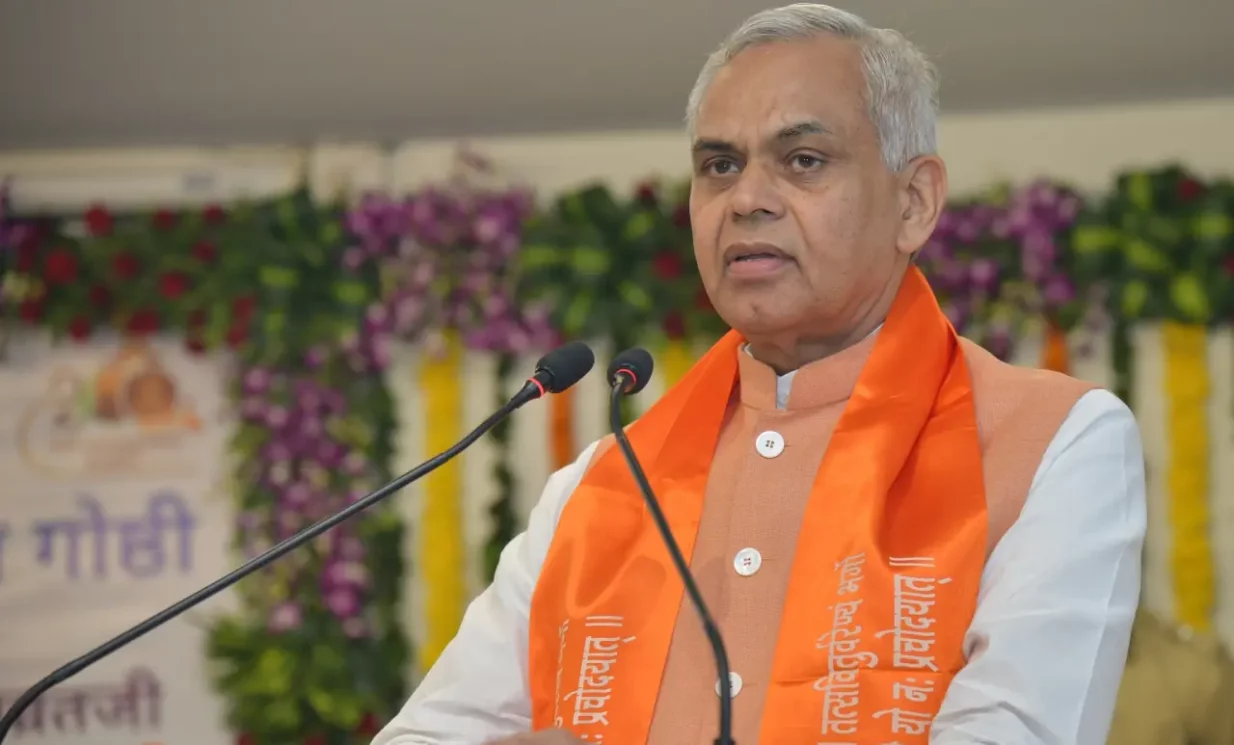
Gujarat Governor Acharya Devvrat Gets Additional Charge of Maharashtra After Radhakrishnan Becomes Vice President

Acharya Devvrat, Governor, Maharashtra, Maha, Gujarat, Governor
Gujarat Governor Acharya Devvrat Gets Additional Charge of Maharashtra After Radhakrishnan Becomes Vice President 6

Gujarat Governor Acharya Devvrat has been given additional charge of Maharashtra following the election of CP Radhakrishnan as the Vice President of India. Radhakrishnan, who was serving as Maharashtra’s governor, secured 452 votes against 300 polled by INDIA bloc candidate and former Supreme Court judge B Sudershan Reddy on September 9.

Radhakrishnan was the Bharatiya Janata Party-led NDA’s nominee for the second highest parliamentary office and emerged victorious in the keenly watched contest. After his election, he vacated the post of Maharashtra governor, paving the way for Devvrat’s additional appointment.

Acharya Devvrat, who has been serving as Gujarat’s governor since July 2019, earlier held the office of Himachal Pradesh governor from August 2015 to July 2019. A strong advocate of Vedic philosophy, natural farming, and cow-breed improvement, Devvrat is also known for his work in promoting yogic science and traditional values.

Academically, he holds a master’s degree in History and Hindi, a bachelor’s in Education, and a diploma in Yoga Science. He is also a doctor in Naturopathy and Yogic Science. Alongside his administrative roles, Devvrat frequently delivers lectures on Vedic human values and philosophy, while engaging in initiatives to spread awareness about sustainable farming practices.

Sensex, Nifty Close Higher on US-India Trade Deal Optimism

nifty, sensex, high, us-india trade deal, us, india, tariff
Sensex, Nifty Close Higher on US-India Trade Deal Optimism 8

Indian equity benchmarks ended higher on Wednesday, extending their positive momentum on the back of optimism surrounding the India-US trade deal and expectations of GST rationalisation.

The Sensex closed at 81,425.15, up 323 points or 0.43%, after opening strong at 81,504.36 against its previous close of 81,101.32. The index touched an intra-day high of 81,643.88. The Nifty settled at 24,973.10, gaining 104.50 points or 0.42%.

Analysts attributed the gains to renewed optimism around ongoing trade negotiations between India and the US. Anticipation of stronger earnings in H2 FY26, supported by GST rationalisation and monetary easing, also lifted investor sentiment.

The IT sector outperformed, buoyed by hopes of a potential Fed rate cut and a revival in technology spending. Market participants are closely tracking the progress of trade talks for cues on tariff-related issues.

Among the top gainers on the Sensex were BEL, HCL Tech, Bajaj Finance, Axis Bank, TCS, Tech Mahindra, Infosys, SBI, L&T, Adani Ports, ITC, Bajaj Finserv, and Kotak Bank. On the downside, Mahindra & Mahindra, Maruti Suzuki, Tata Motors, Ultratech Cement, PowerGrid, and Eternal ended lower.

Most sectoral indices closed in the green, with Nifty IT rising 927 points or 2.63%, Nifty FMCG up 359 points or 0.64%, Nifty Bank climbing 319 points or 0.59%, and Nifty Financial Services gaining 161.80 points or 0.62%. Nifty Auto was the only major laggard, falling 348.55 points or 1.28% due to profit booking.

The broader market mirrored the upbeat mood, with Nifty Smallcap 100 advancing 130 points or 0.73%, Nifty Midcap 100 jumping 535 points or 0.93%, and Nifty 100 climbing 319 points or 0.59%.

Chaos in Nepal: Tourists Stranded as Protests Shut Down Kathmandu Airport

tourist, stranded, kathmandu, kathmandu airport, nepal
Chaos in Nepal: Tourists Stranded as Protests Shut Down Kathmandu Airport 10

Hundreds of tourists, including many from India, have been stranded in Nepal after Kathmandu Airport was shut down due to violent Gen Z protests against alleged corruption and the Oli government’s controversial social media ban.

The youth-led demonstrations, which began peacefully, spiralled into violent clashes with security forces, leaving several people dead and prompting mobs to attack politicians and torch the homes of leaders. With major highways also blocked by protesters, travellers remain trapped across the capital.

Among those stranded is a group of friends from Navi Mumbai who had come to visit the Pashupatinath Temple. “We were travelling in Nepal with friends, but a curfew was imposed after we arrived. The situation is very problematic now. The sooner we find a way to leave safely, the better it will be for us,” one of them told IANS. Another said they had been confined to their hotel for two days and had contacted the Indian Embassy, which advised them to remain indoors until arrangements for evacuation are made.

Tourists from other countries are facing the same plight. A German traveller said, “The situation is very bad. Yesterday I saw a lot of smoke from hotels. They were burning, and people were dying—innocent people. It’s very sad. I hope everything will return to normal soon.” Another German, part of a group of 14, added, “We are safe, but we hope that we can leave tomorrow.”

The Indian Embassy has assured stranded nationals that efforts are underway to arrange their safe return, but until then, tourists have been asked to stay inside their hotels. With Nepal’s unrest still volatile, uncertainty looms large as travellers wait anxiously for safe passage out of the country.

PM Modi Voices Anguish as Cabinet Security Panel Reviews Crisis in Nepal

pm modi, nepal, nepal crisis, narendra modi
PM Modi Voices Anguish as Cabinet Security Panel Reviews Crisis in Nepal 12

Prime Minister Narendra Modi on Tuesday chaired a meeting of the Cabinet Committee on Security (CCS) to review the escalating crisis in Nepal, where violent protests have claimed several lives, many of them young demonstrators.

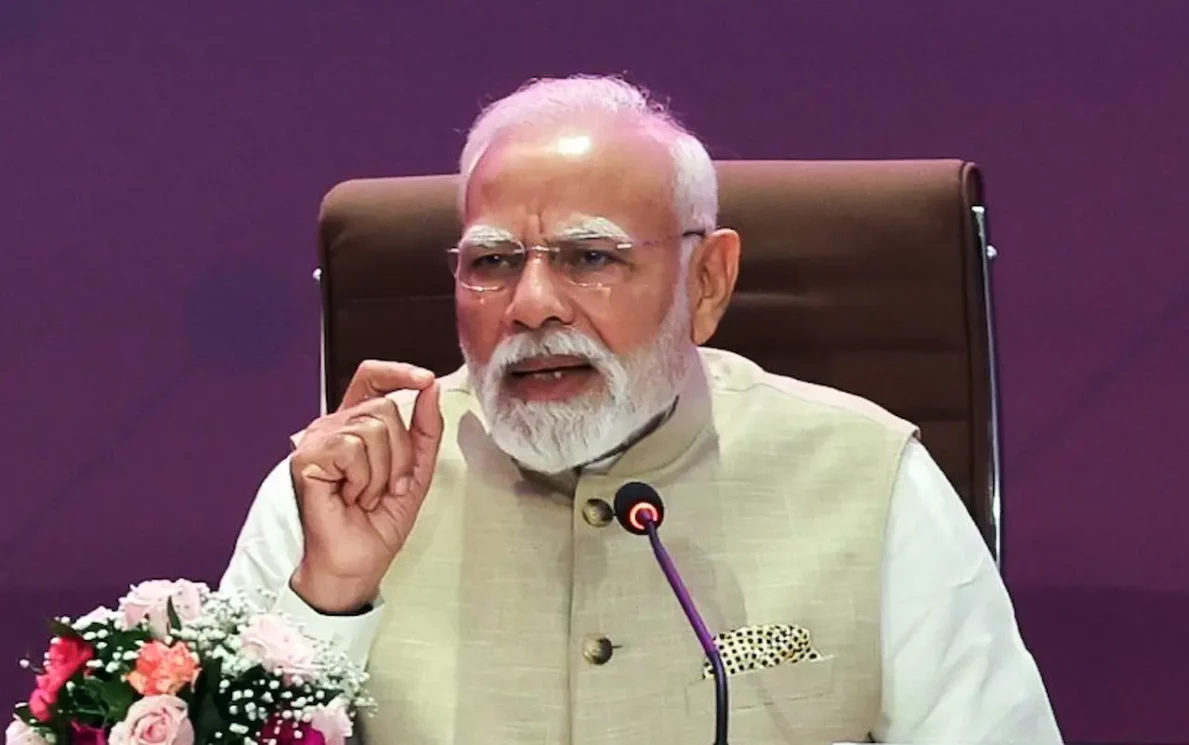
Expressing anguish over the unrest, the Prime Minister stressed the need for peace, stability, and prosperity in the neighbouring country. “On my return from Himachal Pradesh and Punjab today, a meeting of the Cabinet Committee on Security discussed the developments in Nepal. The violence in Nepal is heart-rending. I am anguished that many young people have lost their lives. The stability, peace and prosperity of Nepal are of utmost importance to us. I humbly appeal to all my brothers and sisters in Nepal to support peace,” Modi posted on X.

The CCS discussions underscored India’s concern for regional stability and its commitment to peace in South Asia. Authorities have stepped up security along the Indo-Nepal border, while Indian citizens in Nepal have been advised to avoid unnecessary travel and remain indoors.

Nepal is currently reeling from one of its worst political crises in years, sparked by the government’s decision to ban 26 social media platforms. The move triggered massive youth-led demonstrations, dubbed the “Gen Z movement,” which escalated into violent clashes with security forces. At least 19 people have been killed and over 300 injured after police reportedly opened fire and used tear gas to disperse crowds.

Though the ban has now been lifted, the unrest has forced several ministers to resign, including Prime Minister K. P. Sharma Oli. Reports suggest President Ram Chandra Poudel has also stepped down. With flights to and from Kathmandu suspended and the Army deployed to control the situation, Nepal remains on edge.

Deva Bhau: Maharashtra’s Relentless Political Chess Master

deva bhau, maharashtra, devendra fadnavis, bjp. maratha
Deva Bhau: Maharashtra's Relentless Political Chess Master 14

In the shifting sands of Maharashtra politics, one name repeatedly rises to the center—Devendra Fadnavis. He is not just another politician navigating elections, but the man who has over and over again proved that he is the strategist, the mover, the player who cannot be ignored. His journey from Nagpur’s youngest mayor to becoming the state’s most important political force is not built merely on luck or timing, but on an instinctive ability to read the mood of Maharashtra, to sense when to strike and when to step back.

When the BJP stormed into power in 2014, it was Fadnavis who became the face of that new chapter, the first BJP chief minister of Maharashtra in decades. He carried the weight of development on his shoulders, pushing urban infrastructure, agrarian support, and governance reforms that gave him credibility not just among party loyalists but also among voters who had never imagined a BJP face leading the state. Five years later, when the Sena broke ranks in 2019, he pulled off a breathtaking political stunt by returning to power with Ajit Pawar in an overnight coup that lasted only 80 hours. Critics mocked the brevity of that government, but what lingered in political memory was not the fall, it was the audacity of the attempt. It cemented his reputation as a leader who could turn the tables when everyone else thought the game was over.

That same quality defined him again in 2022, when he accepted the Deputy Chief Minister’s chair to stabilize the Mahayuti government with Eknath Shinde. It was a moment that revealed his understanding of real power—not in titles, but in control, influence, and the ability to hold the system together from behind the curtain. Today, as civic elections approach, he has once again reshaped his image. The sudden disappearance of “Fadnavis” from his name and the emergence of “Deva Bhau” on posters across Mumbai are not random. They are a deliberate play to cross caste lines, to claim the emotional connect that Shiv Sena once monopolized, and to present himself as the brotherly figure every Marathi voter can identify with.

In the posters, he stands before the image of Chhatrapati Shivaji Maharaj, offering flowers. It is more than homage; it is a quiet declaration that Shivaji’s legacy does not belong to one party, that BJP and Devendra too have the right to embody that vision of justice, courage, and pride. The fact that these posters carry no party name or symbol, only his picture and Shivaji’s presence, shows that he is trying to build a personal connection that rises above organizational branding. And this is happening just as the Maratha reservation decision has set off a credit war within the Mahayuti, making his move even more significant.

What emerges from all this is a portrait of a man who is far more than an administrator. Devendra Fadnavis is the chess player of Maharashtra politics, a strategist who knows when to take risks, when to sacrifice, and when to claim the board. From 2014 to 2019 to 2022 and now to the civic polls ahead, every turning point of the state’s politics has his imprint. He has shown that he can reinvent himself, command narratives, and keep Maharashtra’s politics revolving around his presence. That is why, in the final reckoning, he stands not just as the BJP’s strongman but as the man of Maharashtra.

PM Modi Heads to Flood-Hit Himachal and Punjab, Assures Support to Affected Families

pm modi, flood-hit, himachal, punjab, flood
PM Modi Heads to Flood-Hit Himachal and Punjab, Assures Support to Affected Families 16

Prime Minister Narendra Modi on Tuesday said the government stands “shoulder-to-shoulder” with people affected by the recent floods and landslides, as he departed for Himachal Pradesh and Punjab to review the situation in the disaster-hit states.

“Leaving for Himachal Pradesh and Punjab to review the situation in the wake of floods and landslides. The Government of India stands shoulder to shoulder with those affected in this tragic hour,” the Prime Minister posted on X.

PM Modi will review relief, rescue, and rehabilitation measures in Kangra, Himachal Pradesh, where he is expected to meet affected families and interact with personnel of the National Disaster Response Force (NDRF), State Disaster Response Force (SDRF), and Aapda Mitra volunteers engaged in operations.

Later, he will conduct an aerial survey of flood-hit regions in Punjab before holding a review meeting with senior officials in Gurdaspur. He will also meet survivors and relief workers on the ground.

The two northern states have suffered severe damage due to monsoon-triggered floods and landslides, leaving thousands displaced and causing large-scale devastation.

Nepal Lifts Social Media Ban After Deadly Gen Z Protests, Curfew Enforced in Kathmandu

Nepal, Kathmandu, Gen Z protests, anti-corruption protests
Nepal Lifts Social Media Ban After Deadly Gen Z Protests, Curfew Enforced in Kathmandu 18

Nepal lifted its social media ban on Tuesday, less than a day after violent anti-corruption protests sparked by the restrictions left 19 people dead and over 100 injured. The government has now imposed a curfew in Kathmandu to curb further unrest.

The week-long ban on platforms including Facebook was withdrawn following a Cabinet meeting, Communications and Information Technology Minister Prithvi Subba Gurung confirmed. Social media apps were back online by Tuesday morning.

The protests, largely driven by Nepal’s Gen Z, erupted against widespread corruption and intensified after the shutdown, spreading across multiple cities. Authorities in Kathmandu and neighbouring Lalitpur enforced curfews to prevent gatherings, with officials banning protests, assemblies, and public meetings.

Prime Minister K.P. Sharma Oli expressed sorrow over the deaths, blaming “infiltration from different selfish centres” for the violence. He announced compensation for victims’ families, free treatment for the injured, and the formation of an investigation panel to report within 15 days.

Organisers described the demonstrations as a reflection of young people’s frustration with the government’s failure to tackle corruption and provide economic opportunities. Officials defended the initial social media ban, citing a crackdown on fake accounts, misinformation, and hate speech.

The Game of Votes: Why India’s Presidential & Vice-Presidential Elections Matter More Than Ever

Presidential election India, Vice-Presidential election, Jagdeep Dhankhar, vice president
The Game of Votes: Why India's Presidential & Vice-Presidential Elections Matter More Than Ever 20

India prides itself on being the world’s largest democracy. Yet, its two highest constitutional offices — the President and the Vice-President — are chosen not directly by the people but through an intricate web of indirect voting. Critics call it elitist; defenders hail it as balanced federalism. Both are partly right. What cannot be denied is that these elections are far more political and consequential than many imagine.

The System: Elegant, Complex, Essential

The President is elected by an Electoral College of MPs and MLAs, with each vote carefully weighted to balance state and national interests. A single transferable vote ensures that consensus, not brute majority, defines the outcome. It is a system designed to prevent domination by a single state or party, and to compel wide acceptability. The Vice-President, meanwhile, is chosen by MPs alone. Here too, proportional representation and secret ballots ensure free choice, at least in theory.

The complexity is no accident — it is deliberate constitutional craftsmanship. Our founders understood that while Parliament represents the national mood, state legislatures embody the federal spirit. Combining the two prevents Delhi from swallowing the states whole. But this elegance comes at a price: MPs and MLAs need training before voting, lest their ballots be declared invalid. Union Minister S.P. Singh Baghel’s frank admission that many first-time MPs do not even know whether the ballot is electronic or paper speaks volumes about the seriousness of this exercise.

The Past: Cross-Voting, Consensus, and Surprises

History shows that these elections are not mere formalities. Cross-voting has often tilted the scales. In 2022, Jagdeep Dhankhar secured a thumping 75% win, thanks not just to the NDA but to unexpected support from Naveen Patnaik’s BJD and KCR’s BRS. In earlier years, too, parties broke ranks, proving that secret ballots can sometimes free lawmakers from rigid party discipline. These contests have produced both predictable results and political earthquakes, reminding us that “ceremonial” posts can reflect deep undercurrents in national politics.

The Present: A Loaded Battle

This September’s Vice-Presidential election, however, carries a sharper edge. On paper, the NDA has the numbers — 427 MPs, comfortably above the majority mark of 386. With support from Jagan Reddy’s YSR Congress, Maharashtra Governor C.P. Radhakrishnan is the clear frontrunner. Opposition candidate Justice B. Sudershan Reddy, despite a stronger INDIA bloc showing in 2024, faces a daunting shortfall of nearly 100 votes even in the best-case scenario.

Yet, abstentions by the BJD and BRS tell a story of their own. Both regional satraps — Patnaik and KCR — are recalibrating after electoral setbacks. Their silence is not neutrality but strategy, aimed at safeguarding state interests and Muslim vote banks ahead of crucial bypolls. Politics, not procedure, drives these calculations.

Why It Matters: More Than a Rubber Stamp

Skeptics dismiss the President and Vice-President as symbolic figures, bound by cabinet advice. That is a dangerously shallow reading. The President is the constitutional guardian, the one who can send back a flawed bill, summon or dissolve Parliament, and decide who forms government in hung verdicts. The Vice-President, as Rajya Sabha Chair, can make or break the fate of contentious bills, often acting as the government’s shock absorber or lightning rod.

In an era where Parliament is increasingly polarized, these offices are not passive chairs but pivotal referees. Their credibility, impartiality, and even personality matter. A Dhankhar or a Hamid Ansari at the helm makes all the difference in how Rajya Sabha debates play out.

The Bottom Line

India’s presidential and vice-presidential elections are not dull rituals but carefully engineered balancing acts between democracy and federalism, symbolism and power. They are stress tests of our constitutional design.

This year’s Vice-Presidential election, though tilted towards the ruling NDA, reveals how abstentions, cross-voting, and regional power plays can reshape the arithmetic. What looks like a foregone conclusion is, in fact, a snapshot of India’s messy, magnificent democracy at work.

The ballot may be secret, but the politics is never hidden.