Home Blog Page 592

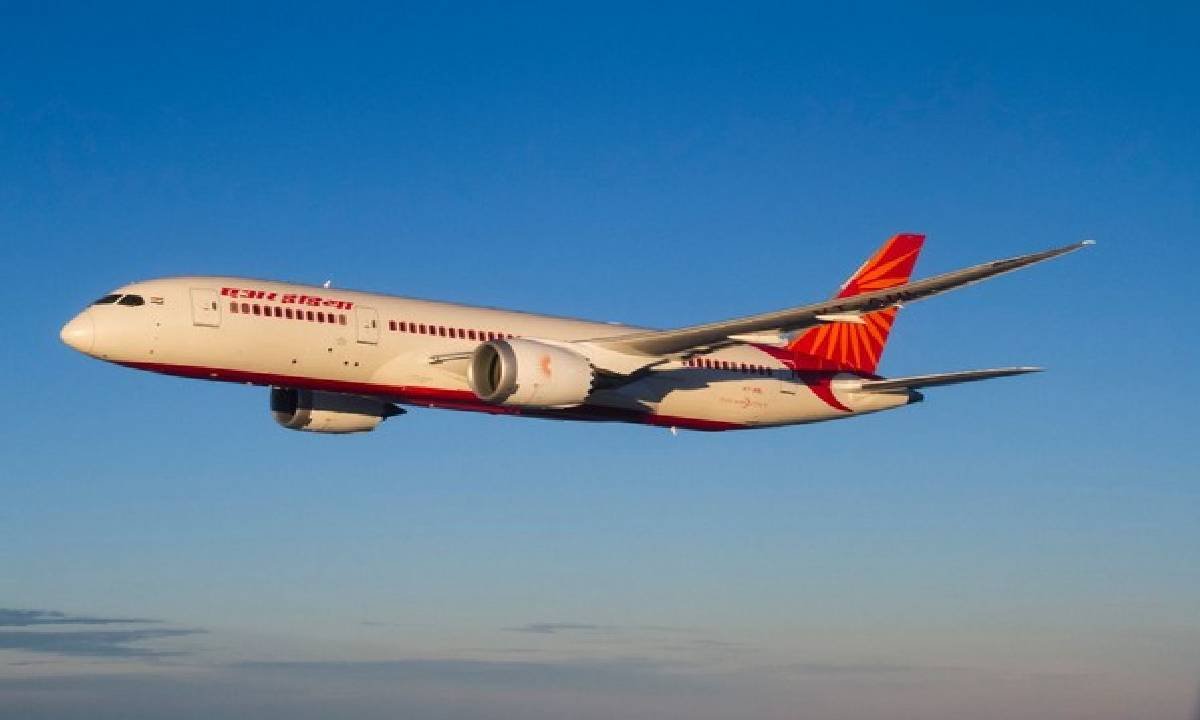
Dubai to Cochin Air India flight diverted and land in Mumbai due to loss of cabin pressure

Air India representative Image
Image for representative purpose

The alternate aircraft arranged for passengers of the Dubai-Kochi Air India flight that got diverted to Mumbai a day ago due to a loss of cabin pressure landed at the Cochin International Airport here early on Friday morning.

An alternate aircraft AI 1681 BOM-COK from Mumbai landed at 0433 hours today with 180 passengers. The rest of the passengers will arrive on an Air India flight at 0730 hrs.

The Directorate General of Civil Aviation (DGCA) has ordered a probe into the incident that took place on July 21 when an Air India flight from Dubai to Kochi was diverted to Mumbai due to a loss of cabin pressure after which an alternate aircraft was arranged to carry passengers from Mumbai to Kochi.

A senior DGCA official informed that the captain of Air India Boeing Fleet Aircraft of Flight No. AI- 934 from Dubai – Cochin, reported to IOCC (Integrated Operations Control Centre) regarding pressurization loss in the aircraft. The flight was diverted to Mumbai and it landed safely.

Two senior officers of DAS WR are assigned the task to carry out a preliminary investigation, he added. He added that an inquiry has been ordered.

On Wednesday, in an incident of technical malfunction, the windshield of a Go-Air flight between Delhi and Guwahati cracked mid-air due to bad weather on Wednesday, a Directorate General of Civil Aviation (DGCA) official said.

The aircraft was diverted to Jaipur and landed safely. Earlier this month, DGCA said that 30 such incidents take place daily, but these occurrences hardly have any safety implications.

“On average, about 30 incidents do take place, including go-around, missed approaches, diversion, medical emergencies, weather, technical and bird hits,” the top DGCA told ANI.

“Most of them have no safety implications. On the contrary, they are a sine qua non of a robust safety management system,” he added. In similar incidents, another two Go First flights were diverted due to engine snags on Tuesday.

The DGCA has said that the matter is being investigated and the aircraft are being grounded. The DGCA added that the flights will take off once they get clearance from the authority.

While the GoAir A320 aircraft VT-WGA flight from Mumbai to Leh was diverted to Delhi due to Engine No.2 EIU (Engine Interface Unit) fault, Go Air A320 aircraft VT-WJG flight G8-6202, from Srinagar to Delhi was diverted to Srinagar due to Engine no. 2 EGT over the limit.

Earlier on July 17, an Air India Express aircraft while operating from Calicut to Dubai was diverted to Muscat after a burning smell was observed from one of the vents in the forward galley of the flight.

Meanwhile, after frequent engineering-related glitches were reported in several airlines, the DGCA conducted several spot checks and advised that all aircraft at base and transit stations shall be released by certifying staff holding a licence with appropriate authorization by their organization, said officials on Monday.

The spot checks carried out by DGCA teams have indicated the improper identification of the cause of a reported defect, increasing trend of minimum equipment list (MEL) releases and non-availability of required certifying staff to cater to multiple scheduled arrivals/ departures in a short interval.

The move comes after several instances were reported in the country where flights were diverted citing safety or functioning issues.


Delhi LG recommends CBI probe into Kejriwal govt’s liquor policy

lg, vk saxena, arvind kejriwal, kejriwal, liquor policy, excise policy
Image: Agency

Delhi LG VK Saxena recommended a CBI probe into the Arvind Kejriwal government’s Excise Policy, 2021-22, over alleged violations of rules and procedural lapses, officials said on Friday.

The CBI inquiry was recommended on Delhi Chief Secretary’s report filed earlier this month, showing prima facie violations of GNCTD Act 1991, Transaction of Business Rules (ToBR)-1993, Delhi Excise Act-2009, and Delhi Excise Rules-2010, they said.

Apart from this there were also ”deliberate and gross procedural lapses” to provide post tender ”undue benefits to liquor licensees”, said the officials.

The new Excise policy 2021-22 was implemented on November 17 last year under which retail licenses were given to private bidders for 849 vends across the city divided into 32 zones.

Many liquor stores failed to open for being located in non-confirming areas of the city. Several such vends were sealed by the municipal corporations, they said.

The BJP and Congress had vociferously opposed the policy and lodged complaints with the LG as well as central agencies for a probe into it.

Jhunjhunwala’s Akasa Air all-set to launch its first commercial flight on Aug 7

Akasa
Image: Agencies

New airline Akasa Air on Friday said it will launch commercial flight operations on August 7 by operating its first service on the Mumbai-Ahmedabad route using Boeing 737 Max aircraft.

In a statement, the carrier said it has opened ticket sales on 28 weekly flights it will be operating on the Mumbai-Ahmedabad route from August 7, as well as on 28 weekly flights it will operating on the Bengaluru-Kochi route from August 13.

The carrier will launch commercial operations with two 737 Max aircraft. Boeing has delivered one Max plane and the second one’s delivery is scheduled to take place later this month.

Praveen Iyer, Co-founder, and Chief Commercial Officer, of Akasa Air, said, “We kick-start operations with flights between Mumbai and Ahmedabad, with the brand-new Boeing 737 Max aircraft.” “We will adopt a phased approach to support our network expansion plans, progressively connecting more cities, as we add two aircraft to our fleet each month, in our first year,” he added.

The carrier had on July 7 received its air operator certificate (AOC) from aviation regulator DGCA.

With the Directorate General of Civil Aviation (DGCA) giving its green light to Max planes in August 2021, Akasa Air signed a deal with Boeing on November 26 last year to purchase 72 Max aircraft.

Shiv Sena expects Murmu to uphold constitutional values, says Sanjay Raut

Sanjay Raut 1
Image: Agencies

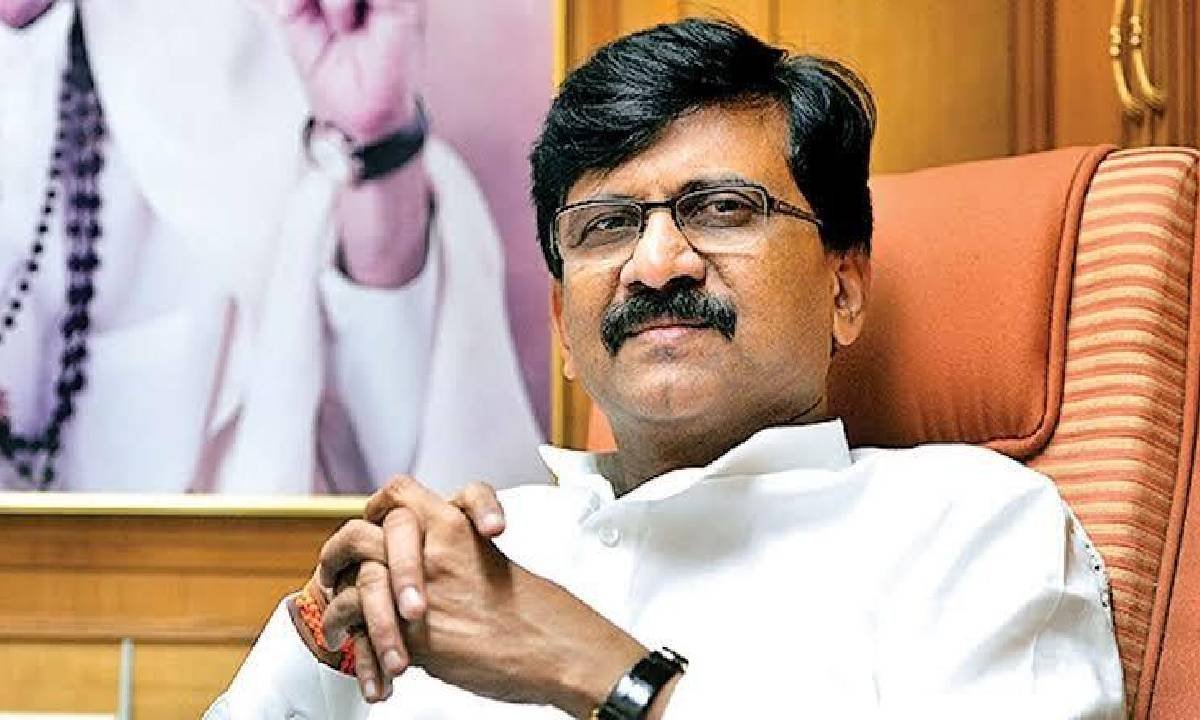
Shiv Sena leader Sanjay Raut on Friday congratulated Droupadi Murmu on her election as the President of India and said his party expects her to uphold the constitutional values.

“We welcome her victory and are happy that a tribal woman has assumed the top post. We supported her candidature. We expect her to uphold and protect the constitutional values,” Raut, who is the party’s chief spokesman, told PTI.

Murmu, the candidate of the Bharatiya Janata Party (BJP)-led National Democratic Alliance (NDA), scripted history on Thursday by becoming India’s first tribal president in the one-sided contest, defeating Opposition candidate Yashwant Sinha.

Murmu, 64, won by an overwhelming margin against Sinha after receiving over 64 per cent valid votes in a day-long counting of ballots of MPs and MLAs, comprising the electoral college, to succeed Ram Nath Kovind to become the country’s 15th president.

In the run-up to the election for the top post held on July 18, Shiv Sena chief Uddhav Thackeray announced his support for Murmu, days after the Maha Vikas Aghadi (MVA) government led by him in the state collapsed. The Sena, the Nationalist Congress Party (NCP) and Congress were constituents of the MVA dispensation.

The Sena had parted ways with the BJP after the 2019 Maharashtra Assembly polls following differences over sharing the chief minister’s post, and later joined hands with the NCP and Congress.

UP ranks 7th in India Innovation Index 2021

niti ayog
Image : Representative/ Agencies

Uttar Pradesh has improved its performance by two places, bagging the seventh rank in the India Innovation Index 2021 – a comprehensive tool for the evaluation and development of the country’s innovation ecosystem.

The state has been ranked seventh amongst the major states category as compared to the ninth rank in 2020.

The India Innovation Index 2021 report was released by Niti Aayog in New Delhi on Thursday.

UP scored highest in the business environment, high cluster strength, and a significant share of the manufacturing and service sector as a percentage of gross state domestic product (GSDP), officials said.

The state has emerged in the top five states under the knowledge-output pillar. This high score is an outcome of a rise in startups and new businesses, they said.

Innovation-led entrepreneurship is key to ‘Make in India’ and ‘Aatmanirbhar Bharat’ programs and the state was determined to create an innovation-friendly environment to give further impetus to startups, manufacturing, and services, Chief Executive Officer of Invest UP, Abhishek Prakash said.

With a score of 6.18, Uttar Pradesh has scored above the national average of 5.81 in Knowledge Diffusion due to a high share of ICT exports, high-tech exports, and citations, he said.

Knowledge Diffusion indicates the knowledge absorption capacity of the state having two sub pillars– knowledge dissemination, and creative goods and services.

The India Innovation Index, prepared by Niti Aayog and the Institute for Competitiveness, is an assessment framework that ranks states and the union territories on their innovation performance.

The third edition of the index released on Thursday highlighted the scope of innovation analysis in the country by drawing on the framework of the Global Innovation Index.

Centre orders airlines not to charge extra for issuing boarding passes at check-in counters

Airport Representative Image
Image: Agencies

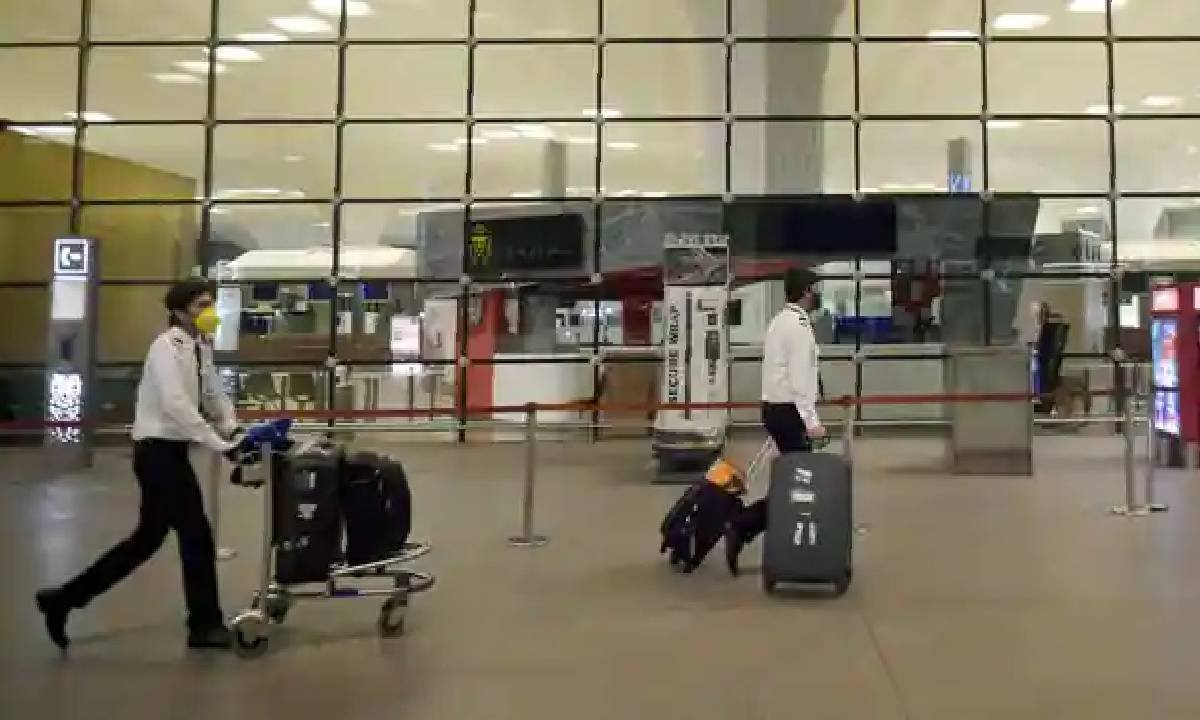
The Ministry of Civil Aviation on Thursday ordered airlines not to charge extra for issuing boarding passes at airport counters.

The letter referred to an order dated May 2020 that mention general instructions to be followed by passengers and Specific Operating Guidelines for major stakeholders for recommencement of domestic air travel for passengers with effect from May 25, 2020 inter-alia indicating that passengers have to ensure that they make a web check-in and generate Boarding Pass.

Further, it is also requested to refer to the letter of even reference dated May 9, 2022, advising airlines to encourage, facilitate and guide the air passengers in making timely web check-in and bag tag printing and minimize/avoid penal charges on non-web-check-in travelling passengers.

It has come to the notice of the Ministry of Civil Aviation that airlines are charging an additional amount for issuing boarding passes from the passengers seeking check-in at airport counters.

Such an additional amount is not in accordance with the instructions given in the aforesaid Order or as per extant provisions of Aircraft Rules, 1937.

In view of the above, the airlines are advised not to charge any additional amount for issuing boarding passes at the airport check-in counters, as the same cannot be considered within the ‘tariff’ as provided under Rule 135 of the Aircraft Rules, 1937.

The letter has the approval of the Competent Authority and it has been marked to the Directorate General of Civil Aviation also.

Maha CM lifted all curbs in upcoming festivals

Eknath Shind
Image: Agencies

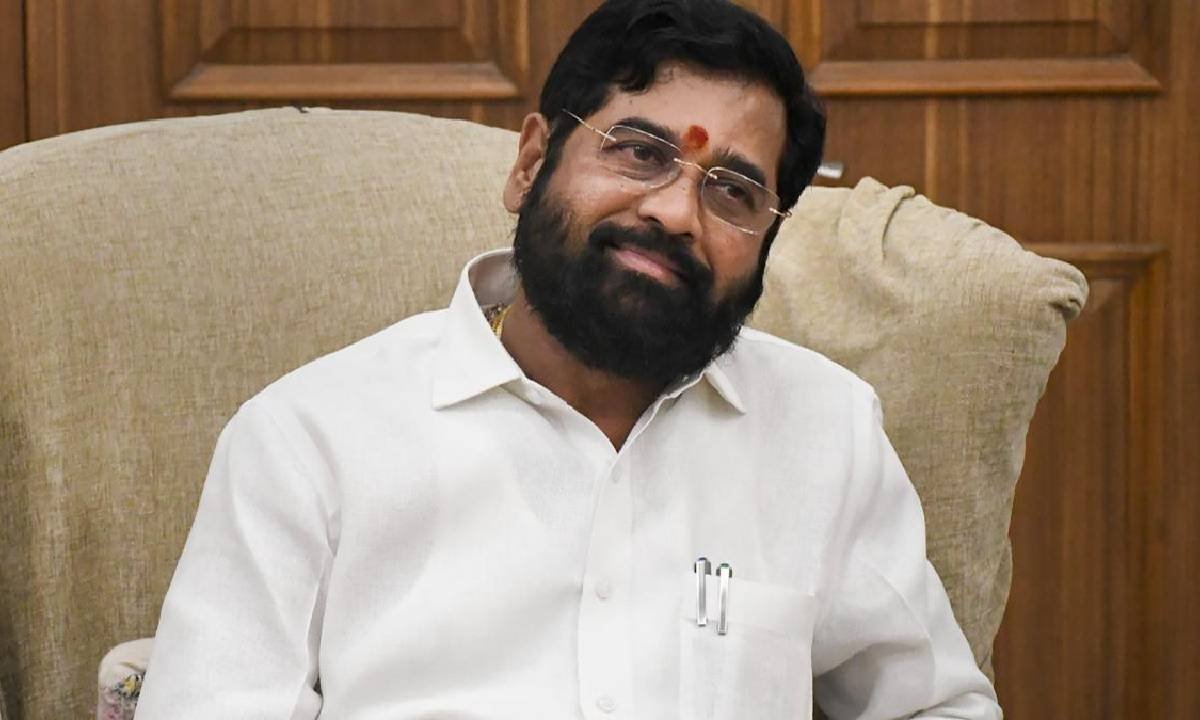
Maharashtra Chief Minister Eknath Shinde on Thursday announced that the restrictions imposed on festivals during the coronavirus pandemic have been lifted and there would no curbs on the upcoming Ganesh Chaturthi, Dahi Handi and other religious events.

There will also be no restrictions on the commemoration of Muharram when processions are taken out, he said.

After the pandemic broke out in March 2020, the Maha Vikas Aghadi (MVA) government, which was then led by Uddhav Thackeray, imposed several restrictions on festivals, including a ban on processions during the Ganeshotsav. There were also curbs on the height of the Lord Ganesh idols installed by sarvajanik (community) mandals and as well the household level.

Due to these factors and the prevalence of infection, the Ganesh festival and other religious events had mostly remained low-key in the last two years.

Speaking to reporters, Shinde said, “All the restrictions on the religious festivals introduced during the pandemic have been lifted. People should be able to welcome such festivals with a positive attitude.” He added that a single-window system would be set up to facilitate the Ganesh mandals across the state in obtaining permissions for pandals and other things. “There will be no registration fees for it,” the chief minister said.

“A committee has been set up for finding a solution for Ganesh idols made of Plaster of Paris (PoP). It will come up with some environment-friendly solutions,” he said.

The 10-day Ganesh festival will begin on August 31 this year.

Man arrested for concealing gold worth Rs 49.27 lakh

gold
Man arrested for concealing gold worth Rs 49.27 lakh 9

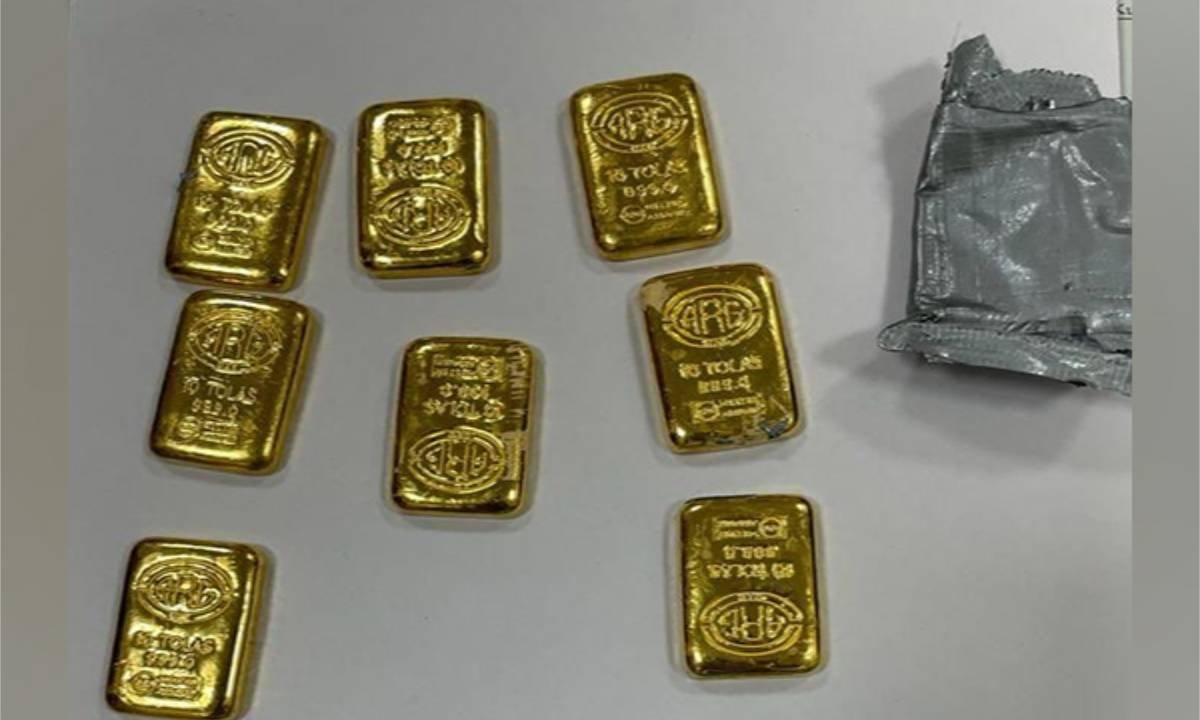
Customs officials at the Amritsar International Airport have seized gold weighing 933.2 grams worth Rs 49.27 lakh from a passenger who travelled back from Dubai.

According to the information, the person who travelled back to India from Dubai was held at the Amritsar International Airport after officials found around 933.2 grams of gold that he concealed inside his baggage on Wednesday.

 The current value of the seized gold is worth Rs 49.27 lakh. Customs officials said, the person was arrested and a case was registered against him under Section 104 of the Customs Act, 1962.

SC finally allows Maha to grant OBC quota in local body polls

SC 1
SC finally allows Maha to grant OBC quota in local body polls 11

After having failed multiple times in convincing the Supreme Court in the past one year to allow it to grant reservations for Other Backward Classes (OBCs) in local body elections, the Maharashtra government can now do so as the court on Wednesday asked the Election Commission to take into account the report of the State Commission for Backward Classes which had recommended the reservation.

Armed with the final report of the Commission for Reservation of Backward Class of Citizens in Local Bodies, the state government pleaded before a bench of Justices A M Khanwilkar, Abhay S Oka, and J B Pardiwala that the reservation for backward classes be allowed as the commission has come to the conclusion that they are under-represented despite forming 37% of the state’s population.

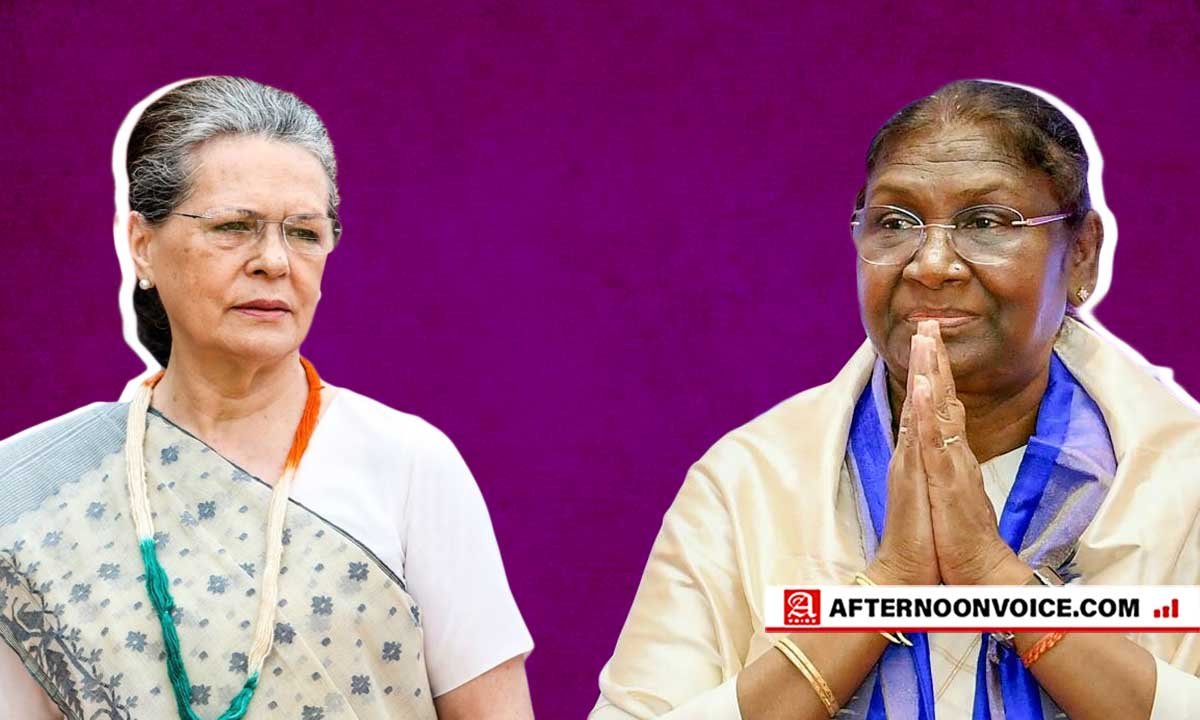
It was the day of two Presidents, Congress president Gandhi and India’s president Murmu

sonia gandhi, draupadi, droupadi murmu, draupadi murmu, president of india, president, sonia, congress, ed, enforcement directorate
It was the day of two Presidents, Congress president Gandhi and India's president Murmu 13

All this started with Subramanian Swamy’s alleged accusations against Congress President Sonia Gandhi and her son Rahul Gandhi. Since 2013, the Gandhi family has been on the radar for alleged corruption charges, and so far nothing has been proven against them. Sonia Gandhi’s questioning in the National Herald case today was led by Kuldeep Singh, an Assistant Director at the Enforcement Directorate, who had also questioned Rahul Gandhi.

The Associated Journals Limited (AJL) closed printing National Herald in 2008. It was left with no money and owed a debt of Rs 90 crores to Congress. The debt was a sum of interest-free loans extended by Congress to The Associated Journals Limited (AJL) from time to time so that the newspaper could pay its employees and continue its operations. The allegation here was that the Gandhis’ had no real interest in the newspaper, and they were actually eying AJL’s real assets.

In November 2010, the Gandhi family floated a company called Young Indian and bought the outstanding loan of Rs 90 crores from AICC by merely paying ₹50 lakh. The debt that The Associated Journals Limited (AJL) owed to Congress now stood transferred to Young Indian. A month later, in December 2010, The Associated Journals Limited (AJL) expanded its equity pool and allotted a large chunk of shares to Young Indian, making it a majority shareholder. Young Indians, too, had no funds. To acquire The Associated Journals Limited (AJL), it borrowed ₹1 crore from a Kolkata-based company called Dotex. Of this, ₹50 lakh was paid to Congress to purchase the Rs 90 crore debts.

In this above-mentioned issue Sonia Gandhi, 75, was questioned for nearly three hours and was allowed to leave during lunchtime. The Congress president, who had missed summons in the past citing Covid, had appeared before Enforcement Directorate. Perhaps the day was closed wrong; on the one hand, India was celebrating its new woman President Murmu, and the Congress President was called for scrutiny. Rahul Gandhi was questioned for over 40 hours across five days. But keeping the Congress president’s health in mind, the Enforcement Directorate wrapped up her questioning far sooner. There is no new summons yet.

The Enforcement Directorate claims Rahul Gandhi’s questioning took more time because his answers “did not match”. After each round of questioning, when he was asked to sign off on the typed transcript, the Congress MP “improvised some answers”, claimed sources. Rahul Gandhi and the Congress, however, accuse the agency of dragging out his questioning deliberately, to harass him.

The Enforcement Directorate says the Young Indian company also took over Rs 800 crores in assets of AJL. According to the Income Tax department, this should be considered an asset of the shareholders of Young Indian — Sonia Gandhi and Rahul Gandhi, for which they should pay tax. Congress says the assets of AJL went to Young Indian, a non-profit, and so the shareholders could not make any money from the assets since that is not allowed under the law. To, the Enforcement Directorate says the Young Indian claims to be a non-profit but has not done any charity work.

 Sonia Gandhi’s questioning revolved around personal details of her shareholding and taxes and the links of Associated Journal to Young Indian, say sources. She was also asked about the links of the Congress party with the companies. Sonia boldly faced ED; she calmly answered whatever was asked of her. Her conduct was graceful. On the other hand, Murmu was very much confident about winning the presidential elections. It was the day of contrast; one woman is going to be India’s president and on the other hand, India’s national party Congress’s president was asked to appear for investigations.

Netflix documented the National Herald case; it would run to 12 seasons of 20 episodes each. The action-packed series would span almost a century, beginning in the era of India’s freedom struggle and traversing through high courts and the Supreme Court, and various government offices including that of the Enforcement Directorate (ED). It would have a parallel track covering a media trial, and a social media trial, of the protagonists, the Gandhis. Congress describes the ED probe as vendetta politics. The ruling BJP believes this is a crackdown on ‘corruption’ and accuses the Gandhis of trying to pressurise the investigating agencies and prevent them from doing their job.

In 1937, Nehru floated a company called Associated Journals Ltd (AJL) with 5,000 freedom fighters as its donors. Therefore, there was no particular owner to that company. AJL launched three newspapers — in English, Hindi and Urdu. Nehru was the international correspondent for the National Herald, the English-language newspaper that was a powerful mouthpiece of the Congress party. He continued to voice his opinions daily even after he became the Prime Minister.

His son-in-law Feroze Gandhi was the managing director of AJL between 1946 and 1950. Nehru would have little imagined that decades later his grandson’s wife Sonia and her children Rahul and Priyanka would find themselves embroiled in criminal investigations following a case filed by their bete noire Subramanian Swamy and two others. Meanwhile, the enforcement agencies alleged that since 2008, AJL was not publishing any newspapers and was only collecting rent from its tenants, therefore it was a real estate company. This was denied by the Gandhis, who said the newspaper publication was only temporarily suspended and not closed.

The lease agreements allow renting. They gave examples of how all other newspaper companies were involved in similar practices. The probe agencies were unwilling to believe that Congress actually extended money to AJL. Rather, they said, AJL’s takeover was based on fraudulent transactions; the Rs 90 crore loan from AICC to AJL was “non-existent” and just a paper entry, they claimed.