On Thursday, two people were arrested for tricking Rs 22 Lakh using an online payment application and transferring money from his account, said Mumbai police.
According to a Dindoshi police station official, two persons befriended the 68-year-old victim and transferred Rs 22 lakh from his account through an online payment app on the pretext of playing a game on his mobile phone.
“After a complaint was filed, we managed to arrest both accused. Further probe into the incident is underway,” he added.
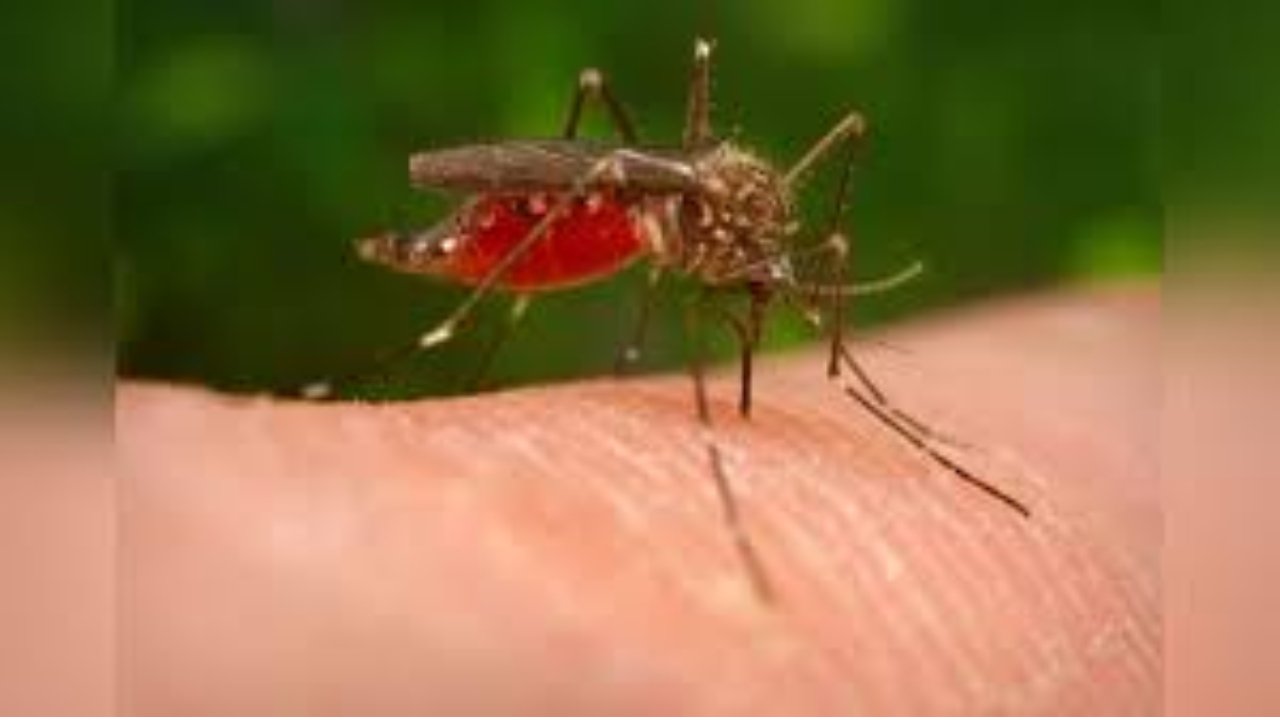
Japanese Encephalitis claimed three more lives in Assam in the last 24 hours taking the death toll to 35 and reported a total of 24 new cases of during the period.
According to the National Health Mission (NHM), Assam, three people died due to the infection of Japanese Encephalitis in the state in the last 24 hours.
Out of 24 new cases, four each were reported from Nagaon, Biswanath district, three in Jorhat district, two each in Dhemaji, Kamrup, Lakhimpur, Nalbari and Sonitpur district and one each in Baksa and Chirang district.
A total of 226 cases of Japanese Encephalitis have been detected in July so far.
Japanese encephalitis virus JEV is the most important cause of viral encephalitis in Asia. It is a mosquito-borne flavivirus, and belongs to the same genus as dengue, yellow fever and West Nile viruses.
The first case of Japanese encephalitis viral disease (JE) was documented in 1871 in Japan. The annual incidence of the clinical disease varies both across and within endemic countries, ranging from 1 to 10 per 1 lakh of population or higher during outbreaks, as per World Health Organization (WHO) website.
Most JEV infections are mild (fever and headache) or without apparent symptoms, but approximately 1 in 250 infections results in severe clinical illness. The incubation period is between 4 and 14 days. In children, gastrointestinal pain and vomiting may be the dominant initial symptoms. Severe disease is characterized by rapid onset of high fever, headache, neck stiffness, disorientation, coma, seizures, spastic paralysis and ultimately death.
The case-fatality rate can be as high as 30 per cent among those with disease symptoms.
Of those who survive, 20 per cent to 30 per cent suffer permanent intellectual, behavioural or neurological sequelae such as paralysis, recurrent seizures or the inability to speak.
Safe and effective JE vaccines are available to prevent disease. WHO recommends having strong JE prevention and control activities, including JE immunization in all regions where the disease is a recognized public health priority, along with strengthening surveillance and reporting mechanisms. Even if the number of JEconfirmed cases is low, vaccination should be considered where there is a suitable environment for JE virus transmission.
In a act of kindness, UP cop helps underprivileged children get education 4
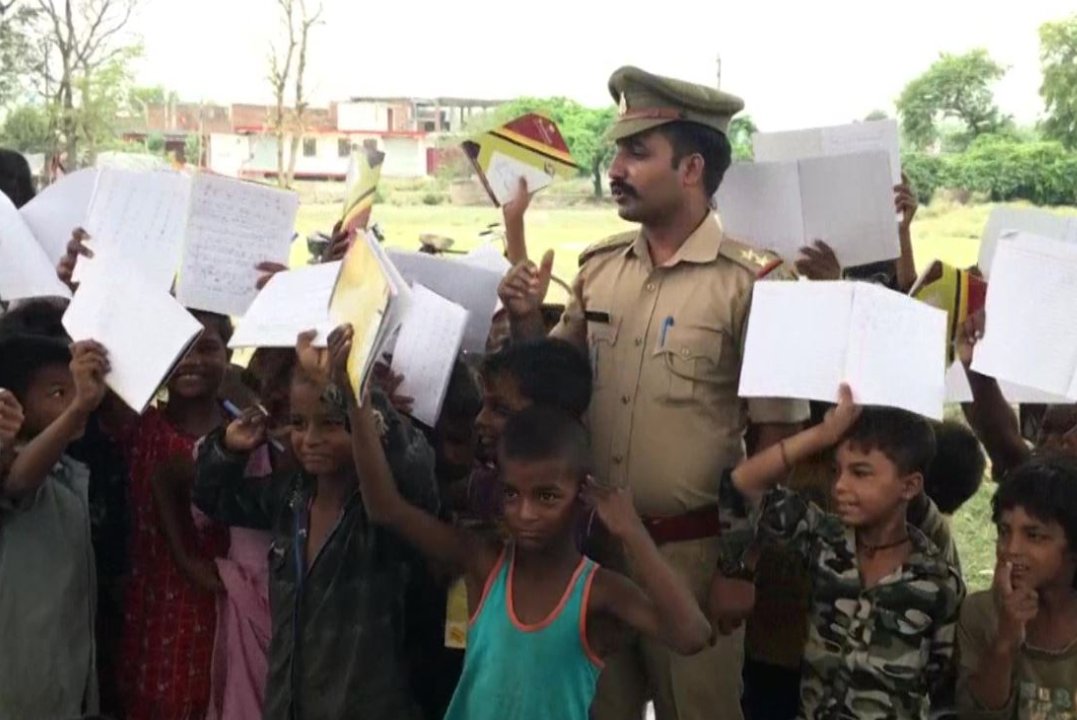
In a bid to provide a brighter future, a police officer in the temple city Ayodhya offers free education to children from the local areas who hail from downtrodden families.
The children, who are enjoying their classes and want to study further now, would have easily ended up begging if the cop wouldn’t have come to their rescue.
“We want to study further and go to school. We feel pretty good while studying here, so now, we regularly come here,” said a child.
With multiple young attendees in a class under a tree and open spaces, humanity echoes in the noble cause.
Police Sub-Inspector Ranjit Yadav began the classes several months ago and the decision came after seeing the parents of these children begging.
“I have started my own school and have been teaching these children for several months whenever I get a holiday. I often saw their parents begging, thereafter, I talked to them and many were willing to educate their children,” Police Sub-Inspector, Ranjit Yadav told ANI.
The children are seen attending his classes in numbers with over 50 students marking their presence. The children are also provided with stationery and books by Yadav.
In a time where everything took a toll during the Pandemic including the education of young innocent children, Police Sub Inspector Ranjit Yadav’s noble thought and deed serve as the first milestone in proving that humanity has a face.
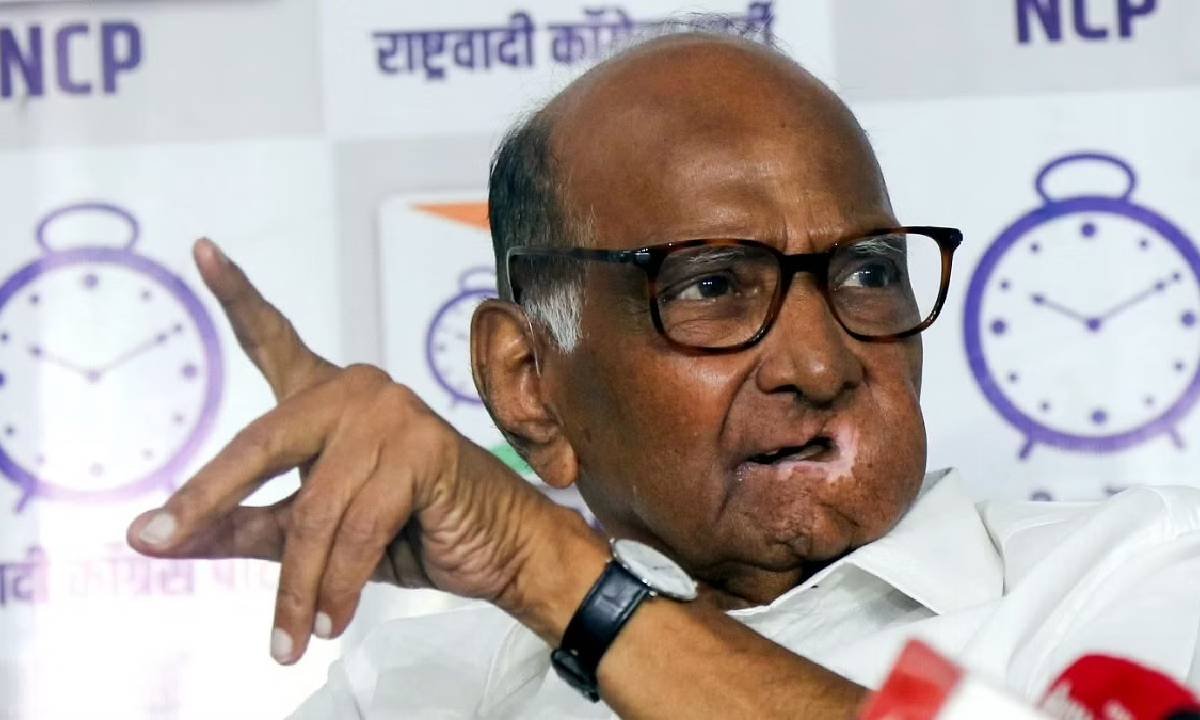
Nationalist Congress Party president Sharad Pawar has dissolved all departments and cells of the party with immediate effect, senior NCP leader Praful Patel said.
While informing about this on Wednesday, Patel did not disclose the reason for the sudden move, which comes three weeks after the collapse of the Maha Vikas Aghadi (MVA) government in Maharashtra.
The NCP was a key constituent of the Shiv Sena-led coalition government which fell apart last month following a rebellion by a section of MLAs of the Uddhav Thackeray-led saffron outfit.
“With the approval of the national president, Nationalist Congress Party, Sharad Pawar, all departments and cells stand dissolved with immediate effect,” Patel, the NCP’s national general secretary and former Union minister, tweeted on Wednesday.
Pawar was instrumental in the formation of the previous MVA government in the state.
Police on Thursday arrested two persons in connection with the attack on a worker of the Uddhav Thackeray-led Shiv Sena here in Maharashtra, an official said.
Harshawardhan Palande, deputy chief of the Sena’s Kalyan city unit, was on Wednesday injured in the attack and admitted to hospital, said an official.
The incident had taken place on Pune Link Road in Kalyan East. Four to five men had arrived in a car and attacked Palande with sticks, iron rods and choppers, a police official said.
The Kolsewadi police on Thursday arrested two persons in this connection, the official said.
They registered a case under Indian Penal Code Sections 323, 324 (voluntarily causing hurt by dangerous means or weapons), 504 (intentional insult with intent to provoke breach of peace), 506 (criminal intimidation) and 34 (common intention), he said.
Palande told reporters that Kalyan Lok Sabha member Shrikant Shinde, the son of Maharashtra Chief Minister Eknath Shinde, and former CM Uddhav Thackeray called him over the phone to enquire about his health.
He also alleged that some associates of a former corporator, who is supporting the Shinde faction, had attacked him.
But, the former corporator said he had no connection with the incident and legal action would be taken against anyone trying to defame him.
Sri Lankan Navy has arrested six fishermen from the Palk Bay area and seized their boats and accused them of poaching in the country’s territorial waters, said police on Thursday.
“When the six fishermen were fishing in the Palk Bay sea area, the Sri Lankan Navy came to the area and claimed that they were fishing across the border and arrested the six fishermen and took them with their boat to Thalaimannar for investigation,” said Q Branch Police, Rameswaram.
On July 20, the fishermen went fishing from Rameswaram port after obtaining permission from the Department of Fisheries.
The fishermen who went for fishing have been identified as N Palamurugan (32) from Kariyur; D Anthony (38) and K Arjunan (23) from Thangachimadsm; J Maduku Pichai (45) from Rameswaram; K Thangapandi (55) and Raja (21) of Rameswaram Sivagami Nagar.
Earlier, 12 Indian fishermen were arrested by the Sri Lankan Navy for allegedly fishing illegally in the country’s territorial waters.
Following which, Tamil Nadu Chief Minister MK Stalin requested External Affairs Minister (EAM) S Jaishankar to take appropriate action for the immediate release of 12 Indian fishermen arrested by the Sri Lankan Navy.
All India Anna Dravida Munnetra Kazhagam (AIADMK) leader O Panneerselvam also wrote a letter to External Affairs Minister S Jaishankar seeking his immediate intervention for the release of 12 Indian fishermen arrested by the Sri Lankan Navy.
On March 25 this year, the fifth meeting of the India-Sri Lanka Joint Working Group on Fisheries was held through virtual mode.
The Joint Working Group discussed all relevant issues in detail including the concerns relating to fishermen and fishing boats which have been on the agenda of bilateral discussions between India and Sri Lanka for many years.
The Indian side expressed its readiness to work together with Sri Lanka for joint research to enhance the productivity of the Palk Bay fisheries.
The meeting concluded on a positive note, with a commitment toward continued cooperation and dialogue to solve the fishermen-related issues and to hold the next meeting of the Joint Working Group as per schedule.
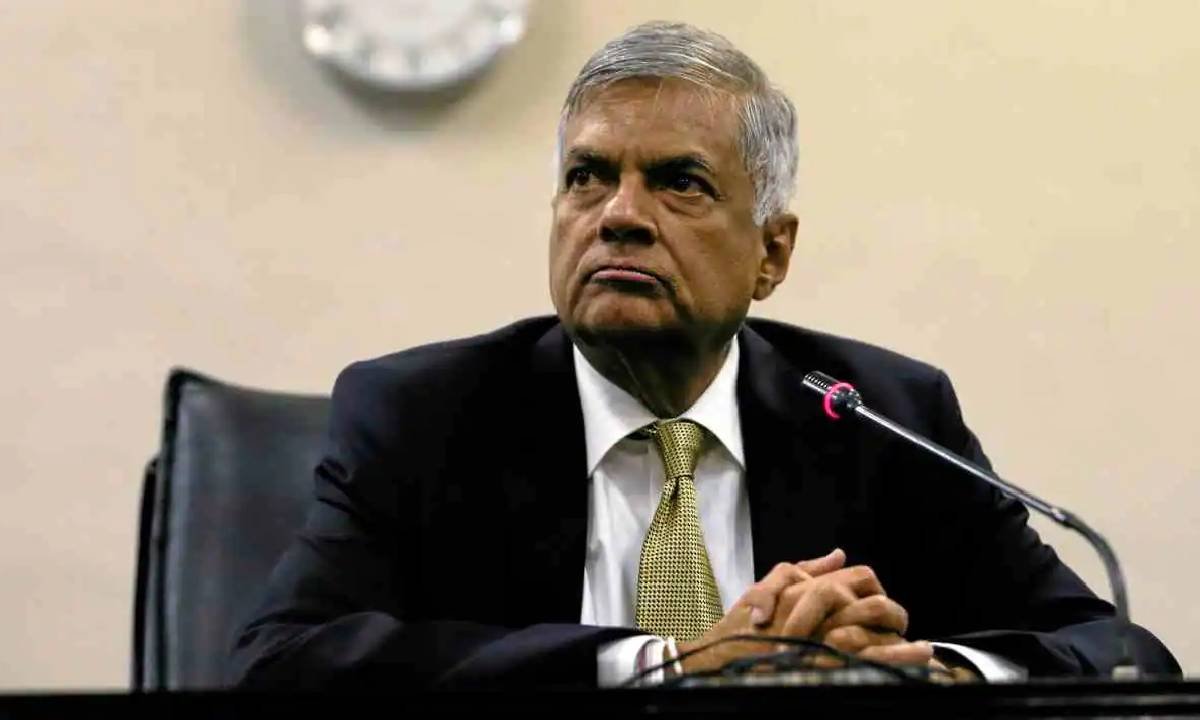
Ranil Wickremesinghe, a seasoned politician who was appointed as the Prime Minister in May to deal with Sri Lanka’s worst economic crisis in decades, faces new challenges to fix a collapsed economy, end political turmoil and unite the deeply divided country in his new role as President.
The 73-year-old lawyer-turned politician, who is believed to be close to India and its leaders, was appointed as the 26th prime minister of Sri Lanka in May by then President Gotabaya Rajapaksa amidst the worst economic crisis in the country. His appointment took place nearly two years after his United National Party (UNP) was routed and failed to win a single seat in the general election held in August 2020.
His appointment filled the void of leadership as Sri Lanka was without a government following the ouster of Gotabaya’s elder brother and Prime Minister Mahinda Rajapaksa after violent protests following an attack on the anti-government protesters by his supporters.
Widely accepted in political circles as a man who could manage the economy with far-sighted policies, Wickremesinghe, however, struggled to fix the economy which, he said, had collapsed at the time of his appointment in May.
He was appointed acting president on July 13 after President Rajapaksa fled to the Maldives and then to Singapore from where he resigned in the face of public revolt against his government’s mishandling of the country’s economy.
Wickremesinghe was later sworn in as the eighth President after he defeated former information minister Dullas Alahapperuma during a vote in parliament. Wickremesinghe, who was backed by members of the fragmented ruling coalition, remained unpopular among voters who view him as a holdover from the previous government that led the country into an economic crisis in decades.
Wickremesinghe, perceived as the Sri Lankan politician who could command international cooperation, has held many important posts during his political career spanning four and half decades.
He built a personal rapport with Sri Lanka’s immediate neighbour India and visited the country on four occasions – October 2016, April 2017, November 2017, and October 2018 – during his previous term as the prime minister.
During the same period, Prime Minister Narendra Modi made two visits to Sri Lankan and he also responded to a personal request from Wickremesinghe to help the island nation set up the 1990 ambulance system – a free health care service that became immensely helpful during Covid-19.
Despite the opposition from then President Maithripala Sirisena, Wickremesinghe had backed the deal with India on the Colombo port’s eastern terminal which the Rajapsksas reneged in 2020.
His party UNP, the oldest party in the country, had failed to win a single seat in the 2020 parliamentary polls. He was unseated for the first time since 1977 but later found his way to Parliament through the sole national list allocated to the UNP based on the cumulative national vote.
His deputy Sajith Premadasa had led the breakaway Samagi Jana Balawegaya (SJB) and became the main Opposition.
Wickremesinghe, the nephew of Sri Lanka’s first executive president Junius Jayewardene, was first appointed Prime Minister from 1993-1994 after the assassination of President Ranasinghe Premadasa.
He was also elected as the Prime Minister from 2001-2004 when the United National Front Government won the general elections in 2001. But he lost power in 2004 after Chandrika Kumaratunga called early elections.
During his term as Prime Minister, he began peace talks with the Liberation Tigers of Tamil Eelam (LTTE), even offering a power-sharing deal. Both Kumaratunga and Mahinda Rajapaksa had accused him of being too lenient with LTTE and of offering them too many concessions.
Wickremesinghe had handed a shock defeat to Mahinda Rajapaksa in 2015 polls and led a minority government.
When he assumed the Prime Minister’s office for the third time in 2015, he pledged to devolve power to the country’s Tamil minority, in a step toward national reconciliation six years after a military offensive crushed the LTTE.
In 2018, then President Sirisena sacked Prime Minister Wickremesinghe and appointed Mahinda Rajapaksa as the new premier. Sirisena’s move triggered a constitutional crisis in the country. However, a Supreme court verdict forced President Sirisena to reinstate Wickremesinghe, ending Rajapaksa’s brief regime.
Born in 1949 after Sri Lanka gained independence from the British, Wickremesinghe was elected to Parliament in 1977 at the age of 28, having worked in the Youth League of the United National Party (UNP) from his university days.
As the youngest minister in Sri Lanka at the time, he held the post of Deputy Minister of Foreign Affairs under President Jayewardene.
He was later appointed to the Cabinet as the Minister of Youth Affairs and Employment. He has also held a portfolio in Education. Then in 1989, as a seasoned legislator, he was made the Leader of the House under President Premadasa. He has also served as the Minister of Industries, Science, and Technology.
On behalf of partner economies including India, US State Department on Wednesday (local time) released a Joint Statement of the 2022 Supply Chain Ministerial Forum, focussing on the global challenges which include — the COVID-19 pandemic, wars and conflicts and climate change.
“The shocks to global supply chains from pandemics, wars and conflicts, extreme climate impacts, and natural disasters have put in stark relief the urgent need to further strengthen supply chains, to work to reduce and end near-term disruptions, and to build long-term resilience. This is a global challenge we intend to approach resolutely and cooperatively,” the joint statement read.
The partner economies include Australia, Brazil, Canada, the Democratic Republic of the Congo, the European Union, France, Germany, India, Indonesia, Italy, Japan, Mexico, the Netherlands, the Republic of Korea, Singapore, Spain, the United Kingdom, and the United States.
According to the statement, for building collective long-term resilient supply chains based on international partnerships, all the partner countries aimed to follow various global supply chain principles including transparency, diversification, security and sustainability
“We intend to promote transparency in consultation with the private sector, civil society, different levels of government, and other relevant stakeholders, consistent with Participants’ domestic laws and international obligations, in order to strengthen the resilience of supply chains,” the joint statement read.
“We aim to promote diversification and increase global capacities for multiple, reliable, and sustainable sources of materials and inputs, intermediate goods, and finished goods in priority sectors, along with logistics infrastructure capacities, increasing the resilience of supply chains to make our economies less vulnerable to disruptions and shocks,” it read further.
The joint statement added that the partner countries encourage Participants to undertake this cooperation in partnership with industry, labor and civil society, and other relevant stakeholders, pursuant to domestic laws, to better understand and manage security risks to supply chains.
“We intend to encourage global sustainability and responsible business conduct across supply chains, as well as objectives set out in relevant multilateral environmental agreements to which we are parties, including the United Nations Framework Convention on Climate Change (UNFCCC) and the Paris Agreement,” it read.
All the countries also welcomed all economies and invite all industries, businesses, women, workers, officials from different levels of government, labour and civil society, and other stakeholders to join us in pursuit of resilient supply chains, guided by these principles
“We acknowledge the key to resolving the next global supply chain crisis is to prevent it from happening in the first place” the statement said.
Eknath Shinde stooped all lows to dismantle Maha Vikas Aghadi government and re-established his new alliance with the Bharatiya Janata Party. Reason he gave was ideological differences and unfair treatment by the Congress Party and NCP. If you remember the earlier days of formation of Maha Vikas Aghadi, when Supriya Sule was seen welcoming all the leaders of Shiv Sena-NCP and Congress to a mega meet, that time these leaders were seen cheerful. Not only had that but Eknath Shinde and other rebels accepted ministry in Maha Vikas Aghadi cabinet. If at all that alliance was unholy or unnatural, why did these Shiv Sainiks accept ministerial posts? Why did they accept this alliance in the first place, why were they not as aggressive as they are now? Why did they not stop Uddhav or threaten him to leave Shiv Sena then? Do you think alliance was an actual problem? NO! The problem was ED, IT and CBI haunting these corrupts.
They all wanted to save their soul and for that they mortgaged their integrity by joining hands with the atrocious BJP. They wanted to get rid of on-going searches against them. BJP’s Kirit Somaiya told media that he will continue to pursue case against ‘dirty dozen’; these dirty dozen are none-other than Yamini Jadhav and Pratap Sarnaik, Yashwant Jadhav, Eknath Shinde (his CA was on ED radar), Bhavna Gavali , Anand Adsul , Hasan Mushriff , Pratap Sarnaik, Ravindra Waikar etc. most of these Harrys are with BJP. Former Chief Minister Devendra fadnavis, now shakes hands with these corrupt ministers and there is no hesitation from Somaiya or any other BJP leader. Looking at the present scenario we can see how ED, IT and CBI were used to demoralise these ministers until they joined the BJP and brought them back to power. For now ED is assigned to Sanjay Raut, if tomorrow Raut joins BJP he would come clean from all enquiries.
Eknath Shinde’s fellow Shiv Sena members said that their complaints were ignored by Uddhav Thackeray and Uddhav favored Congress Party and NCP over his own Shiv Sena members. Why did none of the Shiv Sainik then objected or made it public as they are making it now? What must have drastically changed? Shinde gathered 2/3rd members from his party to support his request. What all Shinde has not done for BJP, he took all the rebels to Surat in BJP-governed Gujarat, throwing the coalition into a chaos. As a result of Shinde’s revolt, Uddhav Thackeray resigned from the post of Chief Minister of Maharashtra and he also resigned from the Maharashtra Legislative Council. Shinde sworn in as the 20th Chief Minister with Bharatiya Janata Party’s Devendra Fadnavis as the Deputy Chief Minister but in this entire bargain, Eknath forgot the fact that he will always remain a rubber stamp, nothing more than that.
Shinde took to the highest position, rebels got their bounty but when it comes to the future, they all know nothing much can come their way. Most of the Shinde camp leaders are now joining BJP. They don’t want to trust Shinde because they know Shinde in Shiv Sena and Shinde as migrant in BJP have vast differences. Some rebels silently wait for the miracle to happen, they believe in those media reports that one day Uddhav will surrender to BJP and all is going to be well. Most of the rebels portrayed Shard Pawar as a villain but they forgot the fact that they all are opportunists.
Let time come BJP will do the correct programme of Eknath Shinde, a leader who can trash the grand old political party of Maharashtra can do anything anywhere because their ambitions are bigger than their allegiance. BJP is a very brilliant political player, their leaders are survivors and they know where to pull the string or when to hold the string. Eknath would be strangled in his own plot one day, as all his rebel supporters are leaving him one by one and approaching MNS and BJP. Moreover BJP would be extra alert of this leader, if Eknath goes out of control they know how to chuk him. Eknath has no other option than acting as a rubber stamp CM in BJP’s hands.
In the meantime the Supreme Court is hearing the pleas relating to the Sena vs Sena legal battle over rebellion in the party. However, the court will decide on the matter during the next hearing, likely to be held on August 1. A bench headed by CJI NV Ramana asked both Thackeray and Shinde factions to frame issues they wanted to argue, make one compilation and submit it preferably by next Wednesday. It also directed the respondents to file a common affidavit if they want to deny any allegations. Disqualification proceedings, the election of Speaker, recognition of the whip and floor test among other issues are the subject matters of the dispute. A bench led by Chief Justice of India NV Ramana, Justices Krishna Murari and Hima Kohli granted time to Maharashtra Chief Minister Eknath Shinde-led camp to file an affidavit on the pleas filed by Shiv Sena chief Uddhav Thackeray-led faction. Senior advocate Harish Salve for the Shinde camp sought time to file a reply on pleas filed by the Thackeray camp and asked the court to postpone the hearing next week.
An ‘associate’ of fugitive gangster Chhota Shakeel has been arrested by Mumbai Police for allegedly trying to extort money from a businessman, an official said on Wednesday.
The Anti Extortion Cell (AEC) of the Crime Branch arrested the 25-year-old accused, who had identified himself as “Billo”, from suburban Oshiwara on Tuesday, he said.
The accused allegedly called the businessman, who runs a chain of bakery shops in the city, many times between July 13 and 19, claiming to be an aide of Shakeel and demanding Rs 35 lakh.
If the businessman did not pay up by Tuesday, he would shoot him, the accused told him. After the businessman approached the police, the crime branch laid a trap and arrested Billo. Further probe was on, the official said.