Heroin worth nearly Rs 80 lakh was seized and two persons, including a woman, were arrested in Assam’s Karbi Anglong district, police said on Friday.
Around 122.22 gms of the narcotic, hidden in soap boxes, and around Rs 5,000 were seized from the duo, who were intercepted by police patrolling team at Dokmoka when they were coming in a motorcycle from Dimapur in Nagaland on Thursday evening.
The arrested man was identified to be a resident of Bihar’s Vaishali district and the woman of Bhuragaon in Morigaon district of Assam, the police said.
The seized heroin is worth about Rs 80 lakh in the international market, it added.
The recent North Atlantic Treaty Organization (NATO) summit in Madrid and G7 summit held in Germany have exerted pressure on China’s ambitions and “coercive policies” in the Indo-Pacific.
European leaders have grown increasingly wary of China in recent years, and those views have hardened after Beijing has refused to condemn the “Russian invasion of Ukraine,” reported Global Strat View. China has been included in NATO’s “Strategic Concept,” adopted at the bloc’s summit in Madrid, Spain, on June 29-30 for the first time.
It lays out the security challenges facing the 30-country military alliance while outlining a course of action and suggests China’s ambitions and “coercive policies” challenge the allies’ interests, security, and values.
China found a special mention in both the summit’s communique and the ‘Strategic Concept’ document. NATO’s Secretary General Jens Stoltenberg remarked China is not an adversary, but it does represent serious challenges to the alliance, reported Global Strat View.
He further averred that “China’s growing assertiveness and its coercive policies have consequences for the security of Allies and our partners.” The new Strategic Concept outlines NATO’s transformation in line with the NATO 2030 agenda adopted at the 2021 Summit.
The messaging was clear that in addition to NATO’s “Euro-Atlantic” focus, the alliance is eager to expand its strategic influence in the Indo-Pacific region and tackle the emerging China challenge.
The statement further noted, “We urge NATO to stop provoking confrontation by drawing ideological lines, abandon the Cold War mentality and zero-sum game approach, and stop spreading disinformation and provocative statements against China.”
Meanwhile, the NATO alliance warned that Beijing is working to “subvert the rulesbased international order, including in the space, cyber and maritime domains,” which would have direct strategic implications for the US and its alliance partners in Europe and outside.
Although it was the first-time inclusion of China in NATO’s policy document and the G7’s communique, this trend will continue in future summits as well, reported Global Strat View.
The Bombay High Court delivered a landmark judgment. The court said the woman “cannot be asked to choose between her child and her career.” The High Court also quashed the Family Court order. In they banned the mother from going to Poland with her daughter.
A bench by Justice Bharti Dangre was hearing a petition filed by the woman, in which the mother sought permission to travel to Krakow, Poland, along with her nine-year-old daughter. Her company offered a woman working in a private company in Pune a project in Poland. The woman can now go to Poland as the High Court said.
The court decided to strike a balance between the woman’s career prospects, as well as the relationship between father and daughter. The court did not think it should prevent the mother from being allowed to work, the court said. Basically, the interests of both the mother and the father should be balanced, as well as the future of the daughter, the court said.
The husband had opposed the plea and claimed that if the girl was taken away from him, he would never see his wife’s face again. The husband has alleged that the woman’s only motive for settling in Poland was to break the father-daughter relationship. Lawyers also cited the ongoing situation in Poland because of neighbouring countries, Ukraine and Russia. The court said the woman’s career prospects could not be ruled out.
After hearing the arguments of both parties, Justice Dangre said that to date the custody of the girl is with the mother, who has taken care of the girl alone and should be with her considering the age of the girl.
The Maharashtra State Election Commission (SEC) on Thursday stayed the elections to 92 municipal councils and four Nagar panchayats in view of the next week’s hearing on OBC reservations before the Supreme Court.
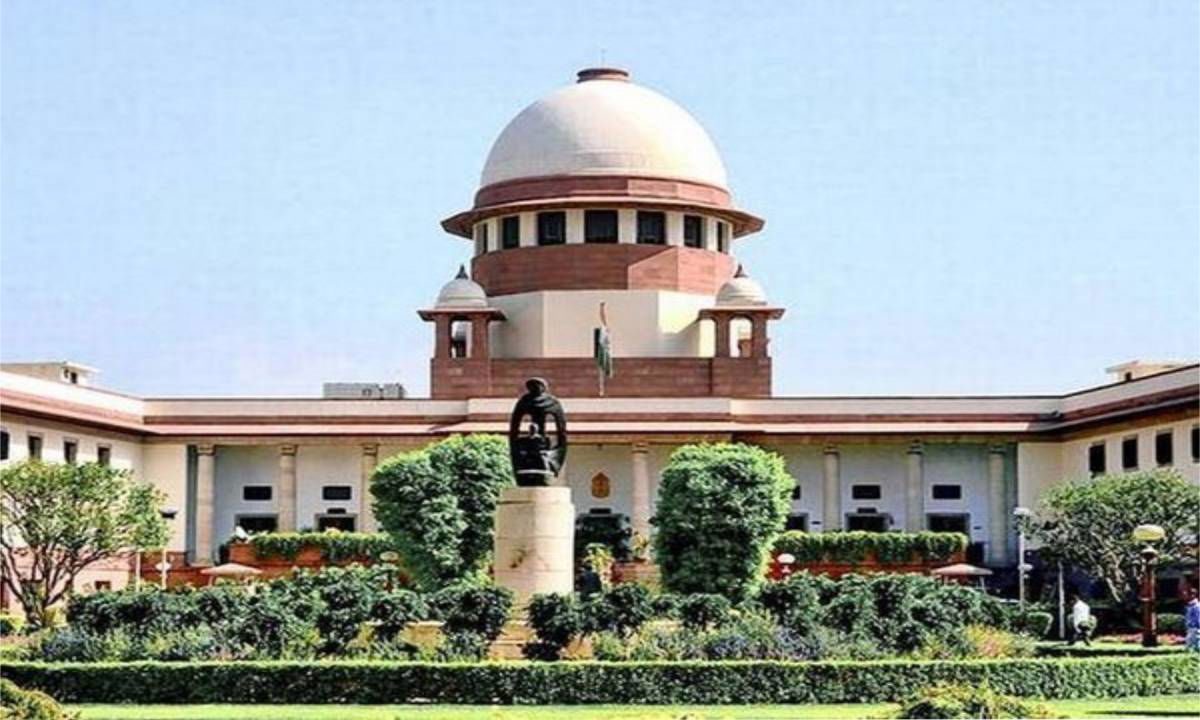
On July 12, the state OBC commission submitted its report (containing data about Other Backward Classes) to the Supreme Court, and the next hearing in the case has been scheduled for July 19, the SEC said in a statement here.
Last week, the SEC announced that elections for these local government bodies will take place on August 18 without OBC reservation. But both the Eknath Shinde-led government as well as opposition parties had said that elections should not be held until the OBC quota issue was resolved.
Last year, the SC had set aside the OBC quota in local bodies in Maharashtra for want of empirical data about the backward classes population in the state. Two days ago, the SEC stayed the lottery for deciding on other reservations in 25 Zilla parishads and 284 panchayat samitis.
Mumbai Police Commissioners with scams and schemes 7
Following ED and CBI scrutiny, the ex-commissioner Sanjay Pandey may come into trouble for meddling in the investigation of a Ponzi scheme. After facing the Enforcement Directorate and the Central Bureau of Investigation in connection with the NSE Co-Location scam, former Mumbai police commissioner and former DGP Maharashtra, Sanjay Pandey, is under the scanner for asking the Amravati police commissioner to stop the investigation of the Anugrah Ponzi scheme case. He had done so during his tenure at DGP Maharashtra. Before his appointment as CP Mumbai this year in February, Pandey was DGP of Maharashtra for 10 months.
The CBI also has registered an FIR against Pandey and former MD and CEO of NSE Chitra Ramkrishna for the alleged illegal phone tapping of the stock market employees by the former’s Information Technology Company, officials said on Friday (July 8). Mumbai police are the best most professional Police in India. They finished all organised gangs and syndicates from Mumbai and now no one dares to try extortion in Mumbai. Other places like North India still struggle with organised gangs.
The infamous underworld organizations operating in Mumbai, including those of the Dawood Ibrahim gang, had hired Param Bir’s political sponsors. Param Bir had been in effect athird-levell operator, who used his authority as Police Commissioner of Mumbai to assist the gangs in extortion, drug peddling and smuggling operations. These were getting exposed by an extraordinarily persistent courageous reporter and his team. This reporter was jailed with trumped-up charges. That didn’t silence him or his team. Param Bir may have panicked and had framed the Maharashtra Home Minister from the NCP so much that Anil Deshmukh lost his post and has been arrested. But this Minister was himself in the second tier in the NCP hierarchy.
His party seems to have sacrificed him to divert attention from the NCP supremo and his family. Param Bir may have panicked at this stage. His political sponsors had assisted his escape. This is a win-win situation for both parties. Param Bir was the man who knew too much about too many people for too long a time. He had to be kept away from India, as his hiding in his native Chandigarh would save his skin. The reasons behind his fleeing from India are obvious. There’s no mystery involved here unless this refers to his mode of exit and his possible initial destination. The simplest explanation for a criminal’s conduct is usually the correct one, as Agatha Christie is reported to have said in an interview. This being so, Param Bir most probably had boarded a flight from Mumbai to Dubai. There are many of his lackeys posted at Mumbai Airport’s security control.
In the meantime, the CBI action comes following a complaint from the Union Home Ministry, they said. Besides Pandey and Ramkrishna, who are in judicial custody in connection with the NSE co-location scam, the CBI has also named another former National Stock Exchange (NSE) CEO and MD Ravi Narain in the case. The Central Bureau of Investigation (CBI) is conducting searches at 20 locations in Delhi-NCR, Mumbai, Pune, Kota, Lucknow, Chandigarh and other cities in connection with the FIR against Pandey, officials said. It is alleged that iSec Securities Pvt. Ltd, one firm amongst a few others that conducted a security audit of NSE had illegally tapped the phones of NSE employees during 2009-17. Sanjay Pandey’s questioning by the ED is related to the functioning and activities of a company called iSec Securities Pvt. Ltd.
The 1986-batch Indian Police Service (IPS) officer retired from service on June 30. Before his four-month stint as Mumbai commissioner of police, he served as acting Maharashtra director general of police (DGP). Pandey’s questioning by the ED is related to the functioning and activities of a company called iSec Securities Pvt. Ltd, one firm amongst a few others that conducted a security audit of NSE around the time the co-location irregularities are alleged to have taken place. Pandey incorporated The company in March 2001 and he quit as its director in May 2006. His son and mother later took charge of the company.
The police officer, who studied at IIT-Kanpur and Harvard University, is understood to have established the company after he resigned from service. His resignation was not accepted by the State government and he rejoined but was not immediately given a posting. The ED wants to understand the mandate, operations and results achieved by the company while it worked with the NSE. Ramkrishna is lodged in Tihar jail. She and former group operating Officer Anand Subramanian were arrested by the Central Bureau of Investigation (CBI) in March in the NSE co-location scam case. The ED took cognisance of this CBI complaint to press money laundering charges against them. The Income Tax Department is the third agency probing these charges of irregularities at the NSE. The ED, like the CBI, widened its net to probe alleged governance lapses in the appointment of Mr Subramanian as a chief strategic advisor and his re-designation as group operating officer and advisor to the then MD (Ramkrishna).
Pandey’s predecessor, former Mumbai Police Commissioner Hemant Nagrale, has been made MSSC managing director. Pandey had also been holding additional charge as acting director general of police (DGP) of Maharashtra since April last year and was relieved of it only a little over a week ago. Pandey’s appointment as Mumbai Police Commissioner comes at a time when the Maharashtra government and the Centre are at loggerheads, with the former accusing the latter of misusing central agencies against state leaders. He also takes charge days after an FIR was filed against former IPS officer Rashmi Shukla in an illegal phone-tapping case, and another case was registered by Mumbai Police against Union minister Narayan Rane and his MLA son Nitesh Rane for their alleged remarks on Disha Salian, former manager of Sushant Singh Rajput.
Pandey is believed to be in the state government’s good books. His appointment is being seen as a strategic move by the state government. Last month, the Bombay High Court had referred to Pandey as the state’s “blue-eyed” officer and accused the government of favouring him. It had added that “such an officer [an officer favoured by the government] should never be considered for the post of DGP” as “there will be a relationship of giving and take.”
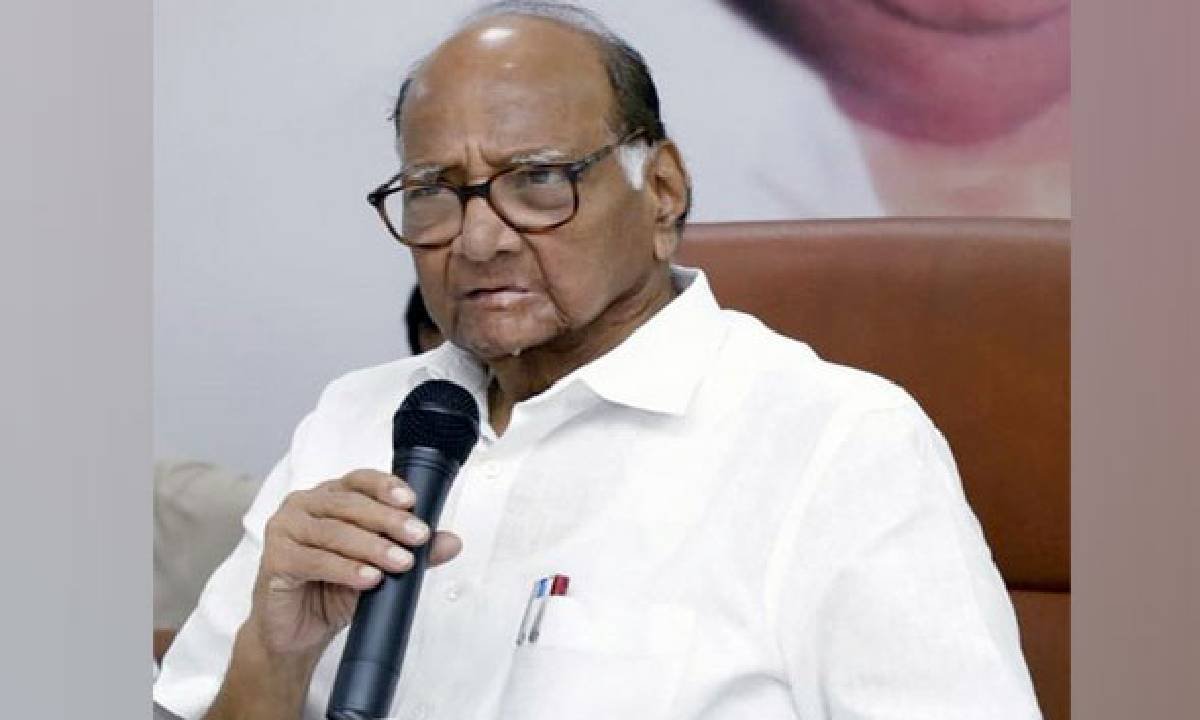
A key member of the rebel faction of Shiv Sena MLAs in Maharashtra has claimed Nationalist Congress Party president Sharad Pawar was behind the earlier splits in the saffron party and his alleged role in revolts caused pain to its founder Bal Thackeray.
Deepak Kesarkar, a Sena MLA and spokesperson for the rebel faction headed by Chief Minister Eknath Shinde, sought to know what Pawar gained by causing pain to Bal Thackeray.
It is a fact that whenever the Shiv Sena has split, Pawar saheb had a role to play,” he said in New Delhi on Wednesday. Kesarkar said “Matoshree” (the private residence of the Thackerays in suburban Mumbai) has never gone to “Silver Oak” (Pawar’s home in south Mumbai). “Why did he (Pawar) engineer splits that caused pain to Balasaheb (Thackeray)?” the Sena legislator, who was once in the NCP, asked.
Before the last month’s revolt by a section of MLAs led by Shinde, the 56-year-old Shiv Sena has seen rebellions by its influential leaders like Chhagan Bhujbal, Narayan Rane, and Raj Thackeray, the cousin of party president Uddhav Thackeray.
Once a firebrand leader of the Shiv Sena, Bhujbal quit the party and joined the Congress in 1991. He later became a member of the NCP after Pawar floated the party in 1999 after leaving Congress. Konkan strongman Rane, a former Sena chief minister who is now in the BJP, quit the Bal Thackeray-founded party in 2005.
“These things are not to be revealed. I was witness to this. Pawar saheb said this to me in confidence that although ‘I helped Rane to quit the Sena, I did not lay any condition which party he should join. This means he provided whatever help Rane needed. He took Bhujbal (with him in NCP),” Kesarkar said. The Shiv Sena suffered another jolt when Raj Thackeray quit and formed his own outfit Maharashtra Navnirman Sena (MNS) in 2006. Raj Thackeray and Rane had blamed Uddhav Thackeray for their decision to quit the party. “And you are aware, his blessings were always there for Raj saheb because he has high regards for him (Pawar),” Kesarkar added.
The Uddhav Thackeray-led faction of the Shiv Sena is an ally of the NCP, which was part of the erstwhile Maha Vikas Aghadi (MVA) government.
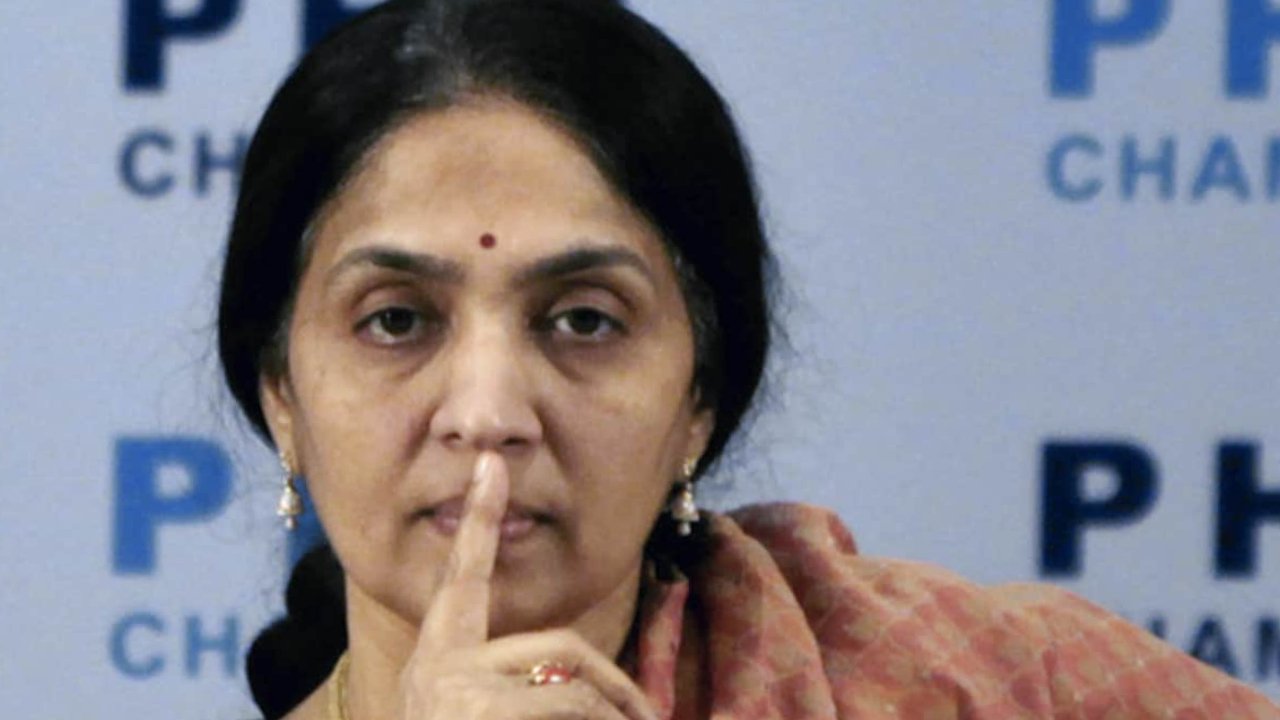
The Enforcement Directorate on Thursday arrested Chitra Ramkrishna, former MD and CEO of the National Stock Exchange (NSE) in a money laundering case relating to alleged illegal phone tapping and snooping of employees of the stock exchange.
ED on Wednesday moved Court for production of Chitra Ramakrishna as she is presently in judicial custody in a CBI case. After her production in Court today, ED arrested the accused after conducting her interrogation after taking permission from the court.
Later Special Judge Sunaina Sharma also sent her to four days ED Remand. Special Public Prosecutor Naveen Kumar Matta appeared for the Enforcement Directorate in the matter.
The Central Bureau of Investigation (CBI) recently also registered a fresh FIR in the NSE Co-Location Case over allegations of phone tapping Following the orders of the Ministry of Home Affairs (MHA), the Central Bureau of Investigation (CBI) last week registered a fresh case in an alleged National Stock Exchange (NSE) co-location scam that involves phone tapping of NSE employees.
The fresh FIR mentioed the names of former NSE Chief Chitra Ramakrishna, Ravi Narain and former Mumbai Commissioner Sanjay Pandey for allegedly tapping phones of NSE officials and other irregularities.
Pandey is a 1986-batch Indian Police Service (IPS) officer who retired from service on June 30. During the investigation, it has been found that Pandey is closely related to the functioning and activities of a company called iSec Securities Pvt. Ltd.
The company had conducted a security audit of NSE around the time the alleged co-location irregularities have taken place. The company was incorporated by Pandey in March 2001 and he quit as its director in May 2006. His son and mother took over the charge of the company.
It has been alleged that illegal phone tapping of NSE employees was done between 2009-17.
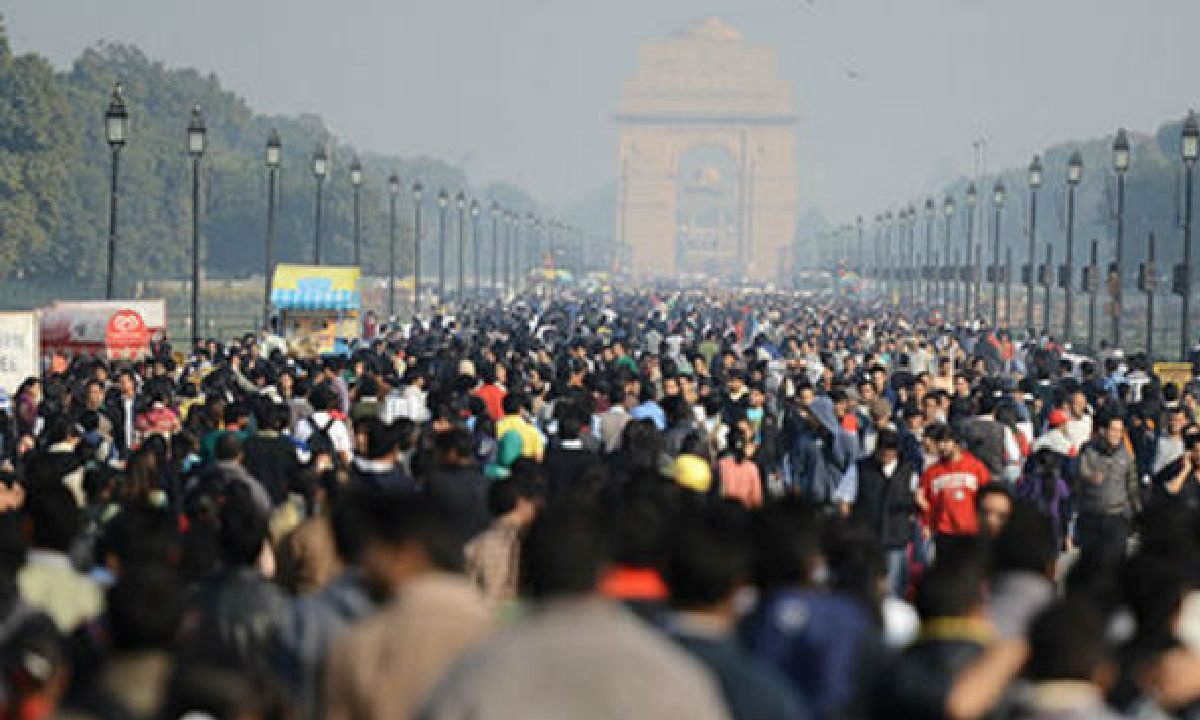
The proportion of unmarried persons within the age bracket of 15-29 years has increased to 23 percent in 2019 from 17.2 percent in 2011, according to a government survey.
As per the National Youth Policy 2014, those aged 15 to 29 years are classified as youth.
The latest report of the National Statistical Office stated that the percentage share of the youth population (15-29 years) who are never married has shown an increasing trend in the male population from 20.8 percent in 2011 to 26.1 percent in 2019 and a similar trend has been observed in case of the female population.
The proportion of unmarried females rose from 13.5 percent in 2011 to 19.9 percent.
In 2019, the highest percentage share of the youth population who are never married has been observed in the States/UTs of Jammu & Kashmir followed by Uttar Pradesh, Delhi, and Punjab and the lowest have been observed in the States/UTs of Kerala, Tamil Nadu, Andhra Pradesh, Himachal Pradesh, and Madhya Pradesh, it stated.
However, the report did not attribute any reason for rising in the proportion of unmarried youth.
It stated that early marriage in India has been declining over time.
The data showed that among the adolescent women (15-19 years), 1.7 percent of women have been first married by the age of 15 years during 2019-21 as compared to 11.9 percent in 2005-06.
Age at marriage also seems to have increased over the years. A significant reduction has been observed in the level of age at first marriage for women in the 25-29 years age cohort as only 52.8 percent of women have been first married by the age of 20 years during 2019-2021 as compared to 72.4 percent in 2005-06, it stated.
Men tend to marry considerably later than women in India since 42.9 percent of males in the 25-29 years age cohort were first married by the age of 25 years in 2019-21. This percentage was almost double at 83 percent for females. The percentage of the population who never married also has increased among both males and females in all age groups over the years.
The median age at first marriage increased steadily from 17.4 years in 2005-06 to 19.7 years in 2019-21 for women in the 25-29 age cohort.
A similar trend has also been observed for the median age at first cohabitation in the same age cohort during the same period.
It showed that the more educated the woman is, the higher the median age at first marriage, with the median among women aged 25-29 who have completed 12 or more years of education exceeding the median age among women having no schooling by 5.5 years during 2019-21.
Further, one good thing is the median age at marriage has increased by two years for women with no schooling and by 1.2 years for those who have not even completed their primary education during this period, it stated.
The percentage of women aged 20-24 years married before age 18 years in the country has halved in the last 15 years from 47 percent in 2005-2006 to 23 percent in 2019-21. Similarly, teenage pregnancy and motherhood have declined from 16 percent to 7 percent during the same period, it stated.
India’s population, which reached 1,211 million in 2011 and is projected to reach 1,363 million in 2021 makes India one of the youngest countries in the world, with 27.3 percent of its population aged 15 29 years, i.e., youth (Report of Technical Group on Population Projections for India and States 2011-2036, Ministry of Health & Family Welfare), it stated.
In terms of absolute numbers, between 2011 and 2036, because of the declining fertility and increasing life expectancy, the population pyramid of the country will undergo a shift, it stated.
While the proportion of the population aged under 15 years is projected to decline, the elderly in the population is expected to increase, it also stated.
However, it stated that the youth population is expected to increase initially but will start to decline in the latter half of the 2011-2036 period.
The total youth population increased from 222.7 Million in 1991 to 333.4 Million in 2011 and is projected to reach 371.4 Million by 2021 and thereafter decrease to 345.5 million by 2036, it said.
Two alleged inter-state drug smugglers were arrested on Thursday after 600 kg of poppy straw was seized from their truck, an officer of the Anti-Narcotic Task Force said.
Senior Superintendent of Police of the Anti-Narcotic Task Force (ANTF), Vinay Sharma, said the truck was on its way to Punjab from Kashmir when it was intercepted and checked near the Environmental Park in Sidhra.
Twenty-four plastic bags containing 600 kg of poppy straw concealed under plywood sheets were seized from the truck, the officer said.
He said two Nasir Farooq and Mohammad Amin Rather were arrested.
“ANTF is investigating the forward and backward links of this consignment and more arrests are expected,” Sharma said.
He appealed to the people to share information on narcotics dealers so that strict actions can be taken against them.
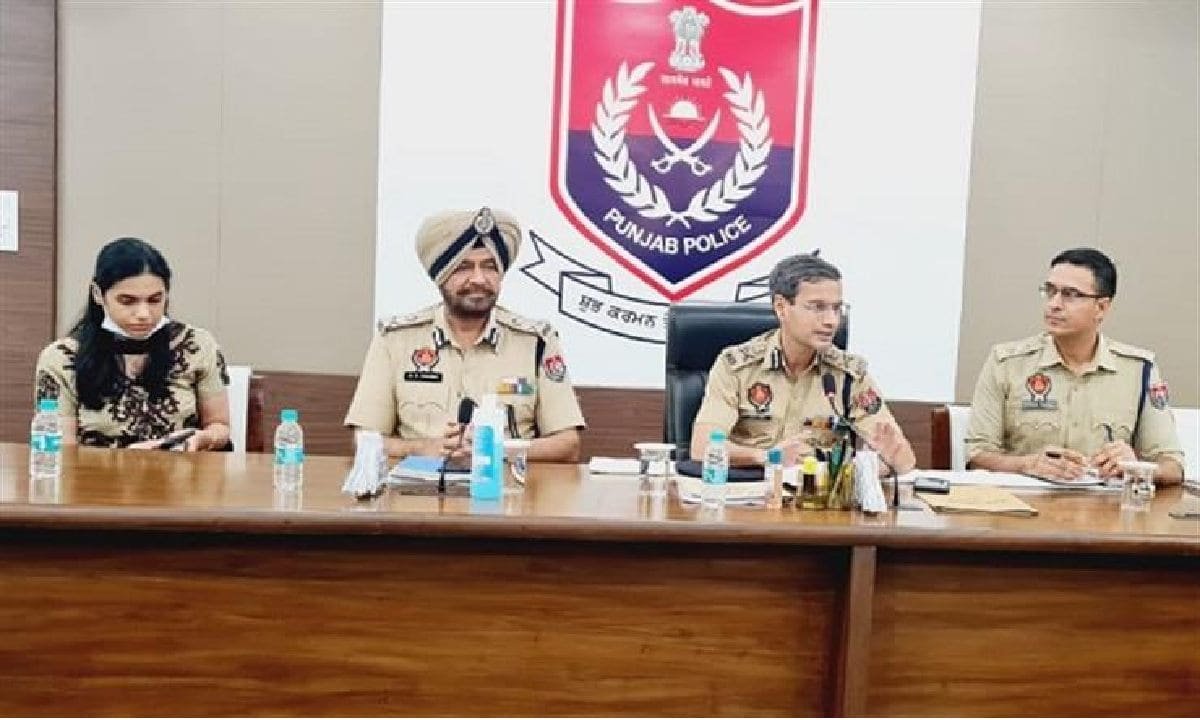
On Thursday, Punjab DGP Gaurav Yadav said controlling the drug menace and eliminating gangster culture is the police’s top priority.
The DGP visited Amritsar Golden Temple and the Durgiana Mandir to offer prayers. He speaks to the media that Punjab Chief Minister Bhagwant Mann directed to eliminating gangster culture and control over drugs were top priorities.
He also states that the Punjab police is one of the best police in the world. The state police are maintaining the law and order and peace.
Yadav also said they are focusing on basic policing, and they will ensure people-friendly police.
After senior IPS officer V K Bhawra left for a two-month leave of absence on July 5, Yadav officially took over as director general of police.
Police launched an anti-drug drive after Yadav took charge.
Within a week, more than 559 FIRs were registered and 676 drug peddlers were arrested under Narcotic Drugs and Psychotropic Substances (NDPS) Act, Police said.
A total of 5.5 kg heroin and 17 kg opium and another variant of drugs seized during search operations.