Home Blog Page 634

Ex-SC, HC judges, senior lawyers write to CJI for suo motu action on bulldozing of houses in UP

bulldozer, uttar pradesh, up, up bulldozer, cji, supreme court
Image: Shuttershock / Agency

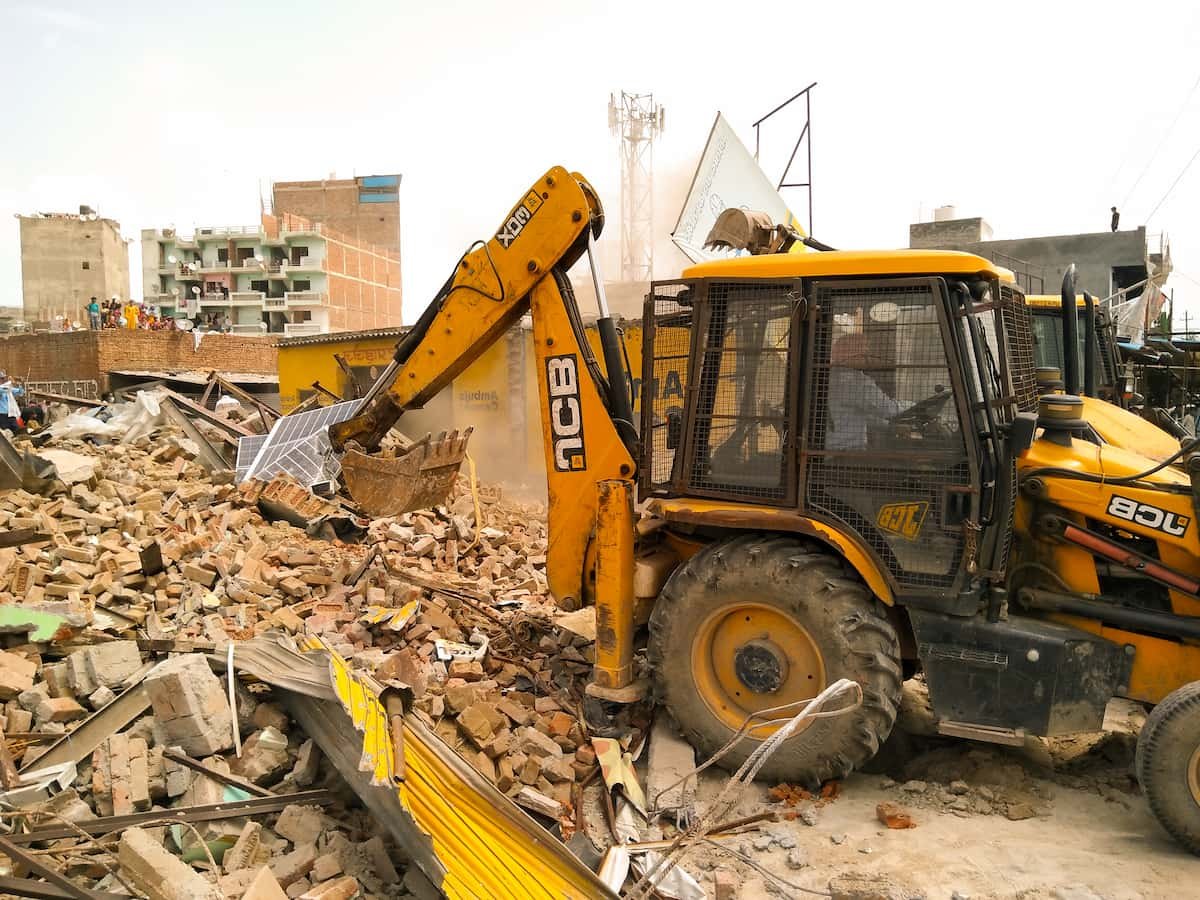
Former judges and senior advocates have written to Chief Justice of India N V Ramana urging him to take suo motu cognizance of alleged incidents of illegal detention, bulldozing of residences, and police action on protestors agitating against certain objectionable remarks made by BJP spokespersons.

The letter signed by them said, “the letter petition is being presented as an urgent appeal to the Supreme Court of India to take cognizance of the recent incidents of violence and repression by state authorities on citizens of Uttar Pradesh.”

It further said that the recent remarks made by certain BJP spokespersons (since suspended from the office) on the Prophet Mohammed have resulted in protests in multiple parts of the country, particularly in UP. The letter petition has been signed by former judges of the top court Justices B Sudarshan Reddy, V Gopala Gowda, and AK Ganguly, former Chief Justice of Delhi High Court AP Shah, former judge of Madras High Court Justice K Chandru, and former judge Karnataka High Court Mohammed Anwar. Among the senior lawyers who have signed the letter petition include senior advocates Shanti Bhushan, Indira Jaising, CU Singh, Sriram Panchu, Prashant Bhushan, and Anand Grover.

It said, “Instead of giving protestors an opportunity of being heard and engaging in peaceful protests, the UP state administration appears to have sanctioned taking violent action against such individuals. The Chief Minister has reportedly officially exhorted officials to take such action against those guilty that it sets an example so that no one commits a crime or take the law into their hands in future.” It added that the UP CM has further directed that the National Security Act, 1980, and the Uttar Pradesh Gangsters and Anti-Social Activities (Prevention) Act, 1986, be invoked against those found guilty of unlawful protests. It is these remarks that have emboldened the police to brutally and unlawfully torture protestors, the letter petition added.

“Pursuant to this, the UP police have arrested more than 300 persons and registered FIRs against protesting citizens. Videos of young men in police custody being beaten with lathis, houses of protestors being demolished without notice or any cause of action, and protestors from the minority Muslim community being chased and beaten by police, are circulating on social media, shaking the conscience of the nation”, it added. It said that such a brutal clampdown by a ruling administration is an unacceptable subversion of the rule of law and a violation of the rights of citizens, and makes a mockery of the constitution and fundamental rights guaranteed by the State.

“The mettle of the judiciary is tested in such critical times. On many occasions, including in the recent past, the judiciary has faced such challenges and emerged with distinction as the custodian of the rights of the people. Some recent examples are suo motu actions taken by the Supreme Court in the migrant workers’ matter and the Pegasus matter” it added.

The petition further said, “In the same spirit, and its role as custodian of the constitution, we, therefore, urge the Supreme Court to take immediate suo motu action to arrest the deteriorating law and order situation in Uttar Pradesh, specifically involving the high-handedness of the police and state authorities, and the brutal clampdown on the fundamental rights of the citizen. We hope and trust the Supreme Court will rise to the occasion and not let the citizens and the constitution down at this critical juncture”.

The gift of blood is a gift to someone’s life

JHKHJJ
World Donor Day (photo for representation)

14th June was celebrated as World Blood Donor Day. It is celebrated every year on the day of birthday anniversary of Karl Landsteiner on 14th of June in 1868. It is rightly said that “The future can be anything we want it to be, providing we have the faith and that we realize that peace, no less than war, required “blood and sweat and tears.” Blood donation is the big contribution in the whole life of people. Blood donation is one of the most significant contributions by the human being.


This event celebration was first started in the year 2004 aiming to raise the public awareness about the need for safe blood donation (including its products) voluntarily and unpaid by the healthy person. Blood donors are the key role player at this day as they donate life-saving gifts of blood to the needed person. Blood donation has many benefits for the blood donor. It gives certain facilities to the people while the blood was donating. It is a good thing for everyone. It is safe for blood giving people. According to the statistics, it has been noted that only 62 countries are getting sufficient blood supplies from the voluntary and unpaid blood donors whereas 40 countries are still dependent for the blood donations on the patient’s family member or paid donors. It is celebrated to motivate voluntary blood donors in rest of the countries worldwide. It is celebrated to fulfill the need of blood transfusion and blood products transfusion to the needed person anywhere in the world. This campaign saves more than millions of lives annually and gives a natural smile on the face of blood receiver.

Blood donation is one of the most significant contribution that a person can make towards the society. It is not harmful for an adult person to donate blood. The body of the donor can regenerate the blood within few days. It poses no threat to the metabolism of the body. It is nice that Health care organizations like “the World Health Organization, the International Federation of Red Cross and Red Crescent Societies (IFRC), the International Federation of Blood Donor Organizations (IFBDO) and the International Society of Blood Transfusion (ISBT)” work jointly to organize international level programs to promote people globally.

Nowadays a public awareness is noticed to donate blood. Many clubs, colleges, societies, offices, etc. organize blood donation camps on different occasions. It is a healthy gesture. We must keep this aptitude up at any cost. Our blood banks are running short of required blood. By organizing such blood donation camps we may help them to enrich their capacity.

Blood donation is our human duty. Our body does not get affected if we donate blood. The body can repair the loss within a few days. So we must come forward to donate blood as it can make sure the return of a dying man again into the light of life.

It brings the proud feeling in the mind that we are the reason to save the life of someone. Its consequences, we are giving blood, so we can certainly give life to people.

Everyone has to give the blood for better health and save someone life. During the giving of blood as it is painless and will take about an hour only. So whenever we have spare time, we can visit the hospital and donate the blood. We will surely feel happy as people will shower their blessings on us for giving ourselves blood and saving their life.

A new scheme called “Agnipath” for the recruitment of soldiers in the Army

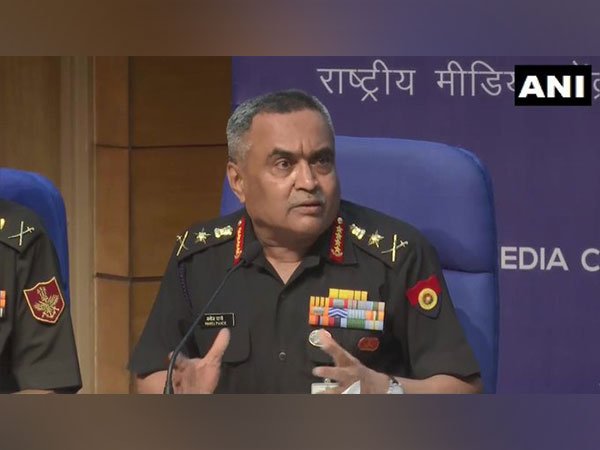
Indian Army Chief General Manoj Pande (photo for representation)
Indian Army Chief General Manoj Pande , photo for representation (photo credit ANI)

Agnipath scheme aims to make the Army a future-ready fighting force capable of meeting multiple challenges across the full spectrum of conflict, Indian Army Chief General Manoj Pande said on Tuesday.

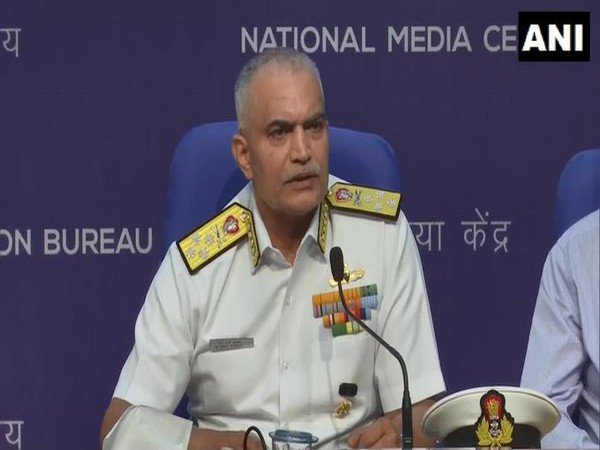
Defence Minister Rajnath Singh, with three services chiefs General Manoj Pande (Army), Air Chief Marshal VR Chaudhari and Admiral R Hari Kumar (Navy), addressed a joint press conference today at National Media Centre in New Delhi.

Here, the government unveiled a new scheme called “Agnipath” for the recruitment of soldiers in the Army, the Navy and the Air Force, largely on a short-term contractual basis, with an aim to cut the ballooning salary and pensions bill.

Speaking at the press conference today, the Indian Army chief said, “Agnipath scheme aims to make the Army a future-ready fighting force capable of meeting multiple challenges across the full spectrum of conflict and it will increase the technical threshold of the Army by recruiting ‘Agniveers’ through ITIs and other tech-institutes.”

The Army chief highlighted that ‘Agniveers’ will be assimilated and integrated into Army in every way. “We will institute a fair, transparent and scientific method in screening initial intake of four years and apply similar yardsticks to select those who will get enrolled… ‘Agniveers’ will be assimilated and integrated into Army in every way,” he said.

“There won’t be any compromise on the skillset of Agniveers. We will deploy Agniveers on borders,” Chief Of Army Staff General Manoj Pande said.

The Army chief said further, “Agnipath scheme aims to bring a paradigm shift in recruitment in armed forces. Agnipath scheme will help ensure optimum balance between youth and experience in Army.” Union Defence Minister Rajnath Singh, on June 14, approved the Agnipath scheme under which the youngsters will be provided with an opportunity to serve in the regular cadre of the Armed Forces.

The Agnipath model envisages the recruitment of personnel below officer rank (PBOR) in the Army, Air Force, and Navy for four years, including six months of training. Soldiers recruited under the Agnipath model will be called as ‘Agniveers’. The Agniveers will form a distinct rank in the three services, and will also wear a distinct insignia as part of their uniform.

Agnipath is a visionary move that will bring multi-dimensional transformations to the Navy.

Indian Navy  Chief Admiral R Hari Kumar(photo for representation)
Indian Navy Chief Admiral R Hari Kumar, photo for representation (photo credit ANI )

Hailing Agnipath scheme under which the youngsters will get an opportunity to serve in the regular cadre of the Armed Forces, the Indian Navy on Tuesday said that Agnipath is a visionary move that will bring multi-dimensional transformations to the Navy.

Addressing a press conference in the national capital today, Indian Navy Chief Admiral R Hari Kumar said, “As far as the Navy is concerned, ‘Agniveers’ will provide a steady and continuous infusion of unbridled vitality, enthusiasm and new-age abilities of youth. Women too will be included in the Agniveer scheme of the Indian Navy. I believe that Agnipath is a visionary move that will bring multi-dimensional transformations to the Navy.”

“Agnipath scheme is a new idea of the new era. An idea that is made in India and made for India. An idea that will have positive impact on the human resources management of armed forces,” he said.

Indian Navy top official said, “This idea will bring balance between the youth aspirations and future requirements of armed forces. This idea that will make the profile of armed forces more youthful, as per Kargil Committee Report.”

“The Agnipath scheme will have a positive impact on the Armed Forces. This idea has the capacity to change society. We can’t afford to continue on the known path,” Chief of Naval Staff said.

Union Defence Minister Rajnath Singh, on June 14, approved the Agnipath scheme under which the youngsters will be provided with an opportunity to serve in the regular cadre of the Armed Forces.

The Agnipath model envisages the recruitment of personnel below officer rank (PBOR) in the Army, Air Force, and Navy for four years, including six months of training. Soldiers recruited under the Agnipath model will be called ‘Agniveers’. The Agniveers will form a distinct rank in the three services, and will also wear a distinct insignia as part of their uniform.

Department of Military Affairs on Tuesday appreciated the government’s decision to approve the Agnipath scheme under which the youngsters will be provided with an opportunity to serve in the regular cadre of the Armed Forces.

Addressing a press conference today in this regard, Lieutenant General Anil Puri, Additional Secretary, Department of Military Affairs said, “We will provide an opportunity to the youth to serve the nation for a short and long duration, as agniveers. We are giving youth a chance for both long and short-duration military service.”

Lieutenant General Anil Puri further said, “Today average age is around 32 years, in time to come, it will further come down to 26 years. This will happen in 6-7 years. In order to transform armed forces into youthful, tech-savvy, modern, there’s a need to harness the youth potential and make him a future-ready soldier”.

“Agniveer would be a part of this future-ready soldier. Agniveer would be India’s young protector. After being with us for 4 years, an agniveer’s resume and biodata will be very unique. He will stand out in the crowd with his attitude, skills and time he would have spent with us,” Lieutenant General Anil Puri said.

England pacer James Anderson has noe taken 650 wicket in Test cricket

James Anderson (photo for representation)

England pacer James Anderson has now taken 650 wickets in Test cricket, becoming the first fast bowler to do so.

Anderson reached this landmark in the second Test against New Zealand at Trent Bridge in Nottingham.

The pacer trapped opener Tom Latham with his pace. Latham attempted to leave the ball but it crashed between the middle and his off stump, sending him back to the pavilion for just 4.

With this, he also becomes the first English pacer to reach the 650-mark. Notably, he is also the leading wicket-taker for his side in Tests.

He is currently the third-highest wicket-taker in the longest format of the game, just behind Sri Lankan spin legend Muttiah Muralitharan (800) and late Australian leg-spin great Shane Warne (708).

Coming to the match, New Zealand’s second innings and overall third innings of the match is in progress.

In the second innings, England was bowled out for 539. Joe Root (176) and Ollie Pope (145) and Ben Foakes (56) were the stars for their side.

Trent Boult (5/106) and Michael Bracewell (3/62) were the best bowlers for the Kiwis.

England won the toss and elected to field first. In the first innings of the match, New Zealand ended at 553/10.

Daryl Mitchell (190) and Tom Blundell (106) were the top scorers for New Zealand in the innings. James Anderson was the top bowler for England with 3/62 in 27 overs.

A youth arrested for supporting Nupur Sharma on social media

A youth was thrashed by a group of people in Bhiwandi over a social media post allegedly supporting suspended Bharatiya Janata Party (BJP) spokesperson Nupur Sharma who made controversial remarks against Prophet Muhammad.

The incident took place in Kesar Bagh area of Bhiwandi on Sunday when a large number of people gathered at the residence of Saad Ashfaq Ansari, an engineering student and thrashed him.

Saad, in a social media post, allegedly supported Nupur Sharma’s controversial remarks. Soon after Saad’s post went viral on social media, some people came to his house and sought an apology from him for hurting the sentiments of a particular community.

Following the incident, Bhiwandi Police reached the spot to bring the situation under control. Police registered a case against Saad for inciting religious sentiments and took him into custody.

Meanwhile, Bhiwandi city police summoned Nupur Sharma and asked her to appear for enquiry on Monday for a matter pertaining to a controversial religious remark.

People have no choice then continue to live dangerously fragile buildings

dilapidated, mumbai buildings, old buildings, bmc, mumbai building collapse, monsoon
Watson’s Esplanade Hotel (now Esplanade Mansion) in Mumbai in dilapidated state. | Image: Twitter @SabyasachiBasu_

There are thousands of buildings in Mumbai that are more than 70 years old. Due to an archaic law which limits raising rents, many tenants pay as low as $1-$20 (65 pence-£13) a month, leaving the landlords with little money to invest in repairs and maintenance. No wonder then those 959 buildings have been branded as “dilapidated and dangerous” by the city’s municipality. And every year, a number of these buildings collapse, leading to many deaths.

In a densely populated city where quality, affordable housing is scarce, realtors often cut corners to make what many call substandard buildings, putting the buyers at risk. Though there are nearly half a million pricey apartments which lie vacant as sellers look for rich buyers, millions of middle class residents get squeezed out to the suburbs and outskirts to live in these hazardous new buildings.

The corruption in the housing sector – complex regulation leading to complicity between a section of builders and government workers – worsens matters and leads to poor quality buildings coming up in the city. Corrupt builders build homes without taking mandatory permissions using poor construction material. In many cases, residents get a structural audit done and approach the court to get a stay delaying the demolition further. According to the data, 145 cases are pending with the court and 21 cases are pending with an internal committee.

A structural audit is mandatory for any building, which is more than 30 years old. With limited availability of open land parcels in Mumbai, major developers are now looking at venturing into the redevelopment space. Dilapidated buildings on the verge of collapse are a grim reality for thousands of housing societies across Mumbai. Developers, as an incentive to owners of older buildings, offer additional area, money, and the promise of a new flat with a better amenity. But owners should keep a few things in mind before opting for redevelopment. Housing redevelopment refers to the process of reconstruction of a residential premise by demolition of the existing structure and construction of a new one as per approvals from the Municipal Corporation of Greater Mumbai (MCGM). It ideally works best when a society is in dire need of extensive repairs but is starved of the necessary funds for it. Developers, on their part, are also on the lookout for properties with unused development rights where they can build a new and higher structure where the additional floors can be sold for a tidy profit. But redevelopment can only take place if 75 percent of the members tender their consent. Over 20,000 housing societies, 17,000 abandoned buildings and over 3,000 MHADA (Maharashtra Housing and Area Development Authority) structures are waiting for redevelopment proposals.

However, while redevelopment may be the latest buzz, citizens argue that developers often tear down old colonial mansions to build luxury towers for the rich. And more often than not, it is often haphazard and done without the consent of society members. The redevelopment process also causes inconvenience to the residents, as they will have to look for alternative places to stay in while the builder demolishes the old building and constructs a new one. Redevelopment is usually burdened with bitterness and complaints of high-handedness and corruption against the Managing Committee of the society, which is why people choose to live in whatever space they have.

Almost in every monsoon, some people give up their lives under the wreckage of old buildings. Between 2001 & 2015, an average of 7 people died per day in Collapse of Structures in the city. Data from the National Crime Records Bureau (NCRB) indicates that a total of 38363 people lost their lives due to the collapse of various structures between 2001 and 2015. From 2015 to 2021 the ratio has not changed much. The saga of such tragic deaths continued till 2022, this year Mumbai has many challenges, from sudden rise in COVID19 cases to recent building collapse just after one strong rain.. Most people lost their lives because of the collapse of residential houses. There are hundreds of people forced to live in these dangerous buildings in spite of everyday building fall incidents.

The building walls have deep cracks and the paint is peeling, much of the building just sliced and some are standing on temporary supports. But still the people are forced to live here in danger, because they cannot buy or rent a new flat in the neighborhoods because they are very expensive. Property prices and rent in Mumbai are among the highest in Asia. Many citizens are forced to live in old, dilapidated properties in a land-scarce city where an estimated 60% of its 18 million people live in slums and purlieus.

In the western suburbs, Andheri (west) or the K/West ward has 50 buildings in the C-1 category. As part of its pre-monsoon preparedness, the Brihanmumbai Municipal Corporation (BMC) had identified 791 buildings in the C-1 category — the most dangerous. Of these, it has demolished 186 (23%) buildings and evacuated 117 (14%) buildings as of March-end. buildings as C-2 and C-3. While C-2 buildings require major structural repairs, C-3 needs minor repairs. The largest numbers of dilapidated buildings are in L ward or Kurla (113) followed by N ward or Ghatkopar, where 80 buildings are in the C-1 category. However, the BMC demolished only two buildings in L ward and evacuated around 19 others. It is yet to initiate action on 92 buildings. The F/North ward (which includes Matunga, Dadar and Sion) also has 77 structures in the C-1 category.

BMC to vacate the dilapidated buildings

nerul, building, nerul building collapse, bmc, mumbai, dangerous buildings
BMC to vacate the dilapidated buildings 9

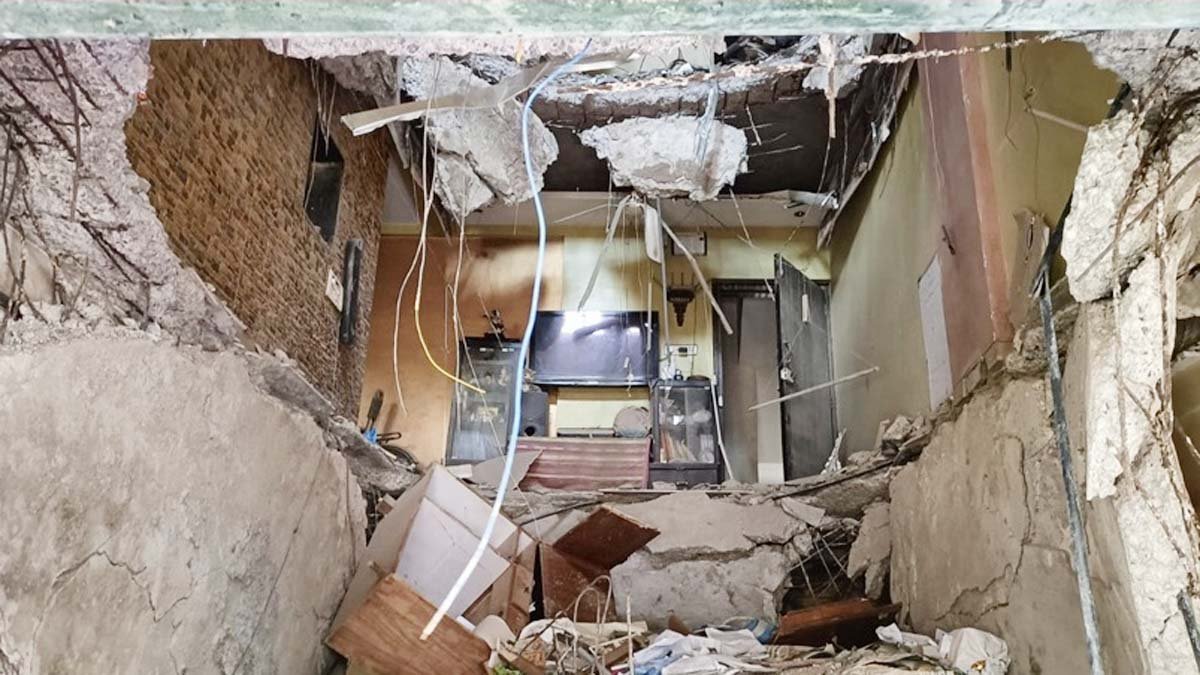
As the rain approaches, the concern over the safety of occupants in dilapidated buildings has become more challenging. On Saturday, a 29-year-old man died while seven others were severely injured after the ceiling slabs of multiple flats collapsed in an eight-storied building in Nerul, Navi Mumbai.

On Thursday a ground plus two-storey building in Bandra (west) suddenly collapsed and claimed two lives. This incident has increased the worry of ward officials of 24 administrative wards in the city. Most of the dilapidated buildings on the BMC’s list are in the T ward – Mulund which has 49 dilapidated structures, followed by K West ward- Andheri West with 42 buildings. Out of 42 buildings, 10 have been vacated, and the water and electricity of 17 buildings have been disconnected. While 16 cases are pending in court.

Prithviraj Chauhan, Assistant commissioner of K west said, “We have requested our legal department to fast track the cases pending in court so that we can vacate the dilapidated buildings. Also, the action on other dilapidated buildings in the ward is being taken according to standard operating procedure.” The highest 25 dilapidated buildings in the city area are in GTB Nagar, Sion Koliwada.

Dilapidated building 2022 In Mumbai

  • City – 70
  • Western suburbs – 163
  • Eastern suburbs – 104

Areas with the most dilapidated buildings

  • City – Sion, matunga – F North – 25
  • Western – Andheri West – K West – 42
  • Eastern – Mulund – T – 49

In a pre-monsoon survey, the BMC declared 337 buildings dangerous. Out of them, the electricity and water connections of 102 are disconnected, while 113 buildings are vacated. But occupants of 122 buildings have moved to court, so the ward offices are requesting the legal department to speed up the case so that they can vacate such buildings to avoid untoward incidents. According to BMC’s policy, buildings that are more than 30 years old are eligible for audit. The civic body sends notice of evacuation to buildings that they found dangerous or at high risk.

Based on these reports, BMC classifies the buildings in various categories and decides whether they should be demolished completely or need maintenance. The buildings which should be demolished immediately are tagged as C-1. As a precautionary measure, BMC has appealed to these residents to move to safer places immediately. But in some cases, either the tenant has gone to the courts and got a stay order or refuses to leave even after water and electricity are disconnected.

“Janhit Mein Jaari is Not A Bold film. It’s A Brave film” says Jai Basantu Singh

janhit
Janhit Mein Jaari (photo for representation)

Gone are the days when directors would vie for big budget projects, popular starcast , larger than life storyline. These days a socially relevant film that entertains while passing a message to the society is exciting enough. That’s precisely how debutant director Jai Basantu Singh feels about his maiden venture Janhit Mein Jaari. “I really couldn’t have found a better project to kickstart my directorial journey,” says Singh.

It wouldn’t be wrong to say that Jai Basantu Singh’s journey to film industry was predestined. His mother was a huge film buff, and he grew up amidst film shoots and film screenings. “My mother was total film buff and would watch all films first day first show. She would take me to watch a lot of films also. That’s where I picked up the love for cinema. I grew up in Goregaon, Mumbai. That’s where most of the film studios are located. I still remember, I would bunk school and go and watch shootings on the sets for hours. I knew even then; this is the industry I wanted to get in. I wanted to be the man, the name called director. While many of my friends would be interested in watching the actors, I used to be fascinated by this person who would call the shots. The one everyone would listen to and follow. I didn’t know what a director was but I knew back then too, this is who I wanted to be. This was my dream in watching the person in my childhood,” says Singh with certainty.

Janhit Mein Jaari didn’t just fall in Singh’s lap. There were long, struggle some years before getting his chance to helm a full length feature film. Singh recalls his journey and says, “When I entered the industry, I went straight into production and it didn’t take much time for me to realise that direction was my true calling. I worked as an assistant director for 3-4 years and then joined Zee Tv as campaign and promo director. I shot 600-700 campaigns and promos of fiction and reality shows. That’s where my journey into direction began. My boss then, Puneet Goenka and Ashwini Yardi really gave me a free hand to shoot the way I wanted. I would really owe a great deal of my learning years to Zee Tv and both of them. In 2008 I quit Zee and went onto independently direct campaigns and promos of almost all big broadcasters. In 2009 recession came and that’s when i started directing Tv shows as set up director where my journey of telling a story from 30 sec to 30 min began. I owe a great deal of my journey upto this point to television shows. I couldn’t be where I am today if it weren’t for all the campaigns and tv shows I directed.”

Singh directed many popular and successful shows like Ye Un Dino Ki Baat Hai, Ek Duje Ke Vaste, Ye Pyaar Nahi To Kya Hai, Ye Rishta Kya Kehlata Hai, Namune, Jeannie Aur Jiju many hit shows.

janhit jjjjjjj
"Janhit Mein Jaari is Not A Bold film. It’s A Brave film” says Jai Basantu Singh 12

I came on this project as Screenplay writer but wherever I used to narrate the script is it to actors, studios, or producers they always acknowledged of how effortlessly I narrate without even looking at the script even once that too for straight two and half hours. That is when my team, producers and studios started telling me that I should direct the film. Seeing the faith people had in me, I got the strength to direct this film.

He further adds, “Janhit Mein Jaari is a challenging subject. It’s about a woman who’s a salesgirl for condoms. In a country that still finds condom as a taboo word, I had to be very mindful to treat this subject delicately. I was walking a thin line. I didn’t want this film to be preachy but pass a good message at the same time. Didn’t want people to make fun of it but wanted to make this film entertaining too. But things eventually fell in place and I got the talented actress Nushrratt Bharuccha to work with who couldn’t be more right for this role. Even the rest of the cast was all very supportive. I really want this film to be a family entertainer and not a TV commercial people awkwardly move away from at homes.”

Rahul Mukerjea – Sheena Bora’s most tragic love story of the city

sheena bora, sheena bora murder case, rahul mukherjea, mukherjea, indrani mukherjea
Rahul Mukerjea - Sheena Bora's most tragic love story of the city 14

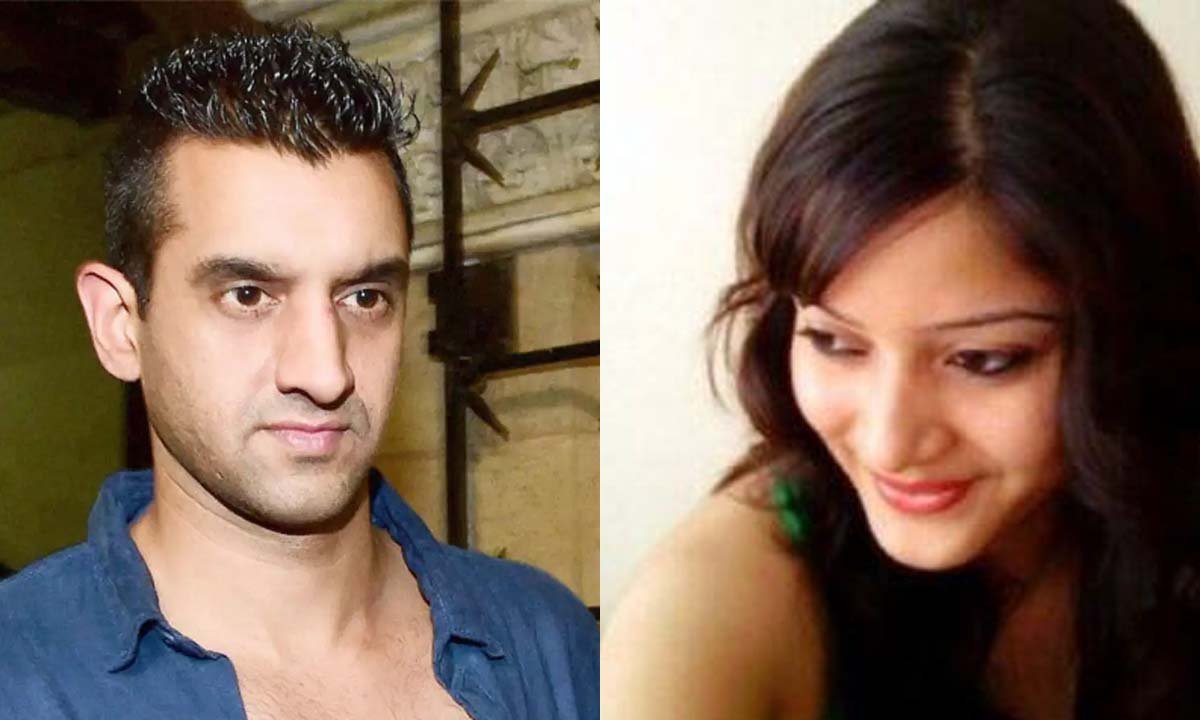
Rahul Mukerjea – Sheena Bora loved each other immensely without bothering about the baggage they were carrying.  Rahul Mukerjea is the son of Peter Mukerjea, one of the accused in the Sheena Bora murder case. Rahul told the court that he ran pillar to post to trace Sheena, who had disappeared after meeting her mother Indrani Mukerjea, the prime accused in the case, on April 24, 2012.

Indrani had two children from her partner Siddharth Das, Sheena and Mikhail. Mikhail lived in Guwahati with Indrani’s parents. The relationship between mother and daughter was not amicable. Indrani got married three times and she also had one daughter from her second marriage. Indrani’s present husband Peter Mukerjea was married several times and had children from all of them.

In early 2012, Sheena resolved her differences with Indrani, as she wanted financial help to pursue an MBA course at Oxford Brookes University. The mother-daughter duo then met for some time at a five-star hotel near Mumbai airport and after the meeting, Sheena told Rahul that “Indrani’s attitude had changed and she had accepted their engagement and was helpful. Indrani was against the relationship between Rahul and Sheena because Rahul was Peter Mukerjea’s son and Shreena was his daughter.

But gradually, the mother-daughter duo had decided to meet again on April 24, 2012 – the day they allegedly killed Sheena. On that day, Rahul dropped Sheena on Linking Road at Bandra where he saw a parked Silver car in which Indrani was sitting in the back seat and Shyamwar Rai, another accused in the case who has turned approver, was in the driver’s seat. He also saw Indrani’s ex-husband Sanjeev Khanna, also arrested in the case, on the spot.

After reaching home, Rahul messaged her intermittently. When he received her first reply, they were having drinks at a hotel in Bandra and later went for dinner at another hotel. In a subsequent message, Sheena replied to him that she was having fun with Indrani and wished to spend the night with her. Rahul was shocked by the message because the day before Sheena was in two minds… whether to go or not for the meeting.

The next morning, he didn’t hear anything from her. When he sent a message, she replied that she will be home in a couple of hours. But half an hour later got another message from her saying she had met someone very wealthy and she was in love with him and no longer wanted to be with me and that Rahul shouldn’t chase her. Rahul messaged her that she should at least call him. He received a reply. Not now, maybe in a couple of months. On receiving the reply, Rahul suspected “something may have happened… possibly someone else was sending the messages from her phone.”

Rahul could never imagine that Sheen’s life could be in danger. However, he immediately started searching for Sheena and went straight to Indrani’s house in Worli. He checked both her adjoining flats but didn’t find anyone except a lady, who had no idea about Sheena. On failing to track her whereabouts, Rahul went to the Worli police station and explained the situation to the officers on duty.

Two police constables came with him to check at Indrani’s residence but in vain. He then tried to give a written complaint to Worli police, but they said he should stop worrying, as Sheena had gone with her mother. She would be fine and may return in a few days. At the suggestion of the Worli police, he visited Bandra police station, within whose jurisdiction he had last seen Sheena, to lodge a complaint. The Bandra police told him the same thing and eventually directed him to the MIDC police station in Andheri. He then called his mother (Peter Mukerjea’s first wife) at Dehradun and informed her that Sheena had gone missing. His mother obtained former Mumbai police commissioner Param Bir Singh’s number through a common friend and spoke to him. Rahul said Singh told him to file a missing person report, saying it was very important.

Eventually, when his mother came to Mumbai, MIDC police took down whatever he said in the police diary, but did not investigate further. Thereafter, he called Indrani, his father, Sheena’s friends, her boss and even her grandparents, but no one had any idea of her whereabouts. He suspected Indrani was not telling the truth, as she kept telling him different stories about Sheena. First, she told him that Sheena had gone to Nagpur, and then said she had gone back to Guwahati and later that she was in the USA. On one occasion Indrani told Rahul that she had dropped Sheena at the place (Bandra) from where she had collected her.

Indrani informed the court that she herself would be cross-examining Rahul. Once the prosecution completes examining Rahul, he would be cross-questioned by the accused’s lawyer. Indrani told the court that she would need a gap of at least 15 days to prepare for his cross-examination. The court would decide on it by June 17 According to police, Indrani and her ex-husband Sanjeev Khanna strangulated 25-year-old Sheena, Indrani’s daughter from her previous relationship, on April 24, 2012, in a car in Mumbai. The following day, they disposed of the body in a forest area in Gagode village of Raigad district.

The murder came to light after the Khar police arrested Shyamvar Rai, Indrani’s former driver, in another case in August 2015. Indrani was arrested on August 25, 2015 – immediately after the crime came to light, followed by Khanna’s arrest. Peter Mukerjea was arrested on November 19, 2015, after the case was transferred to CBI.