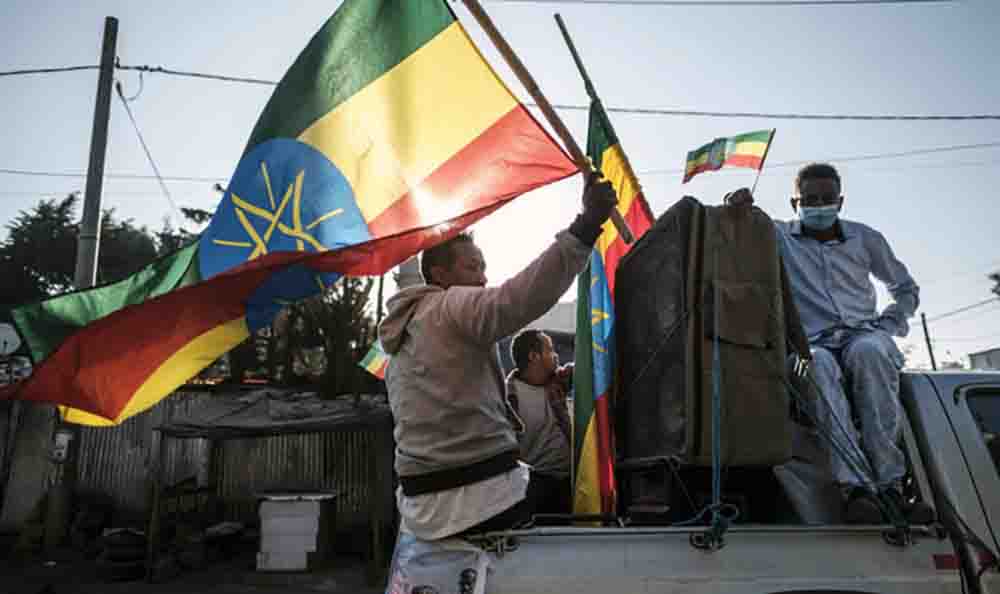
An airstrike in Ethiopia’s northern region of Tigray on Monday killed at least 17 people, mostly women, and wounded dozens in the town of Mai Tsebri, two aid workers told Reuters, citing local authorities and eyewitnesses.
This followed an airstrike that killed 56 people and injured 30, including children, in a camp for displaced people in Tigray on Friday. US President Joe Biden raised concerns with Ethiopian Prime Minister Abiy Ahmed on Monday about civilian casualties and suffering caused by airstrikes. Ethiopian military spokesperson Colonel Getnet Adane and government spokesperson Legesse Tulu did not immediately respond to a request for comment on the Mai Tsebri strike.
The government has previously denied targeting civilians in the 14-month conflict, which pits Abiy’s federal forces and their regional allies, backed by Eritrea, against rebellious forces of the Tigray People’s Liberation Front (TPLF). Abiy’s appointment as prime minister in 2018 ended 27 years of TPLF dominance over Ethiopia’s central government. But the party stayed in power in its home region of Tigray, where fighting erupted in November 2020.
Each side blames the other. The TPLF accuses Abiy of centralising power at the expense of the regions, which he denies, while Abiy accuses the TPLF of seeking to return to power at the national level, which it rejects.
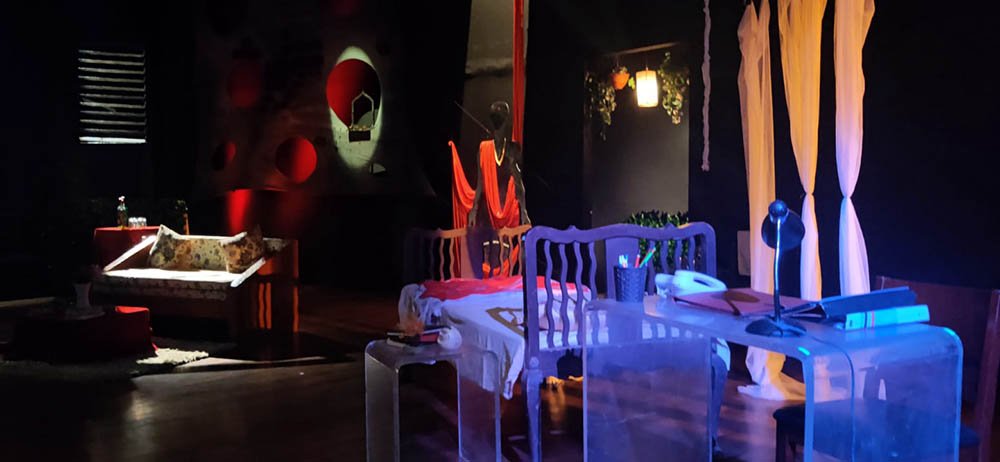
Sir Sir Sarla… A timeless act by Makarand Deshpande 3
That standing ovation, those loud claps, and happy faces in the theatre by audiences, waiting for the artists to come out after the play, spoke volumes. I was also standing right there, just to convey how happy I was to see this timeless drama, but left abruptly and quietly because that happiness in me needed isolation to reason myself. I was in a different zone.
It was all about Professor Palekar (Makrand Deshpande) who has written and directed the drama and played the role of the Professor. While Sarla (Aahana Kumra) is passionately in love with the professor and she crazily reminds him about her inclination, there is another student called Phanidhar (Ninad Limaye) who is the second-best who shares a love-hate relationship with the Professor and is madly in love with Sarla. The lives of the three are consequently mingled. Throughout the play, we see each of the characters deal with their individual conflict, subduing it and then letting it out sometimes calmly, and sometimes intensely.
Even though the Professor let down internal conflict himself, he is always a role model of wisdom for his two favourite students. However, if the play were just that, it would be quite simple and straightforward. The interest lies in Phanidhar questioning his teacher, again and again, even accusing him of ruining all their lives by manipulations, and as a teacher, he gives monotonous explanations. The play would have been long-winded had it not been for Phanidhar, who is very endearing with his utter lack of grace and simple character. Phanidhar stole the entire show; he takes out emotions on a roller-coaster ride, inquisitive, hilarious, and bringing one down quite suddenly from idealistic theories to a reality where jealousies and self-interests lie.
The situation becomes interesting midway when Sarla’s insecure husband, Keshav, enters. Keshav (Mr Mane) is a businessman with little understanding of Sarla’s romantic view of life, even though he tries. Keshav brings a new layer of depth and wholesomeness to the play with his unpretentious simplicity and honest demeanour. As he rendered his performance with honesty to his character’s personality, was actually the showstopper of the play. His entry in the play tickles your ribs and at the same time calms your brains. As the story unfolds, unkind allegations are made; life-altering decisions are anticipated and then re-considered. With all its ‘grand’ ideals, the play also provides prurient satisfaction as the plot is about the love of a young girl for her elderly teacher and mentor.
Initially, the play was slow, maybe it was to create the premise but as the storyline progressed, every character got the audience involved in their personalities and performance. The guys were constantly in character and had distinct personalities. Every character is relatable and each one connects to them in some form of life experience.
The professor subtly conveys how life does not give as much grief as your perspective and how a simple shift in that line of thought changes the direction of your life. Knowing or unknowingly he nudges them towards the right path which comes to be questioned down the line. In spite of their inner turbulence and conflict, he is constantly aware of their nature and patiently nudges their entwined lives and leads them from confusion to clarity and then purpose.
Sarla is inspired by the intellect and her love for poetry is the reason for her to fall in love with her mentor. Ahana Kumra as Sarla flitted through various timelines easily with her performance of bubbly youthful candour to a married young lady. At some point, she was a little over the top and can level it out further.
Makarand Deshpande as an actor, director and writer knows his craft and generously gives space for all the artists to perform. He leaves that open canvas for them to improvise, there were many such prompt cute moments in the play. Makarand is a mentor all the way and as he evolved as an artist and mentoring people is second nature. Perhaps this performance of his was a perfect example of how sometimes you begin to play this role but eventually somewhere actually becomes the role.
It’s intriguing to see how much our thoughts encompass us and how the right mentoring shifts your perceptions. Love is perceived with a formula where you tick all the boxes, but the fundamental confusion lies between what you want and what you get and further what you can accept. So locked we are in our world and perceptions, that invisible or variant expressions don’t seem to register on the horse-blinkered psyche. Compelling people to express and finding that middle ground in the equations seems to be the ultimate need of life and ultimately determines success. Love does come with its complexities and inner conflicts.
Love is a universal language, and as the characters sift through their complex layers of expression, you can relate to each one of them in some way or the other. What I found fascinating about this play is how immensely relatable it was. You can connect to every character at some point or the other as somewhere we have either been one of them or frankly speaking, perhaps at different points of life even been all of them.
The play is brilliantly written and the dialogues are well-timed, it was wonderful to see them play with both minutes of silence with words. I would consider this play as a timeless creation that can be viewed in any language, performed by any artist, and still will always be applauded as a great example of theatrical art. Music, sound, lights, makeup, costumes, stage, everything was in order.
BJP's old guard Vinod Tawde's influence can't be clipped 5
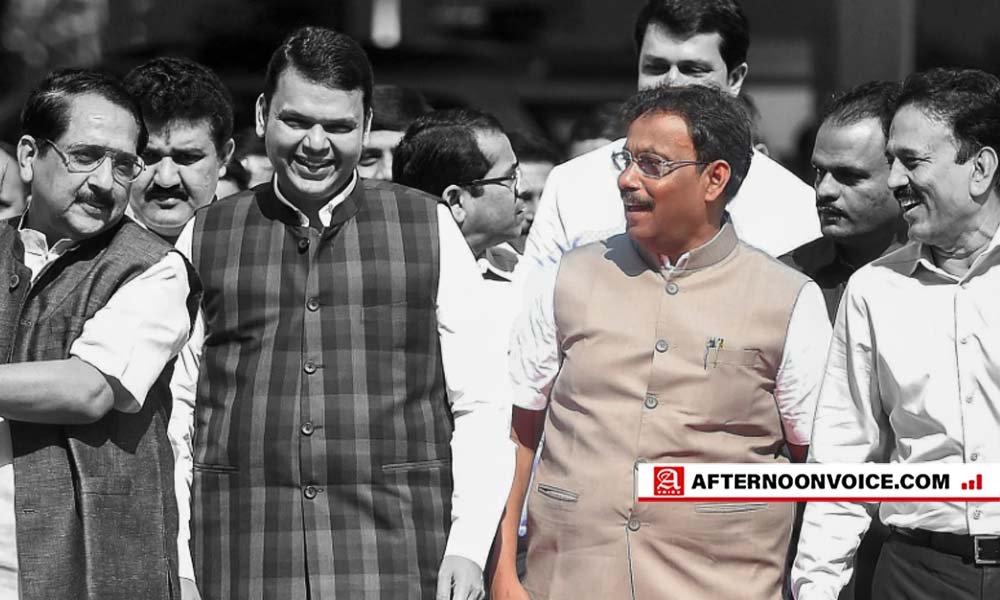
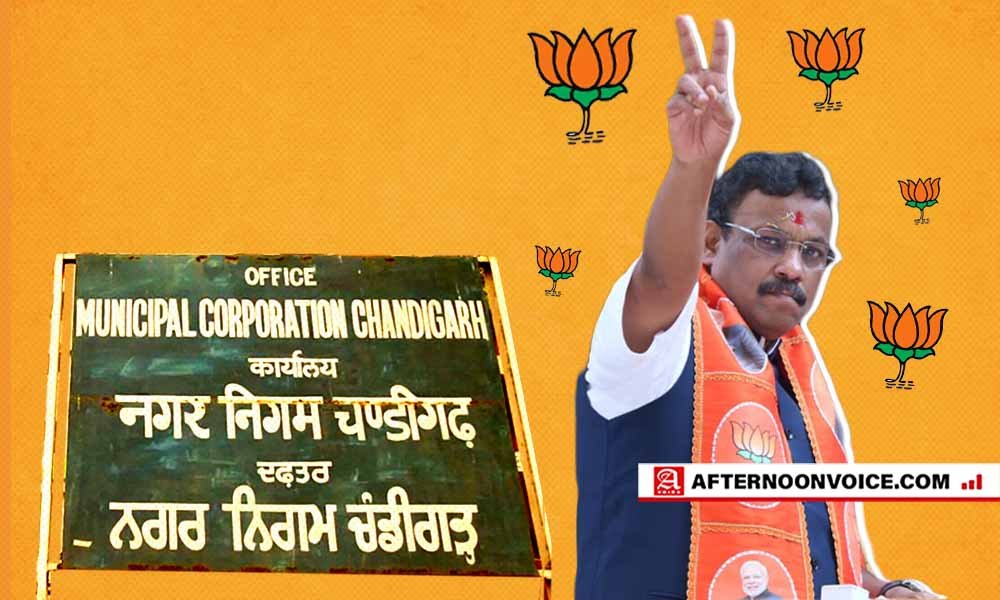
Recently Vinod Tawde was instrumental in winning municipal elections in Chandigarh. In the abnormal epoch of Punjab politics against BJP, Tawde made it possible. He is one of the old guards of BJP. Throughout his political career, he was persistent with his temperament and approach towards the party and party men. He is one of those leaders who can’t be clipped for long or ignored. Tawde may also play a crucial role in the Punjab Legislative Assembly election, 2022. A Marathi manoos not only caught the nerves of Punjabi people but he could instil faith in them.
Tawde, a simple and subtle man, born in Mumbai’s Girgaon, was a member of Akhil Bharatiya Vidyarthi Parishad (ABVP) since his student days and active karyakarta of Rashtriya Swayamsevak Sangh. He was groomed by grassroots leaders. Throughout his four-decade-long political career, Tawde has worked in various positions for BJP, making cadre-building and organization his strength. Within the ABVP, Tawde rose from karyakarta (worker) to the organizing secretary of the Mumbai Central Zone, and eventually the All-India General Secretary of the outfit.
In 1995, Tawde took charge as general secretary of the Maharashtra BJP, and in 1999, became the president of the Mumbai BJP. He was the leader of the opposition in Maharashtra’s Legislative Council from 2011 to 2014 and then became an MLA from Mumbai’s Borivali constituency.
Tawde was a cabinet minister in the Fadnavis-led cabinet, in charge of school, higher and technical education and medical education, as well as cultural affairs. In spite of combating various allegations, he maintained his calm and rendered needed explanations.
In 2016, Tawde was also beleaguered by the opposition for being allegedly associated with a for-profit company despite being a minister.
No doubt then the Chief Minister Devendra Fadnavis defended Tawde out and out when allegations were hurled at him. But in 2016, Devendra trimmed Tawde’s power by replacing the medical education portfolio with Girish Mahajan, a leader said to be close to him. From that time Vinod Tawde maintained peace and quietly remained isolated. He was dropped from the 2019 assembly polls. When all old guards of BJP were side-lined, BJP as a Party could not stand its ground and lost to power against the Maha Vikas Aghadi alliance. This was the time even BJP’s war-lords realized their mistakes of ignoring core leaders, who are the basics of the state party. Perhaps by rectifying their mistakes Tawde was made the BJP’s national general secretary. After a long pause, Tawde was suitably rewarded.
No one can deny the fact that he was disheartened but still maintained calm. He is a seasoned politician and hard-core worker; the beauty is that he never puts the party of its leaders in any sort of embrace. His appointment as national general secretary only means that the party needs this in the national scheme of things ahead of elections in major states. He was sent to Punjab and I am sure he proved to be the best at his craft.
After the Late Pramod Mahajan a former Union minister and Gopinath Mundhe also a former Union minister this was the first time that Maharashtra has got a general secretary’s post to its state minister. Mahajan and Munde were appointed BJP national general secretary in 1993 and 1999 respectively. Elevating Vinod Tawde to the post of national general secretary, and nominating Chandrashekhar Bawankule as its candidate for the legislative council, BJP did great damage control because many BJP leaders those days felt ignored and hurt.
Tawde and Bawankule appointments can help the BJP to get caste equations right, with Tawde being from the Maratha community and Bawankule being from the Teli community among the Other Backward Classes (OBC). This was also an indication to Fadnavis that the party wants to keep his power in check.
Moreover, it being unlikely that the Shiv Sena and BJP will align again, it is clear that the party has to travel the distance from 105 to 145 MLAs on its own, and needs the organizational strength of old as well as new faces in the party.
Vinod Tawde was the first leader to demand a separate budget for agriculture and he consistently proposed measures that the government should implement to enhance agriculture productivity and prevent farmer suicides. From mill workers to farmers, he stood strong for their demands and that is the reason he has mass appeal when it comes to rural and urban Maharashtra. He also demanded an SIT probe into wakf land allotments.
He used various legislative devices to compel the government to establish an enquiry committee under the chairmanship of Madhavrao Chitale for the investigation of corruption in the irrigation sector. Vinod Tawde condemned the government’s decision to start a textile park in Baramati; in his opinion, the government should have selected a cotton-producing district to set up the facility. He also opposed the textile policy announced by the government as it was non-beneficial for farmers.
He is one of those working politicians who gave access to the common public by solving their water, gutter, and meter problems. He sponsored many toilets, open gardens, religious places, and community welfare programs from his MLA funds. In his constituency, you will find something or the other thing contributed by him towards the wellbeing of people. BJP is one big national party in the ocean like Indian politics and leaders like Tawde are the anchors, it’s better late than never party holds its guards equally strong.
Any suggestions, comments or disputes with regards to this article send us at feedback@www.afternoonvoice.com
Vinod Tawde: BJP leader who charmed Chandigarh MC elections 7
The Bharatiya Janata Party (BJP) won the Chandigarh Municipal Corporation elections by defeating local traditional political parties. When asked national general secretary Vinod Tawde, who was also in charge of Chandigarh Municipal Corporation elections, the motivation behind this success, he said, “Due to corruption and policy failure Punjab government has failed on various fronts. People were fed up and they voted for BJP for the development and welfare of the people.”
“There might be some perceptions created but in reality, Punjab loves BJP and Modi. Local dedicated BJP workers of Chandigarh functioned efficiently. I am always committed to the party and people,” Tawde further stated.
When asked about the challenges in the present scenario in Punjab, Tawde said, “There were no major challenges, AAP got 14 seats, BJP got 12 seats and Congress got 8 seats, Akalis got 1 seat and the Congress and the SAD abstained from the election. This is how we got maximum numbers to elect our Mayor.”
Whereas local Congress workers said, “AAP played well. They contested for the first time and became SLP. BJP has a government in the centre so it can easily attract councillors. Look at the results, no political party got a clear majority. Congress and Akalis did not support AAP but one of the Congress seats supported BJP.”
Bharatiya Janata Party’s Sarabjit Kaur Dhillon was elected the new Chandigarh mayor after she defeated Aam Aadmi Party’s Anju Katyal by one vote. Seven councillors of the Congress and the lone member of the Shiromani Akali Dal in the 35-member House abstained from voting in the Chandigarh municipal corporation (MC) mayoral election. Sarabjit Kaur got 14 votes, while Katyal got 13 votes and one vote was declared invalid. Both the BJP and the AAP had 14 votes each in the House.
Sarabjit Kaur Dhillon, a councillor from ward number 6 is the wife of Jagtar Singh Dhillon, a former councillor and lives in Mani Majra. She has studied till BA second year. She entered politics after her husband’s ward was reserved for a woman candidate. BJP’s Dalip Sharma won the senior deputy mayor election, defeating AAP’s Prem Lata. Sharma got 15 votes and Lata 13 out of the 28 votes cast. BJP candidate Anup Gupta won the deputy mayor’s election. He was declared the winner by a draw of lots. Earlier, Gupta and Ram Chander Yadav of the AAP were tied with 14 votes each in the House with the strength of 28 members.
“BJP once again looted the deal. We were the single largest party with 14 councillors. Our elected members of the Municipal body were overpowered and got out from the electoral process venue. This was purely a horse-trading that BJP and Congress are always into. Their one vote was even torn by the electoral officer inside,” said Aman Arora an MLA from AAP.
Manoj Lubana, Chandigarh Territorial Youth Congress said, “Our calculation and planning was to keep AAP away from the power of Chandigarh municipal corporation. We cast our one vote in the favour of a national level party. Our intelligence had briefed up that AAP Mayor can be an anarchist. As one councillor’s vote was declared void, we understood the result and gave powerplay to be the kingmaker in Chandigarh. Our one vote got a lady to be the Mayor.”
“Their very own corporators were not happy with the Congress party. The people on the other hand were not satisfied with the state government and its policies, which led to the votes against Congress and in favour of BJP. The people of Chandigarh have shown Congress their place, and given a message that they choose BJP for governance and betterment of the state,” said Atul Moreshwar Save an MLA of BJP.
Amanjit Singh, a Chandigarh resident said, “The entry of the AAP, in a traditionally two-pronged battle, has particularly disturbed the Congress party’s election strategy. In many wards, Congress and SAD were competing for the same anti-BJP votes. Unlike BJP and AAP, which spent heavily on advertisements, the party was focusing more on individual contacts with voters and social media.”
BJP fought anti-incumbency by exhibiting more than 50 achievements and its key message was put across different media platforms and door-to-door campaigns. Known for its cadre strength, the party took every advantage. A three-cornered fight between Congress, BJP and AAP made its attempt at a win that much more complex and harder.
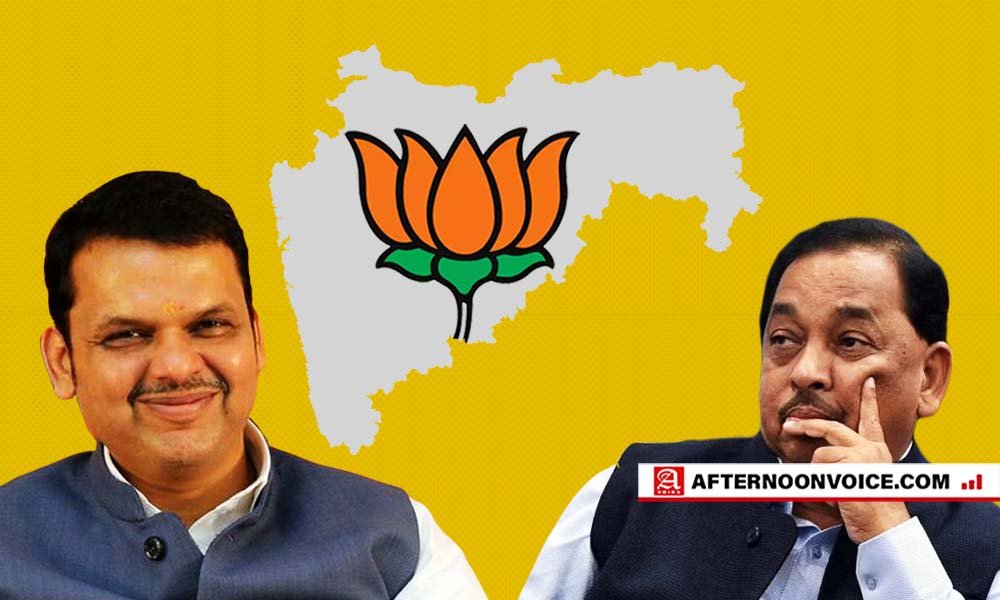
Is Narayan Rane aspiring to be CM again? Think Tanks predict it is only Devendra Fadnavis again 9
There are some sections of Narayan Rane supporters on social media seeding the thought that Rane can be the next Chief Minister of Maharashtra. Narayan Rane and his veiled ambitions to become Chief Minister of Maharashtra is not a hidden secret anymore. Rane switched his loyalties to various political parties to try his fortune for the CM post. Rane was Chief Minister for a shorter period than Uddhav Thackeray, for only six months.
Soon after Rane joined BJP, he made a statement that Maharashtra would have a new, Bharatiya Janata Party (BJP)-led government by March next year, adding that things should be kept ‘secret’ to trigger the collapse of an incumbent government. There were nonstop attacks made by Rane on Chief Minister Uddhav Thackrey and Shiv Sena. Whereas Devendra Fadnavis always presented his dignified side, with indispensable mannerism in his speeches, media statements and conduct.
Madhav Bhandari, spokesperson of BJP, Maharashtra State unit said, “Right now our entire focus is on Assembly Elections In 5 States. Maharashtra has two and half years to make any such guesses or assumptions. We are a cadre-based political party, let the elections take place our Party will decide about the rest.”
Narayan Rane said, “These are all the news made by the media, I never made any statement that I want to be Chief Minister of Maharashtra again. I was already a chief minister and now a union minister. I will work hard to bring the BJP government in the state but that does not mean I am putting my candidature for the CM post.”
BJP supporter on social media Nayan Chandra said, “These are just rumours and a thought that is propagated by the social media supporters of Rane, I strongly believe that there is no other leader in BJP who can replace Devendra Fadnavis. Rane has already joined the central ministry and he should stick there.”
Shaina NC, the State Spokesperson of BJP said, “Let us not get hypothetical. Devendra Fadnavis is an outstanding persona for the Chief Ministerial position. He has experience running the Government for 5 years in Maharashtra. He has been the opposition leader of the Vidhan Sabha and has a lengthy diplomatic career as a member of the Legislative Assembly. He has consequently been elected by the people and in the Bharatiya Janata Party, Devendra Fadnavis is known as a very intelligent and upgraded Personality. As an option to him, the CM’s Chair candidature is decided by the Party leadership and the Core Committee and not by cadres.”
Prakash Joshi, Senior Political Analyst said, “No, I don’t think so. It does not work like that in the Sangh Parivar. BJP has different Criteria for the Chief Ministerial position, they do not like this difference. In politics, anything can happen as he has been the CM in the past during ‘Yuti Government’ still I think this Party will go for someone else or may get somebody else in option.”
Aatish Patil, a political banners maker said, “There is no doubt that people love to see only Devendra Fadnavis as Chief Minister of Maharashtra. I don’t think people will ever favour leaders like Narayan Rane over Devendra Saheb. I have been making political banners for the past ten years, never witnessing so much craze for any politician other than Devendra. He was betrayed but never mind he will come again.”
Rajendra Shebadkar, an academician and political analyst said, “In the race for the post of Chief Minister Narayan Rane, this gossip is circulated by NCP. I do not think that Pawar’s policy will create such a rift between Maratha and Brahmins. This government of Mahavikas Aghadi has failed miserably. That’s why they come up with this kind of chewing news rumours, the general public should ignore it completely. The Maha Vikas Aghadi is united for power. The day before the Lok Sabha / Vidhan Sabha elections, their bubble will burst or they will fight separately.”
Samajwadi Party MLA Abu Azmi said, “We do not think so. If Congress, NCP, and Shiv Sena Alliance continue then BJP cannot come to the throne. As far as the State Powered Chair is concerned my opinion is that Fadnavis is apt for the post, but in politics, anything can happen anytime and even if BJP Shiv Sena come together the Shiv Sena will never accept Narayan Rane as the CM.”
Mahesh Upadeo, Senior Journalist (Nagpur) said, “Devendra Fadnavis has been the Karyakarta of Rashtriya SwayamSevak Sangh. He is popular at the Party and quite famous in India at large. He is known as an intellectual MLA. Narayan Rane is brought in only to perturb the ShivSena and dethrone them in the BMC. Devendra Fadnavis is currently the opposition leader of the Maharashtra Legislative Assembly so he is the best name for them. Only if Brahman and non-Brahmin politics jump up then an option can be thought of. Anyhow Sudhir Mungantiar who was the State President is desperate and ready to be the Chief Minister of Maharashtra.”
Eknath Khadse, NCP leader said, “Devendra Fadnavis is the only priority of the BJP. They have no other option till he is in the State. I have seen the Workflow of BJP for over 40 years. I have witnessed Sangh Parivar’s style of working. In my personal opinion, they cannot think of any name besides Devendra Fadnavis in Maharashtra for the CM chair.”
A BJP veteran told Afternoon Voice, “certainly Narayan Rane is a fearless speaker, he has his pluses but is not fit for the post of Chief Minister of Maharashtra. No one can replace Devendra Fadnavis. Rane hails from the Konkan region, heavyweight influences the voters through his speech. During 2009 Congress – NCP, combined could get 133 seats against the requirement of 145. The combine formed the government with the help not smaller b parties and such alliance is always vulnerable. At an opportune moment, he was about to go in for a kill to bring down the government. Seeing Uddhav canvassing for his candidacy for CM, he discarded the idea. He is an astute politician.”
Brand maker social media agency told Afternoon Voice, “There are these traits and methods of soft hammering. Rane has already started his campaign sowing this thought in people’s minds. Nowadays people are seeing him as the strongest Maratha face in BJP, he is capable enough to take on Shiv Sena and Uddav. Rational speaker and very dominant in his behaviour. In two and half years, this thought will take concert shape and the narrative will be established. In this social media era, anything can be possible.”
The ruling MVA coalition in Maharashtra comprises the Shiv Sena, Nationalist Congress Party (NCP) and Congress. Now-former allies, the BJP and Sena, which governed the western state together between 2014 and 2019, won re-election two years ago. However, differences over several issues, including who gets the chief minister’s chair, led to a split between the two, with the Uddhav Thackeray-led party joining hands with the NCP and the Congress.
While Thackeray heads the alliance as the chief minister, the BJP is still the single-largest as well as a principal opposition party in Maharashtra. Devendra Fadnavis, Thackeray’s predecessor, is the Leader of Opposition. The Aghadi allies have frequently accused the BJP of trying to bring down their government though they also assert that the ruling dispensation will complete its full five-year term.
Devendra Fadnavis – The most acceptable leader of Maharashtra 11
Today I won’t be making any report card or getting in analysis, just writing the political scenario in Maharashtra. The name Devendra Fadnavis is known to me from a very young age, being a Nagpurkar for some decades (my maternal uncle resides in Nagpur) I am seeing his steady growth. And now as a journalist, my connection is even stronger. After Vilas Rao Deshmukh and R R Patil, he is one of the Chief Ministers who never hesitated to meet people. Even if you leave a miscall his office reverts back. Communication is the biggest strength of this leader of masses.
Devendra Fadnavis is a pragmatic, forward-looking and solution-oriented working politician. Perception may vary from person to person and politician to politician, but he is one of the leaders who is liked by grassroots. One has to be a neutral observer and go beyond what is apparent. Here I shall try to give my opinion about him. The people of Maharashtra have rejected all other political parties to form the government but the majority of people have preferred Devendra Fadnavis as CM.
The people of India highly regard him as the most youthful, accountable, and clean leader of Maharashtra. After the Narendra Modi wave that rocked the entire nation in 2014 including Maharashtra, there was a power shuffle in the State. With a clear majority in Assembly elections, BJP decided to form a government. BJP’s Party President Amit Shah quickly went through all probable candidates for the post of Chief Minister and declared the name of dynamic Devendra Fadnavis.
It was expected that Fadnavis will be declared as the Chief Minister in the State as political experts from the state had predicted the same. There was a strong reason for it. His honesty, clean image and also his tenure as Leader of Opposition in the State assembly was marvellous. After he was chosen as leader of opposition in 2010, Fadnavis proved himself through his speeches and work. With qualities like studious nature, vision and to take any question to a logical conclusion, he literally kept then the ruling Congress-NCP led government on its toes. Many times, he made them beached and put in defensive mode. He was the key person to create an anti-environment image of the Congress-NCP government.
After being chosen as Chief Minister Fadnavis did not waste his time and quickly swung into action as the state was facing many serious problems like drought, farmers suicides, labour issues, law and order, and most importantly the empty treasury of the State. Sensing the urgency to address those issues, he first took control over administration and on the other side made several teams of young and experienced senior ministers. Once his cabinet was settled, he started to take quick decisions related to the development of the state. He was holding most of the crucial portfolios and somewhat that has overburdened him.
A man who successfully faced so many political challenges with his government which has external support and not the complete majority. A man who can get electoral success for BJP across the State including in the strongholds of other parties. Lastly and most importantly, the most popular leader in Maharashtra in terms of approval rating is way ahead of all others. Despite having all merits, a few things strongly went against him.
Maharashtra was ruled mostly by the Marathas and Fadnavis is a Brahmin. This was actually a good chance for diversity but the egos of tall leaders became a hindrance. He also had hidden enemies within the party. He is a young and hardworking person against most politicians who are old. As far as corruption or governance is concerned, he has not been able to hold good control over bureaucrats & administration. The alliance Shiv Sena was another jolt. This is where he needed huge improvement. But the best thing is that he could remain non-controversial, non-corrupt which is always been his strength. There were many allegations made against him but he successfully sailed through them.
Another big trouble he created for himself is cutting other BJP state leaders to size and centralizing all decision-making to CMO instead of individual ministries. BJP has recruited local leaders from other parties, so corruption at local levels has not changed even a bit. Only the party taking the cut has changed. Here I don’t blame Devendra because managing all such outside infiltration was tricky.
Another big mistake of BJP that has cost Devendra is instead of contesting all the 288 seats, the BJP contested only 160 seats and gave away 120 seats to Shiv Sena expecting the alliance in order. Out of 160 seats contested, BJP got 105 elected, that is 2 out of 3. If BJP had contested all the seats, it might have scored 180 to 200 seats getting almost 2/3 majority. Devendra Fadnavis made some incorrect assumptions while contesting these elections. Some of his moves like picking up MPs from INC and NCP was damaging. More than 50% of such candidates lost their seats. At the same time, the BJP worker, who were neglected or sidelined due to these imported leaders started silently revolting. Looking statistically, BJP may not have considerably lost ground in terms of vote percentage to a large extent, but they lost to the power politics of opposition.
Looking at the current picture, BJP is still not in a bad position, as they seem to have maintained a moral high ground. Even though INC, NCP and Shiv Sena alliance formed bargained government, BJP seems to gain in long term. BJP got the opportunity to observe everything from the opposition benches and waiting their opportunity to form the government on their own for the next time. In such a scenario many senior BJP leaders need to tame their egos and mind their tongues; these loose cannons are causing damage to Devendra as a leader and BJP as a party. This is an appropriate time, that BJP needs to come up with a strong strategy and project Devendra as their prominent and permeant face in the state.
Any suggestions, comments or disputes with regards to this article send us at feedback@www.afternoonvoice.com
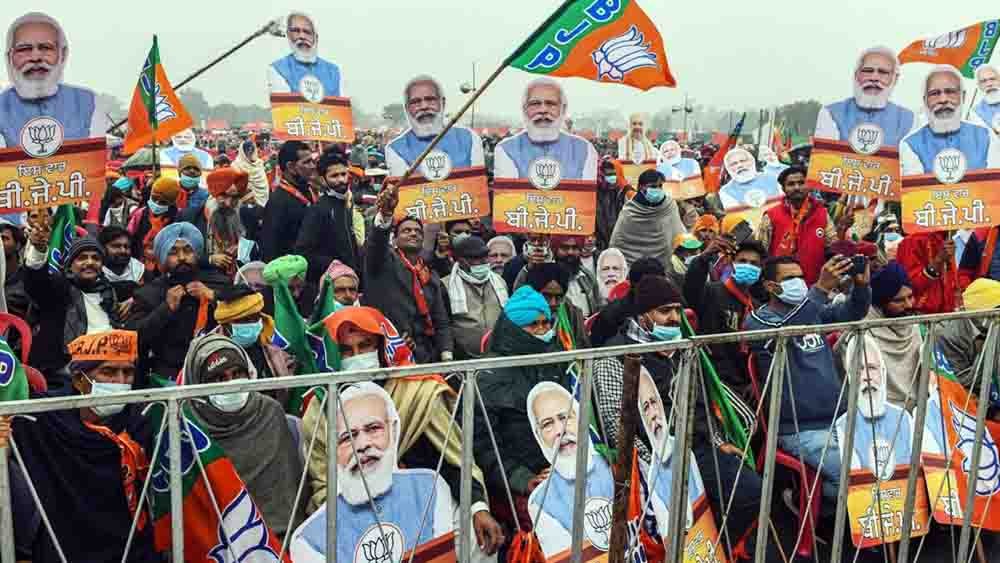
Election Commission bans physical political rallies, roadshows till Jan 15 in 5 poll-bound states 13
The Election Commission of India (ECI) on Saturday directed that no physical political rallies and roadshows will be allowed till January 15 for the Assembly elections in Uttar Pradesh, Punjab, Goa, Manipur and Uttarakhand in wake of the COVID-19 surge.
“No physical rally of political parties or probably candidates or any other group related to elections shall be allowed till January 15. The Election Commission will subsequently review the situation and issue further instructions accordingly,” Chief Election Commissioner (CEC) Sushil Chandra said while addressing a press conference.
“No roadshows, padayatras, cycle or bike rallies and processions shall be allowed till January 15. Situation to be reviewed and fresh instructions to be issued later,” the CEC said. “Our civil application should be used by voters to report any incident of violation of the Model Code of Conduct, distribution of money and freebies. Within 100 minutes of complaint, ECI officials will reach the place of the offence,” Chandra added.
Uttar Pradesh will go to the polls in seven phases from Feb 10 to March 7; Punjab, Uttarakhand and Goa to vote on February 14th and Manipur to vote on Feb 27 and March 3. Counting of votes for the five poll-bound states will take place on March 10.
A total of 18.34 crore electors including service voters will take part in the upcoming Assembly elections in Goa, Punjab, Manipur, Uttarakhand, and Uttar Pradesh. Goa, Punjab, Manipur, Uttarakhand, and Uttar Pradesh are slated to go for Assembly elections this year. 403 Assembly seats are slated to go to polls in Uttar Pradesh, 70 seats are up for grabs in Uttarakhand, 117 seats in Punjab, 40 seats in Goa and 60 seats in Manipur.
Out of these 5 poll-bound states, the BJP is in power in 4 states including Goa, Manipur, Uttarakhand, and Uttar Pradesh. Leaders from all the political parties are campaigning aggressively for months to register their win in the upcoming polls.
"Marathi Rabri Devi" - Jab at CM Uddhav Thackeray's Wife sparked controversy 15
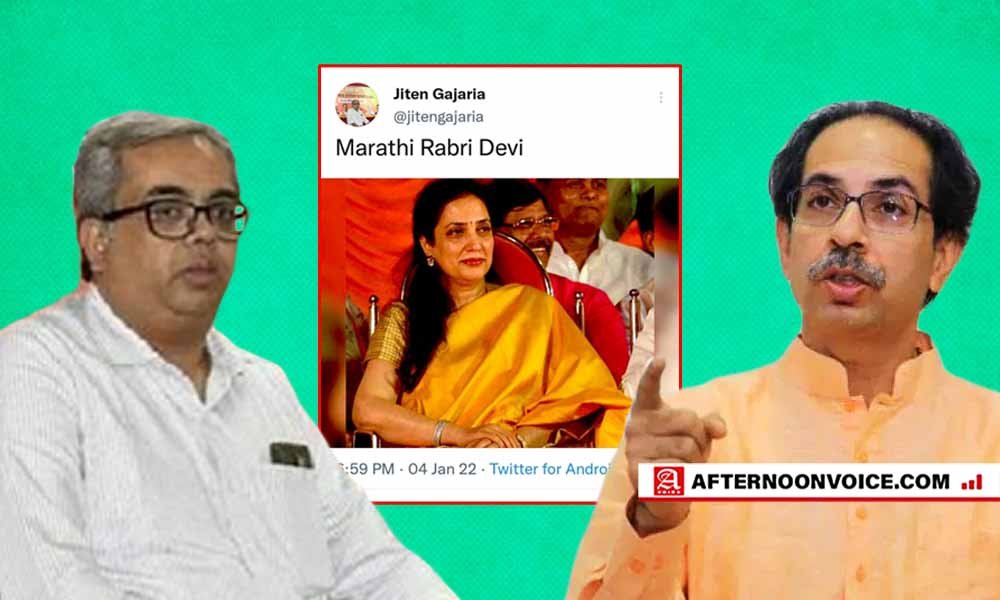
Marathi Rabri Devi trending on Twitter and BJP supporters made derogatory comments on Uddhav Thackeray’s wife and Son Aditya Thackeray. Earlier on Thursday, the social media convenor of Bharatiya Janata Party in Maharashtra Jiten Gajaria was summoned for questioning by Mumbai Police Crime Branch’s Cyber Cell for his tweet on Chief Minister Uddhav Thackeray’s wife Rashmi Thackeray. Jiten Gajaria was seen present at BKC Cyber Police Station to record his statement after being summoned by police over his tweets.
Reportedly, Gajaria had on January 4, posted a photo of Rashmi Thackeray with the caption “Marathi Rabri Devi”. After the uproar, Jiten Gajaria deleted the Twitter post. Mumbai Mayor Kishori Pednekar reacted to Bharatiya Janata Party (BJP) leader Jiten Gajaria’s tweet on Chief Minister Uddhav Thackeray’s wife Rashmi Thackeray and said that the BJP is passing derogatory comments on the daughter-in-law of Shiv Sena founder Balasaheb Thackeray who helped BJP become a big name in politics. She added that Gajaraia is a turncoat who is now passing derogatory comments on Maharashtra women.
Mumbai resident Jiten Gajaria who has nearly 20,000 followers also hosted a Twitter poll on the same subject. His post was shared by many people on Twitter, mostly those who support the BJP ideology.
Gajaria’s lawyer claimed that his client was called in for questioning by the cyber police without revealing the nature of the complaint lodged with the police. There was no FIR in the case. A source hinted that the police may call Gajaria again for questioning. Cyber police officials refused to comment on the development. The arbitrary action has been taken against the BJP leader by Maharashtra police at the behest of the Shiv Sena government led by Uddhav Thackeray.
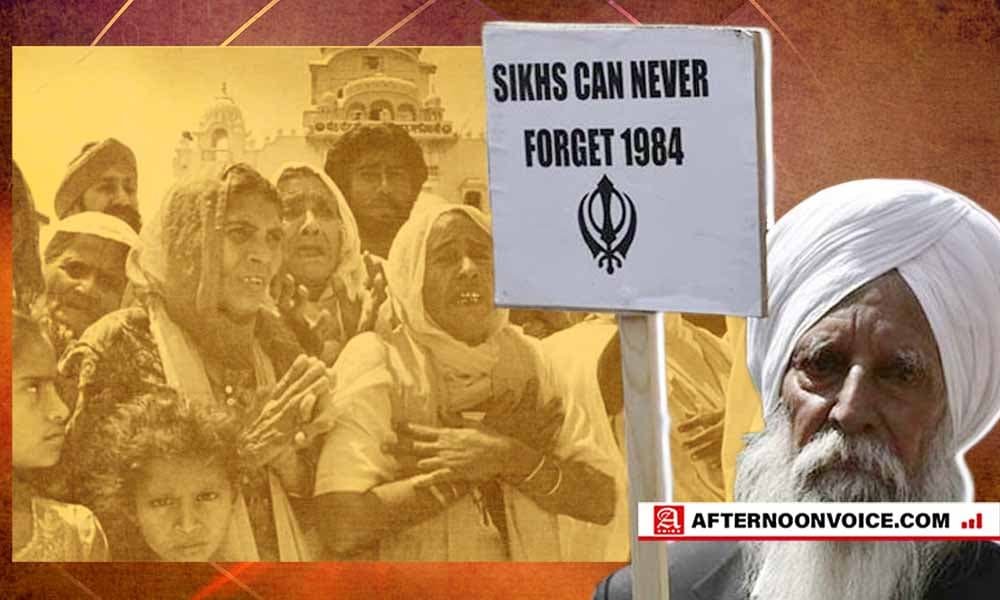
Are we waiting for another anti-Sikh riots like 1984? 17
Since the protesting farmers hardened their stand against the Center’s new farm laws they were labelled as Khalistani to demoralize agitation. Sikh’s farmers were the centre of attraction in this entire saga. The Bharatiya Janata Party alleged that the Khalistani agenda is being propagated under the garb of the Punjab farmers’ agitation and accused the Congress which is in office in the state — of aligning with radical elements.
BJP IT cell in-charge Amit Malviya tweeted that an alleged video of protesting farmers where a man is heard citing PM Indira Gandhi’s assassination in an apparent bid to threaten PM Modi should their 3 December discussions with the government fail to resolve their grievances against the farm laws. Since then, the hate against Sikhs rose among certain sects.
They are hassled on social media; they are trolled and threatened. Most of the TV channels are projecting Sikh’s as anti-nationals and anti-Modi. The hate knows no boundary; minorities are always under attack but this time its Sikhs at large. Successful agitation dominated by Sikhs for reversal in 3 farm laws is seen as resistance to the otherwise invincible chariot of the Modi-Shah duo.
Though defamation of Sikhs is not a new phenomenon, an exponential increase in hate comments and actions have been observed in what seems like a well thought out narrative building exercise. Ever since the start of the Protest in June 2020 – Barring a few, most mainstream media ran from pillar to post to declare it terrorists led the movement to destabilize India. Efforts were made to make it a “Sikh vs Nation” and paint Sikhs as anti-India. Though that remained mostly unsuccessful primarily due to the presence Hindu Jaat community on the ground, narratives got traction online and in areas not close to ground zero.
Lakhimpur Khiri where BJP sitting Union minister’s son used his jeep to crush farmers, were all Sikhs. Most recently, the PM’s unsuccessful trip to Ferozpur (Punjab) calling for a repeat of 1984 can be trending on social media. There hasn’t been any action taken by police, judiciary, or administration to take notice of serious intimidations, so far. In fact, the hollow rhetoric of “Sikhs vs. India” has been propagated intensely by most of the national media.
BJP is wounded because Punjab’s Sikh Majority always spurned Modi’s Hindutva agendas. During the Lok Sabha elections, Congress won eight out of 13 seats, it was all because of the BJP’s obvious Hindutva agenda which motivated Sikh voters to shun the Shiromani Akali Dal-BJP combine. The Narendra Modi-Amit Shah brand of majoritarian politics has had a startling impact on elections in Punjab, dismantling traditional voting patterns, consolidation of the Hindu votes and creation of an insecure Sikh community. Punjab is India’s only Sikh majority state and here, religion and politics have been working hand-in-hand much before the BJP gave Hindutva to the nation.
For long, the SAD-BJP alliance worked well, its arithmetic based on the premise that while the SAD – which claims to champion the rights of Sikhs – brought in the Sikh votes, the Hindus, at least in urban areas, mostly voted for the BJP and the combine had smooth sailing for a while, winning election after election. But overdoing on their agenda and always attacking Sikhs did not go well with BJP’s fortune in Punjab. Punjab always opposed the Arya samaj (Hindu supremacist thinking) and BJP is all about pro casteism. For more than a few decades, the SAD represented Sikh politics in Punjab, in line with the Sikh concept of ‘Miri Piri wherein it wielded political power to watch over the political interests of Sikhs while the Akal Takhat and the Shiromani Gurdwara Parbandhak Committee (SGPC) looked after the spiritual aspects. The Akal Takht, the highest temporal authority for Sikhs, has condemned the Modi government’s farm laws, slammed the RSS for being “divisive” and even called for a ban on it earlier this year.
Sikh achievers from several fields – from Sahitya Akademi Award-winning literary figures to Arjuna Award-winning sportspersons, decorated soldiers and prominent scientists – have returned awards given to them by the government. Somewhere Sikh Community gave a strong message to Modi and his government that they don’t like the way they play decisive politics.
Recently the failed rally of Modi, Punjab is portrayed as a bloodthirsty state that was trying to eliminate the PM, there was a lot of social media uproar and a series of Primetime debates accusing Congress and Sikhs as anti-establishment. People are made to believe that the attempt was made to attack Modi but he somehow recused himself. With such wrong narratives and misinterpretations of events, what are they trying? Another 1984 like riots?
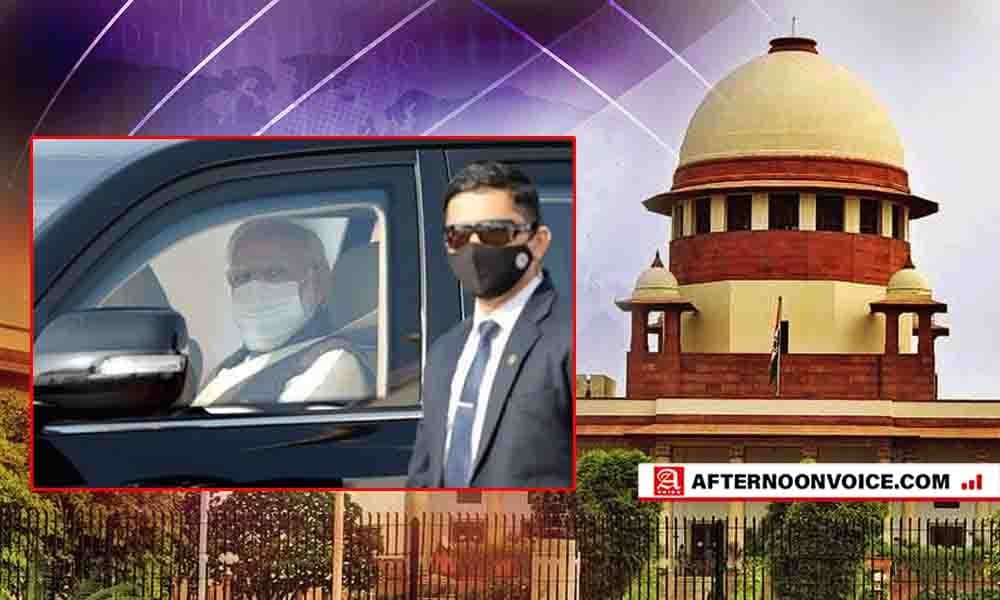
PM Modi security fiasco: SC asks for travel records to be preserved 19
The Punjab and Haryana High Court’s Registrar General has been asked to “keep all records in his safe custody” and the Punjab Police, the Special Protection Group (SPG) and other Centre and state agencies are to “cooperate and provide necessary assistance” to him, the Supreme Court said.
On a security breach that left Prime Minister Narendra Modi stuck on a highway in Punjab for 15 minutes on Wednesday, the Supreme Court today directed that his travel records be preserved.
A bench headed by Chief Justice NV Ramana also directed that the separate investigations ordered by the Punjab government and the Centre be paused till Monday. The security lapse is a “rarest of the rare” case that could cause potential international embarrassment, the Centre told the Supreme Court, backing a petition calling for a probe by the National Investigation Agency (NIA).
“The incident created a very serious situation for the PM’s security,” Solicitor General Tushar Mehta said, urging the Supreme Court to call for records related to PM Modi’s visit and security in Punjab on Wednesday. In the middle of an intense campaign for the approaching Punjab election, allegations have been flying between the Centre and the state over the incident that took place when PM Modi visited Bathinda for events that included a rally at Ferozepur.
When bad weather prevented PM Modi from flying to the rally site by helicopter, his convoy took off by road for a two-hour journey. Around 10 km short of the rally venue, the PM’s convoy was stranded on a flyover because of protesting farmers. After waiting for 20 minutes, PM Modi turned back and left, scraping his programmes.
“Both the Punjab government and the police were responsible for the security lapse…There’s also the possibility of cross border terrorism. This is something which ought to have been avoided, it’s a case of potential international embarrassment,” Mehta said.
The Punjab government countered that it is not taking the case lightly. “We have formed a committee on the same day. Even the Centre has formed a committee. We are open… any person can be appointed to investigate this matter,” said the state’s lawyer.
“Our Chief Minister has said the PM is our PM too. We also want it to be investigated. Whatever the court thinks fit may be done.”