RCB and Event Firm Officials Arrested After Deadly Bengaluru Stampede Sparks Public Outrage 2
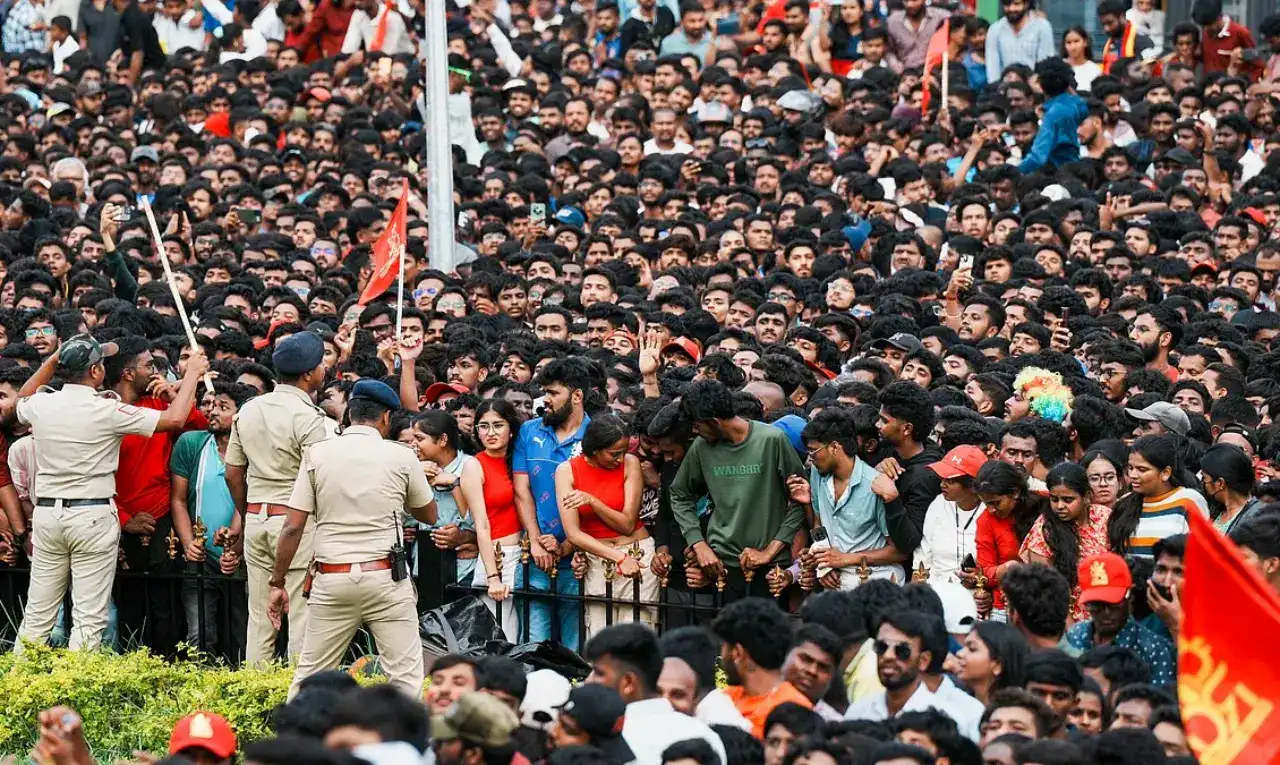
In a shocking turn of events following the deadly stampede outside Bengaluru’s Chinnaswamy Stadium, police have taken senior officials from Royal Challengers Bengaluru (RCB) and the event management firm DNA Entertainment Pvt Ltd into custody. The tragedy claimed 11 lives and left over 50 injured, igniting a firestorm of criticism over mismanagement and negligence.
Among those being questioned are Nikhil Sosale, Head of Marketing and Revenue at RCB, along with Sunil Mathew and Kiran Kumar from DNA Entertainment. Police sources confirmed the detentions on Friday, as pressure mounts to hold those responsible accountable.
The arrests come in the wake of a strong directive from Karnataka Chief Minister Siddaramaiah, who on Thursday instructed the state’s Director General of Police (DGP) and Inspector General of Police (IGP) to immediately arrest representatives of RCB, DNA Entertainment, and the Karnataka State Cricket Association (KSCA). An FIR has already been registered in connection with the incident.
Siddaramaiah cited “irresponsibility” and “gross carelessness” as the primary causes of the stampede, calling the deaths a preventable disaster. The chaos reportedly erupted due to overcrowding and poor crowd control measures during ticket distribution for an RCB match, exposing serious lapses in event coordination and safety protocols.
The incident has sparked public outrage, with many demanding stricter regulations for large-scale events and swift action against those found guilty of negligence. As investigations continue, the spotlight remains firmly on the role of the cricket franchise and its event partners in what is now being dubbed one of Bengaluru’s worst sports-related tragedies.
Politics in Silence: Selective Outrage, Strategic Distractions, and the Vanishing Accountability 4
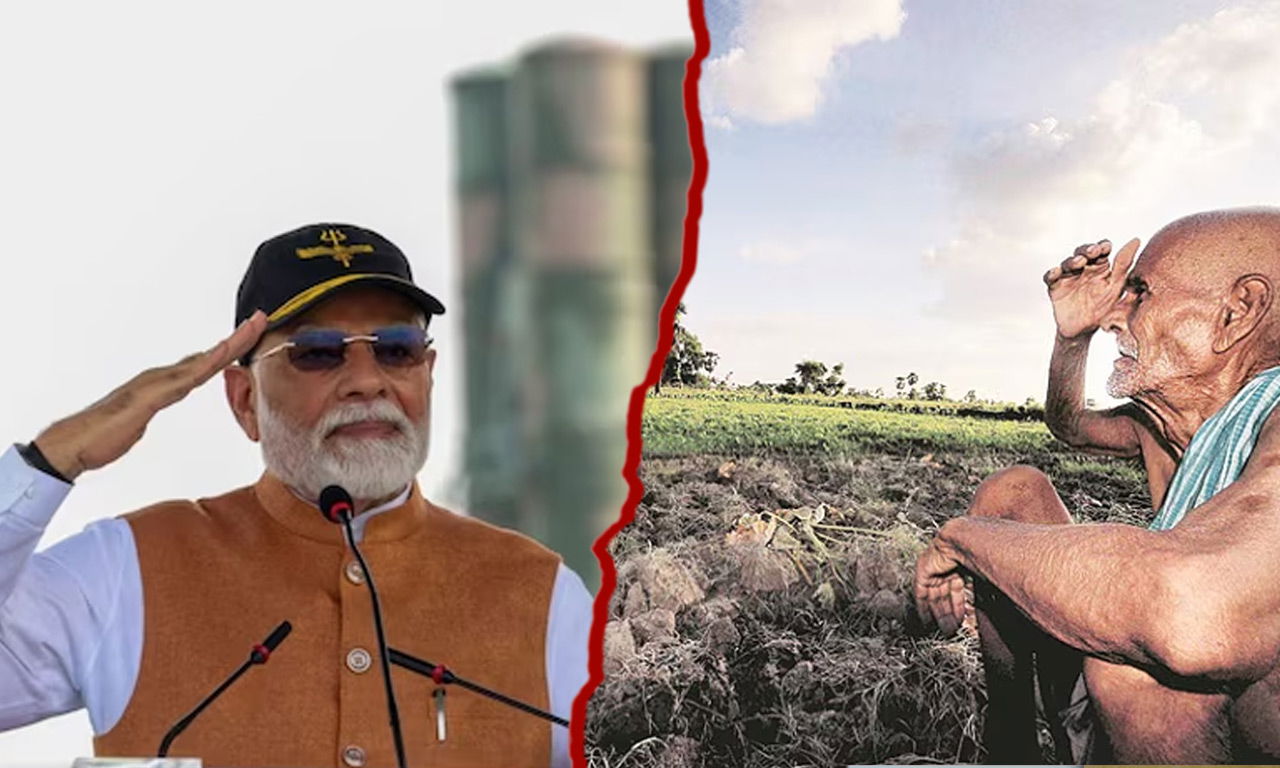
Indian politics today has turned into a carefully scripted performance, where real issues are muted and selective outrage is amplified. The recent developments both at the national and Maharashtra levels are perfect examples of how conveniently governments dodge questions, dilute dissent, and distract the public with narratives tailored for applause, not accountability.
Let’s start with the national scene. On June 3, leaders from 16 opposition parties wrote a letter to Prime Minister Narendra Modi demanding a special session of Parliament to discuss Operation Sindoor — India’s surgical airstrikes on terror camps in Pakistan, in response to the Pahalgam terror attack that claimed the lives of 26 civilians, most of whom were innocent tourists. This was a moment that called for transparency, discussion, and national unity. But what did the government do? It brushed off the demand and instead casually announced the monsoon session from July 21 to August 12 — as if public discourse on national security could be postponed like a school function.
This will be the first Parliament session post-Operation Sindoor, but the government seems more interested in controlling the headlines than facing the questions. If the strikes were such a strong message to Pakistan, why not own it in Parliament? Why this silence? Why this reluctance to speak to the elected representatives of the people? Is nationalism now a one-way street—loud and proud on social media, but absent in democratic forums?
Switching over to Maharashtra — the local drama isn’t any less theatrical. The monsoon session of the state legislature is scheduled from June 27 to July 13, during which the Mahayuti government will present the budget. But let’s rewind a little—back in March, Deputy CM Ajit Pawar already unveiled a grand budget for 2025-26, painting Maharashtra as the golden land of opportunity. At the World Economic Forum in Davos, MoUs worth ₹15.72 lakh crore were signed, promising a staggering 16 lakh new jobs. On paper, it sounds like a dream. On ground, it feels like déjà vu.
Every year, we hear about these astronomical figures, foreign investments, and lakhs of new jobs—but unemployment remains rampant, farmer suicides continue unabated, and rural infrastructure crumbles. Budget allocations were announced generously: ₹9,710 crore for Agriculture, ₹16,456 crore for Water Resources, and so on. But ask the common man in drought-hit Marathwada or Vidarbha if anything’s changed. They’ll tell you what budgets don’t show—empty promises and dry borewells.
What’s worse? Expectations from this session, like the proposed hike in monthly grants to women from ₹1,500 to ₹2,100, didn’t materialize either. For a government that claims to be committed to women’s empowerment, that’s a pretty underwhelming letdown.
Meanwhile, the politics of caste and provocation continues to brew. In Pune, a 60-year-old man scribbled something suspicious on a Shiv Srushti board. He was confronted, handed over to the police, and later identified as a known activist of the Andhashraddha Nirmulan Samiti, reportedly related to secularist Atul Kulkarni. The man, a Christian convert, had slogans written on his car and was recording the entire act with his wife. Soon after, caste-based groups erupted in outrage online, not for justice, but to milk the man’s surname and launch vicious attacks on the state government—especially targeting Devendra Fadnavis. It was a classic case of identity politics over truth. Fortunately, it was contained by alert citizens, but the damage was already done.
Now, here’s the big question to BJP — why the selective silence? Why ignore a legitimate demand to discuss India’s anti-terror operation in Parliament? You thump your chest over patriotism, but refuse to face questions from the same Parliament that represents the people. When will patriotism stop being performative and start being accountable?
And to Mahayuti in Maharashtra — when will grand budget speeches translate into ground realities? When will governance outshine gimmicks? When will promises stop evaporating post-elections?
From Delhi to Mumbai, one thing is clear — governments have mastered the art of selective responses. They react swiftly to criticism from opposition-ruled states but go into silent mode when it comes to their own backyard. Nationalism is sold like a product. Investment is packaged like a festival. And the Constitution? It’s conveniently invoked when needed and ignored when questioned.
The Indian voter, however, is no longer asleep. People are watching. They’re listening. And they’re tired of being taken for granted.
It’s time the governments of the day realize — the public doesn’t want propaganda. They want answers. Not optics, but outcomes. Not slogans, but sincerity.
And most importantly — they want democracy, not drama.
NIA Cracks Down on Terror Network: Massive Raids Across Jammu & Kashmir Target OGWs 6
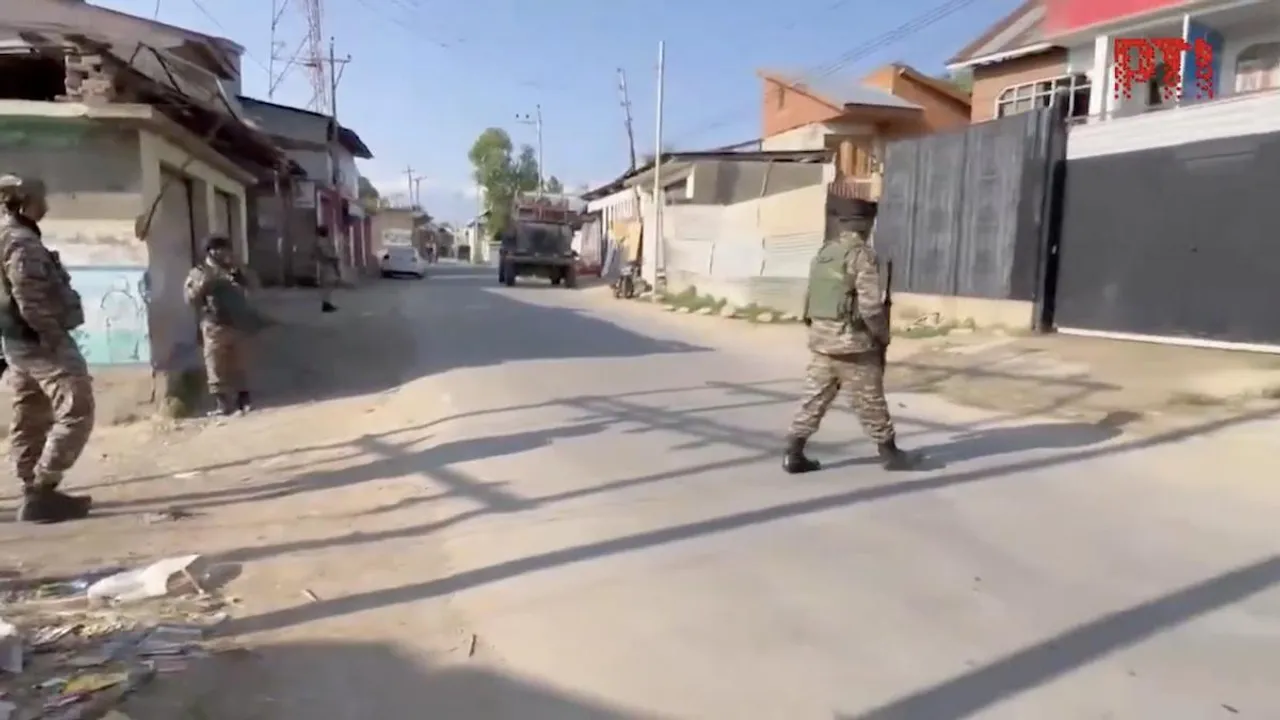
In a major counterterrorism operation, the National Investigation Agency (NIA) on Thursday launched extensive raids at multiple locations across Jammu and Kashmir, targeting suspected overground workers (OGWs) linked to terrorist outfits. The coordinated searches were part of an ongoing investigation into a terror conspiracy case, officials confirmed.
The high-intensity raids were carried out across the districts of Pulwama, Kulgam, Shopian, Baramulla, and Kupwara, regions often flagged for heightened militant activity. According to NIA sources, the crackdown is aimed at dismantling the support networks that aid and abet terrorism in the Union Territory.
While the agency has yet to confirm the number of detentions or seizures, officials said the operation was based on specific intelligence inputs regarding individuals providing logistical, financial, and ground-level support to banned terror organisations operating in the region. The raids are seen as part of a broader push to sever the supply lines that enable recruitment, radicalisation, and the execution of terror plots.
This operation marks the latest in a series of aggressive actions taken by the NIA to neutralise the influence and reach of militant groups in Kashmir, especially those working through civilian fronts under the radar.
Trump's New Travel Ban Sparks Global Uproar: 12 Nations Barred, 7 Face Partial Restrictions 8
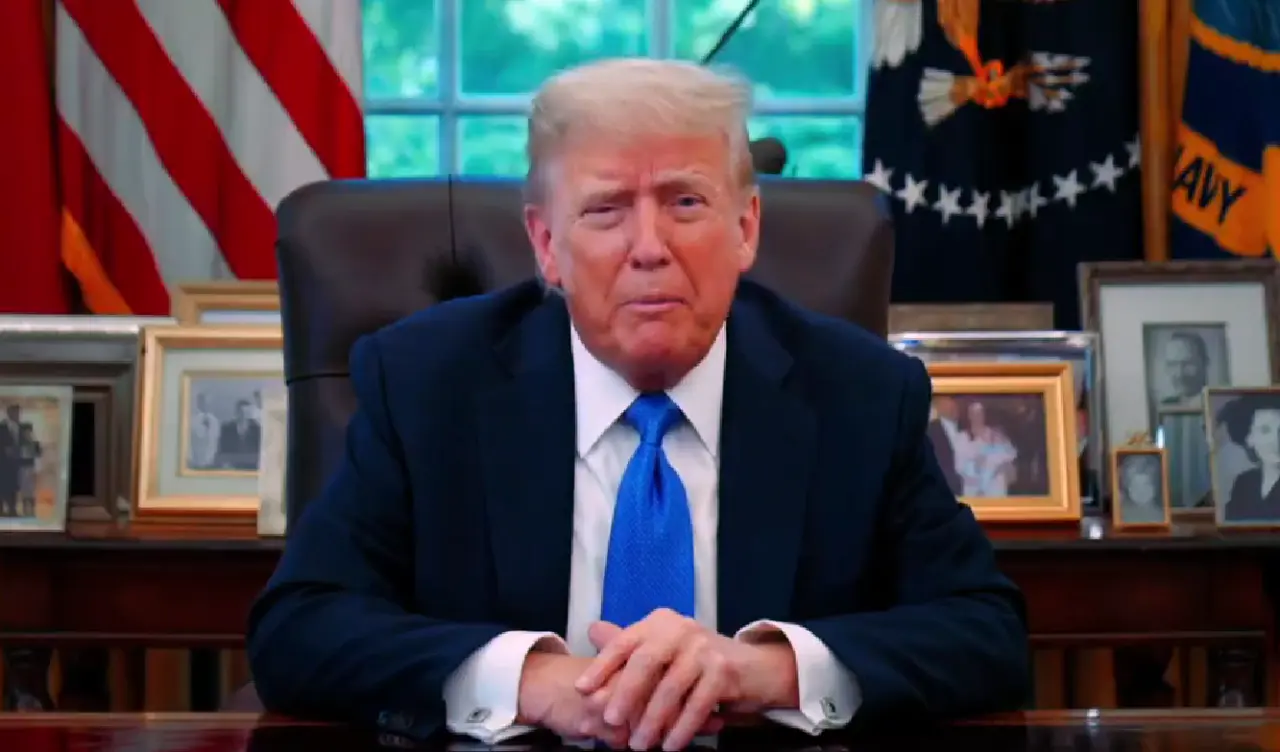
In a sweeping move reigniting global debate, US President Donald Trump has signed a proclamation barring the entry of nationals from 12 countries, citing threats to national security and public safety. The countries named in the ban include Afghanistan, Myanmar, Chad, the Republic of the Congo, Equatorial Guinea, Eritrea, Haiti, Iran, Libya, Somalia, Sudan, and Yemen. The White House stated the ban is part of a broader effort to protect American citizens from terrorism and hostile foreign elements.
Additionally, Trump has imposed partial entry restrictions on citizens from seven other countries—Burundi, Cuba, Laos, Sierra Leone, Togo, Turkmenistan, and Venezuela—distinguishing between immigrant and nonimmigrant visa categories. The executive order notes that both types of visas will be subject to scrutiny, albeit with differing implications due to the permanence of immigrant status.
"We cannot have open migration from any country where we cannot safely and reliably vet and screen… That is why today I am signing a new executive order placing travel restrictions on countries including Yemen, Somalia, Haiti, Libya, and numerous others." –President Trump pic.twitter.com/ER7nGM4TO2
Referencing his previous term, Trump said the earlier restrictions had successfully kept security threats at bay and had been upheld by the Supreme Court. “It is the policy of the United States to protect its citizens from aliens who intend to commit terrorist attacks, threaten our national security, or exploit our immigration system,” Trump stated in Executive Order 14161 signed on January 20, 2025.
The order underscores that stricter vetting is necessary, especially from countries that lack credible identity management or do not cooperate with the U.S. on security information. Trump warned that admitting individuals from such nations poses unacceptable risks, especially when lawful permanent residents—unlike nonimmigrants—are harder to deport once security concerns arise.
The proclamation further elaborates on each country’s inclusion. Afghanistan, for instance, is under Taliban control and lacks a competent authority to verify documentation. Myanmar’s high overstay rates for B1/B2 and student visas, as well as its history of non-cooperation in repatriating deportees, were cited as major concerns.
Critics have already begun to voice concern over the sweeping nature of the order, pointing out that the move revives one of Trump’s most controversial immigration policies during his earlier presidency. Nonetheless, the administration defends the decision as a necessary step to compel foreign cooperation, enhance national security protocols, and safeguard American lives.
As global reactions pour in, the policy is expected to draw legal scrutiny and potentially face diplomatic pushback from the affected countries and human rights groups.
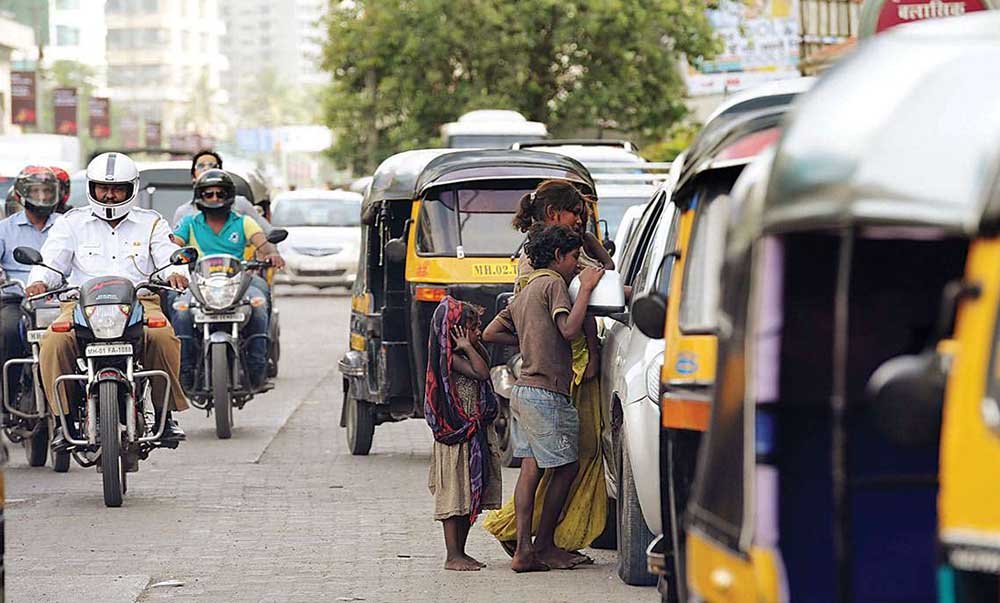
In a staggering case of delayed justice, Maharashtra’s state government has finally increased the wages paid to beggars in state-run rehabilitation homes — from a shocking ₹5 per month to ₹40 per day. This is the first revision in 61 years, highlighting the long-standing neglect of the destitute in the state’s institutional care system.
The paltry ₹5 monthly wage, fixed back in 1964 under the Mumbai Prohibition of Begging Act, 1959, remained unchanged for decades. According to the law, physically fit beggars housed in these homes are required to work eight hours a day as part of their rehabilitation process. However, the outdated compensation had made the entire initiative appear more punitive than reformative.
The recent decision by the state cabinet, taken in late April, comes as a desperate attempt to inject purpose and dignity into a system that has clearly failed. Despite a total capacity of over 4,000 across 14 such beggars’ homes, only 350 individuals currently reside in them. The Chembur men’s facility, which can house 850, holds just 86. Its adjacent women’s home has 36 residents against a 550-person capacity. Similar numbers are reflected across facilities in Ahilyanagar, Satara, Solapur, and Nagpur.
A senior government official admitted that the unchanged wages were an insult to the idea of rehabilitation. “The idea was to train beggars in skills to earn a livelihood after their release. But with a wage like ₹5 a month, it’s no wonder the homes are nearly empty,” the official remarked.
The inmates are provided basic needs like shelter, clothing, and food, and are engaged in jobs like tailoring, farming, weaving, candle-making, carpentry, and rope production. The goal has always been to foster self-reliance, but the system’s failure to revise wages for over half a century undercut its own intention.
Despite the sparse population, these homes generate a modest annual revenue of ₹3–5 lakh through vocational and agricultural activities. Interestingly, police reportedly round up about 3,000 beggars annually, yet only a third are sent to these rehabilitation homes — pointing to deeper issues in enforcement and trust in the system.
While the new ₹40-per-day rate may offer a sliver of hope for both dignity and participation, critics argue that it’s far too little, far too late. The coming months will reveal whether this long-overdue reform can bring new life to a system many had already written off.
"My Soul Is With Bangalore": Virat Kohli Breaks Down After RCB's First-Ever IPL Triumph 11
In a night of tears, fireworks, and long-awaited glory, Royal Challengers Bangalore finally lifted their maiden IPL trophy—ending an 18-year drought—and no one wore the moment more emotionally than Virat Kohli. RCB edged past Punjab Kings by six runs in a gripping final, and as the last ball was bowled, Kohli dropped to his knees, eyes filled with tears, overwhelmed by a dream finally realized.
“This is right up there,” said Kohli, clutching the trophy. “I’ve given everything I had for the last 18 years. I’ve stayed loyal to this team, no matter what. I’ve had moments where I thought otherwise, but I stuck to this team. They stood behind me and I stood behind them. I always dreamt of winning it with them, and this is far more special than winning it with anyone else because my heart is with Bangalore, my soul is with Bangalore.”
The post-match celebrations were electric. Kohli was joined by RCB legends AB de Villiers and Chris Gayle on the podium, who together coined a new chant—turning the long-standing “Ee Sala Cup Namde” into a triumphant “Ee Sala Cup Namdu.” Bengaluru erupted in joy, with fireworks lighting up the skyline and fans taking to the streets in celebration.
Speaking to the media, Kohli added, “This win is as much for the fans as it is for the team. I’ve given this team my youth and my prime. Tried to win it every season, gave it everything. Never thought this day would come. What AB has done for the franchise is tremendous—I told him, ‘This is as much yours as it is ours.’ He deserves to be on this podium.”
Kohli’s emotional pledge to RCB fans captured hearts across the cricketing world. “Until my last IPL game, it’s RCB,” he declared. “God’s blessed me with perspective and talent. I just put my head down and worked as hard as I could.”
For a player who has carried the weight of expectations for nearly two decades, this moment was more than a victory—it was vindication, celebration, and closure.
Lee Jae-myung Rises from Political Chaos to South Korea's Presidency, Defeats "Martial Law Regime" 13
In a stunning political comeback, Democratic Party candidate Lee Jae-myung has been elected President of South Korea, defeating conservative rival Kim Moon-soo just months after former President Yoon Suk Yeol was ousted over his failed attempt to impose martial law.
Lee’s victory marks a decisive shift in South Korean politics, especially after his narrow loss to Yoon in 2022. This time, he secured 49.42% of the vote—17.3 million ballots—triumphing over Kim’s 41.15% and setting a new record for the highest number of votes in a South Korean presidential election. The controversial backdrop of Yoon’s impeachment and the martial law debacle, which triggered political unrest and economic uncertainty, significantly shaped the electorate’s mood.
Addressing a jubilant crowd at Seoul’s Yeouido, Lee vowed to end authoritarian tendencies, calling Yoon’s actions an “insurrection.” He promised to restore democratic values, revive the economy, and prioritize the people’s welfare. “I will create a world where democracy is respected, and the sovereign people live with dignity,” Lee declared.
Kim Moon-soo conceded gracefully, stating, “I humbly accept the people’s choice,” while acknowledging the public’s desire for change. The People Power Party, however, expressed shock at the margin of defeat, with Rep. Na Kyung-won calling the results “a disappointment and a shock.”
The election, held six months after Yoon’s martial law move, witnessed a robust turnout of 79.4%—the highest since 1997—demonstrating heightened civic engagement. Early voting also saw a strong showing with 34.74% of registered voters casting ballots ahead of election day.
Due to the snap nature of the election, Lee assumed office immediately without a transition period. His inauguration is expected to be held later in the day at the National Assembly.
A total of five candidates contested the presidency, though only Lee and Kim dominated the race. Pre-election polls had consistently put Lee ahead by roughly 10 percentage points, with Kim trailing despite highlighting Lee’s legal troubles and combative political style.
Both major contenders emphasized economic growth, particularly through artificial intelligence. Lee promised pragmatic diplomacy in an increasingly volatile global landscape, while Kim focused on countering North Korea’s nuclear threat. Interestingly, both supported constitutional reform to move away from the single five-year presidential term, although they differed on timelines and implementation.
Lee Jae-myung’s win is being hailed by supporters as a democratic reset, following months of national tension under Yoon’s crisis-laden rule. As the country attempts to turn the page on its most turbulent political chapter in recent memory, all eyes are now on how Lee will navigate the fractured landscape he inherits.
Opposition Corners PM Modi: Demands Special Parliament Session on Pahalgam Terror Attack 15
In a bold political move, 16 opposition parties have united to demand a special session of Parliament to discuss Operation Sindoor and the recent terror attack in Pahalgam. The demand was formally made through a joint letter addressed to Prime Minister Narendra Modi following a high-level INDIA bloc meeting held in New Delhi on Tuesday.
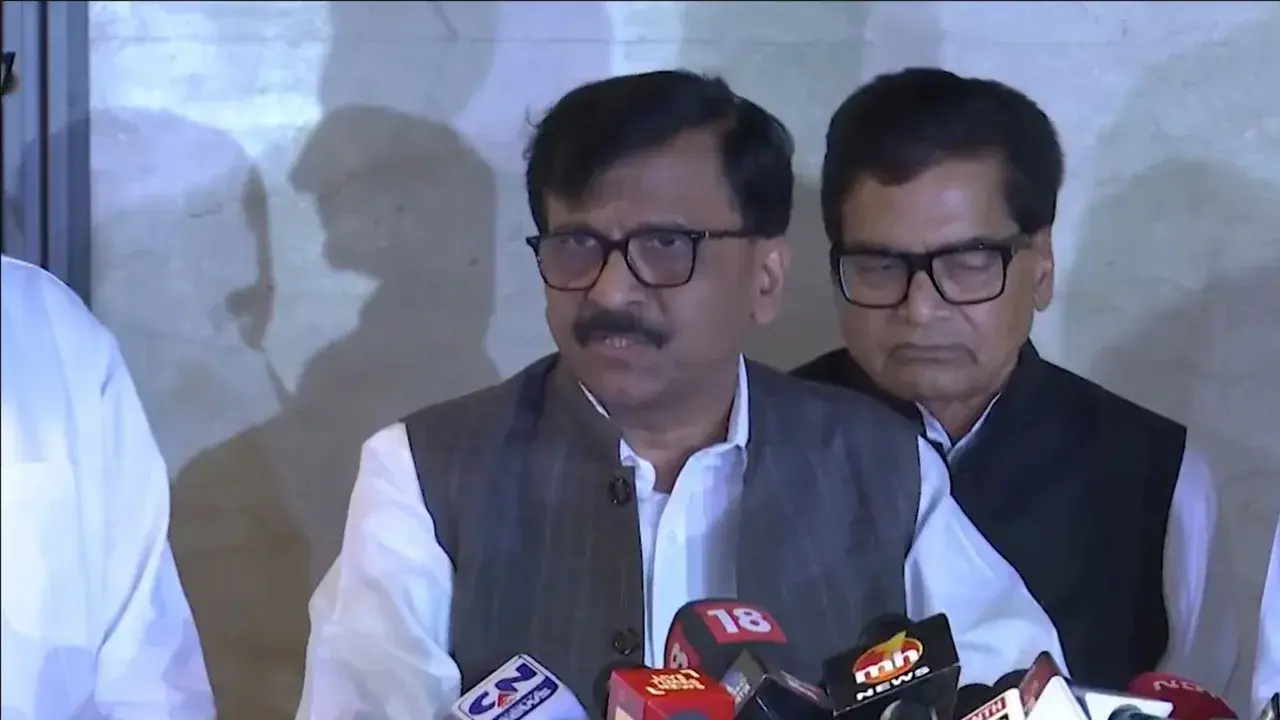
Senior leaders from the Congress, Trinamool Congress, Rashtriya Janata Dal, Samajwadi Party, and Shiv Sena (UBT) were present at the meeting. Among the signatories of the letter are Congress’ Jairam Ramesh and Deependra Hooda, TMC’s Derek O’Brien, SP’s Ramgopal Yadav, RJD’s Manoj Jha, and Shiv Sena (UBT)’s Sanjay Raut. While the DMK backed the letter, it could not attend due to Karunanidhi’s birth anniversary celebrations.
Other signatories include the National Conference, CPI(M), IUML, CPI, Revolutionary Socialist Party (RSP), Viduthalai Chiruthaigal Katchi (VCK), Kerala Congress, MDMK, and CPI(ML) Liberation. The Aam Aadmi Party (AAP) did not attend but announced it would send its own letter to the prime minister reiterating the same demand. Notably, the Nationalist Congress Party (Sharad Pawar faction) has distanced itself from the demand.
The push for a special session intensified after the deadly Pahalgam terror attack. The opposition had also raised this issue during an earlier all-party meeting where Operation Sindoor was discussed. Trinamool Congress has suggested that the session take place in June, once India’s multi-party delegations return from their diplomatic missions abroad aimed at unifying the global stance against terrorism.
With pressure mounting and political lines drawn, the ball is now in the Prime Minister’s court.
Helicopters Airlift 34 from Landslide-Hit Sikkim as Army Camp Tragedy Unfolds 17
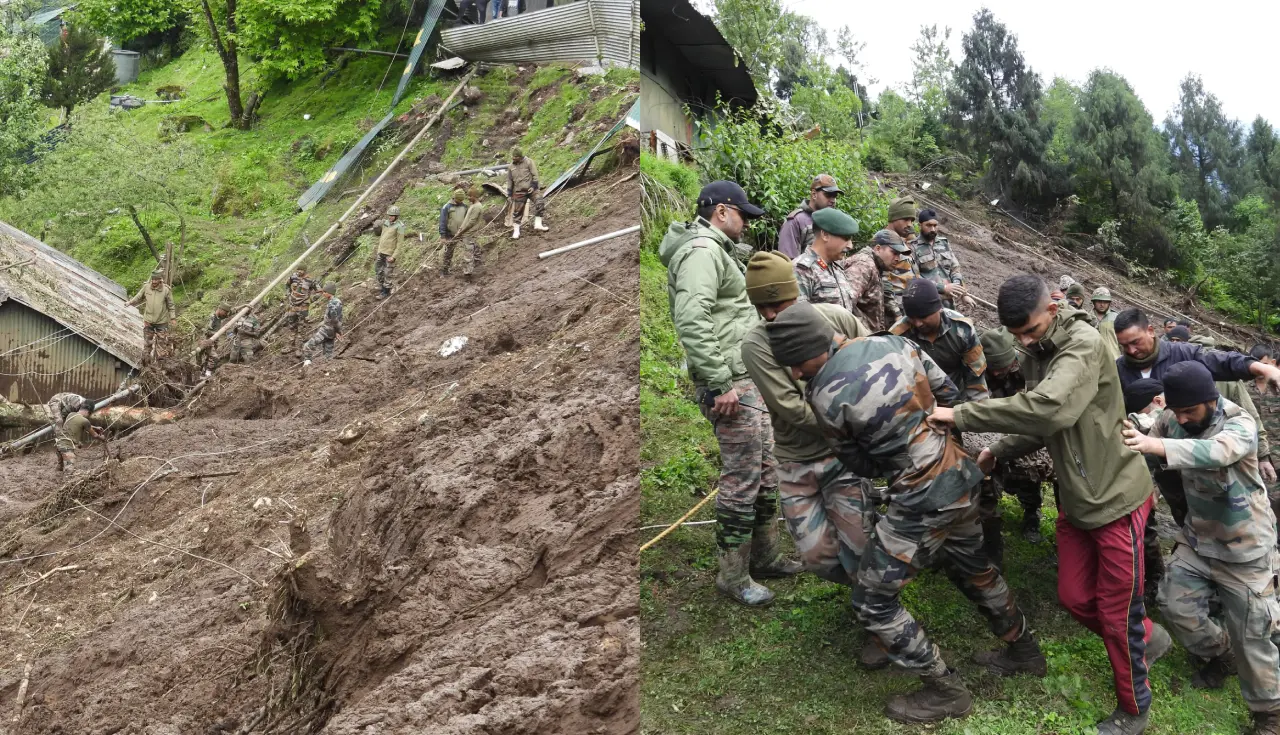
Thirty-four people were airlifted from the landslide-hit region of Chhaten in North Sikkim on Tuesday by two MI-17 V5 helicopters, officials confirmed. The evacuees included injured army personnel, their family members, and stranded tourists, all of whom were safely transported to Pakyong Airport despite ongoing challenging weather.
This rescue operation follows a catastrophic landslide that struck an army camp near Lachen in Mangan district at around 7 PM on Sunday. Triggered by relentless rainfall, the landslide claimed the lives of three army personnel—Havaldar Lakhwinder Singh, Lance Naik Munish Thakur, and porter Abhishek Lakhada. Their bodies have been recovered, while six other soldiers remain missing and four more sustained minor injuries.
Earlier in the day, 23 personnel from the National Disaster Response Force (NDRF) were deployed by air to assist in search, rescue, and establishing temporary communication links. Authorities are now exploring alternate foot-access routes and evaluating the feasibility of further helicopter operations based on weather conditions.
As efforts continue, officials warn of ongoing instability in the region due to persistent rain, while families of missing soldiers and stranded civilians await further updates with hope and concern.
Bakrid Ban on Public Animal Sacrifice in Sambhal: DM Warns of Strict Action, 950 Under Watch 19
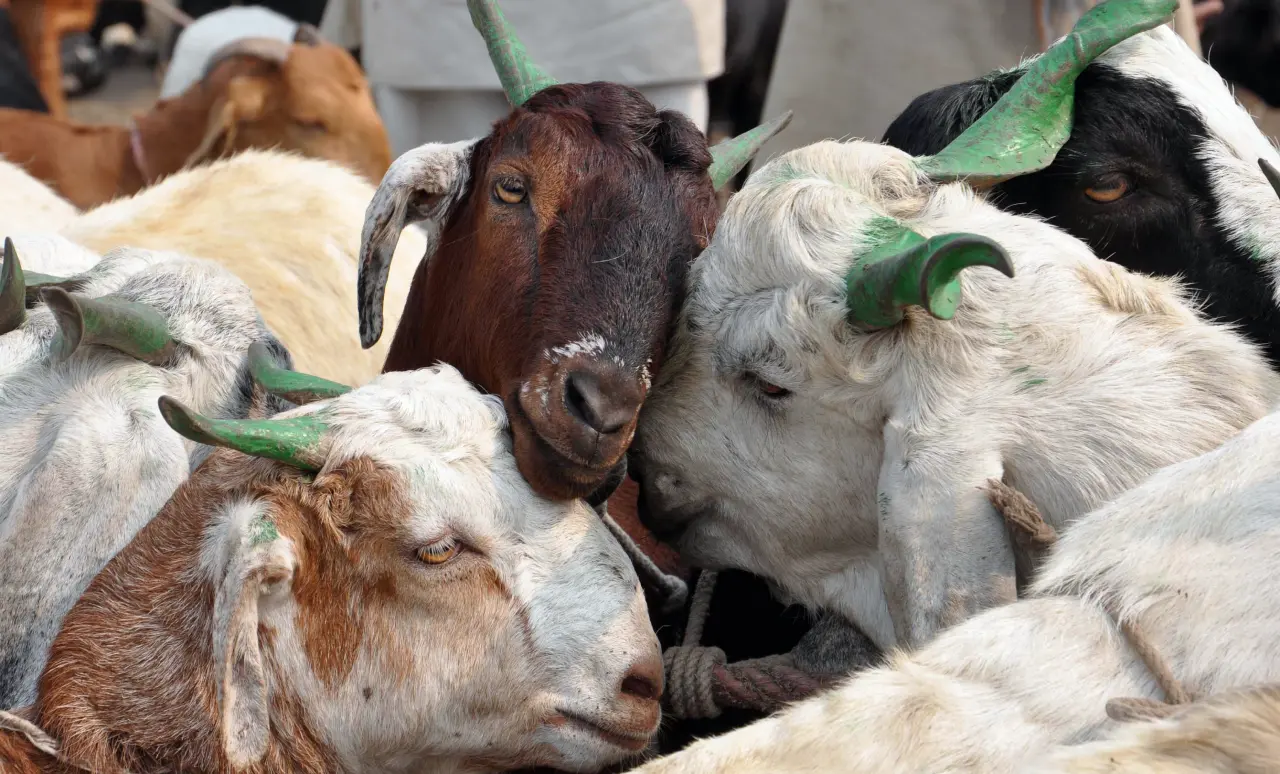
Sambhal District Magistrate Rajender Pensiya announced on Tuesday that sacrificial slaughter in public places will not be allowed during Bakrid, warning that any attempt to disturb public order will be met with strict legal action. Speaking at a press conference following a peace committee meeting with local religious leaders, the DM clarified that sacrifices would be permitted only at 19 designated sites and not in open or public areas.
Pensiya emphasized that the slaughter of prohibited animals has been banned for years and no violations have occurred in the past five years. “We expect Eid prayers to be conducted peacefully. All arrangements for water, electricity, and sanitation are being ensured,” he added.
Religious leaders have been advised to complete all sacrificial rituals between June 7 and June 9, no later than 3 PM. As a security precaution, preventive measures have been placed against around 900 to 950 individuals with past records or potential to disrupt peace.
The DM also warned against uploading videos of animal sacrifice on social media, stating that such content could provoke unrest and will be dealt with sternly. With tight monitoring and preemptive policing, the district administration aims to ensure a peaceful and orderly Bakrid celebration.