Trump's Tariff Tactics: 15% Duties Planned Under Rare Trade Law as Court Blocks Emergency Powers 2
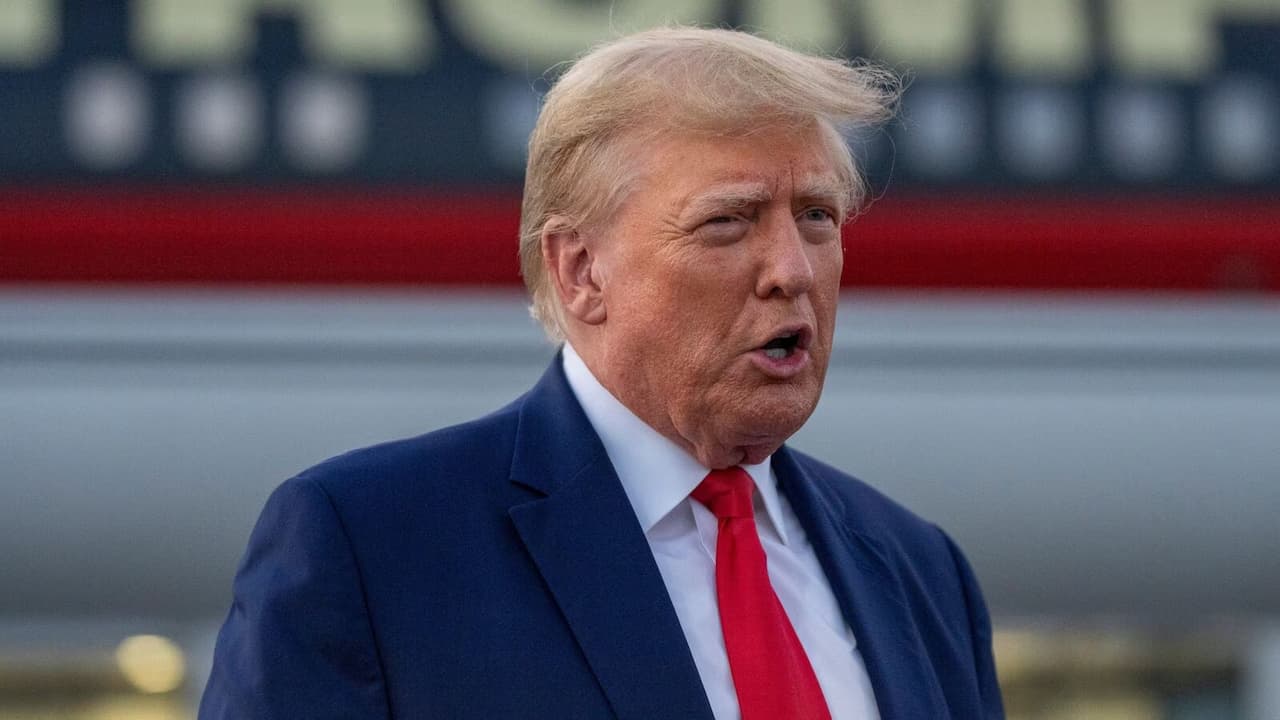
The Trump administration is exploring a new legal path to impose tariffs, following a court ruling that struck down its previous use of emergency powers. Under the revised strategy, the administration is considering invoking the Trade Act of 1974, specifically Section 122—a provision never used before—to impose a 15% tariff for a temporary period of 150 days. This provision allows the president to act swiftly to address urgent trade imbalances.
Once the 150-day window expires, the plan would transition to Section 301 of the same act, a longer-term and more legally resilient framework targeting unfair trade practices by foreign nations. While no official announcement has been made, White House Press Secretary Karoline Leavitt confirmed that several legal options are under review, though she declined to elaborate.
Top Trump adviser Peter Navarro endorsed the approach and hinted that even older laws such as the Smoot-Hawley Tariff Act of 1930 or national security-linked trade powers might be considered. Legal experts suggest that this revised plan is significantly more durable than the earlier tariffs, which were grounded in the International Emergency Economic Powers Act (IEEPA). A federal court ruled on May 28 that IEEPA cannot be used for broad tariff powers without Congressional approval.
Despite the ruling, a federal appeals court allowed the existing tariffs to remain in effect while the legal challenge continues. This temporary reprieve gives the Trump administration time to implement its fallback strategy.
Sources say the new approach is designed to maintain U.S. leverage in international trade negotiations, particularly with the European Union. Some analysts believe it could even help facilitate a stronger trade agreement in the long run, as the administration pivots to firmer legal ground.
'Trap the Next One': SC Slams False Rape Allegation, Quashes FIR as 'Bundle of Lies' 4
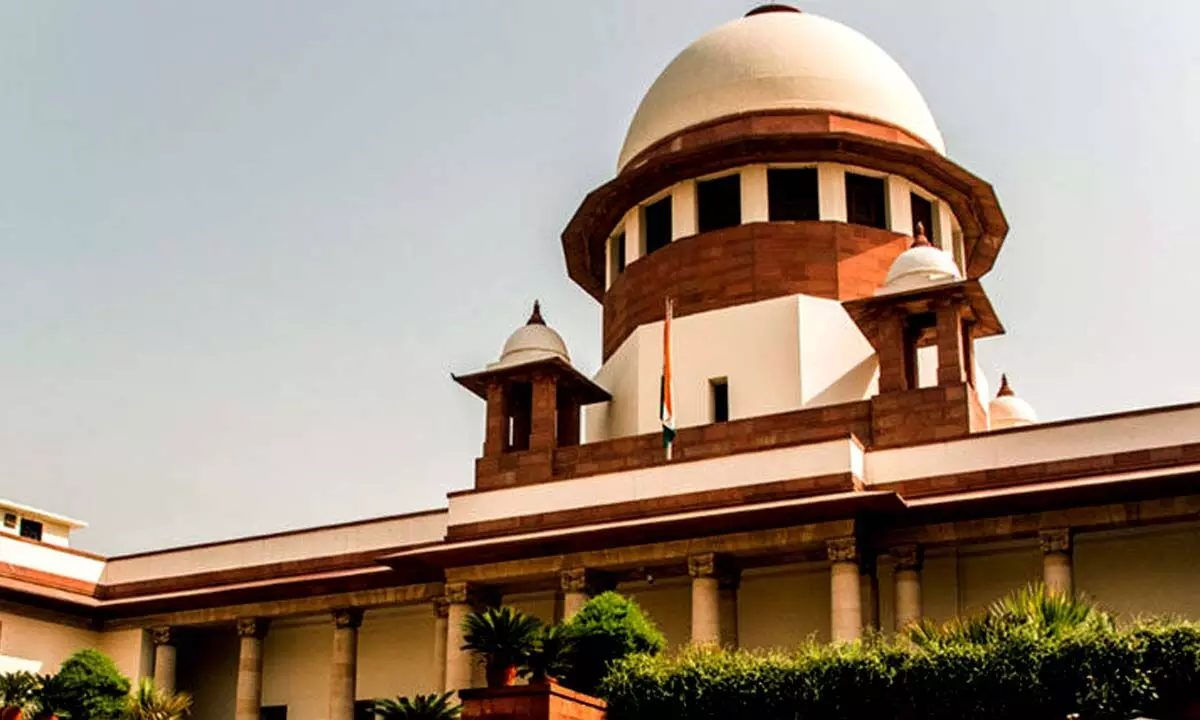
The Supreme Court on Thursday dismissed an FIR filed against a man accused of raping a woman under the pretext of marriage and violating the SC/ST Act, calling the complaint a “bundle of lies” and a clear abuse of the legal process. A bench comprising Justices Vikram Nath and Sandeep Mehta observed that the accusations were filled with contradictions, manipulation, and lacked any credible evidence.
In its scathing order, the apex court noted that the woman, a 30-year-old highly educated individual, had initially alleged only a single incident in her 2021 FIR. However, in a subsequent 2022 FIR, she referenced 4-5 earlier incidents—some predating the initial complaint—raising serious doubts about the credibility of her narrative. The court found it “inherently improbable” that such critical details would be omitted from the first FIR if they had truly occurred.
The man had approached the Supreme Court after the Telangana High Court refused to quash the FIR. During the proceedings, the apex court also discovered that the complainant had filed a similar complaint against an assistant professor at Osmania University, further undermining her credibility.
Most damning were the WhatsApp chats retrieved from the complainant’s phone. In them, she admitted to being manipulative, spoke of “trapping” a green card holder, and even confessed to using the accused. She mentioned her strategy of irritating her victims until they dumped her, allowing her to move on to the “next one.” These revelations, the court said, reflected a vindictive and obsessive behavioural pattern.
The bench further held that the accused was justified in backing out of the proposed marriage after learning about the woman’s aggressive and erratic behaviour. Even if he did retract a promise to marry, the court ruled it did not constitute rape or a violation under the SC/ST Act, as no evidence supported the claim that sexual relations occurred under a false promise of marriage.
Calling the case a “gross abuse of the process of court,” the top court quashed the FIR in its entirety, making a strong statement against the misuse of serious legal provisions for personal vendettas.
Mumbai Drowns in Chaos: Trains Hit, Roads Submerged as Torrential Rains Paralyse City 6
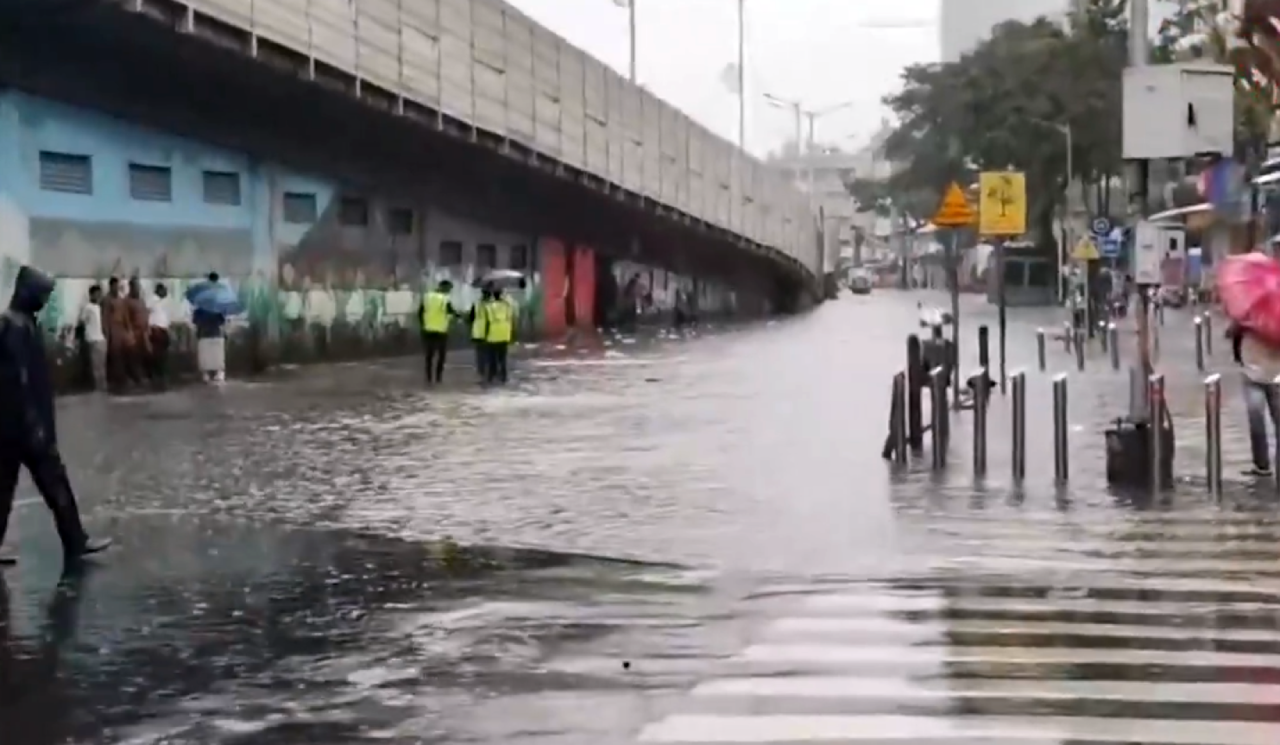
Mumbai witnessed severe disruption on Monday morning as heavy rains lashed the city, forcing Central Railway to suspend suburban train services between Vadala Road and Chhatrapati Shivaji Maharaj Terminus on the Harbour line from 10:25 am. Several low-lying areas experienced intense waterlogging, paralysing vehicular movement and leaving thousands of commuters stranded during rush hour.
According to the Brihanmumbai Municipal Corporation (BMC), Nariman Point Fire Station recorded the highest rainfall at 104 mm between 9 and 10 am, followed by A Ward Office (86 mm), Colaba pumping station (83 mm), and the Municipal Head Office (80 mm). Suburban regions reported relatively less precipitation.
Train services on the Harbour line were suspended due to waterlogged tracks at Masjid station, while some technical issues such as signal and track point failures hit the fast corridor of the main line. Chief Public Relations Officer of Central Railway, Swapnil Nila, said that operations in the CSMT yard were severely disrupted due to flooding, impacting train movements on multiple platforms.
Several Central Railway stations including Masjid, Byculla, Dadar, Matunga, and Badlapur saw inundated tracks, leading to delays and commuter frustration. Though Western Railway reported normal operations, passengers complained of minor delays.
Major roads in Mumbai turned into water canals, with King’s Circle, Mantralaya, Dadar TT East, Kalachowki, Wadala, Hindmata, Kemps Corner, Churchgate, and Chinchpokli among the worst-affected. The civic-run KEM Hospital in Parel was also hit by waterlogging. The Brihanmumbai Electric Supply and Transport (BEST) diverted buses on over a dozen routes due to flooding in several areas.
The India Meteorological Department (IMD) had earlier issued a warning predicting thunderstorms with lightning, intense rainfall, and gusty winds reaching 50-60 kmph. The downpour’s intensity decreased after 10 am but the skies remained cloud-covered throughout the day.
Civic officials noted a high tide of 4.75 metres was expected at 11:24 am, with another at 4.17 metres due around 11:09 am. Low tides of 1.63 metres and 0.04 metres were forecast for the evening and early Tuesday, respectively. The IMD has predicted light to moderate rain in Mumbai for the next 24 hours, keeping the city on alert for further disruption.
Just 3 Nights of Poor Sleep Can Damage Your Heart, Warn Scientists in Alarming Study 8
In a striking new study, scientists from Uppsala University in Sweden have found that just three consecutive nights of poor sleep — as little as four hours per night — can trigger biological changes in the body that significantly increase the risk of heart disease. The findings shine a new spotlight on how quickly the body responds to sleep deprivation, even in healthy young adults.
The researchers monitored 16 young men under controlled lab conditions, ensuring uniformity in meals, activity, and light exposure. Each participant experienced two routines: three nights of normal sleep (8.5 hours) and three nights of restricted sleep (4.25 hours). After each phase, blood samples were taken before and after a brief high-intensity cycling session.
Their analysis of nearly 90 blood proteins revealed that sleep restriction caused a measurable rise in inflammatory markers known to damage blood vessels and increase the risk of coronary artery disease, heart failure, and atrial fibrillation. These molecules are typically elevated when the body is under stress or fighting illness, but their persistent presence can lead to long-term cardiovascular harm.
Normally, exercise boosts beneficial proteins such as interleukin-6 and BDNF (brain-derived neurotrophic factor), which support heart and brain health. However, those responses were significantly blunted after nights of poor sleep, further highlighting the detrimental impact of sleep loss.
Even more concerning, these effects were observed in young, otherwise healthy adults, underscoring that sleep debt doesn’t need to be long-term to be dangerous. With around 25% of adults working in shifts that disrupt sleep cycles, the implications are far-reaching.
The study also revealed that the timing of blood sampling played a role—protein levels shifted between morning and evening, with greater variation during sleep restriction. This suggests that sleep affects not only the presence of inflammatory markers but also the timing of their expression.
While society often glorifies sacrificing sleep for productivity or entertainment, this research is a sobering reminder that the body silently tallies the cost—through chemical shifts that may go unnoticed until they manifest as serious disease.
"Fadnavis Pushed for My Induction—Even in December": Chhagan Bhujbal Reveals BJP's Internal Tug-of-War 10
Senior NCP leader Chhagan Bhujbal has stirred political chatter with his revelation that Maharashtra Chief Minister Devendra Fadnavis was keen on inducting him into the cabinet during its first expansion in December 2024. Bhujbal, who was finally sworn in on May 20 this year, confirmed that both Prime Minister Narendra Modi and Union Home Minister Amit Shah were supportive of his induction at the time, but it didn’t materialize then due to internal dynamics.
Speaking to reporters at Nagpur airport, Bhujbal (77), a veteran OBC face in Maharashtra politics, said his return to the Mahayuti 2.0 government—after being sidelined post the BJP-led coalition’s landslide 2024 Assembly victory—was backed strongly by Fadnavis. “It’s true. Even during the first cabinet expansion, Fadnavis saheb had insisted on including me. PM Modi and Amit Shah also tried, but it didn’t happen then,” Bhujbal said.
The NCP stalwart dismissed speculations about BJP control over his appointment, clarifying, “I’m not a BJP minister, I’m an NCP minister. The NCP decides who becomes a minister, the CM only gives suggestions.”
His remarks come amid reported internal resistance within the NCP over his re-entry into the cabinet, especially with ongoing tensions over the OBC versus Maratha quota debate. Bhujbal, known for his firm opposition to including Marathas under the OBC reservation bracket, also reacted to activist Manoj Jarange’s announcement of a fresh protest in August. Without elaborating, he simply said, “We are also ready.”
Asked about who would be appointed guardian minister of Nashik—his stronghold—Bhujbal refrained from comment, signaling he wasn’t looking to escalate turf battles within the coalition. A multiple-term MLA from Yeola in Nashik district, Bhujbal’s cabinet role reasserts his political relevance in Maharashtra’s shifting alliance equations.
"Why Are Students Dying Only in Kota?": Supreme Court Slams Rajasthan Govt Over Suicide Surge 12
The Supreme Court on Friday strongly criticized the Rajasthan government over the alarming rise in student suicides in Kota, asking pointedly, “Why are these children dying by suicide—and why only in Kota?” A bench of Justices J B Pardiwala and R Mahadevan, hearing multiple cases including the deaths of a 22-year-old IIT Kharagpur student and a NEET aspirant in Kota, said the situation was “serious” and questioned the state’s apparent indifference.
The court was informed that 14 student suicides had already been reported from Kota in 2024 alone. When asked what the government was doing, the state’s counsel claimed a special investigation team (SIT) had been constituted to look into the cases. However, the bench was far from convinced, criticizing delays in registering FIRs and calling out a lack of urgency in responding to these deaths.
In the IIT Kharagpur case, the court noted a disturbing four-day delay in lodging the FIR, which was filed only on May 8 despite the suicide occurring on May 4. “Don’t take these things lightly. These are very serious,” Justice Pardiwala remarked, warning that the court could have initiated contempt proceedings against the police officer in charge.
Similarly, in the NEET aspirant’s case from Kota, the bench expressed dissatisfaction over the non-filing of an FIR and reminded the Rajasthan government that they were in contempt of the Supreme Court’s March 24 verdict. That ruling had called for the formation of a national task force to address the growing mental health crisis among students and directed police to file FIRs promptly in all such cases.
Despite claims from the state that an investigation is ongoing and the SIT is aware of the issue, the court found this insufficient. It emphasized that even though the NEET aspirant had been living with her parents and not in her institute’s accommodation, the police were still duty-bound to act immediately.
Summoning the police officer concerned in the Kota case to appear before the bench on July 14, the court made it clear: the authorities must explain their inaction, and investigations must move forward “in the right direction and expeditiously.”
'Maa, I Am Not a Thief, I Love Kurkure': 12-Year-Old's Heart-Wrenching Suicide Note Shocks Bengal 14
A heart-wrenching tragedy has emerged from West Bengal’s Paschim Medinipur district, where a 12-year-old boy allegedly died by suicide after being publicly humiliated over a packet of chips. Krishnendu Das, a class 7 student from Panskura, reportedly consumed pesticide after being accused of stealing a Kurkure packet and forced to do sit-ups in public by a local shopkeeper, who is also a civic volunteer.
According to the boy’s mother, Krishnendu had called out to the shopkeeper, Subhankar Dikshit, multiple times, saying, “Uncle, I will buy chips,” but received no response. Finding no one at the counter, he allegedly picked up a packet lying near the shop and left, intending to pay later. Soon after, the shopkeeper returned, confronted the boy, slapped him, and made him do sit-ups publicly, accusing him of theft.
The police said the mother was also summoned, and she too scolded and slapped Krishnendu at the scene. Despite his repeated pleas that he had not stolen but intended to pay, the boy was branded a liar.
Back home, Krishnendu locked himself in his room. Moments later, his mother and neighbours broke in to find him unconscious, frothing at the mouth with a half-empty bottle of pesticide beside him. He was rushed to Tamluk Hospital’s ICU but could not be saved.
A chilling suicide note, scribbled in Bengali, was found beside his body. It read: “Maa, I am not a thief. I did not steal. Uncle was not around as I waited. While returning, I saw a Kurkure packet lying on the road and picked it up. I love Kurkure. These are my final words before leaving. Please excuse me for this act.”
The shopkeeper, who initially denied any wrongdoing, has since gone missing as a crowd gathered in protest outside his shuttered shop. Police have launched an investigation into the incident, which has sparked outrage and raised disturbing questions about how society treats its children.
A straight and bold call for justice in the face of dowry-driven brutality
Vaishnavi Kasapate did not take her own life. She was pushed. Pushed by a system that still allows the ancient evil of dowry to thrive. Pushed by a society that looks away when a woman screams from within the four walls of her marital home. Pushed by a powerful family who saw her not as a daughter-in-law but as a financial deal that didn’t quite meet expectations.
She had a love marriage. She chose her partner, Shashank Hagwane—the son of NCP leader Rajendra Hagwane, a man with political clout and influence in Maharashtra’s Mulshi taluka. But her love was not enough to shield her from the toxic greed that soon engulfed her life. Her marriage was never fully accepted by her in-laws because they had hoped for a richer bride—one who could bring in more wealth, more dowry. Still, Vaishnavi’s family agreed to give in: 51 tolas of gold, silver utensils, and a Fortuner SUV. And still, they wanted more. Two crore rupees more—to buy land, to satisfy their endless appetite for wealth.
The harassment began. The pressure grew. Her husband, her mother-in-law, and her sister-in-law all reportedly played their parts in tormenting her. One day, it ended. Or rather, they ended it. Vaishnavi was found hanging on May 16 at her in-laws’ house in Pune. The family says it was suicide. But her father has filed an FIR, claiming it was murder, a premeditated act masked as suicide. Her body bore injury marks. No suicide note was found. The pain she carried inside her—hidden, silenced—was finally exposed only after her death.
Her husband Shashank, her mother-in-law Lata, and her sister-in-law Karishma were arrested. But her politically connected father-in-law Rajendra Hagwane and brother-in-law Sushil Hagwane are absconding. The police claim they are searching for them, but how long will it take? How long before power shields the guilty and justice fades into silence?
This is not an isolated case. This is not rare. It’s happening everywhere—in cities, in villages, in homes that look respectable on the outside but are soaked in cruelty inside. Let’s look at the numbers:
In 2022, nearly 6,400 women were killed in dowry-related deaths across India. That’s almost 18 women every single day. In 2020, over 10,000 cases were filed under the Dowry Prohibition Act. Yet, convictions remain painfully low. The legal process is slow, cumbersome, and often biased toward the powerful.
According to the National Commission for Women (NCW), in 2024, there were 25,743 complaints related to crimes against women. Out of these, 6,237 were related to domestic violence, while 4,383 were specifically about dowry harassment. There were 292 cases reported as dowry deaths. Imagine how many more went unreported, buried under shame, fear, or the influence of power.
Complaints about the right to live with dignity made up nearly 28% of total cases—because dignity is still a luxury denied to most women in their marital homes. Most of these complaints came from Uttar Pradesh (54%), followed by Delhi, Maharashtra, Bihar, Madhya Pradesh, and Haryana. The so-called “progressive” states are not immune either. The monster of dowry is alive, well-fed, and protected—by silence, by complicity, and by power.
And now, a politician’s family is under the scanner. The accused are being given VIP treatment at the police station. Why? Because justice bends when it meets influence? Because laws can be manipulated when the surname is big enough?
Let us be very clear—Vaishnavi did not die because of personal issues or mental health. She died because our society killed her: our culture of glorifying marriage while ignoring the abuse, our failure to enforce laws, and our willingness to stay silent.
This time, we won’t be silent. This is not just about one girl. This is about every girl who is forced to barter her freedom for acceptance. About every father who sells his dreams to fulfil dowry demands. About every mother who loses her daughter in the name of family honour.
We demand immediate arrest of all the accused, no bail, and no political protection. We demand a fast-track court, not another endless trial. We demand police accountability—no VIP treatment for murder accused. And most importantly, we demand that India finally treats dowry deaths as national emergencies, not private tragedies.
Justice for Vaishnavi is not just about punishing her killers. It is about sending a message—that daughters are not dowry. That marriage is not a licence for cruelty. And that no amount of power will shield murderers from the truth.
Let her death not be just another news report. Let it be a turning point. Let us raise our voices—louder than their silence. Let us demand justice—before another Vaishnavi is pushed to her death.
SC Slams ED for 'Crossing All Limits', Halts PMLA Probe in Tamil Nadu Liquor Scam 18
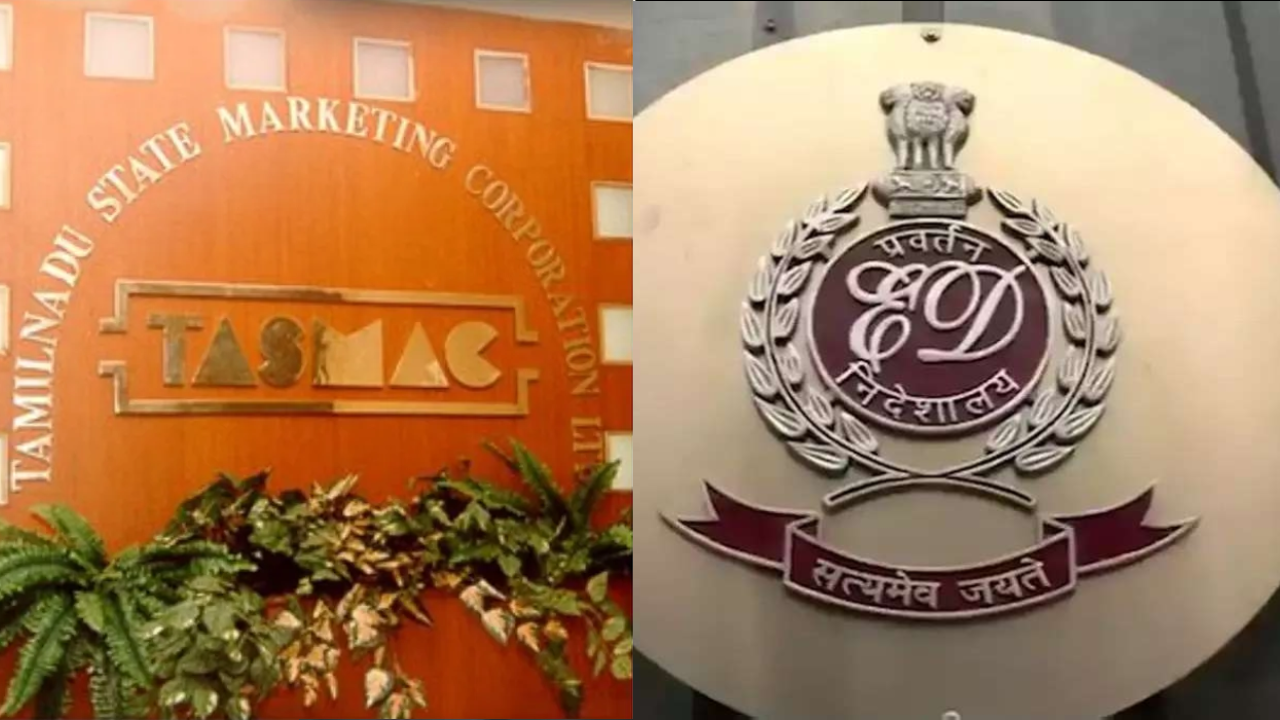
The Supreme Court on Thursday stayed the Enforcement Directorate’s money laundering investigation against Tamil Nadu’s state-run liquor retailer TASMAC, accusing the agency of “crossing all limits” and undermining the federal structure of governance. The sharp rebuke came from a bench led by Chief Justice B R Gavai and Justice Augustine George Masih while issuing notice to the ED on petitions filed by the Tamil Nadu government and TASMAC.
“Your ED is crossing all the limits,” the bench told Additional Solicitor General S V Raju, who appeared for the central agency. It added that the ED’s probe, launched under the Prevention of Money Laundering Act (PMLA) over alleged irregularities in granting wine shop licenses, “violates the federal concept” enshrined in the Constitution.
The central law officer tried to defend the investigation, claiming it involved corruption amounting to over ₹1,000 crore and that the agency was well within its jurisdiction. However, the bench remained unconvinced and pulled up the ED for raiding a state-run corporation. “How can you raid the state-run TASMAC?” it questioned.
Senior advocates Kapil Sibal and Amit Anand Tiwari, representing the Tamil Nadu government, told the court that the state had already registered over 40 FIRs related to liquor shop licensing since 2014. They argued that the ED’s sudden intervention through raids was an encroachment on the state’s jurisdiction.
The petitions challenged the Madras High Court’s April 23 order, which had allowed the ED to go ahead with its probe. The Supreme Court’s interim stay now puts a halt to the ED’s actions pending further hearings, setting the stage for a high-stakes federal-versus-central confrontation over investigative powers.
"Jailed for Ideology?" SC Grants Bail to Kerala PFI Leader in RSS Murder Case 20
The Supreme Court on Wednesday granted bail to Abdul Sathar, former secretary general of the Popular Front of India (PFI) in Kerala, who was arrested in connection with the 2022 murder of RSS leader Srinivasan in Palakkad. A bench comprising Justices Abhay S Oka and Ujjal Bhuyan observed that there was no direct role attributed to Sathar in the assassination, raising critical concerns over the broader implications of jailing individuals solely based on their ideological leanings.
“You cannot put someone in jail for their ideology. This is the trend we find—it is because they have adopted a particular ideology that they are put in jail,” the bench told the counsel representing the National Investigation Agency (NIA), which is probing the case.
Earlier, on June 25, 2024, the Kerala High Court had granted bail to 17 out of 26 PFI members accused of instigating communal violence across the state and other regions. Those granted bail were subjected to strict conditions, including mandatory sharing of their cellphone numbers and live GPS location with investigators.
Following the murder of RSS leader Srinivasan in 2022, the Centre alleged a larger conspiracy by PFI leaders with serious national and international implications. The NIA took over the case, filing a consolidated charge sheet in 2023, followed by two supplementary charge sheets.
With the Supreme Court’s decision to grant bail to Abdul Sathar, the case now highlights the growing judicial scrutiny over the thin line between ideology and actionable criminal intent, particularly in politically and communally sensitive investigations.