India's Farm Exports Poised to Thrive Despite US Tariffs—Experts See an Edge 2
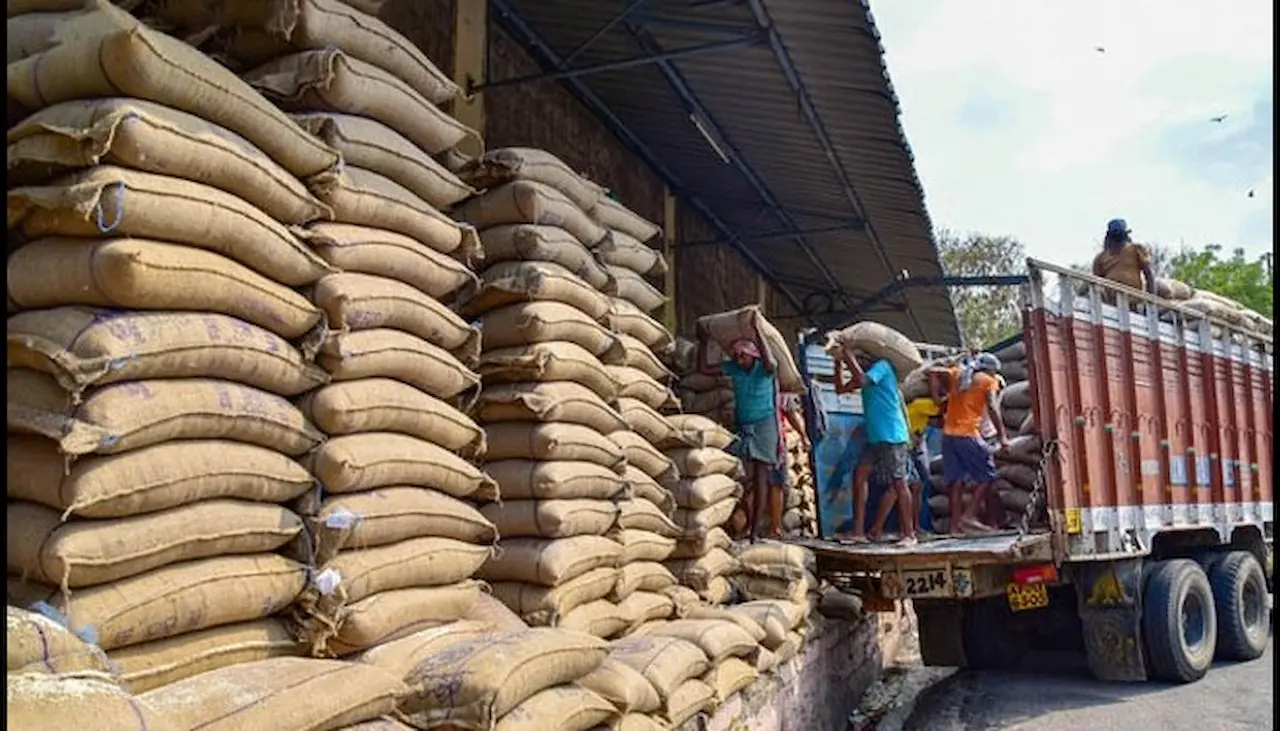
India’s agricultural exports to the United States may remain resilient—or even expand—despite new tariffs imposed by President Donald Trump, according to leading agricultural economist Ashok Gulati. Unlike some competing nations facing even steeper trade barriers, India’s exporters could find a relative advantage in the new tariff structure.
The 26% “discounted reciprocal tariff” on Indian goods is expected to have a limited impact on key agricultural exports like seafood and rice, compared to the significantly higher duties imposed on regional competitors, said Gulati, former chairman of the Commission for Agricultural Costs and Prices (CACP).
“We should not look at the tariff increase in absolute terms but in relation to our competitors,” Gulati told PTI, pointing out that China now faces a 34% tariff—8% higher than India’s. Other nations face even more severe trade restrictions: Vietnam (46%), Bangladesh (37%), Thailand (36%), and Indonesia (32%).
For shrimp exports, India’s key advantage lies in quality packaging and bulk-handling capacity, according to Gulrej Alam, General Secretary of the Shrimp Feed Manufacturers Association of India. While Ecuador enjoys a lower 10% tariff and a geographical advantage, India’s established processing infrastructure is expected to sustain demand in the long run.
Similarly, India’s rice exports, which currently face a 9% US tariff, will now see an increase to 26%—a challenge but not an insurmountable one. Former All India Rice Exporters Association president Vijay Sethia acknowledged short-term setbacks but expects market stabilization in the long term.
Experts believe that India could even gain market share as competitors struggle with higher tax burdens. Gulati, now a chair professor at ICRIER, emphasized that while tariffs create short-term disruptions, they could ultimately open doors for Indian exporters in markets where other nations become less competitive.
Waqf (Amendment) Bill, 2024: A Calculated Assault on Constitutional Secularism and Minority Autonomy 4
The Lok Sabha commenced on a turbulent note as Union Minority Affairs Minister Kiren Rijiju introduced the Waqf (Amendment) Bill, 2024, amidst strong opposition. The bill has sparked nationwide outrage for its controversial provisions that risk altering the very foundation of waqf jurisprudence in India. Despite widespread dissent and stark warnings from the opposition, the government remains steadfast in pushing this legislation through.
This bill, which proposes to rename the Waqf Act of 1995 to the Unified Waqf Management, Empowerment, Efficiency, and Development Act, aims to consolidate state control over waqf properties under the guise of reform. It empowers the district collector with sweeping authority, transferring all responsibilities of the survey commissioner to the collector or any officer not below the rank of deputy collector. Such a move eliminates the necessary checks and balances, leading to an unprecedented concentration of power in the hands of the executive. This is not an administrative convenience—it is a deliberate structural redesign that bypasses accountability and undermines the autonomy of Waqf Boards.
The most contentious provision gives the collector unilateral authority to decide if a property claimed as waqf actually belongs to the government. This is not a mere bureaucratic shift. It revives old wounds of historical injustice—most notably the 123 waqf properties, including mosques and graveyards, that were inadvertently acquired during the expansion of Delhi. Granting the state the power to override claims of religious endowments risks setting a dangerous precedent of land dispossession under the cover of legal reform.
The side effects of the bill, both intended and unintended, are severe and far-reaching. First, the inclusion of non-Muslims on Waqf Boards—including a clause that permits a non-Muslim to serve as the Chief Executive Officer—strikes at the heart of the religious and cultural integrity of waqf institutions. This provision, unprecedented in Islamic legal practice worldwide, weakens the representational ethos of waqf management and alienates the very community the system was designed to serve.
Second, the bill does away with the principle of waqf by user, which previously allowed land or property used for religious purposes over time to be declared waqf. Eliminating this concept without a viable replacement strips community institutions of their legal protection and ignores centuries of lived tradition. Additionally, the centralisation of data by mandating registration of all waqf properties within six months into a national database, without adequate institutional support, paves the way for bureaucratic paralysis and potential misuse.
Furthermore, the removal of the provision that made tribunal decisions final and restructuring the tribunal to exclude members with expertise in Islamic law undermine the tribunal’s credibility. It makes way for legal ambiguity, prolonged litigation, and rulings devoid of religious context—effectively secularising a spiritual and community-driven institution. Appeals are to be filed before the High Court within 90 days, yet no clarity is provided on the qualification of judges to adjudicate such culturally specific matters.
The bill was introduced last year amid a din in Parliament and referred to a Joint Parliamentary Committee (JPC) chaired by BJP MP Jagadambika Pal. The JPC accepted 14 amendments proposed by NDA members while rejecting all 44 recommendations from opposition MPs. Crucially, dissenting notes by opposition members were redacted from the final report without their consent—a glaring procedural lapse that casts doubt on the integrity of the legislative process. This act of suppressing institutional disagreement shows a calculated effort to steamroll opposition and silence alternate voices in Parliament.
The rationale behind the government’s urgency to push the Waqf (Amendment) Bill seems to be twofold: consolidate control over vast tracts of waqf land and simultaneously present it as a bold reform agenda. Yet critics argue that it masks deeper failures. Samajwadi Party chief Akhilesh Yadav called it a “veil over the government’s unfulfilled promises,” citing demonetisation, rising unemployment, inflation, and stalled infrastructure projects as areas where the government has failed to deliver. By focusing public attention on controversial cultural legislation, the government deflects from its underperformance in economic governance.
Despite Minister Rijiju’s repeated assurance that the bill will not interfere in religious practices or mosque management, the text of the bill speaks otherwise. The proposed structural reforms give undue power to the state and erode the historical character of waqf institutions, creating avenues for political and bureaucratic exploitation. BJP MP Ravi Shankar Prasad’s invocation of national unity during the debate cannot override the inherent implications of the bill, which many believe disrespects the community’s religious self-governance.
The bill’s journey through Parliament appears inevitable given the current numbers. The NDA commands a comfortable majority in the Lok Sabha with 293 members, surpassing the 272 votes required for passage. The Opposition bloc, INDIA, has 235 MPs, bolstered by a few non-aligned parties that have also declared opposition. However, the BJP’s numerical edge in alliance with parties like the TDP, JD(U), Shiv Sena (Shinde faction), and others virtually guarantees the bill’s passage in the lower house. Nonetheless, resistance continues in the Rajya Sabha, with regional parties such as the BJD, which holds seven seats, pledging to oppose it.
The bill’s passage would set a regressive precedent, institutionalising state overreach into community-run religious affairs. It risks legalising historical injustices and accelerates the erosion of minority institutions under the garb of administrative streamlining. Reform is not the problem—exclusion, opacity, and cultural insensitivity are. The Waqf (Amendment) Bill, 2024, may be framed as a tool of empowerment, but its implications reveal an unmistakable strategy to centralise control, sideline dissent, and recalibrate constitutional secularism on terms dictated by the state. If passed without fundamental reconsideration, this bill will be remembered not as reform—but as rupture.
Disha Salian's Father Seeks CBI Probe, FIR Against Thackeray; Bombay HC Directs Registry to Reassign Plea 6
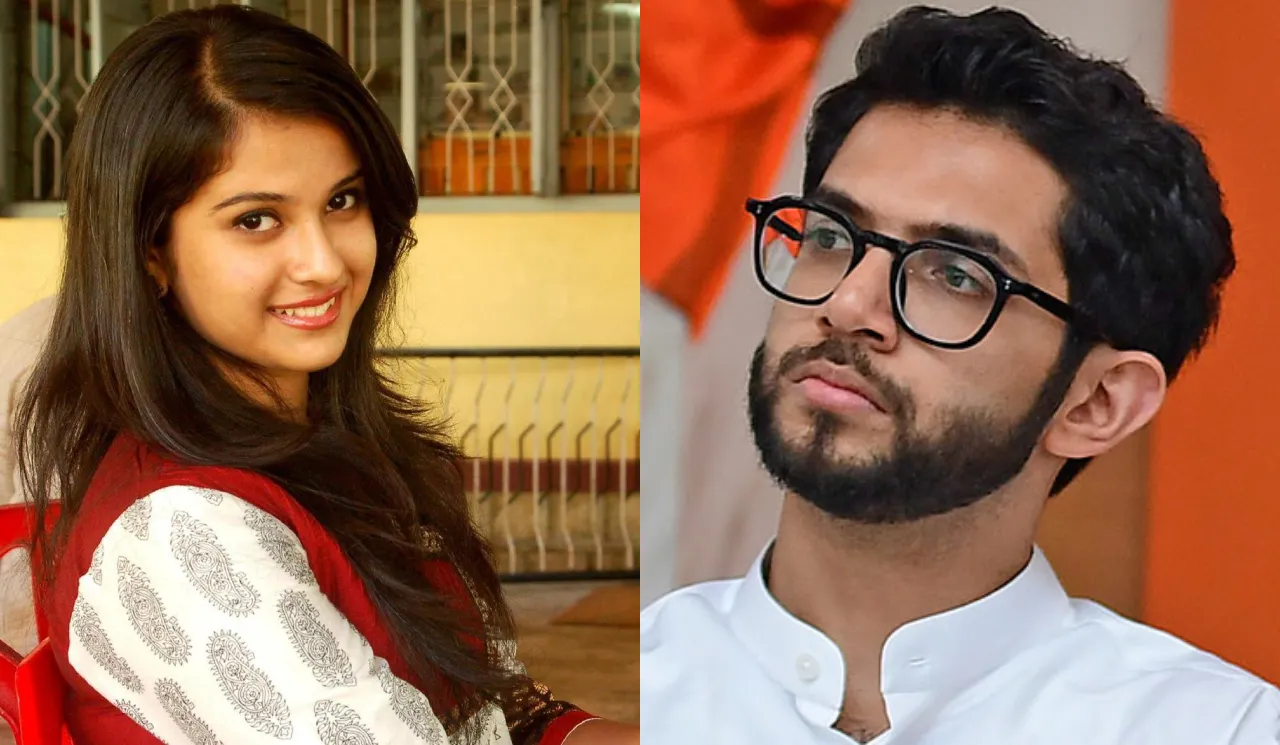
The Bombay High Court on Wednesday directed its registry department to place before an appropriate bench the petition filed by Satish Salian, father of late celebrity manager Disha Salian, seeking a CBI probe into his daughter’s death and an FIR against Shiv Sena (UBT) leader Aaditya Thackeray. The plea was initially heard by a division bench of Justices Revati Mohite Dere and Neela Gokhale before being referred for reassignment.
Salian’s legal team argued that the case pertains to crimes against women and should be assigned to the division bench headed by Justice Sarang Kotwal. The court subsequently ordered the registry department to take necessary steps for the petition’s reassignment.
Satish Salian has alleged that his daughter was brutally raped and murdered, and that a politically motivated cover-up was orchestrated to protect influential individuals. Initially, he trusted the Mumbai Police’s investigation but now believes it was a deliberate attempt to suppress the truth. His plea claims that the police hastily labeled the case as suicide or accidental death without thoroughly examining forensic evidence, circumstantial proof, or eyewitness testimonies.
Disha Salian died on June 8, 2020, after falling from the 14th floor of a residential building in Malad. The Mumbai Police registered an Accidental Death Report (ADR) but did not pursue a deeper investigation. Just six days later, Bollywood actor Sushant Singh Rajput, for whom Salian had previously worked as a manager, was found dead in his Bandra apartment. While initially ruled as a suicide, Rajput’s case was later handed over to the CBI.
In a recent development, the CBI submitted a closure report on Salian’s case, but her father continues to demand a fresh probe, alleging that key evidence was ignored to shield those in power. The petition also calls for an FIR against Aaditya Thackeray, further fueling political controversy surrounding the high-profile case.
Over 1 Lakh Awami League Members Flee to India, Claims Bangladesh Govt Advisor 8
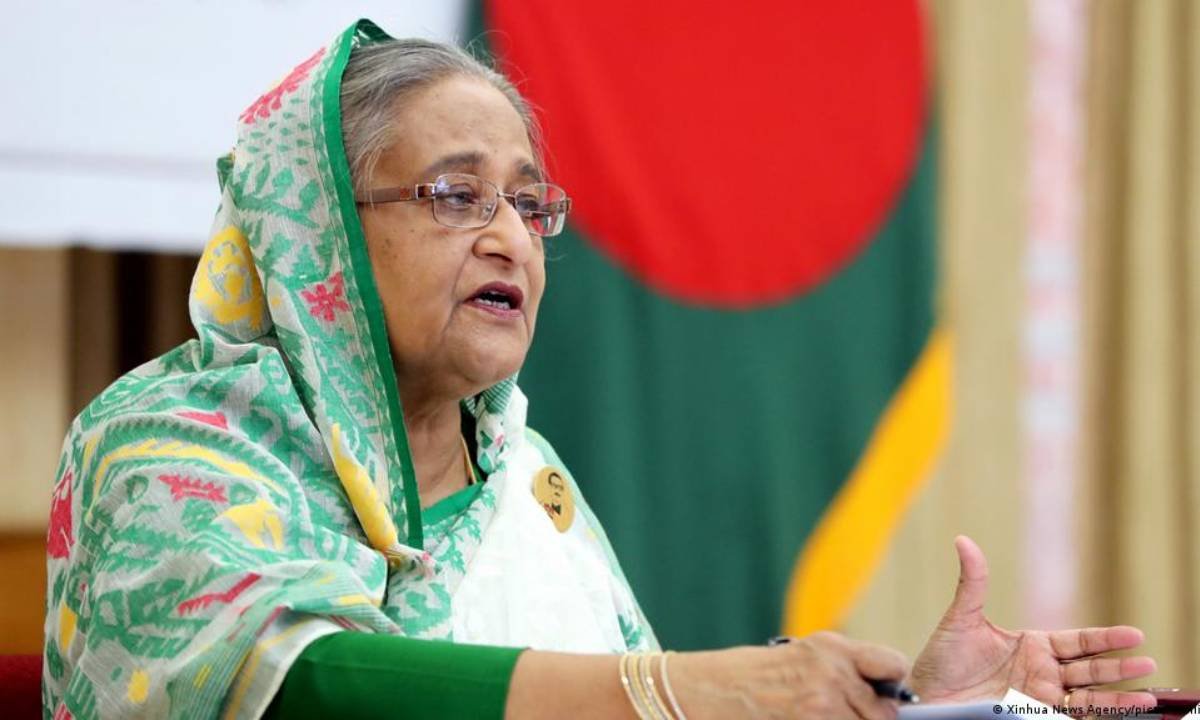
Bangladesh’s interim government Information Advisor Mahfuj Alam has claimed that over one lakh members of Sheikh Hasina’s ousted Awami League have fled to India, according to media reports. Speaking at an Eid gathering in Dhaka, organized by human rights group “Mayer Dak,” Alam alleged that Hasina’s regime was marked by enforced disappearances and political assassinations.
Alam accused Hasina of using disappearances and killings as a means of avenging her parents’ assassination. “The highest number of enforced disappearances occurred in 2013 and 2014 when people were fighting for their voting rights. The aim was to destroy the electoral system,” he said. He added that the current government has formed a commission to investigate such cases, with arrest warrants already issued against several individuals.
Slamming the Awami League, Alam claimed that those opposing Hasina were falsely branded as terrorists and militants before being forcibly disappeared. He further alleged that state institutions were weaponized for political persecution.
Taking a direct swipe at Hasina, Alam accused her of conspiring against Bangladesh from India. “It is unfortunate that India has chosen to shelter her and her terrorist forces. Nearly 100,000 Awami League members have taken refuge there,” he said. He further declared that the Awami League would never be allowed to regain political ground in Bangladesh, calling it a “mafia group.”
Hasina, who ruled Bangladesh for 16 years, was ousted on August 5 last year in a violent student-led uprising. Since then, the 77-year-old leader has reportedly been residing in India. Facing over 100 cases—including charges of mass murder and corruption—she, along with many of her party leaders and ministers, either fled the country or were arrested.
Following her removal, Nobel Laureate Muhammad Yunus took charge as the Chief Adviser of the interim government. The Awami League has since vanished from Bangladesh’s political landscape. Hasina and her senior aides have also been indicted by Bangladesh’s International Crimes Tribunal for alleged crimes against humanity during last year’s protests. Ironically, the same tribunal was established under her regime to prosecute those accused of war crimes during Bangladesh’s 1971 Liberation War.
Delhi BJP Rallies Behind Waqf Amendment Bill Amid Opposition Backlash 10
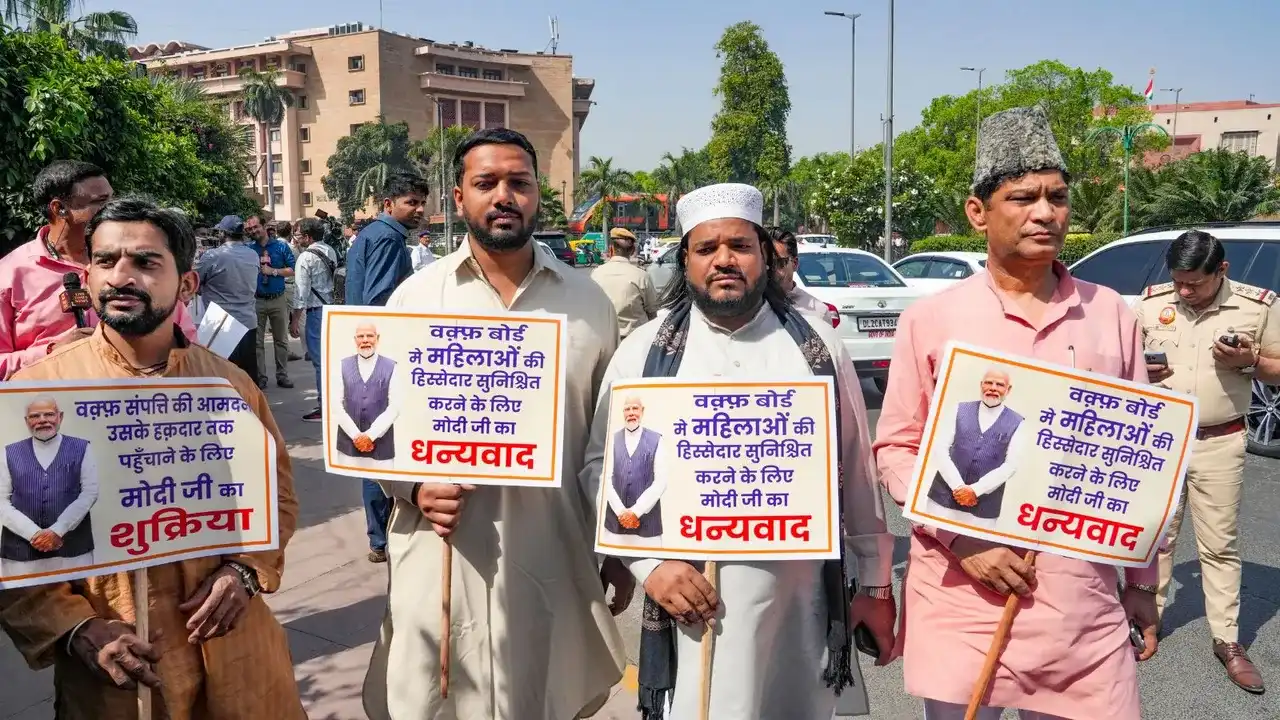
The Delhi BJP staged a demonstration at Vijay Chowk and Rail Bhawan on Wednesday in a show of support for the controversial Waqf (Amendment) Bill, which is set for discussion and passage in the Lok Sabha. Led by Delhi BJP president Virendra Sachdeva, party members held placards reading, “Thank you, Modi, for ensuring a share for backward Muslims in the Waqf Bill.”
Addressing the gathering, Sachdeva defended the bill, stating that it aims to empower underprivileged Muslims and safeguard their legal rights. He questioned why opposition parties were resisting a measure designed for the welfare of the community.
The bill introduces significant amendments to the 1995 Wakf Act, including ensuring representation of Muslim women and non-Muslims in Waqf boards. It seeks to remove Section 40, which grants boards the authority to determine if a property qualifies as Waqf property. Additionally, it proposes the formation of a separate board for Boharas and Aghakhanis, along with representation for Shias, Sunnis, and backward Muslim communities.
The legislation, if passed, will rename the existing act as the Unified Waqf Management, Empowerment, Efficiency, and Development Act, 1995.
With eight hours allotted for debate in the Lok Sabha, the government remains determined to pass the bill, while opposition parties stand united in denouncing it as unconstitutional. The Rajya Sabha is expected to take up the bill on Thursday, setting the stage for a heated political showdown.
CPI(M) Declares War on Waqf Bill, BJP Launches Statewide Protests 12
The Communist Party of India (Marxist) [CPI(M)] has firmly opposed the Waqf Amendment Bill proposed by the NDA government, declaring that its MPs will vote against it in Parliament. The party’s stance has sparked fresh political friction, especially in Kerala, where the Catholic Church has criticized MPs for their position on the controversial bill.
CPI(M) state secretary M.V. Govindan reaffirmed the party’s opposition while speaking at the 24th party congress in Madurai, Tamil Nadu. He dismissed concerns raised by the Kerala Catholic Bishops’ Council (KCBC), stating that external influences would not sway the CPI(M)’s stand. “Let there be no doubt, we will take a stand against the Waqf Bill. We have already made our stand clear. We do not keep changing our stand based on what others are saying. We have a clear stand,” Govindan asserted.
Meanwhile, the BJP in Kerala announced statewide protests, including marches to the residences of INDIA bloc MPs, condemning their opposition to the Waqf Bill. The bill, set to be tabled in Parliament, has triggered heated debates, with Govindan alleging that it does not protect Waqf properties but instead opposes them. He further claimed that some forces were deliberately stoking communal tensions over the issue.
Adding to the controversy, Church-run daily Deepika recently described the Waqf Amendment Bill as a critical test of secularism in Parliament. The editorial warned Kerala MPs that opposing the bill would align them with religious fundamentalism, while supporting it would rectify injustices affecting Hindus, Christians, and Muslims under existing Waqf laws.
Opposition parties, however, have slammed the bill as “unconstitutional” and detrimental to the Muslim community. Several Muslim organizations have been actively rallying against the legislation, which underwent scrutiny by a Joint Committee of Parliament before receiving multiple amendments.
Maharashtra Offers 15% Tax Rebate for Scrapping Old Vehicles 14
In a bid to promote vehicle scrappage and curb pollution, the Maharashtra cabinet has approved a 15% tax concession for vehicle owners who voluntarily scrap their old vehicles while purchasing a new one of the same type. The decision was taken during a cabinet meeting chaired by Chief Minister Devendra Fadnavis on Tuesday.
According to a statement from the Chief Minister’s Office (CMO), a 10% tax concession will be provided to transport vehicles voluntarily scrapped within eight years of registration at a Registered Vehicle Scrappage Facility (RVSF) and to non-transport vehicles scrapped within 15 years of registration.
A 15% tax concession will apply to transport and non-transport vehicles subject to lump sum tax. For vehicles under annual taxation, the rebate will be applicable for the next eight years from the date of registration in the transport category and for the next 15 years for non-transport vehicles.
Owners will receive a Certificate of Deposit after scrapping their vehicle at an RVSF, which will remain valid for two years to avail of the tax concession. This relief will apply to registering the same type of vehicle—two-wheeler, three-wheeler, or light motor vehicle—after purchase. The scheme will be available for vehicles voluntarily scrapped within three years from the date of notification publication.
Mumbai Braces for Stormy Weather: IMD Issues Orange and Yellow Alerts 16
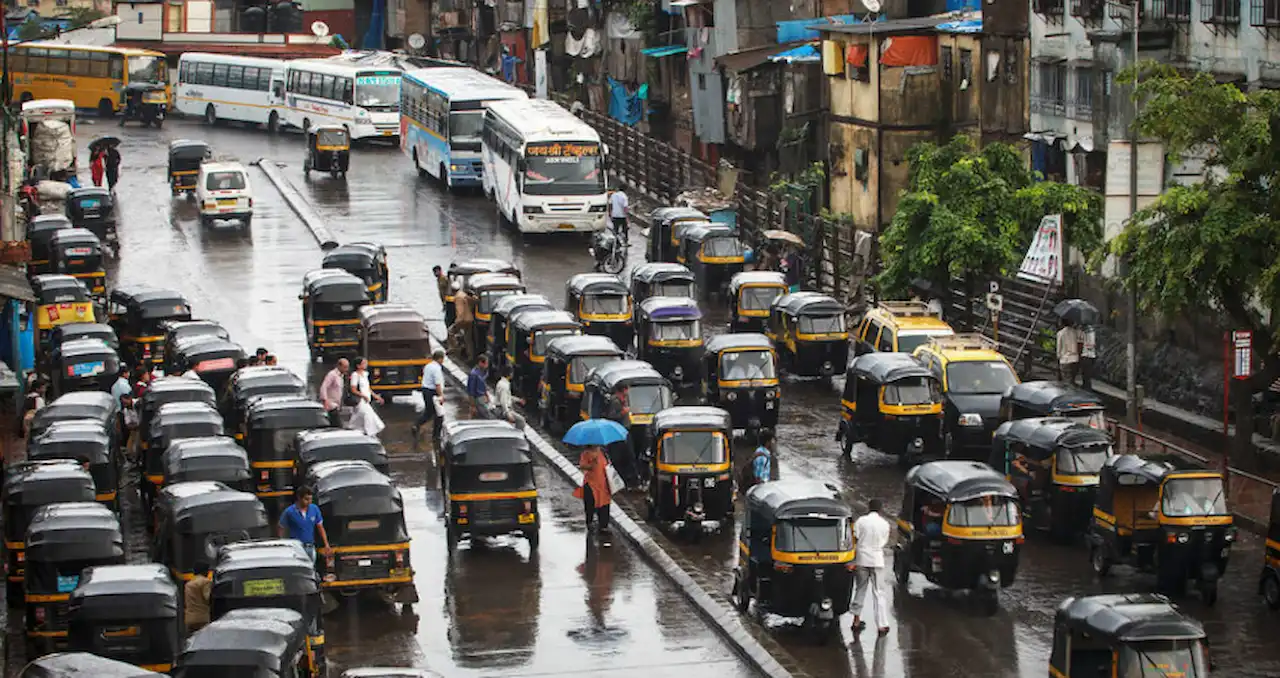
Mumbai witnessed light showers on Tuesday evening, offering brief relief from the oppressive heat. Areas like Chembur, Matunga, and Wadala experienced drizzle as temperatures soared earlier in the day. The Indian Meteorological Department (IMD) recorded a maximum temperature of 33.5°C at Colaba and a sweltering 37.7°C at Santacruz.
In a significant weather update, the IMD has issued yellow and orange alerts for almost the entire state on Wednesday, warning of thunderstorms, lightning, and squalls. Except for Solapur, all districts in Maharashtra are on alert, with 13 districts under an orange warning. These include Satara, Nashik, Pune, Ahilyanagar (formerly Ahmednagar), Beed, Chhatrapati Sambhajinagar, Jalna, Amravati, Akola, Yavatmal, Bhandara, Chandrapur, and Gondia.
Meanwhile, Mumbai, along with Palghar, Thane, and Raigad, falls under the IMD’s yellow alert, cautioning residents about thunderstorms, lightning, and light to moderate rainfall. While a yellow alert signifies moderate to severe weather conditions, an orange alert urges preparedness for potential disruptions.
With unpredictable weather looming, citizens are advised to stay updated and take necessary precautions against sudden storms and downpours.
2020 Delhi Riots: Court Orders FIR Against Delhi Minister Kapil Mishra, Others 18
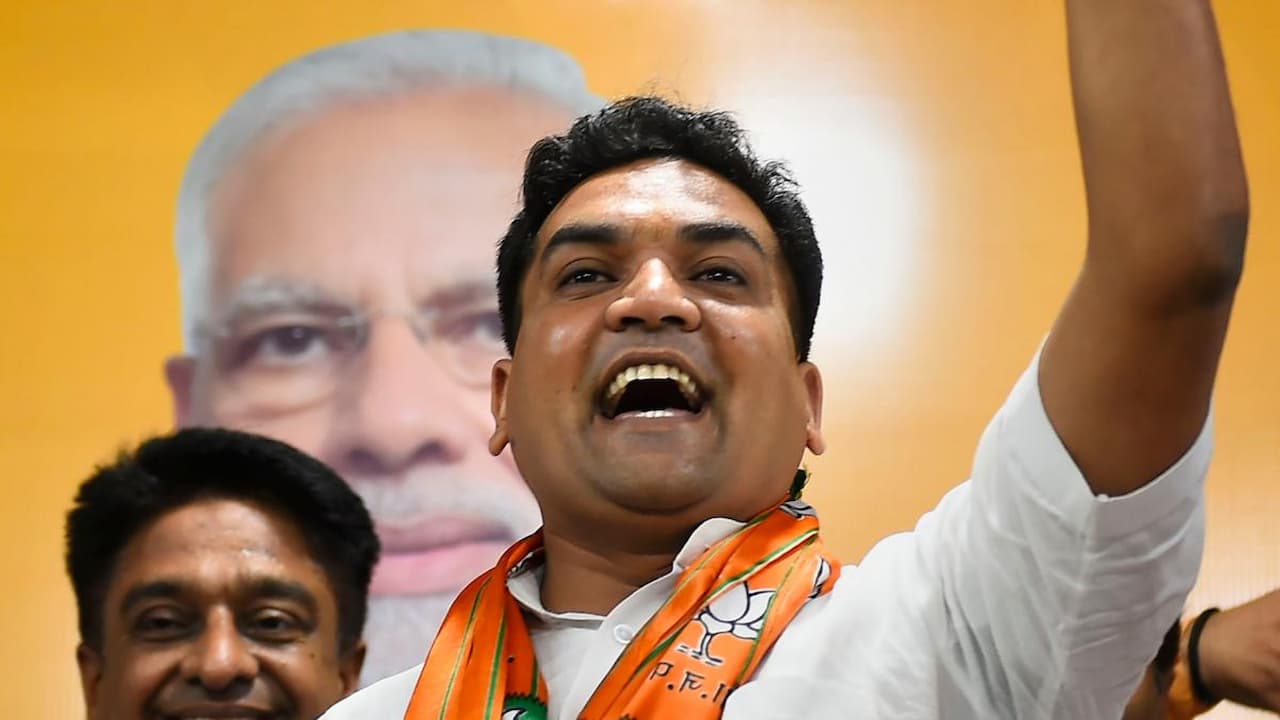
A Delhi court on Tuesday ordered an FIR against Delhi cabinet minister Kapil Mishra and others to investigate his alleged role in 2020 Delhi riots.
Additional chief judicial magistrate Vaibhav Chaurasia found a “prime facie” cognisable offence, requiring a probe.
“It is clear that Mishra was in the area at the time of alleged offence… further probe required,” the judge said.
The judge was hearing arguments on a plea filed by a Yamuna Vihar resident Mohammad Ilyas, seeking registration of the FIR, which was opposed by Delhi Police, claiming Mishra had no role in the riots.
Delhi Power Crisis: AAP MLAs Demand Assembly Debate, Blame BJP for Outages 20
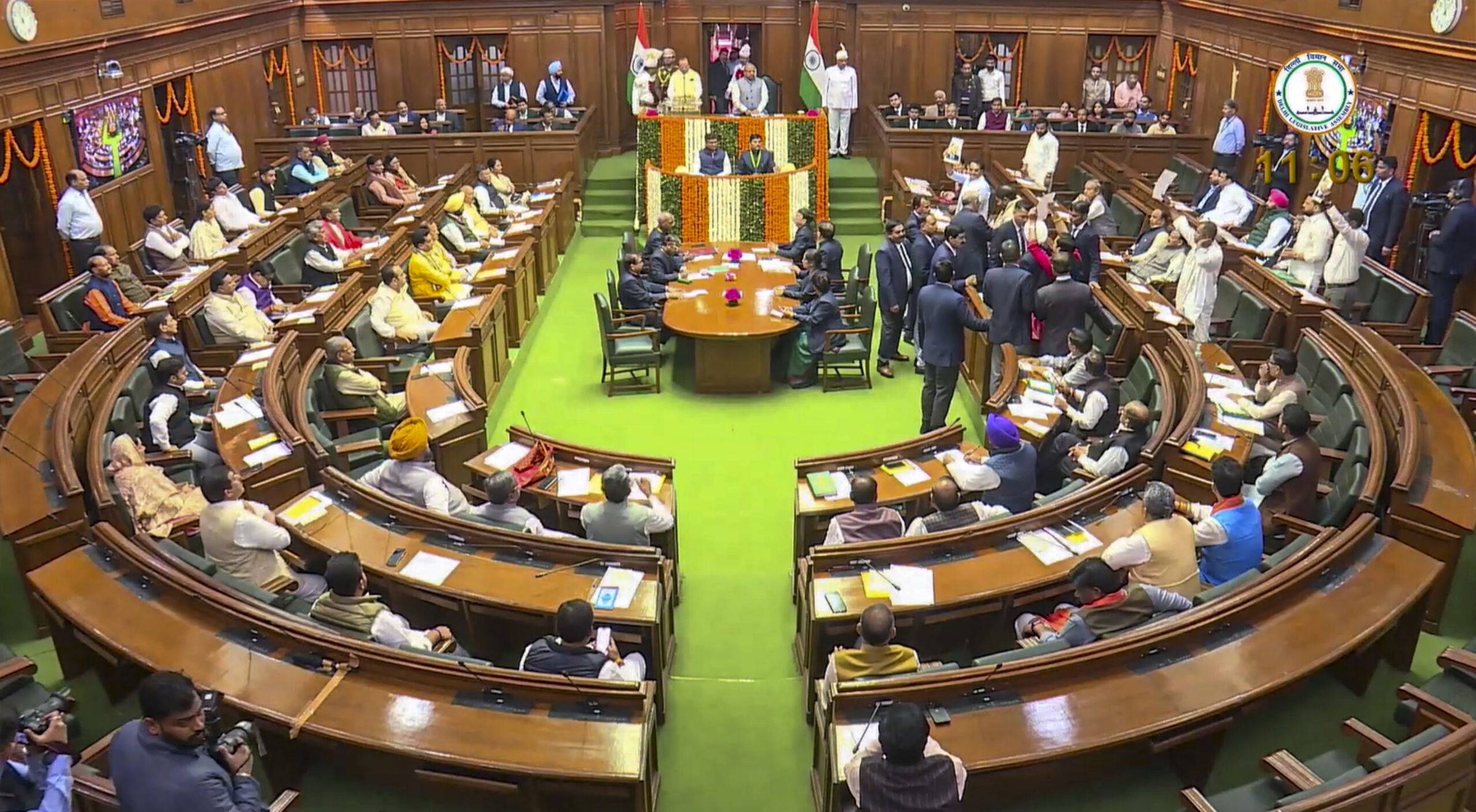
AAP MLAs on Tuesday submitted notices to the Delhi Assembly secretary, demanding a discussion on the alleged power cuts affecting multiple areas in the city. Burari MLA Sanjeev Jha and MLA Kuldeep Kumar wrote to Delhi Power Minister Ashish Sood, highlighting prolonged outages that have impacted households, businesses, and essential services.
Jha specifically pointed to a blackout in Jagatpur village on March 28, stating that despite complaints, no immediate resolution was provided. He urged the minister to outline steps to prevent such disruptions in the future. Kumar, on the other hand, called for an adjournment motion to discuss the crisis in the Assembly, citing severe inconvenience to residents.
The power crisis has ignited a fierce political battle between AAP and the BJP. Senior AAP leader and former Delhi Chief Minister Atishi accused the BJP-led administration of incompetence, questioning how power cuts returned within a month of their rule after a decade of uninterrupted supply. “This proves BJP lacks both the intent and the ability to govern Delhi,” she asserted.
Delhi BJP President Virendra Sachdeva hit back, calling uninterrupted power supply a fundamental duty of any government and accused AAP of corruption in power management. “Cities like Mumbai, Pune, and Bangalore have uninterrupted electricity. Even Uttar Pradesh has improved its power supply. Providing 24-hour electricity is a government’s responsibility, not a privilege,” he stated.
AAP national convenor and former CM Arvind Kejriwal also weighed in, expressing frustration over the outages. “We worked hard for 10 years to ensure uninterrupted electricity in Delhi. Within a month, they have destroyed the system,” he wrote on social media.
The debate unfolds amid the first budget session of Delhi’s eighth legislative assembly, with BJP having won 48 out of 70 seats in February, ending AAP’s decade-long rule and marking its return to power in the national capital after 27 years.