Home Blog Page 97

Gyanesh Kumar Appointed as CEC; Vivek Joshi Election Commissioner

gyanesh kumar, vivek joshi, election commission, election commissioners, cec, government
Gyanesh Kumar Appointed as CEC; Vivek Joshi Election Commissioner 2

Election Commissioner Gyanesh Kumar was appointed as the next chief election commissioner on Monday, the law ministry said.

Kumar is the first CEC to be appointed under a new law on the appointment of the members of the Election Commission (EC).

His term will run till January 26, 2029, days before the EC is expected to announce the schedule of the next Lok Sabha election.

Vivek Joshi, a 1989-batch Haryana-cadre Indian Administrative Service (IAS) officer, has been appointed as an election commissioner.

Born on May 21, 1966, Joshi (58) will serve in the poll panel till 2031.

According to law, a CEC or an EC retires at the age of 65 or can have a tenure in the poll panel for six years.

Earlier, Sushil Chandra, who was serving as the Central Board of Direct Taxes (CBDT) chairman, was appointed as an EC. He resigned from the CBDT before joining the poll authority.

Joshi, a former Haryana chief secretary, was on central deputation since January 2019.

During his tenure as the 26th CEC, Kumar will oversee the Bihar Assembly polls later this year, and the Kerala and Puducherry Assembly polls in 2026.

Similarly, he will oversee the Assembly polls in Tamil Nadu and West Bengal, which are also due in 2026.

Kumar, who played a key role in implementing decisions following the abrogation of Article 370 of the Constitution in Jammu and Kashmir during his stint in the Union home ministry, took charge as an election commissioner on March 15, 2024.

His appointment came hours after the Congress asked the government to defer its decision on the new CEC till the Supreme Court concludes its hearing on a petition challenging the composition of the selection panel.

The Congress’s demand was put forth by Leader of Opposition in the Lok Sabha Rahul Gandhi during a meeting of the selection panel chaired by Prime Minister Narendra Modi, sources said.

The meeting took place in the South Block office of the prime minister. Besides Modi and Gandhi, Home Minister Amit Shah is the third member of the selection panel.

Kumar is a 1988-batch Kerala-cadre IAS officer.

After completing his B.Tech in Civil Engineering from the Indian Institute of Technology (IIT), Kanpur, he studied Business Finance in ICFAI, India and Environmental Economics in HIID, Harvard University, US.

He has worked in the government of Kerala as the assistant collector of Ernakulam, sub-collector of Adoor, managing director of the Kerala State Development Corporation for SC/ST, municipal commissioner of the Corporation of Cochin, besides holding other posts.

As a secretary to the government of Kerala, Kumar handled diverse departments, such as finance resources, fast-track projects and the public works department.

In the government of India, he has rich experience of working as the joint secretary in the Ministry of Defence, joint secretary and additional secretary in the Ministry of Home Affairs, secretary in the Ministry of Parliamentary Affairs and secretary in the Ministry of Cooperation. He superannuated on January 31, 2024.
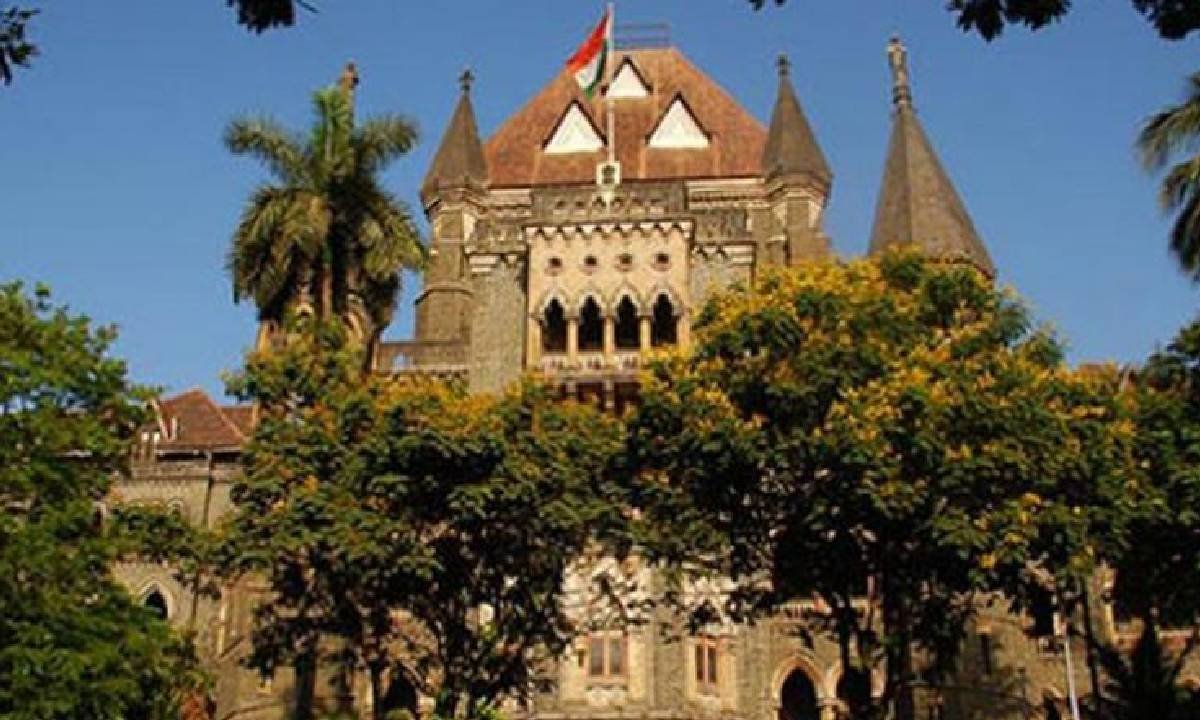
Bombay HC Grants Bail to Woman Priest in Shocking Human Sacrifice Case

Bombay High Court Malegaon Blast Case, human sacrifice, bombay hc, woman priest, satara
Image: PTI

The Bombay High Court has granted bail to Kamal Ananda Mahapure, a 61-year-old woman priest accused of participating in the gruesome human sacrifice of a 17-year-old girl in Satara district, Maharashtra. The case, dating back to January 22, 2019, involved the ritualistic killing of Bhagyashri, allegedly orchestrated by her own father, who sought divine blessings and hidden wealth.

Initially, the father filed a missing person report, but investigations later revealed that he had masterminded the murder. According to the prosecution, Mahapure played a key role in the black magic ritual, feeding the victim a sacred offering (Bhandara), holding her legs, and chanting mantras as the main accused slit her throat. She was arrested in July 2022, over three years after the crime, and charged under the IPC and the Maharashtra Prevention and Eradication of Human Sacrifice and Black Magic Act, 2013.

Mahapure’s advocate, Satyavrat Joshi, argued that she had been in custody for over two years without trial, citing inconsistencies in a key witness’s statements. He pointed out that the witness had not mentioned Mahapure’s involvement in his initial testimonies, only to suddenly claim to have seen her at the scene three years later, raising doubts about the credibility of his account. Joshi also assured the court that Mahapure would not enter Satara district until the trial concluded.

Opposing the bail, State’s advocate Sangeeta Shinde contended that Mahapure had conspired with the co-accused and could threaten witnesses, abscond, or fail to attend trial.

Justice Shivkumar Dige, on February 7, acknowledged the delays in the trial and Mahapure’s age, emphasizing that the witness’s statement, recorded three years after the crime, would be examined during the trial. Granting bail on a bond of ₹50,000, the court imposed strict conditions, including barring her from Satara district and ensuring regular court attendance.

“Interfaith Unions Fine but Marriage Through Fraud Is Not”, Says CM Fadnavis, Backing Anti-Love Jihad Law

devendra fadnavis, fadnavis, maharashtra cm, maharashtra chief minister
"Interfaith Unions Fine but Marriage Through Fraud Is Not", Says CM Fadnavis, Backing Anti-Love Jihad Law 5

Maharashtra Chief Minister Devendra Fadnavis has endorsed the state government’s move to introduce an ‘anti-love jihad’ law, asserting that while interfaith marriages are acceptable, legal action is necessary against fraudulent alliances and false identities. A seven-member committee has been formed to analyze the legal framework for such a law.

Referring to observations by the Supreme Court and Kerala High Court, Fadnavis noted that cases of ‘love jihad’—a term used by right-wing groups for alleged conspiracies involving Muslim men converting Hindu women through marriage—are on the rise in Maharashtra. He claimed that several women have reported being deceived into marriage and later abandoned after childbirth.

In response to increasing complaints, the state government has issued a Government Resolution (GR) to establish a committee led by the Director General of Police (DGP). The panel will study existing laws in other states and recommend legislative measures to prevent forced conversions and fraudulent marriages.

The proposal has sparked sharp political reactions. Union Minister and RPI chief Ramdas Athawale opposed the law, arguing that labelling interfaith marriages as ‘love jihad’ is unfair. Speaking in Shirdi, he stated, “Hindu-Muslim couples, like Dalit and upper-caste couples, unite. It is wrong to term such marriages as ‘love jihad.’ However, there should be legal provisions to prevent forced conversions.”

On the other hand, Maharashtra Minister Mangal Prabhat Lodha supported Fadnavis’s initiative, citing an alarming increase in ‘love jihad’ cases, especially in Mumbai. Lodha criticised Samajwadi MLA Rais Shaikh for opposing the law and filing a case against him, questioning whether such actions were an attempt to “encourage love jihad.”

The proposal for an ‘anti-love jihad’ law has fuelled a heated debate, with critics calling it an attack on personal freedoms and supporters arguing that it is necessary to protect women from deceitful marriages.

MP’s Liquor Ban in Holy Cities Sparks Debate, ‘Low Alcohol’ Bars to Open

Liquor, Indian made foreign liquor, IMFL, Inflation. Trade
Image for representative purpose

Madhya Pradesh is set to implement a partial liquor ban in 19 locations, including 17 holy cities, while simultaneously allowing “Low Alcoholic Beverage Bars” to operate from April 1 under its new excise policy. The decision, announced by Chief Minister Mohan Yadav, is expected to cause a revenue loss of ₹450 crore for the state government.

As per the policy, the new bars will serve only beer, wine, and ready-to-drink alcoholic beverages with a maximum alcohol content of 10% V/V. Hard liquor consumption will be strictly prohibited in these establishments.

The holy cities affected by the liquor ban include Ujjain, Omkareshwar, Maheshwar, Mandleshwar, Orchha, Maihar, Chitrakoot, Datia, Amarkantak, and Salkanpur. In total, 47 composite liquor shops—which sell both Indian Made Foreign Liquor (IMFL) and country liquor—will be shut down in these areas.

However, officials clarified that individual possession and consumption of liquor will not be penalized in these regions, as MP does not have a full prohibition law like Bihar or Gujarat. The Excise Act in force only restricts liquor sale points and public consumption.

To compensate for lost revenue, the policy introduces a 20% hike in liquor shop renewal fees while retaining exemptions for heritage liquor manufacturers from Value Added Tax (VAT). Additionally, wine production in MP will be expanded, allowing the use of fruits, honey, and jamun, with wineries permitted to operate retail outlets and wine-tasting facilities for tourists.

Meanwhile, foreign liquor bottling units will also be allowed to manufacture, store, export, import, and sell special liquors in the next fiscal year. The 3,600 liquor shops across MP are projected to generate ₹15,200 crore in revenue this year.

The move has triggered mixed reactions, with religious groups welcoming the ban while others question the government’s decision to promote low-alcohol bars while restricting liquor in holy cities.

MLA Sneha Dube Pandit Meets CM Fadnavis to Address Rehabilitation of Displaced Palghar Residents

sneha dube pandit, pandit, devendra fadnavis, fadnavis, cm, maharashtra cm
MLA Sneha Dube Pandit Meets CM Fadnavis to Address Rehabilitation of Displaced Palghar Residents 8

BJP MLA Sneha Dube Pandit has met Maharashtra Chief Minister Devendra Fadnavis to discuss the rehabilitation of residents of 41 illegal buildings in Palghar district, where demolition action has been taken, and other key civic issues.

These buildings, constructed in the Nallasopara area on land reserved for a sewage disposal project and dumping ground using fake documents, were demolished recently by the Vasai Virar Municipal Corporation (VVMC).

The Bombay High Court recently asked the VVMC to clarify within three weeks its stand on the rehabilitation of thousands of residents of these illegal buildings.

On January 27, in a meeting with senior officials, Vasai MLA Sneha Dube Pandit urged the civic body to address the issue.

In this context, she met CM Fadnavis on Saturday to find a solution for the rehabilitation of the residents, a release from the MLA’s office said.

The CM assured that immediate steps will be taken in this matter and a meeting will be organised on this issue soon, and accordingly instructed the administration for further action, the release said.

During the meeting, the legislator also brought to the CM’s notice various other issues pertaining to her constituency, including the demand for the transfer of Zilla Parishad schools and primary health centres to VVMC, establishment of a well-equipped hospital with modern facilities in Vasai, and expansion of ST (State Transport) Corporation premises to resolve parking issues.

Vaidehi Taman’s Book “Monastic Life” Launched at Maha Kumbh: A Testament to Spiritual Awakening

monastic life, book monastic life, vaidehi taman, Mahamandaleshwar Dr. Umakantanand Saraswati Ji Maharaj, prayagraj, maha kumbh
Vaidehi Taman's Book "Monastic Life" Launched at Maha Kumbh: A Testament to Spiritual Awakening 10

Prayagraj, February 13, 2025 – Amid the divine atmosphere of the Maha Kumbh Mela, Vaidehi Taman, Founder Editor of Afternoon Voice, unveiled her latest book, Monastic Life: Inspiring Tales of Embracing Monkhood. The launch ceremony was graced by Mahamandaleshwar Dr. Umakantanand Saraswati Ji Maharaj, along with other revered saints and dignitaries, marking a significant milestone in contemporary spiritual literature.

Unveiling the book, Mahamandaleshwar Dr. Umakantanand Saraswati Ji Maharaj described it as a “profound reflection on the spiritual journeys of extraordinary individuals.” He further emphasized its relevance, stating, “This book beautifully highlights how education and wisdom play a crucial role in shaping a true spiritual seeker. It is an essential read for those yearning for deeper meaning in life.”

A Journey into Renunciation and Self-Discovery

Monastic Life explores the stories of individuals who, despite attaining material success, felt an undeniable inner calling to seek a higher truth. Through real-life narratives, the book delves into the transformation of these individuals as they relinquish worldly attachments to embrace the path of Sannyasa (renunciation).

Taman, a journalist and spiritual thinker, intertwines her own experiences with the teachings of her Guru, offering a deeply personal yet universally resonant perspective. She underscores that embracing monkhood is not about withdrawing from life’s challenges but about engaging with them through a lens of wisdom, self-awareness, and higher consciousness.

A Tribute to Spiritual Luminaries

The book also pays tribute to legendary spiritual figures like Swami Vivekananda, who demonstrated that knowledge, education, and personal accomplishments can serve as stepping stones to spiritual evolution rather than obstacles. Taman argues that intellectual and professional growth can often act as catalysts for deeper introspection, leading one toward renunciation and a more meaningful existence.

Through compelling and thought-provoking stories, Monastic Life sheds light on the growing number of young, educated individuals who are voluntarily choosing the monastic path, seeking purpose, peace, and self-realisation beyond material success. It serves as an invitation for readers to contemplate a life driven by inner fulfilment rather than external achievements.

Now available on all major online platforms and bookstores, Monastic Life is poised to inspire and guide seekers on their spiritual journey.

Power, Pride, and Controversy: The Fierce Rivalries Tearing Apart the Kinnar Akhada

kinnar akhara, kinnar akhada, maha kumbh, laxmi narayan tripathi, hemangi sakhi, kinnar, hijra, mamta kulkarni
Power, Pride, and Controversy: The Fierce Rivalries Tearing Apart the Kinnar Akhada 12

Since gaining recognition in the spiritual sphere, the Kinnar, or Hijra transgender community, has frequently found itself in the spotlight—often for reasons that go beyond their spiritual pursuits. While the acknowledgement of their place within the religious framework was initially seen as a progressive step toward inclusion, the reality has become far more complex and contentious. At the heart of these controversies are four prominent figures: Mahamandaleshwar Kalyani Maa, Mahamandaleshwar Laxmi Narayan Tripathi, Jagadguru Hemangi Sakhi Maa, and Mahamandaleshwar Pavitranand Giri. Each of these individuals holds significant power and influence within the Kinnar Akhada, yet their rivalry has fractured the community, turning a spiritual movement into a stage for personal ambition, public accusations, and even violence.

Among them, Laxmi Narayan Tripathi stands out as a trailblazer and a symbol of transgender empowerment. A well-known transgender rights activist, Bollywood actress, Bharatanatyam dancer, choreographer, and motivational speaker based in Mumbai, India, she has carved out a formidable reputation. Laxmi Narayan Tripathi holds the prestigious title of Acharya Mahamandaleshwar of the Kinnar Akhada, making her one of the most influential figures in the spiritual and social landscape of the transgender community. She is credited with pioneering the inclusion of the Hijra community into the domain of sainthood—a move that brought unprecedented visibility to a historically marginalised group. Her achievements extend beyond the religious sphere; in 2008, she became the first transgender person to represent the Asia-Pacific region at the United Nations, where she spoke passionately about the plight of sexual minorities. This landmark moment not only amplified the voices of the transgender community but also showcased her as a fearless advocate for human rights. Her commitment to uplifting the community is further evidenced by her role in facilitating the first transgender team to scale Friendship Peak in the Himalayas in 2020—a symbolic achievement reflecting the breaking of societal barriers. Supported by the Akhara Parishad, Laxmi Narayan Tripathi’s leadership of the Kinnar Akhada is marked by a clear vision for advancing the rights and dignity of transgender individuals. Her intellectual acumen, combined with her relentless advocacy, has earned her both admiration and fierce opposition within the Akhada.

In stark contrast to Laxmi Narayan Tripathi’s composed and strategic approach is Mahamandaleshwar Hemangi Sakhi Ma, a figure whose defiant personality and outspoken nature have kept her at the center of controversy. Known as the world’s first transgender Bhagavad Gita raconteur (kathawachak), Hemangi Sakhi Ma is an ardent devotee of Lord Krishna and has built her spiritual identity around the retelling of sacred texts. However, her spiritual journey is frequently overshadowed by her combative stance and bold public gestures. She attracted national attention when she announced her candidacy against Prime Minister Narendra Modi in the Varanasi constituency during the 2024 Lok Sabha elections. This unexpected move, backed by the Uttar Pradesh chapter of the Akhil Bharat Hindu Mahasabha (ABHM), signalled her desire to challenge political and religious norms. Despite her spiritual title, critics often describe her as egoistic and arrogant, pointing to her confrontational attitude and tendency to engage in public disputes. Hemangi Sakhi Ma’s personal story is one of resilience and reinvention. Born in Baroda, Gujarat, she experienced significant upheaval after the death of her parents, leaving her to navigate life on her own. Her father, a film distributor, had relocated the family to Mumbai, where she briefly attended a convent school. Following her parents’ passing, she turned to the entertainment industry, appearing in films and television before embracing a spiritual path. Her rise to prominence within the Kinnar Akhada has been anything but smooth, as her rivalry with Laxmi Narayan Tripathi and others has escalated into public conflict.

Another complex and controversial figure is Mahamandaleshwar Kalyani Maa, who has a markedly different background from her peers. Previously known as Choti Begum, she was once a well-known transgender sex worker before converting from Islam to Hinduism and adopting a spiritual life. Her transition from the margins of society to the upper echelons of the Kinnar Akhada is both remarkable and fraught with challenges. Despite her religious transformation, Kalyani Maa’s past continues to haunt her, and her journey is emblematic of the broader struggle faced by many transgender individuals seeking acceptance and legitimacy. The rivalries within the Kinnar Akhada have not remained confined to ideological disagreements; they have erupted into physical violence. During the Prayagraj Maha Kumbh, Kalyani Maa was reportedly attacked and severely beaten, leaving her and two of her disciples injured. In the aftermath, Hemangi Sakhi Ma faced allegations of orchestrating the assault, an accusation that further deepened the fractures within the community. These violent episodes underscore the intensity of the power struggle, where personal ambitions and rivalries have overshadowed the Akhada’s original spiritual mission.

The internal conflicts within the Kinnar Akhada paint a troubling picture of a community divided by power and personal ambition. What began as a groundbreaking effort to bring transgender people into the fold of Hindu monastic life has devolved into a series of public spats, physical altercations, and character assassinations. Each figure within the Akhada appears to be vying for supremacy, using their titles and influence to assert dominance over their rivals. This ongoing turmoil raises serious questions about the spiritual authenticity of their pursuits. Critics argue that none of these self-proclaimed saints have undergone the rigorous training and discipline traditionally required of Hindu monastics. They point out the absence of Gurukul education, a deep understanding of the Vedas, or the ascetic practices that define genuine spiritual commitment. Furthermore, the opulent lifestyles of these leaders—characterised by lavish attire, makeup, and public spectacles—stand in stark contrast to the ideals of renunciation and humility expected of Hindu saints. This apparent disconnect between their public personas and the essence of monastic life has fueled scepticism about their claims to spiritual authority.

As the power struggle within the Kinnar Akhada intensifies, the future of the community hangs in the balance. While figures like Laxmi Narayan Tripathi have undeniably advanced the cause of transgender rights and visibility, the bitter rivalries and public controversies threaten to undermine the credibility of their spiritual mission. What was once a movement rooted in the quest for dignity and recognition now appears mired in personal disputes and the relentless pursuit of power. The Kinnar Akhada, once seen as a beacon of hope for transgender inclusion within the spiritual domain, risks becoming a cautionary tale of how internal discord and ambition can erode even the most revolutionary of movements.

10 Devotees Heading to Maha Kumbh Killed After Car-Bus Collision on Prayagraj Highway

prayagraj, prayagraj highway, bus accident, car accident, car
10 Devotees Heading to Maha Kumbh Killed After Car-Bus Collision on Prayagraj Highway 14

At least 10 people were killed after a car collided with a bus on Friday night. The incident occurred around 2 AM on the Prayagraj-Mirzapur highway in the Meja area. Additionally, 19 pilgrims were injured in the crash.

According to the police, the victims, who were from Korba district in Chhattisgarh , were returning from the Maha Kumbh when the accident took place. Authorities responded promptly, with the injured being sent to a local hospital for treatment.

The police recovered the bodies trapped in the Bolero vehicle and sent them for post-mortem.

DCP Yamunanagar, Vivek Chandra Yadav, confirmed that 10 people had died after the Bolero, carrying devotees from Chhattisgarh, collided with a bus. The accident occurred on the Prayagraj-Mirzapur highway near the Meja police station at midnight. The bodies were taken to Swaroop Rani Medical Hospital for post-mortem.

“An unfortunate incident occurred in Prayagraj when a bus and Bolero collided. All the passengers in the Bolero died in the accident. The victims were traveling to Prayagraj from Chhattisgarh, while the bus was en route from Prayagraj to Raigarh,” said CMO AK Tiwari.

Reports suggest the crash happened when the speeding Bolero collided with the bus. Images from the scene show the front of the Bolero completely smashed.

An investigation into the cause of the crash is currently underway.

Man Held for Operating Sex Racket at Housing Complex in Thane

prostitution racket, spa, thane, thane police
Man Held for Operating Sex Racket at Housing Complex in Thane 16

A man has been arrested for allegedly running a sex racket from his flat in a housing complex in Maharashtra’s Thane city, police said on Saturday.

Based on a tip-off, the anti-human trafficking cell (AHTC) of the Thane police raided the premises on February 12 and rescued a woman, senior inspector Chetna Chowdhari said.

She said the accused, Dattaram Sawant (58), was using the flat in the Vartak Nagar area to operate the racket.

The official said a case was registered against the accused under section 143(1) (trafficking of person) of the Bharatiya Nyay Sanhita and Immoral Traffic (Prevention) Act, 1956 (PITA).

Kejriwal’s ‘Sheesh Mahal’ to Be Probed Over Renovation of ‘Lavish’ Bungalow: BJP

kejriwal delhi cm house
Kejriwal's 'Sheesh Mahal' to Be Probed Over Renovation of 'Lavish' Bungalow: BJP 18

The Central Vigilance Commission has directed the Public Works Department of Delhi government to conduct a detailed probe into the alleged merger of properties to expand the 6, Flagstaff Road bungalow and the expenditures incurred on its interiors, BJP leader Vijender Gupta said on Saturday.

The bungalow labelled as “Sheesh Mahal” by the BJP for alleged corruption was occupied by Arvind Kejriwal as the chief minister of Delhi from 2015 till the first week of October last year.

No immediate reaction was available from the Aam Aadmi Party (AAP) or its convenor Kejriwal on the matter.

Gupta said the Central Vigilance Commission (CVC) took cognisance of his two earlier complaints and sought factual reports from the Public Works Department (PWD) based on which it has now directed to conduct a detailed probe.

In his first complaint to the CVC, the newly-elected BJP MLA from Rohini alleged that Kejriwal flouted building regulations to construct a lavish mansion covering 40,000 square yards (8 acres) of land.

Government properties, including plot Nos. 45 and 47 on Rajpur Road (previously housing senior officials and judges in Type-V flats) and two bungalows (8-A and 8-B, Flag Staff Road) were demolished and merged into the new residence, violating ground coverage and floor area ratio norms and lacking proper layout plan approvals, Gupta alleged.

In his second complaint, Gupta alleged “extravagant spending” on the renovation and interior decoration of the bungalow on 6, Flag Staff Road.

He also claimed “massive financial irregularities” and expenditure of crores of rupees from the taxpayers’ money on luxurious amenities in the bungalow.