


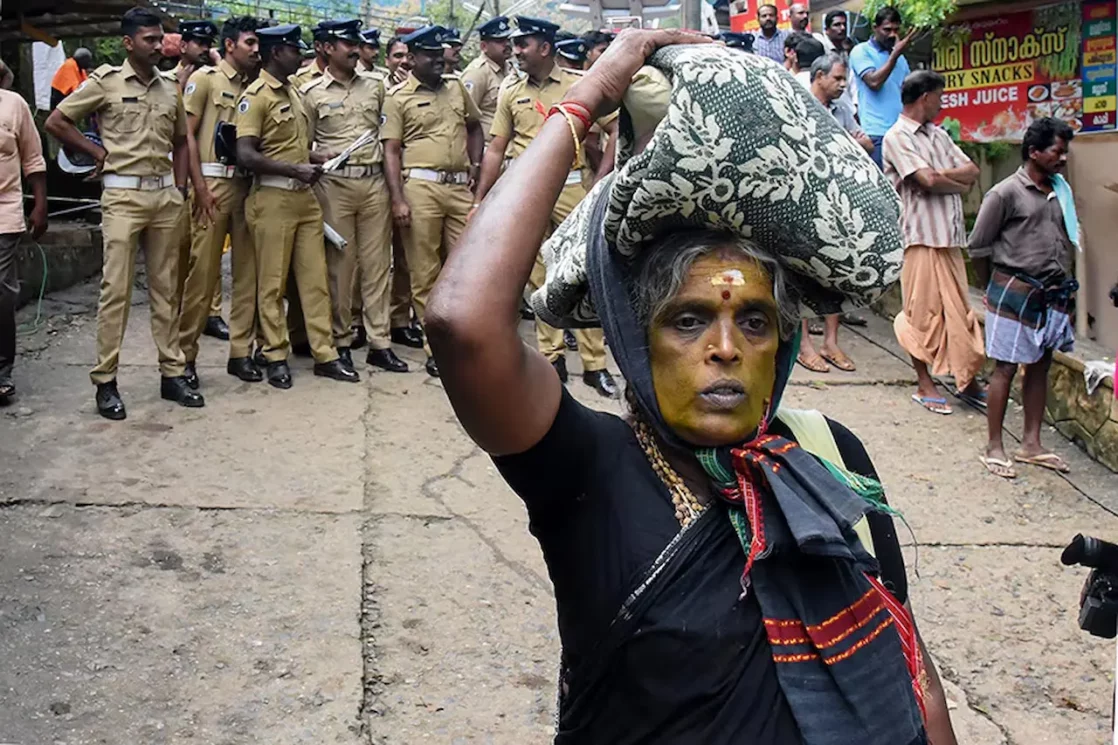
A nine-judge Constitution bench of the Supreme Court on Tuesday began hearing petitions related to alleged discrimination against women at religious places, including the Sabarimala temple, while also examining the broader scope of religious freedom under the Constitution.
The bench, headed by Chief Justice Surya Kant and comprising eight other judges, is dealing with key constitutional questions arising from the Sabarimala case and similar issues across religions.
Ahead of the hearing, the Centre submitted its written arguments, urging the court to uphold restrictions on the entry of women of menstruating age into the Sabarimala temple. It argued that the matter falls within the domain of religious faith and denominational autonomy, and is beyond the scope of judicial intervention.
The case traces back to the Supreme Court’s 2018 verdict, where a five-judge bench, by a 4:1 majority, had lifted the ban on the entry of women aged between 10 and 50 at the shrine, declaring the practice unconstitutional. However, in 2019, another Constitution bench referred the matter to a larger bench, noting that similar issues arise across multiple religions and require a comprehensive examination.
The present bench is also considering related questions, including the entry of Muslim women into mosques and dargahs, and the rights of Parsi women married to non-Parsi men to access religious places.
The court is expected to deliberate on several key constitutional issues, including the scope of the right to freedom of religion under Article 25, the relationship between individual rights and the rights of religious denominations under Article 26, and whether such rights are subject to other fundamental rights.
It will also examine the meaning of “morality” within constitutional provisions, the extent of judicial review in religious matters, and whether individuals outside a religious group can challenge its practices through public interest litigation.
The hearing, which began on April 7, is expected to continue until April 22. The outcome is likely to have far-reaching implications for balancing religious practices with gender equality and constitutional rights in India.
