


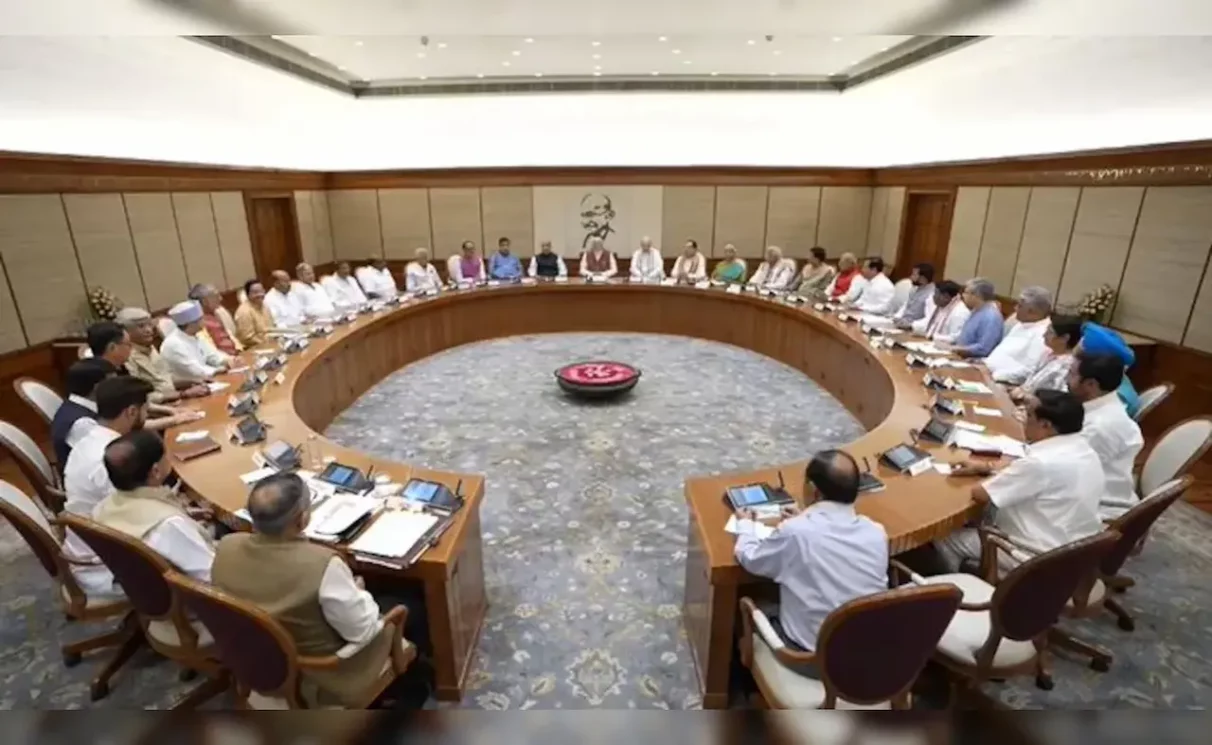
The Union Cabinet is scheduled to meet at 1 pm on Friday in the Parliament complex to consider a draft proposal for fast-track courts and stricter punishment in examination paper leak cases, as the Centre simultaneously opens formal talks with the Cockroach Janta Party (CJP) over the ongoing nationwide student protests.
The Cabinet meeting will follow discussions between representatives of the Union government and the CJP at the Constitution Club of India at 12.30 pm.
The parallel developments represent the government’s twin approach to addressing the examination controversy—through political dialogue with the protest leaders and legislative measures aimed at strengthening the legal framework against examination fraud.
The venue for the Centre-CJP meeting was finalised after the government accepted the CJP’s demand that negotiations be held at a neutral location. The protest group had earlier rejected proposals to meet Union ministers at their offices or residences.
Union Health Minister J.P. Nadda and Minister of State Jitendra Singh are expected to represent the Centre during the talks.
The CJP has maintained that the resignation of Union Education Minister Dharmendra Pradhan remains its primary demand. The organisation is also expected to seek comprehensive reforms to the examination system, withdrawal of cases registered against peaceful protesters and compensation for families allegedly affected by examination-related distress.
Cabinet to Consider Tougher Anti-Cheating Measures
Prime Minister Narendra Modi announced on Thursday that the Cabinet would examine proposals for establishing fast-track courts and introducing stricter penalties in cases involving examination paper leaks.
In a video message shared on social media, the Prime Minister said government departments had prepared the draft proposal on his directions and that it would be finalised after consultations with Cabinet colleagues.
The Centre is expected to introduce the proposed legislation during the second week of the ongoing Monsoon Session of Parliament.
The move comes in the wake of the NEET-UG 2026 controversy, which affected nearly 22 lakh candidates after allegations of a paper leak led to the cancellation of the examination and its subsequent re-conduct.
The government has stated that the examination was held again and results declared on schedule to ensure students did not lose an academic year. It has also said that several individuals allegedly involved in the paper leak have been arrested and remain in judicial custody.
Existing Legal Framework May Be Strengthened
India already has legislation addressing examination malpractice through the Public Examinations (Prevention of Unfair Means) Act, 2024.
The law provides for imprisonment and fines of up to Rs 1 crore in cases involving organised cheating, paper leaks and other unfair practices in public examinations.
According to officials, the Cabinet discussion is expected to focus on strengthening the existing framework by creating specialised fast-track courts for quicker disposal of examination fraud cases and enhancing penalties where required.
Separately, the Delhi High Court has designated a fast-track court at the Rouse Avenue Courts Complex to hear cases registered under the 2024 Act.
Political Accountability Remains Key Issue
While the Centre’s proposed measures focus on stronger enforcement, faster trials and stricter punishment, the CJP has argued that legal reforms alone cannot address the present controversy without political accountability.
The organisation has been leading protests in Delhi and several other parts of the country, demanding the resignation of Union Education Minister Dharmendra Pradhan and broader structural reforms to restore transparency and credibility in the examination system.
The government, meanwhile, has reiterated that protecting students’ interests and ensuring the integrity of public examinations remain its priorities.
The outcome of Friday’s talks at the Constitution Club, along with the Cabinet’s decisions on the proposed anti-cheating measures, is expected to determine whether the government and the protesters can move closer to resolving the ongoing impasse.
