


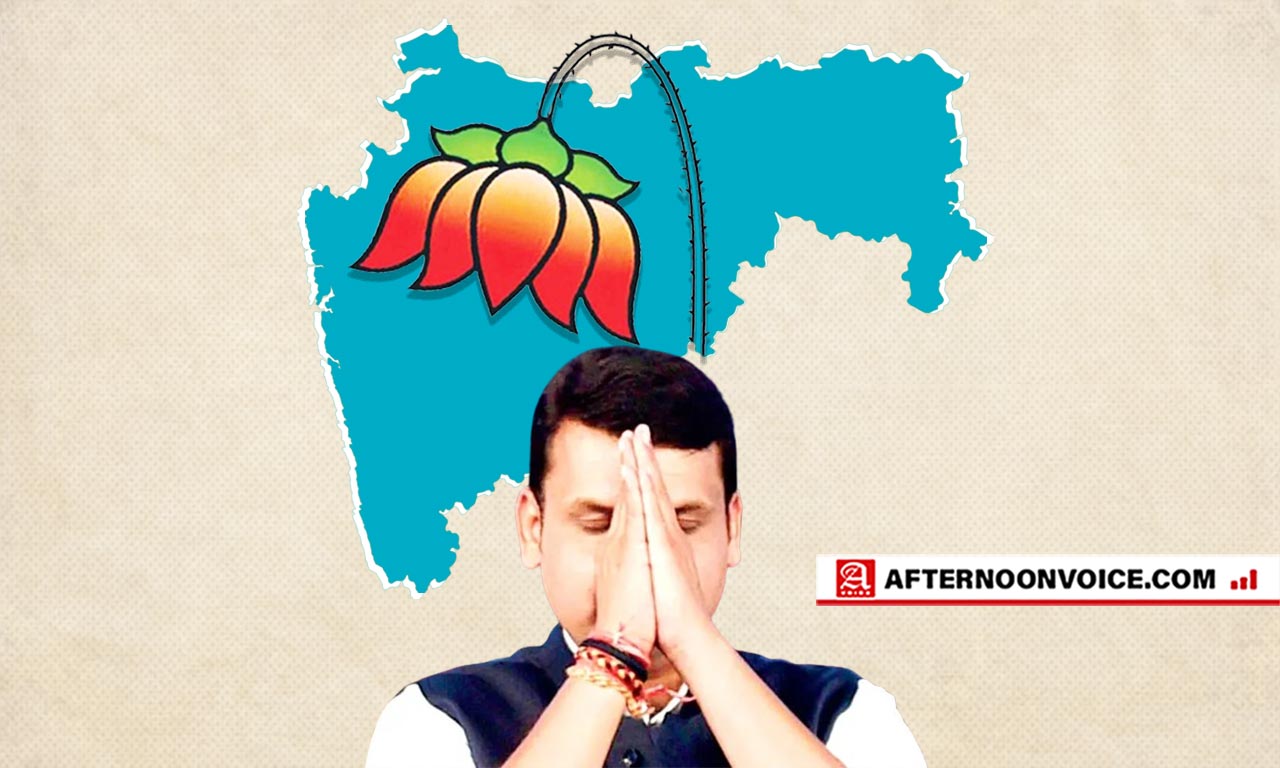
There have been discussions time and again about who betrayed whom or which party did what was right or wrong. It is pointless to talk about the same issues again and again. The biggest concern for the BJP was the declining number of seats. Devendra Fadnavis, a strong leader, ruled as the Chief Minister for 5 years continuously and was suddenly made the deputy Chief Minister in another term. In an attempt to teach a lesson to Uddhav Thackeray, he broke two main regional parties, and the math also went wrong from here.
Maharashtra is a state that was supposed to decide the BJP’s fortunes in the 2024 Lok Sabha elections. And it held true to that, bringing down the party to nine seats from 23 in 2019 and ending it with a short majority in Parliament.
Maharashtra was mostly ruled by the Congress and the NCP. The BJP and then Balasaheb’s Shiv Sena came to power in Maharashtra only once and then came to power again in 2014, but people liked the Thackeray family’s party and the BJP’s alliance with each other. Neither the BJP nor Shiv Sena could come to power on their own strength; both had the same ideology and people liked to see them together. Perhaps this is the reason they were favoured by the people of Maharashtra. In 2019, political betrayal reached its peak and the BJP somehow came into an awkward position. They were not letting Uddhav demand anything but joined hands with corrupt Ajit Pawar, while Shivna too joined hands with the NCP and Congress. People in the state felt cheated. In the past two and a half years since Mahayuti came to power, the BJP and its leaders have engaged in only blame games, forgetting development issues. The BJP’s Mahayuti allies also performed below expectations, with the Eknath Shinde-led Shiv Sena getting seven seats and Ajit Pawar’s NCP just 1. The NDA was thus reduced to 17 seats out of 48 in the state. In 2014, with the united Sena as an ally, the NDA had won 43 seats. The BJP-led NDA has won after securing 292 seats in a 543-member Lok Sabha. The INDIA Alliance defied all exit polls and predictions and bagged 234 seats.
One of the sad results of the 2024 Lok Sabha election results has been the drop in numbers for the BJP. From a commanding 303 seats in 2019, the Narendra Modi-led BJP has been reduced to 240 seats this time around. This indicates Modi has lost his charisma; people are not taking him seriously. Modi is the star campaigner of the party and its alliance.
Following the low-slung performance of the National Democratic Alliance (NDA) in Maharashtra and Uttar Pradesh, In Maharashtra, the splitting of Shiv Sena and the Nationalist Congress Party (NCP) led to voter preference for Uddhav Thackeray and Sharad Pawar, which negatively impacted the NDA’s performance. Maharashtra never settled down with the BJP after the party failed to secure a majority in the 2019 Assembly elections. However, while it may have come back into power by first breaking the Shiv Sena and the NCP, the BJP left the voters unconvinced. Instead, the sympathy factor helped the original leaders of the Sena and NCP, from under whose noses their parties were seen as “stolen”—Uddhav Thackeray and Sharad Pawar, respectively.
Uddhav, who was projected as the face of the Maha Vikas Aghadi (MVA) coalition—or INDIA—in Maharashtra, won nine of the 21 seats it contested. This was two more than the Shinde-led Sena, which contested 15 seats and won seven. In the split, the Shinde Sena, which walked away with most of the united Sena’s MLAs and MPs, had both the name of the party and its symbol. Still, that didn’t come in the Uddhav faction’s way. Similar was the case with the Ajit Pawar-led NCP, which won the name and the symbol after breaking away from the party created and bred by Sharad Pawar. While Pawar Senior again came up on top, with an impressive strike rate of winning seven of the 10 seats it contested, Ajit’s NCP could win just one of the five seats it fought for.
Ultimately, Marathwada’s eight seats proved the albatross around the BJP’s neck, with the party paying a price for the poor management of the Maratha quota agitation by the state government. The BJP failed to win any of the seats in Marathwada. The government’s flip-flop on the issue was seen as driven by essentially the BJP, with the other two partners in power, Sena and NCP, led by Maratha leaders Shinde and Ajit, respectively. While the aggressive campaign by activist Manoj Jarange Patil forced the BJP to ultimately bring in a 10% quota for the Marathas, the delay was considered by many to be a cynical move by the party to consolidate the OBCs behind it in a case of reverse polarisation. Finally, even that didn’t happen, despite the OBCs previously proving a solid BJP vote bank.
Days before the elections, the BJP persuaded long-time Congress leader and former CM Ashok Chavan into its fold in a move to bolster its Maratha credentials. But that, too, failed. In 2019, the BJP saw sweeping wins in the Beed, Jalna, Nanded, and Latur seats. In 2024, even BJP national secretary Pankaja Munde, the daughter of one of the BJP’s tallest OBC leaders, the late Gopinath Munde, lost to NCP (Sharadchandra Pawar) candidate Bajrang Sonwane in Beed. In the 2014 and 2019 Lok Sabha elections, the BJP’s performance rested to some extent on its ability to win over Dalits. However, this time, the INDIA bloc’s narrative of an overwhelming BJP majority government being a threat to the Constitution seems to have struck home.
Voices were heard from Dalit defrayals about alterations in the statute created by Dr. B. R. Ambedkar and threats to the protections provided in it for them. At 10.5%, Dalits are a formidable vote bank in Maharashtra, with the state seen as Ambedkar’s karma Bhoomi, and their apprehension regarding the BJP seems to have found reflection in the party’s performance in Vidarbha, Marathwada, and Mumbai. The BJP tried to debunk this narrative. With 55% of the state being rural, agriculture has always driven the politics of Maharashtra. It is not for no reason that Sharad Pawar ensured he held the agriculture portfolio in his stints as Union minister. If there is the sugarcane belt in western Maharashtra, soyabean and cotton are predominant in Vidarbha and Marathwada regions, and onion in North Maharashtra. Across these regions, farmer angst was evident.
