


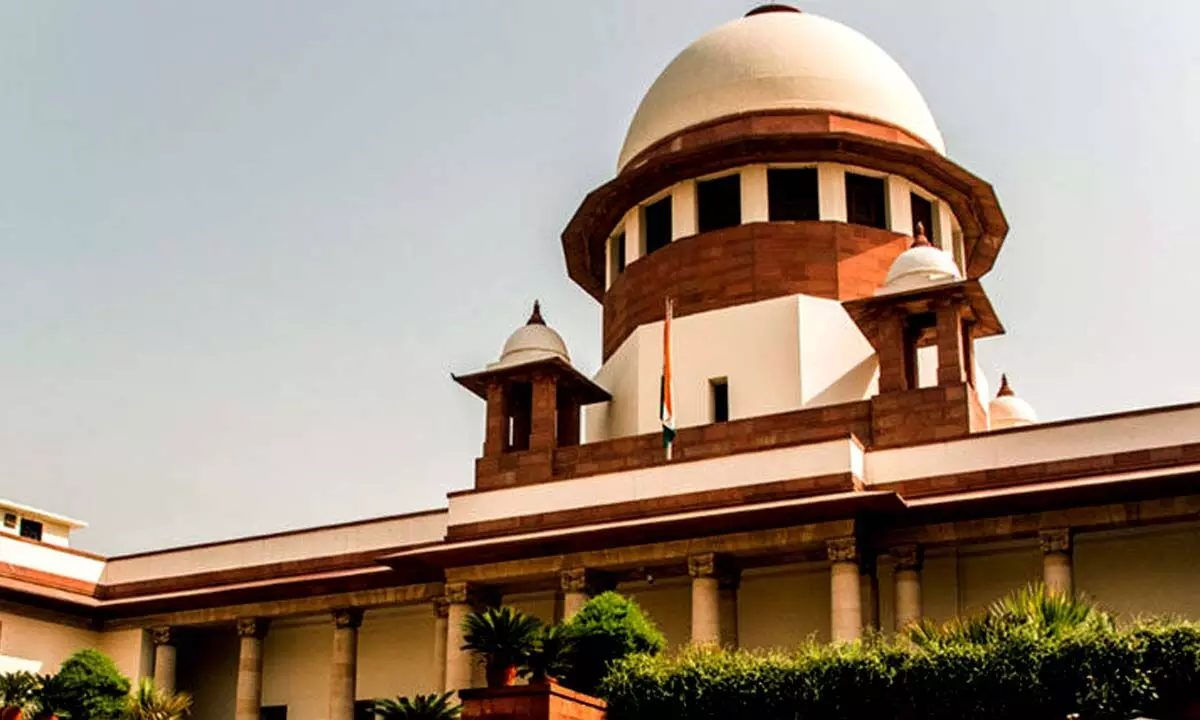
The Supreme Court on Monday agreed to urgently consider listing multiple petitions that challenge the constitutional validity of the Waqf (Amendment) Act, 2025, which has sparked nationwide uproar among Muslim organisations and political leaders.
The Act, recently passed by Parliament and signed by President Droupadi Murmu, is under fire for allegedly stripping Waqf Boards and state governments of their authority over Waqf properties, instead centralising control under the Union government.
During the court proceedings, senior advocate Kapil Sibal, representing Jamiat Ulama-i-Hind, urged for urgent listing of the pleas. The matter was also raised by senior advocate Abhishek Singhvi, lawyer Nizam Pasha, and others on behalf of petitioners including AIMIM president Asaduddin Owaisi, Congress MP Mohammad Jawed, and AAP MLA Amanatullah Khan.
Chief Justice Sanjiv Khanna, along with Justices Sanjay Kumar and KV Viswanathan, noted the submissions and said the listing request would be considered later in the day.
The Jamiat Ulama-i-Hind, in its plea, described the law as a “dangerous conspiracy” to rob Muslims of their religious freedom, calling it a direct attack on the Constitution. The organisation also indicated that its state units would be challenging the law separately in various High Courts.
Maulana Arshad Madani, the president of Jamiat, has filed an interim petition seeking to halt the implementation of the Act altogether.
Another petitioner, Samastha Kerala Jamiathul Ulema, a body of Sunni Muslim clerics, argued the law intrudes on Article 26 of the Constitution, which protects the rights of religious denominations to manage their own affairs. Their plea warned that the amendments would distort the religious character of Waqfs and irreparably damage the autonomy of Waqf institutions.
The law has also been challenged by Association for the Protection of Civil Rights, an NGO, which said the Act imposes arbitrary restrictions not seen in the governance of other religious endowments.
Owaisi, in his plea, argued that while protections for Hindu, Jain, and Sikh endowments remain intact, those for Waqfs are being eroded — calling it “hostile discrimination” against Muslims and a violation of Articles 14 and 15 of the Constitution.
Amanatullah Khan, in a separate petition, has sought that the entire amendment be declared unconstitutional, citing violations of a host of constitutional provisions, including Articles 14, 15, 21, 25, 26, 29, 30, and 300-A.
With widespread concern among religious and political leaders, the legal battle over the Waqf (Amendment) Act is shaping into a high-stakes constitutional showdown that may have far-reaching implications for minority rights and religious autonomy in India.

