


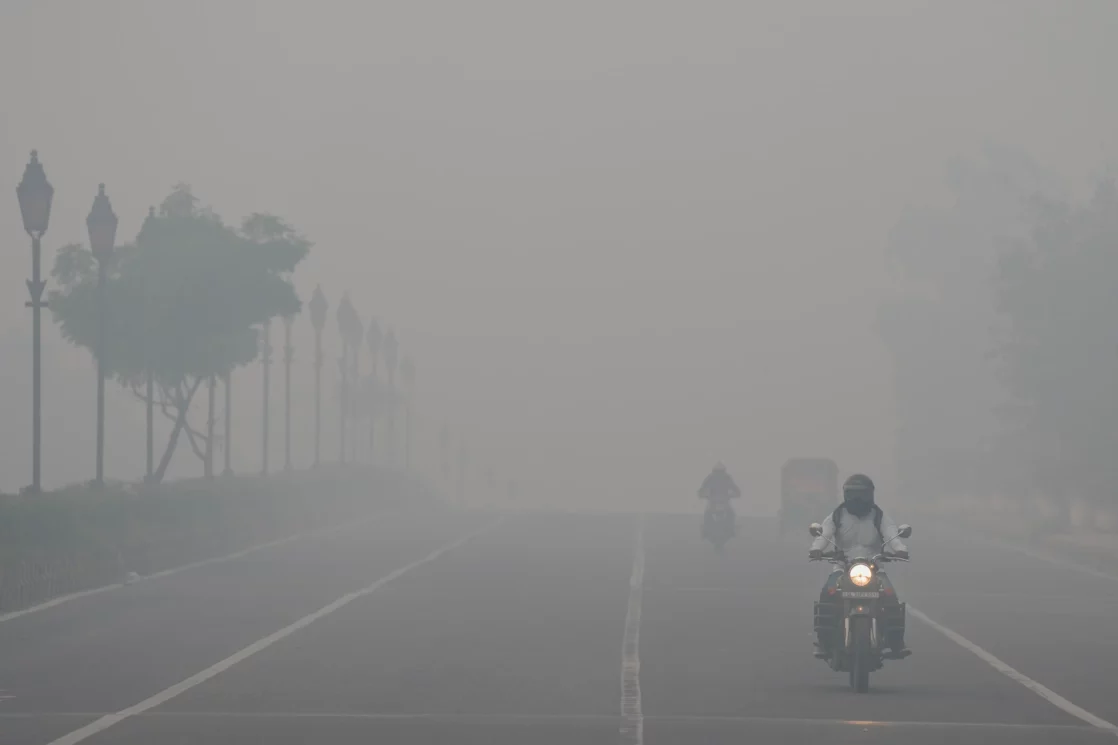
Delhi woke up on Tuesday to a thick blanket of grey smog, reduced visibility, and hazardous air as post-Diwali pollution sent the city’s Air Quality Index (AQI) spiraling into the ‘very poor’ zone. Many residents flouted the Supreme Court’s two-hour limit on firecrackers, celebrating late into the night.
According to data from the Central Pollution Control Board (CPCB), Delhi recorded an AQI of 352 at 8 am, up from 346 at 5 am and 351 at 7 am, indicating a sustained rise in pollution levels. The 24-hour average AQI on Monday was reported at 345, placing it firmly in the ‘very poor’ category.
An AQI between 301 and 400 falls under the ‘very poor’ range, meaning prolonged exposure may cause respiratory discomfort. On Monday, 36 out of Delhi’s 38 monitoring stations registered readings in the ‘red zone,’ showing that pollution was widespread across the capital.
The CPCB’s SAMEER app, which tracks real-time AQI data, remained unresponsive on Tuesday morning, leaving citizens relying on scattered updates from local stations.
While the Supreme Court had permitted the use of green firecrackers in Delhi-NCR only between 8 pm and 10 pm on Diwali night, widespread violations were reported as loud bursts and fireworks continued well past midnight.
At midnight, the AQI stood at 349, and at 1 am it was 348, reflecting that pollution levels had already surged during the peak of celebrations. Environmental experts warned that stagnant winds and low temperatures could trap pollutants near the ground for the next few days, worsening the smog.
Forecasts suggest the capital’s air quality may slip into the ‘severe’ category on Tuesday and Wednesday as pollution from firecrackers combines with emissions from vehicles, industries, and ongoing stubble burning in neighboring states.
With Delhi once again gasping for breath, environmentalists are urging authorities to step up enforcement and citizens to exercise restraint during future festivities.
