


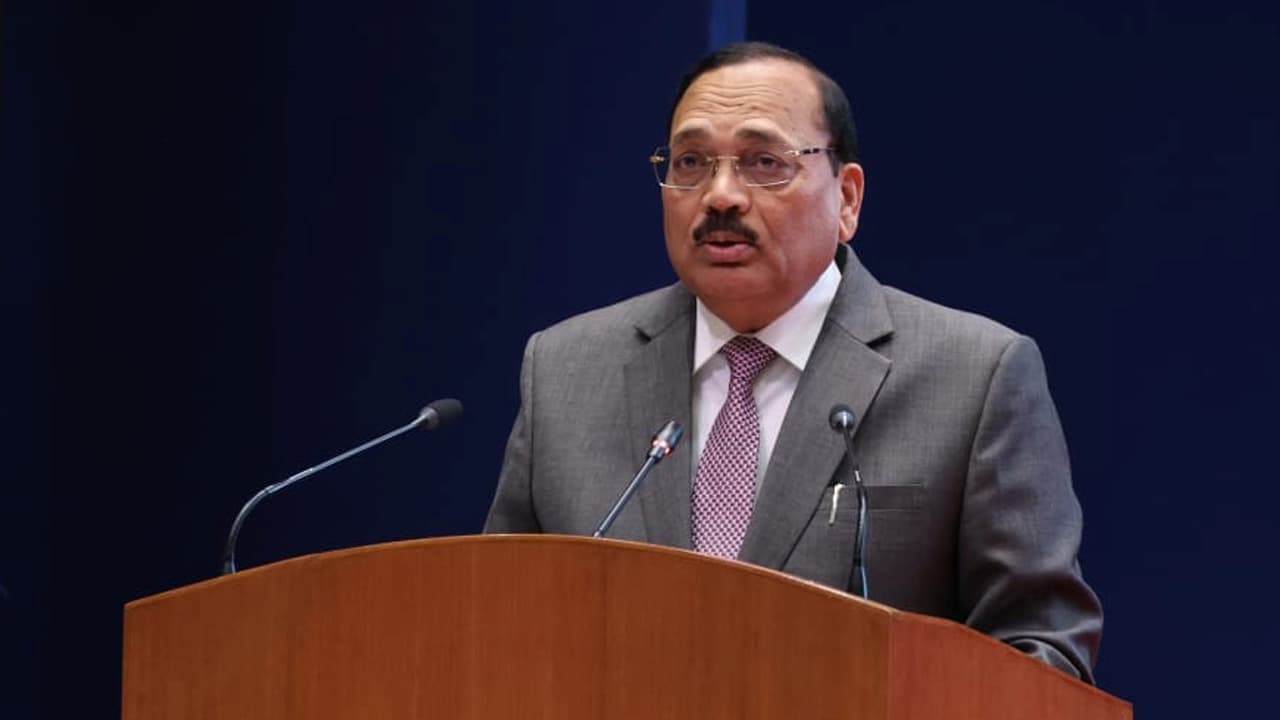
The Supreme Court on Monday observed that the constitutional right to peaceful protest cannot be curtailed merely because a demonstration is taking place, with Chief Justice of India Surya Kant stating that the existence of an agitation does not by itself justify a police lathi-charge.
The observations were made during the hearing of a batch of petitions alleging excessive police action against students protesting over alleged examination paper leaks, including during the Cockroach Janta Party’s (CJP) “Chalo Sansad” march towards Parliament on July 20.
A Bench comprising Chief Justice Surya Kant and Justices Joymalya Bagchi and V. Mohana heard the matter.
“The right to peaceful and lawful protest is absolutely guaranteed under the Constitution,” the Chief Justice observed.
“Merely because there is an agitation does not mean there should be a lathi-charge,” he added, while stressing that allegations of excessive use of force must be examined independently and without prejudice.
Court Calls for Uniform Guidelines
The Chief Justice noted that the issue was not confined to Delhi and indicated that uniform national guidelines may be required for handling public demonstrations.
At the same time, the Bench emphasised that protesters also have a responsibility to maintain discipline, observing that self-restraint is an essential part of democratic expression.
The Court made it clear that violence during protests cannot be condoned and said authorities are free to act against anti-social elements involved in unlawful activities. However, it stressed that peaceful protesters should not be subjected to indiscriminate force.
Justice Joymalya Bagchi said injuries sustained by both protesters and police personnel deserved equal concern. The Bench also permitted a lawyer representing the families of injured police personnel to participate in the proceedings.
Justice Bagchi further questioned whether police personnel deployed for crowd-control duties had been adequately equipped with protective gear, including helmets and other safety equipment.
Petitions Challenge Police Action
The petitions arise primarily from the police action during the CJP-led “Chalo Sansad” march on July 20, when protesters attempted to march from Jantar Mantar to Parliament over alleged examination paper leaks and broader concerns regarding the education system.
Delhi Police had maintained that permission had not been granted for the march. Clashes later broke out, with protesters alleging that police used lathis, tear gas and force, including by unidentified or plainclothes personnel.
One of the petitions claims that at least 60 protesters sustained injuries, while police personnel were also reported to have been injured during the violence.
The petitioners have sought nationwide guidelines governing police action during public demonstrations. Among their demands are prohibiting unidentified personnel from carrying out crowd-control operations, requiring officers to display visible identification badges and restricting the repeated imposition of prohibitory orders unless there is a clear and immediate threat to public order.
The pleas also seek an independent investigation into the July 20 violence, preservation of CCTV footage and other electronic evidence, and action against personnel found responsible for assaulting protesters or allegedly misbehaving with women demonstrators.
Some petitioners have additionally requested the constitution of a judicial commission or a Special Investigation Team (SIT) headed by a retired Supreme Court judge.
The petitions also raise concerns over the closure of Metro stations and internet restrictions imposed during the protests, arguing that the measures disrupted commuters, students, patients, banking services, remote work and access to emergency facilities.
Hearing Continues on July 28
The Supreme Court has decided to hear all the petitions together and has listed the matter for further hearing on Tuesday, July 28.
The issue had first reached the Court through a letter addressed to the Chief Justice on July 22. At the time, the Chief Justice clarified that no formal petition had been filed and therefore the Court had not refused to hear the matter.
After a petition was formally filed and mentioned before the Bench on July 24, the Court agreed to take up the matter, leading to Monday’s hearing.
