


Watching Khakee: The Bihar Chapter was like staring into a mirror that reflects the rot of Bihar’s political and administrative system. It isn’t fiction—it’s a frightening reminder of how crime, caste, and politics have merged into one inseparable web. The show’s portrayal of gangsters ruling districts, police working under their thumb, and politicians being hand-fed by criminals is not exaggeration—it’s Bihar’s long, unending tragedy.
Bihar has lived under the shadow of organized crime for decades, and what’s worse, it has normalized it. The Ashok Mahto gang, led by caste politics and blood vendetta, terrorized entire districts like Nalanda, Sheikhpura, and Nawada. This was not just about gunfire and gang wars—it was the complete hijacking of the system. Policemen became spectators, bureaucrats became pawns, and politicians became protectors of the very men they should have condemned.
Let’s call it what it is: Bihar is not merely a state with a law-and-order problem. It is a state where the idea of justice has been mutilated by politics. Criminals are not hiding; they are contesting elections. Convicts are released to garlands and gunshots, and gangsters turn into leaders, while honest officers like Amit Lodha are punished for doing their duty. This is not governance—it’s decay.
Take the case of Ashok Mahto and his sharpshooter Pintu Mahto—men accused in multiple murders, including that of a sitting Congress MP, Rajo Singh. They escaped from prison after killing policemen, ruled over villages like feudal lords, and turned caste into their shield. The Mahto-Singh rivalry alone claimed over 200 lives across 100 villages. But instead of condemnation, they became symbols of “caste pride.” This is the moral erosion Bihar refuses to confront—where gangsters become heroes and officers become villains.
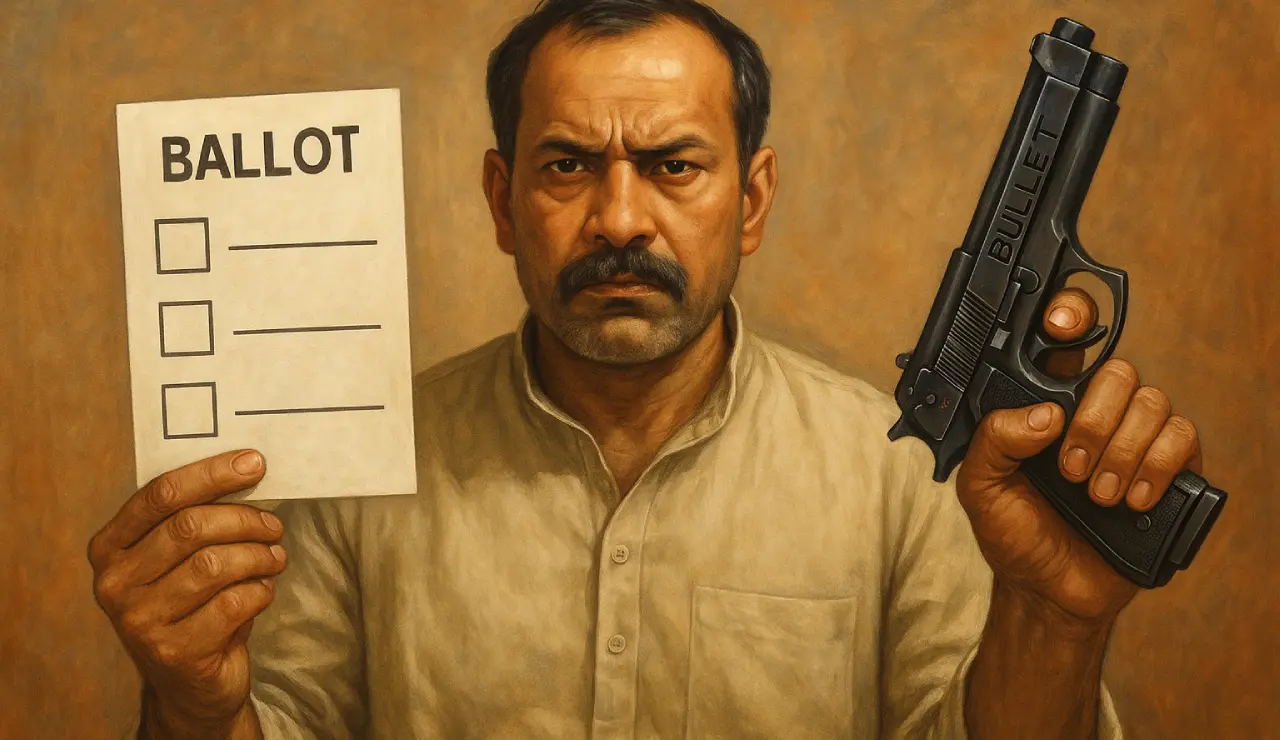
Even after decades, Bihar hasn’t learned. Pintu Mahto, accused in 30 murder and abduction cases, was acquitted for “lack of evidence.” His wife contested elections, and he reportedly joined the Janata Dal (United). Ashok Mahto, who once escaped jail and orchestrated massacres, was released in 2023, married under political patronage, and his wife was given a ticket to contest Lok Sabha elections. That’s Bihar for you—where the ballot and the bullet now share the same stage.
The political establishment of Bihar has made peace with crime. The reason? Vote banks built on caste arithmetic and fear. The Kurmi and Koeri support for Mahto was seen as resistance against Bhumihar domination, but in reality, it was a legitimization of violence in the name of “social justice.” Lalu Prasad Yadav perfected the art of this caste manipulation—turning the oppressed into weapons of revenge. Nitish Kumar, too, has walked the same tightrope—balancing morality and survival, but tilting toward whichever side guarantees power. Governance, justice, and reform have long been traded for electoral convenience.
What Khakee exposes is not just Bihar’s past—it’s its present. Crime is no longer an underground enterprise; it’s part of the establishment. The police machinery functions under political instructions, not the Constitution. When honest officers rise, they are sidelined, suspended, or hounded by corruption charges. Meanwhile, the criminals they once arrested are celebrated as local heroes. Bihar’s system doesn’t punish crime—it promotes it.
The tragedy runs deep. Generations have grown up in fear, watching murders, abductions, and caste wars unfold as routine events. The villages of Nalanda, Sheikhpura, and Nawada still carry the scars of the Mahto-Singh conflict. The media moves on, the politicians reinvent themselves, and the people silently adapt to the cycle of lawlessness. Bihar’s greatest tragedy is not its poverty—it’s the erosion of its moral fabric.
When a state starts calling its criminals “Robin Hoods,” when politics becomes caste warfare, and when bureaucracy becomes complicit—justice dies. Bihar’s story today is not one of development, but of decay covered in slogans. The same leaders who talk of governance allow criminal elements to dictate terms behind closed doors. And as long as that continues, Bihar will remain a hostage—not of its people, but of its politics.
The rise of criminal dominance in Bihar isn’t an accident; it’s the outcome of deliberate political indulgence and social surrender. Until Bihar learns to separate leadership from lawlessness, it will keep producing new versions of Ashok Mahto, new justifications for violence, and new series like Khakee—based on the same old nightmare.
