Mamata Banerjee Rushes to I-PAC Chief’s Home Amid ED Searches, Alleges Political Vendetta 2
West Bengal Chief Minister Mamata Banerjee on Thursday dramatically arrived at the residence of I-PAC chief Pratik Jain, where the Enforcement Directorate was conducting searches, accusing the central agency of attempting to confiscate sensitive internal documents and digital data belonging to the Trinamool Congress.
Banerjee termed the searches at Jain’s residence, whom she described as the “in-charge of my IT cell,” as politically motivated and unconstitutional. She reached the house around noon, shortly after Manoj Verma arrived at the spot, and remained there for about 20–25 minutes before emerging with a green folder in hand.
“ED raided my IT sector office and searched the residence of the person heading it. They were confiscating my party’s documents and hard disks containing details of our Assembly election candidates. I have brought those back,” Banerjee told reporters.
The chief minister alleged that ED officials attempted to seize hard disks, mobile phones, laptops, candidate lists and internal strategy documents of the ruling party. “Is it the duty of the ED to collect political party data?” she asked, asserting that such actions amounted to misuse of constitutional agencies.
The searches were also carried out at the office of the Indian Political Action Committee (I-PAC), the political consultancy firm headed by Jain, which besides offering strategic consultancy to the TMC also handles the party’s IT and media operations.
Launching a sharp attack on Union Home Minister Amit Shah, Banerjee described the raids as an act of political vendetta. “This is not law enforcement, this is political vendetta. Constitutional agencies are being used to intimidate opposition parties,” she alleged.
Pointing to the folder she carried out of the residence, Banerjee claimed ED officials were leaving with party documents and had even attempted to take away a laptop. She further alleged selective targeting by central agencies, claiming that over 15 lakh names from West Bengal had been deleted from electoral rolls without adequate explanation.
Banerjee later visited I-PAC’s Sector V office in Salt Lake, where Rajeev Kumar was also present. The episode evoked memories of the 2019 confrontation at Loudon Street, when Banerjee had rushed to the residence of then police commissioner Rajeev Kumar during a CBI search and later staged a dharna in central Kolkata.
Reacting to the developments, Leader of Opposition Suvendu Adhikari accused the chief minister of repeatedly interfering in the functioning of constitutional agencies. He questioned why TMC’s internal documents were allegedly in the possession of a private consultancy firm and termed the CM’s visit “unethical and unconstitutional.”
The Enforcement Directorate did not issue any official statement on the searches till the filing of this report, and the precise nature of the case under investigation remained unclear.
Ambernath Political Shake-Up: 12 Suspended Congress Councillors Cross Over to BJP 4
Twelve newly elected councillors of the Ambernath Municipal Council, who were suspended by the Congress for aligning with the BJP after the civic polls, formally joined the Bharatiya Janata Party late Wednesday night, triggering a major political realignment in the Thane district municipality.
The development was announced by Maharashtra BJP president Ravindra Chavan at the party office, where he said the move was driven by a shared commitment to development rather than a quest for power. “The people elected these councillors with the expectation of development. They believe the BJP-led government is capable of delivering justice and growth,” Chavan said.
The defections follow the December 20 civic polls, after which the BJP and Congress—traditional rivals—came together under the banner of the Ambernath Vikas Aghadi (AVA) to form the municipal council leadership, sidelining the Shiv Sena despite it emerging as the single largest party. The AVA also included the Ajit Pawar-led Nationalist Congress Party.
In the 60-member Ambernath Municipal Council, the Shiv Sena won 27 seats, falling four short of a majority. The BJP secured 14 seats, the Congress 12, the NCP four, and two independents were elected. With the support of one independent, the AVA’s strength rose to 32, crossing the majority mark of 30.
Embarrassed by the post-poll tie-up with the BJP, the Congress on Wednesday suspended its 12 newly elected councillors along with the local block president. Hours later, all 12 councillors joined the BJP, significantly altering the political balance in the municipality.
The BJP, Shiv Sena and NCP are partners in the ruling Mahayuti at the state level. However, Mahayuti ally Shiv Sena has termed the Ambernath developments a betrayal of “coalition dharma”, arguing that the arrangement was designed to keep the Eknath Shinde-led party out of power in the local body.
Chavan said the crossover reflected growing confidence in the BJP’s governance. “These councillors believe that only through the BJP can the promises made to citizens be fulfilled effectively,” he said, adding that the party would focus on stability and development at the municipal level.
On the BJP’s tie-up with the All India Majlis-e-Ittehadul Muslimeen in the Akot Municipal Council in Akola district, Chavan said a show-cause notice has been issued to the party’s Akot MLA Prakash Bharsakhale. He added that Chief Minister Devendra Fadnavis had expressed strong displeasure over such local-level alliances, warning that actions violating party discipline would not be tolerated.
Fadnavis on Wednesday reiterated that alliances with ideological rivals were not approved by the BJP leadership and amounted to indiscipline. Meanwhile, the Uddhav Thackeray-led Shiv Sena (UBT) said the developments exposed the BJP’s double standards and its willingness to do whatever it takes to secure power.
Madhav Gadgil, Champion of Western Ghats Conservation and Ecological Thought, Dies at 83 6
Eminent ecologist Madhav Gadgil, widely regarded as one of India’s foremost champions of environmental conservation and a key voice in protecting the Western Ghats, passed away in Pune late Wednesday night after a brief illness, family sources said. He was 83.
Gadgil breathed his last at a private hospital in Pune, marking the end of a distinguished career that shaped India’s ecological research, conservation policy and public environmental consciousness for over five decades.
He was the founder of the Centre for Ecological Sciences at the Indian Institute of Science and chaired the Western Ghats Ecology Expert Panel, popularly known as the Gadgil Commission. The panel’s 2011 report, which recommended declaring large parts of the Western Ghats as ecologically sensitive zones, sparked intense national debate but is widely considered a landmark in India’s environmental history.
In recognition of his lifelong work, Gadgil was honoured in 2024 with the United Nations Champions of the Earth award, the UN’s highest environmental honour, for his seminal contributions to safeguarding the Western Ghats, one of the world’s richest biodiversity hotspots.
Born in Pune on May 24, 1942, Gadgil hailed from an eminent academic family. His father, Dhananjay Ramchandra Gadgil, was a noted economist and former director of the Gokhale Institute of Politics and Economics. Madhav Gadgil completed his graduation in biology from Fergusson College in 1963, earned a master’s degree in zoology from the University of Mumbai in 1965, and went on to obtain a PhD from Harvard University in 1969, specialising in mathematical ecology and animal behaviour.
After returning to India in 1971, Gadgil joined IISc in 1973, where he played a pivotal role in institutionalising ecological research. During his tenure, he helped establish the Centre for Ecological Sciences and the Centre for Theoretical Studies, laying the foundation for contemporary ecological and interdisciplinary research in the country.
Following his retirement from IISc in 2004, Gadgil continued his academic and research work at the Agharkar Research Institute in Pune and the University of Goa. He also served on several high-level advisory bodies, including the Scientific Advisory Council to the Prime Minister, the National Advisory Council and the National Tiger Conservation Authority.
A prolific scholar, Gadgil authored or co-authored more than 250 scientific papers and several influential books, including This Fissured Land and Ecology and Equity. Beyond academia, he was a regular columnist in English and Marathi, committed to making ecological issues accessible to the wider public.
His contributions were recognised with numerous national and international honours, including the Padma Shri (1981), Padma Bhushan (2006), Shanti Swarup Bhatnagar Prize, Volvo Environment Prize and the Tyler Prize for Environmental Achievement.
Gadgil’s passing is being mourned across academic, environmental and policy circles as the loss of a scientist who combined rigorous scholarship with an unwavering commitment to ecological justice. His last rites will be performed later on Thursday.
'Not Acceptable': Fadnavis Orders BJP to Exit Local Tie-Ups with Congress, AIMIM 8
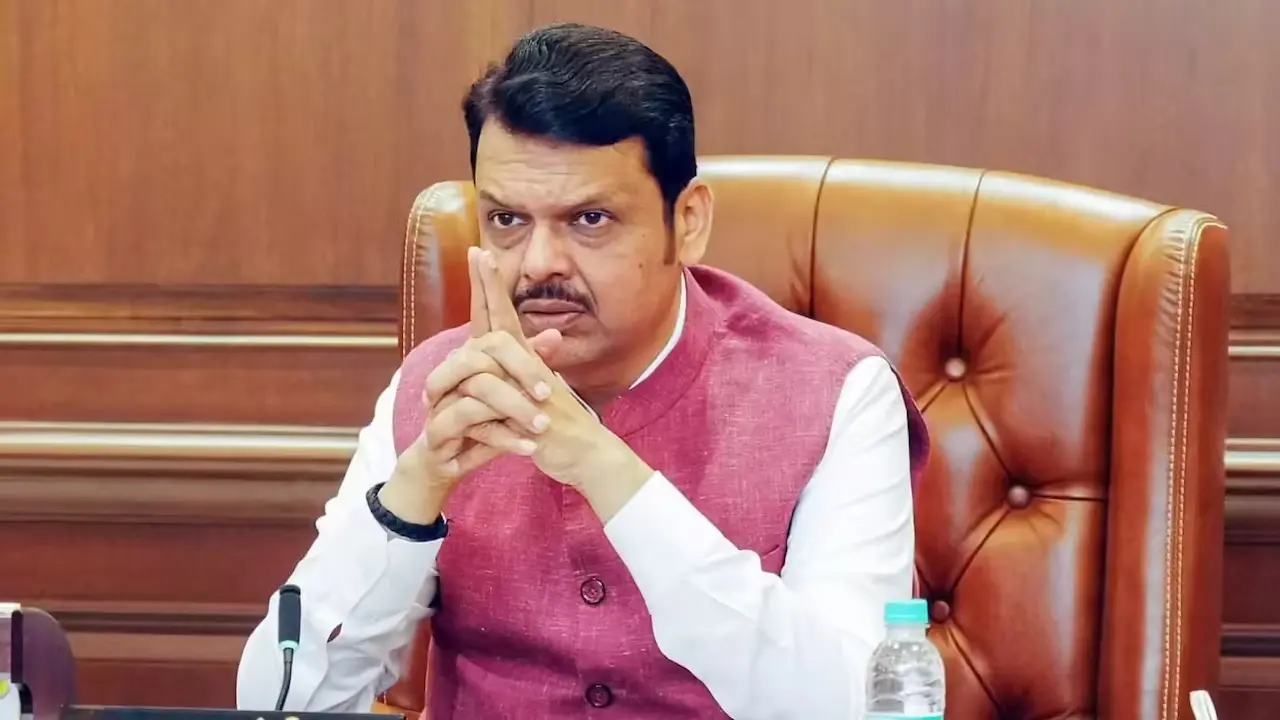
Maharashtra Chief Minister Devendra Fadnavis on Wednesday directed the BJP to immediately sever its local alliances with the Congress and the All India Majlis-e-Ittehadul Muslimeen (AIMIM) in two municipal councils, asserting that such tie-ups were “not acceptable” to the party.
Reacting to alliances formed in Ambernath and Akot ahead of the January 15 municipal council elections, Fadnavis said the BJP would not tolerate partnerships with the Congress or AIMIM. “Alliance with Congress and AIMIM is not acceptable. It will have to be broken. Directives have been issued, and the matter will be looked into. Disciplinary action will be taken if anyone has violated party orders,” he said.
Within hours of the statement, the Indian National Congress announced the suspension of Ambernath Congress chief Pradip Patil and dissolved the local Congress committee.
In Ambernath, around 60 km from Mumbai, the BJP had formed the Ambernath Vikas Aghadi to keep the Shiv Sena out of power. The front included 14 BJP members, 12 from the Congress, four from the Ajit Pawar-led Nationalist Congress Party, and one Independent. A letter submitted to the Thane district collector named Abhijeet Gulabrao Karanjule-Patil as group leader.
While the BJP managed to secure the municipal council chairman’s post, the Shiv Sena emerged as the single largest party with 27 seats. Both Eknath Shinde and Maharashtra BJP chief Ravindra Chavan hail from Thane district, and the alliance was seen as part of a local power tussle to retain control over leadership positions.
A similar controversy surfaced in Akot municipal council in Akola district, where the BJP registered the Akot Vikas Manch by aligning with the All India Majlis-e-Ittehadul Muslimeen, which emerged as the second-largest party with five seats. The front also includes both factions of the Shiv Sena, both factions of the NCP, and Bachchu Kadu’s Prahar Janshakti Party. BJP corporator Ravi Thakur was named group leader, making it mandatory for alliance members to follow the whip.
The alliance currently commands 25 of the 33 seats in the council and is set to vote together in the January 13 elections for deputy president and co-opted members. Congress and Vanchit Bahujan Aghadi corporators will sit in the Opposition.
Responding to the developments, Maharashtra Congress chief Harshavardhan Sapkal said there was no question of an alliance between the BJP and the Congress, as both parties had fought each other politically. He added that the party had sought a report on the matter and would take action if the allegations were substantiated.
Congress Names Observers for 2026 Assembly Polls in Assam, Bengal, South India 10
The Indian National Congress on Wednesday appointed a fresh set of observers for Assam, West Bengal, Kerala, Tamil Nadu and Puducherry as it accelerates preparations for the Assembly elections scheduled in these states and the Union Territory in 2026.
Assam and West Bengal are expected to go to the polls in March–April 2026, while Kerala is likely to vote in April. Tamil Nadu and Puducherry are expected to hold Assembly elections in April–May next year.
According to the list released by the party, former Chhattisgarh chief minister Bhupesh Baghel and Karnataka Deputy Chief Minister D K Shivakumar have been appointed as observers for Assam, along with Bandhu Tirkey. In a move signalling a stronger organisational focus, Congress leader Priyanka Gandhi Vadra has been named head of the screening committee for the state.
For Kerala, the party has appointed Sachin Pilot, K J George, Imran Pratapgarhi and Kanhaiya Kumar as observers, indicating an emphasis on reviving the party’s grassroots presence ahead of the crucial contest.
In Tamil Nadu and Puducherry, senior leaders Mukul Wasnik, Uttam Kumar Reddy and Qazi Mohammad Nizamuddin will oversee organisational and electoral preparations.
For West Bengal, the Congress has named Sudip Roy Barman, Shakeel Ahmad Khan and Prakash Joshi as observers, as the party looks to recalibrate its strategy in a state where it has struggled to regain political ground.
The appointments underline the Congress leadership’s intent to intensify coordination, candidate selection and campaign planning well ahead of the 2026 elections, with observers expected to play a key role in strengthening state units and alliance management.
Karnataka Row After BJP Woman Alleges Police Disrobing During Arrest; Cops Deny, Order Probe 12
A political and administrative controversy erupted in Karnataka after a BJP woman functionary alleged that police personnel disrobed her during her arrest in Hubballi, a charge strongly denied by the police, who claimed she removed her clothes herself and assaulted officers, causing injuries.
The incident came to light after a video showing the woman topless inside a police vehicle went viral on social media, triggering sharp reactions and allegations against the police. The woman claimed she was forcibly disrobed by police personnel during her arrest in connection with an alleged attack on government officials.
Rejecting the allegations, Hubballi–Dharwad Police Commissioner N Shashikumar said on Wednesday that the claims were “absolutely false” and motivated. He asserted that the woman disrobed herself after being placed inside the police vehicle and also attacked police officers, including biting four of them.
According to police, the incident stemmed from an operation to clear an alleged encroachment on government land in the Chalukya Nagar area of Keshwapur in Hubballi. When revenue officials arrived with police personnel to conduct a land survey, they were allegedly attacked by occupants, leading to the registration of three separate cases. The woman was named as a key accused in one of them.
Commissioner Shashikumar said that anticipating possible resistance, the investigating officer had taken adequate precautions and deployed eight to ten women police personnel to carry out the arrest. “Despite this, once she was inside the police vehicle, she unclothed herself. Women police staff sought help from local residents and arranged alternative clothing for her, repeatedly requesting her to change,” he said.
He added that four women police officers were injured during the scuffle, with two sustaining serious bite injuries to the abdomen. Two others also suffered injuries, while several male personnel were hurt but chose not to file complaints. The injured women officers have lodged formal complaints.
The police commissioner said the woman has around nine criminal cases pending against her and has been sent to judicial custody. However, to ensure transparency, he has directed the Deputy Commissioner of Police to conduct a detailed inquiry into the sequence of events between January 1 and 5.
The incident has drawn political reactions across the state, with opposition parties demanding accountability, while police maintain that the viral video presents a misleading narrative detached from the actual sequence of events.
Nearly 6.5 Crore Voters Dropped from Draft Rolls in 12 States, UTs During SIR Phase 2 14
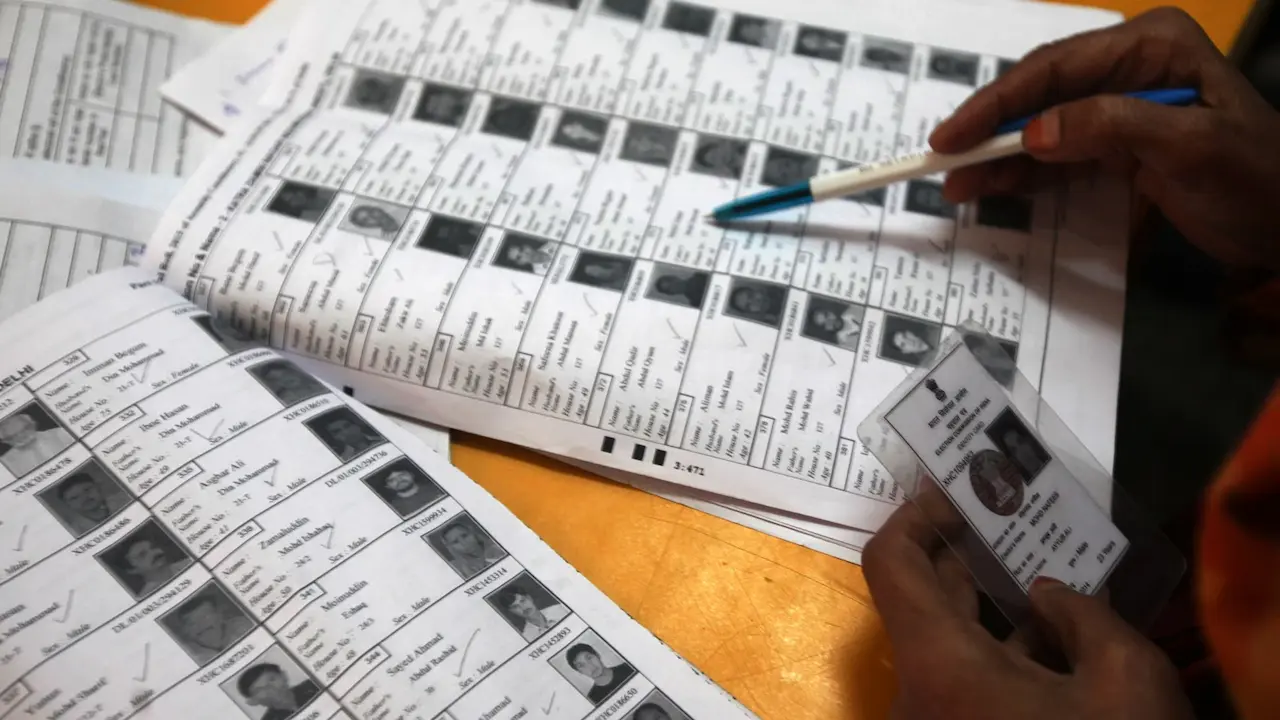
Nearly 6.5 crore elector names have been removed from the draft electoral rolls of nine states and three Union territories published over the past few days as part of Phase 2 of the Special Intensive Revision (SIR) being carried out by the Election Commission of India.
Before Phase 2 of the SIR began on October 27, the 12 states and Union territories together had 50.90 crore registered voters. After the publication of the draft rolls, the electorate count dropped sharply to 44.40 crore.
Election Commission officials said the deleted names have been placed under the ‘ASD’ category—absent, shifted, and dead or duplicate. Officials earlier noted that the collection of enumeration forms during the revision exercise was significantly lower in urban areas compared to rural regions across the states and UTs covered.
In Uttar Pradesh alone, the draft electoral roll published on Tuesday excluded 2.89 crore voters, retaining 12.55 crore electors. Officials said the excluded names accounted for 18.70 per cent of the earlier total of 15.44 crore voters and were removed due to reasons such as death, permanent migration or multiple registrations.
Phase 2 of the SIR formally began on November 4 in Andaman and Nicobar Islands, Lakshadweep, Chhattisgarh, Goa, Gujarat, Kerala, Madhya Pradesh, Puducherry, Rajasthan, Tamil Nadu, Uttar Pradesh and West Bengal. A separate special revision of electoral rolls is currently underway in Assam.
The Election Commission said the most recent SIR in each state will act as the cut-off reference, similar to how the 2003 voter list of Bihar was used during an earlier intensive revision. Most states last undertook a Special Intensive Revision between 2002 and 2004.
Officials said the primary objective of the ongoing SIR is to clean up electoral rolls by verifying voters’ place of birth and identifying foreign illegal migrants. The exercise has gained added significance amid a wider crackdown in several states on illegal migrants, including those from Bangladesh and Myanmar.
SC Shields Singer Neha Singh Rathore from Arrest Over Pahalgam Post, Orders Cooperation with Probe 16
The Supreme Court of India on Wednesday granted interim protection from arrest to folk singer Neha Singh Rathore in connection with a case filed against her over a social media post related to the Pahalgam terror attack in Jammu and Kashmir.
The comments in question allegedly targeted Prime Minister Narendra Modi, Home Minister Amit Shah and the Bharatiya Janata Party over the killing of 26 tourists in the attack.
A bench comprising Justices J. K. Maheshwari and Atul S. Chandurkar issued notice to the Uttar Pradesh government and the complainant in the case, directing that no coercive action be taken against Rathore. The court, however, asked her to appear before the investigating officer and cooperate with the ongoing probe.
The relief comes after the Lucknow bench of the Allahabad High Court rejected Rathore’s anticipatory bail plea on December 5 last year. The High Court had noted that she had failed to cooperate with the investigation despite directions issued earlier while dismissing her plea seeking quashing of the FIR.
An FIR against Rathore was registered at Hazratganj police station in Lucknow on April 27 following a complaint by Abhay Pratap Singh. The complaint alleged that Rathore had repeatedly attempted to incite one community against another on religious grounds and that her remarks threatened the unity of the country.
Rathore has challenged the FIR, contending that she has been falsely implicated under various provisions of the Bharatiya Nyaya Sanhita, including charges related to promoting communal hatred, disturbing public peace, and endangering the sovereignty, unity and integrity of India. She has also been booked under provisions of the Information Technology Act.
The Supreme Court’s interim order will remain in force while the matter is examined further.
Clash Erupts During Anti-Encroachment Drive Near Delhi Mosque, Five Cops Injured; Juvenile Among Five Held 18
Violence broke out during an anti-encroachment drive near the Faiz-e-Elahi mosque in the Ramlila Maidan area of Delhi early Wednesday, after miscreants allegedly pelted stones and glass bottles at police personnel, injuring five officers.
Police used mild force and teargas shells to disperse the crowd and took five people, including a juvenile, into custody following the clash that occurred on the intervening night of Tuesday and Wednesday. Officials said the situation is now fully under control.
According to police sources, the unrest was sparked by social media posts falsely claiming that the mosque was being demolished as part of the drive. Soon after the rumours spread, a crowd gathered near the site, and a section of people began pelting stones at police and Municipal Corporation of Delhi (MCD) workers.
The demolition drive was being carried out by the Municipal Corporation of Delhi on land adjoining the mosque and a nearby graveyard at Turkman Gate, following directions from the Delhi High Court. MCD Deputy Commissioner Vivek Kumar clarified that no damage was caused to the mosque and that only illegal commercial structures were removed.
Police said around 100 to 150 people gathered at the site during the operation. While most dispersed after persuasion, a few created a ruckus and resorted to violence, leaving five policemen with minor injuries. They were provided medical treatment.
The Delhi Police said it is probing whether the violence was spontaneous or a pre-planned attempt to disrupt the court-ordered drive. CCTV footage and videos circulating on social media are being analysed to identify others involved.
Additional Commissioner of Police (Central) Nidhin Valsan said the demolition was scheduled for the night of January 6–7 and that police deployment had been planned in advance after receiving intimation from the MCD. He added that local residents were informed beforehand that the action was legal and limited in scope.
A police source said one of the videos that fuelled tension was allegedly recorded by a person named Khalid Malik, who urged people to step out in large numbers, falsely claiming bulldozers were being used to demolish a mosque.
Those arrested have been identified as Mohd Arib (25), Mohd Kaif (23), Mohd Kashif (25), Mohd Hamid (30), and a juvenile. An FIR has been registered under multiple sections of the Bharatiya Nyaya Sanhita, including rioting, assault on public servants, and disobedience of lawful orders, along with provisions of the Prevention of Damage to Public Property Act, 1984.
MCD officials said around 36,000 square feet of encroached land was cleared during the overnight drive, including a diagnostic centre, a banquet hall and boundary walls. Joint Commissioner of Police (Central Range) Madhur Verma said the area was divided into nine zones with heavy police deployment at sensitive points, and that prior coordination meetings were held with Aman Committee members and local stakeholders.
Delhi Home Minister Ashish Sood termed the incident “unfortunate” and warned that violence would not be tolerated. He said the Faiz-e-Elahi mosque was completely safe and urged people not to fall prey to rumours or provocation, reiterating that the government’s action was strictly within the framework of law.
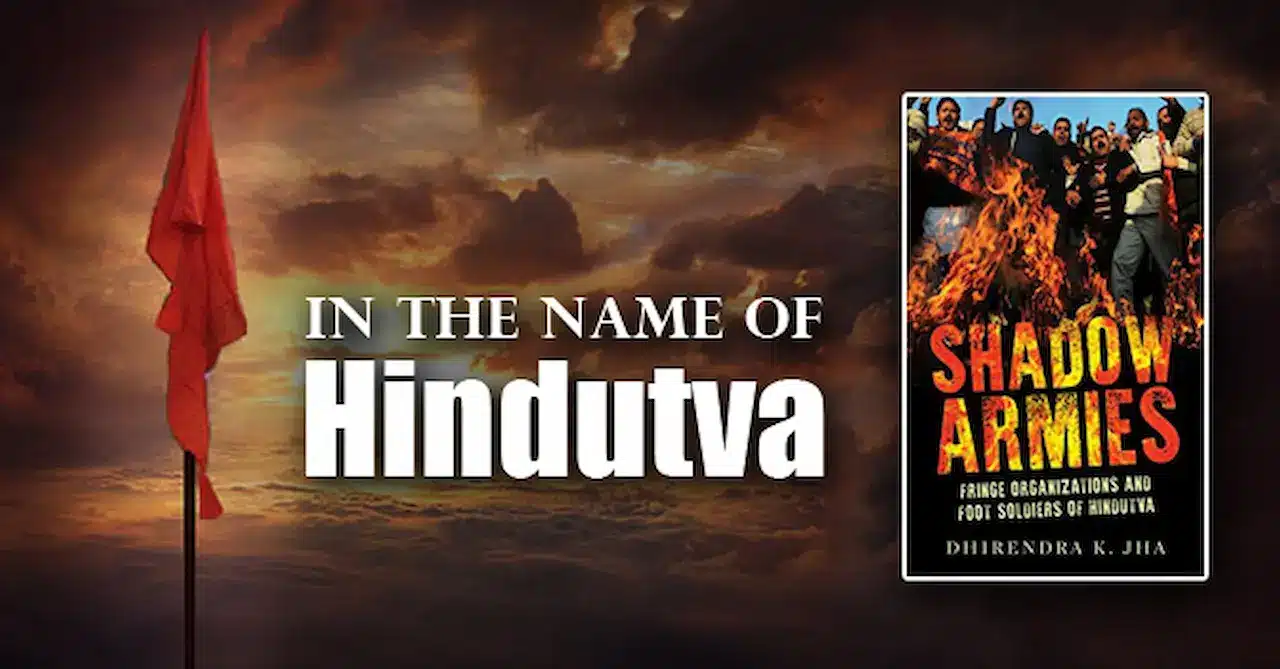
Reviewing Shadow Armies: Between Allegation and Analysis 20
I opened Shadow Armies: Fringe Organizations and Foot Soldiers of Hindutva expecting rigor—cold facts, verifiable linkages, evidence that survives cross-examination. What I found instead was prosecution without a courtroom. The book doesn’t investigate; it indicates. It doesn’t interrogate assumptions; it sermonises. From page one, it’s clear the author isn’t searching for truth but assembling a case—brick by selective brick—against Hindutva and, by convenient extension, against the Rashtriya Swayamsevak Sangh and the Bharatiya Janata Party.
The intellectual backbone of this narrative rests on a reckless shortcut: ideological proximity equals operational control. That isn’t courage—it’s laziness dressed up as bravery. Every fringe group, every local outfit, every individual crime is dragged under one oversized umbrella and christened “foot soldiers,” as if millions of RSS volunteers across generations operate from a single, hidden command room. No documents. No command chains. No financial trails. No institutional directives. Just insinuation, repeated until it starts masquerading as proof. Call it a “shadow,” and suddenly the absence of evidence becomes evidence. Clever trick. Cheap method.
What the book studiously avoids is the most inconvenient question of all: why are the RSS and Hindutva permanent targets? Not because they’re invisible—they’re among the most visible social formations in India. Not because they’re uniquely violent—India’s bloodiest chapters were written by separatists, Maoists, jihadi networks, and caste militias. They are targeted because they endure. Because they’re rooted. Because they mobilise without foreign funding, without intellectual clearance certificates, and without apologies. In an elite ecosystem trained to distrust Hindu assertion while normalising every other identity politics, a disciplined Hindu organisation becomes an existential irritant.
Reading Shadow Armies feels less like history and more like a refurbishment of an old prejudice for a new market. It mistakes mass participation for menace, structure for conspiracy, and cultural confidence for extremism. The anxiety it reveals belongs not to Hindutva but to an ideological class unsettled by its resilience. When hostility comes before inquiry, history is not written—it’s replaced by propaganda with footnotes.
The book’s favourite trope—that the BJP’s rise from two Lok Sabha seats in 1984 to a decisive majority in 2014 “caused” a mushrooming of violent Hindu organisations—is not analysis; it’s ideological storytelling. The conclusion is decided first; causality is reverse-engineered later. Electoral success is treated as forensic evidence. Popular mandate is reframed as moral deviance. Democracy itself is hauled into the dock for choosing the “wrong” side.
The claim that the BJP’s ascent was “accompanied” by groups whose sole purpose is to polarise and kill “in the name of Hindutva” borders on bad faith. Hindu social organisations didn’t pop into existence in the 1990s. Many pre-date the BJP’s relevance—arising as cultural, religious, or reactionary responses to decades of selective secularism, minority appeasement, academic capture, and routine delegitimisation of Hindu identity. Political rise doesn’t manufacture social churn; it reflects it.
The most dishonest move here is the deliberate blurring of ideology and command. The BJP does not run these organisations. The RSS does not issue operational orders to them. Hindutva is not a central headquarters dispatching kill lists. If ideological influence equals culpability, then by that logic every Left-inspired riot must be pinned on Marxist theorists, every Islamist terror act on religious institutions, and every separatist violence on sympathetic intellectuals. That standard collapses the moment the subject becomes Hindu society.
Entities as dissimilar as spiritual groups, youth outfits, and local pressure formations are lumped together to fabricate a single sinister machine. This isn’t investigation; it’s aggregation. Distinctions are erased because nuance doesn’t serve fear.
Take Sanatan Sanstha. Allegations against individuals are endlessly paraded as organisational guilt, as if due process were optional. Even the still-sub judice murder of Gauri Lankesh is exploited to indict an entire ideological spectrum. Verdicts are ignored, closure denied—only perpetual accusation remains. Courts are replaced by outrage.
Then comes Yogi Adityanath and the Hindu Yuva Vahini, wheeled out as proof of state-sponsored extremism. What’s quietly buried is chronology. HVY predates Adityanath’s constitutional role and emerged in regions long abandoned by governance. Criticise methods if you must—but turning it into a nationwide “shadow army” requires either selective amnesia or deliberate exaggeration.
The real discomfort here isn’t violence; it’s legitimacy. The BJP shattered a monopoly that believed narrative control and moral authority were hereditary rights. When voters across caste and class chose the BJP—again and again—the response wasn’t introspection. It was pathology: something must be wrong with the voters; something dark must be manipulating them.
Hence the myth of “shadow armies”—a convenient ghost story that spares the establishment from admitting a simpler, harsher truth: Hindutva gained ground because it resonated—socially, culturally, politically. Indians voted for something: identity, governance, confidence. They weren’t herded by imaginary foot soldiers.
This book isn’t about understanding India. It’s about controlling how India is allowed to be understood—criminalising cultural assertion, delegitimising democratic mandates, and placing Hindu society under permanent suspicion. When ideology blinds inquiry, scholarship dies. What’s left is propaganda—smoothly written, heavily footnoted, and hollow at the core.