Suhas Subramanyam Becomes First Indian American Elected from Virginia and East Coast 2
Suhas Subramanyam has made history as the first Indian American elected to represent Virginia and the East Coast in the U.S. House of Representatives. Running for Virginia’s 10th Congressional District, a Democratic stronghold, he defeated Republican candidate Mike Clancy. Subramanyam, currently a Virginia State Senator, expressed gratitude for the opportunity to serve his district in Congress.
“I am honored and humbled that the people of Virginia’s 10th District put their trust in me to take on the toughest fights and deliver results in Congress. This district is my home. I got married here, my wife Miranda and I are raising our daughters here, and the issues our community faces are personal to our family. It is an honor to continue serving this district in Washington,” Subramanyam said.
With this victory, Subramanyam joins the Samosa Caucus in Congress, a group of Indian American representatives that includes Ami Bera, Raja Krishnamoorthi, Ro Khanna, Pramila Jayapal, and Shri Thanedar.
Subramanyam’s parents emigrated to the U.S. in the late 1970s, passing through Dulles Airport, which he likened to their “Ellis Island.” His family roots are in Bangalore and Chennai, with summers spent in India maintaining a connection to his heritage. Subramanyam highlighted the importance of staying connected to his roots and emphasized values of service, education, and cultural pride instilled by his parents.
He also advocated for a robust India-U.S. relationship, noting the countries’ shared democratic values and the significant Indian diaspora in America. He emphasized the potential for strengthening ties through economic and defense partnerships, including technology transfer and shared strategic goals, seeing these as mutually beneficial for both nations.
Biplab Deb: The Rise, Resilience, and Enduring Influence of Tripura's Former Chief Minister 4
As a journalist who has closely followed Tripura’s political landscape, my recent interview with former Chief Minister Biplab Kumar Deb offered unique insights into his journey and evolution. Meeting Deb was unexpectedly straightforward; he came across as approachable, humble, and refreshingly candid—an impression that contrasted sharply with his often-controversial public persona. It was evident that Deb has grown from his past missteps, maturing with time and experience. Today, he understands what it takes not only to bolster the BJP’s presence in Tripura but also to carve out a meaningful, strategic role for himself within the party. Given another opportunity, Deb might emerge as one of the state’s most impactful leaders.
Tripura had long remained under leftist rule, a period marked by secular ideals but arguably neglecting the preservation of the state’s unique cultural identity. With his rallying cry, “Cholo Paltai” (Let’s Change), Deb disrupted this status quo, leading the BJP to its first victory against the leftist stronghold. His promise of “acche din” (better days) brought new hope to a state grappling with unemployment and poverty, especially resonating with the youth. Deb’s oratory skills and charisma, coupled with the strategic acumen of his ally Sunil Deodhar, catalyzed a political transformation that turned Tripura into a BJP bastion in 2018.
In a surprising twist, Deb stepped down from his role as Chief Minister not due to any scandal or failing, but as a calculated move by the BJP. With the 2023 assembly elections on the horizon, his departure was intended to reinvigorate the party base, allowing him to work more directly with grassroots supporters. As a hands-on leader, Deb’s role as the state president between 2016 and 2020 was instrumental in establishing BJP’s ideological footprint in Tripura, ultimately securing a historic win against the left. His exit was a strategic pivot, emphasizing his organizational strengths over office-bound authority.
Yet Deb’s tenure was far from smooth. His forthright remarks and autocratic tendencies often made headlines, sometimes overshadowing his accomplishments. His controversial statements—from claiming internet technology existed during the Mahabharata era to suggesting unemployed youth open paan shops and raise cattle—were criticized widely and became fodder for social media mockery. His lavish use of government resources, such as frequent helicopter rides and a large convoy, fueled public discontent, while allegations of ties with mafia groups and misuse of public funds added to the scrutiny. In the political sphere, his opponents frequently raised concerns over his governance style, accusing him of fostering a climate of lawlessness.
Despite the controversies, Deb’s impact on Tripura’s political landscape is undeniable. His ability to galvanize anti-left voters in 2018 carved a pathway for the BJP’s success in the region. Recognizing this, the BJP now looks to leverage his organizational expertise to secure a stronghold in the upcoming 2023 assembly elections. Since stepping down, Deb has extended his influence beyond Tripura, contributing significantly to the BJP’s success in Haryana as an election overseer—a testament to his commitment to the party’s larger goals without seeking high-profile positions.
Biplab Deb’s journey is a study in resilience and adaptability. From an idealistic leader with a vision for change to a polarizing figure at the center of multiple controversies, his path has been anything but conventional. Now repositioned as a karyakarta (party worker), Deb is focused on supporting the BJP’s grassroots mobilization in Tripura, aiming to secure a decisive win for the party in the next election. His decision to step back from the Chief Minister’s role reflects a willingness to serve the party’s long-term objectives over personal ambition—a shift that could make him a more grounded and influential force in Tripura’s political landscape in the future.
In the end, Deb’s evolution from chief minister to party worker may just be the defining chapter of his career, one where his experience and renewed focus could drive him to become the pivotal leader Tripura needs.
Book Review: Bhagat Singh Koshyari: A Soul Dedicated to the Nation by Dr. Bihari Lal Jalandhari 6
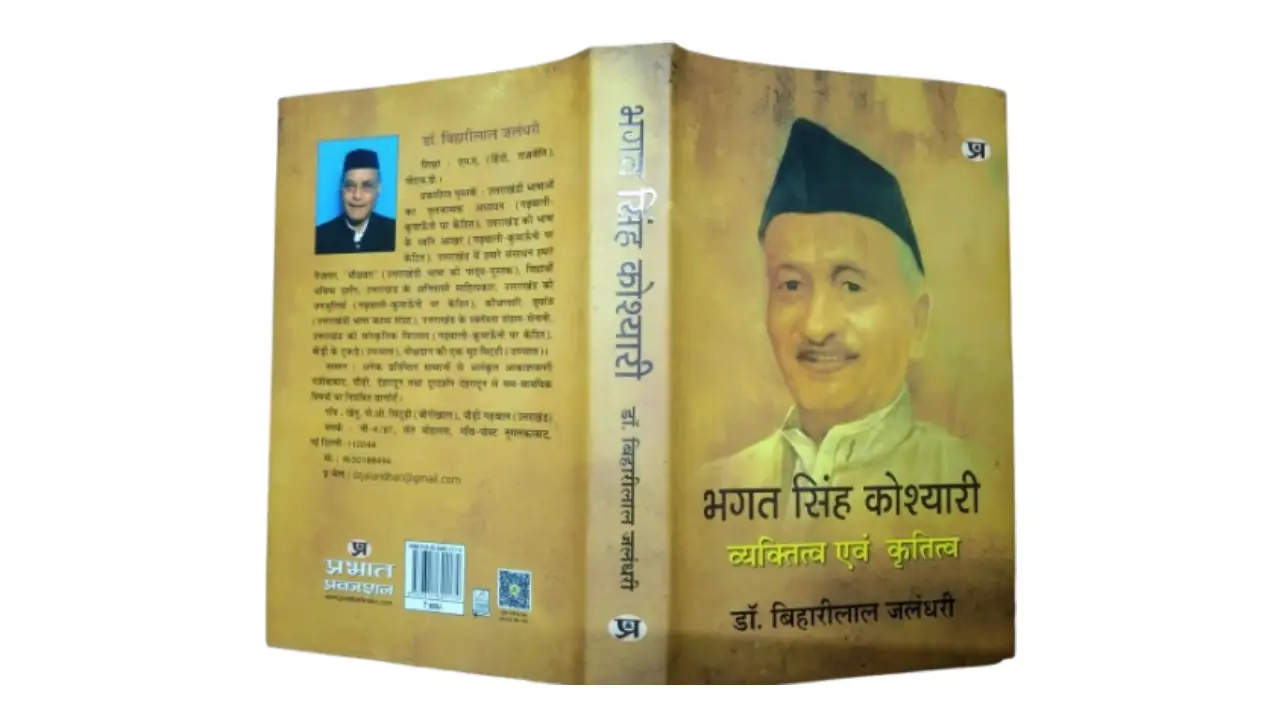
During a recent trip to Uttarakhand, I had the privilege of delving into Bhagat Singh Koshyari: A Soul Dedicated to the Nation, a comprehensive biography of Shri Bhagat Singh Koshyari, former Governor of Maharashtra and a revered public figure celebrated for his warmth and accessibility. This 270-page volume, authored by Dr. Bihari Lal Jalandhari, presents a compelling narrative that traces Koshyari’s journey from a dedicated RSS worker to a respected Governor and influential leader. Through engaging storytelling, the book reveals a leader committed to inclusivity and dedicated to public service, making his story both inspiring and relatable.
Koshyari, often referred to as “Bhagat Da,” is portrayed in the book as an empathetic and patriotic leader with a deep-seated commitment to national security and community welfare. His political journey began early, marked by his devotion to the RSS and his courageous opposition to the 1977 Emergency, which led to his imprisonment. His subsequent roles include serving as Uttarakhand’s Chief Minister and later as Leader of the Opposition, showcasing his tenacity in the face of political challenges. Despite internal challenges within the BJP, he continued to impact the political landscape, contributing notably in roles such as Minister of Energy, Irrigation, Law, and Legislative Affairs in the newly formed Uttarakhand state.
The biography emphasizes Koshyari’s deep understanding of both national and international issues, illustrated through his insightful contributions to parliamentary debates. A multifaceted personality, he is also shown as someone with a profound love for the environment, spirituality, and commitment to justice and equality. Born in Palanadhura Chetabgarh, Uttarakhand, in 1942, Koshyari’s career began in education and journalism, highlighted by the founding of Parvat Piyush, a weekly publication. Over the years, he took on significant roles, from a member of the Uttar Pradesh Legislative Council to BJP National Vice President and Rajya Sabha member, all while championing causes like One Rank One Pension and development in Himalayan states.
Koshyari’s tenure as Governor of Maharashtra marked a transformative period, during which he reimagined the Raj Bhavan as “Lok Bhavan” to emphasize its openness to the public. His influence as Chancellor of 25 public universities in Maharashtra was equally impactful, as he actively engaged with academic communities and launched numerous social initiatives, especially during the COVID-19 crisis. The biography captures these achievements and his efforts to preserve history, such as the renovation of the British-era Bunker at Raj Bhavan to house the ‘Kranti Gatha’ gallery honoring freedom fighters. His retirement in 2023 marked the conclusion of a public career characterized by dedication and service to the nation.
This biography by Dr. Jalandhari offers valuable insights into a leader whose life is an exemplar of resilience and service. Bhagat Singh Koshyari: A Soul Dedicated to the Nation is a tribute to Koshyari’s enduring legacy and a must-read for anyone interested in public service, political dedication, and leadership. I finished reading this book filled with deep emotion, respect, and admiration for the remarkable journey of Koshyari Baba.
Ex-BJP MP Raosaheb Danve's Daughter Sanjana Jadhav Joins Shinde-Led Shiv Sena Ahead of Maharashtra Polls 8
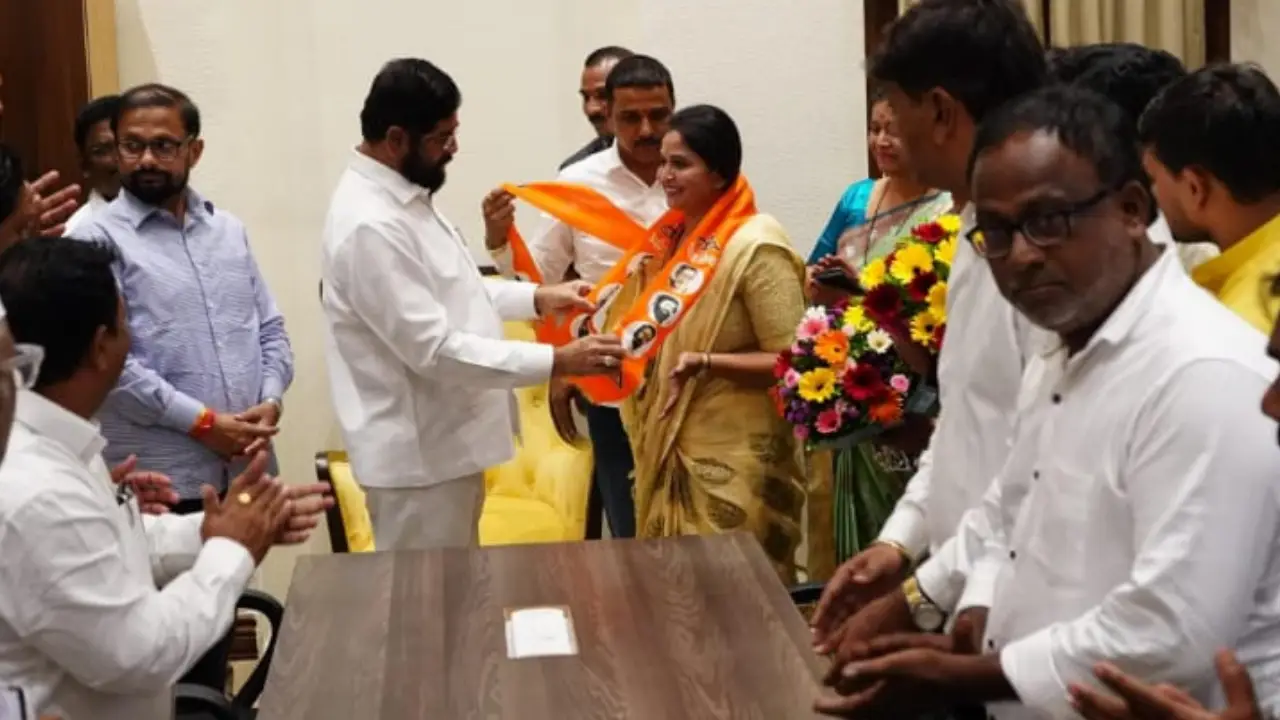
In a significant political shift ahead of the upcoming Maharashtra assembly elections, Sanjana Jadhav, daughter of former Union minister and senior BJP leader Raosaheb Danve, has joined the Shiv Sena led by Chief Minister Eknath Shinde. Jadhav, who joined the Sena on Sunday, is anticipated to be fielded from the Kannad assembly segment in Chhatrapati Sambhajinagar district.
With only two days left to file nominations, other notable leaders, including former MP Rajendra Gavit and Vilas Tare, have also switched to Shinde’s Sena. Chief Minister Shinde, along with former MLC Ravindra Phatak, officially welcomed these leaders into the Sena fold.
Rajendra Gavit, who sided with Shinde during his rebellion against Uddhav Thackeray’s leadership in June 2022, has now been announced as the Shiv Sena candidate for the Palghar assembly constituency. The Shinde-led Sena released a list of 20 candidates on Sunday, bolstering its lineup for the November 20 assembly election. The counting of votes for the 288-member Maharashtra assembly will take place on November 23.
Police Raid on KTR's Kin Sparks Political Feud: BRS Claims Congress 'Trap' as Drug Allegations Fly 10
Police recently raided a farmhouse allegedly owned by BRS working president K T Rama Rao’s brother-in-law, Raj Pakala, where one attendee tested positive for cocaine. Pakala has reportedly absconded since the raid, and police have registered cases under the NDPS and Telangana Gaming Acts.
The incident has triggered a political clash in Telangana, with Congress leaders demanding a thorough investigation. Union Minister Bandi Sanjay Kumar accused the Congress-led state government of “pretending” to enforce the law while “protecting BRS bigwigs.”
However, the BRS claimed that Chief Minister Revanth Reddy is using the situation to entrap KTR in a politically motivated case. BRS officials argue that the event was a private family gathering at Pakala’s residence, dismissing allegations of drugs and unauthorized foreign liquor as “malicious propaganda.”
According to a BRS spokesperson, “Congress and BJP leaders suffer from ‘KTR phobia,’ as he continues to expose their failures.” BRS leader Sravan Dasoju condemned the police raid as a “cheap political tactic,” intended to damage KTR’s reputation. BRS members protested outside Raidurgam, asserting that police entered their leaders’ homes without warrants.
The police maintain that they acted on specific information about drugs and unauthorized liquor at the Janwada farmhouse. Excise officials revealed that Pakala did not obtain the necessary permissions for the event, where authorities found seven foreign and ten Indian liquor bottles. Bandi Sanjay Kumar expressed doubt over the investigation’s neutrality, alleging a “give-and-take” understanding between the Congress and BRS to protect their interests.
The BRS has pledged to contest the case legally and deny all accusations of illegal activity, asserting that the allegations are politically orchestrated.
PM Modi and Spain's Pedro Sanchez Hold Roadshow in Vadodara, Launch India’s First Private Military Aircraft Facility 12
Prime Minister Narendra Modi and Spanish Prime Minister Pedro Sanchez held a roadshow in Vadodara, Gujarat, on Monday, traveling in an open jeep and greeting the crowd gathered on both sides of the 2.5-km route from the airport to the Tata aircraft complex.
The two leaders waved at spectators along the route, where performers showcased India’s rich cultural heritage. Their destination, the Tata Advanced Systems facility, is set to become India’s first private sector final assembly line (FAL) for military aircraft.
At the complex, the leaders will inaugurate the facility for Tata Advanced Systems to manufacture C-295 aircraft in collaboration with Airbus. This Vadodara facility will produce 40 aircraft, while Airbus will supply 16 directly, making this a major milestone in India’s defense manufacturing. Tata Advanced Systems will oversee the entire ecosystem, from manufacturing and assembly to testing, delivery, and life-cycle maintenance.
Public and private entities, including Bharat Electronics, Bharat Dynamics, and MSMEs, will contribute to this program. The foundation stone for the facility was laid by PM Modi in October 2022. After the inauguration, Modi and Sanchez will proceed to the historic Laxmi Vilas Palace for a bilateral meeting to strengthen ties between India and Spain.
Delhi's Air Quality Remains 'Very Poor' Despite Slight AQI Improvement, Minimum Temp Above Normal 14
Delhi residents started Monday with “very poor” air quality, though the Air Quality Index (AQI) showed a slight improvement compared to Sunday. The minimum temperature was recorded at 20.4°C, which is four degrees above the seasonal average, and the AQI at 9 a.m. stood at 327.
On Sunday, Delhi’s AQI had reached 359, according to data from the Central Pollution Control Board (CPCB).
For context, AQI levels from 0 to 50 are classified as ‘good’, 51 to 100 as ‘satisfactory’, 101 to 200 as ‘moderate’, 201 to 300 as ‘poor’, 301 to 400 as ‘very poor’, and 401 to 500 as ‘severe.’
The Indian Meteorological Department (IMD) reported a morning humidity level of 88%. The forecast for the day suggests predominantly clear skies, with the maximum temperature likely to hit around 34.2°C.
As Delhi’s air quality continues to hover at harmful levels, residents are advised to take precautions, especially vulnerable groups like children, the elderly, and those with respiratory issues.
2024 Maharashtra Elections: A Fight for Survival Between Rival Shiv Sena Factions 16
The 2024 Maharashtra elections are set to be a pivotal moment in the state’s political history, characterized by a fierce battle for survival between the two rival factions of the Shiv Sena. On one side is the Maha Vikas Aghadi (MVA), an alliance seeking a decisive win that could diminish the influence of Eknath Shinde, who currently leads a breakaway faction of the Shiv Sena. A victory for the MVA would not only consolidate its position but could also render Shinde politically vulnerable, potentially sidelining his faction. Conversely, a win for the ruling Mahayuti coalition, which includes the Bharatiya Janata Party (BJP), the Shinde-led Shiv Sena, and Ajit Pawar’s NCP faction, could significantly weaken the Uddhav Thackeray-led Shiv Sena, pushing it towards political irrelevance—similar to the fate of other regional parties like the Bahujan Samaj Party (BSP) after the Modi waves of 2014 and 2019. Yet, unlike many regional narratives that have succumbed to the BJP’s dominance, the split within the Shiv Sena is a story of personal ambitions, internal strife, and betrayal. This makes the 2024 elections not just a conventional political contest but a personal and ideological face-off between the MVA and the Mahayuti.
The Shinde-led faction is relying heavily on newly implemented welfare schemes to garner support, targeting key voter bases that might be swayed by tangible benefits. However, critics from the MVA argue that these schemes may not be as effective in securing votes as the Mahayuti hopes, pointing out that they predominantly benefit communities like Muslims and Dalits—demographics not traditionally aligned with the Mahayuti’s core electorate. Uddhav Thackeray, meanwhile, is positioning his faction as the true heir to the Shiv Sena’s legacy, using the slogan of “Marathi pride” to rally his base. The MVA’s narrative paints Shinde and his supporters as “gaddars” (traitors), hoping to resonate with voters who see the split as an affront to the party’s founding principles.
This struggle for control over the Shiv Sena’s legacy has its roots in the aftermath of the 2019 Maharashtra Assembly elections, when the BJP-Shiv Sena alliance won 161 out of 288 seats. Disagreements over the Chief Minister’s post led Uddhav Thackeray to sever ties with the BJP, forming the MVA coalition with the Nationalist Congress Party (NCP) and the Congress. Uddhav’s tenure as Chief Minister lasted for two and a half years until June 2022, when a rebellion led by Eknath Shinde—supported by the BJP—toppled his government, paving the way for Shinde to become Chief Minister. The rebellion and subsequent shift of power were not just political but deeply symbolic, as they underscored the fragmentation within a party that had been built on the charisma and vision of Balasaheb Thackeray.
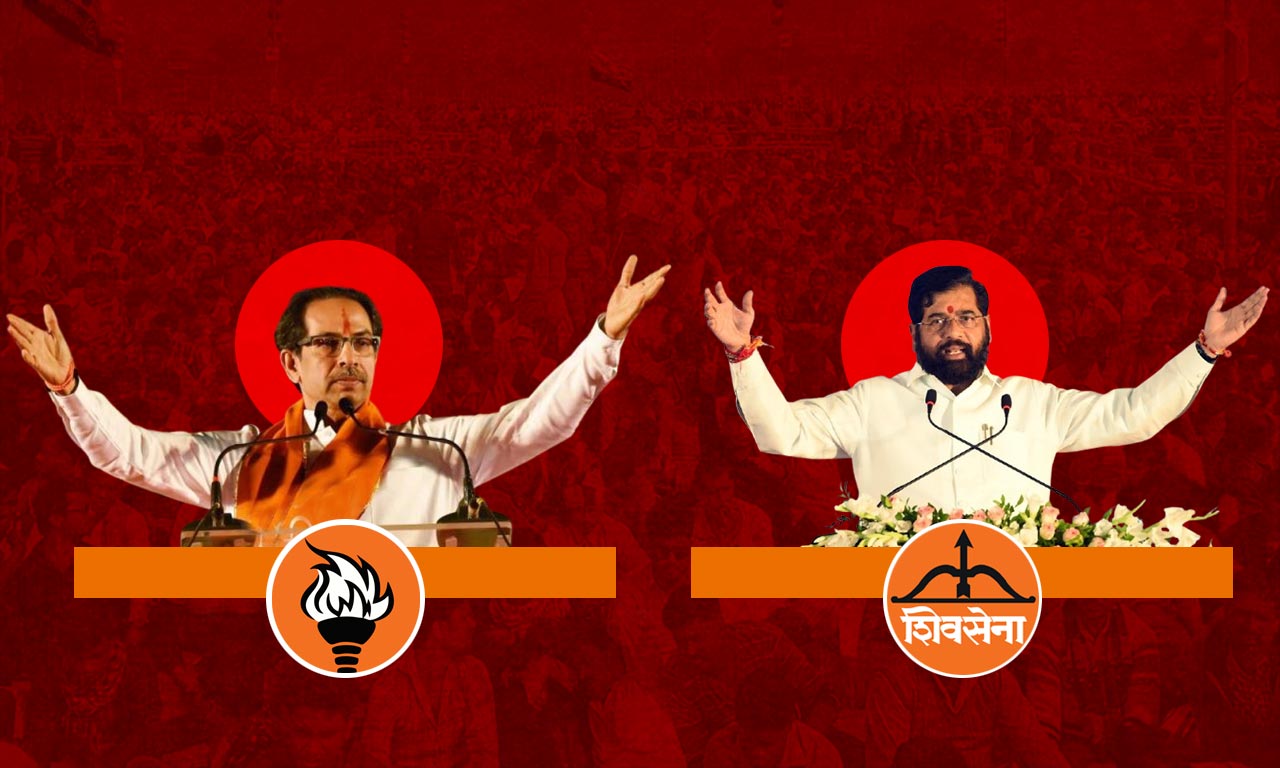
The internal power struggle took a legal turn when the Election Commission recognized Shinde’s faction as the legitimate Shiv Sena, awarding it the bow-and-arrow symbol. This decision forced the Uddhav-led faction, now rebranded as Shiv Sena (Uddhav Balasaheb Thackeray) or SS (UBT), to adopt a new symbol, the flaming torch. The 2023 Lok Sabha elections, where the two factions ended in a near draw, highlighted the evenly matched nature of this rivalry, setting the stage for a more decisive confrontation in the upcoming state elections.
The Thackeray-led faction retains a stronghold in regions with a traditional Marathi-speaking voter base, including Mumbai, Konkan, and Marathwada. In the recent Lok Sabha elections, support from Muslim voters bolstered the faction’s standing, suggesting that Uddhav’s outreach to communities beyond the party’s core base could be a critical factor in the state polls. Meanwhile, smaller political players like RPI (Athavale) and various independent candidates are positioning themselves strategically, likely to side with the coalition that emerges victorious, making them key players in forming a stable government.
For the BJP, the 2024 elections pose significant challenges. The party’s vote share, which peaked at 42% during the height of the Modi wave in 2014, dropped to 36% in the 2019 elections due to a more fragmented opposition. Now, with a united opposition in the form of the MVA and growing anti-incumbency sentiments, the BJP must secure over 50% of the vote share to ensure a victory. A direct contest with the MVA, which combines the organizational strength of the Congress, NCP, and the SS (UBT), presents a daunting challenge for the BJP. This makes the strategy of creating internal divisions within the MVA, aiming for a three-way fight, a more feasible path to victory. In such a scenario, a consolidated 40% vote share could be enough for the Mahayuti to retain control of the state.
The political landscape is further complicated by the emergence of Maratha leader Manoj Jarange Patil, who has become a prominent critic of the BJP, especially targeting Deputy Chief Minister Devendra Fadnavis. Patil’s advocacy for Maratha reservation and his criticism of the BJP could sway a significant portion of the Maratha vote, traditionally a crucial demographic in Maharashtra’s elections. Some political observers believe that Shinde and Ajit Pawar may be strategically encouraging Jarange Patil’s stance to weaken the BJP’s standing among Marathas. If this strategy succeeds, and the Maratha vote shifts away from the BJP, it could pose a severe challenge to the ruling coalition. Conversely, a consolidation of Other Backward Class (OBC) votes in favor of the BJP could counterbalance these shifts, making the electoral outcome highly unpredictable. Meanwhile, MNS chief Raj Thackeray’s election strategy has crafted a highly strategic plan to keep both the Mahayuti and MVA alliances uncertain about his moves, both before and after the elections. He is aware that his party is unlikely to lead, but he is confident that the number of MNS MLAs elected could play a crucial role in determining which alliance ultimately comes to power.
As Maharashtra approaches the elections, the political environment remains highly fluid, characterized by frequent changes in alliances and leadership. The state has witnessed three different governments and three chief ministers in the past five years, a testament to the volatility and realignments that have shaped its politics. With two major alliances—the ruling Mahayuti and the opposition MVA—competing for power, the outcome will not only determine the political future of Maharashtra but could also have broader implications for national politics. A victory for the BJP-led Mahayuti could solidify Prime Minister Narendra Modi’s position ahead of the 2024 national elections, while a defeat could embolden opposition forces and potentially reshape the political landscape leading up to the general elections. The stakes have rarely been higher, making the 2024 Maharashtra elections a bellwether for the state and the nation.
Maharashtra Elections: Congress Releases Second List, Fields New Faces and Incumbents in Key Seats 18
The Congress on Saturday released its second list of candidates for the November 20 Maharashtra assembly elections, retaining sitting MLA Kailash Gorantyal from Jalna and nominating Anuja Kedar, the wife of party leader Sunil Kedar, for the Saoner seat.
The list follows discussions by the party’s Central Election Committee (CEC) on candidate selection for the polls. The Congress had earlier declared 48 candidates in its first list, bringing the total to 71 with this latest announcement.
Anuja Kedar is entering the race from Saoner in Nagpur district, replacing her husband, Sunil Kedar, who has been disqualified from contesting elections for six years following a conviction in the Nagpur District Central Cooperative Bank (NDCCB) scam. MLA Kailash Gorantyal has been retained in Jalna.
In its first list, Congress retained 25 incumbent MLAs. Senior leader and former deputy speaker Vasant Purke, who lost in 2019, will run again from Ralegaon (Yavatmal), while Shivajirao Moghe, also a 2019 contender, steps aside for his son Jitendra from the Arni seat (Yavatmal).
In Mumbai, the Congress has nominated Kalu Badheliya for Kandivali East, Ganesh Yadav for Sion Koliwada, and Yashwant Singh for Charkop. In other regions, Suresh Bhoyar will face off against state BJP chief Chandrashekar Bawankule at Kamptee (Nagpur), and Shekhar Shende, son of former assembly speaker Pramod Shende, will run in Wardha.
Speaking after the CEC meeting, party leader Ramesh Chennithala, the All India Congress Committee (AICC) in-charge for Maharashtra, emphasized the party’s unity within the Maha Vikas Aghadi (MVA) alliance. “The MVA is contesting unitedly, and we have no differences. We will fight together to realize the dreams of the people of Maharashtra,” Chennithala said, expressing confidence in MVA’s victory.
Maharashtra Pradesh Congress Committee (PCC) chief Nana Patole stated that MVA expects to perform even better in the assembly polls than in the Lok Sabha elections, aiming to form a full-majority government. AICC general secretary K.C. Venugopal echoed this sentiment on X, sharing photos of the CEC meeting and expressing optimism for an MVA win.
The Congress previously announced its first list of candidates, which included Patole running from Sakoli, former chief minister Prithviraj Chavan from Karad South, and Leader of the Opposition Vijay Wadettiwar from Brahmapuri.
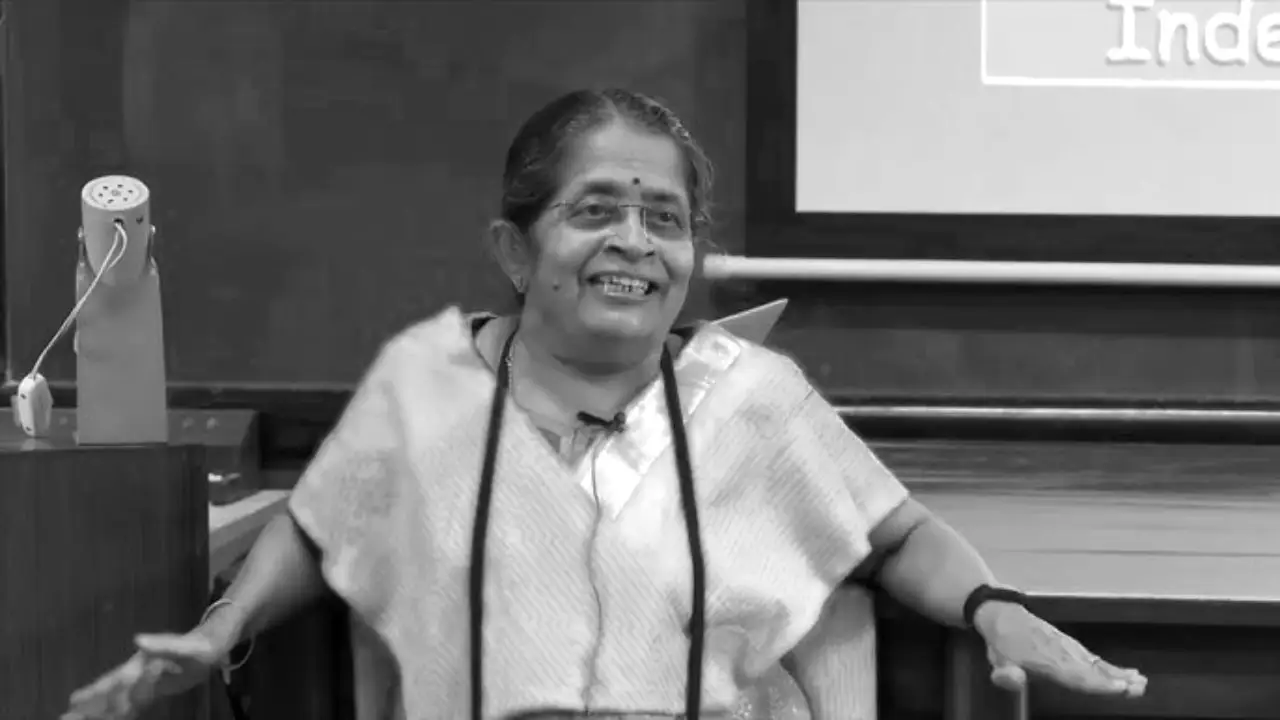
Renowned physicist and Padma Shri award winner Professor Rohini M Godbole passed away on Friday, according to the Centre for High Energy Physics (CHEP), Indian Institute of Science (IISc) Bengaluru.
Godbole was 71.
Godbole, a brilliant researcher and a champion of women in science, joined CHEP as an associate professor in 1995 and has been a professor since 1998. Post her superannuation on July 31, 2021, she became an honorary professor.
Her countless students and colleagues have taken to ‘X’ to pay tribute to her.
Joydeep Chakraborty, Professor of Theoretical Physics at Indian Institute of Technology (IIT) Kanpur posted on ‘X’: “It’s a huge loss not only for the HEP community but also for physics in general… She will be remembered as a great physicist and a teacher who motivated younger people to pursue careers in research.” K Vijaya Raghavan, Developmental biologist at the National Centre for Biological Sciences, Tata Institute of Fundamental Research said on ‘X’ that she was full of energy and drive. “She was a physicist, flag-bearer for women in science, a public citizen and a friend to many. She will be missed and is irreplaceable,” his post read.
According to her colleague at IISc, Arindam Ghosh, Godbole was much more than a renowned scientist. “She was a leader, and a strong advocate of women in science. She was a friend who will be missed,” he posted on ‘X’.
Siddharth Kanakaria, who works at the intersection of science communication research, practice, and teaching in India, and is an alumni of IISc also took to ‘X’ to recollect how Godbole, in addition to her excellent work in particle physics, she also championed inclusion of women in STEM.
“I had the opportunity of interviewing her about the state of women in STEM in 2017 and will always remember our engaged and spirited conversation lasting several hours!” said Kanakaria.
Apart from IISc Bengaluru, Raman Research Institute, which pursues research in basic sciences, also put out a condolence message for Professor Godbole.
“We, @RRI_Bangalore, deeply mourn the untimely passing of Prof. Rohini Godbole,” read the post on the official handle of the institute.
A memorial service was held on Friday at the Physical Sciences Auditorium of the CHEP.