Akasa Air to Begin Flights from Navi Mumbai Airport on December 25 2
Flight operations at Navi Mumbai International Airport (NMIA) will officially begin on December 25, with Akasa Air becoming the first airline to launch commercial services from the new aviation hub.
The airline opened reservations on Friday evening for routes connecting Delhi, Goa (Mopa), Kochi, and Ahmedabad with Navi Mumbai, marking a major milestone for both the carrier and the city’s long-awaited second airport.
According to Akasa Air, flights to Delhi and Goa will operate daily, while services to Kochi will run five days a week and the Ahmedabad route will have one weekly flight.
The Navi Mumbai airport, inaugurated last month by Prime Minister Narendra Modi, will initially operate for 12 hours daily (8 am–8 pm), handling 8–10 flights per hour, before gradually ramping up to 20–30 movements per hour.
Akasa Air, which has positioned itself as one of the key early operators at NMIA, has encouraged passengers to book tickets through its website, mobile app, or travel agents as it prepares for a major network expansion from the new hub.
The inaugural flight schedule for December 25 includes two Delhi-bound flights. Flight QP 1831 will depart Delhi at 05:25 am and land in Navi Mumbai at 08:10 am, while the return flight QP 1832 will leave NMIA at 08:50 am and arrive in Delhi at 11:15 am. Regular daily services on the Delhi–Navi Mumbai route will begin from December 26.
Akasa will also operate daily flights to Goa’s Mopa Airport starting December 25. Flight QP 1928 will depart Goa at 15:40, reaching Navi Mumbai at 17:00, while QP 1927 will leave Navi Mumbai at 17:40 and land in Goa at 18:55, except on Wednesdays.
Kochi flights will commence from December 26, initially on Fridays and Saturdays, with flight QP 1914 departing Kochi at 10:50 am and landing in Navi Mumbai at 12:45 pm, and the return leg QP 1915 leaving at 13:30 pm, reaching Kochi at 15:30 pm. Additional rotations will be added on Tuesdays, Wednesdays, and Sundays starting December 28.
The Ahmedabad service is set to begin on December 31, with flight QP 1916 departing Navi Mumbai at 17:40 pm and landing in Ahmedabad at 18:50 pm, operating once weekly on Wednesdays.
With these launches, Akasa Air is set to make history as the first commercial carrier to take off from the new Navi Mumbai International Airport, signaling a new era in Mumbai’s aviation connectivity.
Nowgam Blast Kills 9, Injures 27; Explosion Linked to Faridabad Terror Module Cache 4
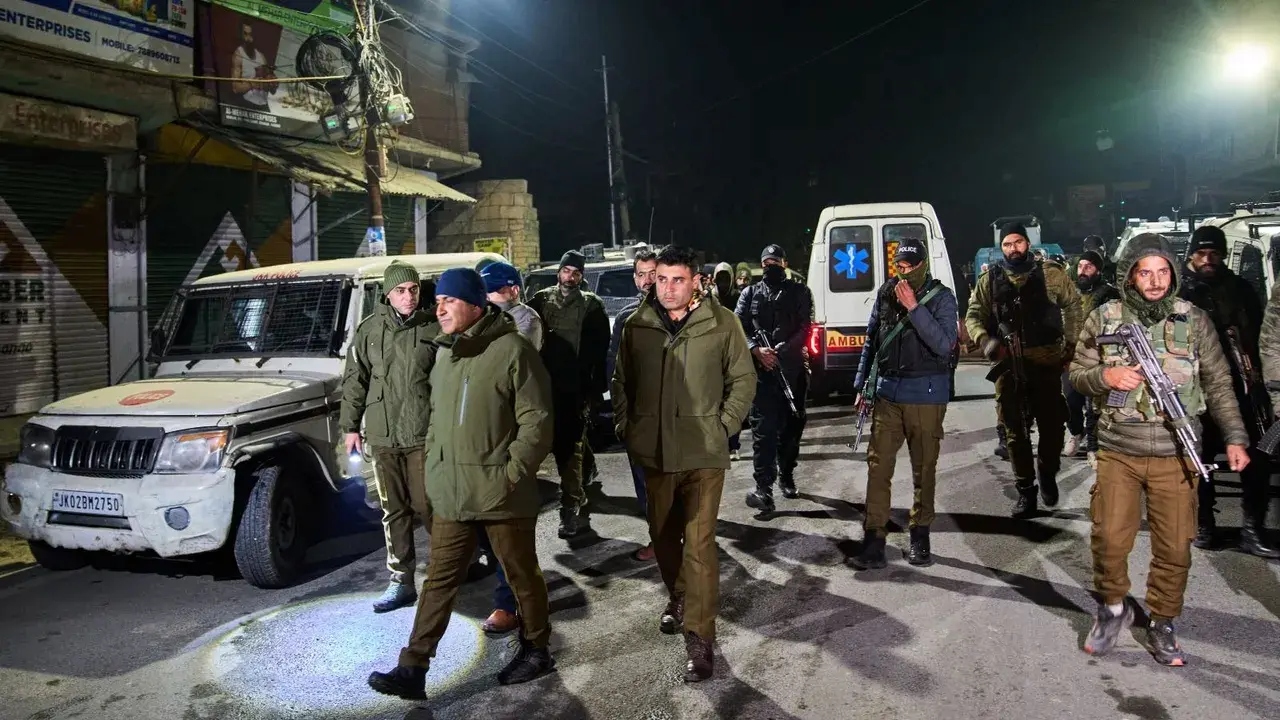
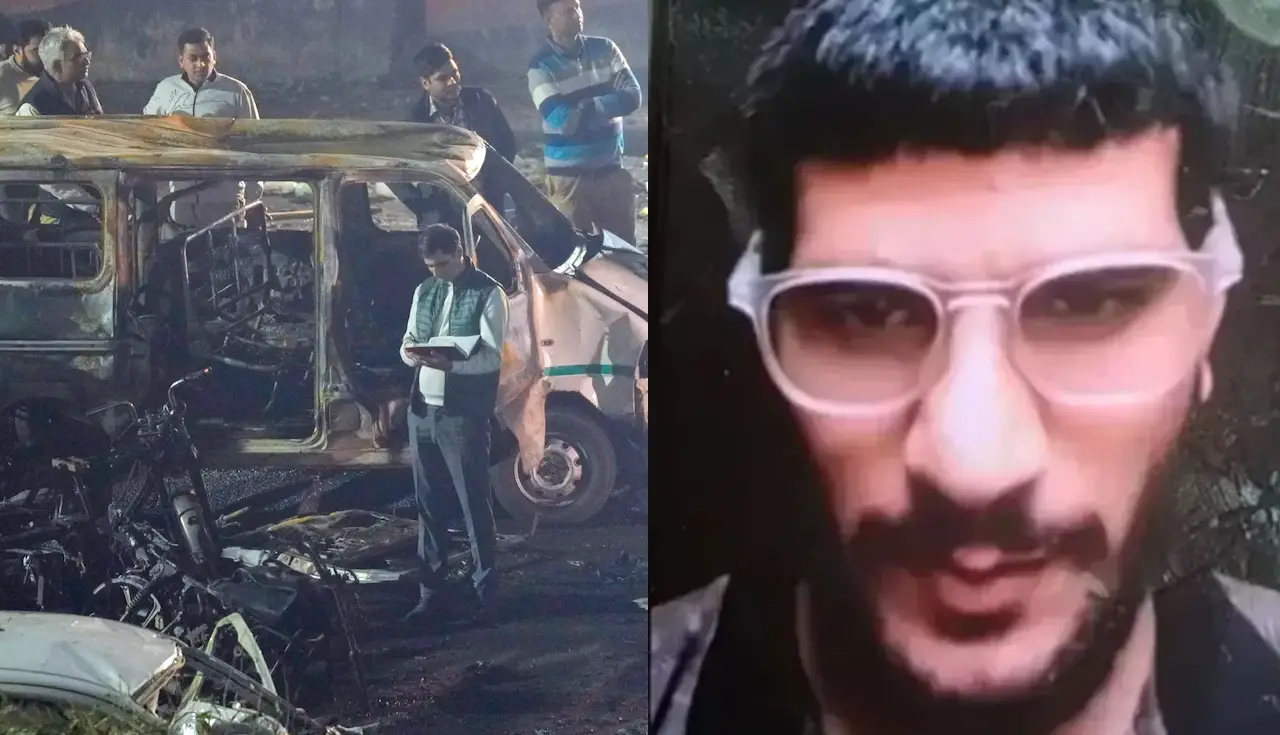
A powerful explosion at Nowgam Police Station in Srinagar killed nine people and injured 27 others late Friday night, after a cache of explosives confiscated from the recently busted ‘white-collar’ terror module detonated accidentally, officials confirmed on Saturday.
Among the dead were three forensic science experts, two Revenue Department officers including a Naib Tehsildar, two police photographers, one officer from the State Investigation Agency (SIA), and a tailor working at the site. The injured, including 24 police personnel and three civilians, were rushed to nearby hospitals for treatment.
Officials said the blast occurred while a team was extracting samples from explosive material brought from Faridabad, Haryana, where a massive cache linked to the terror module had been recovered earlier. Preliminary reports suggest the explosion was caused by the unstable nature of the chemicals, which included ammonium nitrate, potassium nitrate, and sulphur.
The explosives were part of 360 kilograms of material seized from the rented residence of Dr. Muzammil Ganaie, one of the accused arrested in connection with the terror plot. The impact of the blast severely damaged the police station building, while smaller successive explosions hampered rescue operations by the bomb disposal squad for several hours.
According to officials, part of the recovered explosives had been sent to a forensic lab, but a major portion remained stored at the Nowgam police station, where the main case against the module was registered.
The terror network came to light in mid-October after posters threatening police and security forces appeared in Bunpora, Nowgam. Acting on intelligence inputs, Srinagar Police launched an investigation on October 19, leading to the arrest of Arif Nisar Dar, Yasir-ul-Ashraf, and Maqsood Ahmad Dar, all with previous records of stone-pelting.
Their interrogation exposed a radicalisation network led by Maulvi Irfan Ahmad, a former paramedic turned preacher from Shopian, who allegedly influenced medical professionals to join the module. The probe then extended to Al Falah University in Faridabad, where Dr. Ganaie and Dr. Shaheen Sayeed were arrested, and the massive stockpile of explosives was discovered.
Investigators believe the terror module was orchestrated by a core group of doctors — Dr. Muzammil Ganaie, Dr. Umar Nabi (who died driving the car that exploded near Delhi’s Red Fort on November 10), and Dr. Muzzaffar Rather, who remains absconding.
The role of another accused, Dr. Adeel Rather, the brother of the absconding doctor from whom an AK-56 rifle was recovered, is still under investigation.
Authorities have launched a high-level inquiry into the Nowgam explosion to determine how the seized material was stored and handled, even as Kashmir mourns the deadliest blast in Srinagar in recent years.
Historic First: Bihar Assembly Polls Record Zero Voting Day Deaths and No Re-Polling 6
For the first time in Bihar’s electoral history, the state recorded zero voting day deaths and no re-polling during the recently concluded assembly elections, marking a historic shift from its violent past.
According to official data, not a single incident of poll-related death or booth-level re-election was reported during the two-phase elections, making this year’s polls the most peaceful the state has ever witnessed.
This stands in stark contrast to earlier decades when Bihar’s elections were marred by widespread violence, fatalities, and large-scale re-polling. In the 1985 assembly polls, 63 people were killed and re-polling was ordered in 156 booths. The 1990 elections saw 87 deaths linked to poll violence.
In 1995, then Chief Election Commissioner T. N. Seshan had to postpone the Bihar elections four times due to rampant malpractices and law-and-order issues. Even in 2005, re-polling took place in as many as 660 booths following violence and irregularities.
Election officials have attributed this year’s success to enhanced security deployment, strict enforcement of the Model Code of Conduct, and the vigilance of the Election Commission.
The counting of votes for the two-phase Bihar Assembly polls is currently underway, but regardless of the outcome, this election has already made history for its peaceful and incident-free conduct — a milestone achievement for the state once infamous for poll-time violence.
US Lawmaker Proposes Bill to End H-1B Visa Programme, Calls It "America First" Move 8
US Congresswoman Marjorie Taylor Greene has announced that she will introduce a bill to completely eliminate the H-1B visa programme, ending one of the most popular work visa pathways for skilled foreign professionals, including thousands of Indians.
In a video posted on X (formerly Twitter) on Thursday, the Georgia lawmaker said the programme has been “riddled with fraud and abuse” and has “displaced American workers for decades.” Greene claimed her proposed legislation would end the H-1B programme entirely and revoke the pathway to US citizenship for visa holders, forcing them to return home after their visas expire.
“My dear fellow Americans, I’m introducing a bill to completely eliminate the H-1B visa programme. This is an America First policy that puts our citizens ahead of foreigners,” Greene said.
Her bill includes one temporary exemption—allowing up to 10,000 visas annually for medical professionals such as doctors and nurses—but she said even that provision will be phased out over ten years. “We need to build our own pipeline of American doctors and nurses,” she added.
The Congresswoman said her proposal also seeks to ban Medicare-funded residency programmes from admitting non-citizen medical students. Citing statistics, she claimed that in 2023, more than 9,000 American medical graduates were left without residency placements, while over 5,000 foreign-born doctors secured those positions. “This is entirely unfair and puts America last,” she said.
Under current rules, the US issues 65,000 regular H-1B visas and an additional 20,000 for advanced degree holders annually. The programme, widely used by technology companies, enables firms to hire foreign professionals in specialised roles.
The move marks an escalation in anti-immigration rhetoric among right-wing lawmakers and comes after the Trump administration’s September 2025 proclamation introducing a $100,000 additional fee for certain H-1B petitions as part of a broader visa reform.
Greene said the bill’s intent is to “restore the original purpose” of temporary work visas. “These visas were meant to fill short-term specialty needs, not allow people to live here forever. We thank them for their expertise, but it’s time they return home,” she stated.
The proposal, if tabled, could face significant opposition from business and technology sectors, which rely heavily on H-1B professionals—particularly from India, which remains the largest source of skilled visa holders in the United States.
Union Cabinet Declares Red Fort Blast a Terror Attack, PM Modi Vows Swift Justice 10
The Union Cabinet on Wednesday declared the November 10 Red Fort car blast a terrorist attack, unanimously passing a resolution condemning the “heinous act” and directing security agencies to fast-track the probe.
Reading out the resolution, Information and Broadcasting Minister Ashwini Vaishnaw said the explosion was a “heinous terrorist incident perpetrated by anti-national forces,” and that investigators must swiftly identify the perpetrators, collaborators, and sponsors to ensure justice.
Prime Minister Narendra Modi, who chaired the meeting, said those responsible “will not be spared.” The Prime Minister’s Office (PMO) described the blast as a “cowardly assault on India’s sovereignty,” reaffirming the government’s zero-tolerance policy towards terrorism.
Preliminary investigations suggest that the car explosion occurred near the Red Fort Metro Station, a crowded area adjacent to the UNESCO World Heritage site, killing 13 people and injuring several others. The Delhi Police have registered a case under the Unlawful Activities (Prevention) Act (UAPA) and are probing possible links to anti-national networks.
Home Minister Amit Shah is personally monitoring the investigation, with multiple suspects detained in Jammu and Kashmir for questioning. Officials said the National Investigation Agency (NIA) has been roped in for technical assistance and coordination as authorities examine possible foreign linkages.
Initial forensic reports indicate the use of a vehicle-borne improvised explosive device (IED), though the triggering mechanism—whether remote-controlled or timed—is yet to be confirmed. Security has been tightened across Delhi, particularly around key landmarks and government buildings.
Political leaders from across the spectrum have expressed solidarity with the government’s stance. Congress president Mallikarjun Kharge termed the attack a “dark stain on the nation’s conscience,” while BJP spokesperson Sambit Patra said the Cabinet’s resolution “reflects India’s unified resolve against terror.”
The government also announced ₹10 lakh ex-gratia for the families of those killed and free medical treatment for the injured, many of whom were vendors and tourists in the area during the blast.
In its resolution, the Cabinet said the incident was “not just an attack on Delhi, but an attack on every Indian’s right to live without fear,” and vowed a swift, transparent, and professional investigation to ensure accountability and deterrence against future terror acts.
DNA Test Confirms Umar Nabi Was Driving Car in Red Fort Blast, Say Police Sources 12
A DNA test has confirmed that Dr. Umar Nabi was driving the car that exploded near Delhi’s Red Fort earlier this week, killing several people and triggering a major security alert, police sources said on Thursday.
According to investigators, DNA samples of Umar’s mother were collected on Tuesday and sent for forensic examination. The samples were compared with biological remains recovered from the blast site, leading to a conclusive match.
“The DNA results confirm that it was indeed Umar Nabi who was driving the vehicle that exploded near Red Fort,” a senior police official said.
Umar, a resident of Koil village in Pulwama, Jammu and Kashmir, was identified as a key member of a “white-collar” terror module that was busted earlier this week. The network, police said, had links to proscribed terror outfits Jaish-e-Mohammed and Ansar Ghazwat-ul-Hind.
Just hours after the module’s exposure and the arrest of eight suspects, including three doctors, a high-intensity explosion ripped through a Hyundai i20 near the Red Fort Metro Station on Monday evening. The car was reportedly carrying explosives when it detonated, killing Umar instantly and injuring several bystanders.
Police said the blast investigation led them to a wider network spread across Jammu and Kashmir, Haryana, and Uttar Pradesh, where raids resulted in the seizure of nearly 3,000 kilograms of ammonium nitrate, potassium chlorate, and sulphur — materials commonly used in improvised explosive devices (IEDs).
Authorities are now focusing on tracing funding routes and handlers of the module, which they suspect was planning multiple attacks in northern India before being intercepted.
HAPPYHarda: A Living Blueprint for Pragat Bharat 14
In a landmark moment for Indian agriculture, Union Minister of Agriculture, Shivraj Singh Chouhan, visited the Gram Vikas Trust (GVT) in Harda in 2025, standing before a sea of 50,000 farmers who had gathered to witness the dawn of a new era. His promise — to scale the Harda model across the nation — was not a mere announcement; it was a clarion call to reimagine India’s rural landscape through a model that blends tradition, technology, and transformation.
From Concept to Revolution: The GVT Journey
The roots of this vision go back to 2016, when the Gram Vikas Trust dared to test an idea in one of India’s most challenging agrarian zones. Instead of chasing short-term success, GVT created a proof of concept — a real-world, evidence-driven transformation model. Between 2017 and 2024, the results were nothing short of revolutionary. Over 5,000 villages witnessed farmers’ incomes rise tenfold, 6.5 crore trees were planted, and over 800 crore litres of water were harvested through decentralized community initiatives.
This wasn’t an experiment; it was evolution. And the story of Harda became a mirror to what India could achieve when its farmers, technologists, social entrepreneurs, and policymakers move in unison.
The Rise of HAPPYHarda: A Model for the Nation
At the heart of this transformation lies HAPPYHarda — an acronym for Healthy Agriculture by Progressive & Prosperous Youth of Harda. Supported by the Narmada Valley Rural Development Foundation Trust, HAPPYHarda has emerged as a new model of social entrepreneurship, integrating economic, environmental, and ethical dimensions of rural progress.
Harda, centrally located in India and blessed by the sacred River Narmada, has long been known for its rich cultural heritage, fertile lands, and intellectual lineage. But HAPPYHarda is about more than geography — it’s about vision. Its mission is to reclaim Harda’s lost agricultural and cultural glory, while simultaneously positioning it as the nerve center of India’s sustainable rural future.
Know Your Farmer, Know Your Food
The slogan “Know Your Farmer, Know Your Food” isn’t just a tagline — it’s a philosophy. The region’s enterprising young farmers have embraced smart agriculture, horticulture innovation, dairy farming, and eco-tourism, all while preserving the Bhuana heritage of their ancestors. By fusing traditional wisdom with modern technology, they’ve proven that prosperity and sustainability are not opposites — they are partners in progress.
The 2025 Milestone: Harda’s Vision Reaches Mumbai University
This November, HAPPYHarda’s vision for Pragat Bharat reached Mumbai University, marking the beginning of its expansion beyond Madhya Pradesh. The Mumbai Chapter of HAPPYHarda, in partnership with AISECT, proudly participated in Purv Rang, a two-day event on 13th and 14th November 2025.
The event was more than symbolic — it was strategic. An exclusive meeting was held with Dr. Santosh Chaubey, Chancellor of AISECT University, on 14th November from 12 to 2 pm, followed by a networking lunch at the Mumbai University campus. The core agenda: allocation of funds for scaling social assets, empowering local farmers, and strengthening partnerships with civil society and educational institutions.
Building the Ecosystem: The Power of Collaboration
The backbone of HAPPYHarda lies in collaboration — between government, grassroots communities, academia, and industry. Onboard are business partners like Buldhana Urban Cooperative, Jain Irrigation (Jalgaon), Sahyadri Farms (Nashik), Reliance Retail, and RR Kabel — each contributing to building the infrastructural and financial backbone that supports the farmers.
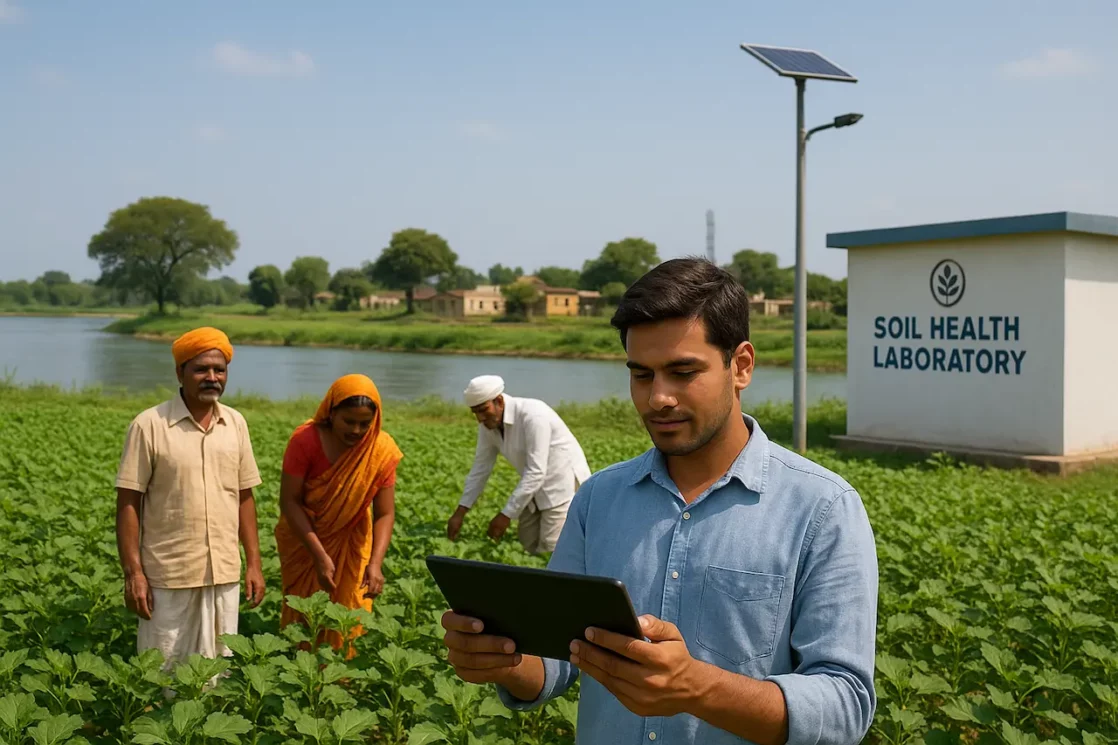
From advanced irrigation systems and soil health labs to value-addition units like juice, sugar, and food processing factories, every partnership serves one goal: ensuring that the farmer earns from his produce, not just his labor. The upcoming soil health labs will address the crisis of soil degradation, focusing on revival and regeneration. Investments will target soil fertility, crop quality, and sustainable inputs, ensuring India’s farmlands remain fertile for generations to come.
The War Against the Agro Mafia
No agricultural reform is complete without addressing the elephant in the room — the agro mafia. These exploitative networks have long dictated market rates, hoarded supplies, and manipulated policies to their advantage. HAPPYHarda’s leadership is determined to dismantle these lobbies through transparency, cooperative ownership, and direct farmer-industry linkages.
The model promotes value chains controlled by farmers, supported by technology-driven traceability, blockchain-based transaction monitoring, and collective marketing systems. By ensuring farmers retain control over pricing, branding, and sales, HAPPYHarda aims to turn the exploited into the empowered.
Why Such Models Are the Need of the Hour
India stands at a defining moment. With 65% of its population dependent on agriculture and allied sectors, the health of the farmer is directly tied to the health of the nation. Yet, climate change, erratic monsoons, degrading soils, and global supply chain disruptions threaten the very fabric of rural livelihood.
In such times, models like HAPPYHarda are not optional — they are essential. They provide a replicable, scalable framework rooted in data, community, and sustainability. They emphasize local self-reliance, echoing the timeless Gandhian ethos of Gram Swaraj, while embracing modern tools like AI, IoT, and data analytics for precision farming and predictive resource management.
The 10x income growth achieved in the GVT model is evidence that the farmer’s prosperity is not a dream — it’s a policy decision waiting to be implemented at scale. If adopted nationally, this model could reduce rural poverty by 40%, increase agri-GDP contribution by 20%, and generate millions of jobs in agro-processing and allied industries.
A Futuristic Vision: From Harda to Bharat
By 2030, HAPPYHarda envisions a network of self-sufficient rural ecosystems — clusters of villages interconnected through technology, education, and enterprise. These “Smart Villages” will have soil and water health analytics, renewable energy systems, digital marketplaces, and training centers for youth in agri-tech and entrepreneurship.
Beyond productivity, the focus is on dignity — restoring pride to the farmer’s identity. The aim is to make agriculture not a profession of last resort, but one of prestige, innovation, and sustainability.
The Road Ahead
With the backing of Shri Shivraj Chouhan and leading national institutions, the roadmap is clear:
Establish regional hubs based on the Harda model across all major agrarian belts.
Develop soil health labs and climate-resilient crop systems in each district.
Foster public-private partnerships to create agro-industrial zones near farming clusters.
Integrate academic institutions like Mumbai University and AISECT for R&D and training.
Empower youth and women as social entrepreneurs and rural innovators.
The Spirit of Harda — The Soul of Bharat
Harda’s journey is no longer confined to the Narmada plains — it has become a national awakening. From the seed of an idea in 2016 to a movement in 2025, HAPPYHarda is redefining what rural India can become when empowered with knowledge, unity, and purpose.
As India dreams of becoming a Viksit Bharat by 2047, it is initiatives like HAPPYHarda that will provide the foundation — rooted in soil, nurtured by innovation, and sustained by collective spirit.
In the words of an old Harda farmer, now a proud entrepreneur,
“We no longer wait for change — we cultivate it.”
And that is precisely what HAPPYHarda stands for — a vision for Pragat Bharat, born from the soil, blessed by Narmada, and destined to nourish the future of India.
HAPPYHarda: The Revolution from the Soil – A Blueprint for Bharat's Agrarian Renaissance 16
In 2025, a defining moment unfolded in the heart of Madhya Pradesh when Union Minister of Agriculture, Shri Shivraj Singh Chouhan, stood before a gathering of over 50,000 farmers at Harda and made a commitment that may well change the destiny of Indian agriculture. His words were not a routine assurance—they carried the weight of a promise to replicate a living, breathing model of transformation across the nation. The model he referred to was born in Harda, nurtured by the Gram Vikas Trust (GVT), and matured into a vision now known as HAPPYHarda — Healthy Agriculture by Progressive & Prosperous Youth of Harda. It represents not just a district’s dream, but the possibility of reviving the soul of Bharat — the soil, the farmer, and the village that have long formed its backbone.
To understand what makes HAPPYHarda revolutionary, one must look back to 2016, when GVT dared to begin an experiment in some of India’s most neglected rural belts. Rather than chasing superficial development, the Trust aimed to build a proof of concept — to demonstrate what is possible when traditional wisdom is merged with modern management, community participation, and sustainable planning. The results between 2017 and 2024 shattered every assumption about rural stagnation. In 5,000 villages, farmer incomes rose by ten times; 6.5 crore trees were planted; 800 crore litres of water were harvested through community-based watershed structures; and social harmony, once frayed by migration and poverty, was rebuilt through shared success.
This was not charity. It was design. A self-reliant ecosystem where the farmer became the entrepreneur, the soil regained its fertility, and the village rediscovered its purpose. This is what drew the attention of the nation. In 2025, when the Agriculture Minister promised to scale this model nationally, it was an acknowledgment that the future of Bharat depends on learning from its roots.
India’s tragedy lies not in its lack of potential, but in its neglect of the very foundation that sustains it — the farmer. Despite being the largest employer in the country, contributing nearly 18% to the GDP and feeding 1.4 billion people, Indian farmers continue to be treated as a vote bank rather than a national asset. Fragmented landholdings, rising input costs, erratic weather, and the stranglehold of middlemen have crippled rural livelihoods. What India has missed for decades is a cohesive, holistic model — one that connects the farm to the market, the farmer to finance, and agriculture to dignity. HAPPYHarda has stepped into that vacuum with the clarity of science and the soul of service.
Harda’s geography is symbolic of its destiny. Nestled on the banks of the sacred Narmada River, with a lineage rich in farming and education, Harda has always embodied the rhythm of Bharat. The HAPPYHarda initiative was designed not merely to revive the district’s prosperity but to turn it into a demonstration site for national regeneration. Its ethos is built around collaboration — bringing together farmers, scientists, industrial partners, and local governance into a single ecosystem that rewards productivity, responsibility, and innovation.
At the Mumbai University’s “Purv Rang” event in November 2025, HAPPYHarda’s vision reached a new milestone when the Mumbai Chapter, led by AISECT, announced its entry into Maharashtra. The event wasn’t ceremonial—it was a convergence of thought leaders, policymakers, academics, and entrepreneurs. An exclusive strategy meeting with Dr. Santosh Chaubey, Chancellor of AISECT University, defined the roadmap for fund allocation and nationwide implementation. The agenda revolved around social asset creation, soil health revival, water management, and industrial collaboration for value addition in agriculture. With corporate partners like Buldhana Urban Cooperative, Jain Irrigation, Sahyadri Farms, Reliance Retail, and RR Kabel coming on board, HAPPYHarda has become a bridge between India’s rural strength and urban resources.
What makes this initiative truly futuristic is its focus on the ecosystem, not isolated reforms. For decades, India has thrown subsidies and schemes at farmers without addressing the systemic rot beneath. The HAPPYHarda model begins with the soil. Years of chemical abuse have stripped Indian farmlands of their vitality. The Trust’s next major investment is in soil health laboratories, designed to analyze, restore, and maintain long-term fertility. It’s a scientific revolution rooted in simplicity: if the soil lives, the nation thrives. Parallel efforts are being made to develop micro-irrigation systems, precision farming, and renewable energy integration, reducing the cost burden while enhancing sustainability.
Yet, technology alone is not enough. The movement also takes aim at one of the darkest realities of Indian agriculture—the agro mafia. Across states, unregulated trader networks, hoarders, and lobbying cartels control prices, dictate supply chains, and exploit farmers who have no access to fair markets. HAPPYHarda is building an alternative ecosystem where farmers are stakeholders, not dependents. Through cooperative ownership, transparent pricing, and blockchain-backed traceability, this model promises to dismantle the exploitative middle layer that has haunted the sector for decades. By connecting farmers directly to industries and consumers, it transforms them into value creators, not raw material suppliers.
The inclusion of local factories for value addition—be it juice, sugar, or food processing units—is not a supplementary idea; it’s central to the model. Every crop must have a second life, and every farmer must earn from every stage of that life cycle. This approach also ensures employment generation in rural areas, slowing down the urban migration that has hollowed out India’s villages.
But the story doesn’t end with economic gain. HAPPYHarda is about restoring dignity. For too long, agriculture has been seen as the profession of those who couldn’t make it elsewhere. The youth of Harda are rewriting that perception. Armed with digital tools, IoT devices, and market intelligence, they are creating an image of the modern Indian farmer—educated, empowered, and enterprising. Through initiatives in horticulture, dairy farming, and eco-tourism, they are diversifying income sources while preserving the cultural soul of Bhuana heritage. “Know your Farmer, Know your Food” is not just a slogan here—it’s a philosophy that reestablishes trust between the producer and the consumer, between Bharat’s heartland and its cities.
If scaled across India, the potential impact of HAPPYHarda is staggering. A tenfold income increase across the farming population could lift nearly 200 million people out of poverty. Improved water conservation could reduce the dependency on erratic monsoons by over 30%. Value-addition industries could create millions of jobs, particularly for women and rural youth. With agriculture accounting for 60% of India’s employment, this model could fundamentally reshape the nation’s economic architecture.
The larger question is: can India afford not to adopt such models? Climate change is tightening its grip, groundwater levels are depleting, and food security risks are mounting. The agrarian crisis is no longer a rural problem—it’s a national emergency. Models like HAPPYHarda offer not just solutions but survival strategies for the decades to come. They embody the Gandhian idea of Gram Swaraj, updated for the 21st century—villages that are self-sufficient yet globally connected, traditional yet technologically advanced.
By 2030, HAPPYHarda envisions a network of Smart Villages — clusters where every farmer has access to soil data, water analytics, renewable power, and a digital marketplace. Education and entrepreneurship will go hand in hand, making rural youth the custodians of a new economic revolution. With support from the Ministry of Agriculture, the roadmap includes soil labs in every district, integrated agro-industrial zones, and partnerships with universities like AISECT and Mumbai University for research and training.
India’s growth cannot be measured by skyscrapers or stock markets alone—it must be reflected in the fertility of its soil and the prosperity of its farmers. The future belongs not to the cities that consume, but to the villages that produce. HAPPYHarda reminds us that progress is not about abandoning the past but about reinterpreting it with purpose. The river Narmada that flows through Harda has always been a symbol of renewal, and now it nourishes not just the fields but a national vision.
Shri Shivraj Singh Chouhan’s endorsement of this model signals more than a policy shift—it marks a philosophical transformation. India’s next revolution will not come from political corridors but from the soil. From the self-respect of the farmer who no longer waits for subsidy but demands value. From the unity of partnerships that see the village not as a relic, but as a powerhouse.
HAPPYHarda stands today as a testimony to what Bharat can become when it believes in its own roots. It is a reminder that in the farmer’s cracked palms lies the map to the nation’s future. A future where prosperity grows with sustainability, where progress walks hand in hand with purity, and where Bharat once again learns to bloom from its soil outward.
As one farmer from Harda said with quiet conviction, “We no longer wait for rain or relief — we have learned to make our own season.” That is the spirit of HAPPYHarda — a spirit that must now flow through the veins of a new, self-reliant, and truly Pragat Bharat.
BJP Names Chandrashekhar Bawankule as In-Charge for Maharashtra Local Body Polls 18
The Bharatiya Janata Party (BJP) on Tuesday appointed senior leader and Maharashtra Minister Chandrashekhar Bawankule as the party’s in-charge for the upcoming local body elections, which are being held in the state after six years.
The announcement was made by State BJP president Ravindra Chavan during a strategy meeting attended by Chief Minister Devendra Fadnavis and senior party leaders.
Speaking at the meeting, Bawankule expressed confidence that the ruling Mahayuti alliance, comprising the BJP, the Eknath Shinde-led Shiv Sena, and Ajit Pawar’s NCP, would secure over 51% of the votes and win a two-thirds majority across Maharashtra.
“We will ensure the Mahayuti wins all elections in Maharashtra — from municipal corporations to zilla parishads, councils, and nagar panchayats — with an overwhelming majority,” Bawankule said.
CM Devendra Fadnavis urged district in-charges to focus on coordination within the Mahayuti and avoid public criticism of partner parties. To strengthen cooperation at the grassroots level, Bawankule announced that a three-member coordination committee—comprising one minister each from the BJP, Shiv Sena, and NCP—will be formed in every district. “We will ensure there are no disputes or differences among Mahayuti partners,” he added.
According to the State Election Commission, polls for 246 municipal councils and 42 nagar panchayats will be held on December 2, with vote counting on December 3. The elections, to be conducted using Electronic Voting Machines (EVMs), will decide 6,859 members and 288 council presidents.
A total of 1.7 crore voters — including 53.8 lakh men, 53.2 lakh women, and 775 others — are eligible to cast their votes across 13,355 polling stations in 3,820 wards. Of the total seats, 3,492 are reserved for women, 895 for Scheduled Castes, 338 for Scheduled Tribes, and 1,821 for OBCs.
The December polls are being closely watched as the first major test of strength for the Mahayuti government after the Assembly elections, with all three alliance partners keen to assert dominance in their respective bastions.
Dharmendra Discharged from Hospital, to Continue Recovery at Home; Family Urges Privacy 20
Veteran Bollywood actor Dharmendra was discharged from Breach Candy Hospital in Mumbai on Wednesday morning and will continue his recovery at home, the family confirmed, requesting privacy and restraint from speculation.
The 89-year-old star had been admitted for a few days for medical tests, though neither the family nor hospital officials disclosed details about his condition. In a statement, the family expressed gratitude for the love and prayers pouring in from fans and colleagues while urging the media to avoid unnecessary rumours.
“Mr. Dharmendra has been discharged and will continue his recovery at home. We request the media and public to refrain from speculation and respect his and the family’s privacy. We appreciate everyone’s love, prayers, and good wishes for his continued recovery and good health,” read a statement issued by Sunny Deol’s PR team.
Dr. Pratit Samdani, who was treating Dharmendra, confirmed that the actor was discharged around 7:30 am. “He will be treated at home as the family has opted for home care,” he said.
An ambulance carrying the actor was seen leaving for Sunny Deol’s Juhu residence, where arrangements have been made for his continued medical supervision.
The update comes a day after several media outlets wrongly reported Dharmendra’s death, forcing his family to issue clarifications. “My father is stable and recovering. Please stop spreading false news and give us privacy,” daughter Esha Deol posted on Instagram.
Actor-politician Hema Malini, Dharmendra’s wife, also lashed out at what she called “irresponsible journalism,” writing on X: “How can responsible channels spread false news about a person who is recovering? This is extremely disrespectful and insensitive. Please respect our privacy.”
Meanwhile, several leading Bollywood stars, including Shah Rukh Khan, Aamir Khan, and Salman Khan, visited Dharmendra at the hospital to check on his health.
The legendary actor, known for classics like Sholay, Phool Aur Patthar, and Chupke Chupke, continues to receive widespread support from fans across generations as he recovers at home.