Sunil Tatkare Confirms Awareness of NCP Merger Talks, Says Party Will Stay with NDA 2
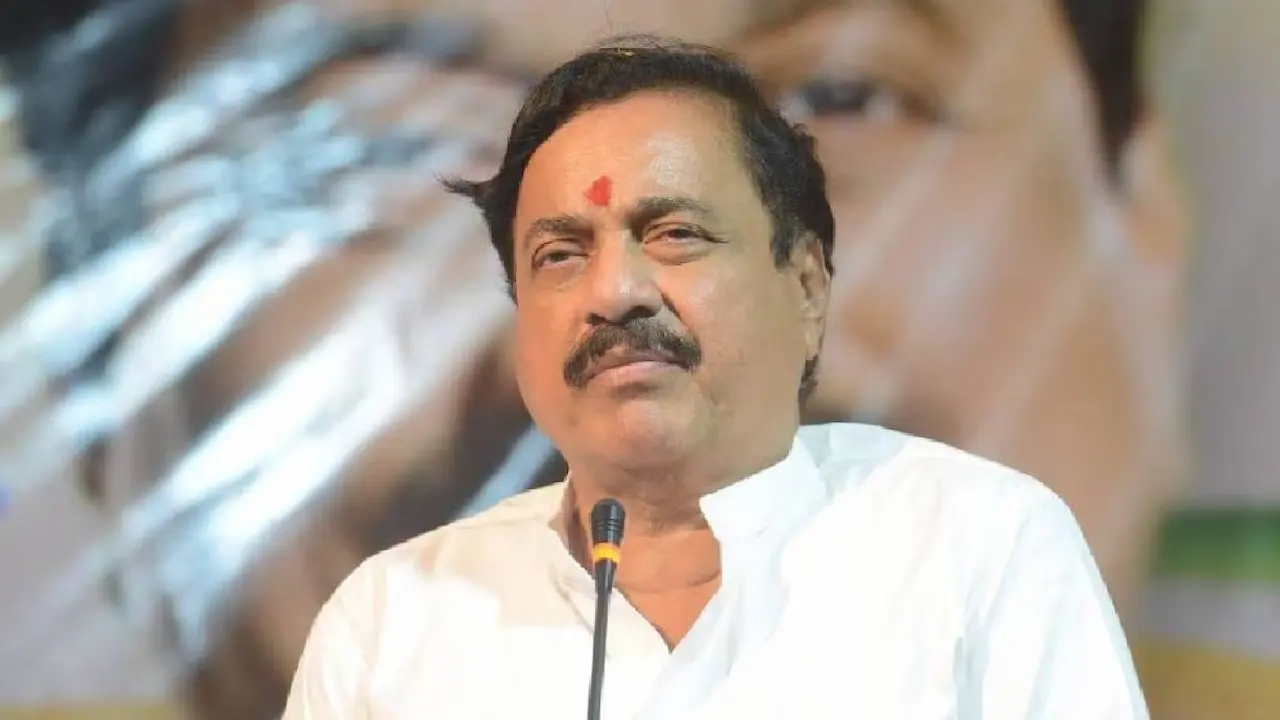
Maharashtra Nationalist Congress Party (NCP) president Sunil Tatkare has said he was aware of discussions regarding a possible merger between his faction and the Sharad Pawar-led NCP (SP), but clarified that he was not opposed to the idea.
Speaking to a Marathi news channel, Tatkare expressed disappointment that the merger talks were made public at a time when the party was mourning the sudden demise of its leader and then Deputy Chief Minister Ajit Pawar on January 28.
Tatkare questioned the narrative around the proposed merger, stating that the key issue remains “who will merge with whom”. He also made it clear that his party will continue its alliance with the BJP-led National Democratic Alliance (NDA).
Following Ajit Pawar’s death, leaders from the Sharad Pawar-led NCP (SP) had claimed that discussions on a merger were underway before his passing. However, leaders from Tatkare’s faction had earlier denied that any such decision had been finalised.
In recent developments, NCP MLA Sunil Shelke, known to be a close associate of Ajit Pawar, and Assembly Deputy Speaker Anna Bansode have voiced support for a possible merger under the leadership of Deputy Chief Minister Sunetra Pawar.
Reiterating his stance, Tatkare said he was informed about the talks but emphasised that the party’s current political alignment with the NDA remains unchanged.
SIT Detains 'Godman' Ashok Kharat's Son in Rape Case Probe; Wife Missing, Search Intensifies 4
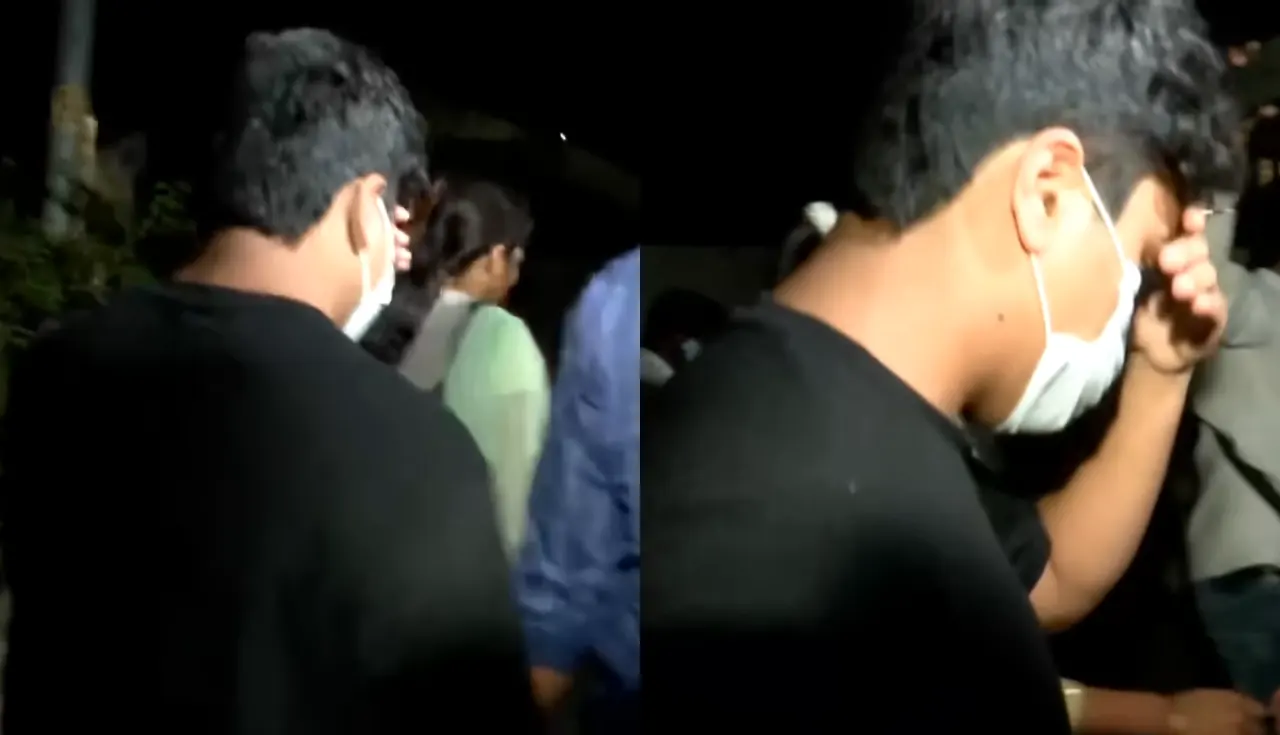
The Special Investigation Team (SIT) probing rape and cheating allegations against self-styled godman Ashok Kharat has detained his son Harshvardhan in Nashik for questioning, while a search is underway to trace his wife, police said.
Kharat is facing at least 10 FIRs at the Sarkarwada police station, including eight cases of alleged sexual assault or exploitation and two related to cheating. Investigators have also received over 100 complaints via phone against him, indicating the scale of the allegations.
On Tuesday, an SIT team reached Kharat’s residence in Karmayogi Nagar and detained his son after failing to locate his wife, Kalpana Kharat. Harshvardhan was subsequently taken to the Maharashtra Police Academy for further questioning, officials said.
Meanwhile, Kharat remains in police custody, which is set to end on Wednesday, after which he will be produced before a local court.
In a parallel development, police in neighbouring Ahilyanagar district have registered a fresh cheating case against five individuals, including Kharat’s wife, in connection with an alleged land fraud exceeding ₹4 crore.
Authorities in Shirdi have arrested two accused—identified as Arvind Bawake and Kiran Sonawane—in connection with the case. Kharat’s wife remains absconding, and efforts are ongoing to trace her.
According to officials, a landowner from Shirdi had taken an unsecured loan of ₹5.52 crore from Kharat’s wife against four acres of land. Despite repaying around ₹1.5 crore, the accused allegedly attempted to usurp the property, prompting the victim to file a complaint.
Based on the complaint, a case has been registered under charges of fraud and provisions of the Maharashtra Money Lending (Regulation) Act. Kharat, his wife, and a middleman have been named among the accused.
The investigation into both the sexual assault allegations and financial irregularities is ongoing as authorities continue to widen the probe.
BJP Unveils Assam Poll Manifesto: Rs 5 Lakh Cr Investment, Land Rights Push and Jobs Promise 6
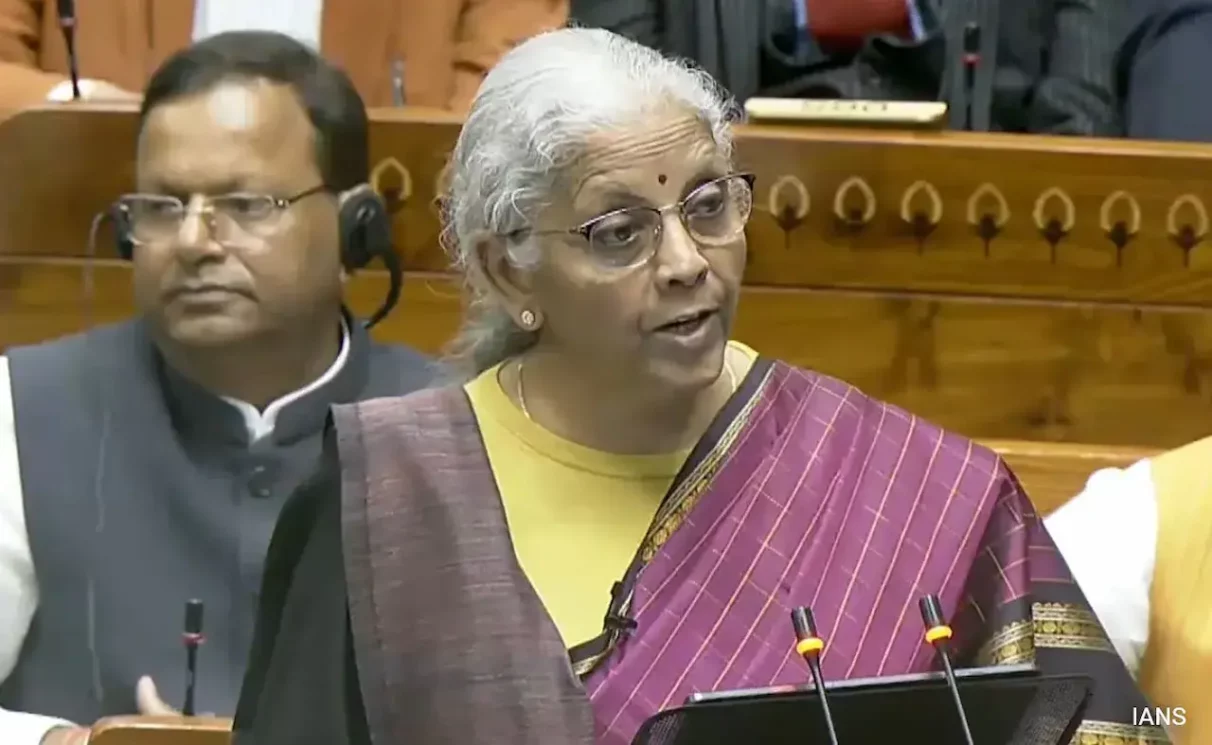
Union Finance Minister Nirmala Sitharaman on Tuesday unveiled the BJP’s manifesto for the upcoming Assam Assembly elections, promising protection of land, heritage and dignity of indigenous communities, along with a massive ₹5 lakh crore infrastructure investment.
The party’s ‘Sankalp Patra’ outlines 31 key promises, including measures to reclaim encroached land, implement a Uniform Civil Code, and boost employment opportunities for the youth while accelerating the state’s overall development.
Sitharaman said the manifesto builds on what she described as a “decade of transformation” under BJP rule, contrasting it with the Congress’ tenure. She alleged that previous governments lacked a long-term vision for the development of the Northeast.
Highlighting the BJP’s governance record, she claimed that the state has witnessed significant growth and stability, which has encouraged many young Assamese professionals to return from abroad in search of new opportunities.
The Union minister also said that peace and stability in Assam have improved under BJP leadership, adding that development is possible only in a secure environment. Referring to the Armed Forces (Special Powers) Act (AFSPA), she stated that the law, which was in force for decades, has now been removed from most areas due to improved conditions.
The manifesto launch event was attended by Chief Minister Himanta Biswa Sarma, Union ministers Sarbananda Sonowal and Pabitra Margherita, state BJP president Dilip Saikia, and other senior party leaders.
Elections to the 126-member Assam Assembly are scheduled for April 9, with counting of votes set for May 4.
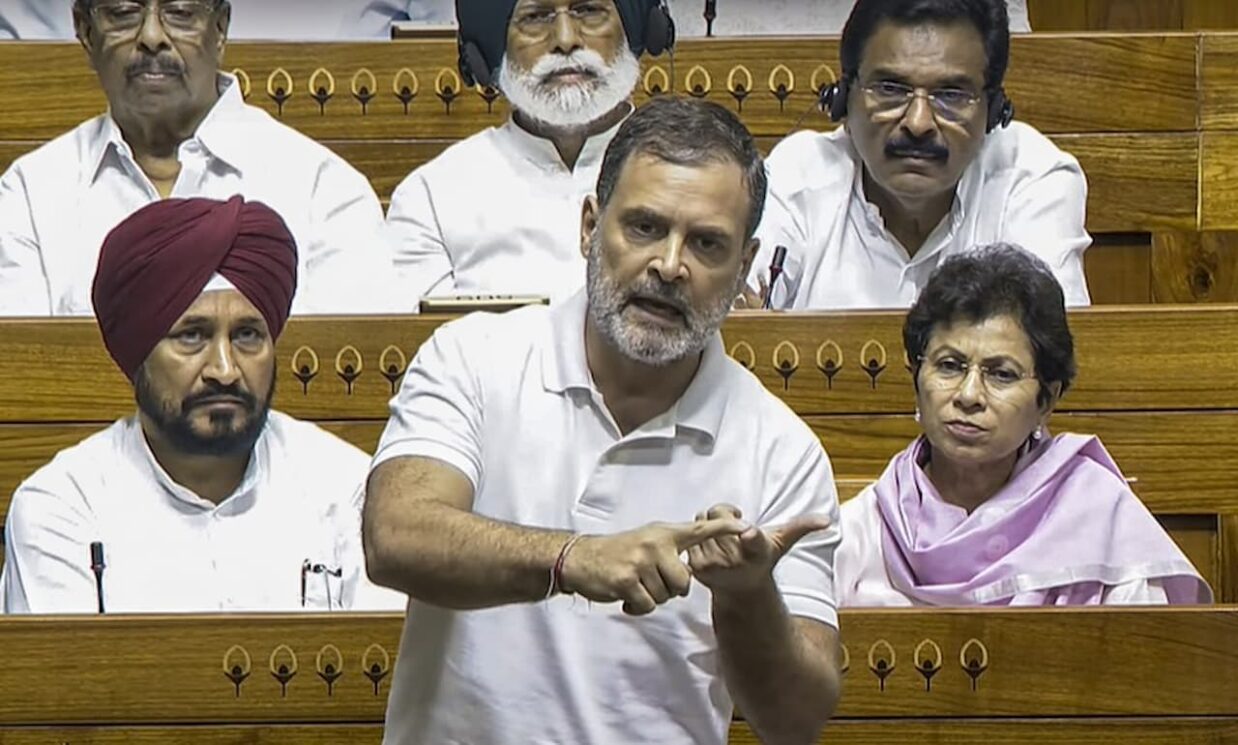
Congress leader Rahul Gandhi on Tuesday alleged that Prime Minister Narendra Modi wants the ruling Left Democratic Front (LDF) to return to power in the upcoming Kerala Assembly elections.
Addressing an election rally, Gandhi claimed that the Congress-led United Democratic Front (UDF) is effectively fighting a combined challenge from both the LDF and the BJP. He described the contest as a battle of ideologies, asserting that an unusual alignment appears to be emerging between the Left and the Right.
“This election is a fight between two ideologies — that of the Left Front led by CPI(M) and that of the UDF. But for the first time, we are seeing a partnership between the BJP and the Left Front,” Gandhi said.
He questioned how parties with opposing ideological positions could appear to converge politically, calling it a “puzzle”. Referring to the presence of former CPI(M) leaders V. Kunhikrishnan and T.K. Govindan on the UDF stage, Gandhi said their shift indicates that the Left is no longer representing its traditional ideological base.
According to Gandhi, individuals with “Left-minded thinking” are now aligning with the Congress, while the CPI(M) has drifted towards what he described as “corporate politics”.
The Congress leader also targeted the BJP’s approach in Kerala, alleging selective silence on key issues. He questioned why Prime Minister Modi does not raise the Sabarimala gold loss issue in the state, while frequently invoking religion and temple-related matters elsewhere.
Gandhi further alleged that CPI(M) leaders were linked to the Sabarimala controversy and accused the BJP of not addressing the matter, suggesting that this indicates a tacit understanding between the two parties.
He reiterated that the UDF remains the only alternative for voters seeking a government committed to people-centric policies, while asserting that recent political developments reflect a shift in Kerala’s traditional ideological landscape.
UP Cracks Down on Fuel Black Marketing: 17,000+ Raids, 17 Arrested Across State 10
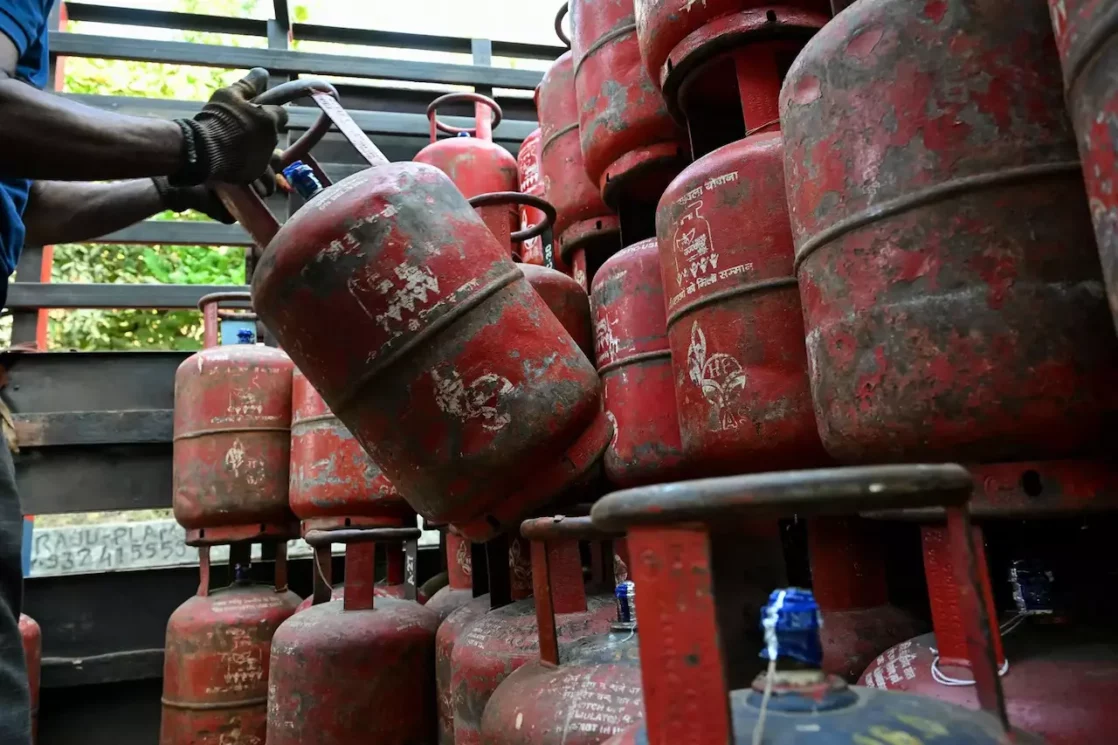
The Uttar Pradesh government has carried out an extensive crackdown on black marketing of LPG and petroleum products, conducting over 17,000 raids and inspections across the state since March 12.
According to an official statement issued late Monday night, a total of 17,581 raids were conducted during this period, resulting in the arrest of 17 individuals. Authorities also registered 33 FIRs against LPG distributors and 189 FIRs in other related cases, while initiating prosecution proceedings against 224 people.
The action follows directives from the Chief Secretary, with district administrations actively monitoring the supply situation. District supply officers and local officials have been tasked with ensuring the timely availability of cooking gas cylinders and fuel to consumers through regular inspections.
The government said petrol and diesel supplies remain stable, with approximately 91,000 kilolitres of petrol and 1.15 lakh kilolitres of diesel currently in stock. Across the state, 12,888 petrol pumps are operational, and fuel sales have continued steadily in recent days.
Authorities have urged citizens not to panic or engage in hoarding, emphasising that the supply chain remains uninterrupted.
The LPG supply situation has also been described as satisfactory, with 4,107 distributors ensuring delivery of cylinders as per bookings. Adequate stock is available to meet consumer demand, the statement said.
Efforts are also underway to expand the city gas distribution (CGD) network, with instructions issued to fast-track approvals and increase the number of piped natural gas (PNG) connections.
In addition, the central government has allowed a 20 per cent increase in the allocation of commercial LPG cylinders from March 23 to support demand.
To maintain constant oversight, a 24-hour control room has been set up at the office of the Food and Civil Supplies Commissioner, along with similar monitoring centres in all districts to track supply and prevent irregularities.
India Now 'Naxal-Free', Amit Shah Declares in Parliament; Targets Congress Over Past Failures 12
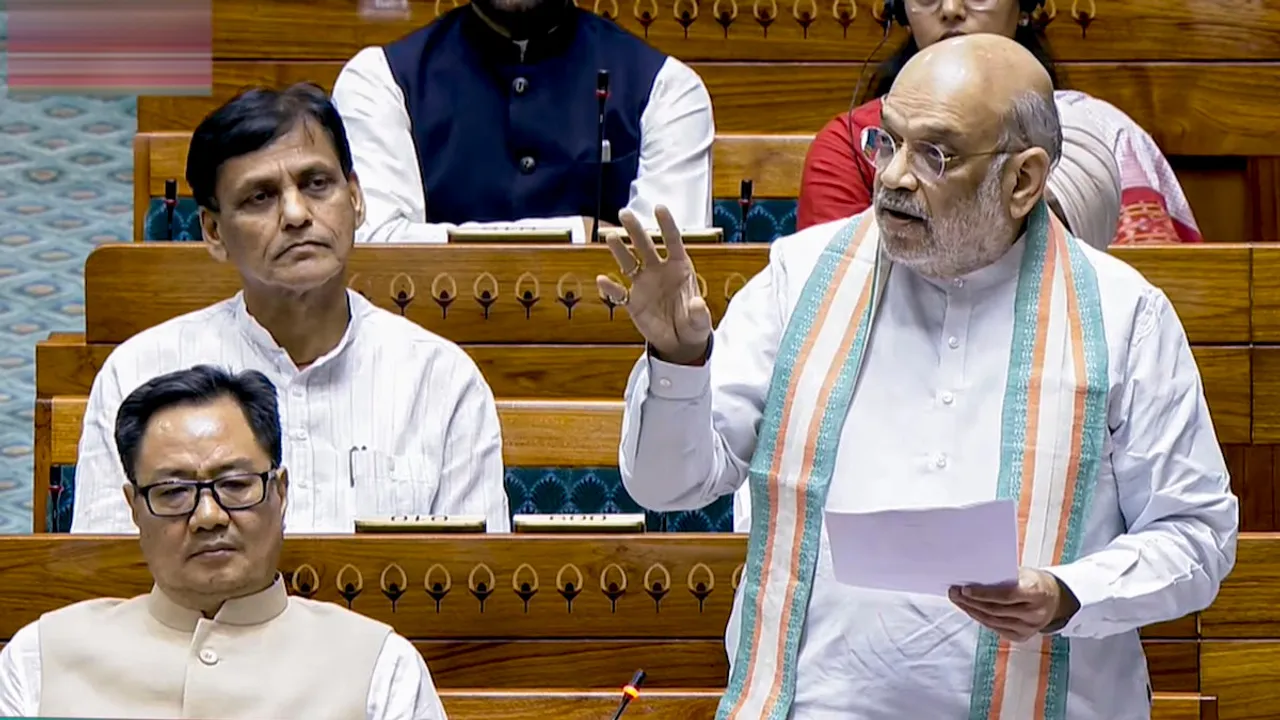
Union Home Minister Amit Shah on Monday declared in Parliament that India has effectively become free from Naxalism, stating that the Maoist leadership and central structure have been nearly dismantled.
Replying to a debate in the Lok Sabha on efforts to eliminate Left-Wing Extremism (LWE), Shah said the government’s target of making the country Naxal-free by March 31, 2026, has largely been achieved. He added that a formal announcement would follow once the process is fully completed.
“Their Politburo and central structure have been almost completely dismantled. I can say that we have become Naxal-free,” Shah told the House, highlighting major successes of security forces across affected states.
Detailing the progress, Shah said members of Maoist state committees in Madhya Pradesh, Maharashtra, and Chhattisgarh have surrendered, while most remaining cadres in Odisha and Telangana have either been neutralised or have laid down arms.
He credited the achievement to coordinated efforts by Central Armed Police Forces, state police units, specialised forces like CoBRA and DRG, and support from tribal communities in affected regions.
Targeting the Congress, Shah alleged that previous governments failed to tackle the decades-long insurgency and allowed the “Red Corridor” to expand across multiple states. He questioned why the issue remained unresolved for years despite Congress being in power for a significant period after independence.
The Home Minister also accused Congress leader Rahul Gandhi of showing sympathy towards Naxal-linked elements, citing past public appearances and social media activity.
Shah reiterated the government’s dual approach—rehabilitation for those who surrender and strict action against those who continue violence. “Talks are only with those who lay down arms; a bullet will be answered with a bullet,” he asserted.
Highlighting the human and economic cost of the insurgency, Shah said Naxal violence had claimed around 20,000 lives, including 5,000 security personnel, and kept nearly 12 crore people deprived of development across affected regions.
He added that areas like Bastar, once heavily affected by Maoist influence, are now witnessing development as the “shadow of red terror” recedes. Shah credited the Modi government’s welfare initiatives and infrastructure push for improving conditions in these regions.
Reaffirming the government’s stance, Shah said India will not tolerate any form of armed insurgency and emphasised that justice must be pursued through constitutional means, not violence.
The Marketplace of Blind Faith: When Consent, Power, and Superstition Collide 14
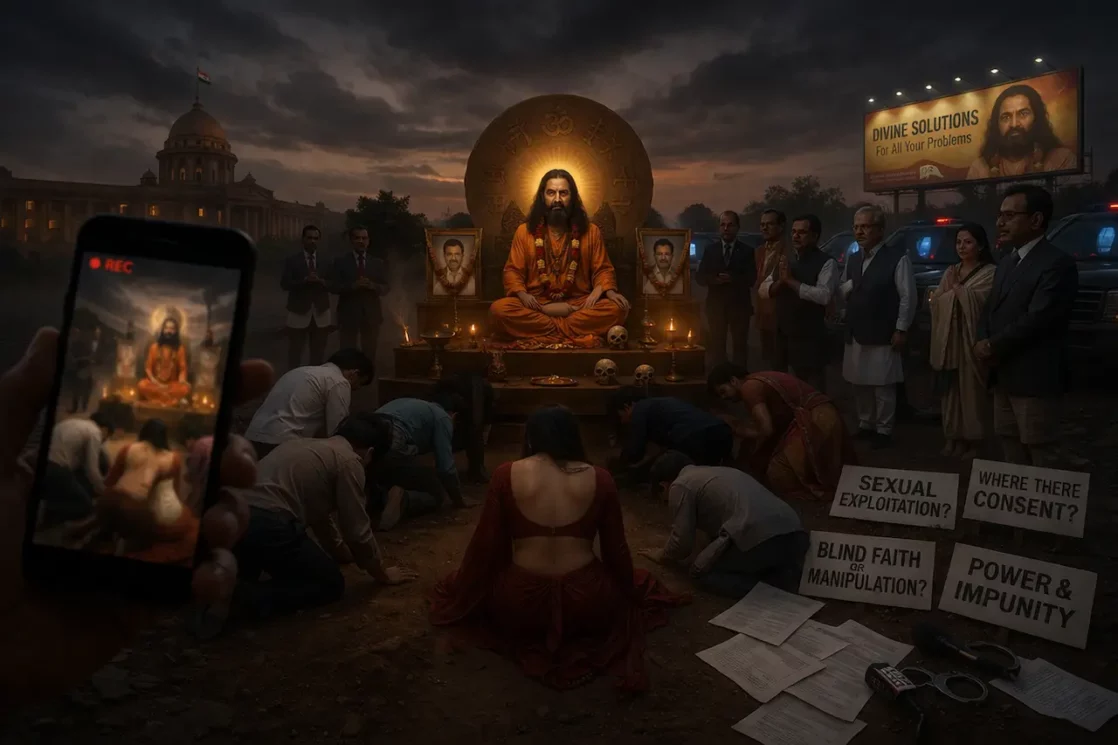
The Ashok Kharat episode is not merely about one controversial figure or a set of disturbing viral videos. It is a brutal mirror held up to society—reflecting uncomfortable truths about blind faith, moral ambiguity, selective outrage, and, most importantly, the unsettling role of willing participants in their own exploitation.
For days now, public discourse has been hijacked by two extreme narratives. One paints Kharat as a monstrous predator who manipulated and violated women. The other attempts to dismiss the entire episode as a conspiracy, a media trial fueled by selective leaks and moral panic. But both sides are conveniently avoiding the most disturbing question of all: what happens when people willingly walk into the trap?
The viral videos—disturbing as they are—do not present a straightforward story of visible force or resistance. What emerges instead is a deeply uncomfortable gray zone. The individuals involved appear conscious, aware, and, at least on the surface, compliant. The acts themselves are framed not as coercion, but as part of some ritualistic, quasi-religious process.
This is where the debate must shift. Because if this was not overt force, then what exactly are we looking at? Consent? Manipulation? Psychological conditioning? Or a dangerous cocktail of all three?
Let us be clear: consent under the influence of blind belief is not the same as free, informed choice. When individuals surrender agency to a self-proclaimed spiritual authority—believing that submission will bring divine reward, healing, or personal gain—the very idea of consent becomes distorted. It is no longer a decision made freely; it is one shaped by indoctrination, fear, and hope.
But here lies the uncomfortable counterpoint—one that society is reluctant to confront. At what stage does personal responsibility enter the equation?
Why do educated, socially aware individuals—many from influential backgrounds—fall at the feet of such figures? Why do they suspend logic, ignore red flags, and participate in acts that, in any other context, would be immediately recognized as exploitative or absurd?
This is not victim-blaming. It is a necessary examination of societal psychology.
Because the truth is, figures like Kharat do not operate in isolation. They thrive because there is demand. There is a market for miracles, shortcuts, and mystical solutions to real-world problems. People do not just stumble into these traps—they are often seeking them out.
In this ecosystem, the so-called “godman” is not just an individual. He is a product—manufactured by belief, validated by influence, and protected by power.
And that power is not abstract. It is very real.
When political leaders, bureaucrats, and celebrities openly associate with such individuals—calling them “family gurus” or seeking their blessings—they legitimize them. They create an aura of untouchability. A silent message is sent: this person is above scrutiny.
In such an environment, questioning becomes rebellion. Doubt becomes disrespect. And skepticism becomes a social risk.
It is within this carefully constructed bubble that exploitation flourishes.
Now consider the timeline of events. For years, there were no public complaints of sexual exploitation against Kharat. His influence grew. His following expanded. His access to powerful circles deepened. Then suddenly, videos surface—reportedly leaked by an insider—and the narrative explodes overnight.
Only after the exposure do complaints begin to emerge.
This sequence raises difficult questions. Were people silent out of fear? Or were they complicit until exposure made silence impossible? Were the relationships perceived as consensual until public shame reframed them as violations?
Again, the answers are not simple. But they cannot be ignored.
Equally troubling is the role of institutions. Authorities have claimed that women were drugged or hypnotized. Yet, the visual evidence—at least what is publicly available—does not clearly support such assertions. If these claims are exaggerated or unverified, then we are looking at a dangerous attempt to simplify a complex reality for public consumption.
Why? Because the truth is far more uncomfortable.
It is easier to say “they were drugged” than to confront the possibility that individuals willingly submitted under the influence of belief.
It is easier to construct a villain than to question the system that creates and sustains him.
It is easier to shout for punishment than to demand introspection.
And yet, introspection is exactly what this moment demands.
Because Kharat is not an anomaly. He is part of a larger pattern. Across regions, religions, and communities, similar figures continue to emerge—each exploiting faith, each building empires on belief, and each eventually exposed, only to be replaced by another.
This cycle persists because the underlying conditions remain unchanged.
Blind faith is not just tolerated—it is celebrated. Questioning is discouraged. Rationality is often dismissed as arrogance. And in this environment, superstition does not merely survive—it thrives.
Another dimension that cannot be ignored is the gendered aftermath of such scandals. While the central figure becomes a subject of debate—guilty or innocent—the women involved bear the brunt of social judgment.
Their identities are exposed. Their dignity is compromised. Their lives are permanently altered.
Society, in its hypocrisy, is quick to consume their images, circulate their videos, and pass judgment—while conveniently ignoring its own role in creating the conditions that led to their vulnerability.
If there is outrage, it must be directed not just at the individual, but at the ecosystem.
At the normalization of blind surrender to authority.
At the political patronage that shields questionable figures.
At the media sensationalism that prioritizes spectacle over substance.
And yes, at the societal tendency to seek miracles instead of solutions.
This is where the conversation must evolve.
Punishing one individual—if found guilty—will not dismantle the system. It will merely provide temporary satisfaction. The deeper problem will remain intact, waiting for the next figure to occupy the same space.
Real change requires something far more difficult: a shift in mindset.
It requires questioning authority, even when it is wrapped in religious legitimacy.
It requires educating individuals—not just academically, but psychologically—to recognize manipulation.
It requires dismantling the culture of unquestioned reverence.
And perhaps most importantly, it requires acknowledging that exploitation is not always imposed. Sometimes, it is enabled—through belief, through silence, and through the human tendency to seek certainty in uncertain times.
The Ashok Kharat episode, uncomfortable as it is, presents an opportunity.
An opportunity to ask hard questions.
An opportunity to confront inconvenient truths.
An opportunity to move beyond outrage and towards understanding.
Because unless we address the root cause—the willingness to believe without question—we will continue to produce both the exploiters and the exploited.
Adhikari Factor Dominates Bengal Poll Battle in Tamluk-Kanthi as BJP, TMC Clash 16
The influence of the Adhikari family has emerged as a decisive factor in three key assembly constituencies of West Bengal’s Purba Medinipur district, as the ruling Trinamool Congress (TMC) and the Bharatiya Janata Party (BJP) gear up for a fierce electoral battle.
Once a dominant anti-Left force and later a pillar of the TMC, the Adhikari family—led by former Union minister Sisir Adhikari and including Suvendu Adhikari, the Leader of Opposition, along with Dibyendu and Soumendu—has now aligned with the BJP, significantly altering the political landscape in the region.
The constituencies of Tamluk, Kanthi (Uttar), and Kanthi (Dakshin), which witnessed closely contested elections in 2021, are again in focus due to shifting political loyalties and the enduring grassroots influence of the family.
Tamluk, in particular, has become a crucial swing seat after a razor-thin margin of just 793 votes decided the contest in the last assembly polls, with the TMC narrowly defeating the BJP. The constituency continues to reflect a bipolar contest, although the presence of Left and Congress candidates could impact vote division.
Kanthi subdivision remains the epicentre of the Adhikari family’s political network, where their long-standing local influence continues to shape voter behaviour. In Kanthi Uttar, the BJP secured victory in 2021 and has retained its candidate, while the TMC is attempting to regain lost ground by reorganising its cadre base.
Kanthi Dakshin, historically considered the family’s stronghold, also presents a tightly contested scenario. The BJP aims to retain its advantage, while the TMC is pushing for a comeback through renewed grassroots efforts.
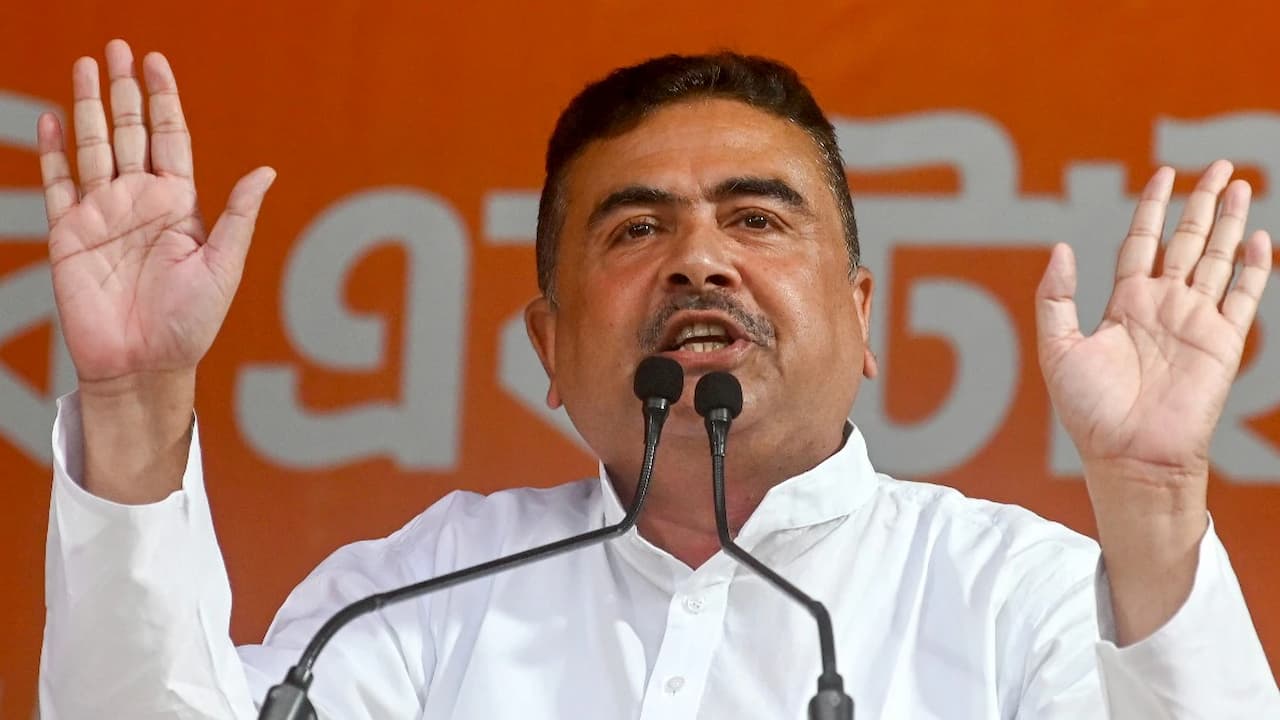
At the centre of this political churn is Suvendu Adhikari, whose shift from being a key aide of Chief Minister Mamata Banerjee to the BJP’s principal face in Bengal has had far-reaching electoral consequences. His transition effectively transferred a well-established political network to the BJP, strengthening its position in the district.
As both parties intensify their campaigns, Purba Medinipur once again emerges as a politically crucial district that could influence the broader electoral outcome. While the BJP seeks to consolidate its gains with the backing of the Adhikari network, the TMC is working to rebuild its organisational strength and reclaim lost ground.
The Left and Congress, though not central to the main contest, could still play a significant role by influencing vote shares in closely fought constituencies. Voting for the 294-member West Bengal Assembly will be held in two phases on April 23 and 29, with counting scheduled for May 4.
DMK Announces Candidates for 164 Seats; Stalin to Recontest from Kolathur 18
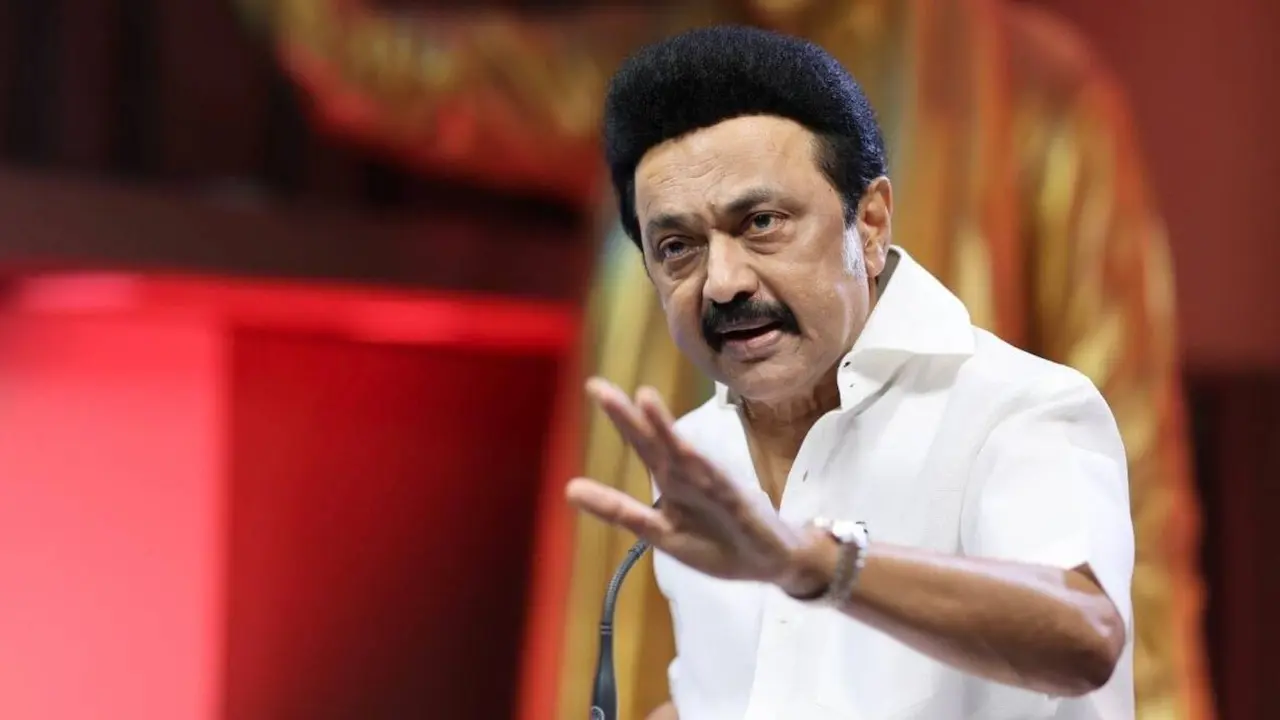
The ruling DMK on Saturday unveiled its list of candidates for 164 constituencies for the April 23 Tamil Nadu Assembly elections, with Chief Minister M.K. Stalin set to recontest from his Kolathur seat.
Announcing the list at the party headquarters, Anna Arivalayam, Stalin confirmed that his son and Deputy Chief Minister Udhayanidhi Stalin will once again contest from Chepauk-Triplicane. The party has largely retained its sitting ministers, MLAs, and senior leaders in a bid to maintain continuity.
Key leaders renominated include DMK general secretary Durai Murugan, K.N. Nehru, Anbil Mahesh Poyyamozhi, Thangam Thennarasu, Ma. Subramanian, and E.V. Velu.
In a significant political development, former AIADMK leader O. Panneerselvam, who recently joined the DMK, has been fielded from Bodinayakkanur, a constituency he represented earlier before resigning as MLA. His associates, Paul Manoj Pandian and R. Vaithilingam, who had joined the DMK earlier, have also been given tickets.
Former minister V. Senthil Balaji has been nominated from Coimbatore South.
Earlier in the day, the DMK concluded its seat-sharing arrangements with alliance partners under the Secular Progressive Alliance (SPA). The Congress has been allotted 28 seats, including key constituencies such as Ponneri, Erode East, Vilavankode, Sivakasi, and Karaikudi.
The DMDK, led by Premalatha Vijayakanth, will contest 10 seats, including Vriddhachalam and Pallavaram. The Viduthalai Chiruthaigal Katchi (VCK), led by Thol Thirumavalavan, has been allocated eight seats, including Kattumannarkoil, Panrutti, and Tindivanam.
The Left parties have also secured representation, with CPI(M) and CPI allotted five seats each. CPI(M) will contest from constituencies including Padmanabhapuram and Palani, while CPI will field candidates in Thalli and Bhavanisagar (SC), among others.
Additionally, the Vaiko-led MDMK has been given four seats, with some candidates contesting on the DMK’s ‘Rising Sun’ symbol. In total, 11 candidates from alliance parties will contest under the DMK symbol.
With the candidate list and alliances finalised, the DMK has signalled a strong and coordinated push for the upcoming Assembly elections.
Nepal Ex-PM KP Sharma Oli Arrested Over Deadly Gen Z Protest Crackdown 20
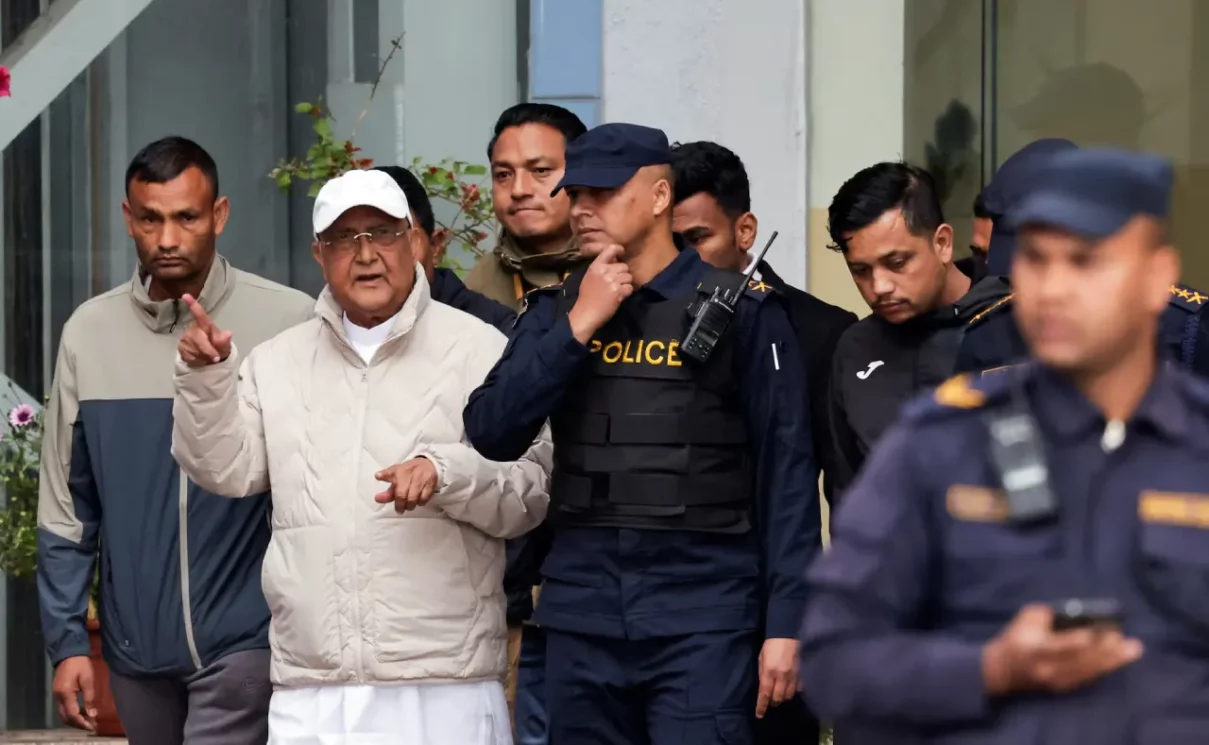
Nepal’s former Prime Minister K.P. Sharma Oli was arrested on Saturday in connection with last year’s violent crackdown on Gen Z protests, a day after the newly formed government led by Balendra Shah moved to implement the findings of a probe commission.
Oli, who also serves as the chairman of the CPN-UML, was taken into custody early Saturday morning from the Gundu area in Bhaktapur district, about 12 km east of Kathmandu, police confirmed.
Former Home Minister and Nepali Congress leader Ramesh Lekhak was also arrested from his residence in Katunje, Suryabinayak Municipality, in the same district.
Both leaders face charges related to their alleged role in suppressing the Gen Z protests held on September 8 and 9 last year, during which 76 people, including several youths, were killed. The probe commission that investigated the incident recommended criminal action against Oli, Lekhak, and others.
Acting swiftly, the Balendra Shah-led government approved the commission’s recommendations during its first cabinet meeting on Friday, paving the way for the arrests.
Home Minister Sudhan Gurung defended the move, stating that the action was part of a legal process and not driven by political vendetta. “Nobody is above the law. This is not revenge, but the beginning of justice,” he said in a social media post, adding that the country would now move in a new direction.
Police said both Oli and Lekhak have been lodged at the Kathmandu District Police Circle in Bhadrakali. They are expected to be produced before the Kathmandu District Court on Sunday, following which formal investigation proceedings will begin.
A senior police official indicated that the probe commission has recommended a prison term ranging from three to ten years if the आरोप are proven.
Shortly after his detention, Oli was taken to Tribhuvan University Teaching Hospital for a routine medical examination, officials said, describing the arrest as part of due legal procedure.
Meanwhile, the CPN-UML has convened an emergency meeting of its secretariat at its central office in Lalitpur to deliberate on the unfolding developments.