Home Blog Page 37

When Protest Terrifies Power: The Making of a False Narrative and the Arrest of Sonam Wangchuk

sonam wangchuk, arrest, leh, ladakh, protest, activist, nia, sedition
When Protest Terrifies Power: The Making of a False Narrative and the Arrest of Sonam Wangchuk 2

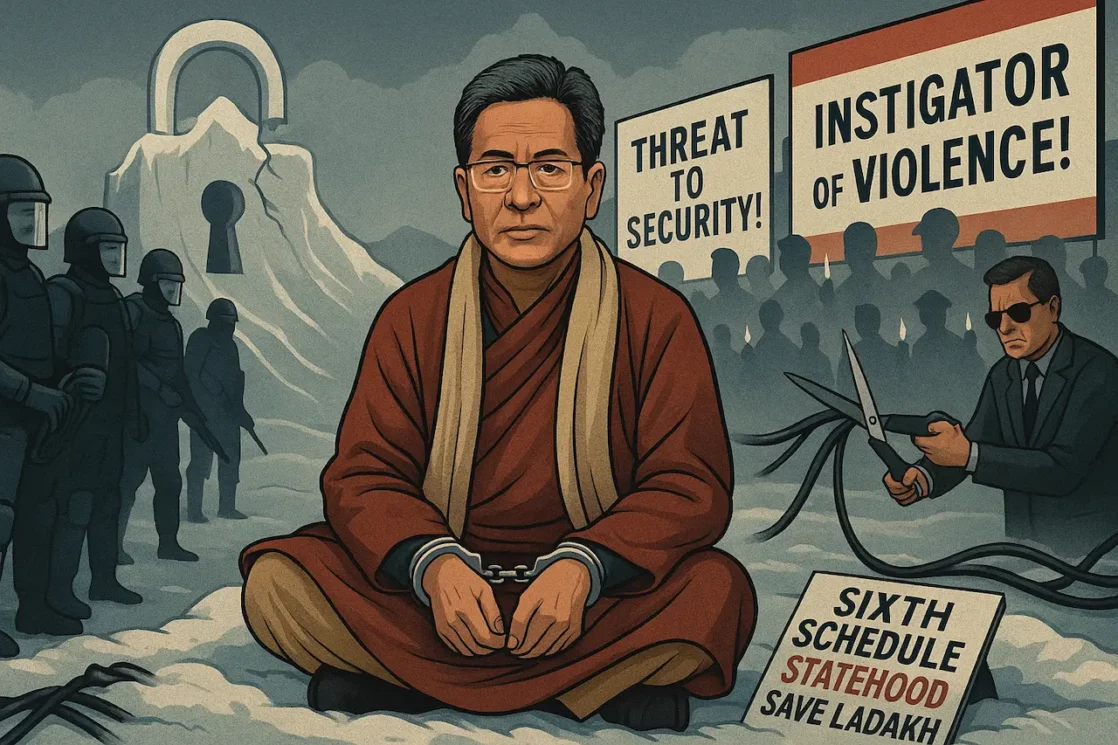
There are moments in a nation’s life when the relationship between rulers and citizens is laid bare, when all the rhetoric of democracy collapses under the weight of its own contradictions, and what remains visible is naked fear. The arrest of Sonam Wangchuk in Ladakh is one such moment. To anyone who has followed his life, his work, his ideas, the very notion that he could be branded a threat to national security would sound ludicrous, if it were not so dangerous. For decades he has been known as an innovator who made the barren land bloom, an educationist who reimagined what it means to learn in harmony with one’s environment, an environmentalist who turned melting glaciers into life-giving ice stupas, and above all a son of Ladakh who believed his people deserved dignity and a voice in their own future. Yet the Indian state has chosen to treat him not as a reformer but as an enemy, not as a partner in development but as a conspirator, and in that choice it has revealed its own weakness more clearly than he ever could have through protest.

The story of his arrest cannot be told without recalling the changes of 2019, when Ladakh was separated from Jammu and Kashmir and made a Union Territory. For many in the rest of India this seemed like an administrative reshuffling, a technical decision buried in legal language. But for Ladakhis it was a rupture, a sudden downgrading of political representation, a loss of agency, a new vulnerability to exploitation. Ladakh, with its fragile ecology and delicate cultural balance, had always required protections that recognized its uniqueness. The Sixth Schedule of the Constitution had been invoked in other tribal areas, giving them the right to safeguard their land, their resources, their identity. Why should Ladakh, even more vulnerable, be denied similar safeguards? That question haunted the region from 2019 onward, and it was Sonam Wangchuk, with his moral authority and his rare ability to translate complex concerns into clear language, who carried it to the nation’s conscience. He was not a politician with a party to build or elections to win; he was a reformer with credibility, and that made him infinitely more dangerous to those in power.

For years the government simply ignored him. His warnings about climate change, about the cultural erosion of Ladakh, about the risks of unfettered development, were tolerated as long as they did not become politically explosive. But patience in Ladakh was wearing thin. Jobs were scarce, migration was draining the young, land was being eyed by outside interests, and every delay from Delhi deepened the sense of betrayal. When Wangchuk finally sat on a hunger strike, it was not an act of drama but of desperation. He wanted to show, through his own body, the urgency of Ladakh’s demands. His fast was peaceful, his speeches calm, his appeal constitutional. Yet within days he drew thousands. The symbolism of a teacher, scientist, and activist starving in the snow while asking nothing more than constitutional justice captured the imagination of young Ladakhis, and it rattled the government in Delhi. They had dismissed him as an eccentric professor; now they saw him as a leader with mass support.

The government’s fear became visible when protests in Leh spilled over into violence. Some youth, frustrated, clashed with police. Vehicles were torched, even a BJP office attacked, and tragically lives were lost. Any government would be shaken by such events. But the response of a secure leadership would have been to ask: what produced such anger, and how do we address it? Instead, the Centre chose the easier, more cynical path: blame one man. The IT cell went into overdrive, scouring speeches, lifting lines out of context, painting Wangchuk as the architect of mayhem. References to the Arab Spring were twisted into a call for insurrection. His moral appeal to the youth was reframed as incitement. And the oldest trick in the book was dusted off: label him a puppet of foreign forces.

This charge was particularly hollow. Wangchuk has never hidden the fact that his innovations and products have found markets abroad. He created, he sold, he earned, and he paid taxes — even though under Article 10(26) of the Income Tax Act, as a member of a Scheduled Tribe living in Ladakh, he was entitled to exemption. He chose the harder road of paying, of standing above suspicion. And yet the IT cell, with its toxic talent for manufacturing suspicion, declared that this was foreign funding, that his institutions were channels of international conspiracy. It was a breathtaking act of projection, for the very party leveling this charge has long thrived on donations from abroad through legal and less-than-transparent means. They imagined everyone must be funded the way their own organizations are, and in that projection they revealed both their guilt and their desperation. For their loyal online army, no lie was too absurd to spread, no slander too low to post. Overnight, the man who had taught India how to harness ice and sunlight was cast as a danger to the nation itself.

Once the smear had been planted, the machinery followed. His NGO, SECMOL, saw its foreign contribution licence canceled. Investigations were announced, irregularities whispered into headlines, the CBI roped in. The idea was not just to tarnish his image but to cripple the institutions he had painstakingly built over decades. If you destroy a man’s work, you destroy his legacy, and perhaps his will. Alongside this, Ladakh itself was silenced: curfews imposed, mobile networks cut, internet suspended. The region was plunged into enforced quiet, as if the government believed that the absence of sound meant the absence of dissent. It was a classic authoritarian reflex: when you cannot control the message, you block the medium.

Wangchuk, however, refused to be cowed. He said openly that he was ready for arrest, that the government might invoke the Public Safety Act or the National Security Act, but that jailing him would create more problems for them than for him. It was a calm defiance, the kind that unnerves power more than any fiery slogan. Because he was right: in locking him away, they would confirm every suspicion about their intent, and they would make his voice echo louder than ever. Nevertheless, on September 26, the hammer fell. He was arrested under the NSA, bundled out of Ladakh, and taken to a jail far away, as if distance could dilute his influence. It was an act less of law than of fear, less of justice than of panic.

What does it say about a government when it must use its harshest national security law against a teacher, an innovator, a man whose only weapons are words and ideas? It says that the government is not as strong as it claims. It says that behind the facade of control lies the fear that one honest voice can undo the carefully constructed propaganda of power. It says that the rulers are more afraid of a peaceful hunger strike than of actual violence, because violence can be crushed with batons, but ideas cannot be crushed so easily. It says, finally, that the government values narrative control above truth, and will do whatever it takes — internet blackouts, arrests, agency raids, propaganda campaigns — to ensure its version of reality prevails.

But in doing all this, they have already lost. Sonam Wangchuk the activist was confined to Ladakh; Sonam Wangchuk the prisoner now belongs to the nation. His arrest has turned him into a symbol, not just of Ladakh’s fight but of the right to dissent itself. Students, environmentalists, civil society voices across India are watching, asking how a government that claims to champion democracy abroad can treat its own reformers as enemies at home. Every lie the IT cell spreads meets its counter in the facts of his life. Every attempt to delegitimize him only reminds people of his honesty. The very act of silencing him has ensured that his story will be told more widely than ever before.

The tragedy is that it did not need to come to this. The demands of Ladakh are not illegitimate. Statehood, Sixth Schedule protections, respect for ecology — these are constitutional questions, political issues that deserve debate and negotiation. By refusing dialogue and choosing suppression, the government has not solved the problem, it has deepened it. It has alienated Ladakhis further, radicalized moderates, and shown the rest of India that peaceful protest can be branded sedition at the flick of a switch. This is the road not of democracy but of authoritarianism. And history tells us authoritarianism always collapses under the weight of its contradictions, because you cannot imprison an idea forever.

What shook the government was not that a few youths set fire to vehicles in Leh. What shook it was the realization that a single man with integrity could inspire thousands without raising his voice, that his hunger strike was more threatening than any mob, because it spoke to the conscience of the people. Governments can control mobs with bullets and batons; they cannot so easily control the moral authority of a figure like Wangchuk. And so they panicked. They smeared, they silenced, they jailed. But in doing so they have confessed their own fear. A government that feels secure does not arrest a schoolteacher under the NSA. A government that trusts its people does not cut their internet. A government that believes in democracy does not treat dissent as treason.

And that is why Sonam Wangchuk’s arrest will be remembered not as the end of his movement but as the moment it broke through the walls of Ladakh and entered the national consciousness. It is the confession of a state that trembles before its own citizens, that fears questions more than violence, that prefers to destroy reputations rather than answer demands. They have locked him in a cell, but in doing so they have unlocked the truth about their own insecurities. And the truth, once seen, cannot be unseen.

Maharashtra’s Governance Drowns While Farmers Sink

marathwada, floods, maharashtra, solapur, pune, flooding, devendra fadnavis, rainfall
Maharashtra's Governance Drowns While Farmers Sink 4

Maharashtra’s Marathwada is not just fighting nature’s fury — it is battling a far more dangerous disaster: the utter apathy and inefficiency of its own government. Unprecedented rains have ravaged the region, turning fertile farmlands into watery graveyards, sweeping away livestock, cutting off villages, and drowning months of hard labour in a matter of hours. Yet, the state machinery, led by Chief Minister Devendra Fadnavis and his two deputies Ajit Pawar and Eknath Shinde, has responded with a lethargy that borders on felonious negligence. Their delayed visits to flood-hit areas were not met with gratitude but with outrage, as angry farmers and villagers confronted them over the pathetic pace of relief distribution and the complete absence of proactive planning. Shinde’s tone-deaf remark, asking people to focus on the “intention” behind relief rather than the miserable execution, exposed just how detached and insensitive the government has become. People do not need empty intentions; they need immediate action, decisive governance, and leaders who stand with them when their lives and livelihoods are washed away.

This government, however, seems too busy saving its own seat belts to save its people. Most of its time has been squandered in the political circus of breaking alliances, forging new ones, and keeping the coalition intact. Governance has taken a backseat to power games. Corruption, irregularities, and bureaucratic red tape run deep within the system, while compassion — the most basic quality expected of leadership — is nowhere to be found. In just three days, more than ten people have died in flood-related incidents, yet the state’s response has been sluggish and directionless. It was not the chief minister or his deputies who initiated urgent rescue efforts — it was the local MP Omprakash Rajenimbalkar, who took the initiative to coordinate evacuations through the Collector’s office. The so-called leadership in Mumbai woke up from its deep political slumber only after Rajenimbalkar’s video went viral on social media, shaming them into action. Until then, they were content to issue hollow statements and stage-managed visits.

The disconnect between the rulers and the ruled was glaringly evident when a desperate farmer questioned Devendra Fadnavis about the insultingly low compensation per hectare. Instead of offering solutions or empathy, Fadnavis snapped, “Don’t politicise the issue.” Police then removed the farmer from the site, silencing the very voice they were supposed to hear. That single moment summed up everything wrong with this government — arrogant, intolerant of criticism, and allergic to accountability. In Solapur, where heavy rainfall has destroyed thousands of acres of soybean, cotton, and maize, Fadnavis’s big solution was to use drone footage for assessing crop loss. It is a classic bureaucratic band-aid — high on optics, low on substance. Farmers don’t need aerial surveys; they need swift compensation, interest waivers, and support to rebuild their lives. The reliance on drone footage only delays relief and adds another layer of red tape to a process already strangled by bureaucracy.

Ajit Pawar and Eknath Shinde, for their part, made their rounds in the flood-affected villages, instructing officials to provide food, shelter, and medicine — the kind of obvious instructions that should have been issued days earlier. Their words sounded rehearsed and robotic, a ritual performance rather than genuine leadership. Meanwhile, the region’s reality is brutal: rivers have overflowed, villages have been submerged, roads and bridges have collapsed, and farmlands — the very heart of rural Maharashtra — have been wiped out. To make matters worse, some areas are simultaneously battling drought, leaving farmers trapped between two extremes of climate disaster with no safety net.

The real tragedy is that the state’s farmers are already on the brink. Repeated crop failures, mounting debt, and rising input costs have pushed them into chronic distress. Many have not yet recovered from last season’s losses, and now, this year’s floods have erased whatever little hope remained. In such a situation, timely relief isn’t just desirable — it is a matter of survival. Yet, the government’s slow-motion response shows no urgency, no vision, and no empathy. It is telling that the most effective relief has come not from the state but from the Indian Army, whose personnel conducted high-risk helicopter rescues, evacuated stranded villagers, and distributed food in areas where the government had failed to reach. Their professionalism and speed only highlight the state administration’s incompetence.

This is not a natural calamity alone; it is a governance disaster, entirely man-made. Maharashtra’s disaster management is stuck in a bygone era — reactive instead of proactive, chaotic instead of coordinated, heartless instead of humane. A state that prides itself on being an industrial powerhouse cannot even ensure basic disaster preparedness for its farmers, the very people who feed its cities and sustain its economy. Eknath Shinde, Ajit Pawar, and Devendra Fadnavis have collectively failed the people of Maharashtra. Their priorities are clear: politics over people, power over performance, survival over service. And unless this attitude changes, the floods will not just wash away crops and homes — they will wash away what little trust the people still have left in their government. 

Delhi HC Questions Sameer Wankhede’s Plea Against Netflix, Red Chillies

delhi hc, delhi high court, defamation case, sameer wankhede, irs
Delhi HC Questions Sameer Wankhede’s Plea Against Netflix, Red Chillies 6

The Delhi High Court on Friday questioned the maintainability of IRS officer and former NCB zonal director Sameer Wankhede’s defamation plea against actor Shah Rukh Khan and his wife Gauri Khan’s Red Chillies Entertainment, along with Netflix, over their web series The Ba**ds of Bollywood*.

Justice Purushaindra Kumar Kaurav asked Wankhede’s counsel to explain how the plea could be maintained in Delhi. Senior advocate Sandeep Sethi, appearing for Wankhede, argued that the series was streamed across cities, including Delhi, and that his client’s reputation had been tarnished here. He, however, sought time to amend the plaint accordingly.

The court granted time to file the amended application before the matter is heard further.

In his plea, Wankhede has sought a permanent and mandatory injunction, a declaration, and damages against Red Chillies Entertainment, Netflix, and others, alleging that the series contained “false, malicious, and defamatory” content. He has demanded ₹2 crore in damages, to be donated to Tata Memorial Cancer Hospital for cancer patients.

“The series disseminates a misleading and negative portrayal of anti-drug enforcement agencies, thereby eroding public confidence in law enforcement institutions,” the plea stated.

According to Wankhede, the show was deliberately designed to malign his reputation in a prejudicial manner, particularly since the case involving him and Shah Rukh Khan’s son Aryan Khan is still pending before the Bombay High Court and the NDPS Special Court in Mumbai.

Curfew in Leh Enters Third Day After Violent Statehood Protests; MHA Team Reviews Security

curfew, leh, ladakh, leh ladakh, town
Curfew in Leh Enters Third Day After Violent Statehood Protests; MHA Team Reviews Security 8

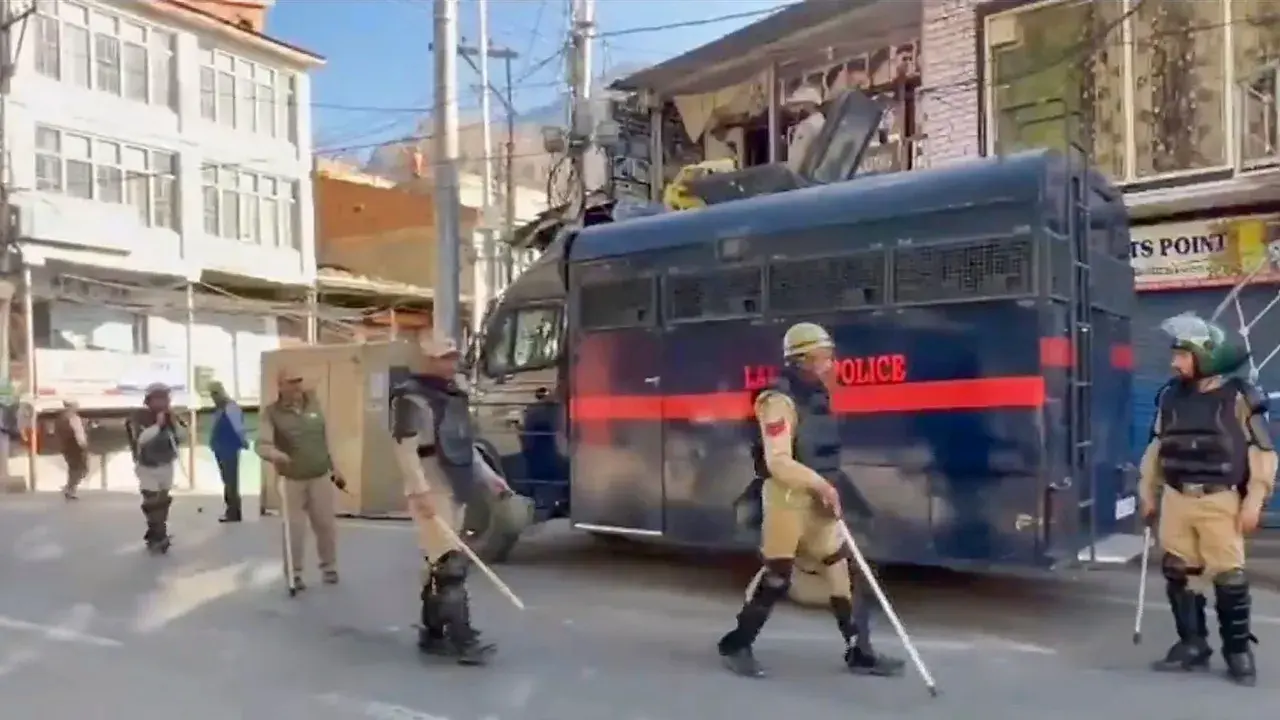
Curfew continued in Leh for the third consecutive day on Friday following violent protests over statehood demands, even as a high-level Ministry of Home Affairs (MHA) team held a series of meetings to assess the security situation.

The restrictions were imposed on Wednesday evening after clashes during a shutdown called by the Leh Apex Body (LAB) turned violent, leaving four people dead and 90 others injured. Officials said the overall situation in Ladakh remained peaceful on Friday, with no fresh incidents reported, but strict prohibitory orders under Section 144 banning assembly of five or more persons remain in force in Leh, Kargil, and other major towns.

Over 50 people have been detained since the violence. Police and paramilitary forces in riot gear continue to patrol the streets, which remain largely deserted. Residents in several areas complained of shortages of essentials such as milk, vegetables, and ration.

Leh District Magistrate Romil Singh Donk has ordered closure of all schools, colleges, and anganwadi centres for two days. Meanwhile, an MHA team that reached Leh on Thursday reviewed the situation with the Lieutenant Governor, civil and police officials, and LAB representatives.

The meeting concluded that a preparatory round of talks would be held in New Delhi on September 27 or 28, followed by an official meeting with a High-Powered Committee. The committee will include seven members each from LAB and the Kargil Democratic Alliance (KDA), alongside Ladakh MP Mohd Hanifa Jan, to deliberate on a four-point agenda.

For the past four years, LAB and KDA have jointly spearheaded an agitation demanding statehood, Sixth Schedule status, separate Lok Sabha seats for Leh and Kargil, and a Public Service Commission. While some progress has been made on job guarantees and additional parliamentary representation, the core demand for statehood and Sixth Schedule safeguards remains unresolved.

Shops and business establishments reopened in Kargil on Friday after observing a day-long shutdown. However, heavy security deployment continues in sensitive areas to prevent further unrest.

Curfew in Ladakh After Violent Clashes Leave Four Dead, 80 Injured; 50 Detained

ladakh, curfew, imposed, leh, police clash
Curfew in Ladakh After Violent Clashes Leave Four Dead, 80 Injured; 50 Detained 10

Curfew has been imposed in Ladakh following intense clashes in Leh that left four people dead and over 80 injured on Wednesday. At least 50 people were detained as police and paramilitary forces enforced strict restrictions across the violence-hit region.

The violence erupted during a shutdown called by the Leh Apex Body (LAB) to push for statehood and the extension of the Sixth Schedule to Ladakh. The protest spiraled into arson and street clashes, with agitators setting fire to the BJP office, torching vehicles, and vandalising the Hill Council headquarters. The situation prompted authorities to declare an indefinite curfew in Leh town.

Strict prohibitory orders banning gatherings of more than five people have also been enforced in Kargil, Zanskar, Nubra, Padam, Changtang, Drass, and Lamayuru. In Kargil, District Magistrate Rakesh Kumar invoked Section 163 of the Bharatiya Nagarik Suraksha Sanhita, restricting rallies, demonstrations, and use of loudspeakers without official permission.

Officials said the unrest intensified after two hunger strikers from a 35-day protest led by LAB were hospitalised. Activist Sonam Wangchuk, who had been leading a hunger strike in support of Ladakh’s constitutional safeguards, called off his fast after the violence broke out. In an appeal, Wangchuk urged young protesters to stop the violence, saying it only harmed the cause. “This is the saddest day for Ladakh and for myself personally because our peaceful struggle has turned violent,” he said.

The Union Home Ministry alleged that the violence was triggered by “provocative statements” and “politically motivated individuals” unhappy with the progress of ongoing talks between the Centre and Ladakhi groups. It reiterated that the government remains committed to providing adequate constitutional safeguards for the people of Ladakh.

Lt Governor Kavinder Gupta condemned the violence, calling it a “conspiracy” and stressing that while peaceful protest is a democratic right, the clashes could not be justified.

Despite heavy security deployment, officials confirmed that three of the injured were Nepali nationals, and police are probing possible foreign links to the unrest. The LAB and KDA, spearheading the four-year agitation for Ladakh’s statehood and Sixth Schedule, are scheduled for another round of talks with the Centre on October 6.

BJP Turns Durga Puja Into Cultural Battleground to Counter TMC’s ‘Anti-Bengali’ Narrative

durga pujo, bengali, bjp, west bengal, tmc, suvendu adhikari
BJP Turns Durga Puja Into Cultural Battleground to Counter TMC's 'Anti-Bengali' Narrative 12

The BJP in West Bengal has recast its Durga Puja outreach into a cultural counter-offensive aimed at blunting the Trinamool Congress’ “anti-Bengali” charge ahead of the 2026 assembly polls. The saffron camp is attempting to fuse faith with identity politics, projecting itself as a stakeholder in “Bangali asmita” (Bengali pride) while challenging Mamata Banerjee’s portrayal of the party as an outsider force.

This year, the party has dispatched 107 leaders to 22 states and Union Territories under the ‘Durgapuja Bangali Milan Samaroh’ to connect with diaspora Bengalis. State BJP president Samik Bhattacharya is touring Gujarat, Union Minister Sukanta Majumdar is in Varanasi, and Leader of Opposition Suvendu Adhikari is in Tripura, with others fanning out across Delhi, Mumbai, Pune, Surat, Chennai, Ranchi and the Andaman Islands. Strategists believe such outreach may not directly translate into votes but could influence families and networks in Bengal through word-of-mouth.

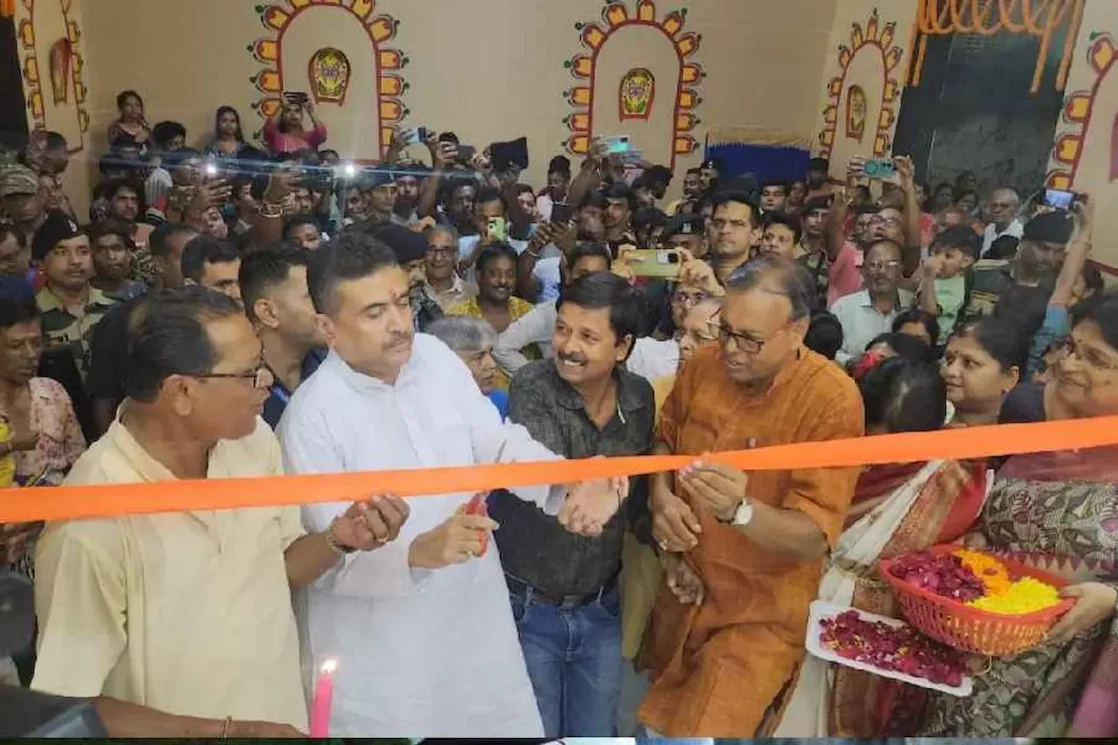
The BJP is also reviving its showpiece Durga Puja at Salt Lake’s Eastern Zonal Cultural Centre (EZCC), first inaugurated virtually by Prime Minister Narendra Modi in 2020. After fading enthusiasm post the 2021 defeat, the puja is returning under the Paschim Banga Sanskriti Mancha, a BJP-backed cultural initiative. Leaders insist it is about art and community bonding, though the TMC dismisses it as political optics.

Bookstalls at pandals, once dismissed by the BJP as a Left relic, are now central to its campaign. From 8,000 stalls last year, the party has targeted 36,000 this season, offering books on India’s civilisational heritage, the Ram temple movement, the Citizenship Amendment Act, and electoral reforms. The outreach extends to prize-rich contests for tableaux and immersion processions, with rewards up to ₹3 lakh.

Senior BJP leaders, including Union Home Minister Amit Shah, are set to inaugurate key pandals, while Adhikari has lined up appearances at over 120 Durga Pujas. The TMC, which has historically controlled nearly 95% of puja committees, remains dominant, but the BJP is working to chip away at its cultural monopoly.

Party spokespersons argue that Bengalis across India are celebrating Durga Puja without harassment, dismissing the TMC’s narrative of cultural alienation. By marrying devotion with political messaging, the BJP hopes to weave itself into Bengal’s cultural identity and turn Durga Puja into a decisive arena for the battle of 2026.

Nitesh Rane Warns Against Disturbing Maharashtra’s Peace Amid Navratri Tensions

bjp, nitesh rane, mankhurd, clash, mankhurd clash, maharashtra
Nitesh Rane Warns Against Disturbing Maharashtra's Peace Amid Navratri Tensions 14

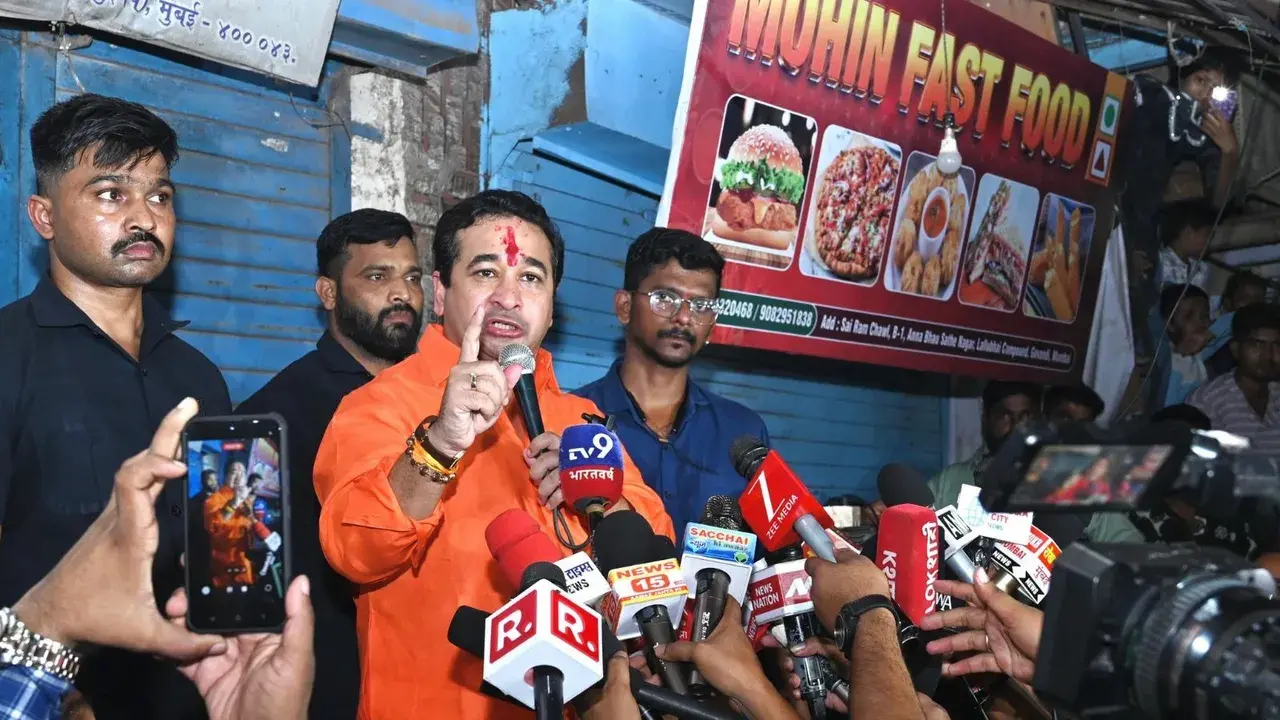
Maharashtra minister Nitesh Rane has issued a stern warning against disturbing the state’s peaceful atmosphere during Navratri celebrations. Visiting a Durga pandal organised by Sakal Hindu Samaj in Mumbai’s Mankhurd on Wednesday, Rane said no one would be allowed to disrespect Hindu gods and goddesses during the festival.

The warning comes after tensions erupted on Sunday night when an idol of Goddess Durga was allegedly desecrated in Mankhurd, sparking a clash between two groups.

Rane described the ruling Mahayuti as a “Hindutvawadi government” elected with the support of Hindu votes, asserting that “people wearing the gol topi did not vote for it.” He cautioned against any attempts to disrupt harmony, saying, “Celebrate your festivals peacefully, and we will celebrate ours. Don’t look at us sideways. We will not tolerate anyone trying to disturb Mumbai’s atmosphere.”

The minister added that those seeking permission to celebrate festivals can easily approach the government and receive approvals without delay. He also joined devotees in a ‘maha aarti’ during the event.

Earlier, Rane had claimed that garba events during Navratri are turning into “epicentres” of “love jihad” and supported the Vishwa Hindu Parishad’s advisory urging organisers to thoroughly verify the identity of participants.

10,000 Kg of Dead Fish, Waste Cleared from Mumbai’s Banganga Tank After Pitru Paksha Rituals

banganga tank, banganga, mumbai, pitru paksh
10,000 Kg of Dead Fish, Waste Cleared from Mumbai’s Banganga Tank After Pitru Paksha Rituals 16

The Brihanmumbai Municipal Corporation (BMC) has cleared nearly 10,000 kg of dead fish and ritual waste from the historic Banganga Tank at Malabar Hill after the conclusion of Pitru Paksha rituals, officials confirmed on Tuesday.

The mass fish deaths were first reported on September 21, when devotees began immersing flowers, food, and other offerings. Civic officials said the immersion of floral and organic material depleted oxygen levels in the water, triggering large-scale fish mortality.

“Over 6,000 kg of waste was collected on Sunday, followed by 2,000 kg each on Monday and Tuesday. The material included dead fish, floral offerings, plastic, and organic waste,” a senior BMC official told The Indian Express. Seven dumper trucks were used to remove the debris, while water samples have been sent for lab testing to rule out chemical contamination.

To stabilise water quality, BMC installed aerators and dewatering pumps to infuse oxygen and pump in fresh water. Officials from the Maharashtra Pollution Control Board (MPCB), Fisheries Department, and Taraporewala Aquarium also inspected the site.

Banganga Tank, a 12th-century freshwater stepped reservoir managed by the GSB Temple Trust, houses more than 220 fish species. However, mass fish deaths during religious immersions have become a recurring issue.

Following the incident, activists renewed demands for preventive measures. Sneha Visariya, founder trustee of Just Smile Charitable Trust, urged BMC to create artificial ponds for ritual immersions. “Offerings should be immersed in artificial ponds, from which only the water can be released into the tank. This way devotees can complete their rituals without harming aquatic life. We are killing living beings in the name of religion, and this must stop,” she said.

Visariya recalled filing complaints after a similar incident in 2022 when post-mortem reports from Parel Veterinary Hospital confirmed contaminated water as the cause of death, reinforcing calls for urgent action.

Maharashtra May Monetise ‘Golden Data’ of Welfare Beneficiaries via Samanvay Portal

devendra fadnavis, cm, chief minister, mahaid, aadhar, ration, maharashtra, maharashtra govt
Maharashtra May Monetise 'Golden Data' of Welfare Beneficiaries via Samanvay Portal 18

The Maharashtra government is considering a proposal to monetise anonymised non-personal data of welfare scheme beneficiaries through its new digital platform Samanvay, which is set to launch on October 2, officials confirmed.

The database, termed Golden Data, will consolidate details of every beneficiary of state and central schemes, accessible via a unique Aadhaar-linked MahaID. Currently under trial, the system is designed to streamline welfare delivery, eliminate ineligible beneficiaries, and provide a single-window view of citizen entitlements.

A senior IT department official said that once the platform runs smoothly, the state may explore sharing anonymised data with private companies, start-ups, and financial institutions for market research. He clarified that no personal details would be revealed, aligning with central government data policies.

The Golden Data pool will include economic, social, and geographical details such as age, caste, education, income range, vehicles owned, and benefits availed. Income Tax and Vahan databases are also being integrated, with health records likely to follow.

Officials revealed that under the Ladki Bahin scheme—which provides ₹1,500 per month to women aged 18–65—lakhs of ineligible beneficiaries were flagged through the system, prompting physical verification by the women and child welfare department.

The government has not yet taken a final decision on monetisation but maintains the consolidated database will first serve to improve transparency and efficiency in welfare implementation.

Kolkata Flood Chaos: Four Dead of Electrocution as Torrential Rains Cripple City

kolkata, rains, heavy rain, floods, flooding
Kolkata Flood Chaos: Four Dead of Electrocution as Torrential Rains Cripple City 20

Torrential overnight rain left Kolkata paralysed on Tuesday, claiming at least four lives due to electrocution and throwing normal life out of gear as vast areas were submerged, transport services disrupted, and traffic brought to a grinding halt.

Commuters waded through waist-deep water in several parts of the city, while vehicles lay stranded on arterial roads. Metro services on a major stretch of the Blue Line were suspended, and train operations from Howrah and Sealdah were badly hit due to flooded tracks.

The victims were identified as Firoz Ali Khan (50) of Beniapukur, Pranatosh Kundu (62) of Netaji Nagar, Mumtaz Bibi (70) of Ekbalpur, and an unidentified man in Gariahat. “So far, we have information of four deaths due to electrocution in different places in the city,” Kolkata Mayor and Urban Development Minister Firhad Hakim confirmed.

Hakim said most areas remained waterlogged, with Kolkata Municipal Corporation teams struggling to drain out water as rivers and canals overflowed. He cautioned that the afternoon high tide might worsen the situation, with some relief expected only late at night.

Traffic was brought to a standstill at Park Circus, Gariahat, Behala, and College Street, while EM Bypass and AJC Bose Road witnessed massive snarls. Many schools declared a holiday, and office-goers faced severe hardships as buses broke down mid-way, taxis stayed off the roads, and app cabs charged exorbitant fares.

Metro services were suspended between Shahid Khudiram and Maidan stations, while Eastern Railway suspended operations in the Sealdah south section. Circular Railway services also came to a halt.

The India Meteorological Department warned of more heavy rain in south Bengal districts, including Purba and Paschim Medinipur, South 24 Parganas, Jhargram, and Bankura. In Kolkata, the worst-hit areas included Garia Kamdahari (332 mm), Jodhpur Park (285 mm), Kalighat (280 mm), Topsia (275 mm), and Ballygunge (264 mm).

With another low-pressure system likely to form over the Bay of Bengal by September 25, authorities fear the situation could worsen further.