


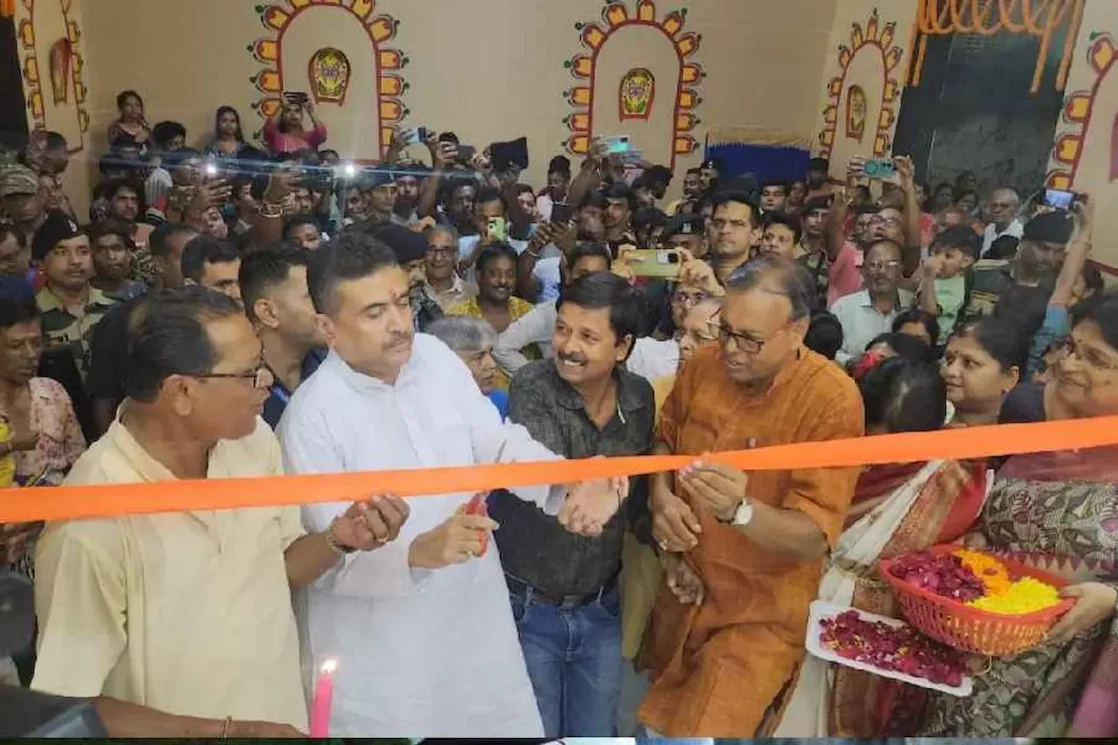
The BJP in West Bengal has recast its Durga Puja outreach into a cultural counter-offensive aimed at blunting the Trinamool Congress’ “anti-Bengali” charge ahead of the 2026 assembly polls. The saffron camp is attempting to fuse faith with identity politics, projecting itself as a stakeholder in “Bangali asmita” (Bengali pride) while challenging Mamata Banerjee’s portrayal of the party as an outsider force.
This year, the party has dispatched 107 leaders to 22 states and Union Territories under the ‘Durgapuja Bangali Milan Samaroh’ to connect with diaspora Bengalis. State BJP president Samik Bhattacharya is touring Gujarat, Union Minister Sukanta Majumdar is in Varanasi, and Leader of Opposition Suvendu Adhikari is in Tripura, with others fanning out across Delhi, Mumbai, Pune, Surat, Chennai, Ranchi and the Andaman Islands. Strategists believe such outreach may not directly translate into votes but could influence families and networks in Bengal through word-of-mouth.
The BJP is also reviving its showpiece Durga Puja at Salt Lake’s Eastern Zonal Cultural Centre (EZCC), first inaugurated virtually by Prime Minister Narendra Modi in 2020. After fading enthusiasm post the 2021 defeat, the puja is returning under the Paschim Banga Sanskriti Mancha, a BJP-backed cultural initiative. Leaders insist it is about art and community bonding, though the TMC dismisses it as political optics.
Bookstalls at pandals, once dismissed by the BJP as a Left relic, are now central to its campaign. From 8,000 stalls last year, the party has targeted 36,000 this season, offering books on India’s civilisational heritage, the Ram temple movement, the Citizenship Amendment Act, and electoral reforms. The outreach extends to prize-rich contests for tableaux and immersion processions, with rewards up to ₹3 lakh.
Senior BJP leaders, including Union Home Minister Amit Shah, are set to inaugurate key pandals, while Adhikari has lined up appearances at over 120 Durga Pujas. The TMC, which has historically controlled nearly 95% of puja committees, remains dominant, but the BJP is working to chip away at its cultural monopoly.
Party spokespersons argue that Bengalis across India are celebrating Durga Puja without harassment, dismissing the TMC’s narrative of cultural alienation. By marrying devotion with political messaging, the BJP hopes to weave itself into Bengal’s cultural identity and turn Durga Puja into a decisive arena for the battle of 2026.
